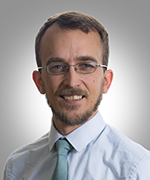
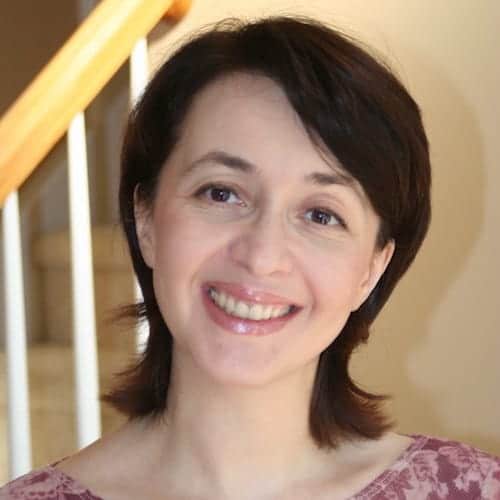
Henry M. Tufo is a Researcher affiliated with the University of Colorado, USA . His work spans High-Performance Computing (HPC) , Cloud Computing , and Computational Fluid Dynamics , with a focus on climate modeling, grid systems, and scalable algorithms. Tufo has collaborated extensively with institutions like IBM, Argonne National Laboratory, and researchers such as Paul Fischer, Kate Keahey, and Paul Marshall. His research interests include: Developing scalable HPC systems for climate and astrophysical simulations Integrating cloud computing with scientific workflows Optimizing spectral element methods for atmospheric models Trends in his publications highlight expertise in parallel computing , secure execution environments , and numerical methods for fluid dynamics. Tufo has contributed to frameworks like the FLASH code and GraphBLAS for large-scale simulations.
David Littlefield is a Professor in the Department of Mechanical Engineering at the University of Alabama at Birmingham (UAB), part of the College of Engineering. His primary research focuses on computational solid mechanics, high-performance computing (HPC), and computational magnetohydrodynamics. Applications span impact mechanics, biomechanics, weapons design, and force protection. He has authored over 200 papers and technical reports, and has served for two decades as an onsite technical expert for computational structural mechanics with the Department of Defense (DoD). Education: B.S., M.S., and Ph.D. in Mechanical Engineering from Georgia Institute of Technology. Teaching interests include numerical methods, continuum mechanics, and special topics in computational inelasticity and nonlinear finite element analysis. Professional memberships include Fellow of the American Society of Mechanical Engineers (2002), United States Association for Computational Mechanics, and the National Defense Industrial Association. His technical contributions include advanced finite element methods, error estimation, and code coupling algorithms for HPC. Awards and recognition include multiple DoD-recognized advancements in modeling and simulation for defense applications. Current research emphasizes HPC-driven solutions for complex material behaviors under extreme conditions.
Juhan Frank is the Lorraine and Leon August Professor of Physics & Astronomy at Louisiana State University (LSU), within the College of Science and the Department of Physics & Astronomy . He holds a Ph.D. from the University of Cambridge (1978) and a Licenciado en Ciencias Físicas from the Universidad de Buenos Aires (1970). His research focuses on accretion processes in compact astrophysical systems, including active galactic nuclei, X-ray binaries, and white dwarf binaries. Notably, he explores the dynamics of accretion onto black holes, neutron stars, and white dwarfs, emphasizing hydrodynamics, radiative transfer, and binary system evolution. Frank’s work includes studies on double white dwarf mergers, their implications for gravitational wave observations (e.g., LISA), and the origins of R Coronae Borealis stars. He has contributed to developing numerical methods like the Octo-Tiger code for simulating stellar mergers and mass transfer in binaries. His research also addresses the role of irradiation in cataclysmic variables and the transient behavior of low-mass X-ray binaries. Frank has authored influential textbooks, including Accretion Power in Astrophysics (3rd ed., 2002), a graduate-level treatise on accretion disk theory. His affiliations include the Landolt Astronomical Observatory and the Hearne Institute of Theoretical Physics. Courses he has taught include Astronomy 1102: Stellar Astronomy , emphasizing scientific method and observational astronomy. His recent research leverages high-performance computing to model complex systems, such as binary mergers and galactic structure formation. Collaborations with institutions like ORNL highlight his engagement with cutting-edge computational tools. Frank’s work bridges theoretical astrophysics, numerical simulation, and observational astronomy, with implications for understanding galaxy evolution, stellar dynamics, and gravitational wave sources.
George Biros is a Professor at The University of Texas at Austin, holding the W.A. “Tex” Moncrief Jr. Chair in Simulation-Based Engineering Sciences at the Cockrell School of Engineering’s Institute for Computational Engineering and Sciences (ICES). He leads the Parallel Algorithms for Data Analysis and Simulation (PADAS) group. His research focuses on high-performance computing, fast numerical algorithms, and applications in fluid dynamics, biomedical engineering, and inverse problems. Education: BSc, Aristotle University of Thessaloniki (1995) MSc and PhD, Carnegie Mellon University (1996–2000) Research Interests: Biros develops scalable algorithms for scientific computing, including parallel methods for integral and differential equations, complex fluids dynamics, and medical image analysis. His work bridges computational mathematics, engineering, and biomedical applications, with a focus on solving large-scale problems in heterogeneous computing environments. Awards: IEEE/ACM SC10 Gordon Bell Prize (2010) J. Tinsley Oden Faculty Fellowship (2006–2008) Early Career Young Investigator Award, U.S. Department of Energy (2005) Grants & Labs: Leads the PADAS group, which specializes in high-performance algorithms for data and simulation. His work has been supported by the DOE, NSF, and industry partnerships. Collaborates with institutions like TUM through fellowships. Labs/Teams: Director of the PADAS group at UT Austin, focusing on scalable numerical methods and their applications in science and engineering.
Prof. Alessandro Reali is a Full Professor of Mechanics of Solids and Structures at the University of Pavia and a Hans Fischer Senior Fellow at the Technical University of Munich's Institute for Advanced Study (TUM-IAS). His research focuses on computational mechanics, particularly isogeometric methods, structural analysis, and biomechanics. He has authored over 90 journal articles and received prestigious awards such as the ERC Starting Grant and IACM John Argyris Award. His work spans applications in engineering, materials science, and biomedical systems. Education: Laurea (MSc equivalent) in Civil Engineering, University of Pavia (2001) MSc and PhD in Earthquake Engineering, University of Pavia and Institute of Advanced Study of Pavia (2004–2005) Research Interests: Isogeometric Analysis Constitutive Models for Advanced Materials Finite Element Methods Fluid-Structure Interaction Biomechanical Simulations Key Contributions: Developed novel isogeometric collocation methods for structural dynamics and fluid mechanics. Advanced computational frameworks for patient-specific biomedical applications, such as heart valve modeling and stent flexibility analysis. Contributed to eigenvalue problem solutions and numerical stabilization techniques in complex systems. Awards: 2018 Bruno Finzi Prize 2017 Commander of the Order of Merit of Italy 2014 IACM John Argyris Award 2010 ERC Starting Grant Grants & Projects: Funded by ERC, MIUR, ONR, and industry partners (e.g., Total, Nokia). Coordinated projects on computational mechanics and materials science. Labs/Teams: Focus Group Lead: Computational Mechanics: Geometry and Numerical Simulation Collaborations with institutions like the University of Texas at Austin and TUM.
Prof. Robert Altmann is a Professor of Numerical Mathematics at the Otto von Guericke University Magdeburg, leading the Institute for Analysis and Numerical Analysis (IAN). He holds a PhD from TU Berlin and has held academic positions at institutions including the University of Augsburg and TU Berlin. His research focuses on numerical methods for partial differential equations, particularly PDAEs, poroelasticity, dynamic boundary conditions, and energy-based modeling frameworks like port-Hamiltonian systems. Education and Career: Bachelor's/Master's in Mathematics, Humboldt University Berlin (2007–2011) Research Stay at École des Ponts ParisTech (2011) Research Associate at TU Berlin (2011–2017) Academic Councillor at University of Augsburg (2017–2023) Research Interests: His work emphasizes numerical analysis for complex systems, including: Development of robust discretization schemes for PDAEs and poroelastic networks Energy-preserving methods for dynamic boundary value problems Riemannian optimization techniques for quantum systems Model reduction and multiscale methods for heterogeneous materials Grants and Projects: DFG Project: Decoupled computational methods for nonlinear parabolic problems (2020–2023) DFG Project: Higher-order decoupling integration schemes for poroelastic networks (2021–2024) DFG Project: Wave-type problems with non-standard boundary conditions (2024–2026) Awards and Recognition: Member of GAMM Juniors (2014) Dr.-Klaus-Körper Prize (GAMM, 2016) 2nd Tiburtius Prize (Berlin Universities, 2016) Team and Collaborations: His research group includes Dr. Afsaneh Moradi, Dr. Riccardo Morandin, and Jochewed Schmeck, focusing on computational methods for coupled systems and energy-based modeling.
Prof. Jörn Behrens is a Professor of Numerical Methods in Geosciences at the University of Hamburg's Department of Mathematics. His work focuses on computational geoscience, including adaptive numerical methods, tsunami modeling, and multiscale simulations. He leads the Numerical Methods in Geosciences research group and is affiliated with the Climate, Climatic Change, and Society (CLICCS) cluster of excellence. Education & Positions: Since 2009: Full Professor at University of Hamburg 2012: Visiting Scientist at Isaac Newton Institute, Cambridge 2007–2009: Privatdozent at University of Bremen Extensive experience at Alfred-Wegener-Institut and TU Munich Research Interests: Behrens develops numerical algorithms for geophysical flows, emphasizing adaptive mesh refinement, discontinuous Galerkin methods, and tsunami hazard modeling. His work bridges computational mathematics and geoscience applications, with a focus on environmental challenges like climate modeling and disaster risk assessment. Recent efforts include cloud computing for instant hazard simulations and interdisciplinary projects like the Global Tsunami Model (GTM). Key Publications: Recent work includes bathymetry reconstruction via PDE-constrained optimization, low-rank preconditioning for fluid flow, and tsunami hazard frameworks within EPOS. These reflect his expertise in computational methods and geophysical problem-solving. Grants & Projects: Lead on EU-funded DT-GEO (Digital Twin for Geophysical Extremes) Co-chair of COST Action AGITHAR (Tsunami Hazard Research) Contributions to CLICCS and EPOS infrastructure development Labs & Teams: Leads the Numerical Methods in Geosciences group, collaborating internationally on tsunami modeling, climate systems, and high-performance computing.
Assoc. Prof. Ali Şendur holds an Associate Professor position at the Department of Mathematics Education, Faculty of Education, Alanya Alaaddin Keykubat University. He obtained his Ph.D. in Mathematics from Izmir Institute of Technology (2012) and has held academic positions at institutions like Akdeniz University and Mediterranean University. His research focuses on applied mathematics, numerical analysis, and mathematics education technology integration. He has served in administrative roles including Head of Department, Vice Dean, and Erasmus Coordinator. Key educational qualifications include: Ph.D. in Mathematics, Izmir Institute of Technology (2012) M.Sc. in Mathematics, Dokuz Eylül University (2007) B.Sc. in Mathematics, Dokuz Eylül University (2002) Research interests span numerical methods for PDEs (convection-diffusion-reaction systems), finite element stabilization techniques, epidemiological modeling, and technology-enhanced mathematics education. Notable projects include design-based studies on Web 2.0 tools for teacher training and TÜBİTAK-funded research on mathematical applications. Recent publications emphasize hybrid numerical methods for singular perturbations, AI/AR integration in geometry education, and epidemiological modeling of health policies. He has received multiple TÜBİTAK awards for international scientific contributions (2012–2021).
Tobin Isaac is an Adjunct Professor in the School of Computational Science and Engineering at Georgia Institute of Technology. He holds a B.A. in Computational and Applied Mathematics from Rice University (2007) and a Ph.D. in Computational Science and Engineering from the University of Texas at Austin (2015). Education: B.A., Computational and Applied Mathematics, Rice University, 2007 Ph.D., Computational Science and Engineering, University of Texas at Austin, 2015 His research focuses on developing large-scale models for physical systems, addressing both forward and inverse problems. Key areas include scalable numerical methods, adaptive mesh refinement (via p4est library), and parameter inference using observational data. He contributes to PETSc, a widely-used toolkit for scientific computing. Awards: 2015 ACM Gordon Bell Prize (collaborative work) 2016 SIAM/Supercomputing Early Career Prize His work emphasizes high-performance computing and numerical methods for solving partial differential equations, with applications in predictive modeling across disciplines. He actively collaborates on open-source software frameworks for scientific computation.
Maryam Parvizi is a PostDoc Researcher at Technische Universität Wien's College of Informatics. She holds a BSc and MSc in natural sciences and works primarily in machine learning and numerical methods. Her research focuses on advanced computational mathematics techniques. Affiliation: Technische Universität Wien Role: PostDoc Researcher Contact: maryam.parvizi@tuwien.ac.at Research Interests: Machine Learning Adaptive Finite Element Methods Numerical Analysis Scientific Computing Recent Publications: Focus on computational mathematics with emphasis on fractional Laplacian and error analysis techniques.
Andrea Bonito is a Professor in the Department of Mathematics at Texas A&M University, affiliated with the College of Arts and Sciences. His research focuses on numerical methods for partial differential equations (PDEs), including adaptive finite element methods, free boundary problems, geometric PDEs, and non-Newtonian fluid dynamics. He explores topics like finite element approximations of thin structures, fractional operators, and optimal learning algorithms. His work emphasizes applications in material science and fluid dynamics, such as modeling bilayer plates, folding mechanics, and electroconvection of thin liquid crystals. Recent contributions include advancements in PINNs (Physics-Informed Neural Networks) for elliptic PDEs and gamma-convergent methods for large deformations. Bonito’s research bridges theoretical analysis with computational implementation, addressing challenges in high-dimensional approximation and incomplete information scenarios. His academic output spans over two decades, with notable publications on geometric PDEs, spectral fractional diffusion, and adaptive methods for elliptic problems. Bonito collaborates on interdisciplinary projects, leveraging numerical analysis to solve complex physical phenomena.
Nils Vu is a Sherman Fairchild Postdoctoral Scholar Research Associate in Theoretical Astrophysics at the California Institute of Technology (Caltech), working within the Division of Physics, Mathematics and Astronomy. His research focuses on theoretical astrophysics, gravitational physics, and numerical relativity, with particular expertise in black hole physics and gravitational waves. His research interests include: Theoretical modeling of black hole mergers and gravitational wave emissions Numerical relativity techniques for simulating strong-field gravity Gravitational wave memory effects and their detection Black hole spectroscopy through ringdown analysis Development of computational methods for relativistic astrophysics Applications to gravitational wave astronomy and data analysis Dr. Vu's recent work demonstrates significant contributions to numerical relativity, particularly in developing high-precision models for binary black hole systems. His research bridges theoretical physics with practical applications for gravitational wave observatories like LIGO and future missions like LISA. He has made notable contributions to the SpECTRE numerical relativity code and the SXS Collaboration's catalog of binary black hole simulations. His publications reveal a focus on horizon tracking in black hole simulations, quantum gravity signatures in gravitational wave memory, and advanced computational techniques for analyzing quasinormal modes. His work often addresses fundamental challenges in numerical relativity while maintaining relevance to observational gravitational wave astronomy. As a Sherman Fairchild Postdoctoral Scholar, Dr. Vu is part of Caltech's prestigious research program supporting exceptional early-career scientists in theoretical and experimental physics.
Gregor Gassner is a Professor at the University of Cologne's Mathematical Institute, specializing in numerical methods for fluid dynamics and high-performance computing. He leads research in entropy-stable discontinuous Galerkin (DG) methods, focusing on robust and efficient simulations of multi-scale problems governed by conservation laws. His work includes adaptive algorithms for compressible flows, magnetohydrodynamics (MHD), and oceanography, supported by an ERC Starting Grant targeting 'un-crashable' solvers. Key research areas: Non-linear multi-scale simulations High-order DG methods Entropy stability and robustness Exascale computing (e.g., SCALEXA project) Adaptive mesh refinement Subcell limiting techniques Publications emphasize advancements in DG schemes, split-form discretizations, and applications to aerodynamics, plasma physics, and geophysical flows. His ERC grant aims to unify efficacy and robustness in numerical methods. Grants/Awards: ERC Starting Grant for developing robust numerical solvers. Labs/Teams: Core scientist at the Center for Data and Simulation Science, leading the NumSim group.
Alina Chertock serves as the Head of the Department of Mathematics at North Carolina State University (NCSU), where she leads academic and research initiatives in computational mathematics. Her work focuses on developing advanced numerical methods for hyperbolic conservation laws, fluid dynamics, and models involving uncertainty quantification. Chertock’s research integrates finite-volume, particle, and hybrid methods to address complex phenomena such as chemotaxis, magnetohydrodynamics, and shallow water systems. She has contributed to high-resolution schemes for stiff detonation waves and stochastic collocation techniques for nonlinear PDEs with uncertainties. Her research interests span computational fluid dynamics, numerical analysis, and applied mathematics, with applications in geophysical flows, multiphase systems, and biological models. Notable contributions include well-balanced path-conservative schemes for rotating flows and divergence-free flux methods for magnetohydrodynamics. Chertock collaborates actively with institutions on NSF-funded projects, including structure-preserving methods for atmospheric and shallow water models. Her publications emphasize adaptive algorithms, error mitigation in stochastic systems, and the integration of machine learning for wave equation analysis. Chertock’s work bridges theoretical developments with practical applications, addressing challenges in computational efficiency and accuracy across diverse scientific domains.
Dr. Nikolay Simakov is a Computational Scientist at the University at Buffalo's Center for Computational Research (CCR), joining in 2012. He holds a PhD in Computational Chemistry from Carnegie Mellon University, alongside BA and MA degrees in Applied Physics and Mathematics from Moscow Institute of Physics and Technology. Research Interests: High-Performance Computing (HPC), Machine Learning, Scientific Software Optimization, Data Analytics for Large Datasets, and Simulation of Biomolecular Systems Teaching: Taught graduate courses like EAS509 Statistical Learning and Data Mining-II and CDA501 Introduction to Data Driven Analysis, mentoring undergraduate interns at CCR Key Contributions: Developed Slurm Simulator for HPC scheduling, contributed to XDMoD/ACCESS Metrics for resource auditing, optimized GPU-based Poisson equation solvers, and advanced multi-rheology geophysical flow modeling Technical Focus: Performance monitoring of HPC systems, node sharing analysis, and ARM architecture benchmarking His work bridges computational infrastructure optimization and biological system modeling, with publications spanning HPC resource management, biomolecular simulations, and parallel computing frameworks.