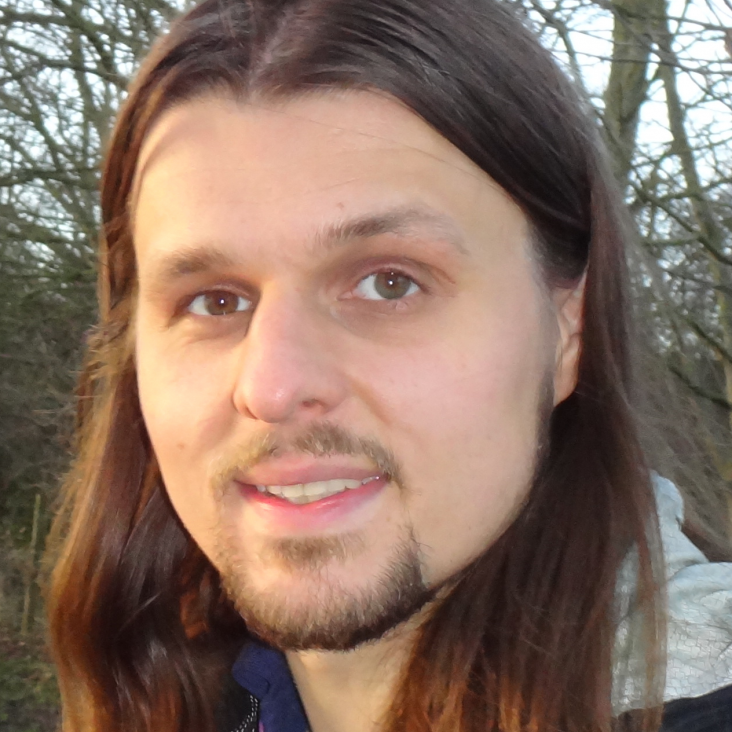
Andrew Wells is an Associate Professor of Physical Climate Science at the University of Oxford's Department of Atmospheric, Oceanic and Planetary Physics. His research focuses on fluid mechanics, thermodynamics, and geophysical processes, with a particular emphasis on sea ice dynamics, ice-ocean interactions, and turbulent convection. He is affiliated with the Ice and Fluid Dynamics research group and conducts studies using mathematical modeling, numerical simulations, and laboratory experiments. His work explores phenomena such as mushy layer growth in sea ice, buoyant plumes under ice shelves, and the impact of salinity on melt pond evolution. Key contributions include studies on Enceladus' geysers, frazil ice crystal interactions, and thermal convection in porous media. His research has implications for climate modeling, astrobiology, and geophysical fluid dynamics. Wells has published extensively in journals like *Journal of Fluid Mechanics*, *Geophysical Research Letters*, and *Proceedings of the Royal Society A*. His recent work emphasizes the interplay between phase changes, convection patterns, and environmental processes in polar and planetary systems.
Houman BOROUCHAKI is a Professor at the University of Technology of Troyes (UTT), France, with over 20 years of academic leadership. He has served as Head of the Automatic Mesh Generation and Advanced Methods (GAMMA3) project team since 2008 and previously led the Laboratory of Mechanical Systems and Concurrent Engineering (LASMIS) (2005-2007). His work bridges academic research and industrial applications through collaborations with INRIA , French Petroleum Institute (IFPEN) , Dassault Aviation , and others. Research Interests: A pioneer in adaptive meshing , he focuses on finite element methods , geometric modeling , and numerical simulations . His innovations underpin mesh generation algorithms , 3D triangulation software , and industrial applications in metal forming, composite simulation, and subterranean modeling. Scientific Trends: His recent work emphasizes metric-based meshing , high-order geometric validity , and parallel processing for mesh generation , with applications in petroleum reservoirs, aviation surfaces, and nanomaterials. His Google Scholar profile reflects 25+ years of contributions to meshing and simulation. Teaching: With 22 years of experience, he teaches courses on meshing , numerical analysis , geometric modeling , and computer graphics at UTT, covering undergraduate to PhD levels. Labs & Teams: He leads the interdisciplinary GAMMA3 team and has contributed to LASMIS (mechanical engineering), L2n (CNRS-UMR 7076) (nanomaterials), and LIST3N (computer science).
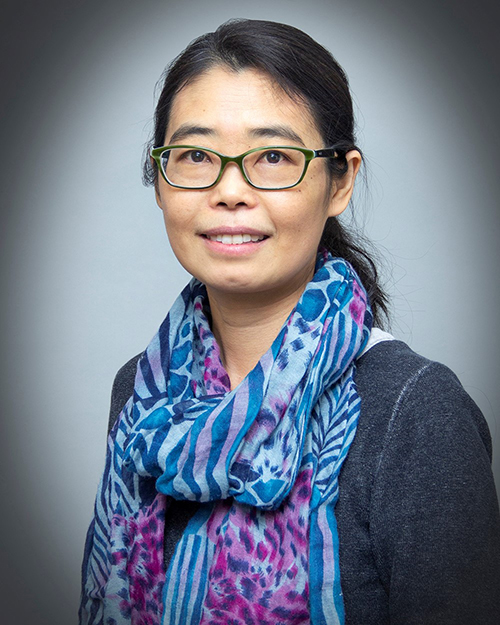
Minna Palmroth is a Professor of Computational Space Physics at the University of Helsinki 's Faculty of Science , leading the Department of Physics 's Space Physics Research Group. She directs the Kestävän avaruustieteen ja -tekniikan huippuyksikön (Centre of Excellence in Sustainable Space Science and Technology) and serves as the principal investigator for the Vlasiator hybrid-Vlasov simulation framework.
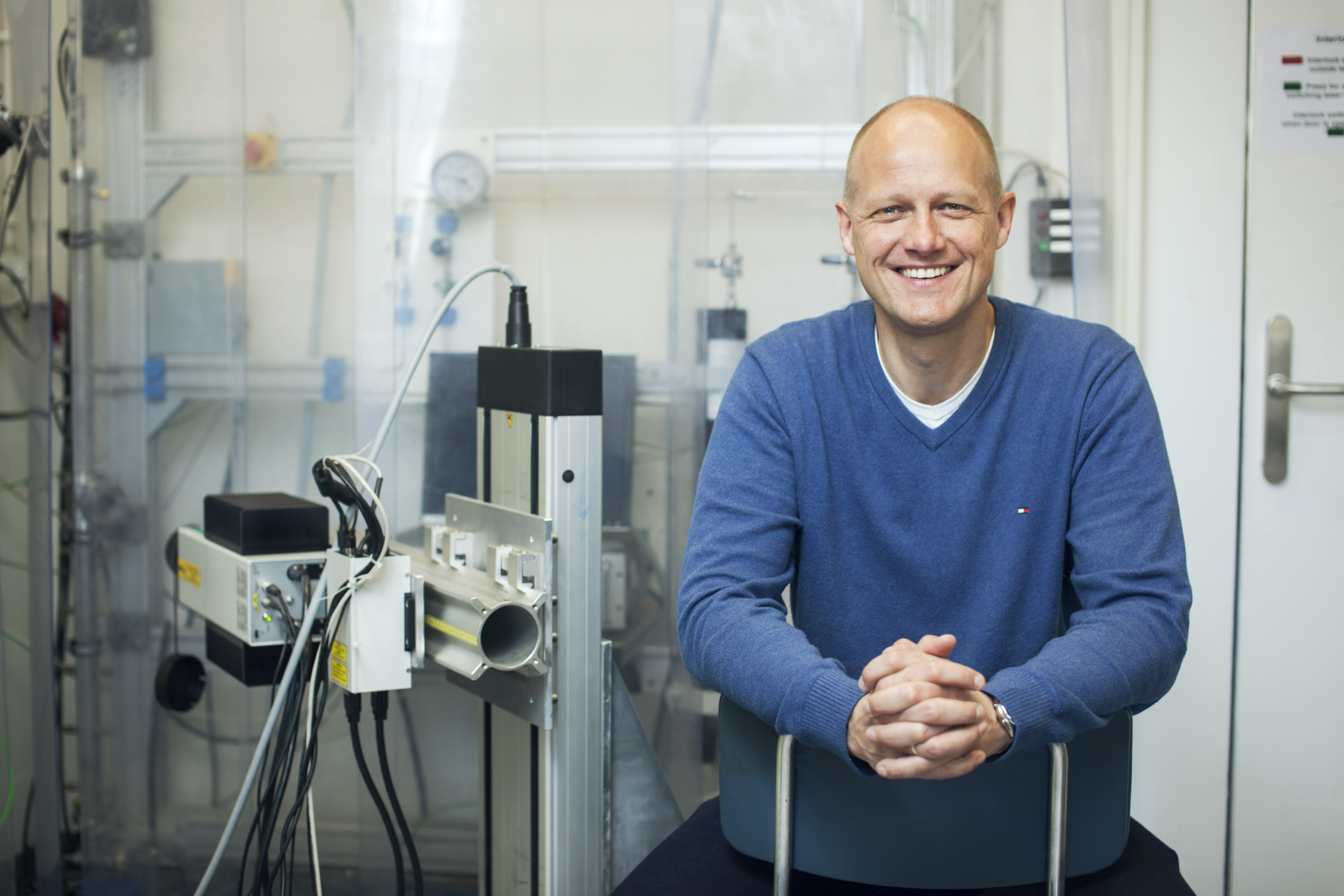
Dr. Martin Rohde is a Professor and Group Leader at the Radiation Science & Technology department within the Faculty of Applied Sciences at Delft University of Technology (TU Delft) in the Netherlands. He leads the Transport Phenomena & Nuclear Applications research group, focusing on advanced nuclear reactor technologies, particularly molten salt reactors, and their associated transport phenomena. Professor Rohde's research interests span across several critical areas in nuclear engineering and fluid dynamics. His work primarily focuses on understanding transport phenomena in nuclear applications, with particular emphasis on molten salt reactors for sustainable and safe nuclear power generation, innovative production techniques of medical isotopes, and advanced energy storage systems like flow batteries. His research group actively investigates complex physical phenomena occurring under extreme conditions such as high pressures, high temperatures, and interactions with radioactive processes. His publication record demonstrates a strong focus on computational methods for nuclear applications, particularly the Lattice Boltzmann Method (LBM), which is used to model fluid flow, heat transfer, and phase change phenomena in nuclear systems. Recent work has concentrated on freezing and melting processes in molten salt reactors, microfluidic separation techniques for medical isotopes, and advanced modeling of flow batteries. His research shows a clear progression toward increasingly sophisticated numerical methods applied to real-world nuclear engineering challenges. Professor Rohde has secured significant funding through multiple European Commission projects including ENDURANCE, MIMOSA, and ReZilient, demonstrating the international recognition of his research. He has supervised numerous PhD and MSc students, many of whom have gone on to complete theses on topics related to molten salt reactors, microfluidics, and flow battery technology. His research group includes several technicians, post-doctoral researchers, and PhD candidates working collaboratively on cutting-edge nuclear technology. The Transport Phenomena & Nuclear Applications laboratory operates several specialized facilities including the ESPRESSO facility for measuring melting and solidification under convective boundaries, and experimental setups for studying molten salt behavior, microfluidic purification, and flow battery technology. The group maintains strong collaborations with international partners including TRIUMF (Canada), NRG, and URENCO (The Netherlands).
Glaucio H. Paulino holds the Margareta Engman Augustine Professorship in Civil and Environmental Engineering at Princeton University, where he also serves as a Professor at the Princeton Institute for the Science and Technology of Materials (PRISM). His work bridges computational mechanics, topology optimization, and materials science. Paulino leads a research group focused on advancing structural design methodologies, fracture mechanics, and functionally graded materials. His team has pioneered polygonal finite elements and multiresolution topology optimization techniques, addressing challenges in mesh bias and computational efficiency. He has published over 240 peer-reviewed articles and mentored 19 PhD and 11 MS students. Notable contributions include the PPR cohesive model for fracture analysis and adaptive mesh refinement for dynamic simulations. Paulino's research extends to practical applications such as high-rise building design and sustainable construction materials. Awards include election to the European Academy of Sciences and Arts and ASME’s Melville Medal. Current projects involve functionally graded cement-based materials, extrusion processing, and digital image correlation for material characterization. His lab collaborates with industry partners like Skidmore, Owings & Merrill LLP to translate topology optimization into real-world engineering solutions. Paulino’s interdisciplinary approach integrates computational modeling with experimental validation, fostering innovations in civil infrastructure resilience.
Martin Berzins is a Professor of Computer Science at the University of Utah, affiliated with the School of Computing and the Scientific Computing and Imaging (SCI) Institute. His research focuses on parallel scientific computing, numerical methods for partial differential equations, and high-performance computing frameworks. He is a leading developer of the Uintah framework, a scalable simulation tool used for large-scale engineering and scientific problems. Research Interests : Parallel algorithms, adaptive mesh refinement, material point method (MPM), exascale computing, computational fluid dynamics, and performance portability. His work emphasizes scalable software solutions for complex multiscale and multiphysics simulations, with applications in environmental modeling, explosive detonation analysis, and computational mechanics. Recent articles highlight advancements in Uintah's portability to exascale systems, error estimation in MPM, and high-order numerical methods. Berzins has contributed significantly to the development of task-based parallelism strategies and heterogeneous computing optimizations. His research bridges theoretical numerical analysis with practical large-scale computational challenges. Collaborations include DOE projects on hazard analysis and exascale computing. He has pioneered the integration of runtime systems like Hedgehog with Uintah to enhance scalability on modern architectures. His work ensures computational frameworks remain viable for emerging hardware trends, emphasizing both algorithmic innovation and software engineering rigor.
Julian Adamek is a computational cosmologist and lead developer of gevolution , a general-relativistic N-body code for cosmological simulations. His work focuses on modeling relativistic effects in cosmic structure formation to better understand gravity’s role on large scales and dark energy. Research Interests: Computational Cosmology, Theoretical Cosmology, Large-scale structure of the Universe, Relativistic N-body simulations. Technical Leadership: Lead developer of gevolution , a public cosmological simulation code available via GitHub. Recent publications span diverse applications of deep learning in geospatial analytics, environmental monitoring, and computer vision, including phenology modeling, biomass mapping, conflict assessment, and 3D reconstruction from point clouds. Key Trends: Integration of AI/ML for environmental tasks, cross-domain applications (cosmology, ecology, forestry), and satellite data processing. Technical Focus: Transformer networks, diffusion models, super-resolution imaging, and ensemble learning for uncertainty quantification. Julian collaborates with researchers in cosmology and geospatial science, though specific students or awards are not mentioned in the provided texts.
Wagdi George Habashi is a Professor and NSERC-Industrial Research Chair at McGill University's Faculty of Engineering, Department of Mechanical Engineering. He leads the Computational Fluid Dynamics (CFD) Lab, focusing on aerodynamics, fluid mechanics, and icing-related simulations. His research emphasizes in-flight icing prediction, computational wind engineering, and CFD-driven optimization of aircraft and jet engine systems. Education: Ph.D., Cornell University M.Eng., McGill University B.Eng., McGill University Research Interests: Habashi's work bridges analytical and computational methods to address multi-physics/multi-scale engineering challenges. Key areas include in-flight ice crystal ingestion in jet engines, ice surface roughness modeling, supercooled droplet dynamics, and CFD-based risk management for icing. His team develops tools like FENSAP-ICE for real-time aero-icing simulations and explores mesh adaptation, parallel computing, and reduced-order modeling. Labs/Teams: Computational Fluid Dynamics Lab (CFD Lab).
Prof. Juan Alonso is the Vance D. and Arlene C. Coffman Professor and James & Anna Marie Spilker Chair in the Department of Aeronautics & Astronautics at Stanford University. He directs the Aerospace Design Laboratory (ADL), focusing on high-fidelity computational methods for aerospace system design. His expertise spans transonic/supersonic/hypersonic aircraft, rotorcraft, and launch vehicles. Alumni include record-holding teams for human-powered watercraft and lightweight unmanned aerial vehicles. Education: PhD (1997) from Princeton University in Mechanical & Aerospace Engineering; M.A. (1993) Princeton; B.S. (1991) MIT Aeronautics/Astronautics. Research emphasizes multi-disciplinary optimization, numerical methods, and parallel computing applied to advanced aircraft design, sustainable aviation, and UAS systems. Notable contributions include computational design frameworks like SU2 and SUAVE, and initiatives in curriculum development for engineering education. Recent work focuses on: GPU-accelerated CFD solvers, multi-fidelity surrogate models (e.g., VortexNet), contrail simulation frameworks, and battery degradation modeling for electric aircraft. Active in urban air mobility and high-fidelity trajectory optimization for hypersonic systems. Labs/Teams: Aerospace Design Laboratory (ADL) leading open-source computational tools development. Involved in NASA-funded projects and industry partnerships for advanced propulsion systems.
Diane Guignard is an Assistant Professor in the Department of Mathematics and Statistics at the University of Ottawa. Her research focuses on numerical analysis, partial differential equations, and computational methods with applications to mechanics and stochastic systems. She holds a position in a leading mathematics department and can be contacted at dguignar@uOttawa.ca . Her research interests include finite element methods, model reduction, uncertainty quantification, and optimal transport-based mesh adaptation. She explores nonlinear approximation theories for high-dimensional anisotropic functions and develops computational frameworks for thin structures and colloidal flow simulations. Her work bridges numerical analysis with practical engineering challenges, emphasizing adaptive algorithms and error estimation techniques. Her recent publications (2021-2024) highlight contributions to goal-oriented mesh adaptation, stochastic field approximations on surfaces, and large deformation analyses of prestrained plates. These studies emphasize interdisciplinary approaches combining mathematical rigor with computational innovation. Dr. Guignard has not been explicitly noted for awards in the provided materials. Her advising record is currently unspecified, though her research group likely engages in advanced numerical methods and computational mechanics projects.
Professor Hossein Rahmani serves at the School of Computing and Communications , Lancaster University , with a focus on Computer Vision and Machine Learning . His career spans institutions like the University of Western Australia (PhD), Shahid Beheshti University (MSc), and Isfahan University of Technology (BSc). Research Interests : Computer Vision, Machine Learning, Video Analysis, Action Recognition/Detection, Object/Human Pose Estimation, 3D Reconstruction, Diffusion Models, Human-Object Interaction Editorial Roles : Associate Editor for IEEE Transactions on Neural Networks and Learning Systems , Pattern Recognition , ACM Computing Surveys ; Area Chair for CVPR 2025, ICLR 2025, ECCV 2024, IJCAI 2024 His recent work leverages diffusion models for domain-generalized object pose estimation, 3D scene editing, and human mesh recovery, published in top venues like TPAMI , CVPR , ICCV , and ECCV . He received the Best Scientific Paper Award from the International Conference on Pattern Recognition and actively supervises 5 PhD students with interdisciplinary projects in digital health and data science.
Dr. Yongjie Jessica Zhang is a Professor at Carnegie Mellon University, holding appointments in both the Department of Mechanical Engineering and the Department of Biomedical Engineering . She received her B.S. and M.S. in Engineering Mechanics from Tsinghua University, followed by an M.S. in Aerospace Engineering and a Ph.D. in Computational Engineering and Sciences from the University of Texas at Austin. After a postdoctoral fellowship at ICES, she joined CMU in 2007, advancing from assistant to full professor by 2016. Research Interests : Image-based geometric modeling, mesh generation, finite element analysis (FEA), isogeometric analysis, and applications in computational biomedicine, materials science, and computer-assisted surgery. Leadership Roles : Chair of Solid Modeling Association (2019-2020), USACM Executive Committee Member-at-Large (2017-2021), and ELATE Fellow (2017-2018). Her work addresses the critical challenge of automating high-fidelity geometric modeling and mesh generation for complex domains (e.g., human anatomy), which traditionally consumes ~80% of FEA time. Her group develops AI-driven methods for multiscale modeling (molecular to organ), with applications in neuroscience , biomechanics , and 4D printing . Notable awards include the Presidential Early Career Award (PECASE) , NSF CAREER Award , and ASME Van C. Mow Medal (2025) . Dr. Zhang’s publications span over 170 peer-reviewed articles, focusing on truncated hierarchical B-splines , polycube meshing , and neurite transport modeling . She has advised more than 40 students, including PhD candidates and postdoctoral fellows. Her editorial roles include Associate Editor of Computer Aided Geometric Design and editorial board memberships in Computer-Aided Design and Engineering with Computers .
Dr. Kidambi Sreenivas is an Associate Professor in Mechanical Engineering at the University of Tennessee at Chattanooga (UTC), affiliated with the College of Engineering and Computer Science. He holds a PhD in Mechanical Engineering and specializes in computational fluid dynamics (CFD), with a focus on unstructured multi-physics flow solvers and applications in aerospace, environmental systems, and biomedical engineering. His research bridges academia and industry, collaborating with NASA, the U.S. Navy, Department of Energy, and private companies. Dr. Sreenivas' research interests include rotating machinery simulations, pre-conditioners for non-ideal fluids, and real-world applications such as submarine hydrodynamics, wind farm optimization, aerodynamic efficiency of vehicles, and contaminant dispersal modeling. He has pioneered methods for simulating complex geometries and physics, including high-fidelity simulations of hypersonic vehicles, weapons bay cavities, and shock-wave interactions. Recent work emphasizes advanced CFD methodologies for high-speed flows, thermal effects on turbulence, and aerothermal characteristics of hypersonic test articles. His collaborations have led to practical solutions for drag reduction on Class 8 trucks and improved accuracy in wind turbine modeling. Dr. Sreenivas also contributes to educational initiatives, such as developing PIV systems for undergraduate fluid mechanics labs. His advising and grants reflect partnerships with federal agencies and private sectors, focusing on projects like microplastic sampling devices for stormwater management. These projects highlight his interdisciplinary approach to solving real-world engineering challenges through cutting-edge computational methods.
Dr. Arman Khoshghalb is a Senior Lecturer in Geotechnical Engineering at the School of Civil and Environmental Engineering, UNSW Sydney, where he has been a faculty member since 2012. His academic credentials include a PhD in Geotechnical Engineering from UNSW (2012), an MSc from Sharif University of Technology (2005), and a BSc in Civil Engineering from the same institution (2003). His research focuses on numerical modeling of multi-phase porous media , with emphasis on unsaturated soils, large deformation analysis, and dynamic soil behavior. Key areas include meshfree computational methods, soil-structure interaction, bio-cementation, and thermo-hydro-mechanical processes in geotechnical systems. His work bridges theoretical advancements with practical applications in slope stability, foundation engineering, and sustainable ground improvement. Dr. Khoshghalb's publications predominantly explore geomechanical modeling, experimental soil mechanics, and computational techniques. Recent trends highlight innovations in bio-cemented soils, thermal properties of unsaturated soils, and adaptive numerical methods for complex geotechnical simulations. Awards & Honors: IACMAG Excellent Paper Award (2017) UNSW Research Excellence Award (2012) Advising & Grants: He has supervised 7+ PhD students on topics ranging from weak rock mechanics to computational geomechanics. Funded projects include: ARC Discovery Project (2019–2021): "Non-isothermal dynamic strain localisation in unsaturated porous media" ($298,257) ARC Linkage Infrastructure Grant (2015): "Earthquake shaking table for soil-structure interactions" ($320,000) ARC Linkage Project (2014–2017): "Constitutive modelling of weak rocks" ($314,280) He leads research within UNSW's geotechnical engineering group, collaborating on large-scale experimental testing and computational frameworks for infrastructure resilience.
Navid Bayati is an Associate Professor at the University of Southern Denmark, affiliated with the Institute of Mechanical and Electrical Engineering and the Centre for Industrial Electronics. He leads the Control and Protection of Smart Grids (CAP-SG) group and focuses on renewable/hybrid power systems, microgrid protection, and grid code compliance. Education: Ph.D. in Power Systems & Microgrid Protection (2020, Aalborg University); M.Sc. in Power Systems (2017, Amirkabir University of Technology) His research spans renewable energy integration , transient analysis , grid interconnection , and digital twin applications . Recent work includes machine learning for carbon emission prediction, fault localization in DC microgrids, and supercapacitor resilience in hybrid systems. Collaborations include projects like IEA Wind Task 50 and RePoSys , addressing grid renovation, life cycle assessment, and digital twin resilience. His teaching portfolio covers power electronics , energy management , and microgrid control .