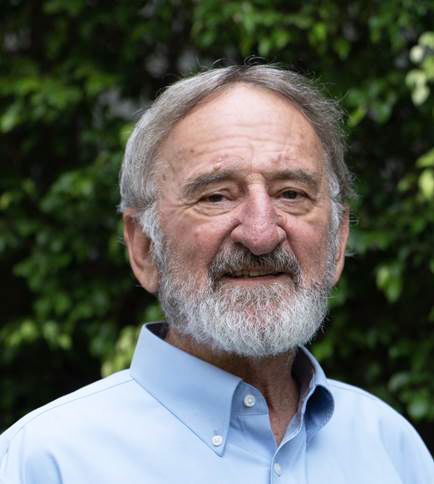
Keith J. HolyoakView profile
Professor
Keith J. Holyoak is a Distinguished Professor in the Department of Psychology at the University of California, Los Angeles (UCLA), where he conducts foundational research in cognitive psychology. His work centers on human reasoning, learning, decision making, and problem solving, with a specific focus on the psychological mechanisms of analogy and relational knowledge across diverse domains including law, politics, mathematics, and science. He directs the Reasoning Lab at UCLA, integrating experimental, computational, and neuroimaging approaches to investigate cognitive processes. Education: Ph.D. from Stanford University Research Focus: Holyoak's research program systematically explores how analogy facilitates knowledge transfer and learning, examining the neural underpinnings of complex reasoning with emphasis on prefrontal cortex functions. His work bridges theoretical cognitive science with practical applications, investigating causal learning, deductive processes, and the constraints shaping human inference. Through computational modeling and cross-domain studies, he reveals universal principles governing relational reasoning while addressing domain-specific manifestations in scientific, legal, and social contexts. Publication Trends: His scholarly output demonstrates consistent evolution from foundational work on pragmatic reasoning schemas (1980s) toward integrated models of causal learning and Bayesian inference (2000s-2010s). Recent publications emphasize rational analysis frameworks, cross-species comparisons in causal cognition, and the role of invariance principles in knowledge generalization. The corpus reveals deep methodological pluralism—combining behavioral experiments, computational modeling, and neuroimaging—to address fundamental questions about the architecture of human thought. Research Infrastructure: Holyoak leads the Reasoning Lab (https://reasoninglab.psych.ucla.edu), which maintains a collaborative environment for interdisciplinary research. The lab's infrastructure supports advanced experimental paradigms, computational modeling suites, and neurocognitive investigations, facilitating research on analogical transfer, causal inference, and decision-making under uncertainty across the lifespan.