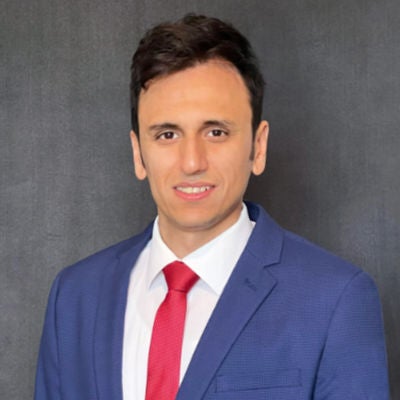
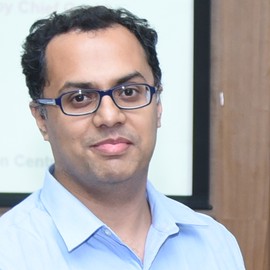
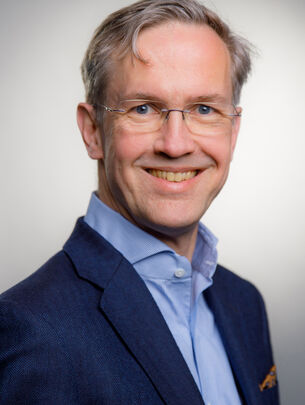
Metin Orhan Kaya is a Professor at the Department of Aeronautical Engineering, Istanbul Technical University. His research focuses on aeroelastic analysis, vibration dynamics, and composite materials, with notable contributions to morphing wing technology and fluid-structure interaction. He has led multiple projects, including the dynamic analysis of aircraft wings modeled as composite beams and AI-driven aeroelastic response prediction using shape memory alloys. Research interests include flutter prediction, structural stability, and experimental wind tunnel testing. Recent work explores neural networks for wing model analysis and adaptive flap design. Over 36 theses supervised highlight his academic mentorship. Projects span from 2012 to present, emphasizing thin-walled composite structures and nonlinear aeroelastic phenomena.
Malte von Scheven is a Senior Researcher and Deputy Director at the Institute of Structural Analysis and Dynamics at the University of Stuttgart. He holds a Dr.-Ing. degree (2009) and specializes in adaptive structures, fluid-structure interaction, and computational mechanics. Research Focus: Redundancy matrices for structural assessment, high-performance computing, actuator placement optimization Teaching: Finite element methods, computational mechanics, nonlinear structural analysis Leadership: Deputy Director since 2006, conference organizer for ECCOMAS and SMART symposia His work bridges structural mechanics with bio-inspired design, including studies on sea urchin skeletons as models for segmented shells. He has supervised numerous theses on SFRP composites, topology optimization, and adaptive systems. Scientific Engagement: Published 15+ papers on redundancy matrices and FSI Organized mini-symposia at international conferences (ECCOMAS 2024, SMART 2023) Active in university governance through Faculty Council and TIK committee Recent research investigates mechanical modeling of adaptive structures, with applications in civil engineering and architectural geometry. His redundancy matrix framework provides novel performance indicators for robust design and assemblability assessment.
Ahmadreza Ghazanfari is a predoctoral research associate at the Institute of Green Civil Engineering , part of the Department of Landscape, Water and Infrastructure at the University of Natural Resources and Life Sciences, Vienna (BOKU). His work focuses on sustainable construction materials and natural hazard mitigation. Location: Peter-Jordan-Straße 82, 1190 Wien Email: ahmadreza.ghazanfari@boku.ac.at Phone: +43 1 47654-87632 Education 2020-2022: MSc in Civil Engineering for Risk Mitigation , Politecnico di Milano 2015-2019: BSc in Civil Engineering , University of Eyvanekey Research Focus His research investigates strand-based engineered wood materials for structural applications, with emphasis on mechanical properties, test method optimization, and numerical modeling. Key themes include: Development of unidirectional strand board (USB) systems Mechanical performance under shear and bending stresses Integration of sustainability principles into civil engineering Climate-resilient construction methodologies Publication Trends The seven recent publications reveal a focused trajectory on timber engineering innovation , particularly strand-based composites. His work bridges computational modeling with empirical testing, addressing standardization gaps in mechanical property characterization and proposing practical solutions for structural applications. Conference Participation 2025: Presenter at World Conference on Timber Engineering (Brisbane) 2025: Speaker at CompWood 2025 (Vienna) 2024: Presenter at ASCE Engineering Mechanics Institute Conference
Anthony Lau is a Professor of Biomedical Engineering at The College of New Jersey (TCNJ) in the School of Engineering, having served since 2015 with progressive promotions from Assistant to Full Professor. He holds leadership roles including Co-Director of Faculty-Student Collaboration (Fall 2024-Ongoing), Research Track Coordinator, and Committee Chair for the BME PRC, while representing TCNJ in the New Jersey Space Grant Consortium since Spring 2016. Dr. Lau earned dual B.Sc. degrees in Biomedical Engineering and Electrical Engineering from Duke University (2005), followed by a Ph.D. in Biomedical Engineering from the University of Virginia (2011). His research centers on bone biomechanics and radiation effects, with three dominant streams: Radiation-induced skeletal changes (space radiation, proton exposure, and bone-cognitive deficit relationships) Disease impacts on bone (hemophilia, chronic kidney disease, estrogen deficiency, and osteoarthritis) Computational modeling of tissue mechanics (finite element analysis of cartilage, ribs, and bone strength) Analysis of his 2011-2024 publications reveals consistent focus on skeletal mechanics, evolving from cartilage/rib studies (2011-2012) to current space radiation projects with NASA. Recent work emphasizes maternal/fetal bone effects (2023) and proton radiation mechanisms (2024), utilizing in vivo models and computational techniques. Dr. Lau received the Harold M. Frost Young Investigator Award from the American Society for Bone and Mineral Research (2014). He actively mentors undergraduate researchers through the Lau Lab, including Calvin Okulicz, Rosalie Connell, Patricia Thomas (2021), and Jack Felipe, Michelle Meyers, Sabrina Vander Weile (2023). His grant portfolio features eight NASA awards since 2020, totaling over $250,000, with two major ongoing projects as PI: 'Effects of Acute and Protracted Proton Radiation on Bone Strength' (2023-2024) and 'Insights into neutron radiation exposure on maternal/fetal skeletal physiology' (2023-2024). Dr. Lau leads the TCNJ Lau Lab conducting NASA-funded bone radiation research at Brookhaven National Labs. He coordinates the BME Research Track and Faculty-Student Collaboration initiative, with lab meetings documented for summer 2024 projects on space radiation effects.
Azeem Ahmad is a Researcher at the Department of Physics and Technology , UiT The Arctic University of Norway. His work focuses on advanced imaging techniques in ultrasound, microwaves, and optics , particularly in the areas of quantitative phase microscopy , acoustic microscopy , and photonic chip engineering . Key research areas: Quantitative phase imaging, acoustic wave modeling, biomedical diagnostics, interferometry, machine learning integration, and photonic device optimization Collaborative projects: Developments in label-free histology, super-resolution microscopy, and noise reduction algorithms Recent publications: 2025 studies on subsurface damage detection in ceramics and acoustic transducer modeling His work bridges optical engineering , biomedical applications , and computational imaging , with affiliations to the Ultrasound, Microwaves and Optics and Optical Nanoscopy research groups.
Dr. Julia Schleuss is a Researcher at the Institute for Analysis and Numerical Analysis within the Department of Mathematics and Computer Science at the University of Münster . She is affiliated with the Mathematics Münster Graduate School and contributes to research in numerical analysis, machine learning, and scientific computing. PhD in Mathematics (2019–2023), University of Münster MSc in Mathematics with minor Economics (2016–2019), University of Münster BSc in Mathematics with minor Business Administration (2013–2016), University of Münster Her research focuses on model order reduction , multiscale methods , and domain decomposition techniques for partial differential equations (PDEs). Recent work includes time-parallel approximation spaces and residual localization strategies, bridging numerical methods with machine learning for high-dimensional problems. Selected publications address optimal local approximation spaces for parabolic PDEs (2022), randomized quasi-optimal time-domain decomposition (2023), and localized training/enrichment strategies (2024). These works emphasize computational efficiency and adaptability for complex systems. She contributes to teaching as a collaborator in courses such as Numerical Methods for PDEs , Nonlinear Modeling in Natural Sciences , and Applied Functional Analysis , working with professors like Mario Ohlberger and Christian Engwer.
Dr. Paras Kumar is a Research Fellow at the Chair of Engineering Mechanics (LTM) within the Department of Mechanical Engineering at Friedrich-Alexander-Universität Erlangen-Nürnberg (FAU). His research focuses on computational mechanics with particular expertise in fracture mechanics of soft materials and polymer composites. He maintains an active research program with significant funding from European and German research agencies. Dr. Kumar's research interests span computational mechanics, fracture mechanics, soft materials, polymer composites, configurational mechanics, and phase-field modeling. His work bridges theoretical developments with computational implementations and experimental validation. He has developed innovative approaches for modeling fracture in materials undergoing large deformations, with applications in soft robotics, stretchable electronics, and tissue engineering. His current research portfolio includes two major projects: 'Configurational Mechanics of Soft Materials: Revolutionising Geometrically Nonlinear Fracture' (2023-2027), funded by the European Union with a 5-year grant, and 'Fracture in Polymer Composites: Meso to Macro' (2019-2027), part of the DFG-funded FRASCAL collaborative research center. These projects address fundamental challenges in modeling fracture mechanics for soft materials and polymer composites, combining theoretical, computational, and experimental approaches. Dr. Kumar's publication record demonstrates a strong trajectory of scholarly contributions in computational mechanics, with recent publications focusing on phase-field fracture modeling, computational homogenization, and numerical methods for materials with complex microstructures. His work shows increasing sophistication in handling geometrically nonlinear problems and multiscale material behavior.
Dr. Xiaonan Hou is a Senior Lecturer in Mechanical Engineering at the University of Lancaster. His research focuses on failure mechanics of advanced materials, composite metamaterials, and multi-material jointing technologies. He employs computational methods like FEM/DEM and machine learning for material analysis under dynamic/static loads. Education: PhD in Mechanics of Advanced Materials (Loughborough University, 2010) Industry Collaborations: Jaguar Land Rover, TATA Steel, Henkel, Stratasys Recent publications highlight applications of deep learning for crack prediction in composites (2025), hybrid adhesive joint optimization (2023), and micromechanical modelling using DEM (2022). His work intersects material science, manufacturing technologies, and computational mechanics. Supervision: 3 postgraduate research students including Kai Pang and Siyu Zhao Expertise: Adhesive bonding, metamaterial design, experimental mechanics
Vahid Jahangiri is an Assistant Professor at the Department of Mechanical, Industrial and Systems Engineering at the University of Rhode Island. His research focuses on offshore wind energy systems, fluid-structure interactions, structural health monitoring, vibration control, and structural dynamics. Education: Ph.D. in Civil Engineering (Louisiana State University, 2021), M.Sc. in Mechanical Engineering (University of Tabriz, 2017), B.Sc. in Mechanical Engineering (University of Tabriz, 2014). His research explores advanced vibration control strategies for offshore wind turbines, hybrid simulation frameworks for structural analysis, and damage identification techniques using finite element model updating. Publications emphasize nonlinear dynamics, energy harvesting, and environmental load mitigation in marine structures. Recent work trends include bi-directional vibration control, real-time hybrid simulations, ice-induced vibration characterization, and integrated energy harvesting solutions for monopile and floating offshore wind turbines.
Luis David Avendaño-Valencia is an Associate Professor in the Department of Mechanical Engineering at the University of Southern Denmark's College of Engineering. His research focuses on structural dynamics, monitoring, and damage detection under time-dependent environmental and operational conditions, integrating signal processing, statistics, and machine learning. Education: PhD in Mechanical and Aeronautical Engineering (2016), BEng in Electronic Engineering (2007) External Roles: External Censor at Censorkorps (2023–present), Member of the Danish Center for Applied Mathematics and Mechanics (DCAMM) (2018–present) His work emphasizes system identification and damage diagnosis algorithms for wind turbines, marine systems, and other structures. Key methodologies include Gaussian Process Regression, Bayesian updating, and Linear Parameter Varying (LPV) models. He has contributed to offshore wind turbine blade diagnostics, marine diesel engine monitoring, and uncertainty quantification in vibration analysis. Recent publications highlight hybrid physics-data-driven approaches and multivariate regression techniques to mitigate environmental/operational variability. Collaborations span maritime engineering, wind energy, and machine learning-based diagnostics. He teaches courses on machine learning for structural monitoring, structural vibrations, and time-series methods. Supervision includes PhD projects on digital twins of axial piston pumps and operational regime clustering for wind turbines.
Parag Chaudhuri is a Professor in the Department of Computer Science and Engineering at the Indian Institute of Technology Bombay. His research centers on computer graphics, animation, and virtual reality, developing computational models to replicate real-world phenomena for enriched virtual experiences. His educational background includes: Ph.D. from IIT Delhi under Prem Kalra and Subhashis Banerjee Postdoctoral research at MIRALab, University of Geneva with Nadia Magnenat Thalmann Bachelor's degree in Civil Engineering from Delhi College of Engineering Professor Chaudhuri's research spans Computer Graphics with core focus areas in character/natural phenomena animation, visual data understanding, and 2D/3D content generation. His work integrates computer vision, physics simulation, and machine learning to address challenges in virtual worlds. Specific interests include rendering, modeling, VR/AR systems, and vision-based graphics. Applications extend to medical simulation, entertainment, industrial processes, and digital heritage preservation through physics-driven approaches. Recent publications (2022-2025) reveal strong trends in document analysis for multilingual text recognition (especially Indic scripts), real-time hand/character animation in AR environments, and physics-based fracture/deformation systems. His work bridges graphics with machine learning for practical solutions in visual data processing. At IIT Bombay, he mentors graduate students requiring foundational courses CS675 and CS775. He accepts Ph.D./M.S. candidates through official CSE department procedures but does not offer internships to non-IITB students. He leads a research group advancing computational techniques for virtual world creation, focusing on interactive animation systems and visual data synthesis.
Markus Gehnen is a Professor of Electrical Systems and High-Voltage Engineering at TH Georg Agricola , with a focus on electrical engineering, information technology, and industrial engineering. He serves as Deputy Head of the Electrical Measurement Technology and Electrical Machines Laboratories, including Power Electronics. His research spans transformer monitoring, building automation in residential construction, and lighting technology. Education: RWTH Aachen (PhD in Electrical Engineering, 1993) Professional Timeline: AEG Lichttechnik (1993-1997), TH Georg Agricola (since 1998), Vice Rector (2005/06) His teaching includes electrical systems, high-voltage technology, and building systems technology. Publications emphasize lighting control systems, energy-efficient lighting, resonance phenomena in transformers, and integrated building management. He contributes to symposia on innovative lighting and transformer diagnostics. Key collaborations include Gharepetian (resonance analysis) and Möller (remote control systems). Research keywords: electrical engineering, building automation, high-voltage engineering, lighting technology. Affiliated with laboratories in electrical measurement and power electronics.
Professor Thomas Bergs serves as the Institute Director at the Department of Manufacturing Technology at RWTH Aachen University, Germany. He leads the Production Engineering Profile Area (ProdE) and serves as Speaker of the Steering Committee at the Production Cluster. His office is located at Campus-Boulevard 30, 52074 Aachen, Germany. Professor Bergs' research focuses on advanced manufacturing technologies with particular emphasis on: Tool wear analysis and prediction using computer vision and machine learning Ultra-precision grinding and metal cutting processes Digitalization of manufacturing through physics-informed operator learning Sustainable manufacturing practices and life cycle assessment Process chain optimization for aerospace components His recent publication trends show a strong focus on integrating artificial intelligence and data analytics into traditional manufacturing processes. He has published extensively on tool wear prediction, process optimization, and sustainable manufacturing approaches. His work bridges the gap between theoretical models and practical industrial applications, with particular emphasis on precision manufacturing for high-value components in aerospace and energy sectors. The research demonstrates methodological innovation in multi-sensor data fusion, reinforcement learning for process optimization, and digital twin applications. Professor Bergs has made significant contributions to the field through research on: Computer vision applications for tool condition monitoring Multi-sensor data fusion for quality prediction Physics-informed machine learning for material characterization Life cycle assessment of sustainable packaging solutions Digitalization of metallic materials through multiscale modeling
Dr. Thiemo Leonhardt serves as a Professor leading the Department of Learning Technologies within the Faculty of Computer Science at Dresden University of Technology. His academic career spans over 15 years with continuous research contributions to computer science education, focusing on innovative pedagogical approaches for diverse learner populations. Leonhardt's research program centers on computer science education with particular emphasis on serious games , virtual reality applications , and gender-inclusive teaching strategies . His work bridges theoretical frameworks with practical classroom implementations, developing tools like the MTLG framework for educational game creation and investigating collaborative learning through multitouch tabletops. He has pioneered approaches for teaching complex concepts like regular expressions and finite automata through gamified environments. Analysis of his publication trajectory reveals consistent focus on k-12 computer science education , with significant contributions to understanding gender dynamics in STEM, developing immersive learning technologies, and creating adaptable teaching frameworks. His research spans all educational levels from elementary (e.g., 'Zauberschule Informatik' for primary students) through secondary education. Leonhardt maintains active leadership in the German educational technology community through the DELFI conference series, where he has served as proceedings editor. His work with the InfoSphere student laboratory at RWTH Aachen University demonstrates long-standing commitment to practical outreach and talent development, particularly in initiatives targeting girls in STEM like the go4IT! project.
Prof. Dr. Jan Bender holds a professorship in Computer Animation at RWTH Aachen University's College of Engineering. As a leading researcher in physics-based simulation methods, his work focuses on developing advanced numerical techniques for fluid dynamics, deformable solids, and multi-physics interactions through Smoothed Particle Hydrodynamics (SPH) and Finite Element Methods (FEM). Key Contributions: Invented PF-FLIP for two-phase flows, developed SymX symbolic framework for energy-based simulations, created STARK unified solver for robotics applications, and introduced implicit boundary handling for SPH Methodologies: Specializes in hybrid Eulerian/Lagrangian approaches, differentiable physics, adaptive discretization, and machine learning integration for simulation acceleration Research Impact: 2023 & 2024 Best Paper Awards in VMV and SCA conferences. His work enables billion-particle fluid simulations and realistic multi-body interactions for robotics, with applications in welding, thermal spraying, and soft robotics. Collaborations: Works extensively with robotics institutes (Gazebo Fluids extension) and materials science departments (TIG welding, thermal spray modeling). Maintains open-source code repositories for simulation frameworks.