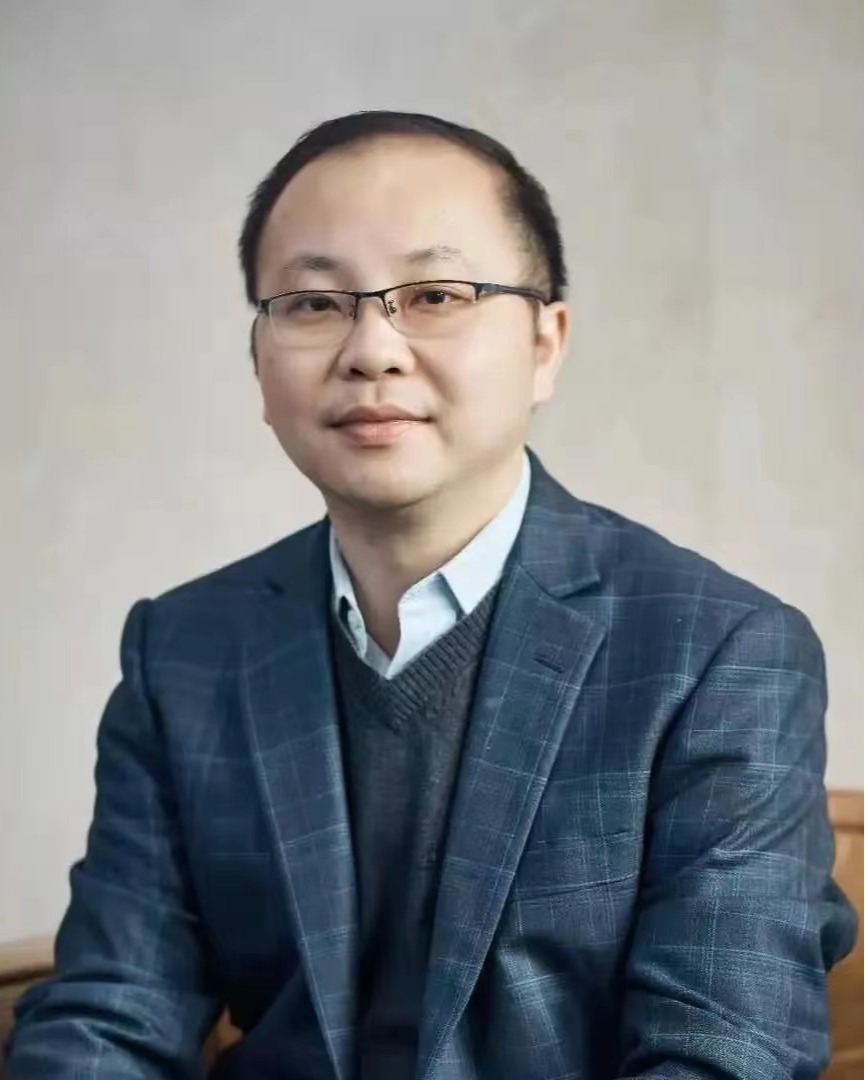
Yixuan Guo is a Lecturer at the Department of Mechanical and Energy Engineering, Southern University of Science and Technology (SUSTech). With expertise in robotics and precision manufacturing, her research focuses include powered prosthetics , surgical robotics , and collaborative robotic arms . Prior to her current role, she held postdoctoral and lecturer positions at SUSTech and Wuhan University of Science and Technology. Ph.D. in Mechanical Engineering, Huazhong University of Science and Technology (2021) B.S. in Mechanical Engineering, Zhengzhou University (2016) Her research integrates advanced calibration techniques with robotics to enhance industrial applications, yielding over 10 SCI publications and 10 patents. Key projects include work on kinematic parameter calibration for industrial robots and error measurement systems in five-axis machine tools. Recent publications highlight her contributions to R-test based calibration , laser sensor integration , and multi-identification space methodologies in robotics. She has secured funding from the National Natural Science Foundation, Guangdong Basic Research Foundation, and Shenzhen Science and Technology Program. Outstanding Postdoctoral Fellow, SUSTech President (2023) Hubei Province Science and Technology Progress Third Prize (2024) Good Design Silver Award, Chinese Society of Mechanical Engineers (2024) Guo's work bridges robotics, mechanical engineering, and biomedical applications, with significant impacts on both academic research and industry practices.
Chunying Li serves as an Assistant Professor in the Department of Electronic and Electrical Engineering at the College of Engineering, Southern University of Science and Technology (SUSTech). Recognized as a 2024 Shenzhen Pengcheng Peacock Program Distinguished Talent and Ocean Power Young Scientist nominee, her research pioneers spherical underwater robotics and multi-agent systems for complex marine environments. Her educational foundation includes: Ph.D. in Intelligent Mechanical Systems Engineering from Kagawa University, Japan (2021-2023) M.S. in Control Engineering from Tianjin University of Technology, China (2017-2020) Dr. Li's research integrates biomimetic principles with advanced engineering to solve underwater navigation challenges. Her work on multi-sensor fusion enables robust environmental perception, while adaptive control algorithms allow spherical robots to operate in turbulent conditions. Key applications include ocean monitoring, resource exploration, and collaborative multi-robot missions where traditional systems fail. Recent publications (2020-2024) reveal a strong focus on performance optimization and biomimetic sensing , with 7 of 11 representative papers appearing in Q1 journals like Information Fusion (IF=17.564). A notable trend is the development of artificial lateral line systems inspired by fish, significantly improving obstacle recognition in murky waters. Her accolades include: 2024 Young Scientists Nomination for Ocean Power 2024 Shenzhen Pengcheng Peacock Program Distinguished Talent 2023 Chinese Society of Automation Natural Science Award (Second Prize) 2022 CSC National High-Level University Scholarship Dr. Li leads the Shenzhen Outstanding Science and Technology Innovation Talent Program while contributing to international projects: Shenzhen Grants: Pengcheng Peacock Program (Principal Investigator) International Collaboration: Japan SPS KAKENHI Program (Key Researcher) Regional Projects: Tianjin Science and Technology Innovation Cooperation Program Her laboratory develops spherical underwater robot platforms featuring hybrid thrusters and multi-sensor arrays, emphasizing father-son robot coordination and jellyfish-inspired swarm behaviors. Through IEEE ICMA conference leadership roles (Finance Chair 2025, Publication Co-Chair 2024), she actively shapes robotics research standards in Asia-Pacific.
Professor Feng Lian is a Vice Dean at the School of Environmental Science and Engineering, Southern University of Science and Technology (SUSTech), with over 20 national and provincial projects and nearly 100 SCI publications in top journals like Nature and Remote Sensing of Environment . Selected as a National Ten Thousand Talents Program Young Top-Notch Talent and Guangdong Province Pearl River Young Scholar, his work focuses on water environment remote sensing, climate-human impacts on aquatic systems, and satellite sensor design. Education: PhD in Cartography and Geographic Information Systems from Wuhan University (2013), Joint Doctoral Program at University of South Florida (2010-2012), BSc in Geographic Information Systems from Yangtze University (2008) Research Interests include: Remote Sensing Algorithms for Water Environments Climate Change and Human Activity Impact on Lakes Satellite Sensor Radiometric Calibration His recent publications span algal bloom monitoring, atmospheric correction methods, and global lake dynamics using Landsat and MODIS data. Key scientific awards include the 2023 Li Xiaowen Remote Sensing Science Award and 2022 Young Scientist Award of the Chinese Geographical Society. As Vice Dean and editorial board member for journals like National Remote Sensing Bulletin , he leads projects on land-sea interaction and cyanobacteria bloom monitoring. His work has been featured by CCTV , Reuters , and ScienceDaily .
Fuchun SUN is a Full-time Professor at Tsinghua University's Department of Computer Science and Technology, where he has been affiliated since 1998. He holds a Bachelor's (1986) and Master's (1989) in Automation from the Institute of Naval Aeronautical Engineering, and a Ph.D. in Computer Science & Technology from Tsinghua University (1997). Prof. SUN serves as Deputy Director of the State Key Laboratory of Intelligent Technology and Systems and holds editorial positions in IEEE Transactions on Neural Networks and Soft Computing. Research Focus: His work spans Intelligent Control, Robotics, Networked Control Systems, and Artificial Cognitive Systems. He pioneers neuro-fuzzy modeling, adaptive control of nonlinear systems, and Markov jump system filtering, with applications in spacecraft, mobile robots, and flexible manipulators. Research projects include National 863 High-Tech Programs and National Basic Research (973) Programs on hyperspace vehicle control and multi-satellite networking. Publications Trend: His 15 most recent articles (2002–2010) demonstrate consistent focus on neuro-fuzzy adaptive control, robotics, Markov jump systems, and H-infinity filtering. Over 80% involve experimental validation of theoretical frameworks for robotic manipulators and nonlinear systems. Awards: National Natural Science Funds for Distinguished Young Scholars (2006) New Century Talents Award, Ministry of Education (2004) National Science and Technology Progress Award, Second Class (2002) 18th Choon-Gang Academic Award, Korea (2003) Science and Technology Progress Award, Beijing (Second Class, 2004) National Distinguished Doctoral Dissertation (2000) Academic Leadership: Supervised 15 Ph.D. and 20 Master's students. Secured 10+ national grants including NSFC Distinguished Young Scholars funding. Developed experimental platforms: two flexible-link robot test-beds and a space teleoperation system for on-orbit servicing.
Wei Chen is a Professor at the State Key Laboratory of CAD&CG, College of Computer Science, Zhejiang University, Hangzhou, China. His academic journey began and ended at Zhejiang University, where he earned both his Bachelor's (1996) and Ph.D. (2002) in Computer Science, followed by a visiting Ph.D. position at the Fraunhofer Institute in Germany (2000-2002) and a visiting scholar role at Purdue University (2006-2008). Research Focus: Visualization, Visual Analytics, Biomedical Image Computing, Big Data Analytics. Academic Leadership: Served on editorial boards of journals like IEEE Transactions on Visualization and Computer Graphics, Journal of Visual Informatics, and as Chair of IEEE Pacific Visualization Symposium. Impact: Over 110 IEEE/ACM Transactions and CCF-A papers, four Chinese textbooks on visualization, and two monographs on big data technology. His recent publications (2023-2024) span domains like visual analytics for health insurance fraud detection, quantum circuit visualization, federated learning visualization, urban mobility modeling, and AI-enhanced cultural heritage preservation. A thematic trend shows integration of deep learning, large language models, and human-in-the-loop systems with visual interfaces. Scientific Awards include the Zhejiang Province Natural Science First Prize (2021, 2017), CCF Technology Invention First Prize (2020), Wu Wenjun Artificial Intelligence Science and Technology Progress First Prize (2023), and multiple Best Paper/Poster recognitions at IEEE VIS and Pacific Visualization conferences. He actively mentors graduate students and leads the Visual Analytics Group , contributing to national and international standards in visualization research. His editorial and organizational roles in top conferences further solidify his influence in shaping the field.
Jia Zhenzhong is an Assistant Professor in the Department of Mechanical and Energy Engineering at Southern University of Science and Technology (SUSTech), where he has been employed since September 2019. His research focuses on robotics, control systems, and intelligent automation with applications spanning medical robotics, mobile robots for extreme environments, and advanced manufacturing. Dr. Jia received his academic training from prestigious institutions: Ph.D. in Naval Architecture and Ocean Engineering (Control Engineering) from University of Michigan (2014) Master's in Applied Mathematics from University of Michigan (2014) Master's in Mechanical Engineering from University of Michigan (2009) Master's in Mechanical and Electronic Engineering from Tsinghua University (2007) Bachelor's in Measurement and Control Technology and Instrumentation with a minor in Computer Science from Tsinghua University (2005) Dr. Jia's research spans three main interconnected domains that reflect his expertise in both theoretical foundations and practical applications of robotics and control systems. His work in robotic manipulation addresses fundamental challenges in dexterous manipulation, assembly tasks, and logistics automation. In mobile robotics , he has made significant contributions to terrain interaction modeling, particularly for extraterrestrial environments like Mars and the Moon, as well as for autonomous vehicles operating under challenging conditions. His research in intelligent control bridges traditional control theory with modern machine learning techniques, with particular focus on model predictive control, reinforcement learning, and their applications in energy systems and autonomous decision-making. His publication record demonstrates a consistent trajectory of impactful research that bridges theoretical innovation with practical engineering applications. The publications show increasing sophistication in modeling techniques, particularly in terrain-vehicle interactions and robotic manipulation. There's a clear evolution from fundamental modeling work to more complex system integration and application-specific implementations. His research consistently addresses real-world challenges in robotics, from medical applications to space exploration and industrial automation. Dr. Jia has received several notable honors throughout his career: 2007 Department Fellowship, Department of Mechanical Engineering, University of Michigan, USA 2005 Outstanding Graduate of Tsinghua University Dr. Jia has led and participated in numerous research projects funded by prestigious organizations including the Beijing Science and Technology Commission, the National Natural Science Foundation of China (NSFC), the 863 Program, the US Army/Navy, the National Science Foundation (NSF), and Foxconn Technology Group. His research portfolio demonstrates strong interdisciplinary connections between robotics, control theory, and practical engineering applications across multiple domains. He has published over 20 academic papers, obtained numerous invention patents, and translated four renowned textbooks, including "Modern Robotics." His laboratory work focuses on developing advanced robotic systems for manipulation and mobility challenges, with particular emphasis on applications requiring high precision in unstructured environments. Current research directions include improving robotic dexterity for assembly tasks, enhancing mobile robot navigation in challenging terrains, and developing more efficient control algorithms that integrate learning with traditional control frameworks.
Professor Guo Hongwei is a Chair Professor at the Department of Biology, Southern University of Science and Technology (SUSTech) , where he serves as Acting Dean and Director of the SUSTech-PKU Institute of Plant and Food Science. His career spans groundbreaking work in plant molecular biology and genetics , particularly in ethylene signaling mechanisms and their crosstalk with other hormones and environmental factors. Ph.D., University of California, Los Angeles (2001) M.S., Peking University (1995) B.S., Nankai University (1992) Guo’s research has established protein degradation and RNA decay models for ethylene action, revealing interactions with auxin, jasmonate, and gibberellin. His team’s work on gene silencing and plant senescence regulation has been published in Cell , Nature , and Science . Recent studies focus on multi-level gene silencing mechanisms and chemical genetics to identify postharvest compounds. His 15 most recent articles (2023–2025) highlight innovations in RNA decay pathways , hormone crosstalk , leaf senescence regulation , and stress adaptation , with tools like chemical screening and single-nucleus RNA-seq. 2025 Ministry of Education Natural Science First Prize 2023 Shenzhen Natural Science First Prize New Cornerstone Researcher Program (2023) Highly Cited Scholar (2020–2022) 2006 National Natural Science Fund for Distinguished Young Scholars Guo’s leadership includes founding the SUSTech-PKU Institute of Plant and Food Science and directing the Guangdong Provincial Key Laboratory of Molecular Design of Plant Cell Factories , driving interdisciplinary collaborations in plant biotechnology and agri-food innovation.
Derong Liu is a Chair Professor at Southern University of Science and Technology (SUSTech) in Shenzhen, China, holding dual appointments as Full Professor of Electrical and Computer Engineering and Computer Science at the University of Illinois at Chicago. He is a distinguished scholar with multiple prestigious recognitions including Member of Academia Europaea, Fellow of IEEE, Fellow of International Neural Network Society, and Fellow of International Association for Pattern Recognition. His academic journey spans multiple institutions across China and the United States, with significant contributions to control theory and artificial intelligence. Ph.D. in Electrical Engineering from University of Notre Dame (1994) M.Sc. in Automatic Control Theory from Chinese Academy of Sciences (1987) B.Sc. in Mechanical Engineering from East China Institute of Technology (1982) Liu's research focuses on Adaptive Dynamic Programming and Reinforcement Learning, Intelligent Control and Information Processing, Modeling and Control of Complex Industrial Processes, Neural Networks and Computational Intelligence, and Smart Grid technologies. His work bridges theoretical foundations with practical applications in industrial control systems, particularly in automotive engine control and energy management. He has pioneered significant methodologies in neural network design and adaptive control systems that have become foundational in the field. His publication record demonstrates a consistent trajectory of high-impact research, with recent articles focusing on event-triggered control systems, neural architecture search, fault tolerant control, and multi-agent game theory applications. The research spans both theoretical advances in control algorithms and practical implementations in complex industrial systems, showing a clear evolution from foundational neural network research to sophisticated adaptive control frameworks. Member, Academia Europaea (2021) IEEE Computational Intelligence Society Neural Network Pioneer Award (2022) Dennis Gabor Award from International Neural Network Society (2018) Highly Cited Researcher by Clarivate (2017-present) Editor-in-Chief of Artificial Intelligence Review (2014-present) Liu has mentored numerous students and researchers throughout his career, serving as Editor-in-Chief for major journals and leading significant research initiatives. His work has been supported by multiple grants from the National Science Foundation of the United States and the National Natural Science Foundation of China. His research group continues to push boundaries in adaptive control systems and neural network applications. Currently, Liu leads a research group at SUSTech focusing on intelligent control systems, with active projects in adaptive dynamic programming, reinforcement learning applications, and smart grid technologies. His laboratory serves as a hub for interdisciplinary research connecting theoretical control frameworks with practical industrial implementations.
GONG Tianyu (Assistant Professor) is affiliated with the Advanced Institute of Business , Tongji University , focusing on institutional transitions and government policy impacts on firm innovation. PhD, Strategic Management/Organizational Theory (2018) MA, Strategic Management/Organizational Theory (2014) MA, Technological and Economic Management (2012) BA, Business Administration (2009) Research examines firms' adaptation to institutional changes and how policy frameworks shape innovation strategies, particularly in transition economies. Recent work highlights structural holes in supply chains, digitalization's role in sustainability, and cross-cultural leadership dynamics. Current projects include: NSFC General Program: Data Governance and Digital Innovation NSFC Youth Project: Government Venture Capital and Innovation Policy Active as a conference reviewer (Academy of Management) and journal reviewer for Management and Organization Review .
Professor Hu Zuohao serves as Professor in the Department of Marketing at Tsinghua University's School of Economics and Management, where he teaches Marketing Management, Channel Management, and Brand Management. He concurrently holds the position of Executive Associate Director at the China Business Research Center and maintains active membership in the American Marketing Association (AMA) and Academy of International Business (AIB). Education: Bachelor in Mechanics, Huazhong University of Science and Technology (1985) M.A. in Management, Zhejiang University (1988) Ph.D. in Economics, Kyoto University, Japan (2000) His research centers on Marketing Strategies with specialized focus on International Marketing of Chinese Firms, Channel Design, and Brand Management. Recent investigations examine financial constraints' impact on consumer variety-seeking and nostalgia's role in brand preference, while earlier work established foundational frameworks for Chinese exporter typologies and buyer-supplier governance mechanisms. His interdisciplinary approach bridges marketing theory with financial services applications. Publication analysis reveals a strategic evolution from export strategy research (2006-2011) toward digital commerce and consumer psychology (2017-2021), with consistent emphasis on Chinese market contexts. Key journals include Journal of Business Research and Journal of International Marketing, reflecting his dual expertise in theoretical marketing and emerging market applications. Scientific Awards: Teaching Award at School of Economics and Management, Tsinghua University (2005) Professor Hu serves as Vice Chairman of the Chinese Marketing Research Association and has held Independent Director positions at two corporations, demonstrating industry-academia integration. His research is supported through the China Business Research Center, where he leads projects connecting academic theory with practical business challenges in Chinese multinational contexts. He directs the China Business Research Center's initiatives on Chinese enterprise globalization, focusing on case-based analysis of brand development and channel strategies for firms like Haier and TCL, while mentoring next-generation researchers through Tsinghua's doctoral programs.
Yu Chunling is an Associate Professor in the Department of Marketing at Tsinghua University's School of Economics and Management. She holds a PhD in Management from Tsinghua University, a Master's in Management from Tianjin University, and dual Bachelor's degrees in Industrial Management Engineering and Electronic Engineering/Radiotechnology from Tianjin University. Her research focuses on brand equity creation , strategic management , and value assessment , with applications in consumer behavior and international marketing. She teaches courses including Brand Management , Marketing Management , and New Marketing Practice Case Analysis for MBA, EMBA, and executive education programs. Prof. Yu has led significant research projects including National Natural Science Foundation studies on Chinese consumers' global brand perception and internet word-of-mouth dynamics. Her publication portfolio demonstrates strong focus on: Cross-cultural brand perception in emerging markets Digital/social media marketing impacts Consumer decision-making psychology Sustainable consumption drivers Awards and Honors: Multiple Outstanding Teaching Awards for EMBA/executive education Outstanding Course Innovation Award Outstanding Responsible Professor Award She has developed over 15 business cases for Tsinghua's China Business Administration Case Library and Harvard Case Library. Current research includes collaborations with industry leaders like China Merchants Bank on brand strategy development.