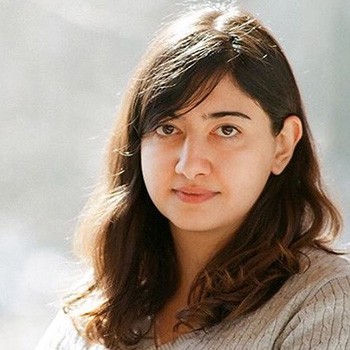
Tara Johnson, M.D., is an Assistant Professor in Pediatric Neurology at the University of Arkansas for Medical Sciences College of Medicine. She serves as Founding Director of the Arkansas Children’s Biomedical Innovations Program. Her research focuses on early identification of neurodevelopmental disabilities in infants, particularly cerebral palsy prediction using movement assessment tools. She specializes in translating diagnostic methods like the General Movement Assessment into clinical practice. Publications (2013-2025) concentrate on: Movement analysis and cerebral palsy prediction in high-risk infants Innovative diagnostic tools including AI-based movement quantification Neurodevelopmental outcomes in congenital heart disease patients Assistive technologies for motor impairments Clinical management of Tourette syndrome She leads implementation of novel clinical protocols for early diagnosis at Arkansas Children's Hospital. Mentors include Alan Tackett, Ph.D. and Kenneth Knecht, M.D.
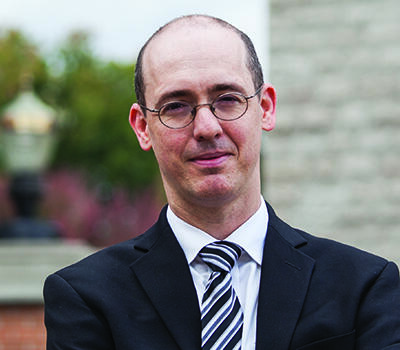
Roope Raisamo is a Professor in the Department of Computing Sciences at Tampere University, part of the Faculty of Information Technology and Communication Sciences. His research focuses on advanced human-computer interaction, virtual/augmented reality systems, haptic feedback technologies, and their applications in medical, automotive, and assistive technology domains. He leads multidisciplinary projects involving collaboration with industry partners like car manufacturers and healthcare institutions. Key areas of expertise include: (1) Design of immersive XR environments with multimodal feedback integration, (2) Haptic actuator development using smart materials like magnetorheological fluids, (3) Ergonomic interfaces for autonomous vehicles, and (4) Accessibility solutions for seniors and disabled populations. His work bridges theoretical HCI research with practical applications seen in surgical training systems, automotive UIs, and wearable communication aids. Raisamo's research outputs from 2023-2025 show strong focus on: - Sensory augmentation in food perception through XR (2025) - Medical VR applications for surgical planning and tumor visualization (2024-2025) - Haptic-mediating technologies for automotive and industrial interfaces (2023-2025) He has pioneered the use of embedded haptic waveguides in steering wheel interfaces and developed novel textile-based AAC systems for non-verbal communication. Current projects include exploring the medical metaverse for collaborative surgical planning and creating AI-enhanced research tools like TAUCHI-GPT.
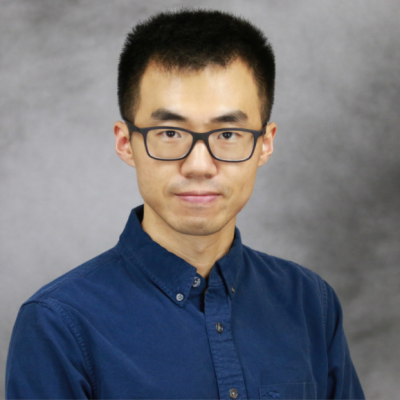
Fateme Rajabiyazdi is an Assistant Professor at Carleton University in the Department of Systems and Computer Engineering , with cross-appointments to the School of Information Technology and Bruyère Research Institute . She holds a Ph.D. in Computer Science from the University of Calgary (2018), focusing on information visualization . Education : Ph.D. (Computer Science, University of Calgary), M.Sc. (Computer Science, Australian National University) Research Interests revolve around real-world health data visualization , specifically patient engagement in medical care , health data tracking , patient-provider communication , and decision-making support . Her work integrates Human-Computer Interaction (HCI) and eHealth technologies , with applications in diabetes management , cardiac rehabilitation , and aging populations . Publications (2025–2020) span information visualization , patient-generated health data , and medical decision-making . Key venues include Journal of Medical Internet Research , Frontiers in Surgery , and ACM CHI . Recent projects include TextVista (NLP-enhanced visualization) and My Personal Brain Health Dashboard for HIV patients. Scientific Awards : Ward of 21st Century Health Services Research Scholarship (PhD) FRQS Postdoctoral Scholarship (2020, ranked 4th in Quebec) Best Student Paper Award at Graphic Interface 2024 Honorable Mention at ACM CHI 2025 Students include PhD candidates in Biomedical Engineering , Master’s students in Data Science and Human-Computer Interaction , and research assistants across disciplines. Her lab collaborates on health visualization tools and assistive technologies .
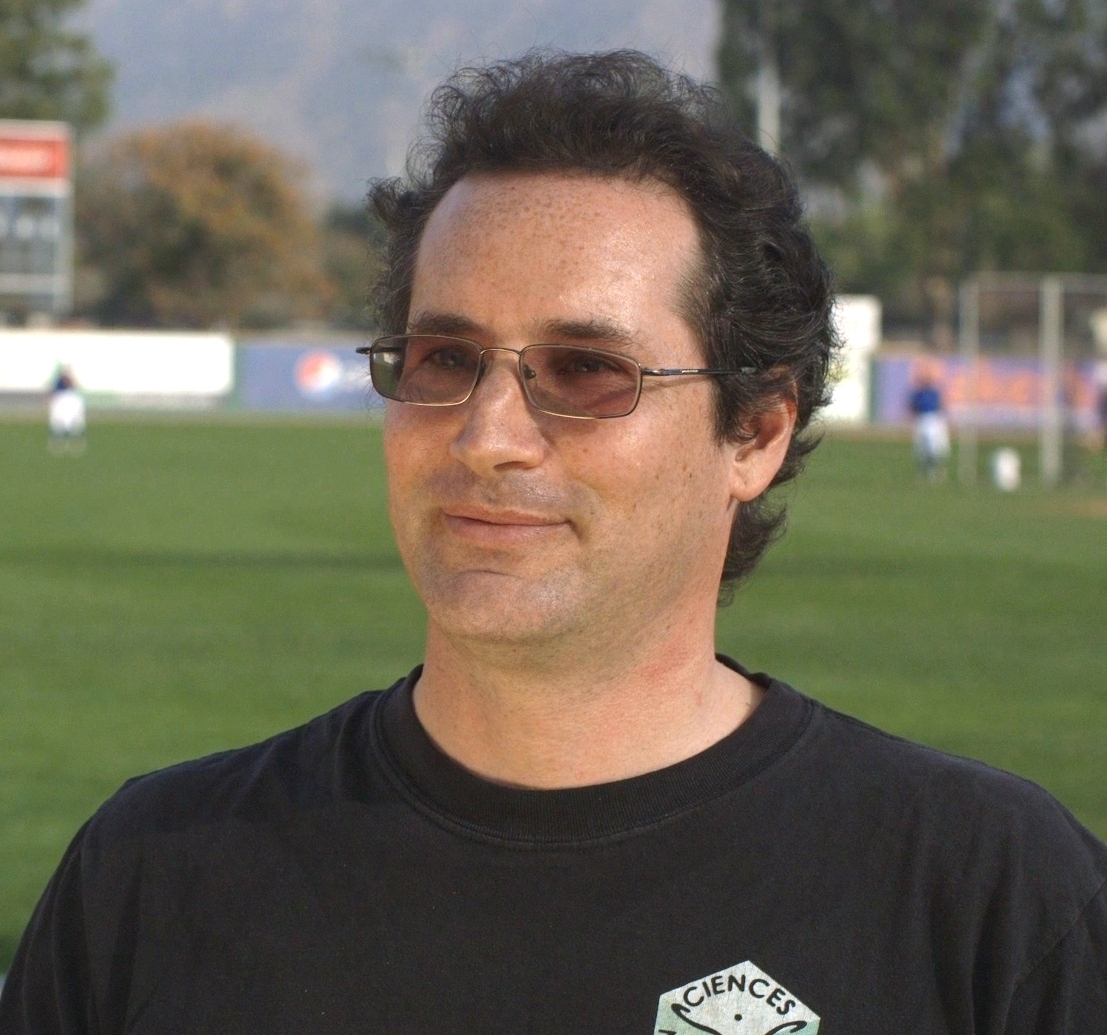
Jon M. Houck is an Associate Professor of Translational Neuroscience at the University of New Mexico and a Research Associate Professor at the Center on Alcoholism, Substance Abuse, and Addictions (CASAA) . His work integrates neuroimaging (MEG, fMRI) with behavioral therapy to study mechanisms of behavior change in substance use disorders and schizophrenia . Dr. Houck has developed MEG-based neuroimaging protocols to investigate motivational interviewing efficacy and neuromodulation for alcohol treatment. Research Interests : Translational neuroscience, neurobiological mechanisms of behavior change, neuroimaging (MEG/fMRI), psychotherapy process research, substance use disorders, schizophrenia, neuromodulation. Publications : 15+ peer-reviewed articles spanning 2015–2024, focusing on motivational interviewing , brain connectivity in schizophrenia, adolescent addiction , and neuroimaging methods . Contributions : Pioneering dynamic functional network connectivity analysis in schizophrenia, client language modeling for addiction treatment outcomes, and test-retest reliability assessments in clinical populations. Affiliation : University of New Mexico, CASAA, with collaborations across neuroimaging , addiction science , and clinical psychology disciplines.
Dr. Madhumita Sushil is an Assistant Professor in the Department of Medicine at the University of California, San Francisco School of Medicine. She holds a PhD in Computational Linguistics from the University of Antwerp (2021) and completed her postdoctoral training in Clinical NLP in Prof. Atul Butte's lab at UCSF in 2024. Her educational background includes a B.Tech in Computer Science and Engineering from VIT University (2013) and an M.Sc. in Language Science and Technology from Saarland University (2016). Dr. Sushil's research focuses on the intersection of natural language processing, artificial intelligence, and clinical medicine. Her work spans multiple healthcare domains including oncology, emergency medicine, pharmacology, and social determinants of health. She has published extensively on large language models in clinical settings, developing methods for clinical text analysis, patient risk assessment, and treatment outcome prediction. Her recent publications demonstrate her expertise in applying cutting-edge NLP techniques to real-world clinical challenges across various medical specialties. Her scholarly output shows a clear trajectory of increasing impact, with 11 publications in 2024 and 2 in 2025 already. These works appear in high-impact journals including JAMA Network Open, Nature Medicine, and JAMIA. Dr. Sushil frequently collaborates with key researchers at UCSF including Travis Zack, Christopher Williams, and Prof. Atul Butte, indicating strong institutional integration within UCSF's medical informatics ecosystem. Natural Language Processing in Clinical Settings Large Language Models for Medical Applications Clinical Decision Support Systems Analysis of Social Determinants of Health through Text Mining Oncology Informatics and Radiology Report Analysis Pharmacovigilance through Clinical Text Mining Dr. Sushil's work demonstrates a strong commitment to methodological rigor in applying AI to healthcare, with particular attention to reliable clinical implementation and validation of NLP systems across multiple institutions and clinical contexts.
Joseph Anthony Buonomo is an Assistant Professor at the University of Texas at Arlington in the Department of Chemistry and Biochemistry, College of Science. He previously held positions at Stanford University (postdoctoral fellow), University of Minnesota (PhD candidate), and University of Rochester (undergraduate). His research focuses on chemoselective chemical processes to study and manipulate biological systems. Current affiliations: University of Texas at Arlington Former affiliations: Stanford University, University of Minnesota, University of Rochester Research interests include: Site-selective bioconjugation for single-molecule tracking Amino-acid specific reactions for protein sequencing Synthetic host-guest chemistries for diagnostics Host-targeted prodrugs for tuberculosis treatment Recent publications show expertise in organic synthesis for biological applications, particularly in tuberculosis research and chemoselective methodologies. His awards span NIH fellowships, RSC recognition, and university research accolades. Teaching focuses on organic chemistry and chemistry-biology interface courses. Scientific awards include: Emerging Investigator in Materials Science (RSC, 2025) NIH Ruth L. Kirschstein Postdoctoral Fellowship (2019) NSF Graduate Research Fellowship (2014) Ole Gisvold Fellowship (2013) He supervises numerous undergraduate and graduate researchers in projects related to bioorganic chemistry and tuberculosis diagnostics. The lab emphasizes inclusivity and translational research.
Stephen Ramsey, an Associate Professor at Oregon State University, holds dual appointments in the School of Electrical Engineering and Computer Science (College of Engineering) and the Department of Biomedical Sciences (Carlson College of Veterinary Medicine). With a PhD in Physics from the University of Maryland, his postdoctoral training in computational genomics at the University of Washington, and professional experience at the Institute for Systems Biology and Center for Infectious Disease Research, Ramsey bridges computational methods with biomedical applications. Education : Ph.D., Physics, University of Maryland; M.S., Physics, University of Maryland; Sc.B., Mathematical Physics, Brown University Ramsey specializes in computational systems biology , focusing on bioinformatics , biomedical knowledge graphs , and precision medicine . His research integrates machine learning , gene regulatory network modeling , and multi-omics data analysis to address challenges in rare disease diagnostics , drug monitoring , and inflammatory disease mechanisms . Current work includes AI-driven biomedical translation and electrochemical biosensor development for non-invasive diagnostics . Recent publications highlight knowledge graph applications in translational biomedicine , causal network inference in clinical-environmental data integration , and cross-species cancer transcriptomics . His team develops tools like RTX-KG2 and PloverDB to standardize biomedical data sharing and semantic reasoning . Scientific Awards : 2019 Zoetis Award (Carlson College of Veterinary Medicine) 2016 NSF CAREER Award 2016 PhRMA New Investigator Award 2010 NIH K25 Mentored Quantitative Research Award Ramsey advises in computational biology courses (CS 446/546) and contributes to biomedical AI through projects like mediKanren for rare disease diagnostics . His NSF-funded research explores gene expression noise and regulatory network dynamics , while NIH and PhRMA grants support his translational medicine initiatives. He leads the Ramsey Laboratory , which develops graph-based reasoning tools for biomedical data translation and multi-omics integration . The lab's work spans comparative oncology models, electrochemical biosensors , and knowledge graph infrastructure for clinical decision support .
Sheng Li is an Adjunct Assistant Professor in the School of Computing at the University of Georgia (UGA). He holds roles such as Graduate Program Faculty and Courtesy Faculty in the Institute of Bioinformatics. Previously, he served as an Assistant Professor at UGA from August 2018 to July 2022. His research focuses on Machine Learning, Computer Vision, Data Mining, Natural Language Processing, Causal Inference, and User Modeling. Li earned his Ph.D. in Computer Engineering from Northeastern University in 2017, following degrees from Nanjing Institute of Post and Telecommunications in China. His work bridges theoretical advancements and practical applications, including AI solutions for healthcare (e.g., medication adherence monitoring), computer vision for wildlife tracking (fish re-identification), and causal inference methodologies. He has received notable awards like the Fred C. Davison Early Career Scholar Award (2022) and the Aharon Katzir Young Investigator Award (2020). His research is funded by grants from agencies such as the US Department of Defense and NIH, supporting projects like Knowledge-Guided Scene Graph Generation and Reasoning for Visual Understanding. Li’s publications span top venues in AI and computer science, addressing challenges in domain adaptation, trustworthy AI, and multimodal learning. He has collaborated on interdisciplinary projects, including bioinformatics and agricultural NLP. His contributions emphasize both technical innovation and societal impact.
Aaron Seitz is a Professor of Psychology at Northeastern University, affiliated with the Bouvé College of Health Sciences and College of Arts, Media and Design. His academic background includes a BA in theoretical mathematics, a PhD in computational neuroscience, and postdoctoral work in systems neuroscience and neuroimaging. His research focuses on understanding cognitive processes like learning, memory, and perception, with an emphasis on translational applications such as perceptual learning interventions and gamified cognitive training. He directs the Brain Game Center for Mental Fitness and Well-being, developing mobile tools to assess and enhance cognitive function in diverse populations. Seitz’s work spans neurotypical individuals, clinical populations (e.g., schizophrenia, Parkinson’s), and specialists like radiologists. Key projects include visual remediation for vision loss, auditory processing assessments, and gamified interventions for aging populations. His research integrates methods from psychophysics, neuroimaging, computational modeling, and clinical trials. Recent studies explore applications in esports prediction, bilingual auditory processing, and neuroplasticity mechanisms linked to locus coeruleus integrity. Publications highlight advancements in perceptual learning frameworks (e.g., PLFest platform), adaptive testing methods (e.g., adaptive scan approach), and remote assessment tools (e.g., Portable Automated Rapid Testing). Collaborations emphasize interdisciplinary approaches, combining neuroscience with engineering and public health to address real-world challenges like cognitive decline and accessibility.
Prof. Lena Maier-Hein is a full professor at Heidelberg University and managing director of the National Center for Tumor Diseases (NCT) Heidelberg. She leads the division of Intelligent Medical Systems (IMSY) at the German Cancer Research Center (DKFZ) and oversees the cross-topic program 'Data Science and Digital Oncology'. Her research focuses on machine learning in biomedical imaging, particularly surgical data science and computational biophotonics. She chairs the Surgical Data Science initiative and serves on editorial boards for journals like Nature Scientific Data and IEEE TPAMI. Her awards include the 2024 German Cancer Award, 2013 Heinz Maier-Leibnitz Prize, and European Research Council grants. She advocates for trustworthy AI in healthcare, co-developing frameworks like Metrics Reloaded and TRIPOD+ AI. Her work bridges academic, clinical, and industrial sectors through initiatives like the FeTS challenge. Key contributions include advancing photoacoustic imaging, surgical AI systems, and validation methodologies. She emphasizes ethical AI deployment and interdisciplinary collaboration to address clinical challenges.
Dr. Mingjun Zhong is a Lecturer in the School of Natural and Computing Sciences at the University of Aberdeen. His research focuses on machine learning and computational statistics with applications in healthcare, energy systems, and medical imaging. He is actively engaged in teaching and academic service, including editorial roles in prominent journals. Position: Lecturer Institution: University of Aberdeen School: School of Natural and Computing Sciences Email: mingjun.zhong@abdn.ac.uk Dr. Zhong's research interests center on probabilistic and statistical machine learning methodologies applied to real-world data. He works on healthcare data analysis, non-intrusive load monitoring (NILM), spectroscopy, EEG/fMRI, and energy disaggregation. His methodological expertise includes variational inference, Markov chain Monte Carlo, Bayesian matrix factorization, and deep learning. He has developed lightweight and efficient neural network models for applications in medical imaging and smart grids. The most recent publications reflect a strong trend in applying advanced machine learning techniques—particularly deep learning, self-supervised learning, and capsule networks—to diverse domains such as medical diagnostics, energy disaggregation, and clinical decision support. There is a clear emphasis on developing efficient, interpretable, and robust models for real-world deployment, often addressing challenges like class imbalance, domain adaptation, and data scarcity. Scientific recognition includes: Fellow of the Higher Education Academy (FHEA) Associate Editor, Neural Processing Letters Review Editor, Frontiers in Applied Mathematics and Statistics Regular reviewer for top-tier journals and conferences in AI and machine learning Grant reviewer for multiple funding bodies Dr. Zhong advises a number of students, as evidenced by co-authorships on numerous publications. His research is supported by academic collaborations and likely external grants, though specific funding details are not mentioned. He teaches courses in Robotics, Machine Learning, and Knowledge Representation and Reasoning, contributing significantly to the curriculum in computing sciences. He is involved in interdisciplinary research, particularly through projects like ARCHERY (Artificial intelligence to Revolutionise the patient Care pathway in Hip and knEe aRthroplastY), which integrates AI into orthopaedic care. His work bridges computer science, statistics, and domain-specific applications, demonstrating a strong commitment to impactful, application-driven research.
Bruno Messina Coimbra is a Researcher at Utrecht University's Faculty of Social and Behavioural Sciences, Department of Methodology and Statistics. He collaborates with Professor Rens van de Schoot on the development of ASReview and leads the FORAS project (Fully Open-source and Real-time AI-aided Systematic Literature Screening in Inclusive Databases). His work bridges methodology, statistics, and mental health research with a particular focus on trauma and PTSD. Dr. Coimbra holds a doctoral degree in Psychiatry and Medical Psychology. Previously, he served as research manager in the Program of Research and Care on Violence and PTSD at the Federal University of São Paulo (UNIFESP), where he investigated trauma effects on neuroprogression and adapted psychotherapeutic techniques for sexual assault survivors. His professional background includes extensive work with marginalized communities in disadvantaged regions of São Paulo. His research interests center on psychopathology, particularly Posttraumatic Stress Disorder (PTSD), with expertise in systematic reviews, meta-analysis, and telomere research as a biological mechanism for health disparities related to psychosocial stressors. He has made significant contributions to understanding moral injury among healthcare workers during the pandemic, the relationship between tonic immobility and PTSD development, and the impact of racial discrimination on mental health outcomes. His recent work integrates artificial intelligence with systematic review methodology to enhance research efficiency. Dr. Coimbra's publication record demonstrates a consistent focus on trauma-related mental health, with recent work expanding into AI-assisted literature screening methodologies. His research spans clinical investigations with sexual assault survivors, cross-cultural validation of assessment tools, genetic and epigenetic factors in PTSD, and the mental health impacts of the COVID-19 pandemic. The FORAS project represents his commitment to developing open-source tools that democratize access to advanced research methodology. Dr. Coimbra actively collaborates across international boundaries, working with institutions including RadboudUMC, UNIFESP, Umeå University, and NorthWest University in South Africa. His work with the Global Collaboration on Traumatic Stress and projects examining moral injury in healthcare workers demonstrates his commitment to addressing pressing mental health challenges on a global scale. He has contributed significantly to validating assessment tools like the Global Psychotrauma Screen in diverse populations. Based at the Sjoerd Groenman Building at Utrecht University, Dr. Coimbra leads research teams focused on AI-assisted systematic reviews and trauma research. His FORAS project team is developing innovative open-source tools to enhance literature screening processes, while his clinical research teams continue to investigate PTSD trajectories and treatment outcomes, particularly among vulnerable populations including sexual assault survivors and healthcare workers.
Desi R. Ivanova is a research fellow at the University of Oxford's Department of Statistics under the Florence Nightingale Bicentennial Fellowship. Her work bridges probabilistic machine learning, Bayesian experimental design, and LLM evaluation frameworks. She holds a DPhil in Statistics from Oxford's StatML CDT program (2020-2024) and an MMORSE in Mathematics from University of Warwick (2011-2016) with Erasmus exchange at LMU Munich. Research spans causal machine learning and uncertainty quantification Developed CO-BED and Step-DAD frameworks Focus on LLM evaluation methodology and calibration Expert in real-time adaptive experimental systems Her publications demonstrate expertise in Bayesian self-consistency methods, neural data compression, and privacy-preserving dataset merging. Key contributions include improving amortized inference efficiency and developing gradient-based causal experimental designs. Current work emphasizes rigorous statistical evaluation of language models, advocating for appropriate uncertainty quantification when analyzing performance across small datasets. She critiques CLT-based methods for LLM evaluation and proposes more robust frequentist and Bayesian alternatives.
Catherine Lord is Professor-in-Residence in the Department of Psychiatry and Biobehavioral Sciences at the UCLA School of Medicine, holding the prestigious Dr. George Tarjan Chair in Intellectual and Developmental Disabilities Research. She is a leading authority in autism spectrum disorder (ASD) research with extensive contributions to diagnostic criteria, assessment tools, and longitudinal studies of developmental trajectories. Dr. Lord's research focuses on autism spectrum disorder across the lifespan, with particular emphasis on assessment tools like the Autism Diagnostic Observation Schedule (ADOS) and Autism Diagnostic Interview-Revised (ADI-R). Her work examines social communication, diagnostic stability, intervention approaches, and adult outcomes in ASD. She has pioneered research on minimally verbal children with autism and the development of daily living skills from childhood through adulthood. Her extensive publication record demonstrates consistent contributions to understanding autism diagnosis, intervention efficacy, and developmental trajectories. Recent work explores contextual factors in autism research, neurodiversity perspectives, and the transition from single words to phrase speech in children with ASD. Her research often employs longitudinal methodologies to track developmental changes and outcomes. Among her notable honors is the Dr. George Tarjan Chair in Intellectual and Developmental Disabilities Research, reflecting her significant contributions to the field. She has contributed to major publications including The Lancet Commission on the future of care and clinical research in autism. Dr. Lord's work includes extensive collaboration with research teams across multiple institutions, focusing on intervention development, assessment tool refinement, and understanding developmental trajectories in autism. Her research has practical implications for clinical practice, diagnostic criteria, and intervention approaches for individuals with autism across the lifespan.
Tim French is an Associate Professor in the Department of Computer Science and Software Engineering at the University of Western Australia's School of Physics, Maths and Computing. He is affiliated with the UWA Oceans Institute and serves as Regional Contest Director for the South Pacific Programming Contest and Programme Chair for the Australasian Conference on Artificial Intelligence 2022. His research focuses on logic, artificial intelligence, knowledge representation, and reasoning about uncertainty in multi-agent systems, probabilistic reasoning in games, and industrial applications like automated planning and machine learning for complex processes. French holds a PhD in Computer Science (2007) and BSc in Computer and Mathematical Sciences (1999), both from UWA. His expertise spans algorithms, automated reasoning, formal methods in software, and temporal logic verification systems. He has led or contributed to 6 major research projects including the ARC Research Hub for Transforming Energy Infrastructure and the ARC Training Centre for Transforming Maintenance through Data Science. His research outputs include 118 publications covering topics like aleatoric logic for probabilistic reasoning, semantic knowledge extraction from industrial maintenance systems, and deep learning applications in wastewater treatment. He has developed novel methods for knowledge graph construction, state estimation in complex systems, and user interface design informed by work characteristics models. Key grants: 6 active/finished projects totaling $M+ funding Leadership roles: Programming contest director, conference chair Interdisciplinary focus: Combines formal logic with industrial automation challenges French's work contributes to UN Sustainable Development Goals through education and innovation in sustainable industrial processes and environmental systems modeling. His team has developed practical solutions for maintenance procedure digitization, wastewater plant optimization, and robust agent-based systems for uncertain environments.