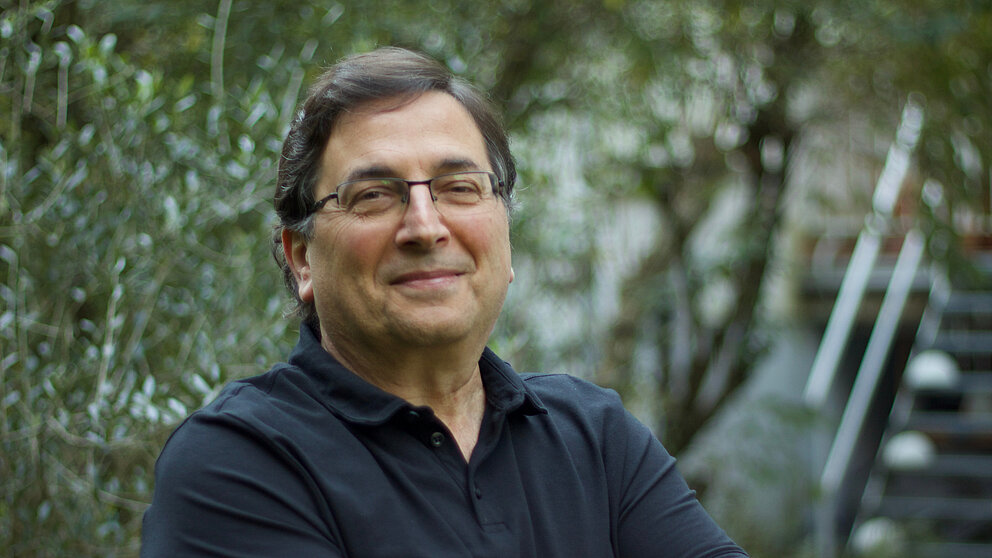
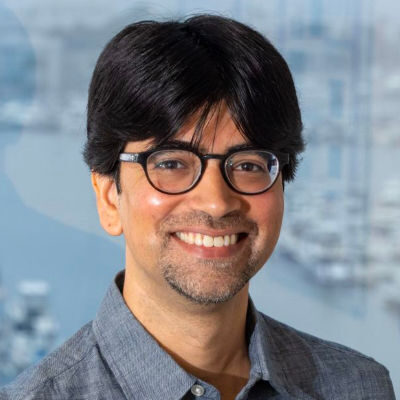
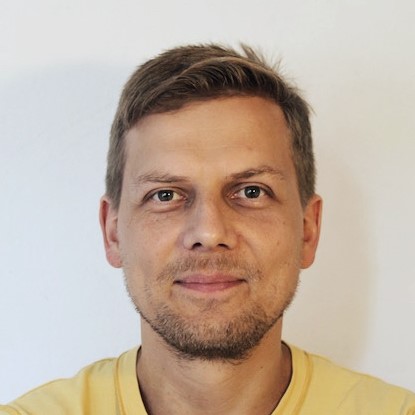
Ingo Bojak is a Professor at the School of Psychology and Clinical Language Sciences , University of Reading. His research focuses on computational neuroscience, neurodynamics, and neural population models. He explores topics such as biological mistake-making, EEG analysis, and the effects of anesthesia on brain activity. Bojak serves as an associate editor for Neurocomputing and related journals. His work bridges theoretical frameworks with experimental data, emphasizing cross-scale biological phenomena and neural network dynamics. Bojak’s research interests include understanding spontaneous neural oscillations, cortical activity modeling, and the integration of EEG/fMRI data. He has contributed to advancements in neural field theory and Bayesian uncertainty quantification. His studies on biological mistakes highlight adaptive mechanisms across biological systems. Related affiliations include collaborations with the School of Biological Sciences at the University of Reading. Recent publications emphasize theoretical biology, computational neuroscience, and interdisciplinary approaches to understanding neural systems. His work often addresses functional adaptation through error-driven mechanisms and explores the interplay between neural excitability and inhibition.
Dr. Stefanie Czischek is an Assistant Professor in the Department of Physics at the University of Ottawa, leading the APRIQuOt research group focused on artificial and physically realizable intelligence for quantum applications. She joined uOttawa in 2022 after postdoctoral work at the University of Waterloo. Her research bridges quantum technologies and neural networks, with expertise in quantum simulation, neuromorphic computing, and machine learning applications in quantum physics. Research Interests: Quantum computation/simulation using neural networks Neuromorphic hardware implementations Quantum many-body systems Machine learning for quantum control and tomography Her publications demonstrate strong interdisciplinary focus, combining quantum physics with cutting-edge ML techniques. Recent works explore transformer models for quantum simulation, neural network quantum states, and quantum sensing applications. The research shows consistent evolution toward hardware-algorithm co-design for quantum problems. Awards: Springer Thesis Award (2020) for doctoral research on neural-network simulation of quantum systems. Research Group & Advising: Leads the APRIQuOt lab with 1 postdoc, 6 graduate students, and 1 undergraduate. Current projects include large language models for quantum states, quantum optimal control via reinforcement learning, and neuromorphic quantum simulations. The group collaborates with experimental teams and maintains strong industry-academia partnerships.
Benjamin Grimmer is an Assistant Professor in the Department of Applied Mathematics and Statistics at Johns Hopkins University. He is affiliated with the Mathematical Institute for Data Science (MINDS) and the Data Science & AI Institute. His research focuses on designing and analyzing algorithms for continuous optimization, particularly in nonconvex, nonsmooth, and adversarial settings. Grimmer’s work bridges classical optimization theory and modern machine learning challenges, leveraging computer-assisted proof techniques to advance algorithmic foundations. He earned his PhD in Operations Research from Cornell University, advised by Jim Renegar and Damek Davis. His doctoral work was supported by a National Science Foundation fellowship. Grimmer has held research positions at Google and the Simons Institute, exploring adversarial optimization and continuous-discrete optimization interfaces. His current work is supported by the Air Force Office of Scientific Research and a 2024 Alfred P. Sloan Fellowship. Research interests include algorithm design for stochastic/nonconvex/nonsmooth optimization, computer-aided proof methods, and meta-optimization tools like stepsize schedules. His recent studies, including work on gradient descent acceleration via long steps, were highlighted in Quanta Magazine (2023). Education: PhD in Operations Research, Cornell University (advisor: Jim Renegar and Damek Davis) Awards: Alfred P. Sloan Fellowship in Mathematics (2024) National Science Foundation Graduate Fellowship (PhD support) Dr. Grimmer advises a research group including PhD candidates Ning Liu, Thabo Samakhoana, Alan Luner, Yue Wu, and others. His lab explores optimization algorithms through both theoretical and applied lenses, collaborating closely with industry and academic partners.
Hector Geffner is an Alexander von Humboldt Professor at RWTH Aachen University, leading the Chair of Machine Learning and Reasoning. He specializes in automated planning, machine learning, and reasoning, with a focus on representation learning for acting and planning. His work bridges symbolic and model-based AI, emphasizing general policies and subgoal decomposition. Education & Background : PhD from UCLA (1989), prior roles at IBM Watson Research Center and Universidad Simón Bolívar. Former ICREA researcher and professor at Universitat Pompeu Fabra (2001–2022). Research Interests : Classical and probabilistic planning, reinforcement learning, knowledge representation, and applications in robotics. His ERC-funded RLeap project explores learning generalized policies and symbolic representations for effective decision-making. Teaching : Courses include 'Actions and Planning in AI' and 'Social and Technological Change', emphasizing interdisciplinary AI applications. Awards & Recognition : Alexander von Humboldt Professorship (2023), AAAI/EurAI Fellowships, and editor of influential works on Judea Pearl’s contributions to AI. Grants & Projects : Advanced ERC grant (2020–2025), Humboldt Foundation support, and RWTH funding for research on planning and reasoning. Labs & Teams : Heads the Chair of Machine Learning and Reasoning at RWTH, focusing on interdisciplinary research in AI, robotics, and planning algorithms.
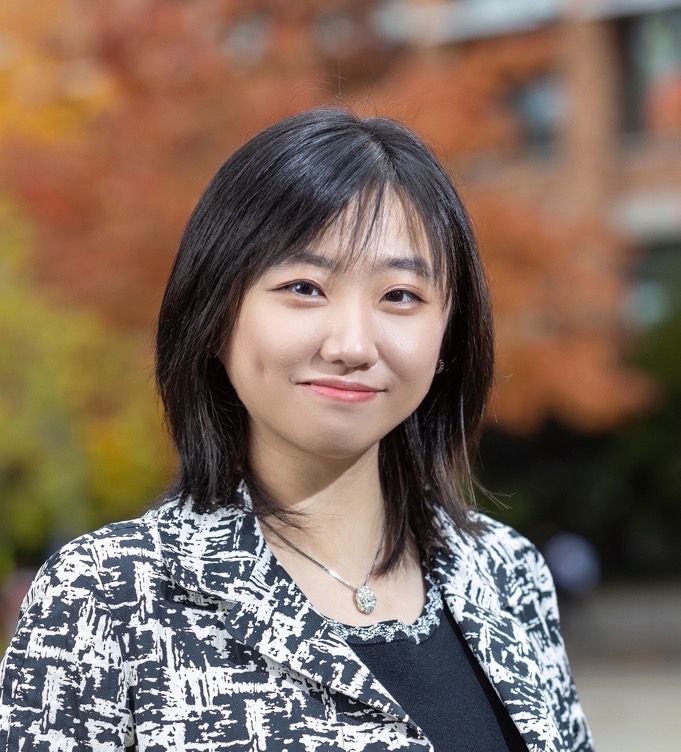
Sherry Tongshuang Wu is an Assistant Professor at Carnegie Mellon University's School of Computer Science, with primary appointments in the Human-Computer Interaction Institute (HCII) and secondary affiliation with the Language Technology Institute (LTI) . Trained at the University of Washington under Jeffrey Heer and Dan Weld, she bridges HCI and NLP to study human interactions with AI systems across diverse user groups. Her educational background includes a Ph.D. (2016-22) and M.S. (2016-18) in Computer Science and Engineering from the University of Washington, and a B.Eng. (2012-16) from Hong Kong University of Science and Technology. Industry experience includes research internships at Google Brain, Microsoft Research, and Apple. Wu's research focuses on three interconnected pillars: Real-world AI Evaluation (developing frameworks like SPHERE for systematic assessment), Task-specific AI Test & Distill (optimizing general-purpose models for specific use cases), and Human-AI Task Delegation (designing optimal collaboration between humans and AI). Her work emphasizes practical deployment, user-specific net gains, and error recovery mechanisms. Analysis of her 15 most recent publications reveals a strong trend toward evaluation frameworks (35%), human-AI collaboration systems (30%), and specialized model distillation (25%), with growing emphasis on educational applications (10%). Key methodological themes include checklist-based evaluation, perspective-aware retrieval, and structural analysis of AI outputs. Google Academic Research Award (2024) Amazon Research Awards (2024) AIED 2024 Best Paper Award ACL 2020 Best Paper Award Rising Stars in EECS Workshop (2020) Wu actively mentors 19 students across PhD, Master's, and undergraduate levels, with notable projects including synthetic data generation, LLM literacy tools, and retrieval system optimization. She leads significant grant-funded work through Amazon Research Awards and Google Academic Research Awards, focusing on deployable model generation and human-AI collaboration frameworks. Her lab develops practical tools like Promp2Model and SPHERE that bridge theoretical research with industry applications.
Nikolai Matni is an Assistant Professor in the Department of Electrical and Systems Engineering at the University of Pennsylvania. He holds a secondary appointment in the Department of Computer and Information Science and is a member of the Applied Mathematics and Computational Sciences (AMCS) graduate group. His research focuses on integrating learning, optimization, and control for safety-critical and data-driven cyber-physical systems, with applications in robotics, autonomy, and distributed control. Secondary Appointment: Computer and Information Science (University of Pennsylvania) Labs/Centers: GRASP Lab, PRECISE Center His research bridges machine learning, robust control, and autonomous systems, particularly in developing guaranteed-safe strategies for cyber-physical systems. He emphasizes the importance of reliability and robustness in learning-based control for applications like self-driving vehicles and agile robots, where failures could be catastrophic. Recent publications highlight advancements in vision-based robotic control, neural ODEs for motion planning, adversarial exploration strategies, and stability-constrained learning. These works span conferences such as ICRA, CoRL, WACV, IROS, and L4DC, with a focus on safety-critical applications. Notable scientific awards include the NSF CAREER Award, George S Axelby Award (for his work on System Level Synthesis), AFOSR YIP award, and Google Research Scholar Award. He was also elevated to IEEE Senior Member. Matni advises Ph.D. students in Computer and Information Science (CIS), Electrical and Systems Engineering (ESE), and Applied Mathematics and Computational Sciences (AMCS). His teaching includes courses like ESE 2030 (Linear Algebra with Engineering/AI applications) and others focused on control theory and robotics.
Brad Knox is a Research Associate Professor in the Department of Computer Science at the University of Texas at Austin . His work bridges machine learning, human-computer interaction, and computational cognitive science, with a focus on developing systems that learn from human feedback. Key research areas: Reinforcement Learning, Human-AI Interaction, Reward Design, Autonomous Systems Notable contributions: TAMER framework for human-guided learning, empirical studies on reward misdesign, and human preference modeling for autonomous agents Research Trends : His recent work (2023-2025) emphasizes reward alignment, safety in autonomous systems, and preference-based learning frameworks. Earlier studies (2012-2020) established foundational methods for integrating human feedback into reinforcement learning architectures and exploring behavioral signatures in decision-making. Scientific Honors : Bert Kay Dissertation Award (2013) Victor Lesser Distinguished Dissertation Award (IFAAMAS, Runner-up, 2013) NSF SBIR Grant (PI, 2016) NSF Graduate Research Fellowship (2008-2011) IEEE Intelligent Systems AI 10 to Watch (2013) Teaching & Leadership : Knox served as Principal Lecturer for MIT's Interactive Machine Learning course (2013) and held organizational roles at major conferences including Reinforcement Learning Conference (Scheduling Chair, 2025) and RLDM workshop (Co-chair, 2022).
Aswin Sankaranarayanan is a Professor in the Department of Electrical and Computer Engineering at Carnegie Mellon University (CMU) , where he leads the Image Science Lab . His research focuses on computational photography , 3D shape estimation , and novel imaging system design . He earned his Ph.D. in Electrical and Computer Engineering (2009) from the University of Maryland and completed a postdoctoral fellowship at Rice University (2012) . Research Themes: Developing imaging systems that exploit low-dimensional signal models to overcome traditional sensing limitations Co-design of optics and processing algorithms for efficient sensing Application of non-linear signal models to high-dimensional data Advancing compressed sensing and big data processing techniques Scientific Recognition: SIGGRAPH 2023 Best Paper Award (Split-Lohmann Multifocal Displays) CVPR 2019 Best Paper Award (Fermat Paths for NLOS Reconstruction) NSF CAREER Award (2017) Dean’s Early Career Fellowship (2018-2021) Herschel Rich Invention Award (2016) Technical Contributions: His recent publications reveal expertise in non-line-of-sight shape reconstruction , VR/AR display systems , and biomedical imaging . Collaborations span institutions like University College London and University of Toronto.
M. Tamer Özsu is a University Professor of Computer Science at the David R. Cheriton School of Computer Science, University of Waterloo, where he holds a Cheriton Faculty Fellowship. He also serves as a Distinguished Visiting Professor at Tsinghua University and is the Founding Director of Waterloo-Huawei Joint Innovation Laboratory since 2018. His extensive contributions to computing have earned him numerous prestigious awards including the 2024 ACM Presidential Award for long-standing and significant contributions to the computing field. Professor Özsu's research focuses on data engineering aspects of data science, particularly addressing data management issues with two main foci: management of non-traditional data and large-scale distributed data management. He is renowned for his seminal book "Principles of Distributed Database Systems" (co-authored with Patrick Valduriez), now in its fourth edition, and the "Encyclopedia of Database Systems" (co-edited with Ling Liu), in its second edition. His work bridges theoretical foundations with practical system implementations, targeting grand societal challenges through computational approaches. His recent publications reveal a strong trend toward graph analytics, streaming data processing, and the integration of large language models with vector data management. The research shows increasing focus on GPU-accelerated graph processing, RDF query optimization, and multimodal data analysis, reflecting the evolution of data management challenges in the era of big data and AI. His work continues to address fundamental challenges in distributed data systems while adapting to emerging technologies and application domains. Scientific Awards and Fellowships ACM Presidential Award (2024) IEEE TCDE Education Award (2024) IEEE Innovation in Societal Infrastructure Award (2022) CS Can | Info Can Lifetime Achievement Award (2018/2019) ACM SIGMOD Test-of-Time Award (2015) ACM SIGMOD Contributions Award (2006) The Ohio State University College of Engineering Distinguished Alumnus Award (2008) Fellow of the Royal Society of Canada Fellow of the American Association for the Advancement of Science (AAAS) Life Fellow of the Association for Computing Machinery (ACM) Life Fellow of the Institute of Electrical and Electronics Engineers (IEEE) Fellow of the Asia-Pacific Artificial Intelligence Association (AAIA) Elected member of the Science Academy, Türkiye Professor Özsu has been deeply involved in academic leadership and community building. As Founding Editor-in-Chief of ACM Books (2013-2019), he launched a series that by 2019 had published 28 major books with another 30 under contract. His service to ACM, particularly through SIGMOD, has been exemplary and widely recognized. He directs the Waterloo-Huawei Joint Innovation Laboratory, which focuses on cutting-edge research in data management and distributed systems, fostering strong industry-academia collaboration.
Olga Kokshagina serves as an Associate Professor in Innovation & Entrepreneurship at The University of Sydney, with adjunct research appointments at Monash University's Emerging Technology Lab and the UNU Hub - Learning Planet Institute. She is also an active member of the French Digital Council. Her research program investigates technology-mediated collaboration in complex innovation systems, focusing on healthcare transformation, deep tech commercialization, and co-design methodologies. Kokshagina has led high-impact projects with global institutions including the World Health Organization, OECD, STMicroelectronics, Vall d’Hebron Hospital, and Roche, demonstrating strong translational research capabilities. Her scholarly work centers on value-based healthcare innovation, digital platform governance, and AI-enhanced collaborative systems. She examines how organizational capabilities evolve during technological transitions, particularly in healthcare ecosystems, and investigates regulatory frameworks for algorithmic control in digital markets. Kokshagina's research bridges theoretical innovation management with practical applications, evidenced by her co-founding of Ninti—an initiative advancing women's health in workplace environments—and her Open Covid-19 crowdsourcing campaign that mobilized global expertise during the pandemic. Analysis of her 2021-2025 publications reveals a cohesive trajectory examining innovation in socio-technical systems. Key themes include value digitalization in healthcare, mission-oriented interdisciplinary collaboration, and the impact of big data on technology management. Her work consistently addresses grand challenges through mixed-methods approaches, spanning conceptual frameworks in journals like Research Policy to applied studies in Technovation and R&D Management, with increasing focus on quantum readiness and AI-augmented learning systems. No scientific awards are documented in the provided materials. Kokshagina currently holds a 2025 research grant for "Co-designing societal readiness and scenario building for quantum" through the University of Sydney Nano Institute/Catalyst program. While no student supervision activities are mentioned, her collaborative projects involve multi-institutional teams across industry, government, and academic sectors. Kokshagina maintains active roles within the University of Sydney Nano Institute and contributes to international policy discourse through the French Digital Council. Her Ninti initiative exemplifies her commitment to human-centered innovation, while ongoing collaborations with healthcare providers like Roche and Vall d’Hebron Hospital demonstrate sustained engagement with real-world implementation challenges in value-based care systems.
Dr. Joshua Brinkerhoff is an Associate Professor in Mechanical Engineering at the University of British Columbia Okanagan Campus. He serves as the Associate Director for Research & Industrial Partnerships in the School of Engineering and leads the UBC-Okanagan Computational Fluid Dynamics Laboratory. His research spans computational fluid dynamics, turbomachinery, multiphase flows, hydrogen safety, wind energy, and biofluid mechanics. He teaches courses in mechanics of materials, alternative energy systems, turbulence, computational fluid dynamics, and aircraft design. PhD, Aerospace Engineering (Carleton University, Ottawa, ON) BEng, Aerospace Engineering (Carleton University) Dr. Brinkerhoff’s research interests include: Computational Fluid Dynamics (CFD) for laminar-to-turbulent transition and instability analysis Wind energy systems and turbine aerodynamics Hydrogen storage and safety protocols for transportation Biofluid mechanics for respiratory diseases and aneurysm modeling Multiphase flows in industrial and environmental contexts His publications focus on CFD simulations for: Aerosol dispersion and mitigation in indoor environments Wind farm interactions and atmospheric gravity waves Cavitation and phase transitions in cryogenic and LNG systems Heat transfer optimization in industrial and thermal systems Instability dynamics in buoyancy-driven and swept flows Turbulent structures in fluidized beds and reactors Dr. Brinkerhoff has no listed scientific awards in the provided data but has extensive contributions to renewable energy, hydrogen safety, and medical fluid dynamics. His laboratory develops open-source tools like TOSCA for large-eddy simulations and investigates practical applications in urban air quality, dental aerosol control, and turbine wake modeling.
Dr. Chunyan Lai is an Associate Professor at the Department of Electrical and Computer Engineering, Concordia University. Her research focuses on electric drives, motor control, power electronics, electrified vehicles, and vehicle-to-grid solutions. She contributes to both graduate and undergraduate education through courses such as Controlled Electric Drives and Hybrid Electric Vehicle Power Systems . Research Emphasis : Electric motor drives and control systems, electrified transportation, power electronics innovations, and energy management strategies. Publications : Specializes in sensorless control techniques for Permanent Magnet Synchronous Motors (PMSM), thermal management in electric machines, and advanced energy trading frameworks for smart grids. PhD Opportunities : The Power Electronics and Energy Research (PEER) Group under Dr. Lai offers positions for developing efficient motor drives for EVs and grid-connected power converters. Collaboration : Industry-adjacent research with requirements for professional communication, patent development, and technical dissemination.
Prof. Dr.-Ing. Elisabeth Clausen is a Professor and Director of the Chair and Institute for Advanced Mining Technologies at RWTH Aachen University. She holds key roles in the Specialist Group for Raw Materials and Disposal Technology, serves as a rectorate representative, and leads the Commission for EU Research Funding. Her research spans Underground mining automation Acoustic emission diagnostics Sustainable mining systems Space resource extraction Advanced sensor technologies Her recent publications focus on autonomous mining machinery, underground communication systems, and acoustic emission analysis across 15+ studies from 2013–2025, with particular emphasis on Ultra-wideband positioning Thermographic detection Crack monitoring in planetary gearboxes Explosive atmosphere safety Mineral processing diagnostics Digitalization trends Prof. Clausen contributes to mining education reform through initiatives like CDIO™ and has developed innovative learning spaces in underground mines. She coordinates international educational labs and integrates sustainability into mining engineering curricula, with publications on Adaptive ventilation systems Mining education frameworks Future-proof mineral extraction Entrepreneurial mindset in engineering
Dr. Jay Pujara is a Research Associate Professor of Computer Science at the University of Southern California (USC) and Director of the Center on Knowledge Graphs. He is also a Principal Scientist at the Information Sciences Institute (ISI) and leads research teams in data science and AI. Ph.D., University of Maryland, College Park (2016) M.S. and B.S. in Computer Science, Carnegie Mellon University Research Interests include artificial intelligence, probabilistic models, knowledge graph construction, statistical relational learning, NLP, and streaming inference. His work focuses on scalable algorithms for big data and uncertainty modeling in dynamic environments. Recent Publications highlight advancements in knowledge graphs, LLM reasoning, and table understanding. Notable topics include non-verbal abstract reasoning , faithful conversational datasets , and KGQA re-ranking . Scientific Awards : SWSA Ten-Year Award (2023), Outstanding Paper (IUI 2019), Top Reviewer (NeurIPS 2018), Best Paper (SRL Workshop 2016) Advising & Grants : Mentored 12+ graduate students, including Ph.D. advisees on topics like causal modeling and neuro-symbolic tasks. Secured NSF funding for table understanding in paleoclimate studies.
Piotr Zwiernik is an Associate Professor in the Department of Statistical Sciences at the University of Toronto's Faculty of Arts and Science, with a cross-appointment in the Department of Mathematics. Currently on leave from the University of Toronto, he is based in Barcelona following his return in July 2025. His academic journey includes a PhD in Statistics from the University of Warwick (2011), research positions at prestigious institutions including Mittag Leffler Institute, IPAM, TU Eindhoven, UC Berkeley, and the University of Genoa, and an Assistant Professorship at Universitat Pompeu Fabra in Barcelona (2016-2021). His research spans the intersection of statistics, mathematics, and computational methods, with particular emphasis on graphical models, covariance matrix estimation, convex analysis, tensors, and algebraic and combinatorial methods in statistics. Zwiernik's work demonstrates a consistent focus on high-dimensional statistics, mathematical statistics, and elegant theoretical frameworks that bridge abstract mathematics with practical statistical applications. His recent publications reveal a deepening exploration of tensor analysis, algebraic statistics, and the geometric properties of statistical models. Zwiernik serves as an associate editor for leading journals including Biometrika, Scandinavian Journal of Statistics, and Algebraic Statistics. His research program includes the development of the GOLAZO R package for asymmetric regularization of log-likelihood in Gaussian graphical models. As an academic leader, he has served as Associate Chair for Research in his department and actively participates in numerous international conferences and workshops, reflecting his significant standing in the statistical community. His recent publications show a strong trend toward algebraic and geometric approaches to statistical problems, with increasing focus on tensor methods, positivity constraints in statistical models, and the theoretical foundations of graphical models. The work demonstrates remarkable continuity in exploring the mathematical structures underlying statistical models while adapting to emerging challenges in high-dimensional data analysis. Zwiernik is committed to mathematical accessibility and education, guided by Federico Ardila's four axioms which emphasize equitable distribution of mathematical potential, joyful mathematical experiences, mathematics as a malleable tool, and treating every student with dignity and respect. He actively seeks PhD students with strong mathematical backgrounds for research at UPF or the Institute of Mathematics of UPC.