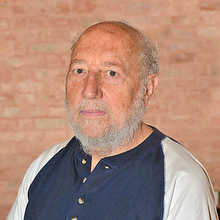
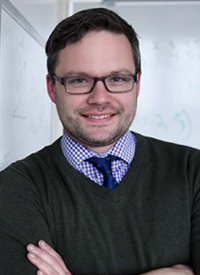
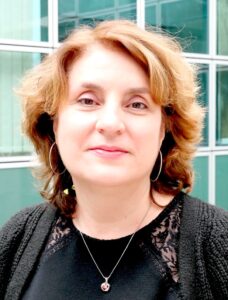
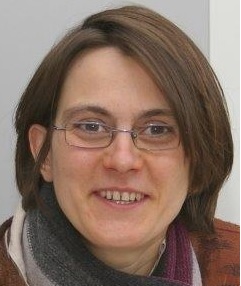
Χατζηκωνσταντινίδης Ευστάθιος is a Professor at the University of Piraeus in the Department of Statistics and Actuarial Science. His academic career spans decades with significant contributions to actuarial mathematics and statistical theory. He teaches undergraduate courses in Actuarial Mathematics, Risk Theory, and Reliability Theory, and postgraduate courses in Generalized Linear Models and Risk Management. Education: PhD in Mathematics (1990) - Aristotle University of Thessaloniki (Grade: Excellent) BSc in Mathematics (1985) - Aristotle University of Thessaloniki (Grade: Excellent) Research Focus: His work centers on risk theory, bankruptcy modeling, compound Poisson processes, and optimal experimental designs. He has developed innovative approaches to: Perturbed risk models with diffusion processes Copula-based dependence modeling in insurance Gerber-Shiu function analysis for dividend strategies Recursive methods for compound distributions His research bridges theoretical mathematics with practical actuarial applications. Publication Trends: Analytical studies of stochastic processes dominate his recent work, focusing on: Ruin probabilities and deficit distributions Dependence modeling using copulas Optimal dividend strategies Computational methods for risk models Earlier publications emphasize experimental design optimization and reliability theory. Administrative Leadership: Chair of Department of Statistics and Actuarial Science (2007-2009) Director of Postgraduate Program in Actuarial Science & Risk Management Member of Senate of University of Piraeus Deputy Chair of Ministry of Finance's Actuarial Examination Committee Research Projects: Has participated in multiple funded projects including: 'Optimal Experimental Designs' (Greek Ministry of Education) 'Modern Model for Actuarial Studies Preparation' (University of Piraeus) EPEAEK programs on statistical applications
Elio Canestrelli is a Senior Researcher in the Department of Economics at Ca' Foscari University of Venice, specializing in mathematical methods applied to economics, actuarial science, and financial sciences (SSD SECS-S/06). His academic career spans over four decades with continuous research contributions from 1973 through 2019. Canestrelli's research focuses on the intersection of financial mathematics, stochastic programming, and portfolio optimization. His work demonstrates a consistent trajectory exploring quantitative approaches to financial decision-making, with particular emphasis on risk management, tracking error models, and multistage stochastic optimization problems. His research methodology often combines theoretical mathematical frameworks with practical applications in financial markets and port management systems. Analysis of his publication history reveals a dual research focus: financial mathematics (particularly portfolio optimization under uncertainty) and urban/port traffic management systems. His work on downside risk protection, volatility modeling, and ship traffic optimization in Venice demonstrates applied research addressing both theoretical financial problems and practical urban challenges. The chronological progression shows an evolution from foundational work in stochastic processes to sophisticated multistage optimization models. Canestrelli has served on the editorial board of Mathematical Methods in Economics and Finance , contributing to academic discourse in quantitative finance. His collaborative work spans multiple institutions and demonstrates interdisciplinary approaches to complex decision problems. His research includes significant contributions to Venice port management systems, particularly through the development of the MANTA project (Modello di Analisi del Traffico Acqueo), which applied GIS technology to water traffic analysis in Venice's historic city center. This work represents the practical application of his mathematical expertise to local urban challenges.
Francesca PARPINEL serves as an Associate Professor in the Department of Economics at Ca' Foscari University of Venice, holding additional responsibilities as Department Delegate for Language Training. Her academic work spans statistical methodology development and practical applications in economics and finance. Her educational background includes a Degree in Statistics Applied to Economics (1990) and PhD in Statistics (1994), both from the University of Padua. She progressed from Assistant Professor (1996-2002) to her current Associate Professor position (2002-present), while coordinating the Bachelor's Degree Program in International Trade and Tourism from 2011-2018. Research interests focus on advanced statistical methodologies including estimation methods for regressions on complex spaces , evolutionary algorithms for regime-changing models , and statistical measures of systemic risk . Her work bridges theoretical statistics with practical financial applications, particularly in trading systems and risk assessment. Recent publications demonstrate strong interdisciplinary connections between statistics, finance, and computational methods, with increasing emphasis on machine learning applications in financial distress prediction and climate derivatives pricing. She actively supervises undergraduate and graduate theses requiring data analysis, emphasizing proficiency in R programming. Her teaching portfolio includes Statistics, Multivariate Statistics, and specialized laboratories across multiple degree programs including International Trade and Tourism, Economics and Commerce, and Global Development. PARPINEL has organized significant academic events including SIS 2015 (Statistics and Demography: the Legacy of Corrado Gini) and multiple MAF conferences, while maintaining membership in the Italian Statistical Society (SIS).
Josh Hiller is an Associate Professor in the Department of Mathematics and Computer Science at Adelphi University's College of Arts and Sciences. He holds leadership roles as Past President of the university's American Association of University Professors chapter. His academic journey includes a Ph.D. in Mathematics from the University of Florida (2017), an M.S. in Applied Mathematics from Western Carolina University (2014), and a B.A. in Mathematics from Webster University (2005). Dr. Hiller's research integrates mathematical biology (epidemiology, carcinogenesis), discrete mathematics, and theoretical computer science with a focus on algorithmic graph theory. His interdisciplinary interests extend to math communication and labor rights. He teaches advanced courses including Discrete Structures, Foundations of Analysis, and specialized research seminars in computational Ramsey theory and hypergraph models. His recent publications demonstrate a dual focus on combinatorial mathematics (hypergraphs, group partitions, binomial matrices) and biomathematical modeling (carcinogenesis, epidemiology, Markov chains). A distinctive thread is his work in mathematical poetry, exploring creative intersections between abstract concepts and literary expression. Grants secured by Dr. Hiller include: SIAM-Simons Foundation Undergraduate Research Program ($69,552, 2025) for deforestation prevention modeling AMS Young Scholars Fund ($15,100, 2022-2025) for the Adelphi Summer Institute of Mathematical Epidemiology Dolciani Mathematics Enrichment Grant ($5,000, 2025) for speaker series development Center for Undergraduate Research in Mathematics awards ($32,800 total, 2019-2021) for hypergraph carcinogenesis projects These initiatives emphasize undergraduate mentorship in computational epidemiology and discrete mathematics research. As co-director of the Adelphi Summer Institute of Mathematical Epidemiology, he leads collaborative teams investigating hypergraph applications in biological systems. His work consistently bridges theoretical exploration with pedagogical innovation.
Haibo (Stephen) Yao serves as an Associate Professor in the Department of Insurance & Risk Management at the College of Business, University of Central Arkansas, where he contributes to academic programs in business and risk analysis. His educational foundation includes: PhD from Mississippi State University, Mississippi State Master of Science in Commerce (MSC) from Central University of Finance and Economics, Beijing, China Dr. Yao's research spans insurance theory, financial risk modeling, and actuarial methodologies, with emphasis on practical applications in economic stability and corporate risk mitigation. His work integrates quantitative analysis with real-world financial systems, reflecting his dual expertise in economics and actuarial science. Professional recognition includes: Diploma in Actuarial Techniques from Society of Actuaries and Institute and Faculty of Actuaries (2003 – Present) While student advising details are unreported, his academic role encompasses curriculum development in risk management. Laboratory affiliations and grant funding specifics remain undocumented in available materials.
Ki Wai Chau is an Assistant Professor in the Faculty of Economics and Business at the University of Groningen, specializing in Economics, Econometrics & Finance. He holds a PhD in Numerical Analysis from Delft University of Technology (2020) and an MPhil in Mathematical Finance from The University of Hong Kong (2014). PhD: Numerical Finance with Backward Stochastic Differential Equations, Delft University of Technology MPhil: Mathematical Finance, The University of Hong Kong His research focuses on Fourier-based numerical approximation, regression techniques, and stochastic differential equations in finance and insurance risk theory. Recent work includes comparative risk aversion analysis in the Omega ratio, rule-based investment strategies, and scalable Python tools for XVA pricing. His publications reflect expertise in Monte Carlo methods, BSDE applications, and error bounds for financial models. He teaches courses such as Statistical Modelling for EOR, Life Insurance, Risk Insurance, and Dependence & Extremes in Risk Management. Ancillary activities include serving on the Central Exam Committee at the Actuarieel Instituut.
Prof. Dr. Serpil Cula is a faculty member at Baskent University , affiliated with the Insurance Program . Her research spans Insurance , Statistical Analysis , and Actuarial Science , focusing on mortality tables, agricultural insurance, and fraud detection. Developed alternative mortality tables for developing countries (2009). Contributed to insurance misuse analysis in Turkey (2023). Advised on AI-driven market surveillance projects (2024). Her recent work includes cross-disciplinary collaboration in dental implantology (2024) and comparative studies of agricultural insurance systems in Turkey, the U.S., and Spain. She teaches courses including Actuarial Mathematics , Life Insurance Models , and Statistical Methods . Contact: scula@baskent.edu.tr
Madalina Deaconu is an Inria Research Director and Assistant Scientific Delegate (DSA) at the Inria Center of the University of Lorraine since January 2022. She leads the PASTA joint project team (Processus Aléatoires Spatio-Temporels et leurs Applications) hosted at the Institut Elie Cartan de Lorraine (IECL). Her academic affiliation is with the Faculty of Science and Technology at the University of Lorraine, where she conducts research in probability theory and stochastic modeling. She serves on multiple committees including the Inria Evaluation Commission, the Geophysics Program Committee of the RT CNRS "Earth & Energies", and has held leadership positions including Director of the Charles Hermite Federation (2018-2022). Dr. Deaconu completed her Habilitation à diriger des recherches (HDR) at Université Henri Poincaré – Nancy 1 in 2008 and earned her PhD in Stochastic Processes and Partial Differential Equations from the same institution in 1997. Habilitation à diriger des recherches (HDR), Université Henri Poincaré – Nancy 1, France, 2008 PhD in Stochastic Processes and Partial Differential Equations, Université Henri Poincaré – Nancy 1, France, 1997 Madalina Deaconu's research focuses on stochastic modeling with applications across multiple domains. Her primary areas include data-enriched stochastic modeling, probabilistic approaches to coagulation/fragmentation models, numerical methods for diffusion reach times, and stochastic methods for linear and nonlinear partial differential equations. Her work bridges theoretical probability with practical applications in environmental science, geophysics, and actuarial science. She develops innovative probabilistic simulation methods and analyzes random spatio-temporal processes, with particular emphasis on fragmentation equations, Bessel processes, and Hawkes processes. Her research has significant applications in modeling avalanches, natural disasters, insurance risk assessment, and hydrochemical data analysis. She has established international collaborations with researchers from University of Turin, University of Uruguay, and institutions in Bucharest, as well as national collaborations with University of Burgundy and INRAE Grenoble. Analysis of Dr. Deaconu's recent publications reveals a consistent focus on fragmentation processes and stochastic modeling approaches. Her work spans theoretical developments in probability theory, numerical methods for stochastic processes, and practical applications in environmental science and actuarial mathematics. A notable trend is her increasing focus on Bayesian inference methods and point process applications, particularly for environmental and insurance contexts. Her most recent work demonstrates strong interdisciplinary connections, applying stochastic methods to hydrochemical data analysis, insurance recommendation systems, and natural disaster modeling. The consistent thread throughout her publications is the development and application of sophisticated probabilistic techniques to solve complex real-world problems. Dr. Deaconu has received recognition for her contributions to research: Paper and Poster award at EWEA 2015 (European Wind Energy Association) Plenary speaker at the 14th International Conference on Monte Carlo Methods and Applications (MCM23) While specific student names aren't listed in the provided text, Dr. Deaconu is involved in doctoral training through the IECL and supervises research in stochastic modeling. She coordinates multiple research collaborations including industrial partnerships with Le Foyer Luxembourg and SnT Université du Luxembourg (2018-2022). Her teaching activities include Stochastic Modeling at Master 2 level, Stochastic Differential Equations at École des Mines de Nancy, and Monte Carlo Simulation for Financial Market Engineering. Dr. Deaconu leads the PASTA research team (Processus Aléatoires Spatio-Temporels et leurs Applications), a joint Inria project hosted at IECL. She previously directed the Charles Hermite Federation (2018-2022), which brought together three major research laboratories: CRAN (Automatic Control), IECL (Mathematics), and LORIA (Computer Science). Her work is centered at the Institut Elie Cartan de Lorraine, a mathematics research institute affiliated with the University of Lorraine, where she contributes to both theoretical developments and practical applications of stochastic methods across multiple scientific domains.
Trine-Lise Wilhelmsen is a Professor at the Nordic Institute of Maritime Law, part of the Faculty of Law at the University of Oslo. She maintains an active academic position with room 103A in Domus Media West wing and can be contacted via email at t.l.wilhelmsen@jus.uio.no or by phone at +47-22859615. She currently holds multiple significant leadership positions across the legal and insurance sectors in Norway. Professor Wilhelmsen's research focuses on insurance law, marine insurance, maritime law, transport law, law of torts, contract law, petroleum law, and law and economics. Her work demonstrates particular expertise in Nordic marine insurance frameworks, liability regimes, and the intersection of insurance principles with broader legal concepts. She has published extensively on how legal frameworks adapt to emerging challenges in maritime operations, including autonomous vessels and polar navigation. Her recent scholarly output shows a consistent focus on practical applications of insurance law within the Nordic context, with particular attention to marine and offshore sectors. Wilhelmsen frequently examines how traditional insurance principles interact with modern commercial practices, especially in specialized fields like petroleum operations and maritime transport. Her work often bridges theoretical legal concepts with practical industry applications. Professor Wilhelmsen serves in numerous leadership roles including Chairman of the Standing Revision Committee for the Nordic Marine Insurance Plan, Chairman of the board of Norsk Legemiddelansvarsforsikring (drug liability insurance), Chairman of the board of Finansklagenemnda, skade, Chairman of the Petroleum Normprice Board, and Editor of Tidskrift for erstatningsrett, forsikringsrett og trygderett. She also leads Sjørettsfondet and serves on boards of the Nordic Offshore & Maritime Arbitration Association and Oslo Center of Commercial Law. While currently on research leave from teaching, Professor Wilhelmsen continues to supervise master's theses in the maritime law program and oversees PhD research, including a paper on double insurance. Her institutional affiliations and board memberships demonstrate her significant influence in shaping insurance and maritime legal frameworks across Nordic jurisdictions.
Michael A. Zazanis is a Professor in the Department of Statistics at the Athens University of Economics and Business (AUEB), where he has been a faculty member since 1997. He previously held positions as Assistant Professor at Northwestern University (1986-1993) and Associate Professor at the University of Massachusetts, Amherst (1993-1997). Dr. Zazanis received his Engineering Diploma from the National Technical University of Athens (1982), followed by an M.Sc. (1983) and Ph.D. (1986) in Applied Mathematics from Harvard University. His academic journey reflects a strong foundation in both engineering and theoretical mathematics. His research focuses on Applied Probability, Queueing Systems, Stochastic Simulation, and applications in Manufacturing and Risk Management. Over his career, his work has evolved from foundational perturbation analysis of queueing systems to contemporary research on age-of-information metrics in communication networks. His contributions span theoretical developments in stochastic processes and practical applications in production control systems and risk analysis. Dr. Zazanis has published extensively in leading journals including Journal of Applied Probability, Stochastic Processes and their Applications, Operations Research, Management Science, and Queueing Systems. His 1988 paper in Management Science on perturbation analysis for the M/G/1 queue is considered seminal in the field. Best Publication Award from the TIMS College on Simulation (1990) He has served in administrative roles including Graduate Program Director (2003-2006) and Head of the Statistics Department (2006-2008) at AUEB. Dr. Zazanis teaches undergraduate courses in Mathematical Methods, Stochastic Processes, and Probabilities, as well as graduate courses in Advanced Stochastic Processes and Operations Research. He is married to Corinna Anastassakou and has one son, Aristomenes.
Alessandro Staino is an Associate Professor in the Department of Economics, Statistics and Finance at the University of Calabria, where he teaches Mathematical Methods for Economics and Mathematics for Finance and Actuarial Science across multiple degree programs including Statistics for Data Science, Finance and Insurance, and Business Administration. His educational background includes: Degree in Statistical and Actuarial Science from the University of Calabria MPhil from Brunel University PhD from the University of Bergamo Postdoctoral fellowship at the University of Palermo Staino's research centers on mathematical finance and actuarial science, with core expertise in contingent claims pricing, risk management, and portfolio optimization. He develops advanced lattice-based models to address complex financial and insurance problems under stochastic correlation and volatility frameworks, contributing significantly to life insurance pricing and derivative valuation methodologies. His recent publications (2023-2025) reveal a consistent focus on lattice-based approaches for pricing insurance products and financial derivatives under multiple risk factors. These works integrate stochastic correlation, fractional Brownian motions, and robust covariance estimation to solve problems in life insurance, mortality bonds, and variable annuities, demonstrating strong interdisciplinary connections between actuarial science, quantitative finance, and computational mathematics. No scientific awards were mentioned in the provided information. While specific advising details and grant information were not documented in the scraped text, his collaborative research patterns indicate active engagement with international scholars across finance and actuarial domains. Staino is an integral member of the Quantitative Methods for Economics, Finance and Management research group at DESF, which develops mathematical programming models, econometric techniques, and statistical tools for decision-making in finance, actuarial science, industrial economics, transport, and logistics.
Christophette Blanchet-Scalliet is a Lecturer in the Department of Mathematics and Computer Science at École Centrale de Lyon, affiliated with the Camille Jordan Institute (UMR CNRS 5208). She obtained her doctorate in 2001 and her Habilitation to Supervise Research in 2016. Currently serving as Director of the Mathematics and Computer Science Department and Head of the Dual Diploma program at Centrale Lyon-ENSAE, she has been active in academia since 2002, with positions at both École Centrale de Lyon (since 2007) and the University of Nice Sophia-Antipolis (2002-2007). Her research spans applied probability , statistics , stochastic processes , stochastic control , Kriging , and robust optimization . She has developed significant expertise in Ornstein-Uhlenbeck processes, backward stochastic differential equations, Hamilton-Jacobi-Bellman equations, and applications in financial mathematics. Her work bridges theoretical probability with practical applications in risk assessment, insurance, and optimization under uncertainty. Analysis of her recent publications reveals a consistent focus on stochastic processes and their applications, with increasing emphasis on computational methods, sensitivity analysis, and optimization techniques. Her research shows strong connections between theoretical probability and practical applications in finance, insurance, and environmental risk assessment, with growing interdisciplinary collaboration across mathematical fields. Dr. Blanchet-Scalliet has supervised five doctoral students since 2015: Mélina Ribaud (2015-2018), Laura Gay (2016-2019), Thierry Gonon (2019-2022), Benoit Nieto (2021-2024), and Noé Fellmann (2021-2024), typically in co-supervision with colleagues from related research groups. She has secured significant research funding through multiple projects including the CIROQUO Consortium (2020-2028), ANR DREAMES (2021-2025), ANR Oquaido Chair (2015-2020), and others. She is actively involved in the CIROQUO research consortium as co-leader, which brings together multiple academic institutions and industry partners including École Centrale de Lyon, Mines Saint-Etienne, University of Toulouse 3, Stellantis France, BRGM, CEA, IFP Energies Nouvelles, and others to advance research in uncertainty quantification and optimization.
Panagiota Birmpa is an Assistant Professor in the Department of Actuarial Mathematics & Statistics at Heriot-Watt University's School of Mathematical and Computer Sciences, Edinburgh. Her research bridges advanced mathematical theory with cutting-edge machine learning applications, focusing on uncertainty-aware methodologies for complex data systems. She actively supervises PhD students and maintains strong collaborative ties with international research groups in applied mathematics and computational science. Her academic credentials include: BSc+MSc (integrated master) in Applied Mathematics and Physical Sciences (majors in Analysis and Statistics) from National Technical University of Athens (NTUA), 2011 MSc in Pure Mathematics from National and Kapodistrian University of Athens (NKUA), 2014 PhD in Mathematics from University of Sussex, UK, 2018 (Thesis: Quantification of Mesoscopic and Macroscopic Fluctuations in Interacting Particle Systems) Dr. Birmpa's research program integrates theoretical mathematics with modern computational challenges through seven core domains: Generative modeling, Scientific Machine learning, Uncertainty Quantification, Probabilistic Graphical models, Interacting Particle Systems, Optimal transport Theory, and Partial Differential Equations. Her interdisciplinary approach enables innovative solutions for complex data analysis problems across scientific domains, particularly where traditional statistical methods face limitations in high-dimensional spaces. Analysis of her publication trajectory reveals a progression from foundational statistical physics (2017-2018 interface dynamics research) toward contemporary machine learning applications (2021-2024). Her recent work demonstrates increasing sophistication in merging deep learning architectures with uncertainty quantification frameworks, especially for scarce high-dimensional data scenarios where conventional approaches fail. This evolution reflects broader trends in mathematical data science toward robust, interpretable AI systems. No scientific awards or fellowships are currently listed in her professional profile. Dr. Birmpa accepts PhD candidates for projects exploring deep learning-graphical model interfaces with uncertainty quantification, building on her prior AFOSR-funded postdoctoral research at UMass Amherst (2021-2022). Her grant history includes significant support from the Air Force Office of Scientific Research for developing particle-based generative algorithms. She maintains active supervision of graduate researchers while pursuing methodological innovations in probabilistic modeling. Her collaborative research network spans multiple institutions including University of Massachusetts Amherst, with interdisciplinary teams developing novel mathematical frameworks for scientific machine learning. Current projects focus on Lipschitz-regularized gradient flows and generative particle algorithms for high-dimensional data, extending her earlier work on non-equilibrium fluctuations in particle systems.
Tzavelas Georgios is an Associate Professor at the Department of Statistics and Actuarial Science, School of Finance and Statistics, University of Piraeus. With a distinguished academic career spanning several decades, he has established himself as a prominent researcher in statistical theory and methodology, with particular expertise in estimation theory, characterization problems, environmental statistics, and biostatistics. His educational background includes a Ph.D. in Mathematical Statistics (1994), Master of Arts (1991), both from the University of Maryland at College Park, and a Bachelor's Degree in Mathematics (1984) from the University of Patras. His academic journey began with exceptional promise, as he ranked in the top 5% of students throughout his undergraduate studies. Professor Tzavelas' research focuses on advanced statistical methodologies with applications across multiple domains. His work in estimation theory has produced significant contributions to understanding parameter estimation in complex models, particularly with biased and size-biased samples. His research in environmental statistics has addressed critical issues related to environmental monitoring and assessment, while his biostatistics work has contributed to medical research methodology. Recent research trends show a strong emphasis on weighted distributions, characterization theorems, and the application of statistical methods to biomedical and environmental data. His scholarly output demonstrates consistent productivity with numerous publications in prestigious journals including Journal of Applied Statistics, Biometrical Journal, Metrika, and Journal of Statistical Computation and Simulation. His work often bridges theoretical developments with practical applications, particularly in healthcare and environmental contexts. Exemplary Teaching Award, University of Maryland at College Park (1993) Ranked in the top 5% of students at University of Patras (1981-1983) Throughout his career, Professor Tzavelas has participated in numerous research programs funded by various institutions, addressing diverse topics from healthcare quality assessment to environmental statistics. His collaborative approach is evident in his extensive co-authorship with researchers across different disciplines. He has also contributed significantly as a reviewer for international journals including Applied Statistics, Journal of Statistical Computation and Simulation, and Communication in Statistics. His teaching portfolio spans both undergraduate and graduate levels, with courses in sampling methods, statistical estimation, clinical trials, and biostatistics. His research program continues to advance statistical methodology while addressing real-world problems in healthcare, environmental science, and social research.
Andrew B. Phillips, PhD, RN, FAMIA is an Associate Professor at the MGH Institute of Health Professions and a Faculty Nurse Scientist at Massachusetts General Hospital. He also serves as Director of Nursing Research at Spaulding Rehabilitation Network, working with nursing staff on clinical quality improvement initiatives. Dr. Phillips received his PhD in Nursing Informatics, BS in Nursing, and Masters Philosophy from Columbia University School of Nursing. He also holds a BA in Economics with a Minor in Biology from Washington University in St. Louis. His educational background uniquely combines healthcare, economics, and technology, reflected in his career trajectory that began as an actuary and consultant to health and pension benefit plans before transitioning to clinical nursing and informatics. Dr. Phillips' research focuses on two interconnected domains: the application of complex systems science to model disease processes and patient behavior, and the development of nursing informatics competency assessment tools to enhance nursing leadership. His work bridges theoretical modeling with practical clinical applications, particularly through agent-based modeling techniques to understand behavioral patterns in healthcare settings. He has extensive experience in health information technology policy and implementation, having served as a co-investigator in the Health Information Technology Collaborative at Weill Cornell Medical College and as a policy advisor examining federal mandates around health information exchange. Dr. Phillips' publication record demonstrates consistent scholarly productivity with recent work in 2023 examining smoking cessation patterns through adaptive agent-based models. His research portfolio spans healthcare quality improvement, nursing informatics competencies, health information exchange, and the financial impacts of health IT systems. His work frequently appears in prominent venues including the American Medical Informatics Association Annual Symposium and Obesity Week conferences. Fellow of the American Medical Informatics Association (FAMIA) Dr. Phillips has established collaborative research relationships across multiple institutions including Columbia University, Weill Cornell Medical College, and various Massachusetts healthcare systems. His work has been supported by numerous grants focused on health information technology implementation and nursing informatics development, though specific grant details aren't provided in the source material. He maintains active research collaborations, particularly with the Lisa J. Wood's Lab at Massachusetts General Hospital Institute of Health Professions. Dr. Phillips leads research teams focused on applying complex systems science to healthcare challenges, with recent projects examining patient behavior modeling, nursing informatics competencies, and health information exchange implementation. His leadership extends to directing nursing research at Spaulding Rehabilitation Network where he works directly with clinical staff on quality improvement initiatives.