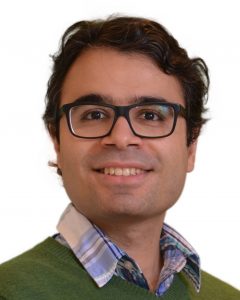
Prof. Dr. Tobias Gemmeke is a University Professor at RWTH Aachen University's Faculty of Electrical Engineering and Information Technology, leading the Chair of Integrated Digital Systems and Circuit Design. His work focuses on neuromorphic computing, hardware accelerators, and energy-efficient electronics. He has pioneered advancements in FPGA-based computational neuroscience simulators, neuromorphic processor architectures, and sensor integration for industrial and medical applications. Research interests include time-domain computing, ReRAM reliability, and co-optimization of neural networks with hardware. Notable contributions include the neuroAIx framework for accelerated neuroscience simulations and energy-efficient ASIC designs for post-quantum cryptography. He actively explores memristive devices and domain generalization techniques for edge computing. Recent publications highlight innovations in spiking neural networks, sensor systems for plain bearings, and time-domain compute-in-memory engines. His work bridges theoretical neuroscience with practical hardware implementations, emphasizing scalability and real-time performance.
H. Jerry Qi is a Professor in the Department of Mechanical Engineering at the Georgia Institute of Technology. He specializes in finite deformation multiphysics modeling of soft active materials, with a focus on shape memory polymers, 4D printing, and material recycling. His research integrates experimental and computational approaches to advance additive manufacturing technologies. Education: Sc.D., Massachusetts Institute of Technology, 2003 Ph.D., Tsinghua University, China, 1999 B.S., Tsinghua University, China, 1994 Research Interests: Dr. Qi's work spans 4D printing of active materials, mechanics in 3D printing, and sustainable polymer processing. His group develops hybrid printing methods and recyclable thermosetting polymers, collaborating with institutions like SUTD and AFRL. Key areas include smart material design, photomechanical experiments, and finite element modeling. Scientific Awards: ASME Fellow (2015) Woodruff Faculty Fellow (2015) J. T. Oden Faculty Fellowship (2012) NSF Career Award (2007) Advising & Grants: Dr. Qi actively seeks undergraduate, PhD, and postdoc researchers. His projects are funded by NSF, AFOSR, and industry partnerships. He leads a research group focused on advancing active materials and sustainable manufacturing. Labs & Teams: His lab integrates computational modeling, experimental mechanics, and additive manufacturing to create innovative materials and structures for applications in aerospace, biomedical, and environmental engineering.
Kari Ingstad is a Professor of Sociology at the Faculty of Nursing and Health Sciences, Nord University, and currently serves as Vice-Dean for Research. Her work bridges academia, clinical practice, and policy, focusing on healthcare organization, leadership, and innovation in Norway's health sector. She holds a PhD in Sociology from NTNU (2011) and has extensive clinical experience in municipal and specialist healthcare. Education: PhD in Sociology, NTNU, 2011 Nursing background from municipal and specialist healthcare sectors Research Interests: Workforce planning and staffing strategies in healthcare Impact of shift scheduling on employee well-being and patient safety Integration of artificial intelligence in healthcare operations Cross-sectoral collaboration and innovation in health services Recent Research Trends: Her 2024 publications emphasize strategic staffing solutions, AI-driven shift planning, and long-shift work-life balance. Key projects include the OptiCare-AI initiative (Norwegian Research Council-funded), exploring AI applications for optimizing healthcare resource allocation. Leadership & Grants: Leads the Acute Care, Innovation and Patient Safety (AKIP) research group Principal Investigator on OptiCare-AI (2023–present) Labs/Teams: Active collaborations with the AKIP group and national/international networks on healthcare workforce issues.
Necmiye Ozay is an Associate Professor in Robotics and Electrical and Computer Engineering at the University of Michigan. Her research focuses on control systems, formal methods, and cyber-physical systems, with applications in autonomy, system identification, and verification. She leads a diverse research group encompassing PhD, MS, and undergraduate students, as well as postdoctoral researchers. Her work bridges theory and practice, addressing challenges in safety-critical systems design and data-driven control. Her educational background includes a PhD in Electrical and Computer Engineering from Northeastern University and a Master’s from Penn State. She has received significant funding from NSF, ONR, and industry partners, supporting projects like the CLEVR-AI initiative and Scenic ecosystem development. Her research has been recognized through awards and collaborations at institutions like MIT, Berkeley, and Johns Hopkins. Key research areas include model-based control synthesis, robust system identification, and anomaly detection in cyber-physical systems. Notable contributions include methods for correct-by-construction control, hybrid system analysis, and learning-based approaches for autonomous systems. She actively contributes to conferences such as HSCC and CDC, and her lab’s work impacts automotive safety, energy systems, and robotics. Ozay’s advising spans over 50 students and postdocs, many of whom hold academic or industry roles. Her lab maintains active collaborations across disciplines, emphasizing interdisciplinary solutions to real-world control challenges.
Yuxin Chen is a Professor at the University of Pennsylvania , holding joint appointments in the Department of Statistics and Data Science and the Department of Electrical and Systems Engineering . Prior to UPenn, he was an Assistant Professor at Princeton University (2017-2021) and a Postdoctoral Researcher at Stanford University (2015-2017). His research spans statistics, optimization, reinforcement learning theory, diffusion models, and information theory , with a focus on theoretical foundations and practical algorithms for machine learning. Education : Ph.D. in Electrical Engineering (Stanford, 2015), M.S. in Statistics (Stanford, 2013), M.S. in Electrical and Computer Engineering (UT Austin, 2010), B.E. in Electrical/Microelectronics (Tsinghua, 2008). Research Interests encompass theoretical and applied aspects of machine learning, including nonconvex optimization , sample complexity analysis , low-dimensional adaptation , and generative modeling . His work bridges mathematical rigor with real-world applications, particularly in scientific imaging and high-dimensional data analysis. Scientific Awards include the SIAM Activity Group on Imaging Science Best Paper Prize (2024) Alfred P. Sloan Fellowship (2022) NSF Career Award (2022) Google Research Scholar Award (2022) IEEE Transactions on Power Electronics Prize Paper Award (2024) Advising and Grants : He has mentored numerous students who have transitioned to academic roles at institutions like UIUC and UW-Madison. His research is supported by grants from the NSF , Amazon , and Google , with recent projects focusing on controllable diffusion models and efficient reinforcement learning algorithms .
Claus Thustrup Kreiner is a Professor of Economics and Director of the Center for Economic Behavior and Inequality (CEBI) at the University of Copenhagen's Faculty of Social Sciences, Department of Economics. He also serves as Area Director of Public Economics in the CESifo network and was co-editor of the Journal of Public Economics from 2014 to 2020. Kreiner has held various leadership positions including Director of the Economic Policy Research Unit (EPRU) since 2005 and Director of the Center of Excellence WEST from 2011-2013. Education: Ph.D. in Economics, University of Copenhagen, 1998 Visiting Ph.D. student, University of York, 1996 M.Sc. in Economics, University of Copenhagen, 1994 B.Sc. in Economics, University of Copenhagen, 1991 Claus Thustrup Kreiner's research primarily focuses on Public Economics , with secondary specializations in Labor Economics, Household Finance, Applied Microeconometrics, and Experimental Economics. His work examines inequality in income, wealth and health, optimal redistribution policy, and behavioral responses to public policy. Kreiner has conducted significant research using Danish administrative data to analyze tax compliance, labor supply responses, and inequality dynamics. His research often involves collaborations with institutions like Columbia University, London School of Economics, and UC Berkeley. His recent publications reveal a strong focus on inequality across multiple dimensions (income, wealth, health, life expectancy), tax policy design and compliance, labor market responses to policy changes, and the intersection of behavioral economics with public policy. Kreiner frequently employs high-frequency administrative data from Denmark to provide empirical evidence on how individuals and households respond to economic policies and shocks. Scientific Awards and Recognition: Appointed Knight of The Order of Dannebrog by Queen Margrethe II (2018) The Invisible Hand Award from the Society of Social Economics (2006, 2001) Best Teacher Award from the Study Board of Economics at University of Copenhagen (2002) Research Fellow at Centre for Economic Policy Research (CEPR), London (2009-) Kreiner has supervised numerous students primarily in Public Economics and has received multiple research grants including from the Danish Social Science Research Council (2003, 2006, 2009), International Growth Center (2009), and Danish National Research Foundation (1998-2003). He has served on important policy bodies including as co-chair of the Danish Economic Council (2010-2014) and member of the Danish Tax Commission (2008-2009). As Director of CEBI (Center for Economic Behavior and Inequality), Kreiner leads a major research center funded by the Danish National Research Foundation. He also directs the Economic Policy Research Unit (EPRU) and has been instrumental in establishing research collaborations through networks like CESifo. His work bridges academic research and policy application, as evidenced by his practical policy experience with government commissions.
Melanie Molina, MD, MAS is an Assistant Professor of Emergency Medicine at the University of California, San Francisco (UCSF) and Affiliate Faculty of the Philip R. Lee Institute for Health Policy Studies. She serves as Co-Director of the Social Emergency Medicine and Health Equity Section and holds a secondary appointment in the Department of Medicine’s Division of Clinical Informatics and Digital Transformation. Clinically, she works at Zuckerberg San Francisco General Hospital and UCSF Medical Center. National Clinician Scholars Program Fellowship (2023) MAS in Clinical Research, UCSF (2023) Residency in Emergency Medicine, Harvard Medical School (2021) MD in Medicine, The University of Texas at Austin (2017) BS/BA in Biology and Hispanic Studies, The University of Texas at Austin (2012) Dr. Molina’s research centers on leveraging technology to address social determinants of health in emergency settings, with a focus on vulnerable populations. Her work spans health equity, opioid use disorder interventions, microaggressions in healthcare, and clinical informatics. She pioneers EHR-enabled tools to integrate social care into emergency clinical workflows while minimizing clinician burden. Her NIH-funded projects emphasize practical solutions for racial and ethnic health disparities, particularly in vaccine delivery and social risk documentation. Her recent publications (2024-2025) reveal three dominant trends: (1) Integration of AI and informatics for social risk screening and clinical decision support, (2) Health equity interventions targeting vaccine hesitancy and long COVID disparities, and (3) Critical analysis of DEI implementation challenges in academic emergency medicine. The work consistently bridges technical innovation with community-centered approaches to address systemic inequities. National Institutes of Health NIDA Loan Repayment Award (2024-2025) National Hispanic Medical Association Top 40 Under 40 (2024) UCSF John A. Watson Faculty Scholar (2023) National Institutes of Health NIAID Loan Repayment Award (2022-2024) Academy for Women in Academic Emergency Medicine Outstanding Research Publication Award (2021) Harvard Medical School Presidential Scholars Public Service Initiative Award (2017) Dr. Molina actively mentors medical students, residents, and fellows in health equity research. As Principal Investigator on multiple NIH and foundation grants—including the Harold Amos Medical Faculty Development Program grant ($825,575, 2024-2028) and an NIH/NIDA K23 award (2024-2029)—she leads projects developing EHR-integrated interventions for social risk documentation and opioid use disorder treatment. Her PROBOOSTVAXED trial addresses vaccine hesitancy through ED-based delivery across eight U.S. cities. She co-directs the Social Emergency Medicine and Health Equity Section within UCSF’s Department of Emergency Medicine, collaborating closely with the Action Research Center for Health Equity and the Philip R. Lee Institute for Health Policy Studies. Her team integrates clinical informatics expertise with community health workers to develop scalable solutions for social risk mitigation in safety-net emergency departments.
Alexandra Paige Fischer is an Associate Professor at the University of Michigan School for Environment and Sustainability (SEAS) . Her research focuses on the human dimensions of environmental change , with emphasis on climate change adaptation , wildfire risk governance , and collective action in forested ecosystems . She collaborates with interdisciplinary teams and serves as a contributing author to the IPCC Sixth Assessment Report . PhD, Oregon State University (Forest Resources Social Science) MS, Oregon State University (Forest Resources Social Science) BA, Hampshire College (Cultural Anthropology) Her research integrates theories from natural resource sociology and human-environment geography , employing qualitative interviews , quantitative surveys , and social network analysis . She leads the Western Forest and Fire Initiative and investigates socio-ecological systems in fire-prone regions and coastal communities. Her work spans the U.S. West and Chile , where she explores global wildfire challenges and flammable plantation impacts. Recent publications highlight her contributions to climate adaptation frameworks , collective risk mitigation , and socio-ecological network analysis . She has received recognition as a Fulbright Scholar and leading fire science researcher . Fulbright Scholar, Facultad de Ciencias Forestales y Recursos Naturales, Universidad Austral de Chile 50 Female Leading Scholars in Fire Science Grants include USDA Forest Service projects on climate change impacts on family forestlands and forestry responses to climate change . She actively contributes to Nature Sustainability , Global Environmental Change , and serves as Associate Editor for Ecology and Society and Frontiers in Climate .
Karl Henrik Johansson is a Professor at the School of Electrical Engineering and Computer Science, KTH Royal Institute of Technology in Stockholm, Sweden, where he also serves as the Founding Director of Digital Futures. He is a Fellow of both IEEE and the Royal Swedish Academy of Engineering Sciences, and has held leadership positions including Immediate Past President of the European Control Association and IEEE Control Systems Society Vice President Diversity, Outreach & Development. Dr. Johansson earned his MSc in Electrical Engineering and PhD in Automatic Control from Lund University. His academic journey includes visiting positions at prestigious institutions such as UC Berkeley, Caltech, and NTU. His research focuses on networked control systems and cyber-physical systems with applications in transportation, energy, and automation networks. His work investigates fundamental challenges in connecting physical world systems through communication networks, exploring how wireless communication and sensor technology can enhance system robustness, reliability, energy efficiency, and safety. Current research directions include security of cyber-physical systems, distributed optimization, multi-agent systems, and applications to intelligent transportation and energy networks. Analysis of his recent publications reveals a strong focus on distributed optimization algorithms, secure networked control, multi-agent systems, and applications to transportation and energy networks. His work increasingly integrates machine learning techniques with traditional control theory, addressing challenges in privacy-preserving distributed computation, resilient state estimation, and resource allocation in complex networked systems. IEEE Control Systems Society Hendrik W. Bode Lecture Prize (2024) Swedish Research Council Distinguished Professor (2018-2027) Wallenberg Scholar (2009-2026) IFAC Young Author Prize IEEE CSS Distinguished Lecturer (2017-2019) IFAC Outstanding Service Award IEEE Fellow Dr. Johansson has supervised over 100 postdocs and PhD students, with many now holding prominent positions at institutions worldwide. His research has been supported by significant grants including the Swedish Research Council Distinguished Professor Grant (2018-2027), multiple Wallenberg Foundation grants, and numerous EU and national research projects. He has directed major research centers including ACCESS Linnaeus Centre (2009-2016) and Strategic Research Area ICT TNG (2013-2020). His research group operates within the Digital Futures initiative and maintains strong connections with industry partners through projects like the Integrated Transport Research Lab (supported by Scania and Ericsson) and Smart Mobility Lab. The group actively collaborates with international institutions and participates in major EU-funded projects addressing challenges in cyber-physical systems, transportation, and energy networks.
Christian Moormann serves as Director and Full Professor of the Institute of Geotechnics at the University of Stuttgart, where he has held his position since 2010. His leadership extends to national and international geotechnical organizations, including serving as Chairman of the German Geotechnical Society (DGGT) since 2022. His educational background includes a distinguished Diplom in Civil Engineering from Leibniz University Hannover (1989-1994), followed by doctoral studies at TU Darmstadt where he earned his Dr.-Ing. with distinction in 2002 for research on soil-groundwater interaction in deep excavations. He completed his habilitation at TU Darmstadt in 2009 on optimization of geotechnical composite structures. Professor Moormann's research spans the critical intersection of theoretical geomechanics and practical engineering applications. His work focuses on material behavior of semi-solid and variable-strength rocks, numerical methods in geotechnics, and reliability analyses for geotechnical composite structures. He has made significant contributions to deep foundation systems, pile-raft foundations, and the application of geosynthetics in construction. His recent work increasingly addresses sustainable applications including near-surface geothermal energy systems and innovative ground improvement techniques. With over 350 publications throughout his career, Moormann's scholarly output demonstrates consistent focus on practical geotechnical challenges. His publication themes reveal evolving emphasis from fundamental soil mechanics to complex system behavior, with growing attention to sustainability and reliability-based design approaches in geotechnical engineering. Professor Moormann holds numerous leadership positions that reflect his standing in the field: Chairman of the German Geotechnical Society (DGGT) since 2022 Head of the "Earth and Foundation Engineering" section of DGGT since 2018 German Delegate to Eurocode 7 Technical Committee (TC 250/SC 7) Chair of the DIN Standards Committee "Piles" (NABau 005-05-07) Member of the Professional Image Committee of ISSMGE His professional activities extend to significant consulting work through his own firm "Prof. Moormann Geotechnik Consult" established in 2010, and leadership of the PÜZ certification office. Moormann serves as an officially appointed expert for earthworks, foundation engineering, and rock engineering. His work on developing practical engineering standards through multiple DIN committees and Eurocode 7 implementation demonstrates his commitment to bridging academic research with practical engineering applications. The Institute of Geotechnics under Professor Moormann's leadership maintains strong connections with industry through its COMMAS program and extensive field testing capabilities. His team actively participates in developing practical engineering solutions for complex geotechnical challenges, particularly in deep foundation systems, excavation support, and sustainable geotechnical applications including geothermal energy systems.
Dhruv Shah is an Incoming Assistant Professor of Electrical and Computer Engineering at Princeton University starting January 2026 and currently serves as a Senior Research Scientist at Google DeepMind. He is also an Associated Faculty member in Princeton's Center for Statistics and Machine Learning, focusing on the convergence of machine learning and robotics for real-world deployment. His academic credentials include a Ph.D. and M.S. in Electrical Engineering and Computer Sciences from the University of California, Berkeley (2024) and a B.Tech. (Honors) in Computer Science and Engineering from the Indian Institute of Technology, Bombay (2019). Shah's research pioneers foundation models for robotics, emphasizing large-scale robot learning, out-of-distribution generalization, and long-horizon reasoning. His group adopts a full-stack methodology spanning algorithmic innovation to system design, drawing from cognitive science to develop physical AI systems at the perception-learning-control interface. Key focus areas include reinforcement learning, human-robot interaction, and continual learning for challenging environments. Analysis of his 15 most recent publications reveals dominant trends in foundation models for visual navigation, language-conditioned policies, and multi-agent systems. His work increasingly integrates multimodal inputs (vision, language) while addressing generalization gaps in real-world settings, with strong emphasis on efficient data curation and scalable robot learning frameworks. His accolades feature the Microsoft Future Leaders in Robotics & AI Fellowship (2024), two IEEE ICRA Best Conference Paper Awards (2024), multiple ICRA finalist awards across cognitive robotics and manipulation categories, and the Berkeley Fellowship (2019-2024). Shah will recruit PhD students for Princeton's upcoming admissions cycle, establishing a research group dedicated to full-stack robotics development. While specific grant details aren't provided, his trajectory indicates significant funding for AI-robotics convergence projects, particularly in foundation model development and real-world deployment challenges. His laboratory at Princeton will integrate algorithmic innovation with system design, focusing on physical AI systems that bridge perception, learning, and control while maintaining strong ties to cognitive science principles for human-aligned robotic intelligence.
Zsolt Kira serves as an Assistant Professor in the School of Interactive Computing at Georgia Institute of Technology's College of Computing, with additional affiliations at the Georgia Tech Research Institute and as Associate Director of ML@GT. He leads the Robotics Perception and Learning (RIPL) Lab, driving research at the intersection of machine learning and robotics. Dr. Kira earned his Ph.D. in 2010 under Professor Ron Arkin, establishing foundational expertise in robotics and AI before transitioning to his current academic role after industry experience at SRI International Sarnoff. His research pioneers beyond supervised learning through unsupervised, semi-supervised, self-supervised, and continual/lifelong learning frameworks, while advancing distributed perception via multi-modal fusion and cross-robot information integration. This dual focus addresses core challenges in robotic autonomy and sensor processing. Analysis of his 15 most recent publications reveals dominant trends in embodied AI systems, robust foundation model adaptation, and multimodal learning architectures. Key themes include neural radiance field applications, reinforcement learning for locomotion, and novel benchmarks for memory evaluation in agents. While specific advisees and grants aren't documented in the source material, his RIPL Lab leadership implies active graduate mentorship and research funding acquisition. The lab's work directly enables next-generation robotic systems through algorithmic innovation in perception and learning. The RIPL Lab operates as a hub for developing machine learning techniques that solve difficult perception problems in robotics, with particular emphasis on unsupervised learning paradigms and distributed multi-robot systems that push the boundaries of autonomous operation.
Graeme J. Kennedy is an associate professor in the Daniel Guggenheim School of Aerospace Engineering at the Georgia Institute of Technology where he leads the Simulation-based Multidisciplinary Design Optimization (SMDO) research group. His research focuses on developing numerical optimization techniques for structural and multidisciplinary design problems, particularly for fixed-wing aircraft analysis and design. Dr. Kennedy received his PhD from the University of Toronto Institute for Aerospace Studies (UTIAS) in 2012, followed by a postdoctoral research fellowship at the University of Michigan in the Department of Aerospace Engineering. His research spans several critical areas in aerospace design optimization: Development of advanced numerical optimization techniques for structural design Large-scale topology optimization for aerospace structures Aeroelastic and aerothermoelastic optimization of flexible aircraft Optimization of composite structures with manufacturing constraints Electric motor optimization for electric vertical take-off and landing (eVTOL) vehicles He has developed multiple open-source research codes including TACS (parallel finite-element solver), ParOpt (optimization toolkit), TMR (mesh generation tool), and FUNtoFEM (aeroelastic coupling framework). Dr. Kennedy is particularly interested in designing structures that manage heat from battery packs in air taxis while achieving optimal aeroelastic performance. His publications reveal a strong focus on computational methods for solving large-scale optimization problems in aerospace design. The research shows progressive development from fundamental optimization algorithms toward increasingly complex multidisciplinary applications, with particular emphasis on making high-fidelity simulation-based optimization practical for industrial design cycles through high-performance computing approaches. Dr. Kennedy actively mentors numerous graduate students, including six current PhD candidates and multiple former PhD and MS students who have completed their degrees under his supervision. His research group maintains strong connections with industry through various grants supporting the development of computational tools for aerospace design. The SMDO group also engages in educational outreach through 'Optimization through Intuition,' providing accessible learning modules about optimization concepts for middle and high school students, demonstrating Dr. Kennedy's commitment to broadening participation in engineering education.
Alana Clifton-Cunningham is a dedicated educator and researcher in fashion and textile design at the University of New South Wales, Faculty of Arts, Design & Architecture. With over two decades of experience in higher education, she has established herself as a leader in sustainable and innovative design education. Her work bridges traditional craftsmanship with cutting-edge technologies, creating experiential learning environments that prepare students for contemporary design practice while addressing global sustainability challenges. Educational Background: 2021 | UNSW - Learn to Lead: Progress Needs Resilient Leaders 2019 | UTS - Graduate Certificate in Higher Education Transdisciplinary Learning 2008 | UNSW (COFA) - Master of Design (Hons) Research 2002 | UTS - Graduate Certificate in Higher Education Teaching and Learning 2001 | TAFE - Diploma of Marketing Management 1993 | UTS - Bachelor of Design (Hons) (Fashion and Textile Design) Clifton-Cunningham's research focuses on sustainable fashion practices, with particular emphasis on circular economy principles in textile production and garment design. Her work explores scalable models for textile remanufacturing, clothing waste reduction, and sustainable workwear systems. She is deeply engaged in addressing clothing sizing issues and standards in Australia, advocating for more inclusive approaches to fit and body diversity. Her commitment to equity, diversity, and inclusion underpins all aspects of her leadership and teaching, making her a strong advocate for responsible design futures that prioritize both environmental sustainability and social justice. Her publication record demonstrates a consistent focus on the intersection of design education, cultural exchange, and sustainable practices. Notable works include her 2022 book chapter on cross-cultural textile workshops in India, her 2018 analysis of undergarment technology evolution, and her contributions to exhibitions like 'Out of Hand' at the Powerhouse Museum. These works collectively highlight her emphasis on hands-on, experiential learning that connects students with real-world sustainability challenges and cultural contexts. Research Grants: 2024 | Redesigning Clothing Waste Using a Circular Design Framework - LP230200929 $220,473K 2024 | Department of Community and Justice - $17,900 2024 | Education Focussed Community of Practice (PVCESE) - $2,500 2023 | Department of Community and Justice - $15,900 2023 | Education Focussed Community of Practice (PVCESE) - $6,995 2017 | AbbVie Pharmaceutical Pty Ltd, HS Support Garments: Chief Investigator - $35,000 Clifton-Cunningham actively supervises research in fashion and textile design, with a focus on sustainable practices and innovative design processes. Her extensive industry network, including partnerships with major fashion labels, brings real-world insight into the classroom. She has led international global studios, including immersive programs in India where students collaborate with artisans. Her current ARC Linkage project 'Redesigning Clothing Waste Using a Circular Design Framework' represents a significant contribution to sustainable fashion research. Her creative practice is reflected in numerous exhibitions, including the Seoul International Fashion Art Biennale (2016, 2018), Wangaratta Contemporary Textile Awards, and the Powerhouse Museum's 'Out of Hand' exhibition. These artistic endeavors complement her academic work, demonstrating the practical application of her research interests in sustainable and innovative textile design.
Amir-massoud Farahmand is an Associate Professor at the Polytechnique Montréal (Department of Computer and Software Engineering) and a Status-Only Associate Professor at the University of Toronto (Department of Computer Science). He is also a Core Academic Member at Mila (Quebec AI Institute). His research focuses on computational and statistical mechanisms for designing efficient reinforcement learning (RL) agents and adaptive algorithms. Dr. Farahmand's research spans reinforcement learning, optimal transport, adversarial robustness, and model-based methods. He has extensively studied regularization in RL, distributional approaches, and algorithm design for stability and convergence. His textbook Lecture Notes on Reinforcement Learning (2021) emphasizes mathematical intuition over algorithmic collections. Recent publications highlight trends in high-update-ratio RL, distributional equivalence, and self-prediction for task understanding. He is actively involved in teaching, having previously instructed courses on machine learning, neural networks, and RL at the University of Toronto. Scientific Awards : Ontario Early Researcher Award (2024) for Accelerated Reinforcement Learning Algorithms Dr. Farahmand has mentored numerous students, including his first PhD graduate Yangchen Pan (now at Oxford) and MSc students like Allen Bao (AMD) and Farnam Mansouri (University of Waterloo). He is currently recruiting graduate students at Polytechnique Montréal and Mila for 2025 admissions.