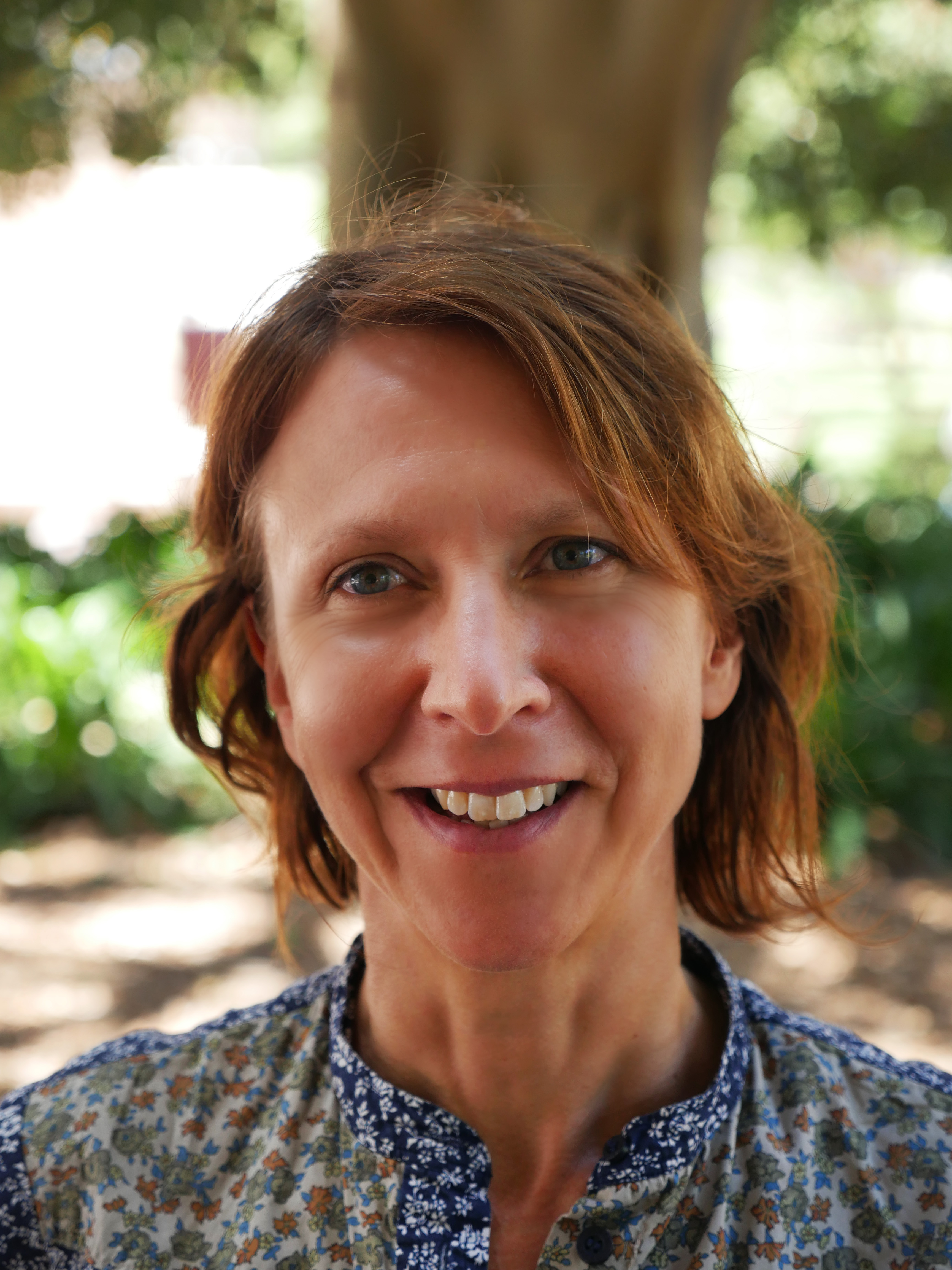
Dr Julie Hatfield is a researcher at UNSW Sydney with over 20 years of experience in human factors and behavioral research related to health and safety. She holds a PhD in Psychology from the University of Sydney and has authored over 200 publications, reports, and presentations. Human factors in transportation safety Active travel (cycling and walking) Psychological contributors to risky behavior Human response to aircraft noise Her work focuses on understanding how perception, personality, and technology impact road safety. She has supervised nearly 40 postgraduate students and collaborates with multidisciplinary teams across academia and industry.
Richard Larouche serves as an Associate Professor in the Public Health Program within the Faculty of Health Sciences at the University of Lethbridge. His research centers on physical activity among children and youth, with specific expertise in active transportation (e.g., walking and cycling for travel), independent mobility (children's unsupervised movement in public spaces), and outdoor play. Dr. Larouche holds a PhD from the University of Ottawa and completed a postdoctoral fellowship at the Children's Hospital of Eastern Ontario Research Institute. He edited the 2018 Elsevier book "Children's active transportation". His research interests encompass physical activity, active transportation, independent mobility, outdoor play, sedentary behaviour, population health, and social-ecological theory. He examines how these elements interact to influence children's health outcomes, utilizing diverse methodologies including systematic reviews and large-scale surveys. Dr. Larouche's recent publications highlight trends in active school transport research, including intervention effectiveness, seasonal variations, and international comparisons. His work often involves multi-country collaborations and addresses both health and environmental sustainability. No scientific awards were mentioned in the provided text. Details regarding student advising and research grants were not provided in the text. He is affiliated with the PATH (Physical Activity and Transportation for Health) research group, as evidenced by his research blog.
Eftychia Nathanael serves as Professor of Transport Systems Design and Assessment, Dean of the Polytechnic School, and Director of the Traffic, Transport and Supply Chain Management Laboratory (TTLog) at the University of Thessaly. She holds significant international roles including Special Expert on Dangerous Goods in NATO's Ground Transport Group and former member of TRB's Hazardous Material Transportation Committee (2009-2021), while representing Greece in COST actions TU1004 and TU1305. Her educational background includes: PhD in Civil Engineering from Aristotle University of Thessaloniki Master of Science in Transportation Engineering from University of Miami Diploma in Surveying Engineering from Aristotle University of Thessaloniki Nathanael's research focuses on sustainable transport systems through integrated methodologies in urban mobility planning , intelligent transport systems , and behavioral modeling . She pioneers applications of multi-criteria optimization for freight logistics, road safety, and resilience against natural hazards, with particular emphasis on collaborative transport schemes and social factors influencing mobility decisions. Her 13 recent publications (2020-2023) reveal three dominant trends: (1) Sustainable urban mobility solutions using computational intelligence for CO2 reduction and hydrogen infrastructure; (2) Behavioral analysis of crowdshipping, navigation systems, and social media impacts; (3) Cross-case evaluations of city logistics through Delphi methods and gender-sensitive approaches. These works consistently bridge technical transport engineering with socio-economic sustainability dimensions. As scientific manager for European projects (CLOSER, STRAIGHTSOL, CITY-HUB), she has secured substantial research funding while mentoring graduate students through TTLog laboratory. Her editorial leadership spans MDPI journals and De Gruyter's Transactions on Transport Sciences. The TTLog laboratory under her direction advances eight research domains including transport safety, user behavior analysis, and freight logistics, with notable outputs in EC-funded initiatives like CAST road safety campaigns and ALLIANCE sustainable transport hubs.
Dr. Lauren Pearson is a Research Fellow and Equity Lead at the Sustainable Mobility and Safety Research Group within Monash University's School of Public Health and Preventive Medicine. Her work focuses on sustainable transport, gender equity, and public health, particularly addressing barriers to active mobility for women. She leads collaborative research projects with governments and NGOs, such as the Victorian Department of Transport and Planning, and has secured over $2.2 million in research funding. Education: Doctor of Philosophy (Medicine), Monash University (2022) Bachelor of Health Science (Hons), Monash University (2019) Bachelor of Human Nutrition, La Trobe University (2016) Research Interests: Lauren explores how equitable active transport (walking/cycling) can improve health, environmental, and social outcomes. Her mixed-methods research examines sociocultural and built-environment barriers to car dependency, with a focus on gender equity. She designs inclusive transport solutions through participatory methods and partnerships. Key Awards: FMNHS Early Career Postdoctoral Fellowship (2024) International Cycling Safety Conference Best Presentation Award (2022) John McNeil Prize for Public Health Research (2023) Advising & Grants: Accepting PhD students since 2021 Manged $2.2M+ in research funding Co-leads projects like the Canadian-Australian transport intervention program and the PETAL initiative for young women's bike riding Labs/Teams: Part of the Sustainable Mobility and Safety Research Group, collaborating internationally on transport equity and safety initiatives.
Yetta Gurtner is an Adjunct Senior Lecturer at the Centre for Disaster Studies, James Cook University, Australia. Her research focuses on integrated disaster management, tourism crisis recovery, and sustainability in vulnerable regions. She explores topics such as community preparedness, socio-economic resilience, and climate adaptation strategies. Her work emphasizes interdisciplinary approaches to address disaster risks in developing nations. Recent publications highlight her expertise in disaster preparedness (e.g., bushfire and tornado response), post-disaster recovery methodologies, and the role of social media in crisis management. She has collaborated on projects analyzing demographic shifts post-disaster and advocating for equitable recovery policies. Research Themes: Disaster Risk Reduction, Sustainable Development, Community Engagement Key Projects: Townsville Bushfire Preparedness, Tourism Crisis Management, Active Transport in Tropics Her work bridges academic research with practical applications, contributing to policy frameworks for resilient urban planning and emergency response systems.
Justin Guy Kemp is a prominent researcher in sports science and exercise physiology at the Faculty of Health Sciences. His work focuses on athletic performance, fatigue analysis, sleep dynamics, and biomechanical adaptations. Specializes in load monitoring and recovery optimization Conducts applied research in team sports and endurance training Develops sensor-based methodologies for movement analysis His research spans: Sleep Physiology in elite athletes Mechanical Stiffness assessment during running Altitude/Hypoxia training effects Musculoskeletal Fatigue analysis Performance Metrics validation Cardiometabolic Risk evaluation Recent publications highlight his contributions to: Accelerometer-based fatigue detection Training load interaction with sleep Inertial measurement unit validation Neuromuscular function testing Altitude training blood volume changes
Dr. Graham Baker is a Lecturer in Physical Activity for Health at the University of Edinburgh, serving as Co-Deputy Director of the Physical Activity for Health Research Centre (PAHRC) and Director of the MSc in Physical Activity for Health. He is affiliated with the Institute for Sport, Physical Education and Health Sciences (ISPEHS) and Moray House School of Education and Sport. His work focuses on active travel, health inequalities, and the socio-ecological framework, with projects ranging from qualitative studies to large-scale intervention evaluations. Research interests include active travel promotion, sedentary behavior reduction, and the implementation of health policies like 20mph speed limits. Recent studies explore walking leisure benefits, workplace interventions for sedentary employees, and cultural adaptation of walking programs for South Asian communities. Baker has secured grants totaling over £2.7 million, leading and co-investigating projects on active travel, speed limits, and workplace health. Teaching includes undergraduate courses on the Psychology of Physical Activity and postgraduate modules in behavioral change theory. He supervises PhD students researching yoga in aging populations, disability sport, and spinal health. Publications span 20mph policy impacts, physical activity messaging frameworks, and cycling promotion strategies. Notable grants include £558,010 for analyzing leisure walking’s influence on short journeys and £260,000 mapping active travel programs for health conditions. Past projects include a £880,884 evaluation of 20mph speed limits in Edinburgh/Belfast and a £343,388 feasibility trial for reducing sedentary behavior in contact centers.
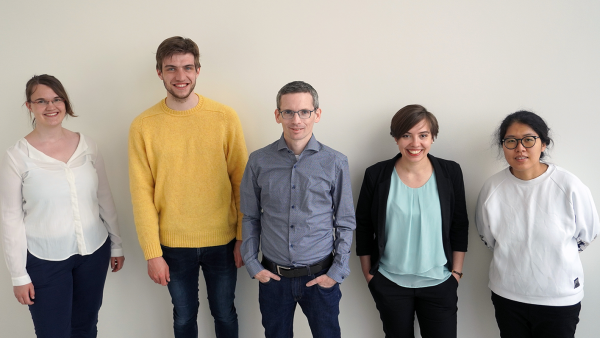
Kevin Buchin is a Professor at the Department of Computer Science, Faculty of Computer Science at Technical University of Dortmund, where he leads Chair 11: Algorithm Engineering. His work focuses on bridging theoretical and experimental algorithm development, particularly in computational geometry and spatial data analysis. Professor Buchin's research spans several key areas in algorithm engineering, with particular expertise in computational geometry, spatial networks, algorithms for GIS (Geographic Information Systems), and motion planning algorithms. His work combines theoretical foundations with practical applications, developing algorithms that address real-world challenges in spatial data processing and analysis. He has made significant contributions to trajectory analysis, geometric spanners, Fréchet distance computations, and map construction algorithms. His research often involves interdisciplinary collaborations that connect computer science with geographic applications and movement data analysis. An analysis of Professor Buchin's recent publications reveals a strong focus on trajectory analysis and spatial network algorithms. His work consistently addresses fundamental problems in computational geometry while developing practical solutions for real-world applications. Key trends include advancements in Fréchet distance computations, trajectory clustering techniques, geometric spanner constructions, and map-matching algorithms. His research demonstrates a balanced approach between theoretical algorithm development and practical implementation, often resulting in benchmark suites and publicly available code to support reproducibility and further research. Professor Buchin actively supervises student research projects and theses. For Bachelor's theses, he requires successful completion of "Effiziente Algorithmen (EA)" and DAP2 courses, while Master's thesis students should have completed "Algorithmen und Datenstrukturen (AuD)" and ideally specialized courses and seminars in algorithms/algorithm engineering. His group offers final projects in algorithm engineering, geometric algorithms, geometric graphs, networks, GIS algorithms, and motion planning. He has supervised numerous Master's theses, with examples of completed projects available on his group's website. The Algorithm Engineering research group led by Professor Buchin includes Mart Hagedoorn (MSc), Antonia Kalb (MSc), Dr. Guangping Li, Aleksandr Popov (external, MSc), Dr. Carolin Rehs, and student assistants Jan Erik Swiadek and Torben Scheele. The group develops tools like the "Ruler of the Plane" game that illustrates geometric problems and algorithms, which is also available online. They maintain repositories containing game sources, art, and documentation for extending the games, including the "dots & polygons" game and new levels for the art gallery game. The group also produces educational videos illustrating research results, particularly in trajectory analysis, and offers a Coursera course on geometric algorithms.
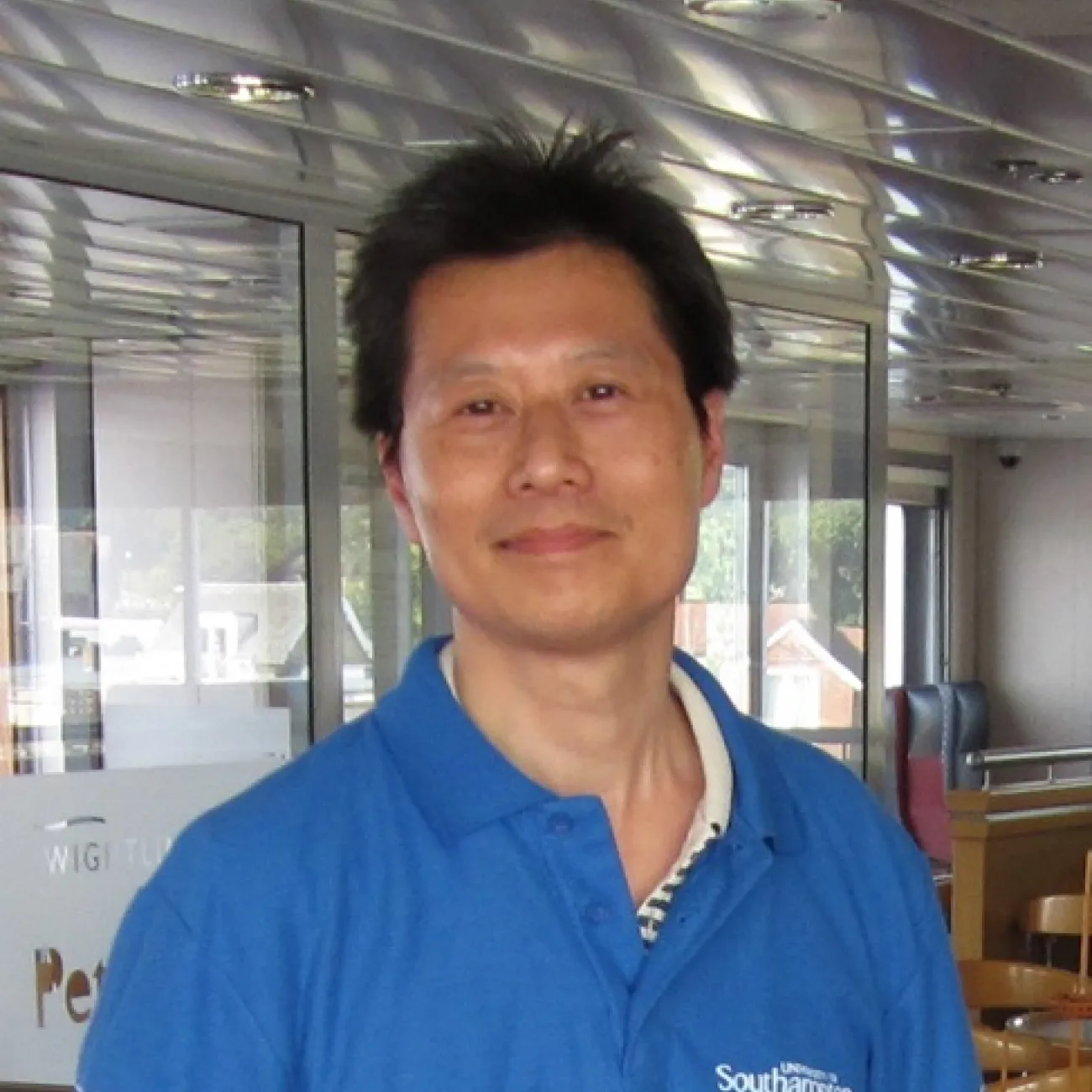
Dr Alan Wong is a Research Fellow at the University of Southampton, focusing on sustainable urban development and transportation planning. His work emphasizes decarbonizing road transport, improving air quality, and promoting active travel modes like walking, cycling, and public transport. He is affiliated with the Transportation Research Group and collaborates with local councils and communities to enhance city livability. Education: Imperial College London (BSc), University of Southampton (Engineering Doctorate). He holds business and technology qualifications, and is a Fellow of Advance HE and the Royal Society of Arts. Research Projects: Active projects include the Solent Future Transport Zone, Metamorphosis: Transforming Neighbourhoods, and the Centre for Sustainable Travel Choices. Completed projects include studies on carbon impacts and congestion relief, as well as transport partnerships with industry. Public Engagement: Alan champions public engagement through festivals like Cheltenham Science Festival and coordinates the Future Cities Community Hub. He has won awards for science communication and research presentation.
Professor Miles Tight is a Professor of Transport, Energy and Environment at the University of Birmingham's School of Engineering. His career spans nearly 30 years in sustainable transport research, with a focus on climate change mitigation, urban mobility systems, and infrastructure interdependencies. He has led and contributed to major interdisciplinary projects such as the EPSRC-funded STEPCHANGE and i-BUILD initiatives, addressing sustainable urban futures and innovative infrastructure financing. His work integrates engineering, social sciences, and policy analysis to develop evidence-based solutions for low-carbon transport systems. Education: BSc (Honours) Geography from the University of Liverpool (1981), PGCE from Goldsmiths' College (1982), and PhD in Transport from University College London (1987). Prior to Birmingham, he held roles at the University of Leeds as a Research Fellow, Lecturer, and Senior Lecturer. Research interests include walking and cycling promotion, urban transport accessibility, and climate-resilient infrastructure. His recent projects explore future transport scenarios, equitable mobility solutions for aging populations, and policy frameworks for sustainable urban development. Notable contributions include co-authoring the International Walking Data Standard and publications on sustainable transport policies and infrastructure valuation. He has advised on over £50 million in research grants, including leadership in EPSRC/ESRC-funded projects. Awards include Fellowship of the Royal Society of Arts (2008). His teaching spans sustainable transport policy, road safety, and synoptic engineering modules.
Professor Gary Higgs is a distinguished academic at the University of South Wales, where he serves as Co-Director of the Wales Institute of Socio-Economic Research, Data and Methods (WISERD) and holds a professorship within the Faculty of Computing, Engineering and Science. With over three decades of academic experience, Professor Higgs leads significant research initiatives focused on spatial analysis and geographic information systems applications in social and health contexts. Co-Director of WISERD since its inception in 2009 Director of the GIS Research Centre at the University of South Wales Lead Principal Investigator for the 'People, Places, and the Public Sphere' research program (2024-2027) Recipient of the USW Impact Award 2019 for research improving mobile cancer services His educational background includes a BSc, PhD, and DSc, establishing a strong foundation for his research career. Professor Higgs is a Fellow of the Royal Geographical Society and has contributed extensively to the academic community through journal reviews, research proposal evaluations, and editorial board service. Professor Higgs' research primarily centers on the application of Geographic Information Systems (GIS) to address critical societal challenges. His work spans accessibility modeling, medical geography, emergency planning, and public participation GIS. He has pioneered methodologies for measuring spatial inequalities in service provision across health, education, and social care sectors, with particular emphasis on multi-modal transport approaches. His research has significantly contributed to understanding how geographical factors influence access to essential services, especially during the COVID-19 pandemic. His recent publications demonstrate a consistent focus on developing innovative spatial analytical techniques to address pressing social issues. Professor Higgs' work shows a clear trajectory toward increasingly sophisticated accessibility modeling that incorporates real-time data, multiple transport modes, and temporal variations. His research has practical applications for policymakers seeking to reduce inequalities in service provision and improve planning for vulnerable populations. USW Impact Award 2019 for research improving mobile cancer services in collaboration with Tenovus Cancer Care Extensive contributions to academic journals as reviewer for over 60 publications Editorial board member for prominent journals including Computers, Environment and Urban Systems Referee for major research councils including ESRC, AHRC, NERC, and EPSRC Professor Higgs actively supervises postgraduate research and teaches on MSc Computing programs, particularly the GIS Principles and Practice module. His leadership extends to the WISERD Data Lab, which supports community-led data collection and citizen engagement in co-production projects. He has been instrumental in developing the WISERD Geoportal, a tool for discovering, analyzing, and visualizing socio-economic data for Wales.