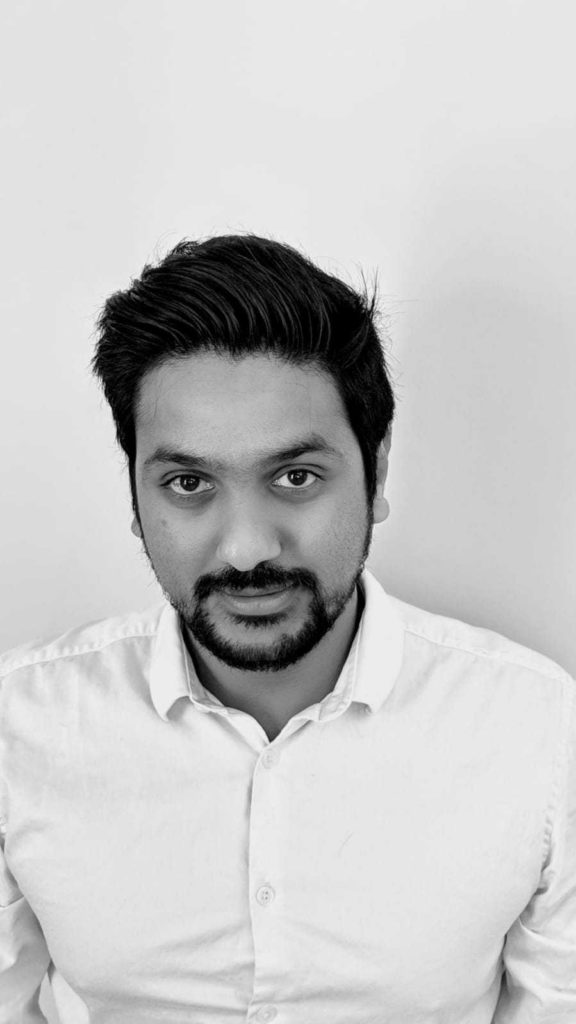
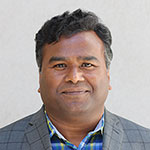
Akash Srivastava is a Research Scientist and Principal Investigator (PI) at the MIT-IBM Watson AI Lab in Cambridge, MA, and Chief Architect of Large Language Model Alignment at IBM Research. His work focuses on generative modeling , Bayesian inference , and machine learning for constrained engineering design . He previously conducted PhD research at the University of Edinburgh under Dr. Charles Sutton and Dr. Michael U. Gutmann on variational inference for generative models using deep learning. His research spans Neuro-Symbolic AI , Language Model Alignment , and Synthetic Data Generation , with applications in 3D modeling , urban logistics , and material science . Recent publications highlight advancements in diffusion models , continual learning , and privacy-preserving data synthesis . As a PI, he collaborates with MIT faculty like Prof. Faez Ahmed and Prof. Rafael Gomez-Bombarelli on projects such as generative modeling for mechanical systems , synthetic data in decision-making , and greener delivery networks . He has received funding through a DARPA grant for machine common sense research.
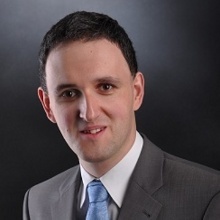
Bernard S. Black serves as Professor of Finance at Kellogg School of Management and the Nicholas D. Chabraja Professor at Northwestern University School of Law, holding a joint appointment since 2010. He concurrently serves as managing director of the Social Science Research Network and founding chairman of the annual Conference on Empirical Legal Studies. His academic foundation includes: B.A. from Princeton University M.A. in physics from University of California at Berkeley J.D. from Stanford Law School Prior academic roles encompass Professor of Law at Stanford Law School (1998-2004) and Columbia Law School (1988-1998). His research centers on empirical analysis of law-finance interactions, with emphasis on corporate governance frameworks in emerging economies, securities regulation, and medical malpractice systems. Methodologically, he integrates legal scholarship with quantitative finance approaches. Recent publications (2016-2022) demonstrate sustained focus on corporate governance validity testing, causal inference methodologies, and cross-country comparative studies—particularly examining Brazil and BRIK nations. Key themes include board structure efficacy, shareholder rights enforcement, and institutional determinants of market value in developing economies. No scientific awards were documented in source materials. While specific student advisees remain unlisted, Professor Black's extensive co-authorship record (including books like The Law and Finance of Corporate Acquisitions ) indicates active research mentorship. His leadership of the Social Science Research Network and Conference on Empirical Legal Studies constitutes significant community-building beyond traditional advising. He directs the Social Science Research Network as managing director and founded the Conference on Empirical Legal Studies, creating platforms for interdisciplinary law-finance scholarship dissemination.
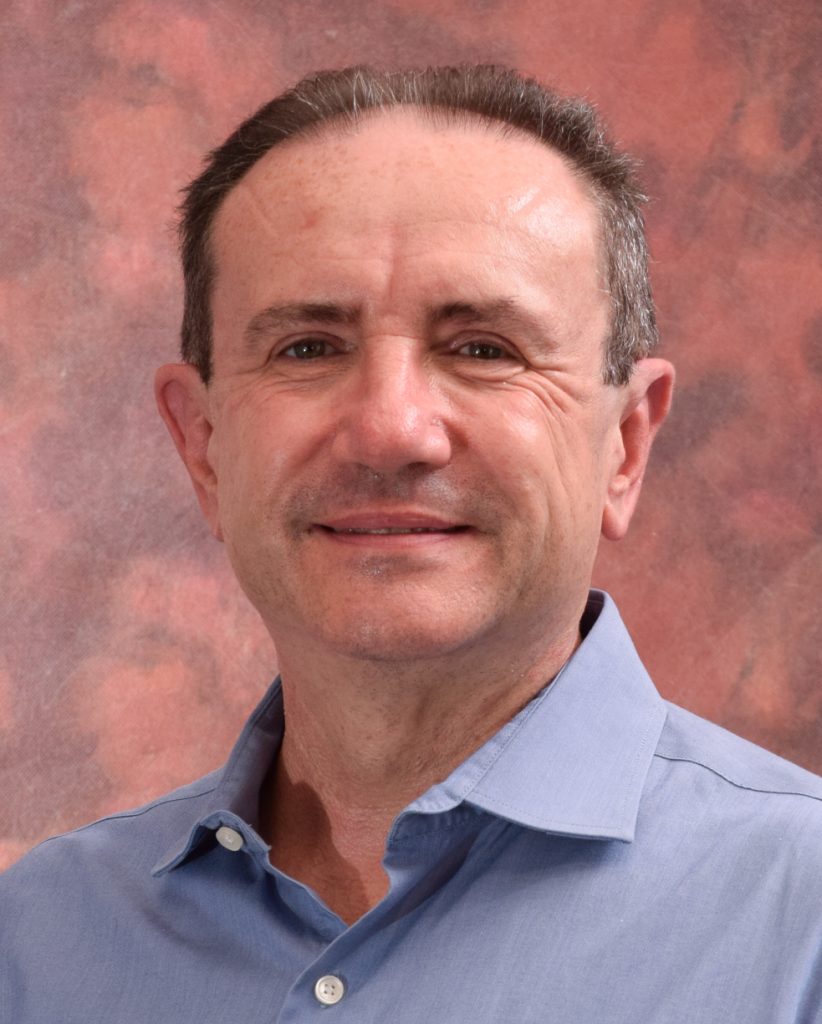
Prof. Ilia Polian serves as Head of the Institute of Computer Engineering and Chair of the Hardware-Oriented Computer Science (HOCOS) department at the University of Stuttgart. His leadership spans research, teaching, and institutional coordination across multiple high-impact projects. Prof. Polian's research focuses on developing circuit and system architectures based on both traditional and novel principles, including neuromorphic, stochastic, and approximate architectures. His second major research focus is systematic design methodology and design automation, with particular emphasis on safety and reliability properties of developed systems. Current research directions include quantum computing engineering, secure mixed-signal neural networks, and resource-efficient stochastic circuits for near-sensor computing applications. His recent publications demonstrate strong trends in quantum computing (particularly circuit partitioning and compilation for multi-QPU architectures), hardware security (including memristive cryptographic implementations), and AI-driven approaches to hardware testing and reliability. These works bridge fundamental computer architecture research with practical industrial applications. University of Stuttgart's Publication Prize for Paper on Partitioning of Quantum Circuits Prof. Polian actively supervises doctoral students including Devanshi Upadhyaya, and leads significant research grants such as the DFG Priority Program Nano Security which he coordinates. His department offers numerous thesis and research opportunities for students interested in cutting-edge hardware research. The Hardware-Oriented Computer Science department maintains strong collaborations with industry partners including IBM, Infineon Technologies, and Advantest, as well as academic institutions through the IQST Graduate School and QuantumBW initiatives.
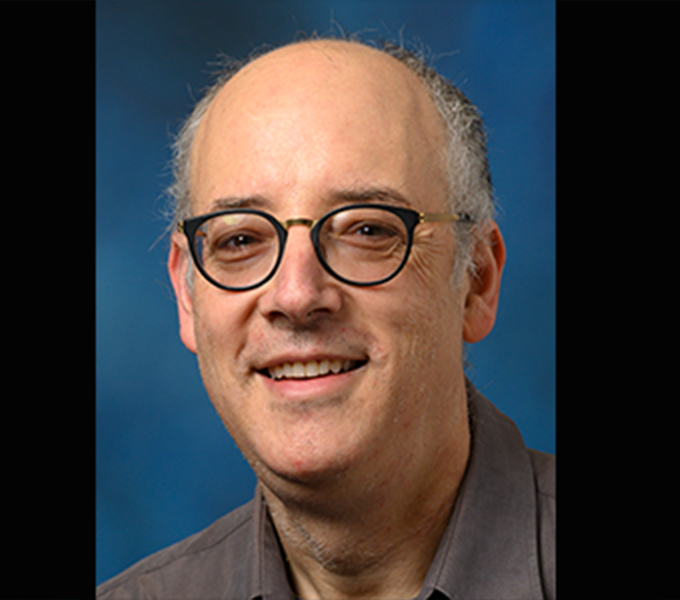
Ole Winther is a Professor at the Department of Biology, University of Copenhagen, specializing in Computational and RNA Biology. He also holds a joint appointment as Professor at DTU Compute, Technical University of Denmark. His research bridges machine learning, bioinformatics, and natural language processing with applications in biological sequence analysis, transcriptomics, and health informatics. Education: 1998: PhD in Physics, University of Copenhagen 1994: Master of Science in Physics, University of Copenhagen Winther's research focuses on developing advanced machine learning methodologies for biological applications. He has pioneered protein language models for sequence analysis (DeepLoc, SignalP, DeepTMHMM), interpretable deep learning for RNA subcellular localization, and benchmarking frameworks for DNA language models. His work spans latent variable models, variational inference, diffusion models, and novel architectures for deep generative modeling, with increasing emphasis on practical healthcare applications including rare disease diagnosis through findzebra.com and medical question answering with large language models. Scientific Recognition: ELLIS Fellow (2021) Head of ELLIS Copenhagen Unit H-index of 61 (Google Scholar, May 2023) 19,700+ citations (Google Scholar, May 2023) Winther has supervised 25+ PhD students to completion with 7 currently in progress, along with over 100 master's projects. He frequently serves as PhD opponent and committee chairman across European institutions. His research is supported by substantial funding including multiple Novo Nordisk Foundation grants totaling over 60 million DKK for the Center for Basic Machine Learning Research in Life Science and CAZAI projects, plus significant funding from the Danish Independent Research Fund. He leads an active research group developing cutting-edge machine learning approaches for bioinformatics and NLP challenges. Winther co-founded two spin-out companies: findzebra.com (2014, 2018), a search engine for rare diseases, and raffle.ai, an NLP startup for enterprise search. He initiated DTU's popular BSc in AI and Data program and teaches the highly enrolled MSc course in Deep Learning (450+ students) and PhD course in Bayesian Data Analysis.
Deg-Hyo Bae is a Professor in the Department of Civil and Environmental Engineering at Sejong University, serving since 2001, and concurrently holds the position of University President since 2018. His academic career spans leadership roles including Assistant/Associate Professor at Changwon National University (1996-2001), Senior Researcher at Yonsei University (1994-1996), and Researcher at the US Department of Agriculture-ARS (1992-1994). His research focuses on critical water security challenges through advanced hydrological modeling and climate impact assessment. His academic credentials include a Ph.D. (1992) and M.S. (1989) from the University of Iowa, and a B.S. from Yonsei University (1983). These qualifications form the foundation for his interdisciplinary expertise bridging civil engineering, atmospheric science, and environmental informatics. Professor Bae's research program centers on atmosphere-surface interactions, climate-driven hydrological extremes, and real-time prediction systems. His work integrates radar meteorology, GIS analytics, and climate modeling to develop operational tools for flood forecasting, drought monitoring, and transboundary water management. Major achievements include the Global Water Bank system and coupled atmosphere-urban flood models, directly supporting UN Sustainable Development Goals for clean water and climate action. Recent publications (2024-2025) reveal a strategic shift toward AI-enhanced hydrology, combining Bayesian uncertainty quantification with deep learning for streamflow prediction. His work increasingly addresses climate change impacts on extreme events in vulnerable regions like Burundi while exploring teleconnection mechanisms such as ENSO-ozone interactions through CMIP6 frameworks. Professional activities include media coverage of Sejong University's research impact (2021-2022) and international collaborations with Slovak presidential advisors. While specific grant details and student advising records aren't documented in the source material, his 111 publications and h-index of 25 demonstrate significant scholarly influence in water resources engineering.
Shuangping Li is an Assistant Professor in the Department of Statistics and Data Science at Yale University. She was previously a Stein Fellow in the Department of Statistics at Stanford University (2022–2025). Her research lies at the intersection of probability theory, high-dimensional statistics, theoretical machine learning, and the theory of algorithms. Ph.D. in Applied and Computational Mathematics, Princeton University (2022) B.Sc. in Mathematics, University of Hong Kong Her research interests include probability theory , high-dimensional statistics , theoretical machine learning , and theory of algorithms . She investigates foundational aspects of random constraint satisfaction problems, neural networks, spectral methods, and phase transitions in high-dimensional models. Her work often draws from statistical physics and combinatorics to explain algorithmic behavior. The recent articles highlight a strong focus on binary perceptrons , clustering in network models , and algorithmic phase transitions . Keywords across publications include probability, theoretical computer science, machine learning, and statistical inference. Subfields reveal deep engagement with spin glass theory, discrepancy minimization, spectral embedding, and information-computation gaps. Scientific awards include: Stein Fellow, Department of Statistics, Stanford University (2022–2025) She has advised and taught at both Stanford and Yale, including courses such as Advanced Probability , Theory of Probability , and Stochastic Processes . She has organized seminars at Stanford and has delivered invited talks at institutions including Cornell, Duke, UC Berkeley, and Princeton. Her collaborative research involves prominent scholars such as Allan Sly, Emmanuel Abbe, and Tselil Schramm. There is no mention of external grants, but her postdoctoral fellowship suggests research funding support. She is involved in academic service through organizing the Stanford Statistics and Probability Seminars. She maintains an active research presence with publications in top venues like STOC, FOCS, COLT, ICLR, and journals such as Annals of Probability and Annals of Statistics .
Kentaro Inui is a distinguished researcher at Tohoku University , specializing in Natural Language Processing , Computational Linguistics , and Machine Learning . His work focuses on advancing language model behavior through rigorous empirical analysis, including mechanisms for detokenization , entity identification , and numerical reasoning . Inui has pioneered methods to rectify spurious beliefs in LLMs via unlearning techniques and explored the dynamics of reasoning strategies in neural models. His research addresses chat translation quality through metrics like MQM-Chat and investigates repetition neurons responsible for text generation patterns. Inui also contributes to argumentation analysis with annotation frameworks like LPAttack and develops resources such as COPA-SSE for commonsense reasoning. His work on universal graph-based relation extraction and cross-stitching architectures has established new benchmarks in NLP task performance. Inui's publications span top-tier conferences including ACL , EMNLP , and LREC , often involving collaborations with researchers like Benjamin Heinzerling and Jun Suzuki. His methodological innovations in semi-structured explanation generation , position embedding (e.g., SHAPE), and zero pronoun resolution demonstrate his focus on both theoretical and practical NLP challenges. While no direct awards or student mentorship data appear in the provided corpus, his extensive publication record (over 20 papers between 2021-2025) underscores significant contributions to NLP education tools , knowledge base integration , and dialogue system consistency . Current projects like ReCall mechanisms and numerical property encoding directions highlight his ongoing impact on model interpretability and reasoning accuracy.
Daniel (Danny) Zane is Associate Professor of Marketing at Lehigh University’s College of Business, where he also holds the endowed Class of ’61 Professorship. His scholarship centers on consumer psychology, with particular attention to how marketplace information shapes consumer inferences, ethical decision-making, and brand evaluations. Education & Professional Background: Ph.D. in Marketing, The Ohio State University Former Marketing Analyst, Harte-Hanks Research Interests: Professor Zane investigates the cognitive and emotional processes that underlie consumer judgments. His work examines how consumers draw inferences about themselves and about companies from advertising, promotions, and social-media content. He applies these insights to domains such as sustainability marketing, pharmaceutical marketing, and public-health messaging, with an overarching concern for consumer well-being. Publication Trends: Across more than fifteen recent publications (2015-2024), Zane’s research has consistently explored metacognitive inferences, ethical consumption barriers, promotional framing effects, and the psychological consequences of multitasking with advertising. His empirical studies appear in premier journals including the Journal of Marketing Research , Journal of Consumer Research , and Harvard Business Review , and have garnered coverage in national media outlets such as NPR and Reuters. Scientific Awards: Mary Kay Inc. Dissertation Proposal Competition – First Place (Academy of Marketing Science) Emerging Scholar in Marketing Communications Award (AMA Marketing Communications SIG) Advising & Funding: While specific student names are not listed, Professor Zane actively mentors doctoral and master’s candidates in consumer-behavior research. His projects have received recognition and support via competitive dissertation and emerging-scholar awards. Contact & Resources: Office: RBC 382 (inside RBC 385), Lehigh University Email: dzane@lehigh.edu Phone: 610-758-4479 Courses: Consumer Behavior, Principles of Marketing Google Scholar: Profile
Fabrizio Riguzzi is a Full Professor at the Department of Mathematics and Computer Science of the University of Ferrara, Italy. His academic career spans over two decades at the same institution, having served as Associate Professor (2014-2020) and Assistant Professor/Ricercatore (1999-2014). He is an active researcher in the fields of Logic Programming and Statistical Relational Artificial Intelligence with numerous publications and leadership roles in international conferences. His educational background includes: PhD in Electronic and Computer Engineering from the University of Bologna (1999) Laurea in Computer Engineering from the University of Bologna (1995) Riguzzi's research focuses on probabilistic approaches to artificial intelligence, particularly probabilistic logic programming and statistical relational AI. His work bridges symbolic reasoning with probabilistic methods, developing frameworks for uncertain knowledge representation and reasoning. He has made significant contributions to probabilistic answer set programming, neuro-symbolic integration, and applications in areas like network intrusion detection and knowledge graph completion. His research demonstrates how logical formalisms can be enhanced with probabilistic reasoning to tackle real-world problems with uncertainty. An analysis of his recent publications reveals a strong trend toward integrating neural and symbolic approaches in AI, with significant work on probabilistic answer set programming frameworks. His research spans theoretical foundations of probabilistic logic programming, practical implementations, and applications in cybersecurity, knowledge graphs, and decision-making under uncertainty. The interdisciplinary nature of his work connects computer science theory with practical AI applications. His notable awards include: Alain Colmerauer 10-Year Test-of-Time Award at ICLP 2021 Best Paper Award for "BUNDLE: A Reasoner for Probabilistic Ontologies" at RR-2013 Highly Commended Paper Award for "Probabilistic declarative process mining" at KSEM 2010 Riguzzi has supervised several PhD students to completion, including Elena Bellodi, Riccardo Zese, and Giuseppe Cota, who have gone on to win prestigious awards for their theses. He has served in numerous editorial roles, including Associate Editor of the Journal of Artificial Intelligence Research and Editor in Chief of Intelligenza Artificiale. His leadership extends to organizing major conferences like ILP 2018 and serving on program committees for top AI venues including IJCAI, AAAI, and ECAI. He is a member of the ML@unife research group and has developed several online systems including cplint, TRILL, and an Online AUC calculator. His work has fostered collaborations across the AI research community, particularly in the areas of probabilistic logic programming and neuro-symbolic AI.
Dr. Jia Rao is an Associate Professor in the Department of Computer Science and Engineering at the University of Texas at Arlington, College of Engineering. He previously served as an Assistant Professor at the University of Colorado, Colorado Springs from 2012 to 2016. His research spans operating systems, distributed and parallel computing, cloud computing, virtualization, and machine learning. Education: Ph.D., Computer Engineering, Wayne State University, 2011 M.S., Computer Science, Wuhan University, 2006 B.S., Computer Science, Wuhan University, 2004 Dr. Rao's research focuses on building adaptive, scalable, and efficient computer systems for cloud and data center environments. His interests include resource management, performance modeling, adaptive scheduling, and quality-of-service (QoS) guarantees in virtualized and containerized systems. He combines machine learning and feedback control techniques with low-level system design to improve efficiency, fairness, and predictability in heterogeneous and multi-tenant environments. An analysis of his recent publications reveals a strong trend toward memory and resource management innovations in cloud-native systems. His work explores tiered memory architectures, secure container deployment, preemptive multitasking for deep learning, and efficient packet processing in container networks. These efforts reflect a consistent focus on optimizing system-level performance, security, and scalability in modern data centers. Scientific Awards: NSF CAREER Award (2019) Best Paper Award, APSys (2016) Best Paper Award, ICAC (2013) Best Paper Nomination, HPCA (2013) Best Paper Nomination, HPDC (2013) Best Paper Award, Middleware (2021) Researcher of the Year, UCCS (2014) Dr. Rao actively advises students and serves on dissertation and thesis committees for numerous Ph.D. and Master’s candidates. He leads federally funded research projects supported by the National Science Foundation, including a major CAREER grant on virtualized architectures and collaborative big data initiatives. His research has been sponsored by NSF, IEEE, and Intel Corporation, reflecting strong industry and academic collaboration. He leads and contributes to major research labs and teams focused on cloud systems, operating systems, and performance optimization. His team has produced high-impact work in top-tier venues such as OSDI, SOSP, ATC, EuroSys, and ICDCS. Current and future work includes next-generation memory architectures using CXL, intelligent resource provisioning, and resilient container networking.
Harry Hochheiser is an Associate Professor at the University of Pittsburgh School of Medicine, affiliated with the Department of Biomedical Informatics and the Intelligent Systems Program. He serves as Director of the Biomedical Informatics Training Program and is a Pitt Cyber Affiliate Scholar, focusing on interdisciplinary research at the intersection of computer science and healthcare. Education: MS and BS in Electrical Engineering and Computer Science from MIT (1991) His research spans human-computer interaction, information visualization, bioinformatics, universal usability, security, privacy, and public policy implications of computing systems. He emphasizes user-centered design for biomedical data exploration, including electronic health records and clinical informatics. His recent work includes NSF-funded projects on computer security education and computational thinking, alongside teaching courses in algorithms, human-computer interaction, and information visualization. Analysis of his publications reveals a focus on biomedical informatics, machine learning in healthcare, clinical data modeling, and natural language processing applications. Collaborative efforts include projects on gene networks, drug interactions, and clinical decision support systems. His current projects aim to develop interactive systems for biomedical data exploration, with applications in cancer informatics, pharmacogenomics, and clinical workflow optimization. He actively contributes to evaluation frameworks for visual analytics in healthcare and participates in policy discussions through roles like the Association of Computing Machinery's US Public Policy Committee.
Gabriella Casalino is an Assistant Professor at the University of Bari Aldo Moro, Department of Computer Science, and a key researcher at CILAB - Computational Intelligence Lab. Her work focuses on Computational Intelligence methods for interpretable data analysis, particularly in eHealth, Data Stream Mining, and eXplainable Artificial Intelligence (XAI) within medical and educational domains. She has contributed to innovative approaches in smartphone-based health monitoring, fuzzy logic applications, and remote vital sign detection via photoplethysmography. Education : Ph.D. in Computer Science, with advanced training at institutions like Universitat de Girona and Université de Mons. Research Trends : Recent publications highlight applications of evolving granular computing, neuro-fuzzy systems, and explainable AI in hypertension prediction, bipolar disorder monitoring, and educational data analysis. Key subfields include remote health monitoring, medical data streams, and hybrid AI models. Grants : Research funded by AIRC (Italian Cancer Research Foundation), focusing on computational methods for healthcare challenges. Labs & Collaborations : Active in CILAB, collaborating on projects involving mHealth solutions, cardiovascular risk assessment, and intelligent educational systems.
Dr. Shakhawat Hossain is a Professor of Statistics at the University of Winnipeg, serving as Chair starting July 2025. He holds adjunct positions at the University of Manitoba and University of Regina. His academic journey includes a PhD from the University of Windsor (2008), postdoctoral training at the University of Alberta's School of Public Health (2008–2010), and prior faculty roles at Alabama A & M University. He specializes in advanced statistical methodologies with applications in health sciences and epidemiology. Dr. Hossain's education includes: Ph.D. in Statistics, University of Windsor M.Sc. in Statistics, University of Alberta M.Sc. in Mathematics, Jahangirnagar University, Bangladesh B.Sc. (Hons.) in Mathematics, Jahangirnagar University, Bangladesh His research focuses on shrinkage estimation techniques , longitudinal data analysis , survival analysis , and health services research . He actively applies these methods to study dengue transmission dynamics, neuroimaging correlates of developmental disorders, and clinical outcomes in pediatric populations. His work bridges theoretical statistical innovation with real-world public health challenges. Dr. Hossain currently holds an NSERC Discovery Grant supporting student research. His 2023-2024 publications emphasize spatial epidemiology, advanced survival models, and dengue fever dynamics. He serves as Associate Editor of the Journal of Statistical Computation and Simulation . His advisory and grant activities include mentoring students in statistical modeling and securing funding for interdisciplinary health projects. While specific lab affiliations are not explicitly stated, his collaborations span departments in statistics, public health, and biomedical sciences.
Yang Liu is an incoming Assistant Professor at Florida State University (Fall 2025) and currently a Senior Research Associate and Affiliated Lecturer in the Department of Computer Science and Technology at the University of Cambridge. She holds a B.E. in Software Engineering from Xi’an Jiaotong University (2016) and a Ph.D. in Computer Science from City University of Hong Kong (2020), advised by Prof. Zhenjiang Li. Her research focuses on intelligent mobile/wearable sensing technologies, combining AI and signal processing to advance applications in human-computer interaction (HCI), smart health, and IoT. She has received notable awards such as the 2024 N2Women Rising Star Award and the 2021 ACM SIGBED Doctoral Thesis Award. Research interests span mobile systems, AI-driven wearable sensing, privacy in human interactions, and healthcare monitoring. Key projects include RespEar (earable-based respiratory monitoring), SmarTeeth (toothbrushing tracking), and WearIoT (privacy-aware wearable systems). She mentors students in areas like biomedical signal processing and secure wearable systems. Teaching includes Mobile/Wearable Systems courses at Cambridge and previously at City University of Hong Kong. Education: B.E. Software Engineering, Xi’an Jiaotong University (2016) Ph.D. Computer Science, City University of Hong Kong (2020) Grants & Services: Organizing roles in ACM SIGCOMM, IEEE ICPADS, and multiple conference TPCs. Invited talks at Columbia University, Purdue University, and others. Her work bridges mobile computing with health applications, addressing both technological innovation and societal impacts through over 30 peer-reviewed publications and industry collaborations.
Marten Scheffer is a Full Professor at Wageningen University & Research , specializing in Aquatic Ecology and Water Quality Management . His work bridges ecology, climate science, and mental health, focusing on tipping points in ecosystems and social systems. He has received the prestigious Spinoza Prize 2009 , Netherlands' highest scientific honor. Research Interests: His research explores Anthropocene dynamics , ecological resilience , climate change impacts , and psychiatric disorders through dynamical systems theory . Notable projects include studying boreal forest collapse and trust dynamics in economies. His work also addresses global sustainability and early warning signals for critical transitions in social-ecological systems. Recent Articles: His 2025 publications highlight trust erosion in weak governance , ecological tipping points , and revolutionizing psychiatric diagnosis . 2024 work includes computational models of panic disorders and resilience indicators for disease outbreaks. Advising & Grants: He supervises PhD students including Agrawal (river commons), Capriati (marine protected areas), and Delecroix (infection warnings). Active in projects funded across ecosystem resilience , AI applications , and climate policy . Labs & Collaborations: Collaborates globally on tipping points research and mental health systems. Datasets include boreal forest dynamics and human climate niche models.