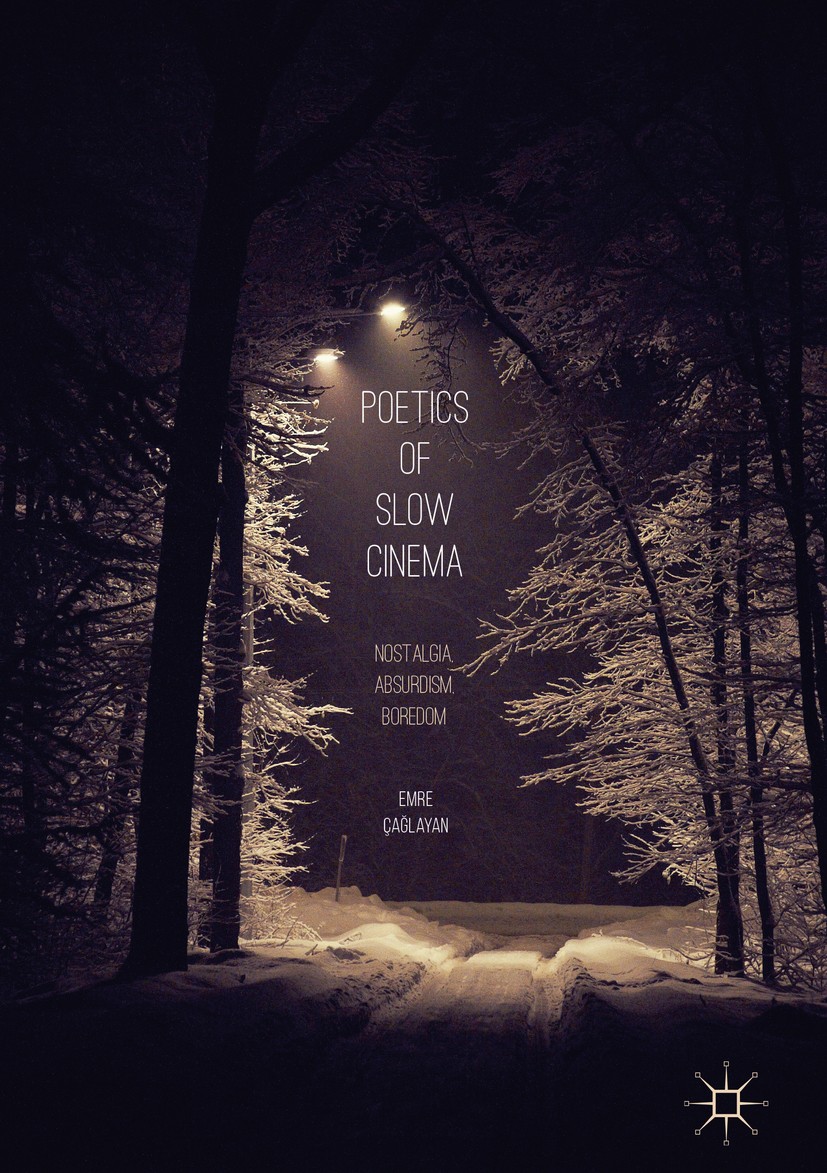
Emre Caglayan is an Assistant Professor and Program Coordinator for Film Studies at the American University of Paris (AUP). He holds a PhD in Film Studies from the University of Kent (2014) and an MA in Film and Television from Istanbul Bilgi University (2009). His research focuses on global art cinema, slow cinema aesthetics, and the intersection of cinematic form with embodied experiences like walking. Caglayan’s work explores how cinema shapes lived experiences through close analyses of film texts and their cultural contexts. Key research interests include the affective qualities of film sound, urban space representations, and ethical dimensions of political filmmaking. His monograph Poetics of Slow Cinema: Nostalgia, Absurdism, Boredom (Palgrave, 2018) is a seminal work in slow cinema studies. He currently investigates walking as an artistic practice linked to cinema, curating film seasons and designing participatory walking activities. Caglayan teaches courses on film theory, international cinema, and cinematic history at AUP. His work has been published in journals like Quarterly Review of Film and Video , Projections , and Jump Cut , with recent contributions on Turkish cinema and film/music intersections.
Nicolas Mathevon is a Professor at the University of Saint-Etienne, with a focus on Animal Behavior and Bioacoustics . He currently serves as Director of Studies at Ecole Pratique des Hautes Etudes and leads the ENES Team . His research explores acoustic communication across diverse species, including crocodiles, seals, penguins, and humans, with particular emphasis on vocal recognition, signal evolution, and neurobiological underpinnings. Major collaborations include Dr. T. Aubin (CNRS), Dr. I. Charrier (marine mammals), Dr. N. Grimault (crocodilian bioacoustics), and Prof. D. Reby (human communication). He also co-edits a new book, The Voices of Nature , published by Princeton University Press. His recent work spans ecoacoustic monitoring for conservation, multi-modal communication in crocodiles, and cross-species analysis of distress signals in bonobos, chimps, and humans. Neurobiological studies include brain activation patterns in response to vocalizations and sound localization mechanisms in reptiles. Scientific Awards include senior membership in the Institut universitaire de France .
Mohamed Amara is a full-time Professor at the University of Pau and the Pays de l'Adour (UPPA) since 1996, affiliated with the Laboratory of Mathematics and their Applications (CNRS-UMR 5142). He served as its director (1999-2007), Director of the Doctoral School of Exact Sciences (ED211, 2007-2008), and UPPA's Scientific Council Vice-President (2008-2012). He has been UPPA's President since 2012 (re-elected until 2020). Education: Mathematics from University of Algiers (1973), Pierre and Marie Curie University (DEA 1974, Doctorate 1978, State Doctorate 1983) Academic Roles: Research Associate at Ecole Polytechnique (1978-1982), Algerian Electricity and Gas Company (1983-1992), Professor in Algiers (1988-1994), Tunis (1994-1995), and Associate Professor at Paris 6 (1995-1996) His research focuses on numerical simulation of partial differential equations for environmental/energy applications, including mechanics in porous media (petroleum engineering, geoscience), fluid mechanics (aerodynamics, estuarine hydrodynamics), non-Newtonian flows, and wave propagation. Articles highlight expertise in discontinuous Galerkin methods, Helmholtz problems, finite element discretization, and multiphysics systems. He managed 20 doctoral theses and led national mathematics programs at ANR (2007-2011). He chairs the Cocktail association for higher education IT systems and collaborates with INRIA's Magique 3D team (since 2006).
Teresa Faucon is an Associate Professor and HDR researcher at Sorbonne Nouvelle University (Paris 3), affiliated with the IRCAV research institute. She specializes in cinema and audiovisual aesthetics, montage theory, and postcolonial film studies. Her roles include director of the Cinema and Audiovisual Master's program (2021–2023), and leadership in disability and professional training initiatives. She co-founded key research groups like Indian Cinemas (2012), CREAViS (2015), and Exotismes en champ-contrechamp (2018), focusing on decolonial cinema and exoticism analysis. Her work bridges academic research with creative projects, including the interactive Maps of Film Analysis platform. Research interests span Indian and Southeast Asian cinemas, dance-cinema interactions, and experimental film forms. She has organized 7 international conferences and co-edited major texts like Chorégraphier le film (2019). Recent publications include studies on exoticism's sonic dimensions and non-European cinema. Her digital platform Les cartes de l'analyse de film innovates in nonlinear film analysis through heuristic maps. She co-directs the Formes filmiques and Cinémas en champ-contrechamp book series, promoting global cinema scholarship.
Nicolas Joly is a Researcher at the Le Mans University 's Institute of Acoustics , affiliated with the Transducers team. His work focuses on numerical modeling of acoustics and vibroacoustics, particularly thermoviscous diffusion phenomena in boundary layers. Research Areas : MEMS Transducers, Thermoviscous Fluid Dynamics, Inverse Methods, Composite Material Analysis Recent Contributions : Modeling micro-scale acoustic devices, homogenization of complex elastic moduli in curved beams, and fluid-loaded microbeam dynamics. Scientific Production Trends : Recent publications highlight advanced numerical simulations for miniaturized transducers, inverse methods in material characterization, and thermoviscous effects in MEMS devices. His work bridges acoustics with structural mechanics and sensor design.
Nicolas Riviere is a Professor at INSA Lyon in the Department of Mechanical Engineering, working within the Laboratory of Fluid Mechanics and Acoustics (LMFA - UMR 5509). He is part of the "Fluides complexes et transferts" (Complex Fluids and Transfers) group and the Environment team. His teaching activities primarily focus on fluid mechanics at the Mechanical Engineering Department of INSA Lyon, covering: General balances (mass, momentum, energy) Aerodynamics Compressible flows Numerical simulation of flows Free surface hydraulics Prof. Riviere's research centers on free surface hydrodynamics, with applications to natural and industrial risks. His work takes an experimental approach, utilizing the laboratory's channel facilities, particularly the channel intersection installation. His research spans river floods with compound beds, urban flooding, sanitation networks, torrential flows, and flow-obstacle interactions. He has developed a strong interdisciplinary focus, co-leading the "Baignades en Rivières Urbaines" studio with Oldrich Navratil from University Lyon 2 and the EVS Laboratory. His publication record demonstrates consistent contributions to the fields of fluid mechanics and environmental hydraulics, with recent work focusing on open-channel flows, urban flooding phenomena, vegetation-flow interactions, and experimental techniques for studying complex hydraulic phenomena. His research often bridges theoretical fluid mechanics with practical environmental applications. Prof. Riviere has received recognition for his work in environmental fluid mechanics, with numerous publications in high-impact journals in hydraulic engineering and fluid mechanics. He has supervised multiple PhD students and research projects related to environmental fluid mechanics and has collaborated with various institutions on interdisciplinary research projects addressing water-related challenges. The laboratory where he works, LMFA, provides extensive experimental facilities including wind tunnels, hydrodynamic channels, and advanced measurement techniques such as PIV (Particle Image Velocimetry), LDV (Laser Doppler Velocimetry), and other state-of-the-art instrumentation for fluid flow analysis.
Guillaume Chiavassa is a Professor in Applied Mathematics at Ecole Centrale de Marseille, affiliated with the Laboratoire M2P2 (Mechanics, Modeling and Physical Processes Laboratory). He leads research in the Thermodynamics, Waves, Digital, Interfaces and Combustion team, focusing on advanced computational methods for complex physical phenomena. His research spans wave propagation in porous media, numerical modeling of plasma flows in Tokamak configurations, multilevel schemes for conservation laws, penalization methods for compressible flows, and wavelets in numerical analysis. Chiavassa's work demonstrates exceptional mathematical rigor applied to challenging physical systems, particularly in nonlinear wave dynamics and computational fluid mechanics. His methodologies bridge theoretical mathematics with practical engineering applications. Analysis of his recent publications reveals a strong focus on wave propagation phenomena across diverse media, with significant contributions to numerical methods for nonlinear systems. His work consistently addresses the mathematical challenges of modeling complex physical behaviors including material softening, fractional attenuation in porous media, and plasma dynamics in fusion devices. The interdisciplinary nature of his research connects applied mathematics with mechanical engineering, geophysics, and nuclear fusion technology. Chiavassa leads the PROSPERO Software project and participates in the ANR Espoir research initiative and the Consortium SEISCOPE. His teaching activities include courses on hyperbolic equations, finite elements, and heat transfer, with practical computational components developed for student instruction. He maintains an active research program through Laboratory M2P2, where his team develops advanced numerical methods for simulating complex physical phenomena with applications ranging from environmental engineering to nuclear fusion research.
Théodora PSYCHOYOU is Professor at the Department of Music and Musicology of Sorbonne University and a permanent member of the Institute for Research in Musicology (IReMus – UMR 8223), which she directed from 2022 to 2024. She currently serves as Director of the Collegium Musicæ institute of the Sorbonne University alliance and is responsible for two Master's programs: Interpretation of Early Music - Baroque Music track, and the Franco-Italian Master's in Musicology Research in partnership with the University of Palermo. Her research focuses on the history and mechanisms of discourse on music in 17th and early 18th century France, the economy and status of musical and theoretical sources, and religious music in the 17th century, particularly the works of Marc-Antoine Charpentier (1643-1704). Her specialty areas include early music (Baroque), historically informed practice, history of musical theory, music and science in the 17th and 18th centuries, religious music in the modern era, study of sources, musical ecdotics, reception of antiquity and Hellenism, and the Ancients and Moderns debate. She has organized numerous research seminars and conferences on these topics, including the Hellenism seminar and the ANR Agon project. Her recent publications demonstrate a strong focus on the intersection of music with science, philosophy, and cultural history from the 17th century to contemporary times. She has made significant contributions to understanding the reception of ancient musical thought in modern contexts, the relationship between music and scientific developments, and the cultural significance of musical practices across different historical periods and geographical contexts. Her work spans historical musicology, theoretical approaches, and contemporary applications. Mention spéciale du Prix des Muses 2010 Prix des Muses 2007 dans la catégorie ouvrage collectif As an academic leader, she has directed major research initiatives including the Hellenism seminar, ANR Agon project, and Baroque XXI Praxis. She serves as Vice President of the International Musicological Society (2022-2027) and has held significant administrative roles including Director of IReMus (2022-2024) and Director of Collegium Musicæ (2023-present). Her collaborative work extends to international partnerships, particularly with Greek institutions, reflecting her interest in Hellenism and Mediterranean musical cultures. Her laboratory work focuses on critical musical editions, performance practices, history of musical theories, historiography, gender studies in music, music and religion, iconography, organology, and aesthetics. She leads research teams investigating the intersection of music with other disciplines, particularly through the Collegium Musicæ which connects music with sciences.
Maxime Lanoy serves as an Associate Professor at Le Mans University, France, conducting research at the Institute of Acoustics (LAUM), a joint research unit of Le Mans University and the CNRS. He is a member of the Materials team, which focuses on the acoustics and mechanics of porous materials, contributing to the university's strategic research in physical sciences and engineering. His primary research interests encompass the acoustics of heterogeneous media and multiple scattering phenomena, the design and characterization of acoustic and elastic metamaterials, and the dynamics of flexible structures such as soft strips and elastomers. He investigates wave propagation in unstable structures and complex media, with applications in sound control, imaging, and particle manipulation. This work sits at the intersection of acoustics, materials science, and mechanical engineering, aiming to develop innovative solutions for wave-based technologies. Analysis of Lanoy's recent publications (2018-2025) reveals a consistent emphasis on metamaterials, particularly those utilizing bubble arrays and soft polymers. His research trajectory shows progression from fundamental studies of wave propagation in structured media to applied work on devices for filtering, lensing, and absorption. Key themes include the control of elastic waves in soft materials, the exploitation of space-time interfaces, and the development of broadband acoustic absorbers. These contributions advance the field of wave physics and have potential applications in medical ultrasound, underwater acoustics, and precision manufacturing. No scientific awards, fellowships, or medals were mentioned in the provided text sources. The available information does not specify any graduate students advised by Dr. Lanoy or details of research grants he has secured. His academic role as Associate Professor implies teaching and mentoring responsibilities, but specific advising activities are not documented in the given materials. Lanoy is embedded in the Materials team at LAUM, which operates within a well-equipped laboratory environment featuring advanced facilities for acoustic and ultrasonic measurements, optical methods, and material fabrication. The LAUM institute fosters collaboration across several transversal axes, including metamaterials and nonlinear acoustics, providing a rich interdisciplinary context for his research on wave phenomena in complex media.
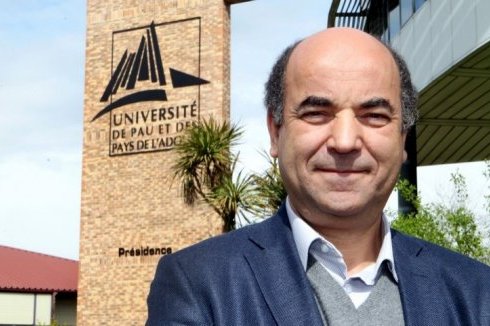
Mohamed Amara is a Professor and President of the Université de Pau et des Pays de l'Adour (UPPA). He is a member of the Inria MAGIQUE-3D team, specializing in numerical analysis and mathematical modeling. His research focuses on finite element methods, computational fluid dynamics, and photovoltaic technologies. He has contributed to advancements in solar energy systems, thermal management of photovoltaic cells, and materials science. Amara has supervised PhD students Elvira Shishenina and Izar Azpiroz, who successfully defended their theses. His work bridges applied mathematics with engineering applications, including studies on estuarian river flows and phase change materials. Roles: Professor, President of UPPA, Inria MAGIQUE-3D researcher Key Research Themes: Numerical Analysis, Solar Energy, Fluid Dynamics Amara's recent publications emphasize structural color metasurfaces, radiative cooling of solar modules, and perovskite solar cell optimization. He collaborates internationally on photovoltaic systems and thermal modeling, addressing challenges in energy efficiency and material performance.
Wouter Bos is a Research Director at CNRS working at the Laboratory of Fluid Mechanics and Acoustics (LMFA) at École Centrale de Lyon, France. He leads research within the Turbulence & Instabilities team, focusing on fundamental aspects of fluid dynamics with applications spanning from plasma physics to epidemiology. His academic journey reflects a deep engagement with theoretical and computational fluid mechanics, particularly in turbulence phenomena. Dr. Bos's research interests center on fluid dynamics, with particular emphasis on turbulence in various contexts including two-dimensional flows, magnetohydrodynamics, plasma physics, and statistical mechanics of fluids. His work explores fundamental questions about energy transfer, coherent structures, and statistical properties of turbulent flows. He has made significant contributions to understanding turbulence without vortex stretching, two-dimensional turbulence, and the application of fluid dynamics principles to epidemiological modeling. Analysis of his recent publications reveals a strong focus on theoretical and computational approaches to turbulence. His work spans from fundamental questions about equilibrium states in two-dimensional turbulence to practical applications in plasma confinement and epidemic modeling. The publications demonstrate consistent innovation in turbulence theory, with particular attention to statistical mechanics approaches, spectral analysis, and the development of reduced-order models for complex fluid phenomena. His research shows growing interdisciplinary connections, especially between fluid dynamics and epidemiology as evidenced by his work on modeling the spread of infectious diseases. Dr. Bos actively supervises doctoral students and postdoctoral researchers, with recent students including Tong Wu, Ryo Araki, Smiron Varghese, Wesley Agoua, and Bruce (Xi Yuan) Yin. He participates in collaborative research projects such as the ANR CM2E project (2021-2025) on Characteristic Mapping Method for the Euler Equations, working with researchers from Aix-Marseille University and McGill University. His laboratory work involves both theoretical analysis and computational simulations, with applications ranging from fundamental fluid mechanics to practical problems in energy research (particularly related to ITER and fusion plasma physics) and public health. The interdisciplinary nature of his research demonstrates the broad applicability of fluid dynamics principles across seemingly disparate scientific domains.
Diogo Barros serves as a Lecturer in the Department of Mechanical Engineering within the Faculty of Science and Technology at Aix-Marseille University. His research activities are centered at the IRPHÉ (Institut de Recherche sur les Phénomènes Hors Équilibre), a prominent research laboratory specializing in non-equilibrium phenomena. His research interests focus on experimental fluid dynamics, thermodynamics, and heat transfer, leveraging IRPHÉ's advanced experimental facilities. This work contributes to fundamental understanding of complex fluid behavior under non-equilibrium conditions. Professional recognition includes an ORCID profile (0000-0003-3839-0203) and active scholarly networking through ResearchGate and LinkedIn. While specific awards are not documented in available sources, his institutional affiliation with IRPHÉ—a joint research unit of CNRS, Aix-Marseille University, and École Centrale de Marseille—signifies engagement in high-caliber research. Dr. Barros participates in academic mentoring within mechanical engineering programs and contributes to departmental research initiatives. His work aligns with IRPHÉ's mission to investigate fluid mechanics, acoustics, and thermal physics through experimental, theoretical, and numerical approaches.
Ronan Vicquelin is a University Professor (1st Class) at CentraleSupélec, Paris-Saclay University, affiliated with the EM2C Laboratory (CNRS). He serves as Head of the Department of Aeronautics, Space and Transport and co-supervises the High Performance Computing Mésocentre. His academic appointments include previous roles as University Professor (2nd class) and Head of Aerospace programs. Education includes Habilitation (University of Rouen Normandy, 2018), PhD in Energetics (École Centrale Paris, 2010), M.Sc. in Mechanical Engineering & Aerospace (École Centrale Paris, 2006), and Engineering Diploma (École Centrale Paris, 2006). Research focuses on turbulent reacting flows with emphasis on: numerical simulation of combustion systems, LES/DNS methodologies, uncertainty quantification, hydrogen combustion dynamics, conjugate heat transfer, and radiative energy transfer. Current investigations explore flame stabilization mechanisms, multi-physics coupling, and high-performance computing applications for aerospace propulsion systems. Publications predominantly address combustion science, with recent works (2021-2025) emphasizing hydrogen flame dynamics, NOx emission control, advanced numerical methods for reactive flows, and experimental validation of turbulent combustion models. Thermal radiation effects and multi-phase flow interactions constitute emerging themes. Advises multiple PhD candidates with projects funded by ANR, EU programs (ACHIEVE, SOPRANO), and industry partnerships (Safran, Air Liquide). Research grants include PEPR OXY3C, ANR HyMaX, and ANR OXYTEC focusing on zero-emission combustion technologies. Leads experimental and computational research at EM2C Laboratory, coordinating teams working on turbulent combustion diagnostics, high-fidelity simulations, and development of the Mésocentre HPC infrastructure for large-scale CFD.
Corinne Dejous is a Professor at the University of Bordeaux, affiliated with IMS Bordeaux (Institut des Matériaux et Systèmes Microélectroniques de Bordeaux) within the College of Engineering. She leads research in the WAVES group, specifically in the DEVICES, MATERIALS, ZEROPOWER team, focusing on advanced sensor technologies. Her work bridges microelectronics, nanotechnology, and environmental monitoring applications. Her primary research interests include acoustic wave sensors, particularly Love wave devices, microwave sensors, biosensors, microfluidics, and energy harvesting for wireless sensor networks. Dr. Dejous has pioneered developments in multiparameter sensing for complex liquids, heavy metal detection, humidity monitoring, and flexible sensor platforms. Her research demonstrates a strong emphasis on practical applications for environmental monitoring, healthcare, and Internet of Things (IoT) technologies. Analysis of her recent publications reveals a consistent focus on advancing sensor sensitivity and reliability through novel materials (including nanomaterials and polymers), innovative modeling approaches (FEM and equivalent circuit models), and hybrid sensing platforms that combine acoustic, optical, and electrical measurement techniques. Her work increasingly addresses sustainability concerns, with research on green laboratory practices and reduced environmental impact of sensor technologies. Dr. Dejous maintains active collaborations with researchers across multiple institutions and has contributed significantly to both fundamental sensor science and practical implementations. Her work spans from theoretical modeling to device fabrication and real-world testing, including field deployments such as in the Amazon River for water quality monitoring.
Yohan PETETIN is an Associate Professor at Telecom SudParis (Institut polytechnique de Paris) in the CITI Department. His research focuses on Bayesian filtering, Monte Carlo methods, hidden Markov models, and multi-object tracking. He has authored over 20 peer-reviewed articles since 2011, with notable contributions in IEEE Transactions on Signal Processing and other top venues. His work bridges statistical signal processing with machine learning applications. PhD: Algorithmes de restauration bayésienne mono- et multi-objets dans des modèles Markoviens (2013, Telecom SudParis) HDR: Generative models for time series data (2023, Institut polytechnique de Paris) Research interests emphasize sequential Monte Carlo algorithms, particle filtering optimizations, and deep learning integration for time-series analysis. Recent work explores expressivity comparisons between recurrent neural networks and hidden Markov models. Teaching includes courses on probabilistic graphical models, Bayesian filtering, and deep learning across undergraduate and graduate programs at Telecom SudParis and affiliated institutions.