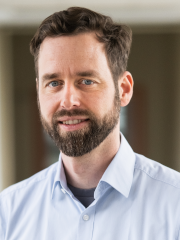
Prof. Dr. Frederik Tilmann is a leading seismologist at the GFZ German Research Centre for Geosciences (Section 2.4 Seismology) and a professor at the Freie Universität Berlin . His work focuses on seismic waveform analysis to understand geodynamic processes in subduction zones and continental collisions. Current affiliations: Head of Seismology Section, GFZ Potsdam University Professor, Freie Universität Berlin Research interests include: Earthquake source characterization Seismic tomography methods Mantle dynamics and lithospheric deformation Machine learning applications in seismic data analysis Volcano-seismic monitoring Ocean bottom seismology techniques Recent publications highlight advancements in: Full waveform inversion for mantle dynamics Machine learning for seismic phase picking Anisotropy studies in Alpine and Himalayan regions Subduction zone microseismicity analysis Volcano-induced landslide detection Scientific awards include: Feodor-Lynen Fellowship (Humboldt Foundation) Trinity Hall College Staff Fellowship Multiple citations in high-impact journals Collaborative work spans global seismic infrastructure projects like SMART cables, the Collaborative Seismic Earth Model, and the AlpArray network. His methodology innovations in shear wave splitting and depth phase picking have become standards in computational seismology.
Prof. Bernhard U. Seeber is an Extraordinary Professor at the Technical University of Munich (TUM), leading the Chair of Audio Signal Processing within the TUM School of Computation, Information and Technology. His work bridges auditory neuroscience and engineering, focusing on improving hearing aids, cochlear implants, and virtual acoustic systems. He holds affiliations with the Bernstein Center for Computational Neuroscience, Munich Institute of Biomedical Engineering, and others. Education: Studied and earned his PhD (2003) in Electrical Engineering and Information Technology at TUM. Postdoctoral research included time at UC Berkeley and the MRC Institute of Hearing Research (UK), where he pioneered studies on binaural hearing and cochlear implant optimization. Research Interests: Combines experimental and theoretical approaches to explore auditory scene analysis, binaural unmasking, and spatial hearing. Key areas include signal coding for cochlear implants, virtual acoustics, and non-destructive acoustic monitoring. His work emphasizes interdisciplinary collaboration with industry and academia. Awards: Lothar Cremer Award (2010), Emmy Noether Fellowship (2007), and recognition from the German Acoustical Society. Teaching: Offers courses on audio communication, computational neuroscience, and technical acoustics. Projects: Leads initiatives like HAPPAA and Auralization, advancing sound field synthesis and hearing aid algorithms. Current Roles: Head of Chair of Audio Signal Processing, Board Member of DEGA, and spokesperson for the ITG Technical Committee on Hearing Acoustics.
Prof. Serge A. Shapiro is a Full Professor of Geophysics at Freie Universität Berlin since 1999 and Director of the PHASE consortium since 2004. He holds a Diploma in Applied Geophysics from Lomonosov Moscow State University (1982), a PhD from the Moscow Research Institute of Geosystems (1987), and a Habilitation from Karlsruhe University (1995). His research focuses on seismogenic processes, induced seismicity, rock physics, and subduction zone dynamics, with applications to geothermal energy, CO2 storage, and hydraulic fracturing. Education: Diploma in Applied Geophysics, Lomonosov Moscow State University (1982) PhD in Geophysics, Moscow Research Institute of Geosystems (1987) Habilitation, Karlsruhe University (1995) Research Interests: Induced seismicity from fluid operations CO2 storage and hydraulic fracturing risks Seismic hazard assessment Rock physics under stress Key Contributions: Developed the Seismogenic Index Model for induced earthquakes Pioneered DAS-based seismic monitoring techniques Advanced understanding of fault stability and pressure diffusion effects Awards: Virgil Kauffman Gold Medal (2013) for work in microseismic monitoring and rock physics Grants & Projects: PHASE consortium leader (2004–present) Utah FORGE EGS project advisor Labs/Teams: Seismology Group, Freie Universität Berlin PHASE university consortium
Herbert Buchner is a researcher affiliated with the University of Cambridge in the Information Engineering Division , focusing on Machine Learning for Signal Processing and Human-Machine Interfaces . Research Interests : Acoustic scene analysis, biomedical interfaces, haptic systems, wave-domain adaptive filtering, and sensor networks. Applications : Speech recognition, wavefield synthesis, active noise control, and full-duplex communication systems. His work explores TRINICON (a framework for broadband adaptive MIMO filtering), blind source separation, and wave-domain filtering, emphasizing theoretical rigor and real-time implementation. Key Awards : Best Paper Award at ITG Conference on Speech Communication (2008) Best Student Paper Award at IEEE Intl. Workshop on Acoustic Echo and Noise Control (2001) Publications highlight 15 recent articles in areas like: Wave-Domain Adaptive Filtering Blind Source Separation for Convolutive Mixtures Robust Extended Multidelay Filters Multichannel Acoustic Echo Cancellation Active Room Compensation Biomedical Signal Processing
Prof. Dr.-Ing. André Jakob is a faculty member at Berlin University of Technology , affiliated with the Department VII - Electrical Engineering - Mechatronics - Optometry. His academic role spans teaching and research in digital signal processing, audio technology, and acoustics. Digital Signal Processing Audio Technology Acoustics Active Noise Control His research focuses on active noise control , simulation of moving sound sources , and audio signal processing , with applications in robotics, building acoustics, and medical devices. Publications include advancements in anti-noise window systems , sound source localization , and acoustic measurement techniques . His recent work explores real-time auralization for educational robotics and nonlinear acoustic modeling with neural networks. The 15 most recent articles demonstrate a consistent focus on acoustic simulation , active control systems , and sound propagation modeling , with conference contributions at DAGA, NAG-DAGA, and international acoustics events. Topics range from dental drill noise reduction to active sound design in musical instruments , reflecting interdisciplinary applications. He supervises numerous Master's and Bachelor's theses in areas like real-time signal processing, deep learning for sound recognition, and virtual acoustics. His lab at TU Berlin explores multi-loudspeaker systems , acoustic beamforming , and active noise cancellation for both industrial and consumer applications.
Claudia Lenk serves as Full Professor at Ulm University since 2024, leading the Biomedical Sensor Systems and Microsystems research group. Her work focuses on developing bio-inspired acoustic sensors to enhance human and machine hearing capabilities, particularly for speech processing in noisy environments through MEMS-based adaptive technologies. Education: Technical Physics, TU Ilmenau PhD in Biophysics (specializing in numerical/chemical modeling of atrial fibrillation mechanisms) Postdoctoral research developing MEMS-based artificial hair cells for hearing enhancement Her research integrates bio-inspired engineering with acoustic sensor design to create noise-robust systems that mimic biological hearing mechanisms. Key innovations include tunable MEMS resonators, neuromorphic auditory processing, and integrated signal pre-processing for hearing aids and robotics. This interdisciplinary approach bridges microsystems engineering, neuroscience, and auditory perception to address limitations in current speech processing technologies. Analysis of her 15 most recent publications (2020-2025) reveals a consistent trajectory toward adaptive neuromorphic acoustic systems. Dominant themes include resonance frequency control, dynamic range expansion through nonlinear dynamics, and bio-inspired feature extraction for low signal-to-noise ratio environments. These advancements target practical implementations in energy-constrained devices like hearing aids and autonomous systems. Scientific Awards: No awards documented in source materials Advising and Grants: Source materials contain no information regarding student supervision, research grants, or collaborative funding initiatives. Labs and Teams: She directs Ulm University's Biomedical Sensor Systems and Microsystems group, which develops cutting-edge sensor technologies for hearing applications, robotics, and speech processing systems through MEMS fabrication and neuromorphic computing approaches.
Ashwin Ram is a postdoctoral researcher at Saarland University's Human-Computer Interaction & Interactive Technologies Lab, under Prof. Jürgen Steimle. He holds a PhD in Computer Science from the National University of Singapore (NUS), advised by Prof. Shengdong Zhao, and a Bachelor's in Electronics Engineering from NIT Trichy. His research focuses on wearable augmented reality, smart glasses, and accessibility, leveraging cognitive and behavioral theories to design intelligent interfaces. Notable contributions include Mindful Moments (DIS '23, Honorable Mention), a mindfulness tool for smart glasses, and a quadruped robot guidance system for visually impaired individuals (CHI '24, Honorable Mention). He has served as an Associate Chair (AC) for UIST 2025 and CHI 2025. His work bridges HCI with wearable computing, exploring topics like video learning optimization (LSVP, IMWUT '21), sound source localization via neural networks (NCC '18), and accelerating Hawkes processes for event modeling (ICML '17 workshop). He collaborates internationally, including a research visit at UCL's Multi-Sensory Devices Group. Key achievements include 17 peer-reviewed publications (Google Scholar, ORCID: 0000-0003-1430-8770) and interdisciplinary projects like semantic floor map-based robot navigation. Beyond academia, he practices Carnatic music, plays guitar, and is fluent in Malayalam, Tamil, and English, with proficiency in French, German, and Hindi.
Prof. Dr.-Ing. Sabine C. Langer is a Full Professor of Acoustics and Director of the Institute of Acoustics at Technische Universität Braunschweig. She holds a PhD in Engineering and has extensive experience in academia, including leadership roles such as President of the Deutsche Gesellschaft für Akustik (DEGA) and Deputy Speaker of the DFG Collaborative Research Center 880 (SFB 880). Her research focuses on acoustics, numerical modeling, aircraft noise reduction, and innovative materials for sound absorption. She has pioneered studies on acoustic black holes, metamaterials, and AI-driven design optimization. Langer’s work also includes contributions to educational platforms, such as developing MATLAB-based sound quality analysis tools and online learning resources for engineering students. Education: Civil Engineering degree (1991–1996, TU Braunschweig), PhD in Engineering (2001, TU Braunschweig). Key positions include W2 Professor for Vibroacoustics (2013–2018) and Junior Professor for Wave Propagation and Building Acoustics (2003–2013). She led the Graduate School at SFB 880 and advised numerous research initiatives in structural acoustics and noise mitigation. Research interests span numerical acoustics, sound quality assessment, and sustainable acoustic design. Her recent work emphasizes AI integration in engineering design, stochastic modeling, and additive manufacturing of acoustic materials. She has published extensively on aircraft cabin noise prediction, vibration isolation, and metamaterial applications. Professional roles include membership in the DIN/VDI Normenausschuss Akustik and the Advisory Board of the Excellence Cluster Hearing4All. She has organized major acoustics conferences, including DAGA 2020 in Hannover, and contributed to standard-setting in noise reduction and vibration technology.
Oliver G. Ernst is a Professor of Numerical Analysis at Technische Universität Chemnitz . His research focuses on Numerical Analysis , Uncertainty Quantification , and Inverse Problems , with applications in Thermo-Hydro-Mechanical (THM) processes , Electromagnetics , and Stochastic Partial Differential Equations . He is associated with the Numerical Analysis group at TU Chemnitz. Key Research Areas : Efficient numerical methods for PDEs Krylov subspace techniques Stochastic finite element methods Multi-physics modeling Geoscientific applications Recent Publications (2025-2010): THM simulations under uncertainty Neural network PDE solvers Bayesian inversion frameworks Rational Krylov algorithms Deflated restarting strategies Collaborations : TU Bergakademie Freiberg University of Manchester Technical University of Munich University of Maryland University of Geneva Software Development : Contributor to OpenGeoSys platform Developer of FEMALY MATLAB library Academic Recognition : h-index 32, i10-index 66, with over 4423 citations since 2020.
Stefan Morent serves as Professor of Musicology with a focus on Digital Musicology and Music before 1600 at the Musicological Institute of the University of Tübingen's Faculty of Philosophy. Since October 2023, he has held the position of Pro-Dean for Studies, Teaching, and Digital Affairs. His academic career spans international research collaborations and leadership roles in major digital humanities projects. Morent earned his doctorate in 1995 from the University of Tübingen, followed by his habilitation in 2004 with the thesis "Das Mittelalter im 19. Jahrhundert. Ein Beitrag zur Kompositionsgeschichte in Frankreich." His educational background includes studies in Musicology (primary), Romance Studies, and Computer Science at Tübingen, recorder performance at Trossingen University of Music, and historical performance practice with Kees Boeke. His research spans medieval music, its performance practice and reception, Renaissance music theory, regional Southwest German music history, 19th-century French music, and Digital Musicology. Morent has pioneered work on digital encoding of neumatic notation, virtual acoustic reconstruction of medieval sacred spaces, and the study of liturgical music fragments. His interdisciplinary approach bridges musicology, computer science, and archival studies. His recent publications demonstrate a consistent focus on digital methodologies applied to medieval music sources, particularly liturgical fragments and neumatic notation. The articles reveal growing emphasis on virtual reconstruction techniques, collaborative digital tools like MEI (Music Encoding Initiative), and interdisciplinary approaches combining musicology with archaeology and computer science. Classical Music Award 'Golden Label' DFG Research Scholarship Habilitation Scholarship from Graduate School 'Ars and Scientia' Doctoral Scholarship from State Graduate Funding Baden-Württemberg Research Fellowship from Herzog August Library Wolfenbüttel Morent has supervised numerous doctoral and master's theses across disciplines, including collaborations with computer science students on digital tools for music encoding. His third-party funding includes major projects like 'Sacred Space: eHeritage and Virtual Acoustics' (ongoing), 'Digital Erschließung mittelalterlicher Musikfragmente' (DFG, 2017-2022), and multiple grants from the University of Tübingen's Zukunftskonzept. He maintains active partnerships with institutions including St. Gallen Abbey Library, Max Planck Institutes, and Swiss cultural foundations. As director of the Schola Cantorum at Tübingen's Musicological Institute and founder of the Ordo Virtutum ensemble, Morent bridges academic research and performance practice. His leadership extends to the 'Sacred Sound' research group and collaborations with the Collaborative Research Center 'Material Text Cultures.' Current projects focus on virtual acoustic reconstruction of medieval sacred spaces and digital encoding of neumatic notation systems.
Michael Bader is a Professor in the Department of Computer Science at the Technical University of Munich (TUM), part of the TUM School of CIT. He leads the research group on hardware-aware algorithms and software for high-performance computing at the Leibniz Supercomputing Center. His work focuses on developing efficient algorithms and software for supercomputing platforms, particularly in geosciences and simulation of earthquakes and tsunamis. His research interests include high-performance computing, simulation software development (e.g., SeisSol and ExaHyPE), parallel numerical algorithms, adaptive mesh refinement, and large-scale geophysical simulations such as earthquake dynamics and tsunami modeling. He emphasizes optimizing algorithms for modern supercomputing architectures to handle complex computational challenges. Professor Bader has supervised numerous PhD students, including Lukas Krenz, Ravil Dorozhinskii, and Sebastian Wolf, among others. His research has been supported by grants from the EuroHPC JU, BMBF, DFG, and other institutions. Notable projects include ChEESE-2P for exascale computing in solid earth sciences and the targetDART project for adaptive task distribution on exascale systems. He is actively involved in teaching, offering courses such as Numerical Algorithms for High Performance Computing and Scientific Computing 1 . His group collaborates extensively with institutions like the Leibniz Supercomputing Center to advance computational methods for simulating natural disasters and geophysical phenomena.
Stephan Preihs is a postdoctoral researcher and group leader at the Institute of Communications Technology of the Leibniz University Hannover , with a focus on acoustics, digital signal processing, and immersive audio systems. He received his Dipl.-Ing. in electrical engineering (communications engineering) from the same university in 2010 and his Dr.-Ing. in 2016. Education: Dipl.-Ing., Electrical Engineering (Communications Engineering), Leibniz University Hannover (2010) Dr.-Ing., Leibniz University Hannover (2016) Research Interests: Acoustics for immersive audio reproduction Digital signal processing and audio coding Signal detection/classification Psychoacoustic models Audio transmission for PMSE Recent Article Trends: Deep learning in sound source localization Wind turbine noise analysis via immersive audio Advancements in headphone technology Immersion prediction in spatial audio Low-latency communication protocols Scientific Awards: Best Paper Award at IEEE International Workshop on Networked Immersive Audio (2024) AES Show 2024 Best Technical Paper Award AES Spring 2021 Student Paper Award AES Poster Award 2019 AES Convention Student Paper Award 2019 Teaching: Lecturer for '3D Audio - Fundamentals of Spatial Reproduction Systems' Lecturer for 'Applications of Digital Audio Signal Processing' Coordinator of student laboratories in 'Audio Communication and Acoustics' and 'Transmission Technology'
Peter Vary is a Professor at the Faculty of Electrical Engineering and Information Technology of RWTH Aachen University, serving as Director of the Institute for Communication Systems. His work focuses on speech and audio signal processing for communication systems. Digital Signal Processing Speech Enhancement Acoustic Echo Control Microphone Array Beamforming Communication Systems Audio Compression His recent publications (2023–2024) emphasize speech coding, noise reduction, and bandwidth extension for hearing aids and mobile devices, with technical innovations in Kalman filters, hybrid digital-analog transmission, and wind noise detection. He holds a leadership role in the Institute for Communication Systems and serves as Ombudsperson for teaching in his faculty. Contact: vary@iks.rwth-aachen.de
André Siegel is a Lecturer for special tasks at the Electronic Media Technology Group, Department of Electrical Engineering and Information Technology, Technical University of Ilmenau. He is actively involved in research and teaching related to audio engineering and acoustics, with a focus on spatial sound reproduction and simulation. His research interests span Audio Engineering , Room Acoustics , Binaural Sound Reproduction , Spatial Audio , Acoustic Simulation , and Audio Signal Processing . His work emphasizes practical implementations in real environments, including crosstalk cancellation, head-related transfer function measurement, and sound field analysis. The publications reflect a consistent research trajectory from 2005 to 2013, with a concentration on spatial audio technologies, room simulation methods, and perceptual aspects of sound reproduction. Key themes include the optimization of stereo and binaural systems, low-frequency acoustic behavior, and advanced measurement techniques using vector sensors and spherical arrays. André Siegel has not been awarded any scientific prizes or fellowships mentioned in the available data. He collaborates with researchers such as Hans-Peter Schade, Stephan Werner, and Julius T. Fricke. His work contributes to both academic knowledge and practical applications in room acoustical consultancy and immersive audio systems. He is based in Helmholtz Building, Room H 3529, and can be contacted at andre.siegel@tu-ilmenau.de.
Prof. Timo Gerkmann is a Professor at the University of Hamburg's Department of Informatics, leading the Signal Processing Research Group. His research focuses on statistical signal processing and machine learning for speech and audio applications, including communication devices, hearing aids, audiovisual media, and human-machine interfaces. He previously held roles at Technicolor Research & Innovation, KTH Royal Institute of Technology, and Siemens Corporate Research. His work emphasizes generative models, diffusion-based approaches, and acoustic signal enhancement. He currently serves as Senior Area Editor of the IEEE/ACM Transactions on Audio, Speech, and Language Processing. Research Interests: Statistical Signal Processing for Speech and Audio Machine Learning Applications in Acoustic Environments Diffusion Models for Audio Restoration Audio-Visual Speech Enhancement Human-Machine Interaction Systems Acoustic Scene Analysis Publications Highlight Trends: Recent works focus on diffusion models for speech enhancement, generative approaches to dereverberation, and audiovisual multimodal analysis. He has pioneered frameworks like ReverbFX datasets and FlowDec codecs, emphasizing perceptual quality and unsupervised domain adaptation. Advising & Grants: While no specific students or grants are listed, his research group actively publishes in top venues, indicating sustained academic contributions. His work bridges theoretical signal processing with applied systems engineering. Labs/Teams: Leads the Signal Processing (SP) Research Group at UHH, specializing in cutting-edge audio technologies and human-centric signal processing solutions.