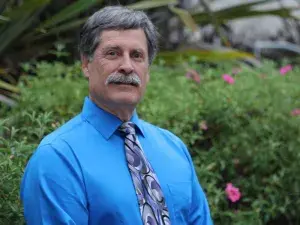
Jean E. SchwarzbauerView profile
Professor
Jean E. Schwarzbauer is the Eugene Higgins Professor of Molecular Biology at Princeton University, where she leads a research group focused on the extracellular matrix (ECM) and its role in cell function and disease. She is affiliated with the Department of Molecular Biology, the New Jersey Center for Biomaterials, and the Rutgers Cancer Institute of New Jersey. Education: B.S. in Chemistry, University of Wisconsin–Milwaukee Ph.D. in Molecular Biology, University of Wisconsin–Madison Postdoctoral Fellowship, MIT Her research centers on fibronectin and ECM assembly, with implications in tissue development, regeneration, fibrosis, and cancer. She investigates how ECM structure regulates cell behavior, with a focus on fibronectin matrix formation, integrin signaling, and the role of proteoglycans. Her work spans basic molecular mechanisms to translational applications in regenerative medicine. Recent publications highlight her lab's work on fibronectin-binding protein signatures in pulmonary fibrosis, glucose-induced ECM changes in diabetic complications, and the use of engineered ECM-synthetic scaffolds for nerve regeneration. Her studies integrate cell biology, biochemistry, and biomaterials to uncover fundamental principles of matrix biology. Scientific Awards: Peggy Wheelock Award for Excellence in Research, Mentoring, and Promotion of Women in Science Professor Schwarzbauer has served as Director of Graduate Studies in Molecular Biology and Associate Chair of the department. She is actively engaged in service, having led the American Society for Matrix Biology, served on NIH study sections, and held editorial roles at Molecular Biology of the Cell , Matrix Biology , and Journal of Cell Biology . She has organized major scientific conferences and advised national research programs. Her lab trains students and postdocs in cutting-edge techniques in cell and matrix biology. Laboratory and Research Teams: The Schwarzbauer Lab at Princeton uses cell culture models, molecular biology, and imaging to study ECM dynamics. The team collaborates with bioengineers and clinicians to develop biomaterials for tissue repair. Ongoing projects include ECM in skeletal development, fibrosis mechanisms, and synthetic ECM design for regenerative applications.