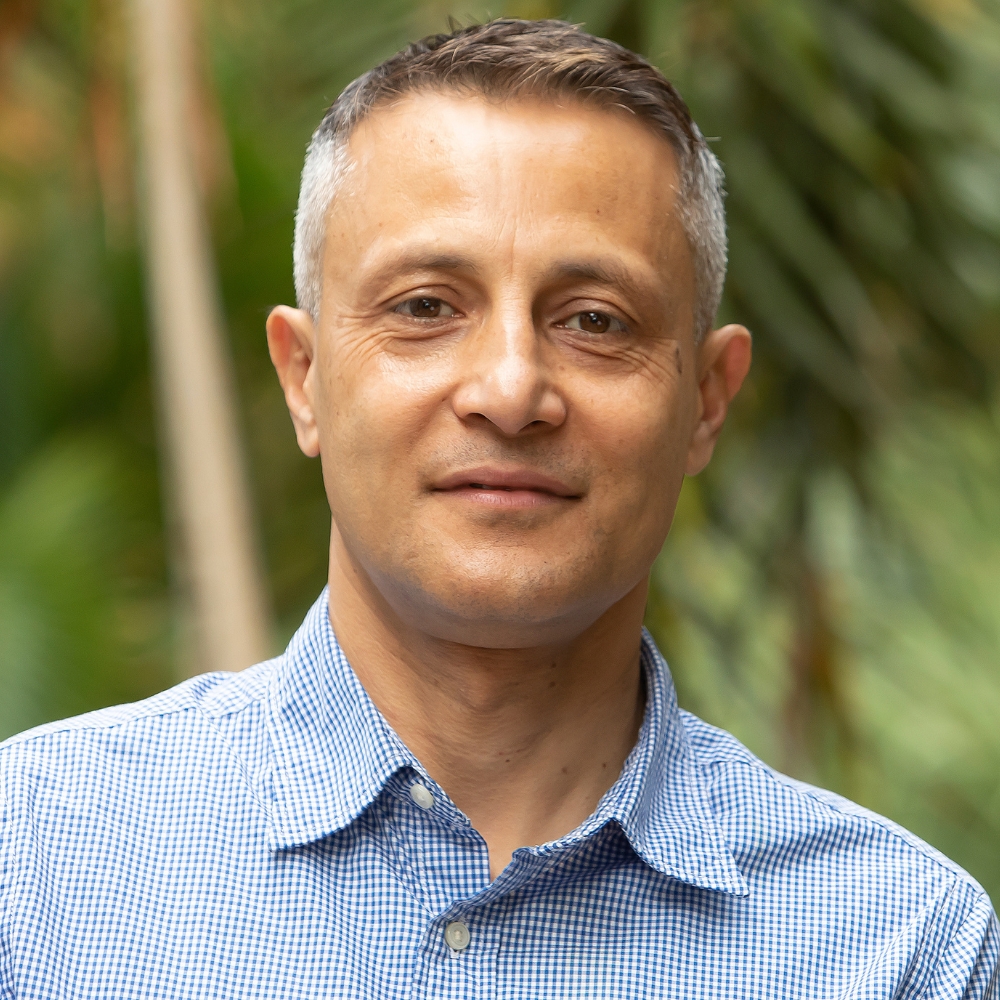
Mushtaq Khan is a Professor in the Department of Economics at SOAS University of London . His research focuses on governance, corruption, industrial policy, and structural transformation in developing countries, with particular emphasis on Bangladesh, Nepal, and Nigeria. Research Interests : Corruption and Anti-Corruption Strategies Political Settlements and Governance Industrial Policy Design Climate Adaptation and Public Health Systems Policy Contributions : His work addresses challenges such as collusive contracting in energy sectors, doctor absenteeism in rural healthcare, and dual-use climate projects as anti-corruption tools. Advising : He has supervised theses on industrial policy in Nigeria, economic transformation in Rwanda, and federalism in Nepal.
Pawan Adhikari is a Professor of Accounting at Essex Business School, University of Essex , where he serves as Director of Impact and Enterprise and Director of Essex Accounting Centre . He is an Associate Editor of the Journal of Public Budgeting, Accounting and Financial Management and a Executive Board Member of the Comparative International Governmental Accounting Research Network (CIGAR) . Previously, he led accounting reforms at Nepal’s Accounting and Auditing Standards Board and lectured at Nord University, Norway. PhD, Nord University Business School Fellow of the Higher Education Academy His research focuses on public sector accounting in developing countries, particularly accounting reforms , public value creation , and climate accountability . He explores how accrual accounting and participatory budgeting can enhance transparency in South Asian and African contexts. His work has influenced policy-making in Nepal and is recognized with the 2023 Best International Research Impact award by the University of Essex. Recent publications analyze wellbeing economies (2025), NGO accountability in disasters (2024), and climate budgeting (2023). He collaborates with institutions like the World Bank , European Commission , and British Academy , focusing on projects related to financial resilience , circular economy , and health sector accountability . Supervising 8 current PhD students, his advisees have produced work on topics like accrual accounting in Bangladesh and NGO accountability in Palestine . World Bank/PEFA Research Award African Accounting and Financial Association (AAFA) Award ESRC IIA Impact Fund GCRF and SeNSS Grants 2019 Best Postgraduate Supervisor (Essex)
Benjamin Arold is a University Assistant Professor at the Faculty of Economics, University of Cambridge. His academic career spans theoretical and applied research in labor economics, education economics, and AI-driven policy analysis. Previously, he held postdoctoral positions at ETH Zurich and visiting roles at Harvard University and Princeton University. Education: Ph.D. in Economics, LMU Munich His research bridges economic theory with empirical applications, focusing on: Long-term impacts of school curricula on student outcomes AI and NLP applications in labor economics Economics of religion and its societal implications Recent Article Trends: His work highlights intersections between education policy and technological innovation, including meta-analyses of private schooling effects, charter school performance evaluations, and computational methods for analyzing educational interventions. Scientific Awards: Prize for Best Dissertation (2021/2022) - German Economic Association Fürther Ludwig Erhard Prize (2023) Teaching: He teaches advanced courses on NLP in economics at Princeton University and Basel University, with a focus on computational methods for non-standard data.
Mashood Baderin is a Professor at SOAS University of London's School of Law, where he has established himself as a leading scholar in Islamic law, international law, and human rights. With over 90 publications spanning more than two decades, Professor Baderin has made significant contributions to bridging Islamic legal traditions with contemporary international legal frameworks. Professor Baderin's research interests focus on the intersection of Islamic jurisprudence with modern legal challenges. His work explores how Islamic legal principles can inform contemporary human rights frameworks, international criminal justice systems, and social reform initiatives in Muslim-majority countries. He has extensively examined Islamic legal theory (usul al-fiqh), the application of Islamic law in modern contexts, and the relationship between Islamic law and international legal norms. His most recent publications reveal a continued focus on the universality of international law from Islamic perspectives, the application of Islamic law in African contexts, and the relationship between Islamic principles and human rights frameworks. Professor Baderin has edited significant works including 'Islamic Legal Theory' (2014) and authored the widely recognized 'Islamic Law: A Very Short Introduction' (2021). Professor Baderin has supervised numerous doctoral students working on Islamic law topics with regional focus on Nigeria, Saudi Arabia, and the UAE. His students' research often examines gender issues, legal reform, and the practical application of Islamic law in contemporary settings.
Dr. June Cao is an Associate Professor at the University of Southampton . Her research focuses on Environmental, Social, and Governance (ESG) Accounting , Corporate Social Responsibility (CSR) , and Sustainability Reporting , with a particular emphasis on Greenwashing , Carbon Emission Trading , and Accounting Education . Key research areas include ESG, CSR, and sustainability frameworks. Prominent publications analyze environmental regulation, green revenues, and digital transformation in sustainability. Her recent work explores greenwashing behaviors, peer benchmarking, and labor investment dynamics. Scientific Awards : None explicitly mentioned in the data. Notable collaborations include co-authoring papers with scholars from Curtin University , Satya Wacana Christian University , and Xiamen University . Her contributions to Systematic Literature Reviews and Bibliometric Analysis highlight her methodological expertise.
Professor Christopher F Forsyth is the Sir David Williams Professor of Public Law at the University of Cambridge, Faculty of Law. He also holds the position of Honorary Professor of Law at the University of Stellenbosch and serves as an Honorary Member of the Advisory Board of the Faculty of Law at the Chinese University of Hong Kong. As an Academic Bencher of the Inner Temple and a practicing barrister from 4-5 Gray's Inn Square, Professor Forsyth maintains an active role in legal practice alongside his academic work. His research interests span several key areas of legal scholarship: Public law with focus on judicial review and the judiciary Administrative Law, particularly examining the legal effect of invalid acts, foundations of judicial review, and legitimate expectations Comparative public law, with special emphasis on Southeast Asia and Southern Africa Private international law, both theoretical and comparative studies Roman-Dutch law, especially regarding suretyship and private international law Professor Forsyth's scholarly work demonstrates a consistent focus on the principles of administrative justice, judicial independence, and the rule of law across various jurisdictions. His publications reveal a particular interest in the evolution of legal systems in post-colonial contexts, especially in Southern Africa and Hong Kong, where he examines how historical legal frameworks adapt to contemporary constitutional arrangements. His work on judicial review spans both theoretical foundations and practical applications across common law jurisdictions. His notable awards and honors include: Recorder of the Crown Court Academic Bencher of the Inner Temple Extraordinary Professor in Public Law, University of Stellenbosch Honorary Member of Advisory Board, School of Law, Chinese University of Hong Kong Tapp Research Student, Gonville and Caius College Professor Forsyth serves as a part-time judge, sitting as a Recorder in the Crown Court and as a Deputy High Court Judge in the Administrative Court. His significant contributions to legal scholarship include co-authoring "Administrative Law" with the late Sir William Wade QC, which has become a standard work cited by students, scholars, and judges across the common law world. He has also authored "Private International Law," a standard textbook on Roman-Dutch conflict of laws widely used in Southern Africa. Internationally, Professor Forsyth has advised governments on constitutional developments and judicial review in several Commonwealth countries. Notably, he served as Technical Adviser on Constitutional Reform to the Law Commission of Malawi, drafting constitutional reports and amendment bills. He has conducted training for civil servants in administrative law across multiple jurisdictions, including programs for the reformed South Africa.
Professor Jeevan R. Sharma serves as Chair of South Asia and International Development and Co-director of the Centre of South Asian Studies at the University of Edinburgh's School of Social and Political Science. An elected General Secretary of the Britain Nepal Academic Council (BNAC), he brings extensive field research experience from Nepal, India, Sri Lanka, and Malawi to his work in development and political anthropology. His current Wellcome Trust-funded transdisciplinary project examines health and well-being of South Asian migrant workers through collaboration with medical scientists and social anthropologists at Aga Khan University and Kathmandu Medical College. Sharma's research interests span labor migration, border-crossing, Maoist conflict, humanitarianism, human rights documentation, and health policy with particular focus on gender dynamics and social transformation. His fieldwork has investigated community health volunteers, maternal and child health, and international research collaboration in South Asia. He has previously worked at Feinstein International Centre at Tufts University (2009-2011) and Save the Children UK (2007-2009), bringing practical development experience to his academic work. His publication trends reveal consistent focus on migration, health policy, and political transformation in South Asia, with increasing attention to transnational health issues and pandemic impacts on vulnerable populations. Recent work examines Covid-19's effects on migrant workers, mental health policy in Nepal, and cross-cultural health measurement tools, demonstrating his commitment to bridging academic research with practical health interventions. Elected General Secretary of the Britain Nepal Academic Council (BNAC) Co-editor of HIMALAYA Journal (2019-2025), transitioning to Editor-at-large from January 2025 Associate Editor of 'South Asia: Journal of South Asian Studies' Co-editor of Routledge Edinburgh South Asia Series Member of ESRC GAP panel C (2024-2025) Member of the commissioning panel for the ESRC Centres Competition 2018 Sharma has secured significant research funding including a Wellcome Trust grant for migrant worker health research, ESRC funding for projects examining low-income migrant workers' access to services in India, and NERC funding for flood resilience research in Nepal's Terai region. His collaborative approach is evident in projects involving multiple institutions across South Asia and the UK, with particular emphasis on transdisciplinary work that bridges social science and medical research. He has served as Principal Investigator on six completed projects and currently leads an active Wellcome Trust-funded initiative. As Co-director of the Centre for South Asian Studies in Edinburgh, Sharma contributes to one of the UK's leading institutions for South Asian research, fostering academic collaboration and knowledge exchange between scholars in the UK and South Asia. His work with the Britain Nepal Academic Council strengthens bilateral academic relations, while his editorial roles with HIMALAYA Journal and South Asia: Journal of South Asian Studies position him at the forefront of scholarly discourse on the region.
Professor Simon Deakin is a Fellow and Director of Studies in Law at Peterhouse, University of Cambridge, specializing in private law (tort and contract law) and labour law. He teaches on the undergraduate Law Tripos and the LLM programme, with research focusing on law and economics, artificial intelligence, and historical legal analysis. Current research on Is Law Computable? and AI ethics Co-editor of computational law essay collection Developed Cambridge Leximetric Database for quantitative legal analysis His research spans tort law, corporate governance, digital economy regulation, and sustainability. Recent work explores the Anthropocene's legal implications and labour law's computational approaches. Scientific awards include the Cambridge Students' Union teaching prize (2023) He supervises doctoral students annually and contributes to legal education through widely used textbooks. As a Centre for Business Research (CBR) affiliate, he advances data-driven analysis of global labour regulation.
Professor Michael J. Gill is Associate Professor of Organisation Studies at the Saïd Business School , University of Oxford, and Tutorial Fellow in Management at St Edmund Hall . He previously served as Assistant then Associate Professor at the University of Bath’s School of Management. Education MA – University of Warwick DPhil – Jesus College, University of Oxford (funded by a scholarship from the Centre for Professional Service Firms) Research Interests Michael’s research centres on the causes and consequences of individuals’ suffering in the workplace , exploring how organisations threaten workers’ mental health and erode their sense of self. He employs qualitative, phenomenological methods to study accountants, chefs, lawyers, consultants, doctors, nurses, police officers and other occupational groups. His work also addresses identity regulation —how organisations shape, constrain and re-define personal identity—and the ethical and methodological challenges of organisational research. Publication Trends Between 2015 and 2025 Michael has produced a steady stream of articles focusing on three broad themes: (1) identity regulation and the phenomenology of self in organisational settings, (2) digital innovation, stigma and professional regulation in healthcare and low- and middle-income countries, and (3) qualitative methodology , including interview design, covert research ethics and phenomenological approaches. Scientific Awards & Fellowships Scholarship from the Centre for Professional Service Firms (doctoral funding) Governing Body Fellow, St Edmund Hall, University of Oxford Tutorial Fellow in Management, St Edmund Hall, University of Oxford Advising & Grants While no specific doctoral students are named, Michael’s roles as Tutorial Fellow and Associate Professor imply active supervision and teaching responsibilities within the Oxford Saïd Business School and St Edmund Hall. Grant funding details beyond his doctoral scholarship are not provided. Laboratories & Teams Michael is affiliated with the Centre for Professional Service Firms and collaborates through the Saïd Business School research community. No dedicated laboratory is mentioned.
Alex Michaelides is a Professor of Finance at Imperial College Business School since 2013 and a Research Fellow at CEPR (International Macroeconomics and Financial Economics Programmes). He holds affiliations with Imperial's Energy Futures Lab and Language and Communication Intelligence initiatives. Previously, he served at the London School of Economics (LSE) as Lecturer (2001-2006) and Associate Professor (2006-2010), and at the University of Cyprus as Professor of Finance (2010-2014). He earned his PhD in Economics from Princeton University (1997) and BA in Economics from Harvard (1993). His research focuses on household finance (e.g., life-cycle portfolio choice), asset pricing with heterogeneous agents, housing markets, and macro-finance intersections. Notable work includes analyses of pension systems, sovereign debt crises (e.g., Cyprus), and banking system dynamics. He has held visiting roles at the Federal Reserve Bank of New York, ECB, and served on the Central Bank of Cyprus' board (2013-2014). Leadership roles include Head of Finance at Imperial (2014-2021) and Director of Postgraduate Studies (since 2023). His work bridges theoretical models with policy-relevant insights, addressing fiscal procyclicality, central bank independence, and climate regulatory impacts.
Ranjit Lall is an Associate Professor of International Political Economy at the University of Oxford's Department of Politics and International Relations, and a Fellow of St John's College. His research focuses on international cooperation, development, technological change, and methodological innovations in machine learning and missing data analysis. He holds a PhD from Harvard University and a BA from Oxford, and has been recognized with the Merze Tate Award and Leamer-Rosenthal Prize for his work. Education : PhD in Government (Harvard University), BA in Philosophy, Politics, and Economics (University of Oxford) Affiliations : St John's College Fellow, Oxford's International Relations Network His research explores how international institutions function, leveraging computational tools like MIDASpy for missing data imputation. Key interests include civil society influence on global governance, accountability mechanisms, and the political economy of technological change. He previously worked at the Bank of England and Financial Times before academia. Recent Research Trends : Articles emphasize institutional performance metrics, pandemic-era voting behavior, and AI governance frameworks. His work bridges theoretical political science with practical computational methods. Awards : 2020 Leamer-Rosenthal Prize, 2018 Merze Tate Award Advising : Supervises six graduate students in international relations and political economy Lall collaborates on open-source projects such as the MIDAS software for data imputation and actively contributes to debates on transparent social science research practices.
Dr. Mohammed Mazumder is a faculty member at Newcastle Business School, Northumbria University, where he has been contributing since January 2020. He leads the MSc Forensic Accounting programme and serves as the Departmental Research Ethics Lead. He teaches Management Accounting and Analytics at the undergraduate level and Financial Planning and Control at the postgraduate level. His educational background includes a PhD from Tohoku University and an MBA in Accounting from the University of Dhaka, where he also taught for over ten years. He is a Fellow of the Cost and Management Accountant (FCMA) and a Fellow of the Higher Education Academy (FHEA), reflecting his dual expertise in professional accounting and academic teaching. Dr. Mazumder’s research focuses on corporate reporting, sustainability accounting, CSR, corporate governance, and forensic accounting , with empirical studies centered on Bangladesh and Japan. His work explores board composition, gender diversity, cybersecurity disclosures, anti-corruption reporting, and SDG disclosures in emerging economies. The research employs discourse analysis, impression management theory, and quantitative methods to assess disclosure quality and governance effectiveness. His recent publications (2021–2025) reveal a strong trend toward ethical, environmental, and governance-related disclosures in banking and insurance sectors of developing economies. Topics include climate change rhetoric, post-cyber heist disclosures, and SDG reporting, indicating a growing emphasis on transparency and accountability in corporate narratives. His scholarly contributions have appeared in reputable journals such as Asian Review of Accounting , International Journal of Disclosure and Governance , Journal of Accounting in Emerging Economies , and Business Ethics: A European Review . While no specific awards are mentioned, his publication record in CABS/ABDC-ranked journals reflects significant academic recognition. Dr. Mazumder actively contributes to academic governance as Research Ethics Lead and programme director. Though no current students are listed, his leadership roles suggest involvement in postgraduate supervision and curriculum development. He has not indicated part-time status and appears to be a full-time, active academic with no signs of retirement or former staff status. He is associated with no named research labs or teams, but his work is highly interdisciplinary, bridging accounting, ethics, sustainability, and governance. Future research directions likely include expanding comparative studies between Japan and South Asia, deepening analysis of SDG disclosures, and exploring digital risk reporting in financial institutions.
Professor Sarah Lauwo is a faculty member at the Aberdeen Business School, Robert Gordon University, specializing in social accounting, corporate social responsibility (CSR), and accountability mechanisms. Her research explores sociological theories applied to accounting dynamics, particularly in resource-rich regions and developing economies. She has held teaching positions at institutions in the UK and Africa, including the University of Dar es Salaam and the University of Essex. Qualifications : Doctor of Philosophy (PhD) in Accounting, University of Essex (2006–2011) Master of Business Administration (MBA), University of Dar es Salaam (2000–2002) Bachelor's Degree in Accounting, University of Dar es Salaam (1997–2000) Research Interests : Corporate social responsibility (CSR) and environmental accounting Accountability in sustainable development goals Transparency in extractive industries and public governance Her articles focus on topics such as anti-corruption in public procurement, CSR reporting in stigmatized industries, and fiscal discipline reforms. She has contributed to journals like the Accounting, Auditing and Accountability Journal and Critical Perspectives on Accounting . Awards : Associate Fellow, Higher Education Academy (2009) Certified Public Accountant (CPA), Tanzania (2004) Teaching involves advanced modules on literature reviews and PhD supervision. She advises on topics like accountability in public sectors and corporate governance.
Dr Taskin Iqbal is a Senior Lecturer in Law at The City Law School, City, University of London. She has been serving in this role since August 2022, having previously held a Lecturer position at the same institution starting in March 2020. Prior to that, she was a Lecturer in Law at the University of Lincoln from April 2018 to February 2020. Her academic affiliations include active membership in the Society of Legal Scholars, Socio-Legal Studies Association (SLSA), and Daughters of Themis: International Network of Female Business Scholars. She is also a Fellow of the Higher Education Academy. PhD in Law, University of Leeds (2015–2018) LLM in Professional Legal Skills (Conversion), City, University of London Bar Professional Training Course, City, University of London LLB (Honours), Queen Mary, University of London Dr Iqbal’s research centers on corporate law, corporate governance, and corporate social responsibility, with a strong interdisciplinary focus. She investigates how corporate governance mechanisms can better protect stakeholder interests and promote sustainability, particularly in global supply chains involving multinational corporations and developing countries. Her work critically examines the Enlightened Shareholder Value principle and its implications for CSR, as well as sustainability reporting practices among large British firms. Her publications, including a 2021 monograph with Routledge and articles in top-tier journals like the Journal of Business Law and Common Law World Review , reflect a consistent thematic focus on legal frameworks for sustainability, corporate accountability, and ethical governance. The research trends show a strong empirical and theoretical engagement with sustainability disclosures, stakeholder theory, and regulatory efficacy in corporate law. Her scientific recognitions include a letter of recognition for research excellence from the University of Leeds, where her PhD thesis was highly commended by examiners. Letter of recognition for research excellence – University of Leeds Dr Iqbal is actively involved in academic mentoring and leadership. She serves as the second supervisor for PhD candidate Md Sekander Zulker Nayeen, whose research focuses on sustainable development in investor-state arbitration. She has led several key teaching modules including LLB Company Law and Global Issues in Corporate Law, and previously led the LLM International Corporation Law module. She is the convener of the City Law School Staff Research Seminar Series, fostering academic dialogue and research development. While no specific grants are mentioned, her research output suggests sustained scholarly activity supported by institutional and academic frameworks. She is associated with research teams through her collaborations, such as with Professor Andrew Keay, and contributes to interdisciplinary discussions on sustainability and corporate responsibility through her active participation in academic networks and seminars.
Dr. Pinar Guven-Uslu is an Associate Professor in Accounting at the University of East Anglia (Norwich Business School), specializing in performance management and benchmarking within public and health sectors. She holds a BSc in Economics, MSc in Accounting & Finance, and a PhD in Accounting. Prior to academia, she worked at Deloitte and Touche International in audit and tax consultancy. Currently, she teaches management accounting and performance control at both undergraduate and postgraduate levels. Director of Postgraduate Research Member of Accounting & Quantitative Methods department Her research focuses on performance management in large organizations, strategic change in health services, and benchmarking in public sectors. Notable projects include: National Institute for Health Research-funded study on health managers' information-seeking behavior British Accounting Association-funded analysis of payment-by-results impacts on NHS decision-making EU-funded project on diversity/equality in healthcare management She advises PhD students across multiple institutions and has supervised completed theses since 2008. Pinar serves on editorial boards for journals like Journal of Accounting in Emerging Economies and Accounting, Auditing & Accountability Journal . Her work contributes to UN SDGs through health service transformation research in countries like Zambia, Turkey, and Saudi Arabia. Key themes include healthcare governance, policy implementation, and organizational change.