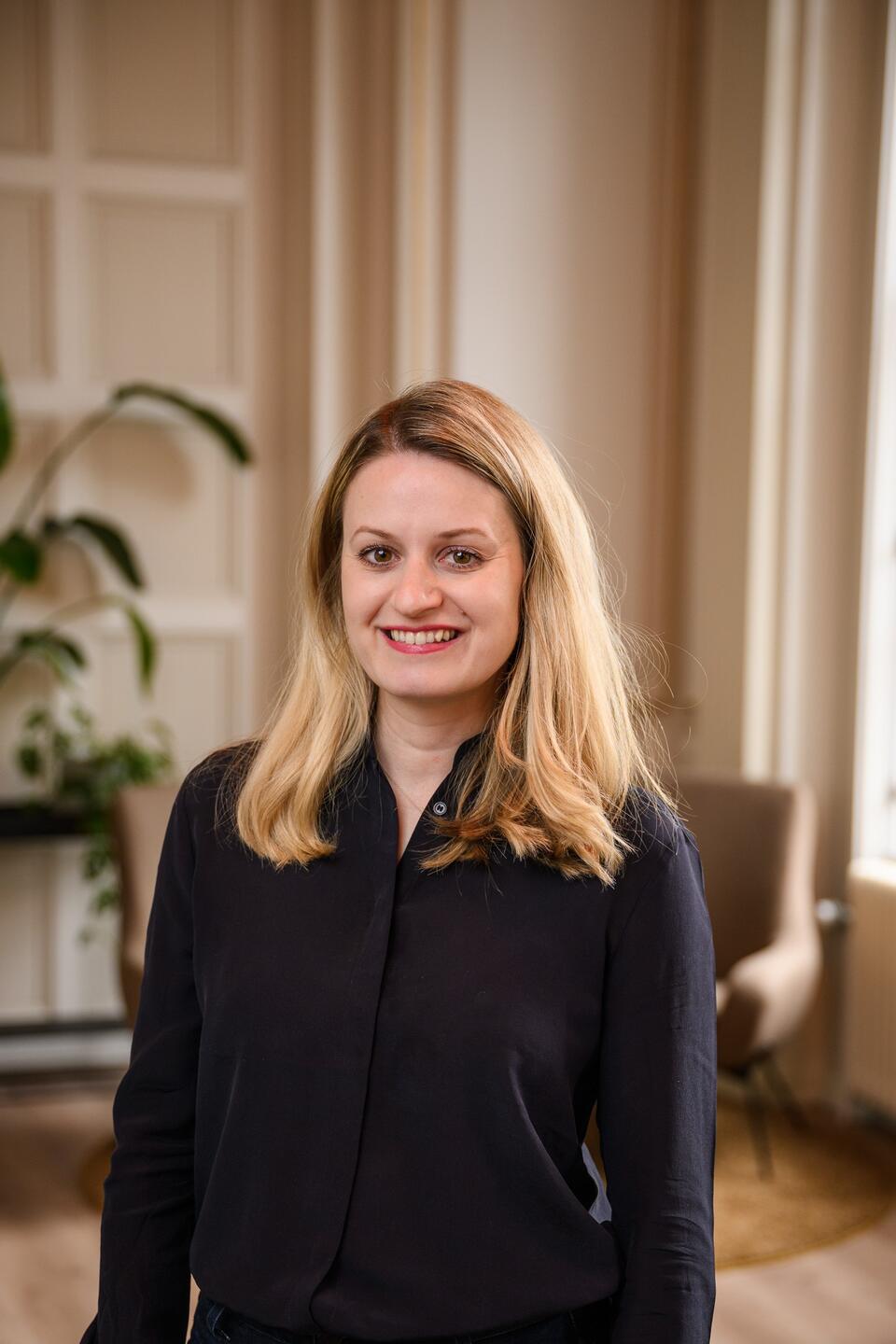
Leona Wiegmann is an Associate Professor of Management Control at ESCP Business School in Paris. Her research examines how digitalization reshapes accounting practices, focusing on tensions between technology and human actors, evolving roles of management accountants, and external stakeholder engagement. She employs qualitative methods like field studies, vignettes, and netnography to explore forecasting, performance management, and accountability. Previously, she held faculty positions at WHU – Otto Beisheim School of Management (Germany) and Monash University (Australia). Open to supervising PhD students, her work appears in journals such as Contemporary Accounting Research and Accounting, Auditing & Accountability Journal . Education: PhD from WHU – Otto Beisheim School of Management Key Research Themes: Digitalization in Accounting, Organizational Dynamics, Qualitative Methodologies Her articles analyze topics ranging from proxy advisor accountability to information search during crises, reflecting her focus on real-world organizational challenges. While no scientific awards are listed, her contributions to accounting and organizational studies literature highlight her scholarly impact.
Pierre van der Eng is an Associate Professor and Reader in International Business and Business History at the Australian National University (ANU), Research School of Management. He is recognized as Australia's research leader in economic history, with expertise spanning economic and business history, international business, and development economics. His work focuses on Indonesia's economic development, Australia's business history, European integration, and EU-Australia relations. His research has been funded by the Australian Research Council and the Shibusawa Foundation. Van der Eng holds a PhD, MA, and BA, and has advised AusAID on development projects. His research emphasizes Indonesia's economic challenges, including historical famines, CSR evolution, and post-colonial business dynamics. He has contributed to major projects like the 'Indonesia Project' phases IV and V, exploring foreign MNE strategies in Australia and EU-Australia trade relations. His awards include the 2021 nomination as Australia's economic history research leader. He has published widely in top journals and edited volumes, with a focus on long-term economic trends, multinational enterprise strategies, and historical crisis responses. His work bridges historical analysis with contemporary policy implications, particularly in Asia-Pacific economic contexts.
Lynn Martin is an Associate Professor at the School of Nursing, McMaster University , with a focus on nursing education , student assessment , and clinical reasoning frameworks . Her work spans curriculum development, simulation integration, and emotional intelligence in health professions education. Academic Rank: Associate Professor University: McMaster University School: School of Nursing Research Interests include: Nursing education methodologies Simulation in clinical training Abductive reasoning application Moral distress in student evaluation Problem-based learning effectiveness Recent Publications highlight: 2021: Nurse-led interventions for implantable cardioverter-defibrillator candidates 2020: Abductive reasoning in nursing pedagogy 2016: Moral distress impacts on student assessment 2015: Simulation adoption in undergraduate nursing
Max M. Schanzenbach is the Seigle Family Professor of Law at Northwestern University School of Law , where he has been a faculty member since 2003. His research bridges economic theory with legal analysis to evaluate real-world impacts of laws and institutions. B.A., University of Oklahoma J.D., Yale Law School Ph.D., Economics, Yale University His research focuses on the intersection of law and economics, particularly in areas like criminal justice reform , trusts and estates , and corporate governance . Recent publications analyze police misconduct , disciplinary policies , and fiduciary law using empirical methods. Articles appear in top-tier journals such as American Economic Journal: Applied Economics and Stanford Law Review . Co-Editor-in-Chief, American Law and Economics Review (2011-2016) Director, Searle Center on Law, Regulation, and Economic Growth (2010-2013) Seigle Family Professor of Law (2015)
Dr. Elena Sherstoboeva serves as a Lecturer at Essex Law School, University of Essex, where she specializes in the intersection of media law, digital regulation, and international human rights with particular focus on non-Western contexts. Her scholarly work critically examines freedom of expression frameworks, disinformation governance, and privacy protections within authoritarian and post-Soviet legal systems, especially Russia. Her academic credentials include dual Ph.D. degrees from Ramon Llull University (Spain) and Moscow State University (Russia), complemented by visiting fellowships at the University of Pennsylvania and University of Leeds. These diverse educational foundations underpin her transnational legal perspective. Dr. Sherstoboeva's research program systematically investigates how digital technologies challenge traditional legal paradigms in restrictive regimes, with recurring themes including Council of Europe standards adaptation, judicial mythmaking in authoritarian contexts, and pandemic-era digital surveillance governance. Her methodology bridges doctrinal legal analysis with empirical media studies. Her publication trajectory (2014-2024) reveals escalating engagement with geopolitical crises, notably Ukraine war-related disinformation laws and pandemic surveillance policies. The body of work demonstrates consistent focus on Russian legal evolution while expanding into comparative East Asian digital governance frameworks, reflecting growing scholarly influence in critical media law studies. No scientific awards were documented in the source material. Actively open to supervision, Dr. Sherstoboeva mentors students in media law and digital rights research areas. Her professional experience includes significant consultancy for UNESCO, OSCE, and Council of Europe on media regulation, though specific grant funding details remain undisclosed in available records.
Elvira Loibl is an Assistant Professor at the Department of Criminal Law and Criminology, Faculty of Law, Maastricht University. Her research focuses on transnational organized crime, illegal intercountry adoption, and crimes against children, combining legal analysis with empirical and interdisciplinary methods. Her research interests include: Transnational Organized Crime Illegal Intercountry Adoption Crimes against Children Empirical Legal Research Interdisciplinary Research Human Rights and Family Law The recent publications of Elvira Loibl reflect a strong thematic focus on legal and criminological responses to illegal intercountry adoptions, child protection, and comparative criminal law. Her work spans journals and books in law, criminology, and human rights, often employing interdisciplinary and cross-jurisdictional perspectives. She has also contributed significantly to policy discussions on historical injustices in adoption systems and emerging legal issues like the regulation of childlike sex dolls. Scientific awards received: Cum laude distinction for doctoral dissertation (2019) Honourable mention, Modderman Prize 2021 Shortlisted, Willem Nagel Prize 2022 Edmond Hustinx Prize 2024 Elvira Loibl has been actively involved in advising policy and public discourse on illegal intercountry adoption. Her research has been cited in official inquiries and she has contributed to media outlets such as NRC Handelsblad, De Telegraaf, Zembla, and Deutsche Welle. She co-edited a major volume on reconciliation after illegal adoptions and led research projects on child protection technologies. While no formal students are listed, her role in shaping academic and policy debates indicates significant mentorship and collaborative influence. She is affiliated with interdisciplinary research initiatives at Maastricht University, particularly those linking law, criminology, and social policy. Her work often involves collaboration with scholars across Europe and beyond, contributing to a broader network focused on child rights and transnational justice.
Teresa Marat-Mendes is a Full Professor in the Department of Architecture and Urban Planning at ISCTE - University Institute of Lisbon, where she is also an Integrated Researcher at DINÂMIA'CET-Iscte - Center for Studies on Socioeconomic Change and Territory. Her work bridges academia and policy, focusing on sustainable urban transitions, urban metabolism, and spatial planning reform. Full Professor, Department of Architecture and Urban Planning, ISCTE-IUL Integrated Researcher, DINÂMIA'CET-Iscte Coordinator of major research projects: MEMO, SPLACH, HAT Member of ISUF and former President of the Portuguese-language Network on Urban Morphology (PNUM) Teresa's research centers on urban sustainability, with a strong emphasis on urban form, ecological urbanism, food systems, and the 15-minute city concept. She investigates how urban morphology influences material flows, energy use, and social equity, advocating for evidence-based, transformative planning policies that respond to climate change and urban sprawl. Her recent publications and projects reflect a clear trajectory toward integrating urban agriculture, transit-oriented development, and proximity-based urban models. The HAT project (2025–2028) exemplifies this trend, aiming to reduce automobile dependence and food imports through green Proximity-Oriented Development (PODs). Earlier work like the MEMO project analyzed historical urban metabolism in Lisbon, providing sustainable lessons from the past. Scientific recognition includes: Women in Science 2019 Award in Architecture (Ciência Viva) Author of Atlas of the Food System. Challenges for a Sustainable transition of the Lisbon Region (Springer) Strong citation metrics: H-index 14 (Google Scholar), 7 (Scopus) Teresa has supervised numerous research initiatives and collaborated with institutions across Europe. She has served as ERASMUS Coordinator (2002–2016) and Vice Director of her department (2013–2016), contributing to academic governance at ISCTE. Her work connects academic research with business and policy sectors to catalyze urban transitions. She has been involved in key research centers and networks: DINÂMIA'CET-Iscte (research leadership) CITTA and GOVCOPP collaborations Portuguese-language Network on Urban Morphology (PNUM), which she co-founded and led (2015–2018)
Prof. Dr. Carsten Herresthal is a full-time Professor at the University of Regensburg, Faculty of Law, where he holds the Chair of Civil Law, Commercial and Corporate Law, European Law and Legal Theory. His work is centered on German and European corporate law, with a focus on banking, capital markets, compliance, arbitration, and European private law. He emphasizes methodological rigor and foundational legal principles in both national and EU contexts. University: University of Regensburg School: Faculty of Law Department: Department of Civil Law, Commercial and Corporate Law, European Law and Legal Theory Position: Professor Email: carsten.herresthal@ur.de, sekretariat.herresthal@jura.uni-regensburg.de Prof. Herresthal’s research spans key areas such as corporate governance, financial regulation, contract law, and legal methodology. He is particularly active in analyzing judicial decisions on standard terms, prepayment penalties, and EU legal harmonization. His work often critiques legislative and judicial overreach, advocating for clarity and coherence in legal frameworks. The recent publications of Prof. Herresthal reveal a strong trend in banking and capital markets law, especially concerning consumer protection, contract validity, and EU regulatory alignment. His articles frequently engage with rulings from the Federal Court of Justice (BGH) and the European Court of Justice (ECJ), analyzing their doctrinal soundness and practical implications. Topics include prepayment compensation, negative interest clauses, and the scope of consumer credit directives. His contributions are primarily in authoritative German legal journals such as NJW, ZIP, and WuB, reflecting his influence in national legal discourse. Prof. Herresthal is deeply involved in academic publishing and education. He serves as co-editor of the book series 'Writings on Corporate Law' (Nomos Verlag) and has contributed to major legal commentaries including the Münchener Kommentar zum HGB and the Staudinger Kommentar. He also co-authored a textbook on legal methodology for law students. He supervises doctoral and master’s theses and organizes a lecture series that bridges theoretical and practical aspects of corporate law, featuring leading practitioners from international law firms. His editorial roles and consistent scholarly output underscore his leadership in legal academia. He has not received explicitly mentioned scientific awards in the provided text, but his editorial positions and frequent publications in top-tier journals indicate high professional recognition. He also contributes to public legal discourse through commentary on legislative proposals, such as those concerning dormant accounts and supply chain due diligence. Prof. Herresthal leads a research team comprising scientific staff, student assistants, and a dedicated secretariat. He organizes academic events and fosters collaboration between academia and legal practice. His chair supports young scholars through thesis supervision and participation in scholarly publications. The ongoing projects include major commentary works on commercial and civil law, reflecting a sustained commitment to doctrinal scholarship and legal education.
Dr. Robert L. Bing III is a Professor in the Department of Criminology and Criminal Justice at The University of Texas at Arlington, where he has served since 1994. He holds a Ph.D. in Criminology from Florida State University and has played a foundational role in shaping the department, serving as its first Chair from 1994 to 2006 and again as Interim Chair in 2014–2015. He is also a CAAS Faculty Fellow and has held leadership roles in diversity and inclusion initiatives at the university. Ph.D., Criminology, Florida State University, 1987 M.S., Criminology, Florida State University, 1976 B.A., Sociology, College of the Holy Cross, 1975 Dr. Bing’s research centers on race, crime, and justice, with a focus on plea bargaining, corrections, sentencing disparities, and the role of race in criminal justice education. He has extensively explored issues such as the militarization of police, day fines, and pretrial detention. His scholarly work reflects a deep commitment to equity and social justice within legal and educational institutions. The 15 most recent publications highlight a consistent focus on racial disparities, legal policy, and institutional reform. His work spans topics such as stand-your-ground laws, mentoring in criminal justice, and the criminogenic potential of healthcare systems. These articles reflect interdisciplinary engagement with public policy, victimology, and organizational behavior. Faculty Excellence Award, AAFSA (2019) Unsong Hero Award, Alpha Phi Alpha Fraternity (2018) Becky Tatum Excellence Award, ACJS (2010) Outstanding Service Award, African American Faculty and Staff (2016) Dr. Bing has advised numerous master’s students, chaired theses and comprehensive exams, and mentored early-career faculty. He has received research funding, including a $100,000 grant for the 'Community Courts Initiative.' He has served on multiple university and professional committees, including the Academy of Criminal Justice Sciences (ACJS), where he was Chair of the Section on Minorities and Women and currently serves as Trustee-at-Large. He is actively involved in community service, including the MLK Celebration Committee and Mothers Against Teen Violence. He has presented widely at national conferences such as ACJS and the American Society of Criminology, addressing topics like police-community relations, diversity in education, and sentencing reform.
Professor Abbe Brown is a leading scholar in Intellectual Property Law at the School of Law, University of Aberdeen. She holds a PhD from the University of Edinburgh, an MA from the University of Cambridge, and a Dip IP from the University of Bristol. She is a Fellow of the Royal Society of Edinburgh (elected 2025) and a solicitor (non-practising) in England and Wales, Victoria, and Scotland. Her roles include Director of Research for the Law School, former University Dean for Student Support, and REF21 School Lead. BA/MA (Cantab) Law, 1992 – University of Cambridge DipIP Intellectual Property Law and Practice, 1997 – University of Bristol PhD Law, 2009 – University of Edinburgh Abbe Brown's research lies at the intersection of intellectual property, climate change, marine biodiversity, disability studies, and public health. She explores how legal frameworks can address societal challenges through innovation and equity. Her work emphasizes interdisciplinary collaboration, particularly in energy law, digital environments, and human rights. She has contributed to major policy consultations with the UN, IUCN, UKIPO, and the European Commission. Her recent publications focus on marine genetic resources under the BBNJ Agreement, IP and climate change, access to medicines, and the legal dimensions of place branding. The articles reflect a consistent trend toward global environmental governance, benefit-sharing, and the ethical implications of IP in science and health. She frequently engages in interdisciplinary research, especially with chemists and marine scientists. University of Aberdeen Principal's Outstanding Research Award (2022) Nominated for Green Gown Award 2022 "Sharing the Benefits of the Ocean" Abbe Brown supervises PhD students in technology and innovation law and has secured funding from AHRC, Wellcome Trust, British Academy, UKRI, and EU Horizon programmes (MARBLES, BlueRemediomics). She is a Co-Investigator on projects like InVisible Difference and leads interdisciplinary efforts on ocean governance. She has served as external examiner at multiple universities and is an active peer reviewer and editorial board member. She is a member of the MARBLES and BlueRemediomics EU-funded projects, focusing on marine biotechnology and sustainable innovation. She co-developed the 'Song of the Ocean' for public engagement and participates in UN processes including COP26 and WIPO conferences. She is also involved in RSE-funded projects on scientific knowledge and ocean equity.
Laura Frosina is an Associate Professor of Comparative Public Law (IUS/21) at the Department of Political Science, Sapienza University of Rome. She teaches courses such as States, Autonomies and Separatisms in the Master's program in International Relations and Comparative Public Law in the undergraduate program in International Cooperation and Development. She is a member of the Doctoral Faculty in Public, Comparative, and International Law and actively participates in national and international research projects. PhD in Theory of the State and Comparative Political Institutions, Sapienza University of Rome (2005) Laurea in Political Science (with honors), Sapienza University of Rome (2000) Postgraduate Course in Assembly Consultants, Sapienza University of Rome (2001) Her research centers on comparative constitutional law, with a strong focus on Spain, Italy, and Latin America. Key themes include multilevel governance, European Union institutions, separatism, autonomy, federalism, parliamentary systems, and constitutional reforms. She analyzes political-constitutional crises, emergency powers, and the evolution of democratic institutions in pluralistic societies. Her work frequently examines the interplay between law, politics, and institutions in contexts of territorial tension. The most recent articles highlight a sustained scholarly engagement with Spanish constitutional dynamics, particularly around the Catalan independence movement, coalition governments under Sánchez, judicial-political conflicts, and broader EU institutional challenges. Trends include the analysis of secession referendums, emergency governance during the pandemic, urban constitutionalism, and the transformation of party systems. Her publications appear in specialized journals such as Nomos , Federalismi.it , and Revista de Derecho Constitucional Europeo , as well as in edited volumes from major academic publishers. Member, Editorial Board of Nomos (since 2001) Responsible, Critical Reviews Section, Nomos (since 2014) Member, Editorial Board, Federalismi.it (2006–2010) Member, Editorial Board, Focus America Latina , Federalismi.it (since 2009) Member, Editorial Board, Quaderni di Nomos (since 2012) Member, Editorial Board, Rivista di Diritto pubblico comparato ed europeo (since 2022) Principal Investigator, Cities and Models of Governance in the 21st Century (Sapienza SEED PNR Project, 2022–2025) Member, Large Ateneo Research Project Following Constitutional Law No. 1/2020, which Parliament? (Sapienza, 2022) Laura Frosina has been involved in numerous research projects funded by the Italian Ministry of Education, Universities and Research (MIUR), CNR, Sapienza University, and the European Committee of the Regions. She has served as a research fellow and principal investigator on topics including intergovernmental cooperation, EU multilevel governance, democratization in South Asia, and urban governance. She has collaborated with the Center of Excellence Integración Europea y Globalización at the University of Granada and participated in international training programs for parliaments in the Balkans. Her academic work bridges doctrinal legal analysis with political science perspectives, contributing to both theoretical and policy-oriented debates. She is affiliated with the Association of Comparative and European Public Law and has coordinated academic events and seminars, including tributes to her mentor Fulco Lanchester. Her institutional page lists regular office hours and remote availability via Google Meet, indicating active engagement with students and the academic community.
Christina L. Kunz is a faculty member at Mitchell Hamline School of Law in St. Paul, Minnesota. She has been actively publishing in the field of contract law, electronic commerce, and fiduciary responsibilities since at least 1984. Her scholarly work appears in leading law journals, including the Business Lawyer , University of Miami Law Review , and William Mitchell Law Review . She has contributed significantly to legal discourse on digital assets, consumer contracts, and electronic agreements. Her research interests include: Contract Law and the Uniform Commercial Code (UCC) Electronic Commerce and Digital Agreements (browse-wrap, click-through) Digital Assets and Fiduciary Management Legal Education and Pedagogy (IRAC, contract clause analysis) Ethics in Contract Drafting Title Registration and Motor Vehicle Ownership Her publications show a consistent trend toward modernizing legal frameworks to address technological changes, particularly in the areas of digital consent, online transactions, and estate planning for digital property. She has collaborated with legal scholars and practitioners across institutions, contributing to interdisciplinary legal scholarship. Notable scientific contributions and collaborations include: Co-authoring work on digital death and fiduciary access to digital assets Contributing to critiques of the Draft Restatement of Consumer Contracts Authoring foundational analyses of electronic assent in browse-wrap and click-through agreements Exploring the intersection of ethics and contract clause validity Kunz has advised on legal education practices, particularly in teaching first-year law students how to analyze and edit contracts. While no formal list of advisees is provided, her educational writings suggest mentorship and curriculum development roles. She has not been noted to lead a lab or research team, but her work is frequently cited in discussions on e-commerce and digital law. There is no indication of part-time status or retirement, and she remains affiliated with Mitchell Hamline School of Law.
Carla Preciosa Braga Cerqueira is an Associate Professor at Lusófona University of Porto, affiliated with the School of Communication, Architecture, Arts and Technologies. She is an integrated researcher at CICANT (Research Center for Applied Communication, Culture and New Technologies) and a collaborator at CECS (Centre for Communication and Society Studies) from the University of Minho, where she earned her PhD in Communication Sciences (specializing in Communication Psychology). Her research focuses on media , gender studies , digital communication , and social movements , with a particular emphasis on feminist activism and intersectionality. Degree in Social Communication Postgraduate in Communication Sciences - Information and Journalism PhD in Communication Psychology, University of Minho Her recent work explores Portuguese feminist movements through digital platforms, analyzing how campaigns like the International Feminist Strike re-politicize gender discourse. She investigates media representation of motherhood in sports and sexual harassment in academia , linking these to UN Sustainable Development Goals. Cerqueira actively collaborates with NGOs, serves on the RTP Opinion Council, and organizes academic events like the II MeLCi Lab Autumn School on media and gender. Key projects include: FEMglocal : Global-local feminist movements YouNDigital : Youth digital citizenship IM Lab : Intersectional media analysis
Mateo Cruz (he/him) is an Assistant Professor in the Management Department at Bentley University. His work bridges organizational behavior, diversity, equity, and inclusion (DEI), and social justice, focusing on unconscious dynamics that shape workplace outcomes for historically excluded groups. He teaches courses on organizational theory, group dynamics, and change leadership across undergraduate, graduate, and executive programs. Education: Ph.D. in Social/Organizational Psychology, Columbia University M.Phil. in Social/Organizational Psychology, Columbia University M.A. in Social/Organizational Psychology, Columbia University B.A. in Social Work and Psychology, University of Portland His research investigates covert workplace dynamics affecting DEI, with a focus on stereotype threat, inclusive leadership, and organizational change. His publications span top management and psychology journals, emphasizing LGBTQ+ integration and equity in STEM. He received the New Educator Award from the Management & Organizational Behavior Teaching Society (MOBTS) in 2025 and Bentley’s Presidential Faculty Fellowship in 2024. Scientific awards include the Joseph M. Cronin Award for Academic Advising, the Dr. Earl L. Avery MLK Leadership Award, and multiple Innovation in Teaching Awards. He advises the Center for Women and Business at Bentley and serves on the GLSEN National Executive Board, advocating for LGBTQ+ education. His consulting practice addresses inclusive leadership and organizational culture change.
Dr. Wolfgang Eppler is a Researcher at the Institute for Technology Assessment and Systems Analysis (ITAS) at the Karlsruhe Institute of Technology (KIT), where he has been working since 2023. His research focuses on the societal implications of digital technologies, particularly artificial intelligence and digital transformation. Prior to his current position, he served in various leadership roles related to staff representation at KIT and its predecessor institutions. Dr. Eppler received his education at the University of Stuttgart, where he completed his computer science studies from 1980 to 1986. He then worked as a research assistant at the University of Karlsruhe and the Research Center for Information Technology (FZI) from 1987 to 1993, during which time he earned his doctorate on the topic of "Pre-structuring of neural networks with fuzzy logic." Dr. Eppler's research spans multiple domains at the intersection of technology and society. His early work focused on neural networks, fuzzy logic, and their applications in areas such as electronic noses, medical imaging, and high-energy physics data processing. In recent years, his research has shifted toward technology assessment, particularly examining the societal impacts of artificial intelligence, digital transformation, and the governance of emerging technologies. His interdisciplinary approach combines technical expertise with social science perspectives to address complex questions about the role of technology in society. Analysis of Dr. Eppler's recent publications reveals a strong focus on the ethical, governance, and societal implications of artificial intelligence. His 2024-2025 work addresses critical issues such as EU AI regulation, generative AI for technology assessment, the grounding of large language models, and algorithmic bias. This represents an evolution from his earlier technical work on neural networks and data processing systems toward more policy-oriented research that bridges technical and social dimensions of technological change. Throughout his career, Dr. Eppler has been actively involved in institutional governance and staff representation. From 2009 to 2023, he served as Chairman of the Staff Council at KIT, and from 2005 to 2009 as Chairman of the Works Council at the Karlsruhe Research Center. His publications on university governance, particularly regarding the KIT merger and models for democratic science institutions, reflect his practical experience and theoretical interest in participatory decision-making in academic settings. Dr. Eppler is a member of the Research Group "Digital Technologies and Social Change" at ITAS, where he contributes to projects examining the societal dimensions of technological innovation. His interdisciplinary background enables him to bridge technical and social science perspectives in assessing emerging technologies.