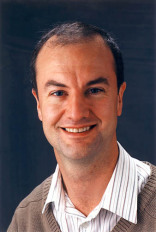
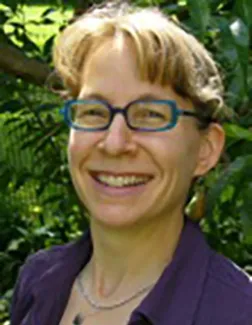
Valisa E. Hedrick is an Associate Professor in the Department of Human Nutrition, Foods, and Exercise at Virginia Tech and Director of the Dietary Assessment Laboratory. She holds a PhD from Virginia Tech (2011) and has extensive experience in nutrition research, including roles as a Postdoctoral Scholar, Adjunct Professor, and clinical dietitian. Her work focuses on dietary assessment methodology, non-nutritive sweetener effects on diabetes, and evaluating nutrition interventions in underserved populations. Education includes a B.S. in Dietetics (2006), RDN certification (2007), and a graduate certificate in Preparing the Future Professoriate (2009). Awards highlight her contributions to dietary assessment tools like the BEVQ-15 and the Market Basket Assessment Tool, critical for SNAP-Ed programs. Her NIH-funded research investigates non-nutritive sweeteners' impact on glycemic control in prediabetes populations. Research Tools: BEVQ-15 (SNAP-Ed beverage assessment), Market Basket Assessment Tool Key Projects: NIH studies on NNS-glycemic pathways, obesity prevention, and sustainable dietary patterns Awards: VCE Evaluation Award (2023), First Author Award (2017), Young Investigator Travel Award (2016) Labs/Teams: Leads the Dietary Assessment Laboratory and collaborates with SNAP-Ed evaluation teams and multidisciplinary research groups on diabetes prevention and food retail interventions.
Raktim Mitra is a Professor and Director of the School of Urban and Regional Planning at Toronto Metropolitan University, co-directing the TransForm Research Laboratory. His expertise spans the built environment, travel behavior, and health linkages, with a focus on active transportation, micromobility, and healthy communities. Mitra teaches courses in Transportation Planning, Healthy Communities, and Research Methods. His research explores how urban planning impacts physical activity and wellbeing, particularly for pedestrians, cyclists, and micromobility users. Current projects include pandemic-era travel behavior shifts, cycling infrastructure impacts, and children’s outdoor play. He has led studies on post-pandemic active transportation policies, equity in street reallocation, and mobility for students with disabilities. Key funded research areas include cycling facility efficacy, post-pandemic active transportation, student travel wellbeing, and e-scooter policy. Mitra’s work bridges academic inquiry with practical solutions, emphasizing equity and sustainability in urban environments. His laboratory focuses on interdisciplinary approaches to transportation-land use-health interactions. Publications highlight pandemic mobility shifts, gendered cycling behavior, and the role of neighborhood environments in child health. Mitra collaborates on community science initiatives like Canada’s Pedal Poll, analyzing cycling demographics and infrastructure use patterns.
Eric Wade is an Assistant Professor in Coastal Studies at East Carolina University's Integrated Coastal Programs. His work focuses on interdisciplinary coastal and marine resource management, with a strong emphasis on small-scale fisheries, climate justice, and marine renewable energy. Dr. Wade holds a B.S. in Marine Biology from the University of North Carolina Wilmington and advanced degrees (M.S./Ph.D.) in Fisheries Science from Oregon State University. His research interests include fisheries governance, food security, socio-ecological systems, and the social dimensions of marine energy development. He has led or co-led over a dozen research initiatives funded by NSF, Sandia National Laboratories, and state agencies, exploring topics like marine spatial planning, cognitive biases in fishery risk perceptions, and community impacts of emerging ocean technologies. Key grants include the NSF-funded EAGER:PBI project (2024-2026) and collaborative ocean energy research with Sandia National Labs. His publications highlight trade-offs in fishing strategies, pandemic impacts on island food systems, and innovative methods for assessing stakeholder perspectives in resource management. Education : B.S. Marine Biology, UNC Wilmington M.S. Fisheries Science, Oregon State University Ph.D. Fisheries Science, Oregon State University Grants & Awards : NSF EAGER:PBI (2024-2026) Sandia National Labs WEC Design Projects Vesta Climate Justice Grant (2023-2025) Wade's work bridges natural and social sciences, addressing challenges at the intersection of human communities and marine ecosystems. He collaborates with the Atlantic Marine Energy Center and actively engages in policy-relevant research to support equitable coastal development strategies.
Julia Behre is a Researcher at the Leibniz Institute for Media Research | Hans Bredow Institute (HBI), where she has been since 2022. Her work focuses on media use in digital environments and journalism-audience relationships. She contributes to Research Program 1, exploring transformative public communication dynamics, and leads the DFG-funded 'Public Connection' project analyzing how individuals engage with public spheres through digital repertoires. Since 2019, she has co-authored Germany’s contributions to the Reuters Institute Digital News Report, examining cross-national news consumption trends. Behre holds a Master’s degree from the University of Hamburg, specializing in media studies, psychology, and journalism. Her thesis investigated trust in news sources and influencing factors. She collaborates on studies like the 2025 Reuters Report (48-country analysis) and projects exploring age-related media trust gaps. Her work bridges empirical research with policy-relevant insights about digital media’s societal role. Key projects include analyzing German news interest decline (2023 Report), pandemic-era media shifts (2021 Report), and gendered news consumption (2020 Women and News study). She also examines algorithmic content delivery’s impact on audience trust and cross-cultural media literacy challenges. Education: MA in Media and Communication Studies, University of Hamburg Funded Projects: DFG ‘Public Connection’ (2022–present), Reuters Institute Annual Reports (2019–present) Key Themes: Digital Journalism, Cross-Cultural Media Analysis, Trust in Media
Michael Ferris is a Professor at the University of Wisconsin-Madison, holding the John P. Morgridge Chair in Computer Sciences and a courtesy appointment in Mathematics. His primary affiliation is with the Department of Industrial and Systems Engineering, and he serves as Director of Hub Central at the Wisconsin Institutes for Discovery. He earned his PhD from the University of Cambridge in 1989. His research focuses on algorithms, environments, and applications of optimization, with contributions to complementarity solvers, large-scale variational inequalities, and mathematical programming. Key areas include energy systems, economics, and engineering applications such as radiation therapy and transportation. Ferris has developed influential software tools like the PATH solver for complementarity problems and interfaces for optimization frameworks like AMPL and GAMS. Notable awards include SIAM Fellow, INFORMS Fellow, and the Beale-Orchard-Hays Prize. He has advised numerous PhD students and contributed to significant projects, including optimizing Great Lakes fishery barrier removal and modeling the energy transition. His work bridges theoretical optimization with practical applications, impacting policy, technology, and environmental conservation.
Lenka Sokolová is a Professor at the Faculty of Social and Economic Sciences , Comenius University in Bratislava, with a focus on Educational Psychology and School Psychology . Her career spans teaching, research, and leadership in promoting well-being and inclusive education. PhD in Educational Psychology (2006, Comenius University) doc. (2019) and prof. (2025) degrees in Educational Psychology (Charles University, Czech Republic) Her research bridges educational psychology , mental health , and teacher training , with recent work on neurodiversity, social support systems, and pandemic-era teaching adaptations. She leads the STRAWS project (funded by UK’s Arts and Humanities Research Council) and contributes to European psychology education frameworks. Key article trends include: Adolescent mental health and social inclusion Teacher resilience and classroom dynamics Neurodivergent student support Cross-cultural psychology education Technology integration in psychology teaching Preventive psychological interventions Scientific contributions include: President of the European Federation of Psychology Teachers’ Associations (2019-2022) Board member of EFPA Educational Affairs (2017-2023) International conference leadership (EARLI, Coalition of Schools for Mental Health) She mentors through continuing professional development courses and collaborates globally, including Erasmus+ mobility programs and Monash University’s Visiting Scholar initiative. Her work emphasizes participatory research and qualitative methodologies.
Mark Heckman, PhD is a Professor of Practice in the CyberSecurity Engineering and Technology program at the University of San Diego. He holds MS and PhD degrees in Computer Science from the University of California, Davis, and is a Certified Information Systems Security Professional (CISSP). With over 30 years of experience spanning government/military systems, commercial IT security, and academic research, his work focuses on cybersecurity compliance, intrusion detection systems, and holistic security frameworks. He teaches at USD's Bridges Academy and actively publishes in cybersecurity education and maritime security domains. Education: PhD & MS in Computer Science (UC Davis) Research interests include cybersecurity best practices for home/commercial environments, privacy frameworks, and mitigation of systemic cybersecurity risks in critical infrastructure. His recent work critiques current educational approaches and explores maritime cyber compliance regimes. Articles emphasize practical applications of big data analytics in threat detection and systemic security policy design. While no formal advisees are listed, his teaching and publications reflect strong engagement with applied cybersecurity training and industry standards development.
Astrid Marie Jorde Sandsør is a Professor at the Department of Special Needs Education, Faculty of Education, University of Oslo, and will serve as Vice Dean of Research at the Faculty of Education from January 2025-2029. She maintains strong affiliations with the Nordic Institute for Studies of Innovation, Research and Education (NIFU), where she has worked as a researcher, and serves as a principal investigator at CREATE - Centre for Research on Equality in Education. Her additional institutional roles include membership in the Young Academy of Norway, the Council of The Frisch Centre in Oslo, and affiliations with CESifo Research Network and the Institute for the Study of Labor (IZA). Dr. Sandsør earned her Doctorate in Economics from the University of Oslo in 2016 and her Master in Economics from the same institution in 2010. Her academic trajectory shows a consistent focus on empirical research in education economics, with early work examining small-group instruction effects and evolving toward comprehensive studies of educational inequality, early childhood interventions, and educational policy evaluation. Her research interests center on understanding and addressing educational inequality through rigorous empirical analysis. Sandsør investigates how socioeconomic background, genetic factors, and institutional arrangements interact to shape educational outcomes across the lifespan. Her work on universal early childhood education examines long-term effects on achievement gaps, while her research on admission systems analyzes mechanisms of access to higher education. She has made significant contributions to understanding gender differences in language learning, the impact of teacher density norms, and the effectiveness of interventions for at-risk students. Her methodological approach combines administrative data analysis, randomized field experiments, and causal inference techniques to produce policy-relevant findings. Analyzing her recent publication record reveals a strong focus on the intersection of genetics, environment, and educational outcomes, alongside persistent examination of socioeconomic inequality in education. Her work demonstrates increasing methodological sophistication, moving from descriptive analyses to experimental and quasi-experimental designs that establish causal relationships. The geographic focus remains predominantly Norwegian, leveraging the country's rich administrative data systems while contributing comparative insights to international literature on educational inequality and policy effectiveness. Through her position at NIFU and the University of Oslo, Sandsør has led numerous government-commissioned evaluations of educational policies, including assessments of teacher density norms, the teacher specialist scheme, and admission systems to higher education. Her research has directly informed Norwegian educational policy debates, particularly regarding equitable access to quality education and evidence-based interventions for reducing achievement gaps. She maintains active engagement with policymakers through expert testimony, commissioned reports, and public dissemination of research findings.
Benjamin Zwickl is an Associate Professor of Physics at the Rochester Institute of Technology (RIT) , located within the School of Physics and Astronomy under the College of Science . He also serves as Co-Director of the Center for Advancing Scholarship to Transform Learning (CASTLE) . His research focuses on Physics Education Research (PER), career pathways in STEM, and quantum technology education. Dr. Zwickl holds a Ph.D. in Physics from Yale University (2012) and a B.S. from Purdue University. His research interests include preparing students for careers in quantum technology, optics, and photonics, as well as improving laboratory education and understanding graduate student development. He has led initiatives to develop quantum education curricula and has secured grants such as an NSF-funded postdoctoral fellowship program. Zwickl’s work emphasizes bridging the gap between academic training and industry needs, particularly in fostering computational literacy and equity in STEM education. His publications highlight trends in PER, including analyses of remote research experiences, graduate student career decisions, and the role of admissions metrics in PhD outcomes. He actively contributes to RIT’s efforts to establish quantum education programs, including a minor in quantum information science and technology. Zwickl teaches courses like Quantum Technology Principles and Physics Education Research , reflecting his commitment to advancing pedagogy and student success.
Dr. Sowmya Shetty is Senior Lecturer and Director of Teaching & Learning at the University of Queensland School of Dentistry, specializing in dental materials science and educational innovation. She leads curriculum development for oral biosciences and interprofessional education. Research examines dental material performance, adhesion mechanisms, and clinical simulation technologies. Her educational research develops novel teaching frameworks for clinical skills training and global dental education experiences. Awards recognize excellence in clinical simulation design and curriculum development. Educational leadership includes creating open-access resources and student-centered teaching methodologies across dental programs.
Professor Sharon Bessell is a leading academic and social policy expert at The Australian National University (ANU), where she holds dual roles as Professor and Director of the Crawford School of Public Policy. She directs the Children’s Policy Centre and co-hosts the Policy Forum Pod, a platform for policy analysis. Her work emphasizes rights-based approaches to social policy, particularly for children in poverty, and she has pioneered the Individual Measure of Multidimensional Poverty (IMMP/IDM), a groundbreaking tool assessing poverty’s gendered and individual impacts. Bessell is also a Senior Fellow of the Higher Education Academy and has received ANU’s Teaching Excellence Award twice (2016 and 2023). Education: - BA (Hons 1st class, Tasmania) - PhD (Monash University) Research Interests: Sharon’s research focuses on three pillars: Social policy, child rights, and poverty reduction Gendered dimensions of poverty and innovative data collection methods Intergenerational relations and evolving childhoods She has conducted extensive studies in Australia, Indonesia, the Philippines, Fiji, and Southern Africa, collaborating with governments, NGOs, and international agencies to develop child-centered policy frameworks. Her methodologies prioritize ethical engagement with children, ensuring their voices shape policy outcomes. Grants and Projects: - More for Children : Paul Ramsay Foundation-funded research creating a child-centered poverty assessment framework. - IDM Program : Co-led an interdisciplinary team under an Australian Research Council Linkage grant, developing the IMMP/IDM. - Suara Anak (Children’s Voices) : ARC Discovery grant-funded research in Indonesia. Awards and Recognition: - 2019: Australian Financial Review’s 100 Women of Influence. - 2016/2023: ANU College of Asia and the Pacific Award for Teaching Excellence. Teaching and Advocacy: Bessell teaches Global Social Policy (POGO8044) and Development Theories and Themes (POGO8072) . Her courses address poverty, globalization, children’s rights, and gender analysis. She advocates for systemic policy reforms to end child poverty, emphasizing structural barriers and the role of social justice in economic policies. Her work challenges stigmatizing narratives around poverty and promotes inclusive, rights-based solutions.
S. Bryn Austin is a Professor of Social and Behavioral Sciences at the Harvard T.H. Chan School of Public Health and Professor of Pediatrics at Harvard Medical School. She holds the S. Jean Emans, MD, Endowed Chair in Adolescent and Young Adult Medicine at Boston Children’s Hospital. Her research focuses on health inequities, particularly among socially marginalized adolescents, with an emphasis on eating disorders prevention and LGBTQ+ health disparities. She leads the STRIPED initiative, the first public health-focused eating disorders prevention program, and the SOGIE Collaborative, addressing sexual orientation and gender identity disparities. Dr. Austin’s work is funded by NIH grants and other agencies, and she has authored numerous publications on topics such as disordered eating, body image, and policy translation. She serves on editorial boards of journals like the International Journal of Eating Disorders and has held leadership roles in organizations such as the Academy for Eating Disorders and the Eating Disorders Coalition. Her mentorship and advocacy aim to advance health equity through transdisciplinary research and policy change. Key achievements include pioneering research on structural racism’s impact on health outcomes, policy advocacy for dietary supplement regulation, and interventions to reduce disparities in healthcare access for marginalized groups. Her research spans global contexts, including studies in Malaysia, Singapore, and Hong Kong, addressing cultural and media influences on body image. Dr. Austin’s grants and awards reflect her leadership in public health and her commitment to bridging research with actionable policies. She continues to shape the field through training programs, policy fellowships, and collaborative initiatives aimed at reducing health disparities worldwide.
Dr. Jennifer Falbe is an Associate Professor of Nutrition and Human Development at the University of California, Davis. Her research focuses on programmatic, policy, and environmental interventions to prevent chronic diseases and reduce health disparities. Notably, she led the evaluation of Berkeley’s soda tax, the first of its kind in the U.S., and has examined healthy retail programs, multi-sector community interventions, and the impact of screen time on adolescent health. She employs quantitative and qualitative methods, including randomized controlled trials and observational studies, in clinical and community settings such as schools, childcare centers, and grocery stores. Dr. Falbe holds dual Sc.D. degrees in Nutrition and Epidemiology from Harvard University, as well as an MPH in Public Health Nutrition and a B.A. in Public Health from UC Berkeley. She is actively involved in mentorship, accepting applications from undergraduate and graduate students interested in her lab’s research areas. Key research interests include food policy, obesity prevention, environmental interventions (e.g., checkout policies, warning labels), and the social determinants of health. Her work often addresses disparities in low-income communities and ethnic minority groups. Education: Sc.D., Nutrition & Epidemiology, Harvard University M.P.H., Public Health Nutrition, UC Berkeley B.A., Public Health, UC Berkeley Recent projects include evaluations of sugar-sweetened beverage taxes, healthy checkout policies, and the effects of climate change impact labels on consumer choices. She has also explored retailer perspectives on taxation and the role of environmental factors in dietary behaviors. Dr. Falbe’s grants include a UC Office of the President initiative to assess drinking water and sugar-sweetened beverage availability on UC Davis’ campus. Her lab emphasizes translating research into actionable policy and community-level interventions.
Caroline Bond is a Senior Lecturer at the Manchester Institute of Education, University of Manchester, and a core member of the Autism@Manchester research initiative. Her work focuses on autism spectrum disorders, motor skills difficulties, and evidence-based interventions in educational settings. She has contributed to over 80 peer-reviewed publications, with recent emphasis on school attendance challenges, teacher-student relationships, and systemic support for neurodivergent learners. Her research interests include evaluating school programs, particularly those addressing emotionally based school avoidance (EBSA), and promoting collaborative approaches between schools, families, and local authorities. Key projects involve developing tools for early identification of attendance issues and enhancing support for autistic students, especially girls, in mainstream environments. Recent work highlights include a systematic review of teachers’ beliefs about intelligence and their impact on pedagogy, and studies on the effectiveness of creative arts interventions for early years’ parental engagement. Collaborations span UK institutions, focusing on autism education, special needs assessment crises, and policy-driven solutions for equitable education access. Dr. Bond’s contributions extend to professional practice, advising on policy frameworks, video-based guidance for educational psychologists, and training programs for practitioners working with neurodivergent populations. She actively disseminates findings through academic journals like Educational Psychology in Practice and European Journal of Special Needs Education .
Wesley L. Meares is an Associate Professor of Political Science and Graduate Director of the MPA Program at Augusta University, affiliated with the Pamplin College of Arts, Humanities, and Social Sciences and the Department of Social Sciences. His work bridges urban policy, public administration, and sustainability. Education: Ph.D., Urban Studies/Affairs, University of Louisville, 2014 MPA, Public Administration, Western Kentucky University, 2011 BA, Political Science and Government, LaGrange College, 2010 Dr. Meares specializes in housing, economic development, urban policy, and sustainability. His research explores how urban environments affect health, equity, and governance, with a focus on walkability, pollution, and affordable housing. Recent work addresses cybersecurity in local governments and the impact of NIL policies on higher education. His 15 most recent publications span 2025 to 2019, emphasizing urban sustainability, public administration, and policy analysis. Themes include housing affordability, environmental justice, municipal resilience, and technology in governance. Scientific Awards: Outstanding Faculty Award, Augusta University, 2024 Dr. Meares serves on multiple committees, including the Budget Advisory and University Resources Committee and the Institutional Review Board-Behavioral. He also mentors students through the Nonprofit Minor Program and reviews for academic journals.