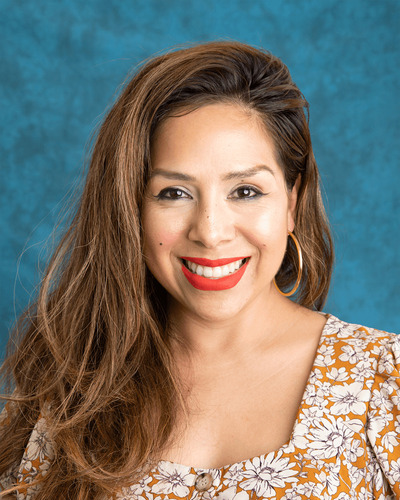
Felicia Castro-Villarreal serves as a Professor of School Psychology within the Department of Educational Psychology at the University of Texas at San Antonio (UTSA), part of the College of Education and Human Development. She holds licensure as a Licensed Specialist in School Psychology (LSSP) and is actively pursuing Licensed Psychologist status, demonstrating her dual commitment to academic rigor and clinical practice in educational settings. Her educational trajectory includes a Bachelor’s degree in Psychology from UTSA, a Master of Science in Clinical Psychology from St. Mary’s University, and a Ph.D. in School Psychology from Oklahoma State University. She completed her doctoral internship at the APA-accredited Cypress-Fairbanks ISD Psychological Services Department, establishing foundational expertise in school-based psychological services. Dr. Castro-Villarreal’s research program centers on multicultural assessment and culturally responsive consultation practices, directly addressing systemic inequities in educational psychology. Her work examines how cultural identity influences assessment validity, develops consultation frameworks for diverse educators, and investigates barriers to mental health services for marginalized student populations—particularly focusing on autism spectrum disorders and high-stakes testing implications. Analysis of her recent publications reveals a cohesive research trajectory emphasizing social justice in school psychology. Her work consistently bridges theory and practice through mental health screening innovations, autism intervention adaptations, and critical examinations of labeling practices. Notably, her 2025 study on autistic women’s care experiences and 2023 meta-analysis on mental health screening demonstrate methodological diversity while maintaining focus on underserved populations. While specific grant details and student advisees aren't publicly documented, her extensive publication record—including systematic reviews, qualitative explorations, and intervention studies—indicates active research leadership. Her contributions to yearbook introductions and special issues reflect scholarly service to advance equity-focused discourse within educational psychology.