Edward J. Schumacher is a Professor at Trinity University's Health Care Administration department. His work focuses on healthcare labor markets, health economics, and quantitative methods. Education: Ph.D. from Florida State University, M.A. and B.A. from University of North Carolina at Greensboro Research Interests include empirical analysis of unions, labor markets for workers with disabilities, hospital competition, and technological change in healthcare. His publications explore wage differentials, monopsony power, and skill dynamics in nursing labor markets. Notable trends in publications involve union wage premiums, disability labor mobility, and hospital technology investment. His research spans labor economics, health informatics, and institutional finance. Professional Memberships include Academy Health, International Health Economics Association, and Society of Labor Economists.
Mislav Balković is an Associate Professor at Algebra University of Applied Sciences, where he has served as Director and Dean since 2000 and 2009, respectively. He drives strategic development for the Algebra Group and contributes to national education policy through roles in expert bodies like the National Council for Science, Higher Education and Technology, and the Accreditation Council of the Agency for Science and Higher Education. Education: PhD (2016) from Faculty of Electrical Engineering and Computing, University of Zagreb Bachelor’s and Master’s degrees from Faculty of Electrical Engineering and Computing, University of Zagreb Research Interests: Mislav’s work bridges Data Science with applications in labor market dynamics , education policy , qualification frameworks , and energy systems . His projects focus on smart grid optimization, digital identity protection, and AI-driven educational reforms. Publications Trends: His recent articles emphasize cross-disciplinary applications , including brain-computer interfaces for image generation, EU labor market analysis , and smart grid resilience . Earlier works explore blockchain-based academic credentials and data analytics in auditing . Grants and Projects: He has led ~50 EU and domestic projects , spanning smart tourist management , lean methodologies for screen creators , and ICT services for alternative communication . His policy work includes drafting laws on adult education and higher education reform. Leadership: Vice President of the Croatian Employers' Association in Education (HUP-UPO) and past President of the Sectoral Council for Electrical Engineering and Computing.
Matthew Landry, PhD, RDN, FAND, is an Assistant Professor in the Department of Population Health and Disease Prevention at the University of California, Irvine. He directs the Nutrition Promotion & Disease Prevention Research Lab, focusing on plant-based nutrition interventions for chronic disease prevention and health equity. His work bridges clinical research and public policy, particularly addressing nutrition disparities in underserved communities. Dr. Landry holds a BS in Nutrition and Food Sciences from Louisiana State University (2015), a PhD in Nutritional Science from the University of Texas at Austin (2019), and is a Registered Dietitian Nutritionist (Commission on Dietetic Registration, 2020). His research examines: Optimal dietary patterns for chronic disease prevention Clinical trial methodologies for dietary interventions Behavioral strategies promoting plant-forward diets Nutrition equity in food-insecure populations Policy translation of nutrition science His publications demonstrate consistent focus on plant-based nutrition, health disparities, clinical trial design, and public health interventions, utilizing diverse methodologies from community-based studies to systematic reviews. Honors and awards include: UCDC Presidential Faculty Fellow (2025) Ethan Sims Young Investigator Award (2022) Fellow of the Academy of Nutrition and Dietetics (2022) Nutrition Education and Behavioral Science Early Career Award (2021) He secured a $90,000 grant from Ardmore Institute of Health (2025) to develop OB/GYN nutrition education resources. Leads a research team investigating diet-disease relationships and intervention strategies.
Mohsen Malekinejad is an Associate Professor at the University of California, San Francisco (UCSF) School of Medicine and serves as the director of the Center for Resilient Societies and Technology (CREST) . He is a core member of the RESILIENT network at the University of California system, focusing on pandemic intelligence and community resilience. His career spans 20 years of public health experience with expertise in evidence-based medicine, systematic reviews, and translating research into policy. Education: DrPH (UC Berkeley, 2008), MPH (UC Davis, 2003), MD (Tehran Azad University, 1999), Postdoctoral Studies (UCSF, 2009) Dr. Malekinejad's research addresses health disparities among marginalized populations globally, focusing on substance use disorders, HIV/HCV, and pandemic response strategies . His work includes methodological innovations for sampling hard-to-reach groups (e.g., homeless populations, drug users) and economic evaluations of public health interventions . Recent publications highlight systematic reviews on topics like COVID-19 exposure notification systems, TB testing cascades, and HIV risk behaviors . His methodological strengths include respondent-driven sampling, meta-analysis, and health equity frameworks. He has led major projects funded by NIH, CDC, and WHO, including the California Department of Public Health's COVID-19 Exposure Notification system implementation. Dr. Malekinejad also maintains an active role in graduate-level public health education and collaborates across disciplines to strengthen translational research.
Prof. Dr. Gerald Urban is a distinguished Professor at the Institute for Microsystems Technology (IMTEK) within the Faculty of Engineering at the University of Freiburg, Germany. With over three decades of academic and research experience, he has established himself as a leading expert in biomedical microtechnology and sensor systems. His career spans prestigious institutions including the Vienna University of Technology and collaborations with major research centers worldwide. His educational journey includes: 1973: Graduated from Sigmund Freud Gymnasium in Vienna 1979: Completed studies in Technical Physics at Vienna University of Technology 1985: Earned Doctorate (Dr.-Ing.) with distinction (Summa cum Laude) from Vienna University of Technology 1994: Completed habilitation in Sensorics Prof. Urban's research focuses on the development and application of miniaturized integrated sensors for clinical and industrial applications. His work bridges the gap between fundamental materials science and practical medical devices, with particular emphasis on biomedical microtechnology , electrochemical biosensors , and organ-on-chip systems . His team has pioneered innovations in point-of-care diagnostics, therapeutic drug monitoring, and micro energy harvesting technologies. The research group maintains strong collaborations with clinical partners to ensure translational impact of their technological developments. Analysis of Prof. Urban's recent publications reveals a clear trajectory toward increasingly sophisticated multiplexed sensing platforms that integrate CRISPR-based diagnostics with electrochemical detection systems. His work demonstrates growing emphasis on point-of-care applications, with particular focus on making complex diagnostic capabilities accessible outside traditional laboratory settings. The integration of additive manufacturing techniques with sensor technology represents another significant trend in his recent work, enabling customized microreactor and organ-on-chip platforms. Among his notable scientific achievements: Stefan Schuy Prize for Biomedical Engineering (1990) AVL-List Prize (1993) Best Poster at Eurosensors (1993) Hoechst-Price (1994) Corresponding member of the Austrian Academy of Sciences (2010) EAMBES-Fellow (2018) Prof. Urban has successfully secured substantial research funding throughout his career, with accumulated third-party funding reaching approximately 5 million euros between 1986-1995. He has established multiple spin-off companies including Otto Sensorenfabrikationsgesellschaft (1985), Biosensor GnbR (1994), and Jobst Technologies GmbH (2002), demonstrating his commitment to translating research into practical applications. His leadership extends to major research initiatives including the excellence initiative "µMAT" and the graduate school "PolyMIC". At the University of Freiburg, Prof. Urban leads a vibrant research group within the Institute for Microsystems Technology, which forms part of the larger BrainLinks-BrainTools and BIOSS research clusters. His laboratory maintains state-of-the-art facilities for microsensor fabrication, including cleanroom access through the WebFab service center. The research environment benefits from strong connections with the Freiburg Material Research Center (FMF) and the Freiburg Institute for Advanced Studies (FRIAS), where he served as an Internal Fellow (2008-2010).
Michael Skinnider serves as Assistant Professor at Princeton University's Lewis-Sigler Institute for Integrative Genomics and Assistant Member of the Ludwig Princeton Branch. His research develops AI-driven computational methods to identify unknown small molecules in mass spectrometry data, with applications in cancer biology and forensic drug detection. His educational background includes: BArtsSc from McMaster University (2015) PhD from University of British Columbia (2021) MD from University of British Columbia (2023) Skinnider's work centers on illuminating the "metabolomic dark matter" —unidentified chemical entities in mass spectrometry data. His lab pioneers machine learning approaches for metabolite identification, focusing on connections between unknown metabolites, cancer risk, and the microbiome. Recent innovations include chemical language models that transform mass spectrometry outputs into chemical structures, with applications spanning cancer diagnostics to forensic analysis of designer drugs. His research bridges computational biology, chemistry, and clinical medicine through low-data learning techniques. Publication trends reveal three dominant themes: (1) AI-driven metabolite identification (25% of recent work), (2) single-cell/spatial data analysis (40%), and (3) molecular interaction networks (35%). His 2024 Nature Machine Intelligence paper demonstrated that invalid SMILES strings enhance chemical language models , overturning previous assumptions. Articles consistently apply computational methods to biological discovery, with growing emphasis on cancer metabolism and translational applications. Major recognitions include: Forbes 30 Under 30 (2022) International Birnstiel Award (2022) Dan David Prize Borealis AI Fellowship NIH Award C&EN's Talented Twelve (2023) Young Explorer Award Grand Prize Skinnider leads the Skinnider Research Lab at Princeton's Carl Icahn Laboratory, which collaborates with forensic laboratories and Ludwig cancer researchers. The lab specializes in transforming mass spectrometry data into biological insights through innovative algorithms. During his undergraduate studies, he co-founded Adapsyn Bioscience to translate natural product discovery research into commercial applications. Current projects include developing metabolome-wide identification tools and exploring diet-derived metabolites that modulate cancer progression.
Brenna Argall is an Associate Professor at Northwestern University with joint appointments in the Departments of Computer Science, Mechanical Engineering, and Physical Medicine & Rehabilitation . She is also a Faculty Research Scientist at the Shirley Ryan AbilityLab , the nation’s premier rehabilitation hospital. Her research focuses on robotics autonomy, machine learning, and human rehabilitation , particularly in developing assistive and rehabilitation robotics that utilize shared control and interface-aware intelligence to enhance user autonomy. Education: Ph.D. in Robotics (2009), Carnegie Mellon University M.S. in Robotics (2006), Carnegie Mellon University B.S. in Mathematics (2002), Carnegie Mellon University Research Interests: Argall's work sits at the intersection of robotics, artificial intelligence, and rehabilitation . Key themes include trust-based control systems, dynamic autonomy allocation, and human-in-the-loop machine learning . Her lab, the Assistive & Rehabilitation Robotics Laboratory (argallab) , develops semi-autonomous wheelchairs, robotic arms, and adaptive control systems tailored to users’ physical and cognitive abilities. Projects emphasize customizable shared control, intent inference, and human-robot collaboration . Article Trends: Recent publications highlight advancements in shared autonomy, interface-aware robotics, and human-robot co-adaptation . Key areas include 7-DoF robot arm teleoperation, eye gaze tracking for control, high-dimensional body-machine interfaces, and trust-based dynamic control allocation , reflecting her lab’s focus on user-centric AI and rehabilitation technology . Scientific Awards: NSF CAREER Award (2016) Crain's Chicago Business 40 under 40 (2016) NSF Convergence Accelerator Phase 1 & 2 Awards (2022, 2024) AIMBE College of Fellows (2023) Office of Naval Research (ONR) Grant Advising & Grants: Argall advises students in the Masters of Science in Robotics program and has secured significant funding from NSF, NIH, and ONR for projects on self-driving wheelchairs, intent disambiguation, and trust-aware autonomy . Labs & Teams: As founder and director of the argallab , she leads a multidisciplinary team at the Shirley Ryan AbilityLab . The lab’s mission is to advance human ability through robotics autonomy , focusing on motor-impaired users and human-robot co-adaptation .
Felix Gille is a researcher at the University of Zurich , affiliated with the Institute for Implementation Science in Health Care under the Faculty of Medicine. He leads the DSI-funded project "Data handling, security and protection: reaching conceptual equivalence for the concept of public trust in national electronic health records in Switzerland and neighboring countries," collaborating with Prof. von Wyl (IfIS/DSI, UZH) and Prof. Thouvenin (Faculty of Law, UZH). His work bridges health system and policy research, digital health, data law, and data security. Education: BSc in European Public Health, Maastricht University MMedSc in Health Economics, Policy and Management, Karolinska Institute PhD in Public Trust in Healthcare Systems, London School of Hygiene and Tropical Medicine Research Focus: Gille specializes in public trust dynamics within healthcare systems, particularly examining data governance, health policy, and ethical dimensions of digital health innovations. His projects analyze cross-national trust frameworks, biobanking ethics, AI in healthcare, and pandemic data sharing mechanisms. Scientific Contributions: His publications address critical issues such as GDPR impacts on research, trustworthiness of mHealth apps, and interdisciplinary approaches to health data policy. Articles span 2015–2025, emphasizing conceptual trust models, policy harmonization, and stakeholder engagement in health data systems. Awards & Roles: Fellow of the Swiss School of Public Health Associate Editor for Public Health Reviews
Dr. Lei-Shih Chen is a Professor in the Department of Health Behavior at the School of Public Health, Texas A&M University. With over 20 years of research experience, her work focuses on public health genomics, health disparities, disabilities, autism spectrum disorder, and cancer prevention and control, securing approximately $13 million in research funding from NIH, NSF, and Texas agencies. Her educational background includes: PhD in Health Education from Texas A&M University (2007) MS in Occupational Medicine and Industrial Hygiene from National Taiwan University (2001) BS in Physical Therapy from National Taiwan University (1999) Dr. Chen's research employs community-based participatory methods to address health inequities through culturally tailored interventions. She specializes in genetic education for underserved populations, particularly Chinese Americans and Latinas, with emphasis on autism spectrum disorder and cancer prevention. Her work bridges genomic science with practical public health applications to reduce disparities. Recent publications (2022-2025) reveal consistent focus on community health worker interventions, genetic testing education, and culturally specific cancer prevention strategies. These studies predominantly target vulnerable groups using mixed-methods approaches to develop accessible health solutions while examining BMI, nutrition, and physical activity impacts on health outcomes. Dr. Chen's scientific recognition includes: Pathway Award (2024) ASHG Education Award (2023) Faculty Research Excellence Award (2023) Association of Former Students Distinguished Achievement Award for Teaching (2022) Public Health Diversity, Equity, and Inclusion Award (2022) Outstanding Research Award (2019, 2022) Armstrong Scholar Award (2021) Young Professional Award (2018) She has chaired 39 graduate students (29 graduated), mentored 10 post-doctoral associates, and advised approximately 300 undergraduates. Her $13 million research portfolio includes major grants from NIH, NSF, Texas Council for Developmental Disabilities, and the Cancer Prevention and Research Institute of Texas for community-based genomic and cancer prevention initiatives. Dr. Chen leads community-engaged research teams developing culturally competent health worker certification programs and family history-based interventions for Chinese American and Latino communities across Texas.
Dr. Le-Nam Tran is a researcher at the UCD School of Electrical & Electronic Engineering , University College Dublin. His work focuses on optimizing the last hop of 5G/6G wireless networks through mathematical programming, with emphasis on energy efficiency, interference management, and security against eavesdropping. Develops low-cost, low-complexity transmission techniques Projects supported by Science Foundation Ireland Career Development Award Author of over 80 peer-reviewed publications Research Keywords: Wireless Communications Network Security Signal Processing Energy-Efficient Systems Beamforming Optimization Interference Mitigation
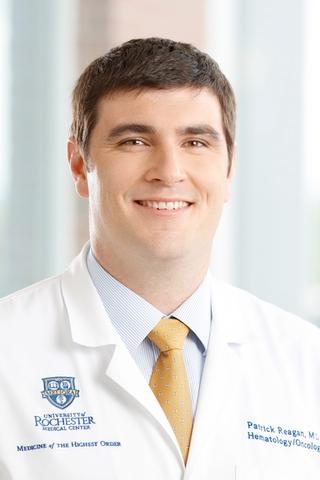
Patrick M. Reagan, M.D. is an Associate Professor in the Department of Medicine, Hematology/Oncology at the University of Rochester Medical Center , affiliated with the Wilmot Cancer Institute . He specializes in clinical care and research for Non-Hodgkin and Hodgkin lymphomas , focusing on aggressive B-cell lymphomas , autologous stem cell transplantation , and cellular therapy including CAR T-cells . His research emphasizes clinical trials in lymphoma treatment, particularly for large B-cell lymphoma and mantle cell lymphoma . Recent publications highlight advancements in CAR T-cell therapy , bridging radiotherapy , and eligibility criteria for trials. Scientific Awards : Wilmot Cancer Institute Inspiration Award (2022) Lymphoma Research Foundation Clinical Research Mentoring Program (2018) American Society of Hematology Clinical Research Training Institute (2015) John and Carol Bennett Travel Fellowship Award (2014) Alpha Omega Alpha (2009) Dr. Reagan is part of a multidisciplinary team at Wilmot Cancer Institute, including hematology and oncology , radiation oncology , and clinical trials office professionals, ensuring comprehensive patient care.
Umut Oguzoglu is a Professor of Economics at the University of Manitoba , with a longstanding affiliation as a Research Fellow at IZA . His research spans labour economics , health economics , economics of education , and applied microeconometric methods . PhD, Economics, University of Guelph MA, Economics, University of Guelph BA, Economics, Marmara University His methodological expertise includes panel data analysis , dynamic modeling , and instrumental variable techniques . Recent projects examine: Intergenerational health behavior transmission Physician relocation impacts on healthcare Sibling sex composition and STEM major choices COVID-19's effect on traffic accidents Gambling-community economic linkages Scientific awards include the 2020 Best Paper Prize from The Economic Record. He has supervised 3 PhD students, 13 MA/MSc students, and served on 16 thesis committees. Major grants include: SSHRC Partnership Grant (2020-2027) for poverty solutions CIHR grant (2020-2023) for lupus employment research Manitoba Gambling Research Program grant (2015)
Thijs Defraeye is a Senior Scientist at Empa (Swiss Federal Laboratories for Materials Science and Technology) and Adjunct Professor at Dalhousie University. He holds a PhD in Building Physics from KU Leuven (2011) and a Master's in Civil Engineering (2006). His work focuses on optimizing food supply chains through multiphysics simulations and digital twins, addressing challenges in refrigerated transport, postharvest quality preservation, and energy-efficient food processing. He leads the SimBioSys group, developing solutions for perishable goods logistics and electrohydrodynamic technologies. Research interests include: Biophysics of food systems Digital twin applications in agriculture Electrohydrodynamic drying Thermal management in cold chains Sustainable food technologies Recent work emphasizes reducing food loss through physics-based modeling of refrigerated containers, ventilated packaging optimization, and scalable evaporative cooling systems. His studies bridge engineering principles with biological processes, aiming to enhance global food security and environmental sustainability.
Dr. Scott Rothbart is a Professor in the Department of Epigenetics at Van Andel Institute (VAI), where he leads the Rothbart Laboratory. He earned his B.S. in Food Science and Human Nutrition from the University of Florida and his Ph.D. in Pharmacology and Toxicology from Virginia Commonwealth University. His postdoctoral training was conducted under Dr. Brian Strahl at the University of North Carolina at Chapel Hill. His research focuses on understanding chromatin accessibility, histone post-translational modifications, and DNA methylation's role in disease, particularly cancer. He translates this basic research into epigenetic target identification and drug discovery. Dr. Rothbart has contributed to groundbreaking studies on UHRF1’s role in DNA methylation maintenance and its therapeutic potential in cancer. He co-leads the VAI-SU2C Epigenetics Dream Team and directs the VAI Cancer Epigenetics Training Program. His work has been recognized with awards like the NIH MIRA Award and the American Cancer Society Research Scholar Grant. Research Interests: Chromatin biochemistry, cancer epigenetics, functional proteomics, histone modifications, and epigenetic drug development. His lab develops tools like peptide microarrays and functional proteomics platforms to study histone modifiers and their clinical relevance. Notable Achievements: Published over 122 peer-reviewed papers in 2024, including 63 in high-impact journals. Launched 15 clinical trials through the Epigenetics Dream Team. His lab’s work on viral mimicry therapies and epigenetic drug combinations has advanced cancer treatment strategies. Education: B.S. University of Florida (2004), Ph.D. Virginia Commonwealth University (2009), Postdoctoral Fellowship UNC Chapel Hill (2014).
Professor Selva Selvanathan is a Professor of Econometrics at Griffith University, affiliated with the Department of Accounting, Finance, and Economics at the Griffith Business School. He serves as Director of the Economics Policy Analysis Program (EPAP) and a member of the Griffith Asia Institute. His research focuses on applied econometrics, time series modeling, tourism and energy economics, and consumer demand analysis. He has authored/co-authored over 100 articles and multiple monographs, contributing to leading journals such as the Review of Economic Studies and Journal of Econometrics . Education: PhD in Economics (University of WA and Murdoch University, Australia), MSc (University of Bucharest, Romania), BSc (University of Jaffna, Sri Lanka). Research Interests: Professor Selvanathan’s work spans econometric methodologies, tourism economics, energy policy, and consumer behavior. His recent studies include modeling financial asset demand in Sri Lanka, analyzing alcohol consumption patterns in Australia, and exploring the gender dimensions of cleaner energy transitions. Awards and Honors: Pro-Vice Chancellor’s Research Excellence Award 2014 (Research Supervision) University of Western Australia Distinguished Teaching Award (1988) Griffith Awards for Excellence in Teaching 2005 – Innovation Across the Institution Grants and Collaborations: Leading projects funded by the Department of Foreign Affairs and Trade, Australian Research Council, and Griffith University. Notable grants include policy capacity-building initiatives in Vietnam and Sri Lanka, and studies on alcohol control measures. Advising and Mentorship: Supervised over 20 doctoral students, including works on foreign aid impacts, renewable energy transitions, and rural livelihoods. Current research includes market integration dynamics and energy policy effectiveness. Labs/Teams: Active in Griffith Asia Institute and EPAP, fostering interdisciplinary research on Asian economies and policy analysis.