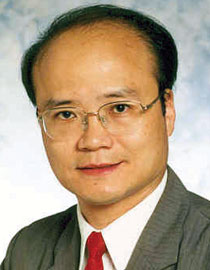
Xiaogang Wu is a Professor of Sociology and Yufeng Global Professor of Social Science at New York University, affiliated with the College of Arts & Science and the Department of Sociology. He holds a Ph.D. from UCLA, an M.A. from Peking University, and a B.A. from Renmin University of China. His research focuses on China's social stratification, education policy, inequality dynamics, urban studies, and quantitative methodologies. Key interests include social cohesion, housing policy impacts, migrant labor outcomes, and the interplay between education and socioeconomic status. His recent work analyzes pandemic vulnerability, educational expansion effects on earnings, and gender dynamics in reform-era China. He has contributed to major publications like Research in Social Stratification and Mobility and Demographic Research .
Associate Professor Jason Thompson holds an Associate Professor position in the Department of Psychiatry at the University of Melbourne. He is affiliated with the Faculty of Medicine, Dentistry and Health Sciences and previously served as Co-Director of the Transport, Health and Urban Systems (THUS) Research Laboratory at the Melbourne School of Design. He earned a PhD in Medicine (2015) from Deakin University, a Master's in Clinical Psychology, and a Bachelor of Science with Honours. His research focuses on computational social science applied to injury rehabilitation, compensation systems, and healthcare design. He has attracted over $5M in research funding and published over 100 articles. Key areas include agent-based modeling, systems dynamics, and policy analysis for public health challenges such as pandemic response and urban mobility. Thompson currently leads the NHMRC Centre of Excellence in Compensable Injury after Road Crashes. Grants: ARC Future Fellowship (2022), DECRA (2017) Awards: Best Paper Award (Computational Social Science Society of the Americas, 2017) Labs: THUS Research Lab (until 2024) His work bridges epidemiological modeling (e.g., influencing Victoria's 2020 pandemic exit strategy) and complex systems analysis for injury prevention and health system design.
Annelies Zoomers is a Professor of International Development Studies at Utrecht University's Faculty of Geosciences. Her research focuses on climate change, land governance, migration, and sustainable livelihoods. She co-founded the Netherlands Land Academy (LANDac) and the Shared Value Foundation, and served as Chair of WOTRO Science for Global Development (2019–2022). Her current projects include the EU-funded 'Welcoming Spaces' initiative, which explores integrating migrants into shrinking European regions, and 'Diamonds in the Delta,' addressing climate resilience in delta cities. Zoomers has extensive experience in policy咨询 for global organizations like the World Bank and ILO, and has authored over 200 publications. She is a member of the Dutch Advisory Council on International Affairs (AIV). Her work bridges academic research with practical solutions for inclusive development, emphasizing participatory approaches to land governance and migration policy.
Ediz Cetin is an Associate Professor in Digital Electronics Engineering at Macquarie University's School of Engineering and a member of the Astrophysics and Space Technologies Research Centre. He serves as Course Director for the MEng Electronics Engineering program and Chair of the School's Postgraduate Coursework Committee. His research focuses on radio frequency interference mitigation, fault-tolerant reconfigurable circuits for space applications, machine learning in RF signal analysis, and low-power digital circuit design. Education: PhD in Signal Processing (Unsupervised Adaptive Signal Processing Techniques for Wireless Receivers) B.Eng. (Hons.) in Control and Computer Engineering Research Interests: RF interference detection and localization GNSS anti-jamming and spoofing detection FPGA-based reconfigurable systems Space instrumentation and CubeSat technologies Machine learning for signal processing Awards: Excellence in Learning Innovation (FSE Teaching Award, 2022) Highly Commended Finalist – Vice-Chancellor’s Award for Learning Innovation (2022) Innovative Approaches – Highly Commended (FSE Teaching Award, 2020) Key Projects: SmartSat CRC (2020–2026): Smart Satellite Technologies and Analytics Spacecraft Innovation Lab (2021–2022) CubeSat Biological Payload (2019–2022) Teaching Contributions: Led the 'Improving Student Engagement with Anywhere and Any-time Laboratory Access' initiative (2019–2020), enhancing remote lab accessibility for students.
France Winddance Twine is a Professor of Sociology at the University of California, Santa Barbara (UCSB), with affiliations at Cambridge University's Sociology of Reproduction research group. She holds a Ph.D. from UC Berkeley and has held prior positions at Duke University and the University of Washington, where she founded the Latin American Studies unit in the Jackson School of International Studies. Her work focuses on intersectional analyses of race, gender, technology, and inequality, particularly through ethnographic and visual methodologies. Education: Ph.D. in Sociology, UC Berkeley Key Research Areas: Racial literacy, queer reproduction, tech industry inequality, feminist science studies, visual sociology Twine's research bridges multiple disciplines, addressing global racial formations, digital labor markets, and anti-racist strategies. Her concept of 'racial literacy' emphasizes intellectual and cultural practices countering anti-Black racism. Recent work examines Silicon Valley's caste systems and barriers faced by women and minorities in tech. Awarded the 2020 ASA Race, Gender & Class Distinguished Career Award, she also secured a $225K Mellon Foundation grant for interdisciplinary seminars on migration and race. She founded UCSB's Technologies for Justice Lab, fostering collaborations between humanities/social sciences and STEM fields to advance equity in technology. Teaching includes courses on digital technologies, racial justice, and ethnographic methods. Her eleven authored/edited books include A White Side of Black Britain (2010) and Geek Girls: Inequality and Opportunity in Silicon Valley (2022).
Xi Zhang is a Full Professor in the Department of Electrical and Computer Engineering at Texas A&M University . He is also the Founding Director of the Networking and Information Systems Laboratory. His academic career includes research fellowships at the University of Technology Sydney and James Cook University, as well as prior roles at AT&T Bell Laboratories and AT&T Laboratories Research. Education: B.S. and M.S. in Electrical Engineering & Computer Science, Xidian University, China M.S. in Electrical Engineering & Computer Science, Lehigh University, USA Ph.D. in Electrical Engineering-Systems, University of Michigan, USA Research Interests: His work focuses on Quality-of-Service (QoS) theory, 6G/Next-Generation Wireless Networks , Massive MIMO , Integrated Sensing and Communications (ISAC) , and Network Function Virtualization (NFV) . He has pioneered advancements in statistical delay/error-rate bounded QoS , AI-driven 6G architectures , and mURLLC (massive ultra-reliable low-latency communications) . Awards & Honors: IEEE Fellow (2014) for contributions to QoS theory in mobile wireless networks NSF Early Career Award (2004) Multiple Best Paper Awards (IEEE GLOBECOM, WCNC, ICC) Outstanding Faculty Award from Texas A&M (2020) Leadership Roles: He has held key positions as Technical Program Committee (TPC) Chair for major conferences (e.g., IEEE GLOBECOM 2011, IEEE ICDCS 2026) and serves as Editor for top-tier journals like IEEE Transactions on Communications and IEEE Transactions on Wireless Communications . Labs & Teams: He leads the Networking and Information Systems Laboratory , focusing on 6G mobile networks, ISAC systems, and AI-driven network architectures.
David B. Johnson is a tenured full Professor of Computer Science and Electrical and Computer Engineering at Rice University. He leads the Monarch research group, focusing on mobile networking architectures. Previously, he served as an Associate Professor at Carnegie Mellon University (1992–2000). His research emphasizes network protocols, distributed systems, and operating systems, with notable contributions to Mobile IP standards and wireless ad hoc networks. He holds a PhD, MS, and BA from Rice University (1990, 1985, 1982). Education: PhD in Computer Science, Rice University (1990) MS in Computer Science, Rice University (1985) BA in Computer Science and Mathematical Sciences, Rice University (1982) Research Interests: Johnson's work centers on adaptive wireless/mobile networking protocols, including Mobile IP, multihop wireless systems, and security protocols. His Dynamic Source Routing (DSR) protocol for ad hoc networks is an IETF standard. He has been deeply involved in IETF standards development for over 15 years, particularly in Mobile IP and MANET working groups. Awards & Leadership: ACM SIGMOBILE Chair (2005–2009), Treasurer (1997–2005) Conference leadership roles: General Chair for IEEE MASS 2012, COMSNETS 2011, and others Editorial roles: IEEE Pervasive Computing (Founding Board), Ad Hoc Networks, and more Labs & Teams: Monarch Group at Rice University, previously at Carnegie Mellon, develops next-generation mobile networking architectures.
Justen O'Connor is an Associate Professor in the School of Curriculum, Teaching and Inclusive Education at Monash University’s Faculty of Education. He also serves as Associate Dean (Staffing and Strategy), demonstrating leadership in academic administration. His research focuses on transforming health and physical education (HPE) to be more inclusive, equitable, and socially meaningful, with strong emphasis on informal sport, social ecology, and systems thinking. His research interests include: Transforming teaching and learning in HPE Equity, diversity, and inclusion in sport and education Mental well-being in community sport settings Curriculum, pedagogy, and assessment in HPE Informal and alternative sport participation Social-ecological drivers of physical activity Rasch modeling and scale development for research measurement Justen’s recent publications reflect a consistent focus on inclusion, informal sport, curriculum futures, and socio-ecological systems in physical activity contexts. His work often involves mixed-methods research, collaboration with industry and academic partners, and real-world impact through policy and program evaluation. He has received several prestigious awards recognizing his contributions: Dean’s Award for Excellence in Social and Economic Impact (2022) Vice Chancellor's Excellence Award for Diversity and Inclusion (2021) Best Paper Award in Physical Education and Sport Pedagogy (2018) Finalist for Most Outstanding Paper, Journal of Curriculum Studies in Health and Physical Education (2021) Justen supervises Honours, Masters, and PhD students in areas aligned with his research. He is actively involved in securing competitive grants, including funding from the Australian Research Council. His teaching includes EDF2171 (Motor Control and Skill Acquisition) and EDF4171 (Advanced Sport and Exercise Science). He also engages in public outreach as a keynote speaker and media contributor, promoting accessible research in HPE.
Dr Luca Follis is an Associate Professor in Criminology within the Department of Sociology and Criminology at the School of Law, Politics and Sociology, University of Sussex. His interdisciplinary research explores the intersections of law, power, technology, and resistance, with a focus on penal systems, surveillance, and digital activism. His education includes a PhD in Sociology (with Honours) from the New School for Social Research, where his dissertation won the Albert Solomon Memorial Award. He also holds a B.A. in English Textual Studies from Syracuse University and a B.A. in Sociology and Mass Communication from the University of New Mexico. Political Sociology Criminology and Penal Governance Hacktivism and State Hacking Surveillance and Networked Technology Carceral Logistics and Prison (Im)mobilities Migration, Health Systems, and (Im)mobilities His recent publications reflect a strong trend in analyzing how digital technologies reshape state power and resistance, from state hacking and cyberwar to healthcare access during pandemics. He frequently collaborates with scholars like Anna Fish and engages in critical legal and historical analyses of punishment and control. Albert Solomon Memorial Award in Sociology, New School for Social Research Senior Fellow of the Higher Education Academy Luca Follis advises students and contributes to academic discourse through editorial work, collaborative research, and public engagement. While specific grant details are not listed, his extensive publication record and interdisciplinary projects suggest active research funding. He is involved in critical studies of justice infrastructures, carceral systems, and digital governance. His work bridges historical and contemporary issues, from 19th-century penal governance to modern cyber conflicts, often situating technological change within broader political and cultural dynamics. He contributes to both academic and public understanding of power, resistance, and justice in digital and carceral contexts.
Dr. Mingyuan Zhang Betancourt is a socio-cultural anthropologist affiliated with the University of Oslo's Institute of Community Medicine and Global Health. Specializing in cross-cultural analysis between China and Africa, her work examines pharmaceutical supply chains and postcolonial development dynamics. PhD in Anthropology, University of Western Ontario (2018) Former Writing Fellow, University of Toronto Scarborough Her research spans multiple disciplines: Pharmaceutical Anthropology : Analyzing antibiotic shortages across India/China production networks China-Africa Relations : Investigating cultural identity formation through historic sugar plantations and Confucius Institute operations Political Ecology : Documenting resource conflicts in Malagasy agrarian systems Recent publications demonstrate: 2024 study on pharmaceutical production history 2023 comparative analysis of China-India trade disputes 2022 critique of cultural standardization in educational programs 2021 pandemic discourse analysis She actively explores: Global antibiotic accessibility Postcolonial development paradigms Transnational identity politics
Dr. Ceri Oeppen is a Lecturer in Human Geography at the University of Sussex and a Global Fellow of the Peace Research Institute Oslo (PRIO). Her research focuses on migration, conflict, and development, particularly in Afghanistan and among Afghan asylum seekers and refugees. Her current project, Possibilities and Realities of Return Migration (PREMIG) , funded by the Research Council of Norway, examines return migration in Afghanistan, Pakistan, and three other countries. Her work bridges academic research with policy and community engagement, emphasizing displacement economies, returnee integration, and gender dynamics in migration. Her recent publications highlight trends in forced and voluntary migration, reintegration challenges, and displacement economies, with case studies across Afghanistan, Pakistan, Europe, and Africa. She employs interdisciplinary methodologies, linking migration discourse to broader social and policy contexts. Scientific Awards Global Fellow, Peace Research Institute Oslo (PRIO) She has contributed to grants like the PREMIG project and collaborated with institutions such as the Sussex Asia Centre. Her research also explores public scholarship, ethical engagement, and activism in migration studies.
Clarice Seifert Clemmens, MD, is a Professor at the Medical University of South Carolina (MUSC) in the College of Medicine's Department of Otolaryngology - Head and Neck Surgery. She specializes in pediatric otolaryngology with particular expertise in neonatal airway disorders and thyroid disorders, while also covering pediatric allergy/sinus disease, ear disease, hearing loss, sleep medicine, speech/swallowing disorders, and dysphagia. Dr. Clemmens completed her medical training at MUSC in 2009, followed by a residency at the University of Pennsylvania and a fellowship at Children's Hospital of Philadelphia. Education Medical Degree: Medical University of South Carolina (2009) Residency: University of Pennsylvania Fellowship: Children's Hospital of Philadelphia Her research focuses on pediatric airway disorders, evidenced by her publications on laryngomalacia interventions, cochlear implant auditory outcomes, sleep study diagnostics, and airway emergency protocols. She has contributed to systematic reviews examining tracheostomy management, neonatal airway anomalies, and sociodemographic barriers in newborn hearing screening. Dr. Clemmens maintains an active clinical practice at MUSC Children's Health ENT at Summey Medical Pavilion, where she provides comprehensive care for pediatric ear, nose, and throat conditions. She has presented her work nationally and regionally, and maintains board certification from the American Board of Otolaryngology since 2015.
Daehyeok Kim is an Assistant Professor in the Department of Computer Science at The University of Texas at Austin, where he co-leads the UT Networked Systems Research Group and participates in the Wireless Networking and Communications Group and 6G@UT. He serves as co-PI for the LDOS NSF Expeditions in Computing project, a major initiative rethinking operating systems through AI. His educational background includes a Ph.D. in Computer Science from Carnegie Mellon University under advisors Vyas Sekar and Srinivasan Seshan, where his dissertation introduced abstractions for elastic in-network computing. He also earned B.S. and M.S. degrees in Computer Science and Engineering from POSTECH, South Korea, followed by research scientist work at KAIST prior to his Ph.D. Kim's research centers on hardware-software co-design for cloud and edge data centers, targeting speed, efficiency, and resilience. Key projects include resource management for programmable infrastructure, robust cellular network design, end-to-end network transport frameworks, and learning-directed operating systems. His work bridges computer networks, operating systems, distributed systems, and 5G/6G technologies, with emphasis on virtualized radio access networks (vRAN) and edge computing challenges. Analysis of his recent publications reveals a dominant focus on enhancing 5G/6G infrastructure reliability—particularly in virtualized RANs—through innovations in failover mechanisms, integrity protection, and latency-sensitive resource allocation. His research consistently addresses critical industry pain points like sub-second availability requirements, fronthaul security vulnerabilities, and end-to-end service-level objective (SLO) guarantees for mobile-edge applications. Notable scientific awards include: NSF CAREER Award (2025) for advancing cloud hardware efficiency Microsoft Research PhD Fellowship (2019) Bronze Award at Samsung HumanTech Paper Awards (2018) Qualcomm Innovation Awards (2016) His grant portfolio features leadership in the $10M+ LDOS NSF Expeditions project and the NSF CAREER award, both driving transformative work in AI-integrated operating systems and resilient network infrastructure. These projects demonstrate strong industry-academia collaboration with Microsoft Research, wireless vendors, and cloud providers. Kim co-leads the UT Networked Systems Research Group, which operates within the Wireless Networking and Communications Group and 6G@UT consortium. These labs maintain a 5G/6G testbed for Open RAN validation and focus on solving real-world problems in cellular infrastructure, edge computing, and network security through close partnerships with industry leaders.
Dr. Elaine Chen serves as Senior Lecturer in Business Analytics and Course Leader for the MSc Business Analytics and Artificial Intelligence at Nottingham Business School, Nottingham Trent University. Her teaching emphasizes practical applications of data and AI technologies for business decision-making, with dedicated focus on accessibility for diverse student backgrounds across technical and strategic domains. Her academic credentials include: PhD in Computing Science MSc in Business Information Technology Postgraduate Certificate in Academic Practice BTech (Hons) in Business Information Systems Chen's research bridges educational and business contexts through data-AI integration: Generative AI adoption in higher education, particularly for neurodivergent/disabled students Human-AI collaboration frameworks in organizational settings SME applications for AI-driven efficiency and competitiveness Workforce analytics and talent management systems Her work consistently connects technical AI capabilities with real-world implementation challenges. Publication analysis (2023-2025) reveals accelerating focus on generative AI's educational impact and business strategy integration, evolving from her foundational work in social recommender systems (2014-2020) which established methodologies now applied to contemporary AI challenges in business contexts. Her professional recognition includes: Senior Fellow of the Higher Education Academy (HEA) Chen actively supervises PhD candidates in AI education, human-AI collaboration, and workforce analytics domains. Her pedagogy leadership includes designing accredited business analytics curricula and securing teaching innovation projects with documented outcomes in student engagement metrics. Prior industry experience as an automation engineer at Intel informs her practical approach to AI implementation. Current initiatives focus on generative AI ethics frameworks and longitudinal SME adoption studies, extending her established research trajectory into emerging business technology challenges.
Nathan Johnson is an Associate Professor at Arizona State University (ASU) within the Ira A. Fulton Schools of Engineering's Polytechnic School. He directs the Laboratory for Energy And Power Solutions and the ASU-Starbucks Center for the Future of People and the Planet, while serving as Assistant Director of Research for the Global Futures Laboratory. His work focuses on sustainable development through energy decarbonization, microgrid innovation, and public-private partnerships. Ph.D. Mechanical Engineering, Iowa State University (2012) M.S. International Development & Mechanical Engineering, Iowa State University (2008, 2005) B.S. Mechanical Engineering, Iowa State University (2004) Research interests span microgrid resilience , energy-water-food nexus , grid modernization , and resource circularity , with applications in defense energy security, global energy access, and climate adaptation. His recent publications examine cascading infrastructure failures, hydrogen's role in decarbonization, and AI-driven solar panel diagnostics, reflecting interdisciplinary work in energy economics , control systems , and climate-resilient infrastructure . Over $70 million in funding includes projects like: DoD-funded microgrid resilience programs ($1.05M, 2022) World Bank climate-adaptive energy solutions in West Africa ($39.95M, 2021) NSF grants for urban resilience modeling ($3.6M, 2019) As leader of ASU's LEAPS initiative, he develops deployable energy solutions for disaster relief and underserved communities, combining hardware innovation with workforce development programs for veterans and civilians.