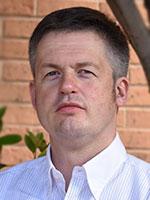
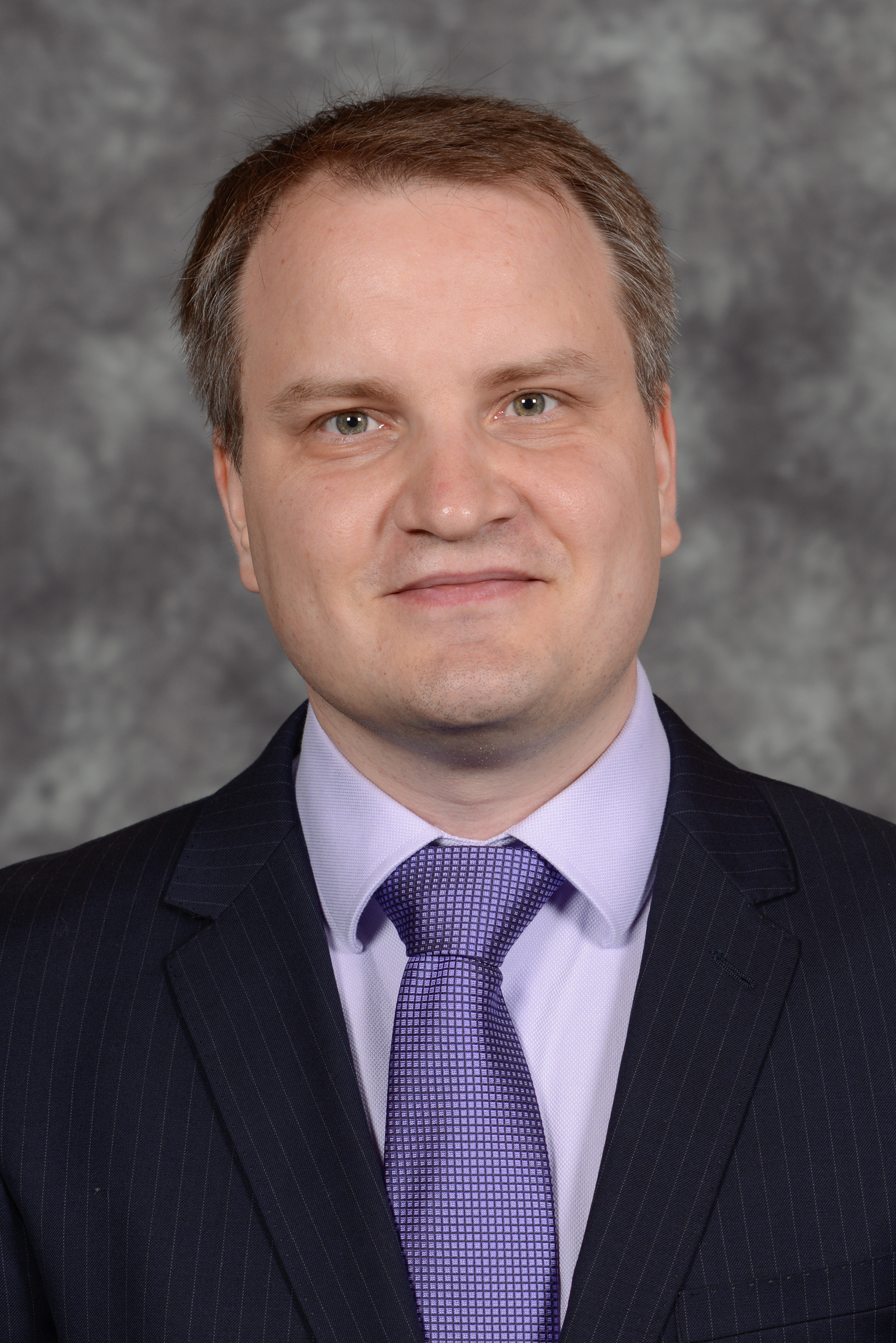
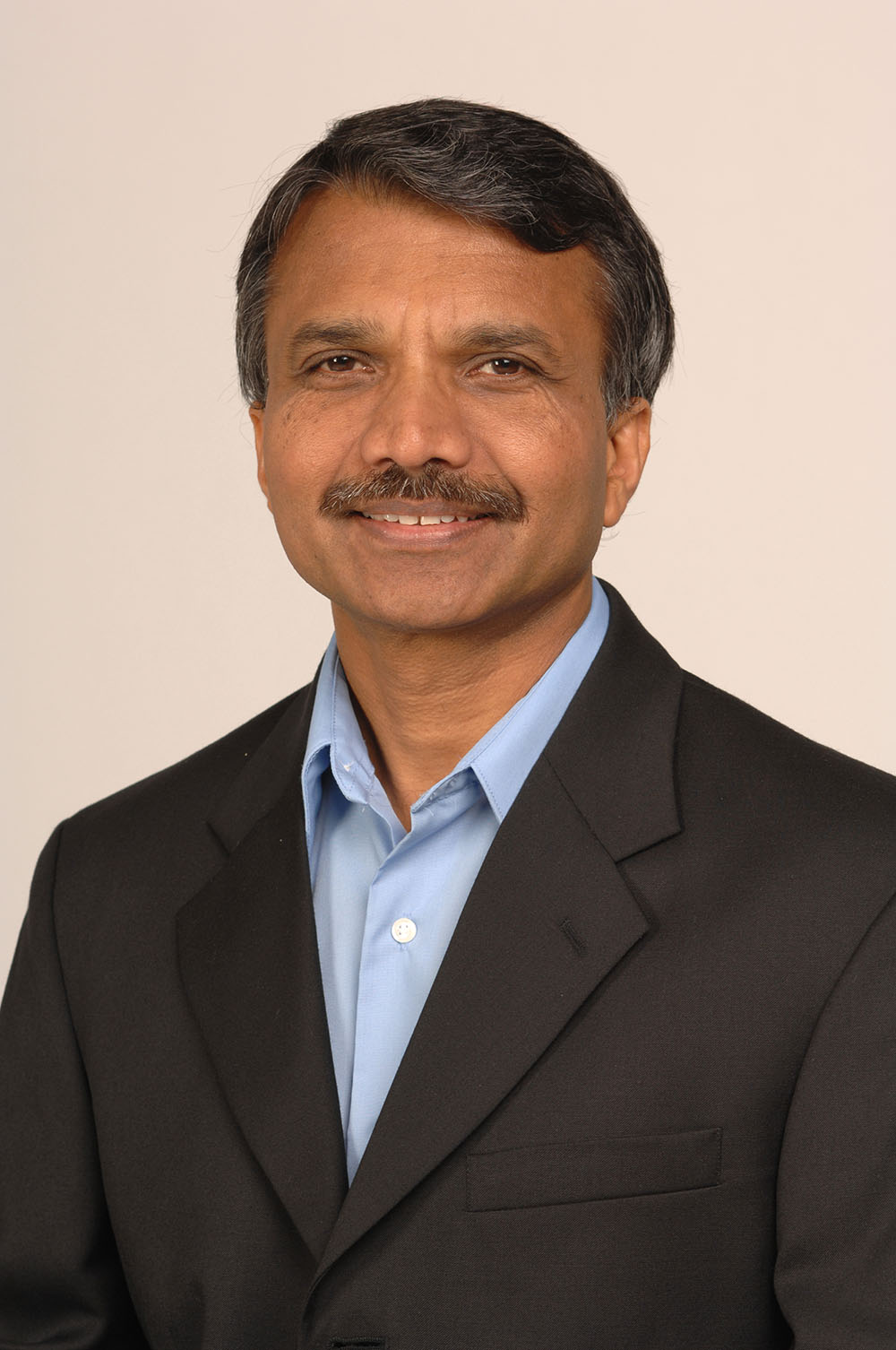
Kirill Morozov is an Associate Professor at the University of North Texas within the College of Engineering and the Department of Computer Science and Engineering . His research focuses on Cryptography and Cybersecurity , particularly on code-based protocols, post-quantum cryptography, and information-theoretic methods. Research interests include cryptographic protocols from coding and correlated randomness, covering post-quantum cryptography, zero-knowledge systems, secret sharing, and physical-layer key agreement. He has taught courses like Introduction to Computer Security and Applications of Cryptography at UNT since 2018, and previously at Tokyo Institute of Technology (2017) and Kyushu University (2011–2015). His work spans code-based encryption , unconditionally secure protocols , and cloud storage applications , with contributions to zero-knowledge proofs, cheater-identifiable systems, and oblivious transfer over noisy channels. Contact: Kirill.Morozov@unt.edu . No scientific awards explicitly listed. His publications emphasize code-based cryptography , secure computation , and quantum-resistant protocols .
Shambhu Upadhyaya is a Professor in the Department of Computer Science and Engineering at the University at Buffalo (SUNY), serving as Director of the SEAS/SOM Cybersecurity MS Program and Director of the Center of Excellence in Information Systems Assurance Research and Education (CEISARE). His expertise spans cybersecurity, behavioral biometrics, and fault-tolerant computing. With a PhD from the University of Newcastle (Australia) and degrees from the Indian Institute of Science, he has held roles including National Research Council Fellow and IBM Faculty Partner. Research focuses on intrusion detection, insider threats, and secure systems. Notable contributions include frameworks for detecting advanced persistent threats (APTs) and ransomware, as well as behavioral biometrics for authentication. Awards include IEEE Fellow (2021), SUNY Chancellor’s Award (2019), and Best Paper recognitions. Teaching spans undergraduate courses like Computer Organization and graduate courses in cybersecurity and wireless networks. Supervised numerous PhD and MS students in areas like secure authentication, database security, and resilient systems.
Dr. Alex Afanasyev is Assistant Professor at Florida International University's Knight Foundation School of Computing and Information Sciences. His research develops Named Data Networking (NDN) architectures for IoT, vehicular networks, and secure distributed systems. Research creates scalable routing protocols, trust management frameworks, auto-configuration mechanisms, and security solutions for information-centric networks. Recent projects include Hydra federated storage, secure automotive networking, and NDN-based pedestrian safety applications. Leads NDN protocol development and contributes to standardization efforts. Recognized by UCLA Chancellor's Award for Postdoctoral Research. Research funded by NSF and industry partners.
Dr. Sarah Wiseman is a Visiting Fellow in the Department of Computing at Goldsmiths, University of London. Her research focuses on Human-Computer Interaction (HCI), with particular emphasis on healthcare technology, haptic interfaces for visually impaired users, and board game player experience. She holds a PhD in HCI from UCL (2014), an MSc from the University of York (2010), and a BSc from the University of Edinburgh (2009). Her teaching responsibilities include courses on web programming, mathematical modeling, and interaction design. Wiseman is actively involved in public engagement through stand-up comedy about her research and science communication at venues like the Royal Institution. Her work bridges technology and culture, exploring how interfaces can enhance accessibility and user experience in diverse settings—from hospitals to immersive theatre. Key research areas include error detection in medical devices, haptic navigation systems, and the role of soundtracks in board game immersion. She has collaborated on projects like the 'Flatland' immersive theatre experiment and studies on emoji repurposing in personal communication. Her interdisciplinary approach integrates HCI principles with fields like game design and accessibility engineering.
Dr. Sam Fowler is a Lecturer in STEM Education at UniSA Education Futures, University of South Australia, based at the Mawson Lakes Campus. He serves as a Research Degree Supervisor and maintains an active research profile focused on educational technology, self-regulated learning, and spatial reasoning development in educational contexts. Dr. Fowler's research interests center on STEM education, educational technology, self-regulated learning, spatial reasoning, mathematics education, teacher professional development, and educational design research. His work particularly examines how technologically enhanced learning environments influence teaching practices and student engagement with STEM subjects, with a focus on how physical learning spaces shape knowledge construction. His recent publications demonstrate a strong emphasis on self-regulated learning interventions in South Australian primary schools, teacher epistemic cognition in professional development contexts, and the potential of technology-enhanced environments to develop spatial reasoning skills. His research employs diverse methodologies including design-based research, pragmatic clustered randomized control trials, and qualitative approaches to understand educational phenomena in authentic settings. Dr. Fowler's scholarly contributions reflect a commitment to bridging educational theory and practice, particularly in developing sustainable models for professional development and educational innovation that can be scaled across educational systems. His work often involves collaboration with South Australian Department for Education and other university researchers to address pressing challenges in contemporary education.
Dr. Sukhwant Sagar serves as a Sessional Assistant Professor in the Teaching Stream within the Department of Electrical Engineering and Computer Science at York University. With over 22 years of teaching experience in Computer Science and Software Engineering, she brings extensive expertise to her academic role. Her educational background includes a PhD in Information Technology from the University of Salford (UK), MSc in Software Systems from BITS Pilani (India), and a B.Tech in Computer Science & Engineering from Punjab Technical University (India). Prior to her current position, she served as Program Coordinator for the Cybersecurity Graduate Certificate program at Durham College and taught at Ontario Tech University. Dr. Sagar's research spans multiple critical areas in computing including Software Engineering, Cybersecurity and Privacy, Artificial Intelligence, and Computer Science Education. Her work particularly focuses on virtual team dynamics, trust factors in construction projects, and practical security implementations. She has developed expertise in network monitoring, penetration testing, ethical hacking, and computer forensics, reflecting her commitment to both theoretical knowledge and practical application in security domains. Her publication record shows a clear evolution from early work in mobile applications and web technologies toward more recent research on virtual team dynamics and trust factors in construction projects. This progression demonstrates her ability to adapt research interests to emerging technological challenges while maintaining focus on practical applications in engineering contexts. AWS Certified Cloud Developer Associate Certified Ethical Hacker (CEH) Microsoft Azure Cloud Practitioner AWS Cloud Practitioner Accredited Educator Dr. Sagar actively contributes to academic and industry initiatives, serving as a reviewer for Mitacs Accelerate research proposals, participating in the Waterloo Security Dialogue roundtable discussion addressing Canada's cybersecurity talent shortage, and acting as a third-party assessor for the Ministry of Colleges and Universities. She serves on advisory boards for conferences like ICRTAIDS-2024 and has spoken at numerous prestigious events including Canadian Women in Cybersecurity and the CISO Forum. Her professional engagement extends to memberships in ACM, IEEE, ISTE, and CSI, reflecting her commitment to staying current with technological advancements and contributing to the broader academic community.
Prabakar Nagarajan serves as Associate Professor and Undergraduate Program Director at Florida International University's School of Computing and Information Sciences, where he has held continuous faculty positions since 1984—from Visiting Assistant Professor (1984-1985) to Assistant Professor (1985-1991) and Associate Professor (1991–present). His office (CASE 345) hosts Monday/Wednesday office hours, and he maintains an active research profile with recent publications spanning security, robotics, and social media analytics. His educational foundation includes: Ph.D. in Computer Science, University of Queensland (1985) M.E. in Automation, Indian Institute of Science (1979) B.E. with Gold Medal (First Rank), Annamalai University (1977) Research interests focus on distributed systems and spatial data, particularly Distributed Sensor Networks, Grid Computing, and Image Processing for Spatial Data. He pioneered TerraFly software for real-time spatial database access and dynamic mosaicking algorithms at FIU's High Performance Database Research Center. Current work involves fault-tolerant distributed computing grids with large-scale sensor networks, bridging theoretical innovation with practical applications in data-intensive domains. Recent publications (2017-2019) reveal strong thematic continuity in machine learning applications—especially for security (malicious attack detection, fake review identification, ATM authentication) and robotics (rehabilitation therapy, telepresence failure prediction). His work consistently integrates temporal data analysis, graph-based methods, and deep learning across cybersecurity, social media, and biomedical engineering contexts. Award highlights include: FIU Excellence in Service Award (College of Engineering, 2012; School of Computing, 2011) Teaching Incentive Program Award (1995) University of Queensland Postgraduate Prizes (1982, 1984) Annalmai University Gold Medal (1977) Dr. Nagarajan secured $13.7M across eight funded grants as PI/Co-PI/Senior Investigator, demonstrating sustained external funding success. His leadership extends to academic governance through roles like Undergraduate Committee Chair (2006-2012, 2014–present) and University Curriculum Committee Chair (2010-2012), reflecting deep institutional commitment. As Undergraduate Program Director, he shapes curriculum and student development in computing disciplines. He remains central to FIU's High Performance Database Research Center—originator of TerraFly technology—and currently leads sensor network initiatives within distributed computing grids, emphasizing fault tolerance for real-world deployment scalability.
Simon Parkinson is a Professor of Cyber Security at the University of Huddersfield's School of Computing and Engineering, serving as Director of the Centre for Cybersecurity and Computer Science Department Research Coordinator. His active research program focuses on securing digital systems through AI-driven approaches, with leadership roles in multiple research centers and acceptance of new PhD students. His research expertise spans Cyber Security and Artificial Intelligence, with concentrated work on identity management, biometric authentication, and access control systems. Key contributions include developing novel methods for detecting security weaknesses in enterprise IT systems and leveraging behavioral biometrics (e.g., keystroke dynamics, fitness device data) for intrusion prevention. This work directly supports UN Sustainable Development Goals through secure technology development. Recent publications (2024-2025) reveal strong interdisciplinary trends, particularly at the intersection of machine learning security frameworks, biometric spoofing countermeasures, and transportation system vulnerabilities. A notable pattern involves applying human factors research (eye tracking, situational awareness) to enhance cybersecurity in augmented reality and connected vehicle environments. Professional recognition includes multiple teaching awards: School Supervisor of the Year (2018, 2019, 2024) University Supervisor of the Year (2020) His supervision excellence is evidenced by 20 completed research degrees (15 PhD, 5 Master by Research) and examination of 10 international PhD theses. Major grant leadership includes £2.6m+ in funding from EPSRC, DSTL, and Innovate UK for cybersecurity initiatives: Centre for Biominetic Societal Futures (2021-2024) Digital Catapult EPSRC Fellowship AI-driven precision manufacturing projects As Centre for Cybersecurity Director, he leads initiatives in threat detection frameworks and collaborates with the Centre for Planning, Autonomy and Representation of Knowledge on AI applications for societal resilience, including biometric security systems and critical infrastructure protection.
Lei Yu is a Tenure-Track Assistant Professor in the Department of Computer Science at Rensselaer Polytechnic Institute (RPI). Previously, he was a Research Staff Member at IBM Research's Thomas J. Watson Research Center. He holds a Ph.D. in Computer Science from Georgia Institute of Technology and earlier studied at Harbin Institute of Technology. His research focuses on data privacy, AI security, machine learning systems, and cloud/mobile computing, with notable contributions to federated learning, adversarial attacks, and blockchain security. Yu has been awarded multiple IBM accolades, including the 2022 IBM Research Outstanding Accomplishment and the IBM Outstanding Innovation Award. He has authored numerous patents and serves on technical program committees for top conferences like ACM ASIACCS and IEEE ICDCS. Education: Ph.D. in Computer Science (Georgia Tech), M.S. and B.S. from Harbin Institute of Technology (China). His work spans theoretical and applied research, including privacy-preserving techniques, secure AI systems, and distributed computing. He leads the RPI lab focused on trustworthy AI and has advised over 15 students across Ph.D., Master’s, and undergraduate programs. Research interests emphasize threats in data lifecycle, machine learning robustness, and system security. His lab’s projects include membership inference attacks, model deduplication, and blockchain-based solutions for data integrity. He has secured grants such as the RPI-IBM AIRC research award and maintains active collaborations with industry and academia. Awards: IBM Research Awards (2020–2022), NSF Travel Grants, Best Paper Awards. Professional Activities: Guest Editor for Wireless Communications and Mobile Computing , TPC roles in ICDCS, AsiaCCS, and ICDE. Teaching: Courses on database systems, network programming, and machine learning security at RPI.
Constantin Chassapis is a Professor in the Department of Mechanical Engineering at Stevens Institute of Technology's Charles V. Schaefer, Jr. School of Engineering and Science. He has held significant administrative roles including Senior Vice Provost for Graduate Education, Deputy Dean of the School of Engineering & Science, and Director of the Department of Mechanical Engineering. Education includes a PhD in Mechanical Engineering from The City University of New York, and ME/BE degrees from The City College, City University of New York. Research focuses on interdisciplinary domains including: Knowledge-Based Engineering Systems Concurrent Engineering methodologies Computer-Integrated Design and Manufacturing Advanced gear mechanism innovations Virtual laboratory development for education Honors include the President’s Leadership Award, honorary Master's degree, and multiple best paper awards from ASEE and SPE. Patents include innovations in planetary gear design and dynamically reconfigurable sensing architectures. Current projects involve hypocycloid gear mechanisms for internal combustion engines and biometric-authenticated virtual laboratories.
Dr. Cheng Chen is Associate Professor and Nariman Farvardin Professor in the Department of Civil, Environmental and Ocean Engineering at Stevens Institute of Technology. He directs the Subsurface Energy, Water and Environmental Systems (SEWES) Lab, focusing on porous media transport phenomena through combined computational and experimental approaches. His NSF and DOE-funded research addresses multiphase flow in geological formations for carbon sequestration, shale energy recovery, and nuclear waste disposal. Recent work integrates machine learning for scale-bridging data assimilation and distributional reinforcement learning for autonomous marine systems. Chen's methodological innovations include lattice Boltzmann simulations for pore-scale analysis and Gaussian process models for uncertainty quantification. Scholarly outputs demonstrate consistent focus on energy-geoscience interfaces, with recent expansion into privacy-preserving federated learning applications for IoT systems. His 2023-2024 publications increasingly address security challenges in distributed computing and adversarial machine learning. Major Recognition: Stanford Top 2% Most Cited Scientist (2023) Nariman Farvardin Endowed Professorship Chen teaches numerical methods in environmental engineering and subsurface flow modeling, maintaining industrial partnerships with Schlumberger, SeaRobotics, and Consolidated Edison. He holds editorial roles for SPE Journal and has authored over 60 peer-reviewed publications.
Dr. Sven Esche is an Associate Professor in Mechanical Engineering at Stevens Institute of Technology. He holds a PhD from Ohio State University and specializes in manufacturing, computational mechanics, and engineering education innovation. With over 30 years of academic experience, he has held leadership roles including Associate Department Director and Program Director for graduate studies. Education includes: PhD in Mechanical Engineering, Ohio State University (1997) MS in Mechanical Engineering, Ohio State University (1994) Diploma in Applied Mechanics, Chemnitz University of Technology (1989) His research integrates virtual laboratories, game-based learning, and IoT applications to transform engineering education. Recent work develops biometric proctoring systems and adaptive control algorithms for robotics education. Publications demonstrate consistent focus on enhancing remote experimentation through VR/AR technologies and collaborative learning frameworks. Awards recognizing his contributions: Employee Recognition Award for Excellence (2016) Humphreys Distinguished Teaching Award (2015) Best Paper Award, ASEE Conference (2006) He coordinates multi-institutional research projects in educational technology and advises graduate students in mechanical engineering. Directs laboratory facilities developing telepresence robots and virtual assembly platforms for distance learning.
Professor Susie Sykes is a Professor of Public Health and Health Promotion at London South Bank University (LSBU), where she has been employed since 2006. She serves as Director of the Health and Wellbeing Research Centre and Director of PHIRST South Bank, one of eight UK-wide NIHR-funded centres evaluating public health interventions. Her work emphasizes community-based approaches to address health inequalities through critical health literacy development. Susie Sykes holds the following academic qualifications: PhD in Public Health, London South Bank University (2011-2015) Certificate in Higher Education, London South Bank University (2009-2010) MA (distinction) in Health and Community Development, de Montfort University (1998-2000) BA (hons), University of Sheffield (1991-1994) Her research centers on health literacy—particularly critical health literacy at community level—as a mechanism for addressing social determinants of health and reducing inequalities. She investigates community-focused public health interventions, evaluation methodologies, and workforce development, with recent projects examining eHealth literacy in infertility contexts and pandemic response. As Vice Chair of the Global Working Group for Health Literacy, she contributes to international efforts addressing health literacy challenges. Analysis of her 15 most recent publications reveals dominant themes in process evaluation of complex public health interventions, with significant focus on gambling harms reduction, violence prevention, and tobacco control. Her work consistently employs co-production methods involving lived experience, examines equity implications across diverse settings (custody suites, community outreach), and addresses structural barriers in public health implementation. Professor Sykes leads PHET@LSBU for public health workforce training and serves as Chief Investigator for PHIRST South Bank. Her international collaborations include the Global Health Literacy and Covid-19 consortium, and she has supervised postgraduate research as indicated by institutional records. She directs LSBU's Health and Wellbeing Research Centre and co-leads PHIRST South Bank, which partners with local authorities on evaluations including advocacy against unhealthy product advertising and violence reduction initiatives in Lambeth. Her team integrates academic researchers with public health practitioners to ensure findings drive policy change at local and national levels.
Joerg Kliewer is a Professor in the Department of Electrical and Computer Engineering at NJIT. His research focuses on information theory, secure distributed computing, error correction, and network communication resilience. Education: Ph.D. in Electrical Engineering, University of Kiel (1999) M.S. in Computer Science, Stanford University (1984) Diploma in Electrical Engineering, Hamburg University of Technology (1993) Research: Develops coding schemes for distributed storage, privacy-preserving machine learning, and straggler-tolerant cloud computing. Recent work includes federated learning optimization and reinforcement learning-based decoding.
Dr. Shaoquan Jiang is an Assistant Professor at the University of Windsor's School of Computer Science. He holds a Ph.D. in Electrical & Computer Engineering from the University of Waterloo (2005). Research interests: His work spans network security architectures, cryptographic protocol design, blockchain implementations, quantum-resistant cryptography, and security education frameworks. Current projects focus on post-quantum security and authentication systems. Teaching: He instructs courses in cryptography, network security, and cyber security fundamentals at undergraduate and graduate levels.