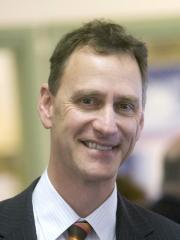
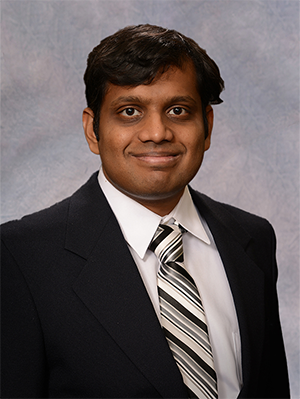
Lydia Kapiriri is a Professor in the Department of Health, Aging & Society at McMaster University, Canada. Her work focuses on health systems, priority setting, and equity, particularly in low- and middle-income countries. She examines how political and social factors influence healthcare resource allocation decisions, advocating for transparent and inclusive processes. Education includes a Bachelor of Medicine from Makerere University (Uganda), a Doctorate from the University of Bergen (Norway), and additional training in public health. Her research spans global health policy, pandemic preparedness, and health equity among marginalized populations, including Black aging communities in Canada and vulnerable groups in Uganda. Key areas of research include: (1) ethical frameworks for priority setting during health crises like the COVID-19 pandemic, (2) addressing inequities in healthcare access for older populations, and (3) exploring health determinants among Black communities. She has authored over 80 peer-reviewed articles and contributed to global health initiatives like the WHO's priority-setting guidelines. Teaching focuses on critical perspectives in health and society, global health, and health inequalities. Her work emphasizes interdisciplinary approaches to strengthen health systems and empower marginalized voices in policy-making.
Daniel Y Chen is a Lecturer in the Department of Statistics at the University of British Columbia (UBC), Vancouver Campus. He holds a PhD Candidate status in Genetics, Bioinformatics, and Computational Biology at Virginia Tech, focusing on data science education in the biomedical sciences. His expertise includes statistical computing, open source software development, and reproducible research practices. Education: PhD Candidate (in progress): Genetics, Bioinformatics & Computational Biology, Virginia Tech MSc: Relevant field (implied via career progression) Research Interests: Daniel's work bridges data science pedagogy and biomedical applications. He focuses on improving computational literacy among medical practitioners through accessible education resources, open source tools, and reproducible workflows. His technical contributions span R and Python ecosystems, including packages like grader and pyprojroot , and authoring Pandas for Everyone . He actively promotes best practices in scientific programming and collaborative software development. Grants & Contributions: Contributions to RStudio's gradethis and learnr packages Open source maintenance (e.g., Arch Linux AUR packages) Labs/Teams: Affiliated with UBC's Data Science for Biomedicine (DS4BIOMED) initiative and Virginia Tech's Social Decision Analytics Laboratory. Collaborates with RStudio and GitHub communities on education and tool development.
Agnes d’Entremont is a Professor of Teaching in the Department of Mechanical Engineering and Associate Dean Equity, Diversity and Inclusion (EDI) pro tem at the Faculty of Applied Science, University of British Columbia. She holds degrees from McGill University (B.Eng) and UBC (M.A.Sc, Ph.D), with professional credentials as a P.Eng, Fellow of the Canadian Society for Engineering in Education (FCEEA), and member of the American Society for Engineering Education (ASEE). Her work bridges biomechanics research and innovative engineering education. **Research & Teaching**: Agnes specializes in human joint biomechanics using MRI technology, particularly childhood hip disorders in collaboration with BC Children’s Hospital. Her teaching focuses on biomechanics, dynamics, and interdisciplinary outreach, including pioneering courses like APSC 366 ('The Art of the Possible') for non-engineering students. She emphasizes experiential learning, team-based projects, and open educational resources (OER). **Awards**: Notable recognitions include the 2021 BCcampus Open Education Award, 2020 ASEE Outstanding New Educator Award, and the 2020 Killam Teaching Prize. Her scholarship addresses systemic barriers in STEM through equity-focused curriculum design and outreach program evaluation. **Leadership**: She leads initiatives on EDI in engineering education, competency mapping for inclusion, and policy analysis on affirmative action. Her OER projects (e.g., Mechanics Map, Mechanics WeBWork Problems) prioritize accessibility and collaborative learning. **Collaborations**: Agnes collaborates across disciplines and institutions, including partnerships with BC Children’s Hospital and national engineering education associations (ASEE, CEEA). Her work aims to democratize engineering knowledge and foster societal engagement with technical decisions.
Professor Ian Coombes is a Conjoint Professor at the School of Pharmacy and Pharmaceutical Sciences within the Faculty of Health, Medicine and Behavioural Sciences at the University of Queensland. With extensive experience in clinical pharmacy practice, education, and research, Professor Coombes contributes significantly to medication safety, prescribing practices, and patient-centered pharmaceutical care. His educational background includes a Bachelor (Honours) of Pharmacy from London School of Pharmacy, a Masters (Coursework) of Clinical Pharmacy from the University of Brighton, and a Doctor of Philosophy from The University of Queensland. Professor Coombes' research focuses on critical areas of pharmacy practice including medication safety, clinical pharmacy interventions, cardiovascular disease management, and pharmacy workforce development. His work particularly emphasizes: Pharmacist-led transition of care services Quality use of medicines Prescribing error reduction Pharmaceutical care bundle implementation International capacity building in clinical pharmacy Professional identity formation in pharmacy education His recent publication trends show a strong emphasis on cardiovascular medication management, with numerous studies examining pharmacist interventions in acute coronary syndrome and post-MI care. He has also pioneered work in developing clinical pharmacy services in international settings, particularly in Sri Lanka, and continues to advance methodologies for evaluating medication administration safety and pharmaceutical care impact. Professor Coombes has secured significant research funding including the current MRFF grant "REducing hospital re-admission for high-risk CARDiology patients" (2023-2027) and previously led projects examining heart failure medication management. As an active supervisor, Professor Coombes currently mentors multiple PhD and Master's students on projects related to pharmacist-led medication review, predictive modeling for hospital readmissions, and professional identity formation in pharmacy education. His collaborative approach extends to working with researchers across disciplines including medicine, nursing, and health services research.
Associate Professor Neale Cohen is affiliated with the School of Pharmacy and Pharmaceutical Sciences at the University of Queensland . His research focuses on diabetes management, insulin delivery systems, and interventions to improve glycemic control through lifestyle modifications and technology. Specializes in Type 1 and Type 2 Diabetes research Expertise in Continuous Glucose Monitoring (CGM) and Hybrid Closed-Loop Insulin Systems Collaborates on Australian JDRF Closed-Loop Research Group studies His recent work investigates: Interrupting sedentary behavior for metabolic health Impact of insulin degludec/insulin aspart in real-world settings Psychosocial aspects of diabetes distress and hypoglycemia Key publications span clinical trials, systematic reviews, and technology-focused diabetes interventions. No scientific awards are mentioned in the provided text.
Prof. Sonia Laszlo is a Professor of Economics at McGill University’s Faculty of Arts, specializing in applied microeconomic analysis within economic development. Her research focuses on decision-making under uncertainty among subsistence farmers and the microeconomic effects of social policies on women’s well-being, particularly in Peru, Kenya, Paraguay, and the Caribbean. She employs experimental methods such as laboratory experiments, surveys, and randomized controlled trials. She is affiliated with the Centre Interuniversitaire de Recherche en Organizations (CIRANO) and the Grupo de Análisis para el Desarrollo (GRADE). As a co-founder and executive member of the Canadian Development Economics Study Group (CDESG), she bridges academic and policy communities in Canada. From 2016 to 2019, she served as Director of McGill’s Institute for the Study of International Development. Her research themes include gender norms, social protection programs, childcare access, and flood risk mitigation in Amazonian agriculture. Recent projects examine the impact of childcare subsidies on women’s employment in Kenyan urban slums and the transformative potential of graduation programs targeting gender equality. Notable contributions include analyzing long-term health consequences of civil conflict in Peru, the distributional effects of bribery in developing economies, and the role of ambiguity aversion in farming decisions. Her work emphasizes policy relevance, particularly in post-pandemic childcare provision and equitable economic recovery strategies.
Dr. Shari Brotman is an Associate Professor at the McGill School of Social Work, specializing in gerontology and anti-oppression social work. She holds a doctorate from the University of Toronto (2000). Her work focuses on equity in healthcare and social care for marginalized older adults, including LGBTQ+, immigrant, and neurodiverse communities. She employs qualitative and arts-based research methods, emphasizing intersectional analyses of identity and systemic oppression. She teaches courses on anti-oppression practice, qualitative research, and social gerontology. Education: PhD in Social Work, University of Toronto (2000). Research Interests: Access to healthcare for marginalized aging populations, intersectionality, queer disability, immigrant elder care, and policy advocacy. Recent work explores resilience among Black older adults during the pandemic and social exclusion experienced by neurodiverse aging individuals. Awards: None explicitly listed in provided texts. Advising/Grants: No student advisees or grant details mentioned. Her research is supported through institutional affiliations. Labs/Teams: Engages with community-based research initiatives such as EDDI (Equity, Diversity, and Inclusion), BAM, and IAM (Indigenous Access McGill) at McGill.
Eunhwa Yang is an Associate Professor and Curriculum Committee Chair at the School of Building Construction, Georgia Institute of Technology. She holds a Ph.D. in Human Behavior and Design from Cornell University and an MS in Building Construction from Georgia Tech. Her research focuses on the interplay between built environments and human outcomes, employing Bronfenbrenner’s ecological systems theory to study workplaces, campuses, and homes. Key areas include sustainable building practices, facility management optimization, and aging-in-place strategies for individuals with mild cognitive impairment. As an advocate for innovative teaching methods, Dr. Yang has developed facility management courses using active learning and service learning approaches. She has led workshops on pedagogical strategies at GT’s Center for Teaching and Learning and Cornell’s Center for Teaching Excellence. Professional affiliations include the International Facility Management Association (IFMA) and CoreNet Global, where she has received young researcher awards and fellowships. Her recent work emphasizes data-driven solutions for energy performance contracting, hybrid workspaces, and inclusive housing designs. The Workplace Ecology Lab under her direction explores environmental factors influencing sleep health, workplace safety, and aging-in-place technologies. Over 15 years of grant-funded research has produced impactful studies on green leasing, building lifecycle analysis, and multi-stakeholder decision-making in urban transformation projects. Awards: IFMA Fellowships, IAPS Workshop Grant Grants: CoreNet Global Academic Challenges, IAPS sponsored projects Labs: Workplace Ecology Lab at Georgia Tech School of Building Construction Dr. Yang’s advisory work supports facility managers, corporate real estate directors, and designers in optimizing space utilization through evidence-based strategies. Her research bridges environmental science, architectural design, and human behavior studies to create healthier, more equitable built environments.
Germán Enciso is a Professor at the University of California, Irvine, with joint appointments in Mathematics and Developmental & Cell Biology. His research integrates mathematical modeling and systems biology, focusing on biochemical networks, stochastic processes, and cellular decision-making. He holds a Ph.D. in Mathematics from Rutgers University. Key contributions include work on absolute concentration robustness in reaction networks, chromatin remodeling mechanisms, and Chlamydia infection dynamics. Recent publications explore enhancer functions, stochastic modeling, and nucleosome regulation. His lab develops conceptual frameworks for biological processes like multisite phosphorylation and gene expression noise. He teaches courses in mathematical biology, stochastic processes, and calculus. Collaborations include experimentalists at UCI and Kyoto University.
David Poeppel is a Professor of Psychology and Neural Science at New York University (NYU), affiliated with the College of Arts and Science. He holds a PhD and BS from MIT, with postdoctoral training at UCSF. His research focuses on auditory cognition, speech perception, and the neural basis of language, employing techniques like MEG, EEG, and fMRI. Key interests include the temporal dynamics of speech processing, neurophysiological mechanisms of lexical access, and multisensory integration in language. Education: PhD (1995) and BS (1990) in Psychology/Cognitive Science from MIT. Positions include Professorships at NYU (2009–present) and University of Maryland (1998–2009). Awards include a 2004 American Academy Fellowship and a 2003–2004 Berlin Wissenschaftskolleg Fellowship. Research trends emphasize neural entrainment to speech structures, auditory-motor coupling, and the interplay between perception and production. Recent work explores how temporal rhythms shape auditory processing and how brain rhythms predict speech tracking variability. The Poeppel Lab also investigates musical perception and the neural underpinnings of vocal emotion. Publications span over 200 peer-reviewed articles, with recent contributions on spectrotemporal modulation, neural chunking in language, and the role of amplitude modulation in distinguishing speech from music. His work bridges cognitive science, neuroscience, and clinical applications, such as stuttering mechanisms and speech rehabilitation.
David Kirsh is a Professor in the Department of Cognitive Science at the University of California, San Diego. He holds a D.Phil from Oxford University and completed post-doctoral work at MIT's AI Lab. His research focuses on distributed cognition, embodied cognition, and human-computer interaction, with specific interests in how environments shape cognitive processes and how physical objects become tools for thought. Key research areas include: Theory of Interaction: Examines how people adapt environments to simplify cognitive tasks Environment Design: Develops principles for designing collaborative spaces and smart rooms Information Architecture: Designs large-scale web systems and information spaces Dr. Kirsh directs the Interactive Cognition Lab and co-directs the Arthur C. Clarke Center for Human Imagination. His work bridges cognitive science with practical applications in workplace design, e-learning, and human-computer interaction.
Greg Ridgeway serves as the Rebecca W. Bushnell Professor of Criminology at the University of Pennsylvania's School of Arts and Sciences, with a dual appointment in the Department of Statistics and Data Science. He holds multiple leadership roles including Co-director of the Data Driven Discovery Initiative and Co-editor-in-chief of the Journal of Quantitative Criminology. His affiliations span the Quattrone Center for the Fair Administration of Justice, Penn Injury Science Center, Center for Causal Inference, and Population Studies Center. His educational background includes a Ph.D. in Statistics from the University of Washington (1999), where his dissertation focused on Bayesian inference for massive datasets under advisors David Madigan and Thomas Richardson. Additional degrees include an M.S. in Statistics (1997) and B.S. in Statistics (1995) from the University of Washington and California Polytechnic State University respectively. Ridgeway's research centers on statistical methods for crime analysis and justice system improvement, with major contributions in police use-of-force analysis, racial profiling detection, and justice system benchmarking. His work bridges criminology and data science through innovative applications of propensity scoring, causal inference, and predictive modeling to real-world criminal justice challenges. He has developed methods implemented by police departments in Cincinnati, Los Angeles, and New York City, as well as Federal Public Defender Organizations. His 15 most recent publications demonstrate consistent focus on police behavior analysis, sentencing disparities, and environmental crime prevention. Key trends include the development of conditional likelihood models for officer shooting analysis, benchmarking systems for judicial accountability, and rigorous evaluation of place-based interventions like vacant lot remediation. His methodological contributions span criminology, statistics, and public health with strong emphasis on practical policy applications. Fellow of the American Society of Criminology (2025) Fellow of the Academy of Experimental Criminology (2024) Fellow of the American Statistical Association (2013) ASA Outstanding Statistical Application Award (2007) RAND Gold Medal Award (2007) 8 granted US patents in medical treatment hypothesis testing and resource pre-fetching Ridgeway has secured over $20 million in research funding from entities including Arnold Ventures, National Institute of Justice, and Neubauer Family Foundation. His advisory work includes directing the Master of Science in Criminology program and mentoring students through Penn's Graduate Groups. As former Acting Director of the National Institute of Justice (2013-2014), he led an 80-person agency with a $250M budget, implementing reforms like a $75M school safety research program. Current service includes chairing the American Statistical Association's Committee on Law and Justice Statistics. His leadership extends to directing RAND's Safety and Justice Program and Center on Quality Policing, where he managed 50-person teams and $10M in annual research. Current institutional roles include Co-director of the Data Driven Discovery Initiative, which he launched to develop data science for social good programming, seed grants, and a data science minor.
Erin Hill, Ph.D., is a Weed Science Diagnostician at Michigan State University (MSU) within the Department of Plant, Soil and Microbial Sciences, part of the College of Agriculture & Natural Resources. She holds a B.S. in Plant Biology from the University of Michigan and M.S. and Ph.D. degrees in Horticulture and Crop and Soil Science from MSU. Her role involves diagnosing abiotic plant stress, herbicide-related injury, and herbicide resistance, alongside providing weed control recommendations and collaborating on plant identification initiatives. She also teaches two weed science courses: Introduction to Weed Management (CSS126) and the Weed Science Laboratory (CSS226L), managing the weed identification garden at the Hancock Turfgrass Research Center. Her research focuses on herbicide resistance screening, abiotic stress analysis, and outreach activities related to weed identification and management. Her recent publications emphasize herbicide misuse prevention, regional weed resistance trends, and innovative identification techniques like app-based diagnostics. She has contributed to over 50 counties across Michigan through extension services, addressing diverse agricultural and horticultural challenges. Dr. Hill’s work bridges academic research and practical application, with a strong emphasis on farmer education and sustainable practices. Her articles highlight themes such as herbicide resistance management, invasive species control, and integrated pest management strategies. She is actively involved in MSU Plant & Pest Diagnostics and collaborates with the Turfgrass Program to enhance agricultural and environmental outcomes.
Mohammad Naser Sabet Jahromi is an Assistant Professor at the Department of Architecture, Design and Media Technology, Aalborg University, Denmark. He is affiliated with the Visual Analysis and Perception Centre for AI Ethics, Law and Policy. His research focuses on explainable AI (XAI), biometrics, machine learning, and ethical AI applications in legal and medical domains. He actively participates in interdisciplinary projects like REPAI: Responsible AI for Value Creation (2023-2027), which explores AI ethics, computational discourse analysis, and value-driven AI systems. His educational background is not explicitly detailed in the provided text, but his research trajectory indicates strong expertise in computer science and AI systems. Key research interests include interpretable machine learning models, privacy-preserving biometric systems, and AI applications in asylum adjudication and educational assessment. Recent work emphasizes developing XAI frameworks like SIDU-TXT for NLP, verifying machine unlearning mechanisms, and automating large-classroom assessments. His projects bridge technical AI advancements with societal implications through collaborations with legal and ethical scholars. Notable contributions include datasets evaluating XAI methods in medicine and methodologies for transparent AI decision-making. He has participated in conferences such as ICPR 2024 and JURISIN 2023, showcasing interdisciplinary research impact.
Dr. Sivakumar Rathinam is a Professor in the Department of Mechanical Engineering at Texas A&M University, affiliated with the College of Engineering and the Computer Science & Engineering department. He holds certifications as a Fellow of ASME (2021) and Senior Member of IEEE (2019). His research focuses on motion planning for autonomous vehicles, collaborative decision-making, combinatorial optimization, and vision-based control systems. He leads the Autonomy Lab, addressing challenges in multi-agent systems, path planning, and rural autonomous vehicle accessibility. Education: Ph.D., Civil Systems Engineering, University of California, Berkeley (2007) M.S., Electrical Engineering & Computer Science, UC Berkeley (2006) M.S., Mechanical Engineering, Texas A&M University (2001) B.Tech., Mechanical Engineering, Indian Institute of Technology Madras (1999) Research Highlights: Dr. Rathinam's work spans autonomous vehicle navigation, UAV coordination, and sensor fusion for adverse conditions. His lab develops algorithms for multi-agent pathfinding and persistent monitoring missions. Recent efforts include rural road detection datasets (R2D2) and thermal/LIDAR sensor fusion for safety in challenging environments. Awards: Outstanding Faculty Contribution Award (2021) Best Paper Runner-Up, ICAPS (2021) Teaching Excellence Award (2012) Labs & Teams: Directs the Autonomy Lab, collaborating with industry partners through the Mechanical Engineering Industry Advisory Council. Active in NSF-funded projects on equitable rural autonomy and multi-UAV recharging frameworks.