Prof. Dr. Harald Reiterer is a leading researcher in Human-Computer Interaction at the University of Konstanz, where he has served as Professor since 2009. His academic journey includes a Ph.D. (1991) and habilitation (1995) from the University of Vienna, followed by roles including Senior Researcher at Fraunhofer FIT and Associate Professor at Konstanz. He currently holds multiple leadership roles: Dean of the Faculty of Sciences , Senator of Section 1 , and Consulting Dean . Ph.D. in Computer Science (University of Vienna, 1991) Venia Legendi (Habilitation) in HCI (University of Vienna, 1995) His research focuses on: Interaction Design for mixed reality environments Information Visualization in immersive contexts Hybrid User Interfaces combining physical and virtual elements 3D Object Manipulation in handheld AR Behavioral Analytics through mHealth interventions Recent work explores: Avatar representation in Augmented Reality (2024) Node selection efficiency in Virtual Reality (2024) Peripheral vision toolkits for Head-Mounted Displays (2023) Hybrid interface optimization for Mixed Reality (2023) Smartphone AR extensions for Spatial Memory (2023) Key scientific contributions: Landeslehrpreis 2021 for interdisciplinary exhibition design Development of Colibri cross-reality toolkit (2023) Foundational work on Re-locations for remote collaboration (2022) He leads numerous projects including: SMARTACT (Smart Mobility, 2015-2023) SFB TRR 161 (2009-2027) on XR interface measurement Blended Library (2011-2015) for future library design
Dr. Pranav Minasandra is a postdoctoral researcher at the Max Planck Institute of Animal Behavior (Konstanz, Germany), affiliated with the Department of Collective Behavior . His work combines quantitative ecology , animal movement modeling , and machine learning to uncover universal patterns in behavioral sequences across species. PhD in Animal Behavior from Max Planck Institute MSc and BS from Indian Institute of Science (Bangalore) Research Focus: Analyzes behavioral predictivity decay and statistical similarities in animal sequences using accelerometry and theoretical frameworks. Recent work explores interspecies infant abduction and social coordination in meerkats/hyenas . Publications span PNAS , Proceedings B , and Current Biology , with 2025 papers revealing truncated power-law patterns in behavior and collective movement dynamics . His Best Paper Award (University of Konstanz) highlights groundbreaking contributions to behavioral sequence analysis. Collaborates with networks including Meg Crofoot , Ari Strandburg-Peshkin , and Vlad Demartsev . Tools developed include VocalPy integrations and predictivity decay metrics for behavioral forecasting.
Elgar Fleisch is a Professor at the University of Zurich, specializing in interdisciplinary research at the intersection of Internet of Things (IoT), Radio-Frequency Identification (RFID), Mobile Health (mHealth), and Energy Informatics. His work bridges theoretical and applied domains, focusing on real-time data analytics, wearable technologies, and behavioral interventions. Key research areas include sensor-based health monitoring systems Development of transparent computing frameworks for AI/data collection Consumer behavior analysis through IoT-enabled retail and energy systems Machine learning applications for circadian rhythm analysis and respiratory disease detection Recent publications demonstrate expertise in federated learning for cough classification, circadian rhythm biomarkers, and driver behavior analytics. While no specific awards are listed in this dataset, his collaborations with institutions like ETH Zurich and University of St. Gallen indicate broad academic engagement.
Ardanaz E. is a researcher at the German Cancer Research Center (DKFZ) specializing in cancer epidemiology, with a particular focus on nutritional factors and colorectal cancer risk. As part of the Division of Cancer Epidemiology within the Medical Faculty, her work primarily involves analyzing data from large prospective cohort studies, most notably the European Prospective Investigation into Cancer and Nutrition (EPIC) study. Her research portfolio demonstrates expertise in biomarker discovery, dietary patterns, and metabolic risk factors in cancer development and outcomes. Her research interests center on cancer epidemiology with emphasis on nutritional influences, particularly examining how dietary components, body composition, and metabolic biomarkers affect cancer risk and progression. Recent work has explored the relationship between circulating biomarkers like lipocalin 2, resistin, and fatty acid binding proteins with colorectal cancer outcomes. She has also investigated the role of food processing, amino acid metabolism, and body shape phenotypes in cancer risk across multiple organ sites. Her methodological approach combines epidemiological analysis with metabolomics and genetic data to uncover complex relationships between lifestyle factors and cancer. Ardanaz E.'s publication record shows a consistent focus on colorectal cancer epidemiology but extends to other cancer sites including breast, renal, and small intestinal cancers. Her work frequently examines sex-specific differences in cancer risk and outcomes, reflecting an understanding of how biological sex influences disease pathways. The research demonstrates strong collaboration within international consortia, particularly with European cohort studies. Her scientific contributions include numerous publications in high-impact journals such as International Journal of Cancer, BMC Medicine, and The American Journal of Clinical Nutrition. While specific awards aren't documented in the available information, the volume and quality of her publications suggest recognition within the cancer epidemiology community. She has been involved in studies examining the economic burden of lifestyle factors on healthcare systems, demonstrating the translational impact of her epidemiological work. Ardanaz E. has contributed to research examining the intersection of physical activity, metabolic health, and cancer risk, often collaborating with teams studying the German National Cohort (NAKO). Her work bridges basic science discoveries about molecular pathways with population-level epidemiological evidence, creating a comprehensive understanding of cancer etiology that informs prevention strategies.
Jörn Kiselev is a Professor of Physiotherapy at Hochschule Fulda, Faculty of Health Sciences, where he has been serving since April 2023. Prior to this, he was a post-doctoral researcher and project manager at the Department of Anesthesiology with a focus on surgical intensive care at Charité – Universitätsmedizin Berlin, working on the PRÄP-GO prehabilitation project. He holds a Dr. rer. medic. from Charité and academic degrees in Physiotherapy from Philipps-Universität Marburg and Hochschule Fulda. Research Interests: His work centers on improving health outcomes in older adults, particularly focusing on frailty, fall prevention, prehabilitation before surgery, functional mobility, and stair-climbing ability. He also explores innovative diagnostic tools such as acoustic emission analysis for osteoarthritis and digital health applications for mobility assessment. Recent Research Trends: His recent publications (2023–2019) reflect a strong emphasis on clinical and translational research in geriatric physiotherapy. Many studies involve interdisciplinary collaboration and use mixed-methods or randomized trial designs. Key themes include validating assessment tools (e.g., mHealth apps, gait analysis devices), understanding mobility limitations, and developing interventions for frail elderly patients, especially in perioperative contexts. Scientific Engagement: Member of the S3 guideline group for perioperative care of frail patients Delegate of the German Association of Physiotherapy (ZVK) Member of the German Society for Physiotherapy Sciences (DGPTW) Advising and Grants: While no direct students are listed, his leadership in the PRÄP-GO project indicates experience in mentoring junior researchers and managing funded research. His affiliations with Charité and BASE-II suggest involvement in large-scale, multi-institutional studies, likely supported by national or institutional grants. Labs and Teams: He has collaborated with research groups at Charité, including the Geriatrics Research Group led by Prof. Steinhagen-Thiessen, and has worked on technology validation projects involving sensor-based assessment chairs (aTUG) and mobile health apps. His work reflects strong ties to both clinical and engineering research teams focused on aging and mobility.
Dr. Stefanie Castell is a Researcher and Deputy Head of the Department of Epidemiology at the Helmholtz Centre for Infection Research (HZI) in Braunschweig, Germany. She leads the Climate, Cohorts and PIA research group and serves as Principal Investigator for the NAKO Health Study since 2023. Her work integrates population-based cohorts , planetary health , and digital epidemiology , with a focus on participatory approaches like citizen science. Education : MSc in Epidemiology (2011, Berlin School of Public Health) Specialization : Physical and Rehabilitative Medicine (2009) Key research domains include: Climate change impacts on infectious diseases Development of digital tools like PIA (Prospective Monitoring and Management App) Health equity analysis using intersectional frameworks Antibiotic stewardship training programs (WASA project) Recent publications highlight her work on: Modeling Lyme borreliosis dynamics Assessing physical activity through accelerometry Analyzing post-COVID conditions in hybrid immunity Evaluating health service use disparities in migrant populations Her funded projects include the BMBF Participant Involvement , EU Horizon PCR-4-ALL , and NAKO Hannover initiatives. She actively contributes to committees like the German Society for Medical Informatics and Working Group Infection Epidemiology (DGEpi).
Steffen Schön is a Professor at the Institute of Geodesy, Leibniz University Hannover, affiliated with the Faculty of Civil Engineering and Geodetic Science. His roles include Dean of Studies for Geodesy and Geoinformatics, and Speaker of the DFG Research Training Group GRK2159 (i.c.sens). He is also a liaison professor for the Studienstiftung des deutschen Volkes. Schön’s research focuses on GNSS technology, atomic clocks, collaborative positioning, antenna calibration, quantum inertial navigation, and satellite gravity missions. He leads projects in the QuantumFrontiers and CRC 1464 TerraQ initiatives. His research explores antenna phase center corrections, multipath mitigation, and hybrid sensor systems combining classical and quantum accelerometers. Recent work includes evaluating quantum sensors for space navigation and improving GNSS integrity in urban environments. He has collaborated globally through programs like the IGS Antenna Ring Campaign and contributes to 5G NR positioning research. Publications span antenna calibration methodologies, inertial navigation improvements, and applications of GNSS in autonomous systems. His work addresses challenges in frequency transfer, tropospheric parameter retrieval, and resilient timekeeping for technical infrastructure. Schön’s research integrates geodetic, aerospace, and quantum physics domains, emphasizing practical applications for navigation and environmental monitoring.
Dr. Bianca Biallas is a research scientist at the German Sport University Cologne, affiliated with the Institute for Movement Therapy and Movement-Oriented Prevention and Rehabilitation within the Department of Movement-Oriented Prevention and Rehabilitation Sciences. She maintains an active research profile with 99 publications and 25 projects, collaborating extensively with colleagues including Ingo Froböse (62 joint publications) and Christiane Wilke (46 joint publications). Her research interests focus on Health Psychology (100%), Physical Activity Psychology (94%), Abilities Psychology (74%), Accelerometer and Accelerometry applications (53% and 47% respectively), and Stressors, Quality of Life, and Disease Management (all at 41%). Her work bridges clinical applications with movement science, particularly examining how physical activity interventions impact health outcomes across diverse populations. Analysis of her recent publications (2018-2025) reveals a strong emphasis on work ability assessment, particularly among professional dancers and physically demanding occupations, alongside significant contributions to diabetes and cardiovascular disease management through digital health interventions and physical activity programs. Her research demonstrates consistent application of accelerometry and objective movement measurement techniques across various clinical and occupational settings. Dr. Biallas is actively involved in multiple funded projects including: Walking Football – Zentrale Prüfstelle Prävention (2025-2026) Training and health promotion at Cologne-Bonn Airport for employees in handling (2024-2026) Back plus – With integrated equipment training (ongoing since 2016) Back basic – The all-round training for the back (ongoing since 2016) Healthy work (ongoing) She also participates in academic outreach, having served as a panel participant for career guidance events such as the 'Studying, and then what?! Professor, Manager, Founder - Be inspired! Job Talk' in June 2023.
Professor Ingo Froböse is affiliated with the Institute for Movement Therapy and Movement-oriented Prevention and Rehabilitation, specializing in research areas such as physical activity, health psychology, and preventive medicine. His work focuses on the intersection of movement science, rehabilitation, and public health. Research Interests: Physical Activity and its psychological impacts Musculoskeletal health and ergonomics in professional performing arts Wearable technology for activity monitoring Child development and motor skills in early childhood Epidemiological effects of pandemics on physical health Esports physiology and health implications Recent projects include funded initiatives like Rücken basic and AiF Geräte Rückenmuskulatur , exploring back health interventions and sports medicine applications. He has also contributed to media discussions on topics like esports mental health and sleep recovery. His research outputs span 347 publications across journals and conferences, with recent focus areas in activity measurement models, pandemic health impacts, and professional dancer wellness. Projects are supported by third-party funding and institutional resources.
Prof. Dr.-Ing. Boris Resnik is a full professor at Berlin University of Technology (BHT Berlin) in the Department of Civil Engineering and Geoinformation. Born in 1960 in Leningrad, he holds a diploma in Geodesy from the Leningrad Mining Institute (1982) and a doctorate from VNIMI (1990). His academic career spans over two decades at BHT Berlin, with prior positions at Rostock University and Brandenburg Technical University Cottbus. His research focuses on: Geodetic monitoring and deformation analysis Structural health assessment of wind turbine foundations AI and neural network applications in structural monitoring Sensor technologies (MEMS, accelerometers, inclinometers) Automated early warning systems for infrastructure He leads significant projects including the IFAF-funded WEsaFE (2014-2016) on wind turbine foundation monitoring and the DAAD Eastern Partnerships initiative (2018-2023) with Central Asian universities. Publication analysis shows a strong evolution toward AI-driven methodologies since 2019, with recent works focusing on neural networks for real-time structural monitoring, vehicle classification, and vibration analysis. His 2023-2025 publications demonstrate increasing integration of drone-based thermography and advanced sensor networks. No scientific awards are documented in the provided materials. Contact is maintained through resnik@bht-berlin.de, with office at Building D (Civil Engineering) Room D 422.
Daniela Kahlert serves as Academic Senior Councillor (Akademische Oberrätin) at Pädagogische Hochschule Schwäbisch Gmünd within the Institute of Health Sciences, Department of Sport and Movement. She has held this position since 2019, following prior roles as Academic Councillor (2016-2018) and Academic Assistant at the same institution. Her academic career includes previous appointments at University of Stuttgart, Duale Hochschule Baden-Württemberg, and University of Potsdam. Her educational background includes: Doctor of Philosophy (Dr. phil.) from University of Potsdam (2011) Magister Artium in Sociology and Sport Science from University of Stuttgart (2008) Kahlert's research focuses on sport psychology and physical activity assessment, particularly examining behavioral aspects of exercise maintenance, methodological approaches for measuring motor performance, and health promotion strategies across different populations. Her work demonstrates particular expertise in geriatric exercise science, investigating how environmental factors influence mobility and social participation among older adults. She employs innovative methodologies including ambulatory assessment, computer-simulated environments, and lifelogging technology to capture real-world movement patterns. Her publication record reveals consistent contributions to understanding physical activity measurement challenges, with emphasis on developing valid assessment tools and examining psychological factors that influence long-term exercise adherence. Recent work shows increasing focus on digital health interventions and community-based approaches for elderly populations. Notable professional recognitions include: Baden-Württemberg Certificate for University Didactics (2016) Robert Bosch Foundation Post-Doc Scholarship 'Blickwechsel International' (2015) Kahlert serves on editorial boards for International Applied Psychology: Health and Well-Being, Frontiers in Psychology, and national journals including Sportwissenschaft and Zeitschrift für Gesundheitspsychologie. Her research has been supported through multiple institutional projects, including collaborations with Techniker Krankenkasse and University of Potsdam's health initiatives. She maintains active membership in the German Society of Sport Psychology (Arbeitsgemeinschaft für Sportpsychologie) since 2008.
Prof. Dr. Cathleen Gaede-Illig serves as President of the HFH Hamburg Distance University, having previously been Dean of the Department of Health and Nursing. She leads the Program for Therapy and Nursing Sciences, focusing on interdisciplinary approaches to healthcare. Her research examines: Health promotion in community settings Rehabilitation methodologies Physical activity measurement Geriatric exercise interventions Cardiac rehabilitation Publications emphasize evidence-based practices in physical therapy, occupational therapy, and interdisciplinary care. Recent work analyzes built environment impacts on health and interdisciplinary collaboration in acute care settings. Major projects include: Future of Therapy Professions: Educational pathways in dual-study programs Health Promotion in Living Environments: Quality development frameworks
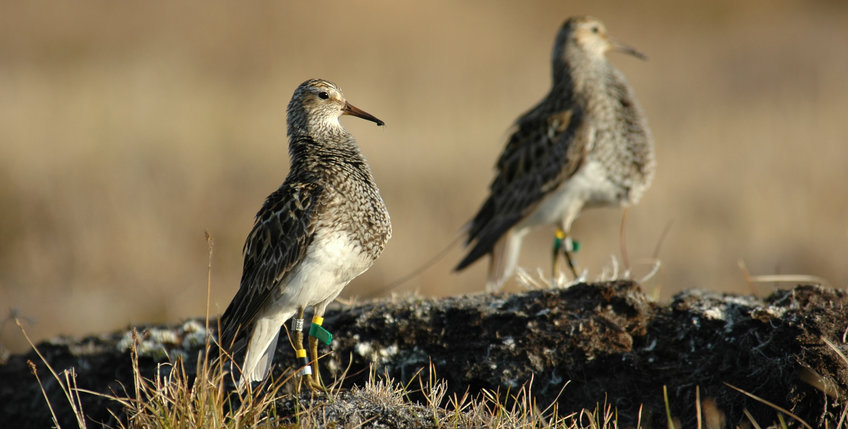
Professor Bart Kempenaers serves as Director of the Department of Ornithology at the Max Planck Institute for Biological Intelligence in Seewiesen, Germany. Formerly known as the Department of Behavioural Ecology and Evolutionary Genetics (renamed in July 2023), this department conducts cutting-edge research in avian behavioural ecology. Kempenaers also holds the position of Honorary Professor in Behavioural Ecology at Ludwig-Maximilian University of Munich, a title he has held since 2004. His leadership guides a highly international research team focused on understanding how sexual selection drives biodiversity in bird species worldwide. Professor Kempenaers' academic foundation was established in Belgium where he was born in 1967. His formal education includes: Biology studies at the Universities of Limburg and Antwerp (completed 1989) PhD at the University of Antwerp (completed 1994) As a leading behavioural ecologist and ornithologist, Kempenaers' research centers on sexual selection and the evolution of avian mating behavior. His work investigates mate selection mechanisms, divorce patterns in bird pairs, and the prevalence and implications of extra-pair copulations. He coordinates field studies on arctic-breeding shorebirds with diverse mating systems, employing technology-assisted behavioral observations on large populations of free-living birds. His department maintains a comprehensive database linking life-history traits of approximately 10,000 bird species with environmental and ecological data, enabling large-scale comparative analyses of evolutionary patterns. Their research combines field observations, captive studies, and advanced statistical methods to understand how sexual selection shapes behavioral and life-history traits. Analysis of Kempenaers' recent publications reveals a strong interdisciplinary focus spanning behavioural ecology, evolutionary biology, and conservation science. His research consistently examines breeding site fidelity, sexual selection mechanisms, extra-pair paternity, and the ecological factors influencing avian coloration and behavior. Methodologically, his work incorporates innovative approaches including accelerometry, machine learning, and comparative analyses across diverse bird species. A significant portion of his research investigates shorebirds, particularly species with alternative reproductive tactics, while other studies explore urban adaptation, vocal communication, and host-microbiome interactions. Professor Kempenaers leads a highly international department that investigates how sexual selection acts as a driver of biodiversity. The department's work is characterized by technology-assisted behavioral observations on large numbers of individuals in free-living populations, complemented by captive studies and advanced statistical approaches. They maintain an extensive database linking life-history traits of the world's bird species with environmental data, enabling large-scale comparative analyses of evolutionary patterns. The department's research spans multiple continents, with field studies conducted in Europe, North America, and other regions where their study species breed.
Dr. Philipp Zingerle is a researcher at the Chair of Astronomical & Physical Geodesy, Technical University of Munich, where he conducts advanced research in satellite gravimetry, global gravity field modeling, and future quantum-based gravity missions. He plays a key role in ESA projects such as MAGIC and QSG4EMT, as well as DFG-funded initiatives NEROGRAV and UPLIFT, contributing to next-generation Earth observation systems. Research Interests: His work focuses on high-resolution gravity field modeling (e.g., XGM series), time-variable gravity, quantum satellite missions, and integration of terrestrial and airborne data. He applies these to improve geoid determination, height systems, and monitoring of mass transport in the Earth system. The recent publications highlight a strong trend toward future quantum gravimetry missions, especially through the MAGIC and NGGM studies, emphasizing constellation design, error modeling, and hydrological applications. There is also sustained work on extending global models to higher spatial resolution (up to d/o 1440 and beyond) and improving regional solutions such as for Antarctica and North America via GRAV-D integration. Scientific Contributions: Lead and co-author of multiple high-impact journal papers on XGM models and satellite gravimetry. Active participant in international symposia including EGU, IUGG, and ESA Living Planet. Contributor to the realization of the International Height Reference System (IHRS). Advising and Research Leadership: He has supervised several bachelor’s and master’s theses, indicating an active role in student mentorship. He collaborates extensively with leading institutions and researchers across Europe and globally. While no formal awards are listed, his involvement in flagship projects underscores recognition in the geodetic community. Labs and Teams: He is embedded in the Satellite Geodesy Research Facility at TUM and contributes to multiple interdisciplinary teams including ESA MAGIC, DFG NEROGRAV, and UPLIFT, working closely with Prof. Roland Pail and other experts in geodesy and Earth observation.