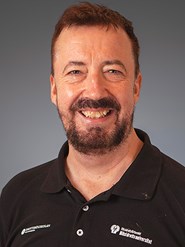
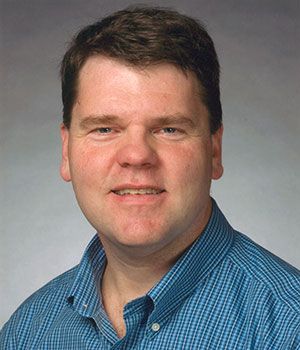
Dr. Victoria Penpraze is a Senior Lecturer in Cardiovascular & Metabolic Health at the University of Glasgow. Her research focuses on physical activity measurement, obesity interventions, and health outcomes in populations including children with intellectual disabilities, adults with disabilities, and companion animals. She leads studies on accelerometer validation and has contributed to canine obesity research. Her work integrates clinical and applied research, with notable projects on: Accelerometer calibration protocols for disabled populations Family-pet exercise interventions (CPET trial) Graduate outcomes in sports science education Key grants include Baily Thomas Charitable Fund projects on sedentary behavior and physical activity interventions, plus NHS-funded studies on child disability health. She collaborates with veterinary researchers, sports scientists, and public health teams. Notable publications span journals like Pilot and Feasibility Studies , Advances in Physiology Education , and Research in Developmental Disabilities . Her 2021 book Acceptance and Commitment Approaches for Athletes’ Wellbeing highlights interdisciplinary health strategies.
Associate Professor Nicholas O'Dwyer is affiliated with the School of Health Sciences at the University of Sydney's Faculty of Medicine and Health. His research focuses on biomechanics, motor control, and the interplay between physical activity and health. Key areas include analyzing movement patterns in sports, neuromuscular control, and the physiological effects of exercise. Research interests span biomechanical studies of human movement, particularly in sports injury prevention, and the cognitive benefits of physical activity. His work often integrates clinical applications, such as facial nerve rehabilitation and stroke recovery. Recent articles explore topics like hamstring mechanics in athletes, the impact of dance on coordination across skill levels, and the effectiveness of physically active learning programs in schools. These contributions highlight his interdisciplinary approach to health science. No scientific awards were explicitly mentioned in the provided information. His research has been collaborative, with frequent co-authorships in journals like the Scandinavian Journal of Medicine and Science in Sports and Journal of Science and Medicine in Sport.
Prof. Grazia Iadarola serves as a Researcher in the Department of Information Engineering at Università Politecnica delle Marche (UNIVPM) , Ancona, Italy. Her work spans biomedical engineering, IoT technologies, and advanced measurement systems. Research Focus : Biomedical signal processing, wearable sensors, and IoT-enabled health monitoring systems. Instrumentation : Development of measurement systems for UAVs, MV switchgears, and human physiology. Machine Learning : Applications in physical fatigue detection, fault diagnosis, and classification of biomedical signals. Email : g.iadarola@staff.univpm.it Recent Publication Trends : Over 20 publications since 2016 focus on IoT-based wearables , compressed sensing , drone monitoring , and health signal analysis . Key Collaborations : Contributions to conferences like EAI HealthyIoT and IEEE journals, with emphasis on sensor validation, signal reconstruction, and smart healthcare solutions.
Börje Rehn is an Associate Professor at the Department of Community Medicine and Rehabilitation, Umeå University , specializing in physiotherapy and ergonomics. His research focuses on preventing musculoskeletal disorders through biomechanical analysis of physically demanding tasks, particularly in occupational settings involving whole-body vibration and repetitive hand work. Education: PhD in Occupational and Environmental Medicine (Umeå University), Master's in Caring Sciences (mobility orientation), Postdoctoral Researcher at the Human Neuroscience Group, University of Queensland. Key research themes include ergonomics , postural control , occupational health , and tailored physical activity interventions . His work spans laboratory and field studies, often involving interdisciplinary collaborations. Recent publications analyze hand-intensive work risks , WBV exposure , and physical therapy for intellectual disability populations . He actively contributes to Swedish ergonomic standards via the Swedish Institute for Standards (SIS) and the Ergonomics and Human Factors Society (EHSS). Awards: Recognised university teacher Teaching responsibilities include human body function , clinical diagnostics , and scientific methodology for physiotherapy students. He also supervises research and organizes courses at all academic levels.
Dr. Philipp Zingerle is a researcher at the Chair of Astronomical & Physical Geodesy, Technical University of Munich, where he conducts advanced research in satellite gravimetry, global gravity field modeling, and future quantum-based gravity missions. He plays a key role in ESA projects such as MAGIC and QSG4EMT, as well as DFG-funded initiatives NEROGRAV and UPLIFT, contributing to next-generation Earth observation systems. Research Interests: His work focuses on high-resolution gravity field modeling (e.g., XGM series), time-variable gravity, quantum satellite missions, and integration of terrestrial and airborne data. He applies these to improve geoid determination, height systems, and monitoring of mass transport in the Earth system. The recent publications highlight a strong trend toward future quantum gravimetry missions, especially through the MAGIC and NGGM studies, emphasizing constellation design, error modeling, and hydrological applications. There is also sustained work on extending global models to higher spatial resolution (up to d/o 1440 and beyond) and improving regional solutions such as for Antarctica and North America via GRAV-D integration. Scientific Contributions: Lead and co-author of multiple high-impact journal papers on XGM models and satellite gravimetry. Active participant in international symposia including EGU, IUGG, and ESA Living Planet. Contributor to the realization of the International Height Reference System (IHRS). Advising and Research Leadership: He has supervised several bachelor’s and master’s theses, indicating an active role in student mentorship. He collaborates extensively with leading institutions and researchers across Europe and globally. While no formal awards are listed, his involvement in flagship projects underscores recognition in the geodetic community. Labs and Teams: He is embedded in the Satellite Geodesy Research Facility at TUM and contributes to multiple interdisciplinary teams including ESA MAGIC, DFG NEROGRAV, and UPLIFT, working closely with Prof. Roland Pail and other experts in geodesy and Earth observation.
Kevin Keenan is an Associate Professor in the Department of Kinesiology at the University of Wisconsin-Milwaukee, directing the Neuromechanics Labs . His research explores the intersection of motor control, neurophysiology, and biomechanics in aging populations. Ph.D. in Integrative Physiology, University of Colorado (2005) Postdoctoral Research Fellow, Sibley School of Mechanical and Aerospace Engineering, Cornell University (2008) MS in Kinesiology, University of Michigan (1998) BS in Kinesiology, University of Michigan (1992) His laboratory employs advanced methodologies including high-density surface EMG arrays, long-term EMG recordings, indwelling EMG, motion capture, and computational modeling to investigate neuromuscular control in aging, stroke recovery, and physical activity impacts. Current projects examine muscle coordination during fine motor tasks, biofeedback interventions for chronic pain, and noninvasive neuromuscular assessment techniques. Key article trends include aging-related motor decline (12/15), EMG/force analysis (10/15), biomechanical modeling (8/15), and cross-disciplinary collaborations with engineers and clinicians. Awards include the UWM Libraries Research Fellows Program (2010) and VISTA Travel Award (2010). Research Fellows Program (2010) - UWM Libraries VISTA Travel Award (2010) - UWM His work bridges kinesiology with mechanical engineering through collaborations and lab infrastructure. The Neuromechanics Labs serve as a hub for interdisciplinary studies involving computational modeling of motor units, stroke rehabilitation, and geriatric mobility research.
Sebastian Staacks is a physicist and academic researcher at the 2nd Institute of Physics, RWTH Aachen University, where he has served as an Akademischer Rat (Academic Councillor) since 2017. He holds a PhD in Physics from RWTH Aachen, with a focus on spin dynamics in semiconductors, and has transitioned into a leading role in physics education research and digital learning innovation. He is a core developer of the phyphox app, a widely used open-source tool for smartphone-based physics experiments. His research interests center on physics education , digital learning tools , and smartphone-based experimentation . He explores how mobile sensors can transform classroom and laboratory instruction, making physics more accessible and engaging. His work bridges experimental physics and pedagogy, emphasizing hands-on, inquiry-based learning through technology. The recent publications highlight a strong trend toward educational innovation, focusing on collaborative experiments, sensor integration, curriculum alignment, and real-world applications of smartphone physics. These works span mechanics, acoustics, electromagnetism, and fluid dynamics, demonstrating the versatility of mobile devices in science education. Georg-Kerschensteiner-Preis (2023) RWTH Lecturer Award (2021) Falling Walls Winner 2020 (Digital Education) Ars-legendi-Fakultätenpreis Mathematik und Naturwissenschaften (2020) Lehrpreis der DPG-Arbeitsgemeinschaft Physikalische Praktika (2019) Archimedes-Preis (2019) Lehrpreis Physik für die beste unterstützende Lehre (2018) Fellowship für Innovationen in der digitalen Hochschullehre (2016) Staacks has been instrumental in advising and developing digital teaching modules and workshops for both university and school educators. He leads numerous teacher training programs and collaborates extensively with physics education groups across Germany and internationally. His work has been supported through grants and fellowships focused on digital university teaching innovations. He is actively involved in outreach, public lectures, and science communication. He leads and co-leads workshops and training sessions on the use of phyphox in classrooms and laboratories. He is part of a dedicated team at RWTH Aachen, including Christoph Stampfer and Heidrun Heinke, that develops and promotes digital physics education tools. The phyphox project functions as a collaborative lab focused on educational technology and experimental innovation.
Professor Joan Duda is a leading academic in Sport and Exercise Psychology at the University of Birmingham’s School of Sport, Exercise and Rehabilitation Sciences, and holds an adjunct professorship at the University of Bergen, Norway. She is internationally recognized for her research on motivation, adherence, and optimal functioning in physical activity contexts. Ph.D., University of Illinois at Urbana-Champaign (1981) M.S., Purdue University (1978) B.A., Rutgers University (1977) Her research integrates theoretical frameworks with methodological rigor, focusing on motivational processes in sport, exercise, and dance. She develops and evaluates theory-based interventions for both healthy and clinical populations across the lifespan. Her work spans field and laboratory studies using advanced quantitative and qualitative methods. Professor Duda leads the Motivating Healthy Lifestyle theme within the Centre for Obesity Research and is affiliated with the Center on Healthy Ageing and the Institute of Sport, Exercise and Movement. Her recent publications reflect a strong trend in applying motivational science to clinical and public health contexts, particularly in managing chronic conditions like rheumatoid arthritis, osteoarthritis, and cancer. She frequently investigates autonomous motivation, sedentary behavior, physical activity adherence, and intervention development using mixed-methods and randomized trial designs. Honorary Doctoral Degree, Norwegian School of Sport Sciences (2008) Visiting International Scholar, Australian Sport Psychology Society (1997) Fellow, Association for the Advancement of Applied Sport Psychology Fellow, European College of Sport Sciences Fellow, International Association of Applied Psychology Fellow, American Academy of Kinesiology and Physical Education Professor Duda has led major funded projects totaling over £3 million from bodies including the European Commission, UK Medical Research Council, and The FA. She has advised elite athletes and teams, including the USA Gymnastics Women’s Olympic Team (1996), and currently serves as performance psychology consultant for the Birmingham Royal Ballet. She has held editorial roles in top journals such as Journal of Applied Sport Psychology and Motivation and Emotion , and is actively involved in professional leadership, including past presidency of AASP and service on the ECSS Scientific Committee. She leads research teams and mentors doctoral researchers, contributing significantly to the training of future scholars in applied sport psychology.
Jennifer Flynn Oody is an Associate Professor of Exercise Science at Maryville College’s Division of Health Sciences & Outdoor Studies. With a Ph.D. in Kinesiology and Sport Studies from the University of Tennessee, Knoxville, and postdoctoral training at the University of South Carolina, she focuses on the intersection of physical activity, outdoor environments, and health. B.S., Saginaw Valley State University M.S. and Ph.D., University of Tennessee, Knoxville Her research emphasizes the health benefits of outdoor engagement for children and adults, particularly through initiatives like Fit.Green.Happy™. She has designed interventions to promote bicycling skills and family outdoor activities, with publications analyzing obesity prevention strategies and physical activity measurement tools. Her recent publications explore topics such as accelerometer-based activity tracking , playground design impacts on movement , and policy frameworks for youth health . She actively contributes to organizations like the American College of Sports Medicine and the American Forest Kindergarten Association. Oody teaches courses including Human Anatomy and Physiology I & II , Natural Environments and Health , and First Year Studies: Get Out and Play! Her work bridges academic research with community programs to foster environmental stewardship through physical activity.
Melker Johansson is an Assistant Professor at the Department of Sports Science and Clinical Biomechanics at the University of Southern Denmark, with a dual appointment in the Research Unit of General Practice. His work bridges clinical biomechanics and public health, focusing on the interplay between physical activity, pain, and long-term health outcomes. Department: Department of Sports Science and Clinical Biomechanics Institution: University of Southern Denmark Position: Assistant Professor His research centers on musculoskeletal pain, particularly low back and mid-back pain, osteoarthritis, and the differential impacts of occupational versus leisure-time physical activity. He employs advanced methodologies such as accelerometer-based measurements and compositional data analysis, often leveraging large population cohorts like the Copenhagen City Heart Study. His interdisciplinary approach integrates biomechanics, epidemiology, and clinical research to inform public health recommendations and clinical interventions. Recent publications highlight trends in systematic reviews on self-management for pain, the cardiovascular implications of physical activity patterns, and the effectiveness of non-pharmacological interventions for musculoskeletal conditions. His work frequently addresses healthcare utilization, patient education, and opioid reduction strategies in chronic pain management. Melker Johansson is actively engaged in research leadership, serving as Principal Investigator (PI) or Co-PI on multiple projects funded through national and institutional sources. These include studies on physical behaviors and persistent pain, reducing opioid use in osteoarthritis (REDO project), and analgesic use in spinal stenosis. He also contributes to public discourse through media engagements on sedentary behavior and occupational health risks. 19th International Forum for Back and Neck Pain Research in Primary Care (2025) 18th International Forum for Back and Neck Pain Research in Primary Care (2023) He has no listed scientific awards in the provided text. His research is conducted within collaborative networks involving national registries, clinical teams, and public health researchers, though specific lab or team names are not mentioned.
Douglas Gregory is an Assistant Professor of Exercise Science at Tennessee Wesleyan University, with a focus on physical activity and environmental health. His research connects outdoor recreation with physiological and mental health outcomes. Research Themes Trail Systems: Urban Wilderness, Bike Parks, Rural Tennessee Counties Key Metrics: Weather effects, Physiological responses, Health benefits Recent publications analyze multi-use trails and bike parks, emphasizing their role in promoting public health and behavioral wellness. Technology validation studies in his earlier work highlight methodological rigor in activity tracking research.
Nicole Augustin is a Reader (equivalent to Associate Professor) in Mathematical Sciences at the School of Mathematics, University of Edinburgh. Her work bridges statistical methodology and environmental applications, with a strong focus on spatial statistics, generalized additive models, and inference under confounding. She is actively involved in interdisciplinary research addressing climate change impacts on forest health and sustainable management. Her research interests include: Spatial and environmental statistics Model selection and inferential methods Generalized additive models and nonlinear covariate effects Forest health and defoliation under climate change Biostatistics and public health data analysis The recent publications reflect a dual focus: advancing statistical methodology (e.g., Spatial+ for confounding correction) and applying these methods to critical environmental and health issues such as forest damage in Germany and physical activity mortality risk in the UK Biobank. This demonstrates a commitment to both theoretical innovation and real-world impact. Nicole Augustin serves as Principal Investigator on an active research project funded by Space Intelligence Ltd, titled "Using satellite data to improve mapping of stem density and forest carbon for sustainable forest management" (2023–2026), highlighting her leadership in data-driven environmental science. She also contributes to statistical education, advocating for consultancy-style dissertations in data science training.
Veronika Vanden Abeele serves as a Senior Lecturer and Department Head of the Human-Machine Interaction (HCI) group within the Department of Computer Science at the Faculty of Industrial Engineering Sciences, KU Leuven. She additionally holds leadership roles as subdivision head of Subdivision 14 at Campus Group T Leuven and maintains active memberships in the Leuven Centre for Accessible Health Technology and DigiSoc – KU Leuven Institute for Digital Society. Her research expertise spans Human-Computer Interaction with core focus areas including user experience design, user-centered design, participatory design, and participatory action research. She extends these methodologies to motivational design, gamification, persuasive system design, and the development of game-based assessments, with specialized applications in design for ageing populations and health technology. Her work consistently emphasizes user empowerment through co-creation and accessible digital solutions. Analysis of her 2025 publications reveals dominant themes in explainable AI for healthcare contexts, gamified health interventions, and mobile health applications for chronic conditions. Key trends include user-centered explanation interfaces for AI systems, video games for cognitive impairment assessment, and empowering mHealth tools for musculoskeletal pain management and stroke rehabilitation. She supervises doctoral candidates including: M. Szymanski (Human-Centered Explainable AI) S. Keyaerts (Mobile health for musculoskeletal pain) Her research is funded by multiple competitive grants: ReDUX: Building children's resilience against deceptive digital interactions (2025-2027) - Promoter Explainable AI for older adults with service robots (2025-2029) - Promoter AI-driven stress management explainability (2025-2029) - Promoter Game-based biomarkers for cognitive disorders (2021-2025) - Promoter As leader of the Human-Machine Interaction research group at Campus Group T Leuven, she directs interdisciplinary collaborations with healthcare institutions and technology partners through the Leuven Centre for Accessible Health Technology and DigiSoc. Her team specializes in co-designing and evaluating interactive technologies that address real-world challenges in health, aging, and digital inclusion, with strong emphasis on participatory methodologies and user empowerment.
Dr. Han Chen is an Associate Professor at Valdosta State University specializing in physical activity research, physical education pedagogy, and school-based health interventions. He holds a Ph.D. in Kinesiology from West Virginia University, an M.Ed. in Physical Education Pedagogy from Shanghai University of Sport, and a B.Ed. in Coaching Sport from Shanghai University of Sport. Research Focus: Multivariate factors influencing physical activity, cross-cultural validation of behavioral scales, and technology-driven interventions (e.g., active video games) for youth and older adults. Key Contributions: Systematic reviews and meta-analyses on global physical activity levels, measurement invariance studies, and validation of psychometric tools for physical education contexts. Publications: His work spans physical activity correlates, fall prevention in older adults, and the interplay between BMI, fitness, and health outcomes across populations. Contact: hanchen@valdosta.edu | PE 1121, Valdosta State University, 1500 N. Patterson St., Valdosta, GA 31698.
Jungwha Lee is a Professor in the Department of Preventive Medicine (Biostatistics and Informatics) at Northwestern University Feinberg School of Medicine. Her research focuses on statistical methods in epidemiology, longitudinal data analysis, and risk prediction models for diverse study designs, including cohort, nested case-control, and registry data. Education includes: MPH from Seoul National University (2001) MS from University of Michigan (2003) PhD from University of Illinois at Chicago (2009) Her recent publications highlight trends in biostatistical modeling of sedentary behavior, arthritis research, and systemic sclerosis. Key areas include multilevel analysis of physical function loss, accelerometer-based metrics, and methodological advancements in risk prediction. Professional affiliations include: Institute for Augmented Intelligence in Medicine Institute for Public Health and Medicine (IPHAM) Northwestern University Clinical and Translational Sciences Institute (NUCATS) Leadership roles span the Korean International Statistical Society (Executive Director, 2021–2023) and American Statistical Association (SPAIG Academia Representative, 2018–2023).