Dr. Priya Vashishta is a Professor with joint appointments in Computer Science, Materials Science, and Physics at the University of Southern California. His research integrates computational methods across multiple scales to address fundamental challenges in materials science and nanotechnology. Research focuses on multiscale simulation frameworks combining quantum molecular dynamics, machine learning interatomic potentials, and high-performance computing. Key areas include: energy storage materials, 2D materials characterization, catalytic processes, and AI-driven materials discovery. Publication trends reveal consistent development of computational methodologies: machine learning potentials for materials simulation, neural network quantum dynamics, GPU-accelerated computing, and multiscale modeling techniques. Recent work emphasizes practical applications in energy storage, nanoscale electronics, and advanced manufacturing. Research group activities include development of open-source simulation packages (PND, Allegro) and leadership in the MAGICS computational materials center. Contributions span fundamental theoretical frameworks to applied materials engineering.
Ahmad Fahim Habib is a Research Fellow in the Department of Physics at the Faculty of Science, University of Strathclyde, United Kingdom. He is actively engaged in advanced research in plasma-based particle acceleration and free-electron lasers, with a focus on achieving ultrahigh 6D brightness electron beams. He is affiliated with major international collaborations, including SLAC National Accelerator Laboratory and the EuPRAXIA project. Research Fellow, Department of Physics, University of Strathclyde Visiting Researcher, SLAC National Accelerator Laboratory (2024) Member, Collaboration Board – EuPRAXIA Preparatory Phase (2024) Principal Investigator and Co-investigator on multiple funded research projects His research interests lie at the intersection of plasma physics and accelerator science. He specializes in developing novel techniques for generating and accelerating high-brightness electron beams using plasma wakefield and hybrid acceleration schemes. His work aims to enable next-generation free-electron lasers with attosecond and Ångstrom-scale resolution, which could revolutionize ultrafast science and imaging. Key areas include plasma photocathodes, energy spread compensation, beam brightness optimization, and staging of plasma accelerators. He leverages high-performance computing and experimental collaborations to validate theoretical models. The recent publications of Ahmad Fahim Habib reflect a strong trend toward advancing the performance limits of plasma-based accelerators, particularly in achieving cold, high-brightness electron beams for free-electron laser applications. His work spans experimental, theoretical, and computational domains, with a focus on overcoming key challenges such as energy spread, emittance, and beam stability. The recurring themes across his articles include brightness enhancement, photocathode development, energy compensation techniques, and hybrid acceleration schemes, all aimed at making plasma accelerators viable for future light sources. Scientific Awards: Saltire Emerging Researcher Award (2021) APS DPP Travel Award (2017) DAAD FIT Worldwide Scholarship (2015) Ahmad Fahim Habib has been actively involved in securing research funding and leading projects. He served as Principal Investigator for the 'Ultra-high brightness beams from hybrids plasma accelerators' project funded by the SUPA Saltire Emerging Researcher Award (2022), and is currently a Co-investigator on the DOE-funded 'High-gradient acceleration of electrons in plasma and dielectric structures' (2024–2026). He has also participated in the Doctoral Training Partnership at the University of Strathclyde (2016–2024), supporting PhD research. He is accepting PhD students and has supervised doctoral work, including his own thesis completed in 2024. He is actively involved in experimental and theoretical research groups focused on plasma accelerators. He collaborates with leading teams at SLAC, EuPRAXIA, and the University of Strathclyde’s plasma physics group. His work is part of a broader effort to develop compact, high-performance particle accelerators for scientific, medical, and industrial applications.
Thorsten Kamps is a Professor of Physics at Humboldt University of Berlin and Head of the Department of High-Brilliance Electron Beams at Helmholtz-Zentrum Berlin . He is also Deputy Project Manager for the Superconducting RF Electron Accelerator Laboratory SEALAB . Education: Graduate Physicist (Dipl.-Phys.) from TU Dortmund (formerly University of Dortmund), Doctor rerum naturalium (Dr. rer. nat.) from Humboldt University of Berlin Research Interests: Particle accelerator beam dynamics, diagnostics, superconducting radio-frequency photoinjectors (SRF photoinjectors), photocathode growth, instrumentation for bright electron beams, free-electron lasers, ultrafast scattering sources, and future trends of accelerator-driven light sources Expertise: Accelerator physics, beam physics of electron beams, photoinjectors, storage rings, electron beam diagnostics, free-electron lasers, and project management of large-scale accelerator projects Labs/Teams: Involved with SEALAB (Superconducting RF Electron Accelerator Laboratory), BERLinPro (Berlin Energy Recovery Linac Project), and collaborations with institutions like Royal Holloway University of London, DESY, and DELTA/University of Dortmund Publications Trends: Thorsten Kamps’ recent works focus on SRF photoinjectors, beam diagnostics, photocathode development, and thermal load studies. His research spans applications in ultrafast electron diffraction, laser-driven acceleration, and energy-recovery linacs, with collaborations across Europe and the US. Topics include interferometric beam monitoring, multi-alkali antimonide materials, and solenoid alignment for beam control. Teaching: Promotes education in accelerator physics through BSc and MSc courses, and supervises BSc, MSc, and PhD students. Develops practical experiments for internships in accelerator physics.
Prof. Thomas Cowan is the Director of the Institute of Radiation Physics at the Helmholtz Center Dresden-Rossendorf (HZDR). His research focuses on high-intensity laser-matter interactions, quantum electrodynamics (QED) under extreme conditions, and plasma diagnostics. He leads projects involving ultra-short pulse lasers, vacuum birefringence experiments, and advanced X-ray scattering techniques. Key collaborations include the Helmholtz International Beamline for Extreme Fields (HIBEF) and the European XFEL facility. Research interests include laser-driven proton acceleration, solid-density plasma dynamics, and material behavior under megabar pressures. His work bridges fundamental physics with applications in radiobiology and advanced diagnostics. Notable projects involve developing spatio-temporal diagnostics for solid plasmas and exploring QED effects in strong electromagnetic fields. Publications highlight advancements in X-ray Thomson scattering, femtosecond temperature measurements, and vacuum birefringence experiments. His group uses facilities like the DiPOLE laser and ELBE radiation source to study ultrafast phenomena. Ongoing efforts focus on optimizing laser-driven proton beams for medical applications and improving the theoretical understanding of relativistic plasma interactions.
Patrick O'Shea is an Affiliate Professor at the University of Maryland, specializing in accelerator physics and beam dynamics. He is affiliated with the University of Maryland Electron Ring (UMER) program, focusing on high-intensity electron beam experiments and free-electron laser technologies. His research spans photocathode development, space-charge effects in beams, and terahertz radiation generation. Education details are not explicitly provided, but his work emphasizes advanced studies in particle accelerators and laser systems. Key projects include the DarkLight experiment at Jefferson Lab and contributions to photocathode material science. Research interests include beam dynamics modeling, nonlinear phenomena in charged particle beams, and applications of free-electron lasers in X-ray and THz regimes. His recent publications (2023–2025) highlight advancements in beam centroid dynamics, polarization control, and compact laser design. No awards or grants are listed, but his involvement in major facilities like UMER and CERN indicates collaborative research impact. His advising role is unclear, though he contributes to experimental teams through his research activities. Lab affiliations include the UMER facility and Jefferson Lab, focusing on beam physics and laser-driven experiments.
Peter Hommelhoff is a Professor in the Chair of Laser Physics at Friedrich-Alexander University Erlangen-Nürnberg (FAU) . His research focuses on dielectric laser acceleration , nanostructured electron sources , and quantum nanophotonics . Key Research Areas: Quantum-coherent control of free electrons Attosecond electron pulse generation Ultrafast dynamics in 2D materials (graphene, hexagonal systems) On-chip photonic particle acceleration Light-driven electron emission from nanotips Quantum interference in electron-photon interactions Recent Publications highlight advancements in dielectric laser accelerators (Nature, 2023), auto-ponderomotive beam control (Phys. Rev. Lett., 2024), and non-classical electron emission (Nature Physics, 2024). His work also explores graphene valley control and Bloch electron interferometry for material band-structure analysis. Laboratory Context: The Chair of Laser Physics at FAU investigates nanostructured electron sources , photonic control of charged particles , and quantum applications in electron microscopy and sensing. Collaborations span quantum nanophotonics , attosecond science , and integrated photonic circuits .
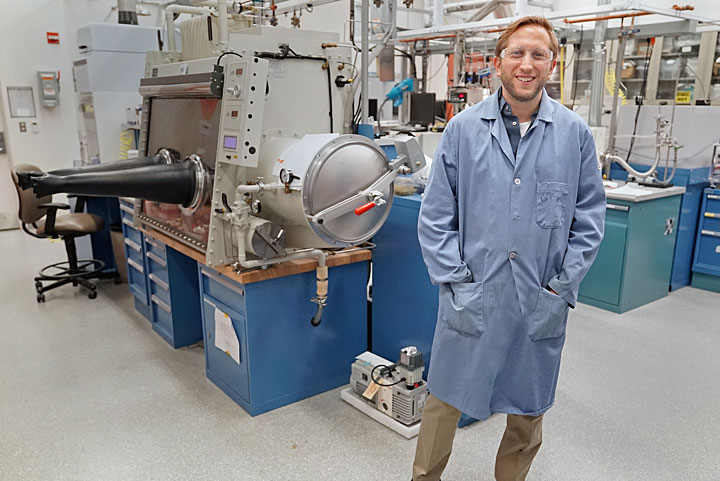
Gregory Doerk is a Materials Scientist specializing in AI Accelerated Nanoscience at Brookhaven National Laboratory's Center for Functional Nanomaterials (CFN). As a key member of the Electronic Nanomaterials Group, he conducts cutting-edge research on self-assembly processes for nanofabrication applications. His work bridges fundamental polymer science with practical applications in energy, optics, and electronics manufacturing. Doerk earned his B.S. in Chemical Engineering from Case Western Reserve University (2005) and his Ph.D. in Chemical Engineering from the University of California, Berkeley (2010). His academic journey was complemented by philosophical studies that shaped his approach to scientific inquiry, recognizing both the power and limitations of scientific knowledge. Dr. Doerk's research focuses on directing the self-assembly of polymers to create tailored nano-architectures for optical, chemical, and energy applications. He specializes in block copolymer systems, developing combinatorial, high-throughput, and adaptive experimental methods to integrate self-assembly into scalable manufacturing processes. His work addresses the challenge of scaling block copolymer assembly to larger feature sizes (approaching 200nm) that can influence light for structural color applications, overcoming the natural limitations of traditional block copolymer systems. His 15 most recent publications reveal a strong trajectory toward AI-accelerated materials discovery, with increasing focus on autonomous experimentation, combinatorial approaches, and hierarchical structures. The research spans fundamental polymer science to applied nanotechnology, with applications in photonic materials, energy conversion, and advanced manufacturing. His work demonstrates a progression from basic self-assembly mechanisms to increasingly sophisticated systems incorporating machine learning and high-throughput methodologies. 2021 DOE Early Career Research Program award recipient As a senior scientist at CFN, Doerk mentors numerous users from academic and industrial institutions worldwide, helping them develop self-assembly processes for diverse applications ranging from microfluidics to biosensing. He has secured significant research funding, including the prestigious DOE Early Career award, and actively contributes to the scientific community through organizing workshops at major conferences including the American Physical Society March Meeting and the NSLS-II & CFN User Meetings. His collaborative approach has resulted in numerous interdisciplinary projects spanning multiple DOE facilities. Dr. Doerk leads research in the Electronic Nanomaterials group at CFN, where he operates specialized equipment for block copolymer self-assembly, solvent vapor annealing, and pattern transfer. His lab focuses on developing adaptive experimental methods that combine self-assembly with AI-driven discovery, creating a unique environment where traditional materials science intersects with cutting-edge computational approaches. The team regularly collaborates with researchers using Brookhaven's National Synchrotron Light Source II for in-situ characterization of self-assembly processes.
Paula López Martínez is a Full Professor at the University of Santiago de Compostela (USC) and Deputy Director of the Singular Research Centre on Intelligent Technologies (CiTIUS) . Since June 2024, she has held the Televés Microelectronics Chair at USC. Her work bridges Computer Vision and Electronic Design of Intelligent Devices , with a focus on CMOS Image Sensors and Biomedical Applications . Her research spans Energy Harvesting , Device Modeling , and Low-Power Embedded Systems . Key projects include SEMIoTICS (low-power AI at the edge), MISEL (multispectral vision), and NANOEATERS (nanotechnology transfer). She has authored over 100 peer-reviewed papers and served in IEEE leadership roles, including Secretary of the Sensory Systems Technical Committee and Treasury of IEEE Women in Engineering Spain (2006–2008). Recent publications highlight Analog Computing-In-Memory , HDR CMOS Sensors , and Energy-Efficient DC-DC Converters . Her work integrates Photovoltaic Energy Harvesting with Biomedical Device Design , emphasizing Self-Powered Systems and Dynamic Vision Sensors . She employs Verilog-AMS and ATLAS Simulations for CMOS Photodiode Modeling , addressing Crosstalk and Shot Noise in pixel arrays. Notable collaborations include Victor M. Brea, Diego Cabello, and Miguel Heredia Conde. She contributes to IEEE Transactions and Q1-Ranked Journals , with a focus on Hardware Acceleration via FPGA and Custom IC Design . Her expertise spans Thermoelectric Generators , Smart Energy Systems , and Radiation-Hard Transistors .
John Nees is a Research Scientist in the Department of Electrical Engineering and Computer Science at the University of Michigan’s College of Engineering, stationed in the High Field Science group. He can be reached at nees@eecs.umich.edu . Research Focus: Mr. Nees pioneers the application of petawatt-class ultra-intense lasers to drive matter into relativistic regimes. His investigations span solid-density laser interactions, attosecond electron bunch generation, novel x-ray sources for medical imaging, laser isotope separation, and fundamental studies of radiation back-reaction in extreme fields. Key techniques include laser wakefield acceleration, femtosecond microscopy, and high-repetition-rate plasma diagnostics. Scientific Awards: Outstanding Investigator of the Year Award, University of Michigan College of Engineering (2006) Fellow of The Optical Society (OSA) (2017) Kenneth M. Reese Outstanding Research Scientist Award, University of Michigan College of Engineering (2020) Publications Trend: Over the last five years, Mr. Nees has co-authored more than 25 peer-reviewed articles centered on three converging themes: (1) design and commissioning of the ZEUS zettawatt-equivalent laser facility, (2) advanced diagnostics and machine-learning control of petawatt-class beams, and (3) applications of laser-driven plasma accelerators for ultrafast x-ray/gamma-ray imaging and neutron generation. These works collectively push the frontiers of high-field science toward the quantum-electrodynamics regime. Teaching & Facilities: Mr. Nees has taught the senior/graduate course "Advanced Lasers and Optics (EECS 438)" for multiple years and leads experimental campaigns on the HERCULES 300-TW and ZEUS lasers housed in the University of Michigan’s Center for Ultrafast Optical Science.
Dr Andrea Santamaria Garcia is a Lecturer in Artificial Intelligence for Particle Accelerators at the University of Liverpool and a member of the Cockcroft Institute. Her work bridges accelerator physics with machine learning, focusing on reinforcement learning and Bayesian optimization for real-time particle accelerator control. Current Research: Reinforcement learning in autonomous accelerators, Bayesian optimization, differentiable simulations Key Projects: RL4AA collaboration, Cheetah simulation code, microbunching instability control Education: PhD in Accelerator Physics (CERN), postdoctoral work on electron light sources Her research explores the synergy between accelerator physics and machine learning, particularly through reinforcement learning and Bayesian optimization . Recent work focuses on zero-shot reinforcement learning, meta-algorithms, and deploying machine learning on hardware for low-latency beam control. She leads collaborations with KIT, DESY, and CERN, including the development of the first differentiable beam physics simulation code. Scientific highlights include the 2024 Physical Review Accelerators and Beams Editors' Choice for her work on online reinforcement learning in accelerators. Her publications demonstrate cross-disciplinary impact in Scientific Reports and Physical Review Accelerators and Beams . PhD Supervision: Chenran Xu (KIT/DESY), Luca Scomparin (real-time RL platform) Teaching Philosophy: Emphasizes precision, ethics, and interdisciplinary collaboration She collaborates with international institutions and co-founded the Reinforcement Learning for Autonomous Accelerators (RL4AA) initiative, which organizes annual workshops on cutting-edge control techniques.
Thomas Christos Katsouleas (known as "TomKat" by students) is an American physicist, engineer, and academic administrator who serves as the 16th president of the University of Connecticut, a position he assumed in August 2019. He holds a professorship in the Electrical and Computer Engineering Department within the School of Engineering at UConn. Prior to his presidency, Katsouleas had a distinguished career in academia and research, with significant contributions to plasma physics and particle accelerator technology. Bachelor's degree from University of California, Los Angeles (1979) Ph.D. in Physics from UCLA (1984) Katsouleas's research primarily focuses on plasma-based particle accelerators, exploring how plasmas can be used to accelerate particles to high energies with potential to lower costs of future high-energy colliders. His work spans both laser-driven and beam-driven plasma accelerators, building on his undergraduate research in this field. He has made significant contributions to high-power light sources development, holding a 1998 patent for a device generating adjustable, high-power radiation pulses with applications in communications, advanced radar, medicine, and research. As a global advocate, Katsouleas has substantially impacted optics and photonics research, education, outreach, and entrepreneurship. Analysis of Katsouleas's recent publications reveals a clear trajectory toward extreme-field physics and nanoscale acceleration techniques. His work has evolved from traditional plasma wakefield acceleration to exploring plasmonic approaches capable of achieving Petavolts per meter gradients using structured semiconductors and nanomaterials. This represents a paradigm shift from gaseous plasmas to solid-state systems, opening new frontiers in particle acceleration. His research group has made significant contributions to understanding nonlinear plasma wakefield dynamics, beam loading effects, and stability issues in plasma accelerators, with recent focus on nanoplasmonic acceleration techniques that could revolutionize compact particle accelerator design. Katsouleas founded the NAE Grand Challenges Summit in Durham in 2009 and initiated Duke's Katsouleas NAE Grand Challenge Scholars Program in 2010, which challenges students to apply their knowledge to solve National Academy of Engineering-identified global challenges. His leadership extends to major collaborative research initiatives including the COMPASS (COMmunity Petascale project for Accelerator Science and Simulation) project, which represents a broad computational accelerator physics initiative. As UConn's president, he continues to champion innovation in both academic administration and scientific research, bridging the gap between fundamental physics and practical engineering applications.
Dmitri Romanov is a Research Professor in the Department of Physics at Temple University. His research focuses on strong-field quantum control in complex systems, including femtosecond laser filamentation, nonlinear optics of filament wake channels, and electronic dynamics in molecules and nanostructures. He explores applications such as light scattering in turbid media and dispersion law engineering for quasiparticles. Key contributions include studies on Rabi sideband control, transient optical nonlinearities, and the development of machine learning algorithms for particle identification in high-energy physics experiments. Romanov has authored influential works on femtosecond laser-matter interactions and co-authored the textbook Modern Advanced Mathematics for Engineers (Wiley, 2001). His recent projects involve collaborations with the Electron-Ion Collider (EIC), focusing on detector design and real-time data processing using FPGA-based systems. Romanov’s work bridges theoretical physics, experimental optics, and applied nanotechnology, with implications for advanced materials and medical imaging.
Scott Kovaleski is Professor of Electrical Engineering and Computer Science at the University of Missouri. He holds a Ph.D. and M.S.E. from the University of Michigan and a B.S. from Purdue University. His research develops charged particle sources, electromagnetic systems, and nanofabrication methods using pulsed power and computational techniques. Current projects focus on piezoelectric-driven particle accelerators, metamaterial design optimization, and carbon nanotube electron sources. His laboratory advances compact radiation sources and computational methods for electromagnetic simulations. Recent publications demonstrate growing integration of deep learning in optical metasurface design and electromagnetic modeling. Key themes include physics-informed neural networks for inverse design, nanofabrication techniques, and vacuum electronics applications. His federally funded projects include research in charged particle generation, electromagnetics simulation, and pulsed power systems. Laboratory capabilities include computational modeling and experimental validation of particle acceleration systems.
Dr. McKenzie Skiles is an Associate Professor at the University of Utah's School of Environment, Society & Sustainability, leading the Snow Hydrology Research-to-Operations Laboratory (Snow HydRO Lab). Her work focuses on snow hydrology, dust-on-snow radiative forcing, and remote sensing applications to assess snowpack dynamics and water security in semi-arid mountain regions. She holds a PhD in Geography from UCLA (2014), alongside multiple degrees from the University of Utah, including dual BS in Geography and Environmental Studies (2008) and an MS in Geography (2010). Her academic journey includes a postdoc at Caltech/JPL (2015–2016) and prior roles as an Assistant Professor at the University of Utah (2017–2023) and Utah Valley University (2016–2017). Her research integrates field observations, numerical modeling, and remote sensing to quantify how light-absorbing particles (dust, black carbon) accelerate snowmelt, impacting water resources in the Western U.S. Key projects include the Dust^2 initiative and the Surface Atmosphere Integrated Field Laboratory (SAIL). Recent work highlights the shrinking Great Salt Lake's role in increasing dust-on-snow events in the Wasatch Mountains. Publications emphasize snow albedo modeling, dust radiative forcing, lidar applications, and machine learning for snow water equivalent estimates. Collaborations span federal agencies (NASA, NOAA) and universities, with a focus on bridging science and operational water management.
John Palastro holds dual roles as Assistant Professor in the Department of Mechanical Engineering and Associate Professor in the Institute of Optics at the University of Rochester. He also serves as Plasma Theory Group Leader and Senior Scientist at the Laboratory for Laser Energetics (LLE). His research focuses on laser-matter interactions, nonlinear optics, and plasma-based accelerators, with particular emphasis on advancing inertial confinement fusion and ultra-high-intensity laser technologies. Dr. Palastro’s work bridges fundamental plasma physics and applied engineering, aiming to optimize laser-driven systems for energy applications, radiation sources, and particle acceleration. He has pioneered techniques for flying-focus pulse control, plasma wakefield acceleration, and mitigating laser-plasma instabilities. His contributions include experimental design for next-generation fusion facilities and theoretical advancements in relativistic optics. Awards : Recipient of the Thomas H. Stix Award for early-career excellence in plasma physics research. Labs/Teams : Leads the Plasma Theory Group at LLE, collaborating with national labs and international institutions on high-energy density physics projects.