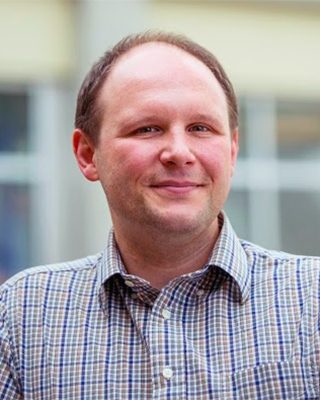
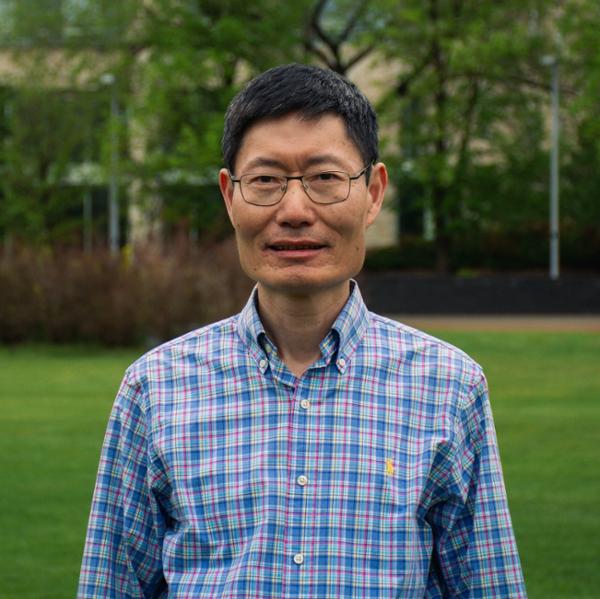
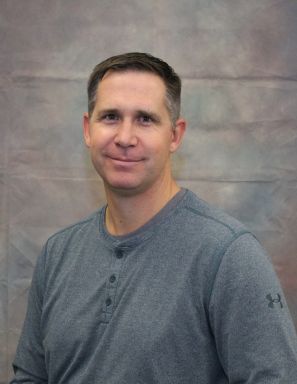
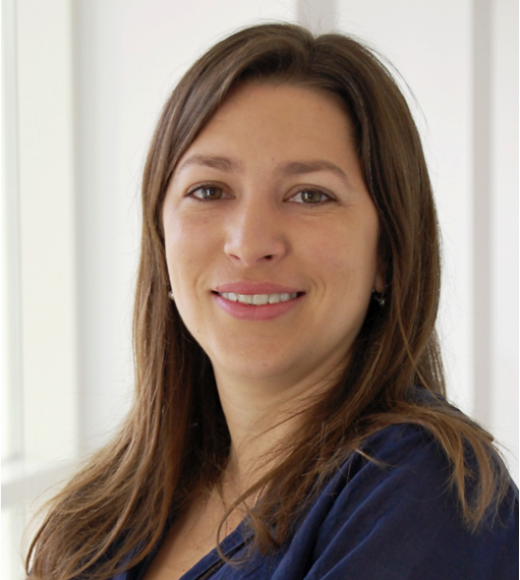
Peter Richtarik is a Professor at the King Abdullah University of Science and Technology (KAUST), specializing in Machine Learning, Optimization, and Federated Learning. He actively teaches courses such as Stochastic Gradient Descent Methods and mentors PhD and MS students like Konstantin Burlachenko, Kai Yi, and Lukang Sun. His research spans distributed optimization, parameter-efficient fine-tuning, and theoretical frameworks for non-convex and non-smooth problems. Recent work includes 2025 contributions to Bernoulli-LoRA (theoretical PEFT) and Gluon (LMO-based optimizers). He co-developed Thanos (block-wise pruning) and BurTorch (CPU-optimized training framework). His publications focus on communication efficiency ( ATA , LoCoDL ), differential privacy ( DP-RBCD ), and stochastic proximal methods. Richtarik received the Charles Broyden Prize for his work on quasi-Newton methods. He frequently presents at workshops like MLSS in Senegal and FLOW seminars.
Vikram Kodibagkar is a Professor in the School of Biological and Health Systems Engineering at Arizona State University, with additional affiliations to the School of Medicine and Advanced Medical Engineering. He leads the Prognostic Bioengineering (ProBE) Lab, conducting cutting-edge research in cellular and molecular imaging, magnetic resonance physics, and biomedical engineering. Education: Ph.D. in Physics, Washington University, St. Louis (2002) M.Sc. in Physics, Indian Institute of Technology-Mumbai (1997) B.Sc. in Physics, University of Mumbai, India (1995) Research Focus: Professor Kodibagkar's research centers on developing advanced imaging technologies for medical applications. His work encompasses cellular and molecular imaging , multimodality probe development , and magnetic resonance oximetry . A key focus is the development of novel contrast agents and imaging techniques for detecting hypoxia in tumors and brain injuries. His lab also works on compressed sensing accelerated magnetic resonance spectroscopic imaging (MRSI) and functional imaging of implants . The ProBE Lab emphasizes comprehensive understanding of both theory and practical techniques to train the next generation of imaging leaders. Current research activities include developing non-invasive methods for real-time monitoring of engineered cells and tissues, investigating tumor oxygenation dynamics, and creating novel MRI nanosensors for various medical applications. Research Funding and Grants: Professor Kodibagkar has secured significant funding from major organizations including: National Institutes of Health (NIH) - Multiple R01 grants National Science Foundation (NSF) - CAREER Award US Department of Defense (DOD) DARPA/BTO Flinn Foundation Texas Higher Education Coordinating Board Teaching and Mentorship: He teaches various courses including BME 350 Signals & Systems for Bioengineers, BME 465/565 Magnetic Resonance Imaging, and supervises honors theses and research projects. His teaching spans undergraduate to doctoral levels, focusing on biomedical engineering and imaging technologies. Laboratory and Team: Professor Kodibagkar directs the Prognostic Bioengineering (ProBE) Lab at Arizona State University. The lab conducts interdisciplinary research combining engineering, physics, and medicine to develop next-generation imaging technologies for clinical applications.
Lars Davidson is a Professor in the Department of Fluid Dynamics at Chalmers University of Technology. His research focuses on numerical simulations of fluid flow and heat transfer, with an emphasis on turbulence modeling for Large Eddy Simulation (LES) and hybrid LES/RANS methods. He has developed computational codes CALC-BFC and CALC-LES based on finite-volume techniques, and recently integrated machine learning to enhance wall functions and turbulence models. Key projects include Hybrid LES/RANS for wall-bounded flows Machine learning applications in fluid dynamics Aeroacoustic noise reduction in automotive and aerospace systems Wind turbine load analysis in forested regions . His publications span 302 articles in journals and conferences, with recent work on Neural networks for turbulence closure Plasma actuators for drag reduction Lattice Boltzmann wall-modeled LES . Collaborations include teams at Volvo, Siemens, and international research groups.
Dr. Adrian Fazekas is a Lecturer at the Institute of Highway Engineering, RWTH Aachen University, and collaborates with the Federal Highway Research Institute (BASt). He holds a Dr.-Ing. in Computer Science from RWTH Aachen (2005–2011), specializing in Media Engineering. His professional trajectory includes roles as a Research Assistant at RWTH Aachen and industry experience as a Software Developer at Continental AG. Research interests focus on traffic data acquisition , microscopic traffic flow simulation , and intelligent transportation systems . Key projects include: DROVA: Drone-based traffic analysis for infrastructure optimization ESIMAS: Real-time tunnel safety management Digital Twin Road: Physical-informational mapping of future highways AUTUKAR: Automated tunnel monitoring systems His publications emphasize real-time traffic detection , safety analytics , and data-driven modeling , with recent work exploring thermal-camera nudging systems and weigh-in-motion accuracy. He actively contributes to the Research Association for Roads, Earth and Tunneling (SETAC). No awards or student advising roles are documented.
Lukas Einhaus is a Researcher and PhD student in the Embedded Systems department at the University of Duisburg-Essen since April 2020, affiliated with the Intelligent Embedded Systems (IES) research group and contributing to initiatives including Elastic AI and the IoT Garage. His academic background includes: Bachelor of Science from University of Duisburg-Essen, thesis focused on programming abstractions for concurrent embedded systems Master of Science from University of Duisburg-Essen, specializing in distributed and reliable systems with thesis research on quantizing neural networks Einhaus's research centers on designing neural networks for efficient hardware implementation on FPGAs, with primary expertise in quantized or low-precision neural networks that reduce bit depth (typically 1-3 bits) for computations and information flow. This work enables energy-efficient AI solutions for embedded and IoT devices where resource constraints are critical. His publication record from 2021-2025 reveals consistent innovation in FPGA-based neural network optimization, with applications spanning fluid flow estimation, time-series analysis, and real-time stream processing. Core themes include Elastic AI for adaptive systems, precomputation techniques for convolutional layers, and hardware-aware neural architecture design. He previously contributed to the BMBF-funded project "KI-Sprung: LUTNet" (until March 2022), developing energy-efficient AI networks using elementary lookup tables for FPGA deployment. Einhaus actively mentors students through the IoT Garage initiative, supervising practical projects including drink-mixing machines, exoskeletons, and ball-challenge systems.
Raghavendra Selvan, an Assistant Professor (Tenure Track) at the University of Copenhagen, holds joint appointments in the Machine Learning Section (Department of Computer Science), Kiehn Lab (Department of Neuroscience), and the Data Science Laboratory. His academic journey includes a PhD in Medical Image Analysis (2018), MSc in Communication Engineering (2015), and BSc in Electronics and Communication Engineering (2009). PhD - Medical Image Analysis, University of Copenhagen (2018) MSc - Communication Engineering, Chalmers University (2015) BSc - Electronics and Communication Engineering, BMS Institute of Technology, India (2009) His research focuses on Bayesian Machine Learning with emphasis on Medical Image Analysis, Graph-based Learning, Tensor Networks, Approximate Inference, and Multi-Object Tracking Theory. Recent publications highlight his contributions to environmentally sustainable AI practices, efficient deep learning in medical imaging, and novel applications of tensor networks. Key research areas: Green AI and Environmental Sustainability Medical Image Analysis Graph Neural Networks Crystal Structure Prediction Model Compression Materials Science Applications
Zachary Tatlock is an Associate Professor at the Paul G. Allen School of Computer Science & Engineering at the University of Washington, where he leads the Programming Languages & Software Engineering Group (PLSE) and the SAMPL Group. His research spans programming languages, formal verification, compilers, and computational fabrication. He is also an Amazon Scholar with AWS's Automated Reasoning Group and previously advised OctoML. Tatlock's work bridges theoretical foundations with practical systems, focusing on making it easier to write tricky code while ensuring correctness through rigorous proofs and measurements. PhD in Computer Science & Engineering, University of California, San Diego (2014) Thesis: Reducing the Costs of Proof Assistant Based Formal Verification Advisor: Sorin Lerner BS in Computer Science (Honors) and Mathematics, Purdue University (2007) Professor Tatlock's research focuses on the intersection of programming languages, formal methods, and systems. His work in compilers and formal verification aims to make it easier to write tricky code while ensuring correctness through rigorous proofs. He explores computational fabrication techniques that bridge digital design with physical manufacturing. His recent work on equality saturation (via the egg framework) has transformed program optimization and synthesis. Tatlock also investigates floating-point numerics, distributed systems verification, and hardware/software co-design, always seeking to balance theoretical rigor with practical implementation. Tatlock's recent publications demonstrate a strong focus on equality saturation techniques (egg framework), computational fabrication, and verified systems. His work increasingly integrates machine learning with program analysis and synthesis. There's a clear trajectory toward more practical applications of formal methods in real-world systems, particularly in numerical computing and fabrication. His research group has made significant contributions to e-graph technology, floating-point accuracy, and the verification of distributed systems. Distinguished Paper Award for Rewrite Rule Inference Using Equality Saturation (OOPSLA 2021) Spotlight Paper Award for Dynamic Tensor Rematerialization (ICLR 2021) Distinguished Paper Award for egg: Fast and Extensible Equality Saturation (POPL 2021) Faculty Appreciation for Career Education & Training (FACET) Award (2020) NSF CAREER Award: Verifying Distributed System Implementations (2017) Distinguished Paper Award for Automatically Improving Accuracy for Floating Point Expressions (PLDI 2015) Distinguished Teaching Award Nomination (2015) Professor Tatlock has advised numerous doctoral, master's, and undergraduate students who have gone on to prominent positions in academia and industry, including faculty positions at the University of Utah and Brown University, and leadership roles at companies like OctoML and Certora. His research is supported by significant funding from NSF, DARPA, DOE, and industry partners, totaling millions of dollars. Current grants include projects on computer-aided reasoning, formal verification, computational fabrication, and machine learning systems. He has served on numerous program committees and organized workshops including FPTalks, EGRAPHS, and PNW PLSE. As co-leader of the Programming Languages & Software Engineering (PLSE) research group and affiliate of the SAMPL Group at the University of Washington, Tatlock has developed influential tools including egg (an equality saturation toolkit), Carpentry Compiler, and Odyssey. His group actively collaborates with industry partners including Amazon Web Services, where he serves as an Amazon Scholar. The group has made significant contributions to equality saturation, floating-point accuracy, program synthesis, and computational fabrication, with applications ranging from compiler optimization to 3D printing.
Jungeun (Jenny) Won is an Assistant Professor of Research in the Department of Biomedical Engineering at the School of Engineering and Applied Sciences, University at Buffalo. Her research focuses on optical imaging , biomedical device development , medical image analysis , and artificial intelligence in OCT . She leads the Translational Biophotonics Laboratory , where she develops advanced OCT techniques for medical applications such as diabetic retinopathy , otitis media , and biofilm analysis . Contact: 215J Bonner Hall, Buffalo NY 14260, jungeunw@buffalo.edu Related Links: CV PDF , Google Scholar , Lab Website Her recent work involves high-resolution OCT for longitudinal studies on retinal degeneration, VISTA OCTA for blood flow analysis, and 3D motion correction algorithms to enhance image quality. She also explores multimodal imaging combining OCT with Raman spectroscopy for bacterial differentiation and microplasma-based therapies for ear infections.
Chun-Hua Guo is a Professor in the Department of Mathematics and Statistics at the University of Regina, Faculty of Science. His research focuses on matrix analysis, scientific computing, and applications in tensor computations and nonlinear matrix equations. He teaches advanced courses such as MATH 869 Numerical Analysis. Dr. Guo’s recent work emphasizes iterative methods for solving eigenvalue problems of nonnegative tensors, matrix equations arising in nano research, and convergence analysis of numerical algorithms. His publications address topics like Newton-Noda iteration, modified Newton methods for Z-eigenpairs, and algebraic Riccati equations associated with M-matrices. His research trends highlight advancements in computational techniques for matrix functions (e.g., matrix pth root), tensor Perron pairs, and stability analysis of iterative algorithms. These contributions bridge theoretical linear algebra with practical computational challenges in engineering and scientific domains. Dr. Guo’s advising and grants involve developing efficient numerical methods for complex systems. His work has implications for fields requiring high-precision matrix computations, such as control theory, stochastic modeling, and nano-material simulations.
Associate Professor Joshua San Miguel leads research in computer architecture and systems at the University of Wisconsin-Madison, with an affiliate role in Computer Sciences. His work focuses on energy-efficient computing for IoT devices, microarchitecture innovations, and networks-on-chip. He holds a PhD (2017) and BASc (2012) from the University of Toronto. Education: PhD in Electrical & Computer Engineering, University of Toronto (2017) BASc in Engineering Science (ECE), University of Toronto (2012) Research Interests: Approximate computing for energy harvesting systems Branch prediction and value prediction in processors Cache architectures and networks-on-chip for many-core processors Intermittent computing resilience His recent work emphasizes value-level parallelism (Carat/uSystolic), RTL simulation acceleration (TaroRTL), and personalized neural network inference (CAP’NN). His research has been recognized with the NSF CAREER Award (2021) and multiple IEEE Micro Top Picks. Grants & Advising: Active in supervising advanced independent studies and master’s/dissertation research. Extensive grant funding includes the NSF CAREER Award and the Grainger Faculty Scholarship. Labs & Teams: Leads research groups focused on approximate computing and energy-efficient architectures within the Electrical & Computer Engineering department.
Tanya Kant is an Associate Professor in Media and Cultural Studies (Digital Media) at the University of Sussex’s School of Media, Arts and Humanities. Her research focuses on algorithmic personalization, digital identity, and the socio-economic implications of data-driven systems. She authored the influential book *Making It Personal: Algorithmic Personalization, Identity and Everyday Life* (2020) and co-manages REFRAME, an open-access publishing platform. Her work bridges qualitative cultural studies with critical political economy, examining how algorithmic systems shape identities, creativity, and socio-material realities. Key research areas include generative AI ethics, algorithmic autobiographies, data profiling, and the impact of AI on PR/communications industries. Kant has collaborated with Ofcom, MIT, and Full Fact on data ethics and misinformation. Her teaching roles include convening MA Digital Media and supervising PhDs in critical AI studies. Recent grants include a £9,600 AHRC Impact Accelerator Award (2023) for studying ethical AI use in communications sectors. Professional activities include advisory roles at Open Rights Group and Full Fact, as well as frequent media engagements discussing AI’s societal implications. Her work emphasizes creative resistance strategies against algorithmic systems, such as participatory methods for ‘writing with’ digital selves through algorithmic autobiography projects. Notable Grants: Sussex KE Fellowship (2025), AHRC Impact Accelerator Award (2023) Key Collaborations: MIT, Ofcom, Full Fact, Magenta Associates Teaching Portfolio: Convenes 10+ modules including ‘Digital Cultures’ and ‘Gender, Sexuality and Digital Culture’
Matt J. Rutherford is an Associate Professor in the Department of Computer Science at the University of Denver, with a joint appointment in the Department of Electrical and Computer Engineering. He is Deputy Director of the Unmanned Systems Research Institute and a faculty fellow of Project X-ITE. His research focuses on autonomous systems, embedded systems, and software engineering, with extensive contributions to UAV navigation, control systems, and robotics. Rutherford holds a Ph.D. in Computer Science from the University of Colorado Boulder (2006), an MS (2001), and a BS in Civil Engineering from Princeton University (1996). His work emphasizes practical applications of software engineering principles in distributed and embedded systems. Notable projects include radar-based collision avoidance for UAVs, self-leveling landing platforms, and studies on electric vehicle charging impacts on power grids. Rutherford's research bridges theoretical computer science with real-world engineering challenges, particularly in unmanned systems and robotic autonomy. Key publications explore UAV flight control using neural networks, ground/ceiling effects in rotorcraft, and GPU-based real-time pose estimation. His contributions to model-driven systems and distributed testbed automation highlight long-term engagement with software reliability and scalable experimentation frameworks. Rutherford collaborates widely, including with institutions like the University of South Carolina and Politecnico di Torino. His interdisciplinary approach integrates robotics, aerospace engineering, and software engineering to advance autonomous system capabilities.
Marian Verhelst is a Professor at KU Leuven's Faculty of Engineering Science, renowned for her research in hardware-efficient computing and dedication to STEM education. Her work spans hardware acceleration for machine learning, edge AI, and in-memory computing, with a focus on energy optimization and algorithm-hardware co-design. Her research interests include: Designing flexible hardware for ultra-low-power edge AI systems Optimizing sparsity-aware architectures for deep learning workloads Advancing chiplet-based and 3D memory technologies Co-designing algorithms and hardware for probabilistic AI Pioneering STEM outreach through KU Leuven InnovationLab Recent publications (2023–2025) demonstrate strong trends in: Hardware-software co-optimization for edge ML systems Efficient data movement in heterogeneous accelerators Low-precision and sparse computation techniques RISC-V based customizable SoCs Sustainable AI accelerator design Awards & Honors: Young Academy of Europe Award (2021) for science communication and STEM advocacy She leads significant educational initiatives, including the KU Leuven InnovationLab which has engaged 150 schools and 13,000 students since 2014. The program develops hands-on STEM projects (e.g., AI-powered wheelchairs, sustainable energy systems) and provides teacher training to inspire youth in engineering.
Joshua Garcia is an Assistant Professor in the Informatics Department at the University of California, Irvine (UCI), within the Donald Bren School of Information and Computer Sciences. His research focuses on software architecture, automated testing, and cybersecurity, particularly in autonomous systems and mobile applications. He leads projects like DeltaDroid, Doppelgänger Test Generation, and Darcy, which address software vulnerability management, architectural consistency, and safety-critical systems. Key achievements include an NSF CAREER Award (2025), an NSF CRI Grant (2018), and a DARPA competition win (2024). His work is adopted by organizations like Boeing, Google, and NASA. Garcia collaborates internationally, involving institutions in Padova and researchers like Luca, Jessy Ayala, and Philipp. Research Interests: Software architecture evolution, automated exploit generation, autonomous vehicle testing, and accessibility in software development Grants: NSF CAREER ($500K+), NSF CRI ($1M+) Labs/Teams: HexHive Group, Autonomous Systems Testing Lab
Marina S. Leite is a Professor in the Department of Materials Science and Engineering at the University of California, Davis. Her research focuses on novel materials for renewable energy, optical devices, and materials under extreme environments. She leads the Leite Lab, pioneering work in perovskite photovoltaics, thermophotovoltaic emitters, and transient photonics using machine learning for accelerated materials discovery. Her group combines advanced characterization techniques with computational methods to address challenges in energy harvesting and optical material performance. PhD: Not explicitly listed in provided text Her research interests include: Machine learning-driven materials discovery Halide perovskites for stable solar cells High-temperature optical materials Transient photonics using magnesium-based systems Thermophotovoltaic emitter design Key research trends from recent articles emphasize AI integration for predicting material behaviors, environmental stressor impacts on optoelectronics, and alloy systems for dynamic optical properties. Her lab has developed methods for automated experimentation and spectral selectivity in emitters. 2025 Optica Fellow 2025 SPIE Fellow Advising: Supervises students like Hannah Darr. Active in DARPA cross-disciplinary projects and editorial roles in energy journals. Leads grants focused on machine learning in materials science and photonic device development. The Leite Lab collaborates on projects involving transient materials and high-temperature photonics. Future work includes scaling superabsorber technologies, developing eco-friendly Pb-free perovskites, and advancing AI tools for material property prediction.