Christoph Sapp is a Lecturer in Perception Psychology/Training at the Institute for Music and Media, Robert Schumann University of Applied Sciences in Düsseldorf. His work bridges philosophy, psychology, and media studies to explore subjective perception and artistic expression. He holds degrees in sound/image technology (drum set specialization) and philosophy/media studies from Heinrich Heine University and Robert Schumann University. Education: Sound and Image Technology (Drum Set) - Robert Schumann University Philosophy, Media/Communication Studies - Heinrich Heine University Guest studies in Psychology/Sociology/German Studies Research Focus: Spatial hearing technologies, audiovisual communication of abstract concepts, and philosophical approaches to media authenticity. Explores perception's role in artistic creativity and aesthetic education through projects like wave field synthesis and binaural technology applications. Awards & Activities: Recipient of Communicator Prize (Science Communication) Member of public philosophy project denXte Teaching: Develops curricula emphasizing perception as foundational for music/media creation. Specializes in format conception integrating design skills with theoretical frameworks.
Dr. Mandy Lange-Geisler serves as an Academic Assistant at Mittweida University of Applied Sciences within the Faculty of Applied Computer and Biosciences. Holding a doctorate in applied mathematics with specialization in machine learning (awarded 2019), she has dedicated over a decade to mathematics education since joining the institution in 2014. Her academic journey includes: Cooperative doctoral studies at Mittweida University and University of Groningen Master's degree in Discrete and Computational Mathematics (2010-2011) Studies in Applied Mathematics (2003-2008) Lange-Geisler's research integrates machine learning methodologies with practical applications, focusing on unsupervised and supervised learning approaches within computational intelligence frameworks. She actively develops educational strategies to make abstract mathematical concepts tangible for students through real-world examples, emphasizing mathematics' role in everyday technology. As part of the MINT KOMPASS initiative (2021-2023), she developed the 'Tutorial Program Mathematics' to enhance student success. Mittweida University provides a unique environment as Saxony's only institution offering mathematics degrees with AI research focus, featuring extensive cross-institutional collaborations in artificial intelligence applications. Her teaching philosophy centers on demonstrating mathematics as both a precise science and practical tool, moving beyond mere arithmetic to reveal its foundational role in technological innovation. She maintains an active research agenda while continuously refining pedagogical approaches to engage diverse learners.
Todd Timberlake is the Reid Professor of Physics and Astronomy at Berry College, serving as Department Chair of Physics and Technology. He specializes in computational quantum mechanics, the history of astronomy, and physics education. His teaching includes computational physics, classical/quantum mechanics, and historical astronomy courses. Education: B.S. from Vanderbilt University and Ph.D. from the University of Texas at Austin. He authored two books: "Finding Our Place in the Solar System" (Cambridge UP) and "Classical Mechanics with Maxima" (Springer). His research focuses on quantum systems, historical astronomy methodologies, and integrating computational tools into STEM education. Research emphasizes eigenvalue dynamics in quantum wells, historical analysis of the Copernican Revolution, and pedagogical applications of computational tools like Open Source Physics. His work bridges theoretical physics with educational innovation, contributing to both academic journals and teaching resources. Leadership roles include coordinating dual-degree engineering programs and directing the Physics and Technology Department. Active in developing open-source physics simulation tools and curricula that enhance student engagement with complex scientific concepts.
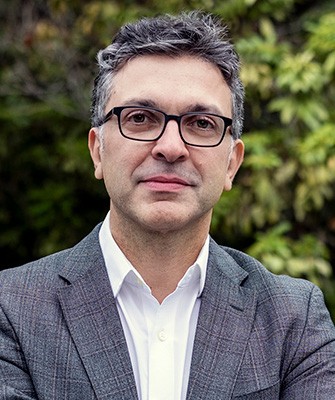
Sandeep Prasada is a Professor and Director of the General Psychology MA Program at Hunter College, part of the City University of New York (CUNY). He holds a PhD in Cognitive Science from the Massachusetts Institute of Technology (MIT). His primary affiliation is with the Department of Psychology within the School of Arts and Sciences. Dr. Prasada's research focuses on the cognitive mechanisms underlying lexical and conceptual representation and development. Key areas include how humans form concepts across diverse domains (e.g., objects, abstract ideas), the interplay between conceptual and perceptual/linguistic representations, and developmental changes in conceptual processing. His work employs interdisciplinary methods, including ERP studies to explore neural correlates of conceptual representation. His publications span journals like Cognition , Psychonomic Bulletin & Research , and Cognitive Science , addressing topics such as principled connections in conceptual systems, generic language, and the formal structures of common sense conceptions. While no specific awards are listed, his contributions reflect sustained engagement with foundational questions in cognitive psychology and developmental science. As Director of the MA program, he oversees graduate education in general psychology. His research and teaching emphasize bridging cognitive science, linguistics, and developmental psychology.
Dr. Annie Selden is Adjunct Professor specializing in mathematics education research at New Mexico State University. Her expertise focuses on proof construction, advanced mathematical thinking, and transition-to-proof pedagogy. Research examines: Cognitive aspects of proof validation Student difficulties with mathematical definitions Habits of mind in proving processes Textbook comprehension strategies Developed pedagogical frameworks including Proof Frameworks approach. Contributes to national mathematics education initiatives through MAA Special Interest Group leadership.
Brian Rourke is an Assistant Professor in the Department of English at New Mexico State University, where he has been a faculty member since 2000. His academic work bridges Twentieth-Century British and Post-Colonial Literature with Film Studies, focusing on cultural representation of abstract concepts. His educational background includes: Ph.D. in English (1999) from Stanford University B.A. in English (1988) from the University of California-Los Angeles Dr. Rourke's research integrates socio-historical and formal methodologies to analyze literary and cinematic texts as human-made cultural artifacts. He investigates how societies represent elusive phenomena like historical memory, global processes, technology, and bodily experiences—currently exemplified by his study of David Lynch's films. As an educator, he prioritizes demystifying complex materials including modern texts, theoretical frameworks, and writing practices for student development.
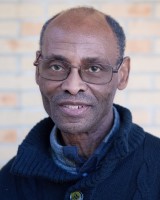
Edmund Moses Ndip is an Associate Professor in the Department of Chemistry and Biochemistry at Hampton University , where he has been since August 2001. His career spans multiple roles including Acting Chair (2000-2001) and ongoing leadership in the Virginia Academy of Science (Chair of Chemistry Division, 2002-2003, 2012-2013, 2018-2019). He holds a Ph.D. in Chemistry (1987, Texas Tech University), M.S. in Chemistry (1982, Oregon State University), and Licence-es-Chimie (1976, University of Yaounde). Ph.D., Chemistry, Texas Tech University (1987) M.S., Chemistry, Oregon State University (1982) Licence-es-Chimie, University of Yaounde (1976) Diploma General Science, University of Yaounde (1975) His research focuses on three main thrusts: (1) Materials Design using computational methods to study organic semiconductors' electronic properties; (2) Organic Reaction Mechanisms via quantum mechanical analysis; and (3) Computer-Assisted Instruction to enhance critical thinking in STEM. He employs ab initio , DFT, and Monte Carlo simulations for molecular electronics applications. The 15 most recent articles highlight his work on nonlinear optical materials, computational education tools, and curriculum reform. These publications span from 2004 studies on propynoic acid decomposition to 2021 research on HBCU undergraduate success metrics, demonstrating enduring contributions to computational chemistry and STEM pedagogy . Edward L. Hamm, Sr. Distinguished Teaching Award (2008) ACS Hampton Roads Outstanding Service Award (2005) SURA XSEDE Broader Engagement Fellow (SC11, SC12) Multiple Virginia Academy of Science leadership roles As an advisor, he has mentored students like Reham Almrashi (2017) and Dominique Covington (2014, 2016) in projects involving supramolecular systems and organic semiconductor synthesis . He has received grants for Microwave Reactors (2015) and participated in NSF workshops on environmental chemistry (2006, 2009, 2016).
Daniel Cunningham is a Lecturer in the Department of Mathematics at California State University, Fresno (Fresno State), located within the College of Science and Mathematics. He holds a Ph.D. in Mathematics from the University of California, Los Angeles (UCLA). His research focuses on Set Theory, Mathematical Logic, and the Axiom of Determinacy. Cunningham teaches advanced courses such as Real Analysis, Differential Equations, and Abstract Algebra, emphasizing foundational mathematical concepts and proof strategies. His professional biography highlights expertise in areas including Set Theory's axiomatic foundations, formal logic systems, and the interplay between determinacy principles and advanced set-theoretic constructs. He has authored multiple textbooks, including Set Theory: a first course and Real analysis: with proof strategies , reflecting his commitment to pedagogical clarity in complex subjects. Cunningham’s scholarly contributions span over three decades, with articles exploring forcing principles, diamond principles under determinacy, and core concepts in analysis and algebra. His work often bridges foundational theory with educational methodologies, as seen in papers like Why does trigonometric substitution work? and Proof Strategies and Diagrams . He maintains an active presence in academic communities through Google Scholar and a personal webpage dedicated to Set Theory resources. His teaching load for Fall 2025 includes courses on Principles of Algebra and Differential Equations.
Samer Hijazi is a Professor at Texas Lutheran University (TLU) specializing in integrating technology into education. His work focuses on web development, database systems, and innovative teaching methodologies. He holds a D.B.A. in Information Systems from the University of Sarasota, an M.A. in Economics from Morgan State University, a B.S. in Computer Science and Applied Mathematics from Towson State University, and an A.A. in Computer Science from Montgomery College. Research & Collaboration His research emphasizes practical applications of technology in education, including: Web technologies interfacing with relational databases AJAX-based rich user interfaces Portable learning environments via USB drives Knowledge management systems with business intelligence components Presentations & Publications Key contributions include: ACET Conference 2013 presentations on WAMP server utilization and Syrian student virtual learning communities ASCUE presentation on portable web programming tools Development of Camtasia-based instructional videos Awards & Leadership Recipient of the 2001 Servant Leader of the Year award. Served as President-elect of the Association of Computer Educators in Texas (ACET). Advocates for technology-enhanced education through campaigns like the Seguin Respect Initiative. Teaching Innovations Pioneered using jump drives for teaching web programming via XAMPP Lite, enabling offline development environments. Developed methodologies to teach object-oriented concepts through JavaScript. Focused on making technology accessible in resource-constrained settings.
Kathryn Leonard is the Interim Vice President for Academic Affairs and Dean of the College at Occidental College, as well as a Professor in the Department of Computer Science. She holds degrees from the University of New Mexico (B.S.), and Brown University (M.S., Ph.D.). Her research focuses on geometric models for computer graphics, vision, and data analysis, emphasizing explainability. She promotes undergraduate research through initiatives like the Center for Undergraduate Research in Mathematics, funded by a $1.4M NSF grant. Leonard also champions diversity in STEM, leading the Association for Women in Mathematics (AWM) and organizing global conferences to support women in computational sciences. Her educational background combines mathematics and English, enabling interdisciplinary approaches to computer science. Notable contributions include developing robust skeletonization algorithms for 3D shapes, shape complexity metrics, and applications in medical diagnosis. She has advised students advancing to top tech companies and PhD programs. Awards include the Best Paper Award (2013) and leadership roles in organizations like the Mathematical Association of America and Council on Undergraduate Research. Leonard’s work bridges computational theory and practical impact, with over 30 publications spanning shape modeling, data analysis, and education. She directs research teams and collaborates internationally on projects like the SkelNetOn Challenge, advancing geometric understanding through AI and deep learning.
Malte Ubben is an academic affiliated with the University of Münster, focusing on quantum physics education, astrophysics pedagogy, and educational technology. His work emphasizes conceptual development in science education and the effective integration of mobile devices in classrooms. He leads projects like the EU-funded ARISTARCHUS (2022–2025) and the sfs initiative (2019–2023), exploring enacted learning and BYOD strategies in STEM education. Ubben collaborates extensively on studies assessing smartphone usage impacts, haptic models for quantum concepts, and low-cost experimental setups using 3D-printing and LEGO®. His research spans over a decade, with recent contributions addressing quantum workforce training and the cognitive dimensions of mental models in science education. Education & Projects: ARISTARCHUS (EU Erasmus+), sfs (Joachim Herz Foundation), and federally funded networks. Publications span Education and Information Technologies , Frontiers in Education , and Physics Education . Active in conferences like the DPG Frühjahrstagung and CERME12. Current office hours: Open-door policy at Wilhelm-Klemm-Str. 10, Room 728. Research Interests: Quantum physics pedagogy, technology-enhanced learning, mental models in STEM, smartphone integration challenges, and topological approaches to quantum phenomena. Recent work evaluates BYOD effects on mathematical modeling and investigates preservice teachers' astronomy conceptions. Publications Overview: Over 30 peer-reviewed articles and book chapters since 2018, focusing on educational technology, quantum visualization tools, and low-cost experimental methods. Key themes include haptic models for abstract concepts, classroom device policies, and topological quantum theory applications. Awards: None explicitly listed in the provided text. Collaborations: With Stefan Heusler, Alexander Pusch, and international teams on EU and federally funded projects.
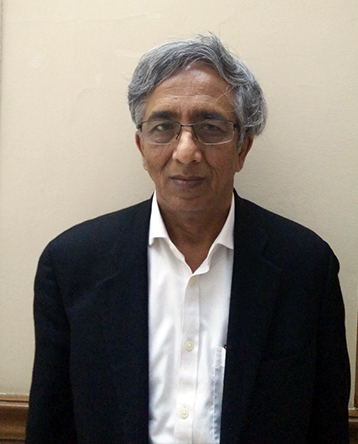
Eswaran Subrahmanian is a Research Professor at Carnegie Mellon University (CMU), affiliated with the Engineering Research Accelerator and the Department of Engineering and Public Policy within the College of Engineering. He concurrently serves as a Visiting Honorary Professor at the International Institute of Information Technology, Bangalore and an Adjunct Faculty member at Ahmadabad University. His roles include part-year work at the National Institute of Standards and Technology (NIST), USA, focusing on smart networks and societies. Education: Ph.D. in Public Policy & Information Systems, Carnegie Mellon University (1987) M.S. in Computer Science, University of South Carolina (1979) B.E. (Hons) in Chemical Engineering, Birla Institute of Technology & Science (1976) Research Focus: Subrahmanian's work centers on socio-technical systems design, decision support systems, and design theory. He explores intersections of technology, public policy, and societal impact through projects with industry leaders like Boeing, Bosch, and the World Bank. His theoretical contributions include the PSI framework and categorical models for complex systems analysis. Publications & Awards: With over 90 peer-reviewed articles and co-edited books, he co-authored We Are Not Users: Dialogues, Diversity, and Design (MIT Press, 2020). Honors include the Steven Fenves Award (2006), AAAS Fellowship (2008), and ACM Distinguished Scientist (2013). Advising & Innovation: Co-founder of Fields of View , a nonprofit designing games/simulations for policy challenges, and involved in initiatives like the National Health Information Systems Project. His work emphasizes inclusive design methodologies and interdisciplinary collaboration. Labs & Teams: Active in the Engineering Research Accelerator and collaborates across disciplines to address urban systems, energy policy, and ICT for sustainable development.
Paulo Barrozo is a Professor and John C. Ford S.J. Distinguished Scholar at Boston College Law School, where he serves as Associate Dean of Faculty and Global Programs. His scholarship fundamentally reshapes understanding across public law, legal theory, and institutional justice through rigorous historical and philosophical analysis. His educational trajectory includes: S.J.D. from Harvard University LL.M. from Harvard University LL.B. from Rio de Janeiro State University (UERJ) M.Jur. from Pontifical Catholic University of Rio de Janeiro (PUC) Ph.D. in Political Science from Rio de Janeiro University Research Institute (IUPERJ) Barrozo's research excavates the foundational tensions between history, reason, and will in modern legal systems, exposing how cruelty operates across punishment regimes and constitutional frameworks. His work on structural mercy revolutionizes transitional justice discourse, while his jurisprudence of distribution challenges orthodoxies in resource allocation theory. Brazilian legal evolution serves as a critical case study for his broader investigations into comparative legal consciousness and global regulatory risks , consistently bridging theoretical rigor with urgent human rights applications—particularly for children and neurodiverse populations. Analysis of his 15 most recent publications reveals a decisive pivot toward interdisciplinary institutional analysis , synthesizing political theory, historical jurisprudence, and critical legal studies. Three dominant trajectories emerge: (1) deconstruction of legal cruelty across criminal and constitutional contexts, (2) reconstruction of transitional justice beyond retributive paradigms, and (3) radical reimagining of legal education through distributional ethics. His scholarship consistently interrogates how legal institutions mediate between abstract principles and concrete political realities. Barrozo's exceptional contributions are recognized through: John C. Ford S.J. Distinguished Scholar designation Stanley Hoffman Prize for Excellence in Teaching (Harvard University's inaugural recipient) As Associate Dean, he shapes faculty development and global programming while maintaining active pro bono advocacy for children's rights and neurodiversity inclusion. His influential open letter A Future for Legal Education catalyzed national conversations on pedagogical reform, demonstrating how theoretical work directly informs institutional practice. Current initiatives focus on integrating distributional justice frameworks into clinical legal education and global regulatory design.
Stanislav M. Mintchev serves as Professor of Mathematics within the Department of Mathematics at The Cooper Union for the Advancement of Science and Art's Albert Nerken School of Engineering. With active teaching responsibilities for Fall 2024 including Linear Algebra and Calculus I, he maintains a prominent research profile in applied mathematics with specific focus on dynamical systems theory and its applications to biological and physical systems. Dr. Mintchev earned his Doctor of Philosophy degree in Mathematics with specialization in dynamical systems from New York University's Courant Institute. Prior to his graduate training, he completed bachelor of science degrees with honors in both Physics and Mathematics at The George Washington University in Washington, DC. His academic journey reflects a strong foundation in both theoretical and applied mathematical sciences. Mintchev's research program centers on the study of organization phenomena in spatially extended dynamical systems, with particular emphasis on traveling wave solutions that constitute perfectly transmitted signals across media. His work bridges rigorous analytical techniques from geometry, analysis, and probability theory with computational simulations, focusing on oscillation models from mathematical biology. He has developed significant expertise in pulse-coupled phase oscillator networks derived from mathematical neuroscience, examining existence and stability properties of traveling wave solutions. Additionally, he applies dynamical systems concepts to statistical data mining, pattern recognition, and machine learning, demonstrating the interdisciplinary reach of his mathematical approaches. Analysis of his publication record reveals a consistent research trajectory focused on neural oscillator networks and traveling wave phenomena. His recent work (2022-2024) shows increasing application to biological neural systems, particularly examining resilience mechanisms in neuronal networks and V1-inspired visual cortex models. Throughout his career, Mintchev has maintained a strong connection between theoretical mathematical frameworks and their practical applications in neuroscience, with publications spanning prestigious journals including Chaos, Nonlinearity, and the Journal of Mathematical Neuroscience. As an educator, Dr. Mintchev has taught a comprehensive range of mathematics courses including Introduction to Linear Algebra, Differential Equations, Probability, and all three introductory Calculus courses. He also offers independent study courses in point-set and algebraic topology, and assists with Cooper Union's Putnam Examination preparation. His teaching philosophy emphasizes connecting abstract mathematical concepts with their concrete applications in science and engineering, reflecting his own research approach. Future course offerings will include Numerical Methods, Boundary Value Problems, and Dynamical Systems, expanding opportunities for students to engage with advanced mathematical topics. Dr. Mintchev maintains active research collaborations with mathematicians including Bastien Fernandez, Bernard Ambrosio, and others in the dynamical systems community. His professional affiliations include the Society for Industrial and Applied Mathematics, American Mathematical Society, and Mathematical Association of America, demonstrating his engagement with the broader mathematical community. Though no formal laboratory is mentioned, his work involves computational modeling and theoretical analysis of dynamical systems, likely conducted through computational resources at The Cooper Union.
Hylke Faber holds dual roles as a PhD Candidate and Lecturer-Researcher at Hanze University of Applied Sciences, affiliated with the Centre of Expertise Healthy Ageing. His research focuses on computational thinking education in primary schools, particularly for young children, and adaptive technology integration in teacher training programs. He actively contributes to educational design research and has presented at international conferences such as Koli Calling and Onderwijs Research Dagen. Key research areas include algorithmic problem-solving in early childhood, abstraction development in programming education, and the use of tools like ScratchJr and educational robotics. His work emphasizes inclusive educational practices and has led to publications in peer-reviewed journals and conference proceedings. Faber has delivered invited talks on topics such as 'Digital Literacy in Teacher Education' and 'Short-term Progression of Abstraction in Primary Programming Education.' His activities include organizing workshops and contributing to innovation challenges focused on adaptive learning methodologies. No scientific awards are explicitly noted in the provided materials. His research has been cited and widely shared, with 27 readers on Mendeley for select works.