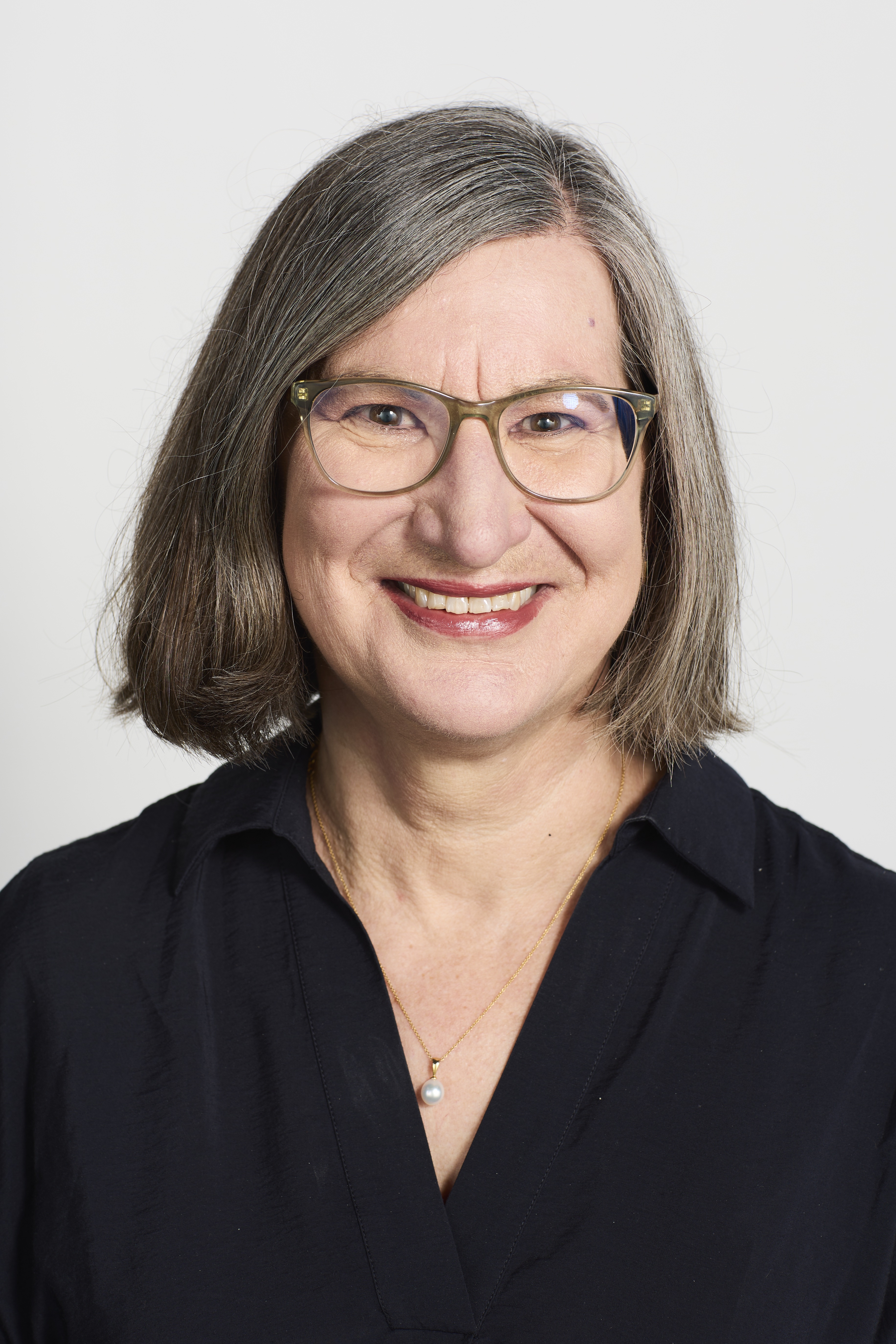
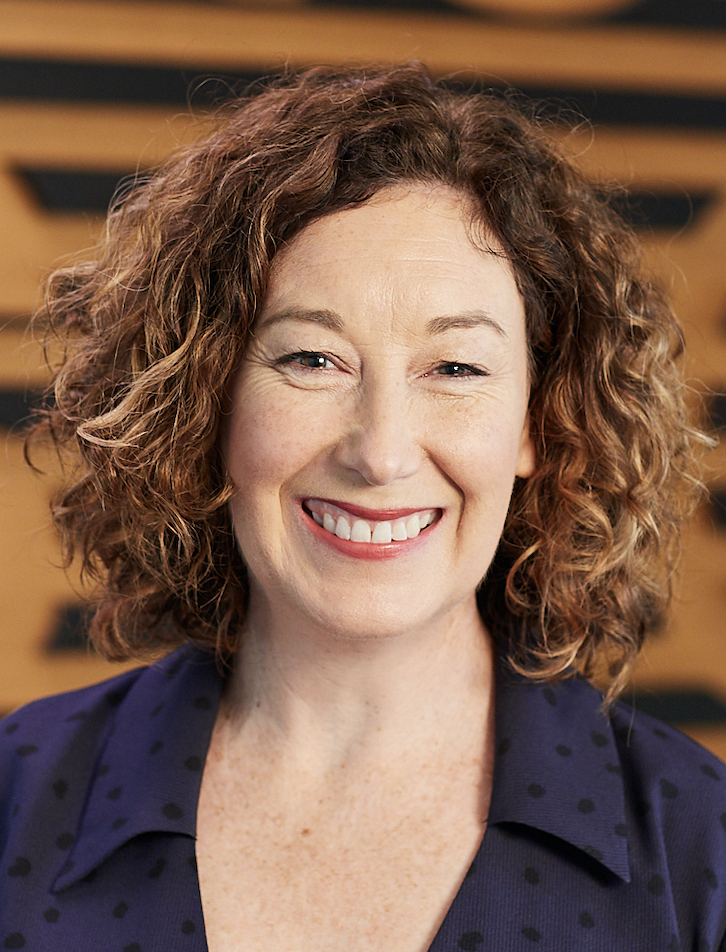
Professor Kathy Bowrey is a leading academic in Intellectual Property Law at UNSW Sydney's Faculty of Law. Her work explores laws shaping knowledge creation, technology, and culture, with expertise in IP, Indigenous rights, and open research advocacy. She holds a Doctor of Juridical Studies from the University of Sydney and a BA LLB from Macquarie University. Her research focuses on historical and contemporary IP frameworks, including their impact on creators, Indigenous communities, and global innovation systems. Notable projects include the ARC-funded 'Producing, Managing and Owning Knowledge in the 21st Century University' (2019–2022), which shaped Australia's open research policies. Awards include the 2022 ANZLHS Book Prize for *Copyright, Creativity, Big Media & Cultural Value* and fellowships at the State Library of NSW and Museum of Applied Arts and Sciences. She co-authored *Adventures in Childhood* (2023), examining IP in toy and media industries, and *David Unaipon* (2023), exploring Indigenous innovation. Professor Bowrey co-leads the International Society for the History and Theory of Intellectual Property (ISHTIP) and advises on national research policies. Her grants include ARC Discovery Projects on Australian copyright history and IP commercialization.
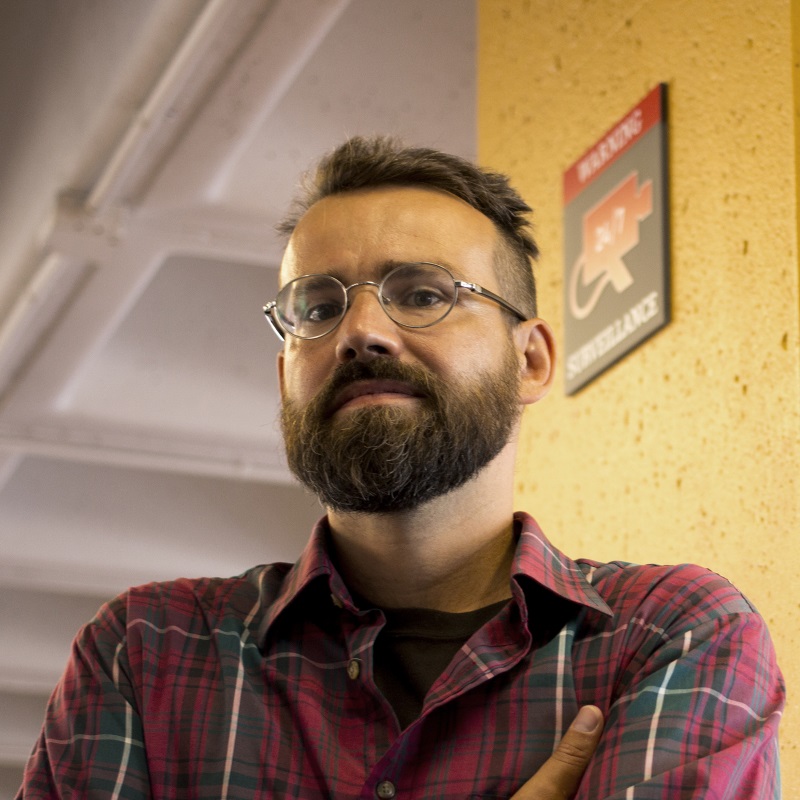
Jeffrey Monaghan is an Associate Professor at the Institute for Criminology and Criminal Justice (ICCJ) at Carleton University. He holds a Ph.D. in Sociology from Queen’s University and serves on the editorial board of Criminological Encounters . His research focuses on the intersections of policing, surveillance, and systemic inequality, with a particular emphasis on settler colonialism, Indigenous movements, and the global expansion of security practices. Monaghan teaches courses on criminological theories, policing, and justice frameworks. His work examines how security and policing practices criminalize marginalized communities, especially Indigenous peoples and social movements resisting extractive development. Key projects include analyses of counterterrorism strategies, disability injustice in criminal systems, and the securitization of Canadian foreign aid. He has authored/co-authored books like Security Aid: Canada and the Development Regime of Security and Policing Indigenous Movements , and edited volumes such as Protests in the Information Age . Monaghan’s research integrates critical criminology, colonial studies, and sociolegal analysis. He is cross-appointed to Carleton’s Department of Sociology and Anthropology and the School of Canadian and Indigenous Studies, amplifying interdisciplinary engagement with security governance and social justice issues.
Professor Peter Billings is a Professor at the School of Law, The University of Queensland, and a Fellow of the Higher Education Academy. His expertise spans Administrative Law, Immigration and Refugee Law, Social Welfare Law, and Human Rights Law. He has received numerous awards, including the Australian Award for University Teaching (2016) and the Vice Chancellor's Equity and Diversity Award (2011). His research focuses on crimmigration, refugee protection, and the corrosive effects of immigration detention laws. Professor Billings has published extensively on topics such as refugee law, preventive justice, and the intersection of criminal and immigration law. Education: Bachelor of Law and Doctor of Philosophy from the University of Southampton. Research Interests Immigration and Refugee Law Crimmigration (intersection of criminal and immigration law) Administrative Justice and Law Social Welfare Law Aboriginal and Torres Strait Islander Legal Issues Media Expertise Regular contributor to The Guardian and ABC Radio National, providing expert commentary on immigration detention, refugee policies, and human rights. Grants and Funding Building research capacity for quantitative analysis of Indigenous poverty (2011–2013) Critical evaluation of administrative rules (2011–2013) Aboriginal protection laws study (2008–2009) Supervision Currently supervising PhD projects on refugee employment integration, immigration detention governance, and international law on migrant smuggling. Key Contributions Authored Regulating Refugee Protection through Social Welfare (2023) and contributed to pivotal discussions on immigration detention's societal impacts. His work informs policy reforms and legal frameworks in Australia.
Dr. Farzana Aman Tanima is a Senior Lecturer at the University of Sydney Business School’s Accounting, Governance, and Regulation department. She previously held roles at the University of Wollongong (2017–2023). Her research focuses on critical and dialogic accounting, social justice, and challenging neoliberal frameworks through participatory approaches. Born in Bangladesh, she earned her PhD in 2015 from Victoria University of Wellington, New Zealand, with a thesis on dialogic accounting practices for marginalized women. Education: PhD in Accounting, Victoria University of Wellington, 2015 Undergraduate Honours Degree, Victoria University of Wellington Research Interests: Dr. Tanima’s work centers on dialogic accounting to democratize accounting practices, with focus on NGOs, microfinance, Indigenous education, and race. She employs participatory action research and autoethnography to address systemic inequalities. Key areas include: Accounting’s role in empowerment and development Decolonizing accounting education through Jindaola Critical race theory and counter-accounting Awards: 2024 Mary Parker Follet Award (AAAJ Journal) 2020 VC OCTAL Teaching Award 2015 AFAANZ Best PhD Award Teaching & Mentorship: She leads pedagogical initiatives embedding Indigenous perspectives into curricula and fosters dialogic learning. Supervised two completed PhDs, with co-authored publications. Active in mentoring early-career researchers through invited talks and workshops. Labs/Teams: Part of the Alternative Accounting Research Network and editorial boards for CPA Journal and Financial Accountability & Management . Co-leads special issues on critical dialogics and publicness in accounting.
Andrew Green serves as Professor and Metcalf Chair in Environmental Law at the University of Toronto Faculty of Law, where he teaches environmental law, climate change law, administrative law, natural resources law, judicial decision-making, and international trade. His scholarly contributions span multiple legal domains with particular emphasis on the intersection of environmental regulation and administrative governance. Green's research interests encompass Environmental Law , Administrative Law , Climate Change Policy , Judicial Decision-Making , and International Trade Law . His empirical approach to legal scholarship has produced significant insights into how judges make decisions, particularly in administrative contexts, and how trade rules interact with domestic environmental regulations. His work often bridges theoretical legal analysis with practical policy implications. His recent publications reveal a strong focus on Canadian climate policy implementation, judicial behavior in high courts, and the evolving standards of review in administrative law. The research demonstrates increasing interdisciplinary integration, incorporating machine learning approaches to analyze judicial decisions and examining the systemic challenges in environmental governance. His scholarship consistently addresses the tension between regulatory effectiveness and legal accountability. Metcalf Chair in Environmental Law Past co-President of the Society for Empirical Legal Studies Past President of the Canadian Law and Economics Association Former Associate Dean at the Faculty of Law Chair of the University of Toronto Academic Appeals Committee (2009-2018) Before joining the Faculty of Law, Green practiced environmental law in Toronto for six years, handling both litigation (including prosecutions, administrative appeals, and civil actions) and transactional work. His practical experience informs his scholarly work on regulatory design and implementation. His research has influenced policy discussions on climate change, securities regulation, and administrative law reform in Canada.
Martha Stiegman is an Associate Professor at the Faculty of Environmental and Urban Change, York University. Her research integrates Indigenous knowledge, food sovereignty, and arts-based methodologies to address issues of social, environmental, and disability justice. She is actively engaged in community-based research and public scholarship in Toronto and Mi’kma’ki (Nova Scotia). Her educational background includes a PhD from Concordia University’s Special Individualized Program and a BA in English Literature & Political Science from McGill University. This interdisciplinary foundation supports her work at the intersection of activism, research, and art. Stiegman’s research focuses on three interconnected domains: Indigenous/settler treaty relations, food sovereignty and justice movements, and participatory video and arts-based research. She emphasizes decolonizing methodologies and community-led knowledge production. Her work explores how arts-based approaches can deepen dialogues across communities and strengthen collective action for justice. Her recent publications and multimedia projects demonstrate a strong trend toward interdisciplinary, community-engaged scholarship that bridges Indigenous epistemologies, environmental justice, and disability justice. She frequently uses film, digital storytelling, and public art to mobilize knowledge and challenge colonial narratives. Co-creator of A Treaty Guide for Torontonians (2022) Lead on the Polishing the Chain project exploring Toronto’s treaty relationships Editor of the forthcoming Anti Colonial Food Systems (Routledge) Active collaborator with Indigenous scholars and artists including Dr. Sherry Pictou, Ange Loft, and Elder Kerry Prosper Stiegman has been involved in significant research grants such as the Atlantic Aboriginal Health Research Program. While specific advisees are not listed, her collaborative projects suggest active mentorship and supervision. She does not appear to lead a formal lab but works within research collectives and community partnerships.
Brad Riley is a Research Fellow at the Australian National University's Centre for Aboriginal Economic Policy Research (CAEPR), affiliated with the Institute for Climate, Energy & Disaster Solutions. His work focuses on renewable energy implementation, energy efficiency, and demand management initiatives in remote communities, particularly in North West Australia. Current Role: Research Fellow, Zero Carbon Energy for the Asia Pacific Grand Challenge Research Themes: Indigenous Engagement with Renewable Energy, Regulatory Disparities, Climate Adaptation Projects: ZCEAP Fellow, Indigenous Engagement with Renewable Energy Industries program His research bridges climate change policy, energy security, and Indigenous rights, emphasizing equity in energy transitions and resilience-building for remote populations. He has collaborated with communities in North West Australia to address energy poverty and regulatory barriers. Riley’s publications highlight challenges in energy policy, focusing on temperature extremes exacerbating energy insecurity, prepayment tariffs, electric vehicle feasibility in remote areas, and Indigenous engagement in renewable energy projects. These works emphasize social equity, regulatory disparities, and community-specific solutions. He is part of research groups including Indigenous peoples, cultures and knowledges; Adaptation, livelihoods and development in Asia and the Pacific; and Risk, vulnerability and resilience. Contact: Bradley.Riley@anu.edu.au | (02) 6125 4559
Stephen Sliwa is the Executive Program Director of Teacher Education and an Adjunct Professor at Queen’s University’s Faculty of Education. He holds an MA from Trent University, MEd and MPA degrees from Queen’s University. Previously, he served as Director of Education and CEO of the Upper Canada District School Board, with extensive experience as a superintendent, principal, and teacher in K-12 education. His research focuses on Indigenous Studies foundations, special education support, intermediate education design, and public sector management. His academic work spans historical analyses of Indigenous-white relations, policy development for inclusive education, and digital learning strategies. He has contributed to provincial education guides and government reports on topics like disability inclusion and Indigenous economic development. Publications include book reviews in Canadian Social Studies and Saskatchewan History , practical guides for teachers, and case studies on Indigenous communities. His work bridges academic research with actionable strategies for educators and policymakers.
Sophie McCall is a Professor in the Department of English at Simon Fraser University (SFU), specializing in Indigenous literatures. Her research focuses on decolonization, resurgence, and the ethics of collaborative authorship, particularly examining how Indigenous writers challenge settler colonialism through storytelling. She holds a BA from Queen’s University, an MA from UBC, and a PhD from York University. McCall is the author of First Person Plural: Aboriginal Storytelling and the Ethics of Collaborative Authorship (2011), which received critical acclaim, and editor of foundational texts like Devil in Deerskins: My Life with Grey Owl (2014). She co-edits Read, Listen, Tell: Indigenous Stories from Turtle Island (2017) and directs SFU’s Masters of Arts for Teachers of English (MATE) program. Her work bridges literary criticism and activism, addressing residential school narratives, Indigenous-Black solidarity, and the politics of reconciliation. She co-chairs the Indigenous Voices Awards and leads SSHRC-funded projects exploring Indigenous-led literary collaborations. Key themes in her scholarship include textualizing orality, ethical representation, and multidisciplinary Indigenous arts. Awards: Gabrielle Roy Prize finalist (2011), Canada Prize finalist (2011) Projects: SSHRC-funded collaboration with NunatuKavut scholar Kristina Bidwell Roles: Director of MATE, Co-chair Indigenous Voices Awards McCall’s publications span scholarly articles, edited collections, and anthologies, emphasizing Indigenous agency in storytelling. Her teaching and research prioritize decolonizing methodologies and amplifying Indigenous voices across disciplines.
Helen Verran is a Professorial Research Fellow at Charles Darwin University's Northern Institute within the Faculty of Arts and Society. An accomplished ethnographer with a distinguished career spanning seven universities across four continents, she has dedicated her academic life to exploring cross-cultural knowledge work, particularly with Indigenous communities. Before joining Charles Darwin University, she spent twenty-five years teaching and researching in History and Philosophy of Science at the University of Melbourne, where she collaborated extensively with Yolngu Aboriginal knowledge authorities. University of Melbourne (25 years in History and Philosophy of Science) Nigeria (8 years in the 1980s working with Yoruba teachers) Charles Darwin University (current position at the Northern Institute) Verran's research centers on ethnographic approaches to knowledge production in an era dominated by numerics, algorithms, and big data. She investigates how first-person experience and Indigenous knowledge systems can inform policy and governance, preventing crucial aspects of human experience from being lost in purely quantitative approaches. Her work spans Indigenous knowledge traditions, philosophy of science, comparative philosophy, and decolonizing practices, with particular focus on Yolngu Aboriginal Australian knowledge systems and Yoruba knowledge from Nigeria. She has developed innovative 'Ground Up' research methods that enhance Indigenous sovereignties and has made significant contributions to Science and Technology Studies (STS), especially regarding numbers and enumeration in cross-cultural contexts. Her recent publications reveal a sustained engagement with decolonizing methodologies, museum epistemology, Indigenous knowledge systems, and the philosophical implications of cross-cultural knowledge exchange. Verran's work consistently examines the tensions between different knowledge systems while developing practical approaches for working across these differences respectfully. She has made notable contributions to understanding Indigenous mathematics and the role of numbers in different cultural contexts, as evidenced by her award-winning book 'Science and an African Logic' (2001). Vice Chancellor's Award for Research Impact (2023) International prizes for 'Science and an African Logic' (2001) Referenced in Wikipedia pages Verran actively supervises postgraduate research and shares her expertise through 'Espresso Yourself!' sessions for Higher Degree by Research students. Her current projects include 'Design and evaluation as strategies/practices for exploring organisational sustainability' and 'Hope and a Decolonising Pedagogy,' reflecting her commitment to developing practical applications of her theoretical work. She has established collaborative research frameworks with Indigenous communities in Arnhem Land, particularly focused on digital technologies, environmental management, and education in remote settlements. As an active participant in academic networks, Verran organizes conferences and workshops on STS and Indigenous methodologies, including the 'Making and Doing Top End Science and Technology Studies together' event in 2024. Her work contributes significantly to Sustainable Development Goals related to quality education, reduced inequalities, and peace, justice and strong institutions.
Noelle Higgins is an Associate Professor in Law at Maynooth University. She previously held academic roles at the Irish Centre for Human Rights (NUI Galway), the School of Law and Government (DCU), and served as Teaching and Learning Innovation Lead at ATU. Her academic qualifications include Master's degrees in Irish and Law, a Higher Diploma in Education, and a PhD from NUI Galway on 'Wars of National Liberation and Self-Determination.' Her research focuses on international human rights law, international humanitarian law, and international criminal law, with a current emphasis on cultural rights and cultural cleansing. She co-leads WG3 of the COST Action K-Peritia (cultural expertise in law) and is part of the Horizon2020 'ReCreating Europe' project on digital copyright law. She previously led an IRCHSS-funded project on international peace mediation. Her recent publications explore cultural heritage protection, indigenous rights, and the intersection of law and climate change. She has contributed extensively to legal education research, advocating for experiential learning tools like moot courts and field trips. Education: PhD (NUI Galway), LLM (International Human Rights Law), MA (Irish), Higher Diploma in Education Awards: None explicitly listed, but recognized for contributions to legal education and international law research Grants: Horizon2020 (2020), IRCHSS (2010) Labs/Teams: Member of the COST Action K-Peritia and ReCreating Europe Consortium.
Maree Higgins is a Senior Lecturer at the University of New South Wales (UNSW) , affiliated with the Faculty of Arts and Social Sciences and the School of Social Work . She serves as the Social Work Honours Program Convenor and is an Associate of the Australian Institute of Human Rights , with links to the Forced Migration Research Network , Kaldor Centre , and Gendered Violence Research Network . Education : Doctor of Philosophy (Social Work), Australian Catholic University (ACU National) Bachelor of Social Work (Hons First Class), UNSW Research Interests : Maree’s work centers on social justice , human rights , and contextualized lived experience , with a focus on refugee and migrant populations , disability studies , aged care , criminal justice reform , and participatory research methods . Her recent publications emphasize lived experience-led knowledge , co-design practices , and trauma-informed approaches . Grants : She has secured funding for projects like Missing Girls: from childhood runaway to criminalised woman (2022–2025; $204,307) and Ethics and community-based participatory research in refugee studies (2019; $5,000). Supervision : Maree supervises PhD candidates in areas such as intellectual disability and support needs , intimate partner violence , and border policy impacts on asylum seekers . Her completions include honors and master’s theses on autonomy in eating disorder treatment , technology-facilitated abuse , and Aboriginal women in maternity care . Professional Engagement : She collaborates with organizations including STARTTS , Foundation House , Black Dog Institute , and Prince of Wales Hospital , while actively participating in Australian Heads of Schools of Social Work , National Field Educational Network , and African Studies Association of Australasia and the Pacific .
Kathi Wilson is a Professor at the Department of Geography, Geomatics and Environment at the University of Toronto Mississauga. Her research examines how urban environments (social, built, physical) influence health outcomes among immigrant, Indigenous, and racialized populations. She collaborates extensively with community partners in the Region of Peel and leads the CHANGE Lab, which supports student research in a MAC/PC environment. Research Clusters: Urbanization, Transportation & Health Contact: DV3294, University of Toronto Mississauga, 3359 Mississauga Road, Mississauga, ON L5L 1C6 Her work employs mixed-methods approaches, including participatory mapping and culturally adapted surveys, to address health inequities and urban walkability. Current projects focus on Arab communities' perceptions of walkability in Toronto and the health impacts of the COVID-19 pandemic in Peel Region. Professor Wilson has published extensively on immigrant health, Indigenous health rights, and spatial health disparities, with a focus on methodological rigor in geocoding and accessibility studies. She mentors graduate students in topics related to immigration, healthcare access, and Indigenous wellbeing.
Professor Donna Green is an internationally recognized environmental scientist at the University of New South Wales (UNSW), affiliated with the School of Biological, Earth & Environmental Sciences. She holds a PhD from the University of California, Berkeley (2004) and leads multidisciplinary research at the intersection of climate change, energy policy, and air pollution. Her work focuses on balancing improvements in indoor air quality against outdoor pollution sources such as traffic, bushfires, and industry, while addressing increasingly recognized risks from indoor air contaminants including airborne diseases. PhD, University of California, Berkeley (2004) Professor Green's research spans environmental science, climate change impacts, air pollution health effects, renewable energy policy, and environmental justice. Her work demonstrates particular expertise in the health impacts of climate change, with emphasis on vulnerable populations including Indigenous communities. She investigates the synergistic impacts of urban air pollution compounding climate emergencies, and has published extensively on environmental injustice in resource-rich Aboriginal Australia. Her research often bridges scientific findings with practical policy solutions, working collaboratively with engineers, legal practitioners, and public health experts to design evidence-based approaches to environmental challenges. The most recent publications reveal a strong focus on wildfire smoke impacts on health, indoor air quality in educational settings, climate litigation trends, and the intersection of renewable energy development with Indigenous rights. Her work shows increasing attention to the health consequences of climate change, particularly through the MJA-Lancet Countdown reports which document Australia's preparedness (or lack thereof) for climate-related health challenges. There's also a clear trend toward interdisciplinary collaboration, with publications spanning environmental science, public health, engineering, and social justice perspectives. Clean Air Society Australia & New Zealand Innovation & Excellence in Air Quality Award for CleanAir Schools program Professor Green leads the CleanAir Schools program and is currently implementing Fresh Air Innovators in 100 NSW school classrooms. She has secured significant research funding through collaborations with multiple institutions and has supervised numerous students, though specific advisees aren't listed in the provided text. Her research has informed policy discussions on air quality standards, climate adaptation strategies, and environmental justice frameworks. Professor Green directs research teams investigating indoor air quality solutions, climate-health interactions, and renewable energy policy frameworks. Her CleanAir Schools initiative represents a major practical application of her research, translating scientific findings into classroom interventions that protect children from air pollution. She collaborates extensively with engineers, public health experts, and policy practitioners to develop evidence-based solutions to environmental challenges.
Mikala Sedgwick is a Research Fellow at the National Centre for Aboriginal and Torres Strait Islander Wellbeing Research, The Australian National University. She specializes in public health, disability, and Indigenous health equity, with a focus on amplifying Aboriginal voices in disability research. Her work emphasizes community-led methodologies and policy advocacy. Education: Master of Philosophy in Applied Epidemiology (ANU, 2023) Master of Applied Anthropology and Participatory Development-Indigenous Policy (ANU, 2010) Bachelor of Arts (ANU, 2009) Research Interests: Aboriginal and Torres Strait Islander health and wellbeing Disability data and policy Autism in Indigenous communities Strengths-based research methodologies Projects and Grants: Assessment of mental health and wellbeing needs during the Voice to Parliament Referendum (2023–2025) Tackling Indigenous Smoking – Regional Grants Impact and Outcomes Assessment (2019–2022) Labs/Teams: She collaborates with the Mayi Kuwayu Study and contributes to the National Centre for Aboriginal and Torres Strait Islander Wellbeing Research, focusing on community-driven research to address systemic inequities in health and disability sectors.