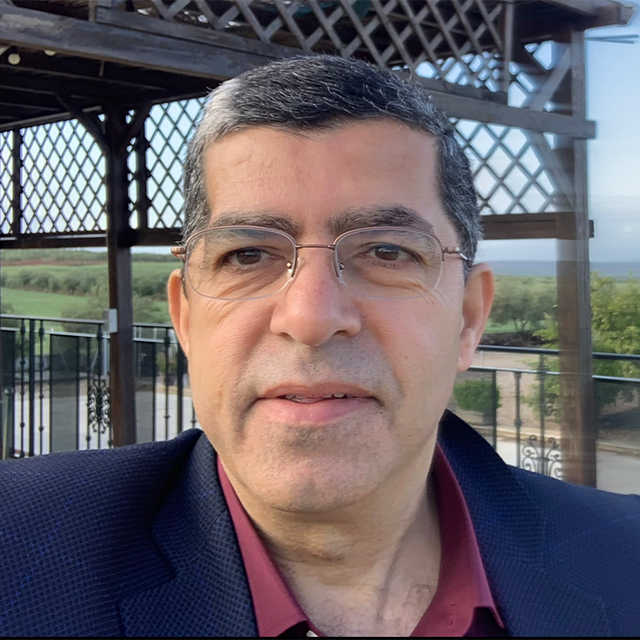
Dr. Ari Kulmala serves as Professor of Practice at Tampere University's Faculty of Information Technology and Communication Sciences in the Computing Sciences department. With extensive industry experience in System-on-Chip (SoC) architecture and design, he specializes in ASIC and FPGA development for applications spanning 5G telecommunications, cloud acceleration, machine learning, security, and ultra-low-power mobile chips. His research focuses on System-on-Chip (SoC) design , with particular emphasis on heterogeneous architectures, RISC-V implementations, and hardware-software co-design for autonomous systems. Recent work includes secure SoC development for nano-UAVs, FPGA-based cryptographic acceleration, and agile chip development methodologies. The article collection demonstrates expertise in SoC architecture (10+ years), with evolving focus from foundational network-on-chip analysis (2008-2009) to modern implementations in RISC-V (2023-2024), cloud security acceleration (2019), and VR/4K video processing (2017-2018). Key technical areas include clock domain management, resource sharing, and performance optimization across various domains. As an industry leader in chip development organizations, Kulmala has worked across Telecom infrastructure (5G) Cloud acceleration Machine learning/AI Security hardware Ultra-low-power IoT Mobile chip design His work spans both academic research and practical implementation, including patents and commercial applications.
Akram Abu-aisheh is a Professor and ECE Graduate Program Director at the University of Hartford's College of Engineering, Technology, and Architecture. He holds a PhD in Optical Communications from Florida Institute of Technology and has over 20 years of academic and industrial experience. His research focuses on fiber optic communications, power electronics, and sustainable illumination systems. Educations: PhD, Optical Communications, Florida Institute of Technology MS, Electrical Engineering, University of Florida BSEE, University of Florida Research Interests: Dr. Abu-aisheh specializes in fiber optic and RF communications, photovoltaic systems, and hybrid LED illumination. He has pioneered sustainable energy solutions and developed advanced optical transmission systems. His work in engineering education emphasizes virtual and remote laboratory environments to enhance STEM learning. Achievements: Recipient of Best Paper Awards at IEEE Advanced Learning Technologies (2010) and SRO5 (2008) Recipient of University of Hartford grants (2009-2011) Advising & Leadership: As ECE Graduate Program Director, he oversees 20+ master's projects annually. His service includes roles as Assistant Chair of ECE Department and leadership in curriculum development. He has supervised students on topics ranging from solar power systems to cryptographic algorithms. Industrial Experience: Prior to academia, he worked at Tyco Telecommunications (1999-2006), leading optical transmission system development and testing processes. He also founded Sustainable Illumination Systems (2010), commercializing hybrid LED lighting solutions.
Scientia Professor Ross Buckley is a leading academic at the University of New South Wales (UNSW), holding positions in the School of Law & Justice and the School of Private & Commercial Law. He serves as an Australian Research Council Laureate Fellow (2020-2027) with a $3.7 million project exploring how Australia might regulate the rise of data and its analysis. Buckley also holds prestigious chairs including the King & Wood Mallesons Chair in International Finance Law (2013) and the KPMG Law - KWM Chair in Disruptive Innovation and Law (2018-2023). Professor Buckley's research focuses on the intersection of finance, technology, and regulation, with particular expertise in FinTech, RegTech, central bank digital currencies, and the Consumer Data Right. His work with Professors Doug Arner of HKU and Dirk Zetzsche of the University of Luxembourg on FinTech is currently downloaded from the Social Science Research Network (SSRN) more frequently than that of any other legal scholars globally. His research examines how the rise of data and its algorithmic analysis impacts society, financial systems, and regulatory frameworks. Buckley's extensive publication record demonstrates a clear evolution from traditional financial law toward the cutting edge of digital finance. His recent work shows increasing focus on central bank digital currencies, consumer data rights, and the regulatory challenges posed by BigTech's entry into financial services. The trajectory of his research reflects the rapid transformation of the financial sector, moving from foundational work on financial regulation to addressing the most pressing technological disruptions in finance today. Australian Research Council Laureate Fellow (2020-2027) King & Wood Mallesons Chair in International Finance Law (2013) KPMG Law - KWM Chair in Disruptive Innovation and Law (2018-2023) Member, Payments System Board, Reserve Bank of Australia Chair, Digital Finance Advisory Panel, ASIC Founding Series Editor, Global Trade Law Series, Kluwer Law International Professor Buckley has consulted for government departments in over 12 countries and three US government agencies (OCC, SEC, and Department of Justice). He has supervised 13 doctoral candidates to completion and is currently seeking two additional doctoral candidates and two post-doctoral research fellows for his Laureate Project starting in 2025. His prior research projects have supported numerous academic careers, with former fellows now serving as professors at institutions including Durham, Monash, Boston University, and the University of Hong Kong. With a background that includes nine years of practice in banking and finance law in Australia, Hong Kong, and on Wall Street with Davis Polk, Professor Buckley brings practical experience to his academic work. Since joining UNSW in 2007, he has established himself as a global authority on financial technology regulation, with research that directly informs policy development in Australia and internationally.
Stefan Augl is a Researcher at the University of Applied Sciences Upper Austria, Wels campus, affiliated with the Research Center Wels, ASiC Center of Excellence, Energy Center of Excellence for Smart Production, and Focal Area Materials. With an h-index of 10, he has contributed to 5 research outputs and 6 projects from 2011 to 2025, focusing on applied materials science for industrial applications. His research spans Materials Science and Engineering with emphasis on Surface Engineering, Hydrogen Technology, and Advanced Manufacturing. Key interests include antimicrobial surfaces, plasma-assisted chemical vapor deposition (PACVD) for biopolymer barrier enhancement, hydrogen-material compatibility, tribology of DLC coatings, and 3D printing applications for metal forming processes. His work targets practical industrial solutions in energy, healthcare, and sustainable manufacturing through surface modification and material characterization. Recent publications (2021-2024) demonstrate applied research trends in hydrogen infrastructure materials, antimicrobial surface validation, and plasma-synthesized nanomaterials for sensors. These studies bridge fundamental surface science with industrial implementation, utilizing PACVD, DLC coatings, and atmospheric plasma techniques to address real-world challenges in energy transition and medical safety. Augl has served as Co-Investigator on multiple externally funded projects: HyBRID – Teil1 (Soft) (2023-2025): Hydrogen research under IBW/EFRE & JTF 2021-2027 High-pressure Hydrogen (2012-ongoing): Material interactions and component testing Untersuchung und Verbesserung des tribologischen Verhaltens (2011-ongoing): Tribological behavior optimization NextMould (2019-2021): Aluminum injection molding tools with arc welding/DLC DLC Schichtentwicklung (2013-2016): Low-friction carbon coatings via plasma processes He collaborates within the ASiC Center of Excellence and Energy Center of Excellence for Smart Production, working with interdisciplinary teams to characterize material properties and optimize industrial processes through advanced coating technologies and hydrogen compatibility testing.
Muriel Medard is the NEC Professor of Software Science and Engineering in the Electrical Engineering and Computer Science (EECS) Department at MIT. She leads the Network Coding and Reliable Communications Group in the Research Laboratory for Electronics. Affiliated with MIT since her undergraduate studies (B.S. EECS 1989, Mathematics 1989, Humanities 1991), she also holds an M.S. (1991) and Sc.D. (1995) from MIT. She is a member of the U.S. National Academy of Engineering (2020), German National Academy of Sciences Leopoldina (2022), Fellow of the National Academy of Inventors (2018), and multiple other prestigious societies. Her research focuses on network coding, information theory, wireless networks, and optical networking. Notable contributions include foundational work in network coding protocols, error correction, and secure communication systems. Medard has pioneered algorithms like GRAND (Guessing Random Additive Noise Decoding) and ORBGRAND, which optimize decoding efficiency and energy consumption in communication systems. Medard’s honors include the IEEE Kobayashi Computers and Communications Award (2022), IEEE Armstrong Achievement Award (2017), and MIT’s Egerton Award (2004). She has over 60 patents, co-founded CodeOn and Steinwurf (as Chief Scientist), and supervised over 40 master’s, 20 doctoral students, and 25 postdocs. She chairs the IEEE Transactions on Information Theory and has held leadership roles in the IEEE Information Theory Society. Her service contributions include founding the Women in Information Theory Society (WithITS), mentoring initiatives, and roles on MIT’s Faculty Committees on Student Life and Campus Planning. Medard’s work bridges theoretical advancements with practical applications in 5G/6G systems, cybersecurity, and energy-efficient hardware.
Oscar Gustafsson is an Associate Professor at Linköping University, affiliated with the Department of Electrical Engineering (ISY) and the Division of Electronics and Computer Engineering (ELDA). His research focuses on energy-efficient computations in digital circuits, particularly in ASIC and FPGA architectures, with applications in communication systems and hardware acceleration for AI. The 2024 publications highlight his work on FPGA implementations for dynamic programming in hybrid vehicles, hardware-aware neural network optimizations, FFT architectures for MIMO systems, Python-based finite word-length effect simulations, and CPU-FPGA co-design strategies. These works intersect with Computer Engineering Artificial Intelligence Signal Processing Computer Arithmetic Embedded Systems domains. He leads the Division of Computer Engineering at Linköping University, emphasizing collaborative research including Swedish-Chinese 5G technology partnerships.
Eder Ollora Zaballa is a Senior Scientific Officer and researcher at the Technical University of Denmark (DTU), specifically affiliated with DTU Fotonik. His expertise spans software-defined networking, control and data plane programming, and next-generation network technologies with applications in telecommunications and transportation systems. His educational journey began with a Bachelor's degree in Telecommunication Engineering from the University of the Basque Country (EHU) in Bilbao, Spain, followed by a Master of Science in Telecommunication Engineering at DTU. He completed his PhD at DTU in 2022 with the thesis "Control and Data Plane Programming-driven SDN Management and Operation: A Top-Down Approach." Zaballa's research focuses on cutting-edge networking innovations including Software-Defined Networking (SDN), P4 programmable data planes, Network Function Virtualization (NFV), and their practical implementations. His work bridges theoretical frameworks with real-world applications, particularly in railway communication systems, cellular networks, and energy-efficient networking solutions. He has made significant contributions to open-source networking through the Open Networking Foundation ONOS community since 2016. His publication record shows a clear trajectory toward greener networking solutions, performance optimization of programmable hardware, and integration of SDN technologies in heterogeneous environments. Recent work demonstrates expertise in latency profiling of P4-based hardware, railway communication systems, and green cellular networks, with practical implications for network reliability, efficiency, and flexibility across multiple industries. Active contributor to European projects including Bandwidth-on-Demand (BoD), SDX-L2, NGPaaS, X2Rail-3, and X2Rail-5 Regular peer reviewer for Sensors journal and European Conference on Computer Systems Guest lecturer on SDN management, programmable networks, and P4 programming at multiple institutions Zaballa maintains strong international collaborations with research groups including the I2T Research Group at the University of the Basque Country, Networks and Intelligent Systems group at the University of Alcalá, and Fundació i2CAT. His work contributes to UN Sustainable Development Goals through advancements in green communications and efficient network infrastructure.
Piotr Kmon serves as a Professor in the Department of Metrology and Electronics at AGH University of Science and Technology's Faculty of Electrical Engineering, Automatics, Computer Science and Biomedical Engineering in Kraków. His institutional roles include membership on the Discipline Council for Automation, Electronics, Electrical Engineering and Space Technologies and the Research Infrastructure Team, with primary workspace in building B-1 room 209. His research centers on integrated circuit design for radiation detection and biomedical instrumentation, specializing in photon counting detectors, analog/mixed-signal circuits, and deep submicron CMOS implementations. Key focus areas include time-based X-ray measurement systems, energy-resolved imaging architectures, and neural recording/stimulation electronics, addressing critical challenges in signal integrity and high-count-rate environments. Analysis of his 2023-2025 publications reveals dominant themes in X-ray detector IC development using 28nm/40nm CMOS processes, particularly pixel readout systems with interpixel communication, pile-up compensation, and in-pixel histogramming. His work bridges semiconductor physics with practical applications in synchrotron facilities and medical imaging, emphasizing spatial resolution enhancement and radiation hardness. Professor Kmon actively contributes to detector infrastructure through the Research Infrastructure Team, advancing projects like the SPHIRD (Small Pixel High-spatial Resolution Detector) for high-rate photon counting applications while maintaining technical leadership in radiation-hardened circuit design.
Piotr Otfinowski is a full-time Professor at AGH University of Science and Technology, affiliated with the Faculty of Electrical Engineering, Automatics, Computer Science and Biomedical Engineering, Department of Metrology and Electronics. His research focuses on advanced electronics, detector systems, and integrated circuit design, with expertise in photon-counting technologies, ASIC development, and signal processing for high-energy physics and synchrotron applications. Research Interests: His work spans: Design of ultra-fast imaging detectors for synchrotrons CMOS-based readout circuits for particle/photon detection Algorithms for pile-up compensation and spatial resolution enhancement In-pixel neural networks for real-time pulse analysis High-rate X-ray detection systems Publication Trends: Recent articles (2021-2025) emphasize photon-counting ASICs, interpixel communication, energy-resolved imaging, and detector optimization for experiments at facilities like ALICE (CERN) and synchrotrons. Dominant themes include small-pixel designs, neural network hardware implementations, and solutions for high-flux environments. Collaborations: Involved in international projects including ALICE (CERN) and the SPHIRD initiative for next-generation synchrotron detectors.
Somayyeh Timarchi is a Lecturer in Electronic Circuits and Systems at the School of Electronic Engineering and Computer Science, Queen Mary University of London . She holds a B.Sc. in Computer Engineering from Shahid Beheshti University (SBU), M.Sc. and Ph.D. in Computer System Architecture from Sharif University of Technology (SUT) and SBU, and completed postdoctoral research on computer arithmetic at Delft University of Technology (TUDelft). Previously an assistant professor and associate professor at SBU's Electrical Engineering Department, she now focuses on high-speed, low-power digital architecture. Research Interests include Computer arithmetic Approximate computing for neural networks Neuromorphic computing ASIC/FPGA design for signal processing and cryptography Residue and Redundant Number Systems Recent Publications emphasize approximate computing, error compensation, and energy-efficient hardware for IoT and biomedical applications. Key trends include optimizing CORDIC-based architectures for spiking neural networks, improving FPGA memory allocation, and developing low-power cryptographic solutions. Scientific Awards : Fellow of the Higher Education Academy (FHEA) Teaching includes ECS502U - Microprocessor Systems Design , covering microcontroller architecture, programming, and design principles for electronic circuits.
Professor Sklavos Nikolaos serves in the Computer Hardware and Architecture Department at the University of Patras, where he leads research in hardware security and cryptographic engineering. His academic profile demonstrates deep expertise in securing embedded systems and IoT devices through innovative hardware implementations. His research spans Hardware Security , Cryptographic Engineering , Cybersecurity , Hardware Design , and Embedded Systems with particular focus on lightweight cryptography for resource-constrained environments. Current investigations include quantum-resistant security architectures, privacy-preserving e-health systems, and secure implementations for 5G/6G communications. His work bridges theoretical cryptography with practical hardware constraints, emphasizing side-channel attack resistance and energy efficiency. Analysis of his recent publications reveals strong trends in hardware-accelerated cryptography (particularly FPGA/ASIC implementations), IoT security frameworks , and privacy mechanisms for healthcare applications . Notable subfields include lightweight cryptographic standards, hardware trojan detection, and security for tinyML devices. His research consistently addresses real-world constraints like area minimization, power efficiency, and latency requirements while maintaining robust security guarantees. Professor Sklavos actively supervises doctoral, master's, and undergraduate thesis projects while teaching advanced courses in Cybersecurity, Embedded Systems, and Hardware Security. He maintains the SCYTALE research group focused on cryptographic engineering and hardware security solutions. His educational initiatives include integrating hands-on cybersecurity training for 5G/6G technologies into STEM curricula.
Dr. Yasir Ali Shah is a Lecturer in Computer Science at Ulster University's School of Computing, Engineering and the Built Environment , based at the Derry~Londonderry campus. His research focuses on hardware design, cryptography, and secure communication systems. Specialization: Post-Quantum Cryptography, Elliptic Curve Cryptography (ECC), FPGA/ASIC implementations Key Contributions: Optimization of cryptographic algorithms for IoT security, high-throughput hardware architectures Recent publications highlight advancements in post-quantum cryptography, including NTT/INTT optimizations, ECC hardware accelerators, and lightweight cipher implementations. His work spans both theoretical and applied domains, with a 2024 study on CPR efficacy indicating interdisciplinary collaborations. Selected trends in research output: 2024: 5 major papers on post-quantum crypto, IoT security, and medical applications 2023: Error-resistant NTT architectures and license plate recognition algorithms 2022: Optical interconnect designs and antiparasitic drug evaluations
Professor Matthias Fertig serves as Professor of Digital Systems at the Faculty of Electrical Engineering and Information Technology, Konstanz University of Applied Sciences. His academic profile bridges theoretical research with practical engineering applications in digital systems design. His research portfolio spans several critical domains: Near-/In-Memory Computing (Universal Memory Automata theory) Digital HDL Design methodology (RAPID VHDL package development) Massively Parallel EM-Simulation optimization Computational Optics using advanced Fourier methods (WPM/VWPM) ASIC design and implementation workflows Prior to academia, Professor Fertig gained substantial industry experience at IBM (microprocessor design), Dialog Semiconductor (Power Management ICs), and Volvo Construction Equipment (control systems for heavy machinery). This background informs his practical teaching approach that emphasizes real-world applications alongside theoretical foundations. His professional recognition includes an invitation to join the Editorial Board of the American Journal of Computer Science and Technology (AMJCST) in May 2025. Professor Fertig actively develops new course content, with a 'uProcessor Architecture' course scheduled for summer term 2026. He teaches across the curriculum from undergraduate Digital Engineering courses through specialized Master's level laboratories in Silicon Photonics and Electromagnetic Simulation, utilizing industry-standard Cadence tools to provide students with professional design experience.
Dr. Tomasz Talaśka serves as an Associate Professor at the Department of Decision Systems and Robotics within the Faculty of Electronics, Telecommunications and Informatics at Gdańsk University of Technology. His research bridges optical engineering, machine learning, and control systems to develop innovative solutions for biomedical diagnostics and real-time optimization challenges. Research Focus Machine learning-enhanced optical fiber sensors for biomedical applications (glucose/CRP detection in urine) Time-fractional electrodynamics modeling using control engineering methods Deterministic optimization algorithms for low-power real-time systems Hardware-implemented programmable controllers with AI tuning capabilities His interdisciplinary approach integrates electronics, informatics, and medical engineering to create practical diagnostic tools and efficient control systems. Publication Trends (2023-2025) Dr. Talaśka's recent work shows a clear trajectory from fundamental algorithm development toward medical applications. His 2023-2025 publications demonstrate increasing focus on translating machine learning and optical sensing research into clinical diagnostics, particularly for non-invasive monitoring of metabolic conditions. The consistent collaboration with biomedical researchers across multiple publications indicates strong cross-disciplinary engagement. Scientific Awards No scientific awards were mentioned in the available institutional records. Academic Contributions As an active researcher in the Department of Decision Systems and Robotics, Dr. Talaśka contributes to advancing real-time control systems and sensor technologies. His publications in high-impact journals like Scientific Reports and Communications in Nonlinear Science reflect significant scholarly contributions. While specific student supervision details aren't provided, his position as Associate Professor implies ongoing mentorship of graduate students in robotics and decision systems.
Michel Kinsy is an Associate Professor at Arizona State University's School of Computing and Augmented Intelligence and Director of the Secure, Trusted, and Assured Microelectronics (STAM) Center. His work bridges hardware security, cryptographic systems, and efficient computing architectures. Education: PhD in Computer Science from Massachusetts Institute of Technology His research focuses on hardware security , including secure architectures, trusted execution environments, quantum-proof cryptography, polymorphous architectures, and zero-trust computing systems. Recent projects explore privacy-preserving machine learning, zero-knowledge proofs, and homomorphic encryption acceleration. Key publication trends include: Hardware security for post-quantum cryptography (2020-2025) Secure distributed systems (2021-2025) Privacy-preserving machine learning implementations (2018-2025) Root-of-trust mechanisms in edge devices (2019-2023) Cryptographic protocol acceleration (2020-2024) Scientific Recognition: MIT Presidential Fellow CRA-WP Inaugural Skip Ellis Career Award He teaches graduate-level courses in computer architecture, research methodology, and thesis/dissertation advising, with recent offerings including CSE 792 Research , EEE 599 Thesis , and CEN 799 Dissertation . As STAM Center director, Kinsy leads initiatives in secure microelectronics and collaborates with hardware/software co-design teams. His research website provides detailed project information: https://stamcenter.asu.edu