
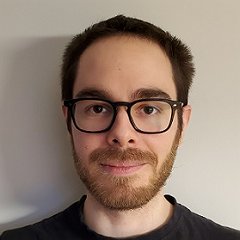
Maxime LamotheView profile
Assistant Professor
Maxime Lamothe is an assistant professor at Polytechnique Montreal specializing in empirical software engineering and mining software repositories. His research focuses on software APIs, build systems, and the intersection of AI and software engineering. Previously, he was a postdoctoral researcher at the University of Waterloo's Software REBELs Lab under Prof. Shane McIntosh. Dr. Lamothe's educational background includes: Ph.D. in Software Engineering from Concordia University (2020) M.Eng from Concordia University (2017) B.Eng from McGill University (2013) His research interests center around empirical studies of software engineering practices, with particular focus on API design and evolution, software build systems, and performance analysis. Dr. Lamothe investigates how developers interact with APIs, how build systems operate in practice, and how AI techniques can enhance software engineering processes while maintaining human oversight of critical decisions. Dr. Lamothe's publication record shows a consistent focus on empirical approaches to understanding software engineering practices. His work frequently examines API usage patterns, code review processes, and continuous integration systems. A notable trend is his growing interest in applying AI techniques to software engineering challenges while maintaining empirical validation of proposed solutions through rigorous case studies and longitudinal analyses. Dr. Lamothe actively serves the academic community as a reviewer for top journals including Transactions on Software Engineering (TSE), Empirical Software Engineering (EMSE), and Journal of Systems and Software (JSS). He has served on program committees for major conferences including ASE, ICSE, ESEC/FSE, MSR, and SANER across multiple years, with particular involvement in the NIER Track, Research Papers track, and Tool Demonstration tracks. Currently seeking Masters and Ph.D. students, Dr. Lamothe leads research at the intersection of traditional software engineering practices and emerging AI techniques. His work combines rigorous empirical methods with practical applications to solve real challenges in software development, with implications for improving API design, enhancing code review processes, optimizing build systems, and developing trustworthy AI-assisted software engineering tools.