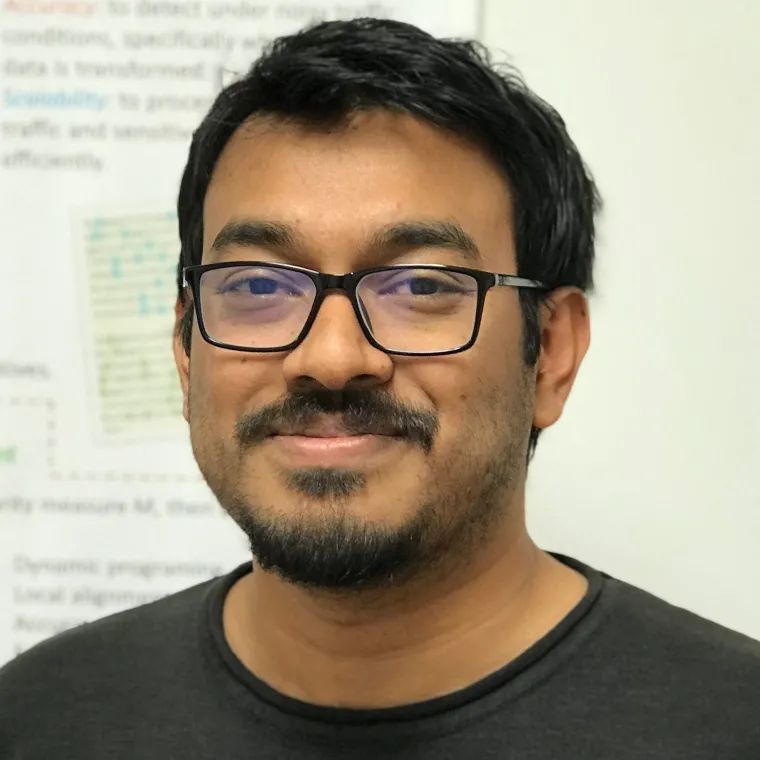
Wei Li is a Professor in the Department of Computing at Nova Southeastern University's College of Computing & Engineering. He joined NSU in 2005 after earning his Ph.D. from Mississippi State University. His research focuses on enhancing computer system security through interdisciplinary approaches, including network security, artificial intelligence applications, and software engineering practices. Dr. Li’s research areas encompass computer security, network security, software engineering, artificial intelligence, and database systems. His work bridges theoretical advancements and practical cybersecurity solutions, such as improving intrusion detection systems, analyzing social engineering attack vulnerabilities, and developing machine learning models for IoT security. His recent publications (2020–2025) address topics like password policy effectiveness, remote worker cybersecurity risks, and adaptive deep learning models for anomaly detection. These contributions highlight his focus on mitigating organizational cybersecurity risks through empirical studies and innovative technical solutions. No scientific awards or grants are explicitly listed in the provided information. His advising record remains unspecified, and no active labs or teams are mentioned.
Dr. Sharmin Jahan serves as a tenure-tracked Assistant Professor in the Department of Computer Science at Oklahoma State University since August 2022. Her research centers on dynamic security assurance for autonomous systems (self-adaptive systems) through explainable AI models that interpret uncertain operational environments to enable autonomous security decision-making and compliance maintenance. Her educational background includes a Ph.D. and Master's in Computer Science from the University of Tulsa (2018-2021), and a B.Sc. in Computer Science and Engineering from Bangladesh University of Engineering and Technology (2007-2012). She teaches Introduction to Computer Security (CS 4243/5243) and leads Dr. Jahan's Lab focused on security for autonomous systems. Research interests span Explainable AI in Cyber Security, IoT Security, Self-Protecting Systems, and Micro-service Security. Her work develops frameworks that embed security awareness in dynamic systems, using XAI to interpret environmental uncertainty and maintain security compliance through autonomous adaptation. Current projects explore machine learning models for security analysis and XAI challenges in domain-specific security applications. Recent publications (2025-2020) demonstrate concentrated research on security assurance in self-adaptive systems, particularly for IoT and microservice architectures. Key trends include XAI-driven anomaly detection, security profile extraction from operational data, and risk-adaptive access control. Subfield specializations cover service mesh security, blockchain-based access frameworks, runtime trust evaluation, and autonomous threat containment. Scientific awards include: Principal Investigator for 2023 Arts and Sciences Summer Research Award on XAI-enhanced security awareness in autonomous systems Senior personnel on 2022 NSF RET Grant for Big Data and Machine Learning research experiences She advises M.Sc. student Masrufa Bayesh and teaches graduate/undergraduate security courses. Her lab actively investigates frameworks for security assurance in dynamic environments, with emphasis on IoT and microservice architectures requiring continuous adaptation to environmental changes while maintaining security compliance. Dr. Jahan's research team develops analysis and assessment models to determine security compliance degradation risks and optimal adaptation strategies, enhancing system resiliency through separate analytical frameworks integrated with her PhD-developed assessment methodology.
Dr. Yaguang Zhang is a Clinical Assistant Professor at Purdue University, jointly appointed in the Department of Agricultural & Biological Engineering (ABE) and the Department of Agricultural Sciences Education & Communication (ASEC) . Holding a Ph.D. in Electrical and Computer Engineering from Purdue (2021), he specializes in data science , digital agriculture , and UAV-aided wireless communication systems , with applications in intelligent transportation, proactive road maintenance, and engineering education. Education: Ph.D. and M.Sc. in Electrical and Computer Engineering (Purdue), B.Eng. in Communication Engineering (Tianjin University) Research Interests span cutting-edge domains including: Digital Agriculture: GPS-based field shape generation, product traceability trees, and automated metadata collection for agricultural operations Wireless Communication: Millimeter-wave channel modeling, UAV relay systems, and rural network coverage optimization Smart Infrastructure: Pavement condition assessment tools, sun-shadow simulation for road treatment, and vehicle automation platforms Recent Publications emphasize scalable solutions for agricultural IoT, machine learning in crop monitoring, and interoperable data frameworks. His scientific awards include: 2024 Outstanding Engineering Teacher (Purdue) 2024 ASABE Superior Paper Award 2020 FFAR Student Poster First Prize Multiple NSF/IEEE travel supports Grants from USDA, NSF, INDOT, and industry partners (CableLabs, Nokia) fund projects like tractor autopilot development, rural 6G networks, and pavement monitoring systems. He mentors graduate students in agricultural robotics , data science , and connected vehicle research .
Armando Fox is a Professor in the Department of Electrical Engineering and Computer Sciences at UC Berkeley, where he co-leads the ASPIRE Lab and directs the Berkeley MOOCLab. His work focuses on integrating online learning research into educational frameworks. He holds a PhD, MS and BS from Berkeley, Illinois, and MIT respectively. Fox's research spans applied statistical machine learning, Software as a Service (SaaS), cloud computing, parallel programming, and innovative online education methods. He pioneered Berkeley's first MOOC on software engineering and co-authored the textbook Engineering Software as a Service . His recent publications demonstrate strong focus on: AI-enhanced education tools and assessment systems Cloud-based learning management architectures Generative AI for collaborative programming education Automated testing frameworks for computer science Significant awards include: NSF CAREER Award ACM Distinguished Member Scientific American 50 top researcher recognition Fox previously contributed to Intel Pentium Pro microprocessor design and founded a mobile computing company based on his dissertation research.
Martin Wulf Gerdes is an Associate Professor at the Department of Information and Communication Technology, University of Agder, Norway. With a Ph.D. in eHealth and over two decades of experience in telecommunications and healthcare technology research, he focuses on developing user-friendly, interoperable eHealth solutions using ICT and IoT. His career spans roles at Ericsson Eurolab and academic leadership in Norway. Education: M.Sc. equivalent in General Electrical Engineering (1998) from RWTH Aachen, emphasizing ICT. Ph.D.: Information and Communication Technologies with eHealth specialization (2019) from University of Agder. Research Interests: Gerdes explores AI-driven decision support systems, distributed eHealth infrastructure, telemedicine, and assistive technologies for chronic disease management. His work bridges IoT, data privacy, and user-centered design in healthcare robotics. Teaching: Since 2014, he has taught at bachelor's and master's levels, currently leading courses in Communication & Cooperation, Technology Understanding, and seminar projects in eHealth. Scientific Publications: His 15 most recent articles (2020-2024) span AI in dental radiology, blood glucose prediction, digital twins, and ethical considerations in healthcare algorithms. Topics include IoT integration, data privacy, and pandemic analytics.
Prof. Dr.-Ing. André Nitze is a faculty member at the Brandenburg University of Technology in the Department of Economics . His research focuses on Internet of Things (IoT) , Digital Business Models , Software Architectures , Cloud Computing , Mobile Computing , and Predictive Analytics . He leads research projects on municipal LoRaWAN infrastructure, rural on-demand transport systems, and user-centered digitalization for sustainable development. Area of Expertise: IoT Applications, Software Engineering, Digital Transformation Current Research: Sustainable Municipal LoRaWAN, Rural Mobility Solutions Projects: risKI - KatKomm (2024-2026): Protocol development for disaster communication InNoWest (2023-2027): Subproject leader for digital sustainability OSLO (2023): Rural on-demand transport software architecture Awards: Best Paper Award at ICDS 2024 for work on LoRaWAN infrastructure Education & Supervision: M.Sc. and B.Sc. in Business Informatics Supervised over 15 theses including topics on GIS analysis, sensor networks, and AI applications
Frank Asche is Professor II in Resource Economics at the University of Stavanger, affiliated with the Faculty of Science and Technology and the Department of Security, Economics and Planning. His research focuses on the economic dimensions of aquatic food systems, with emphasis on sustainability, trade dynamics, and policy effectiveness in global fisheries and aquaculture sectors. His primary research interests include: Resource Economics Aquaculture Economics Fisheries Economics Seafood Trade Policy Environmental Economics Sustainability Assessment Asche's recent publications reveal a strong focus on quantifying sustainability through tools like the Aquaculture Performance Indicators (API), analyzing food loss in aquatic systems, and investigating market structures in global seafood trade. His work consistently bridges economic theory with practical industry challenges, particularly in Norwegian and European contexts. He maintains extensive international collaborations with researchers including Taryn Garlock, James Anderson, and Ragnar Tveterås, contributing to major projects on blue food systems and aquaculture sustainability. His work appears in leading journals across ecological economics, fisheries science, and environmental policy domains.
Professor Francesco Pilla is a Full Professor of Smart and Sustainable Cities at University College Dublin's School of Architecture, Planning and Environmental Policy, where he also serves as Co-Director of the Spatial Dynamics Lab. Previously, he held positions as MSc Director (2018-2019) and Undergraduate Director for the School of Architecture. With over 15 years of experience in GIS modeling and spatial data analysis, Professor Pilla's work bridges technology, urban planning, and community engagement to create more sustainable cities. Professor Pilla's research focuses on developing geospatial analysis tools and environmental pollution models (air, noise, water) using GIS platforms to facilitate interoperability between research teams and end users. His approach integrates environmental pollution models with pervasive and community sensing applications for calibration and validation. A key innovation in his work is the integration of co-design principles through Living Labs in urban planning and citizen science initiatives to improve city life from an environmental perspective. His recent publications reveal a strong focus on urban sustainability challenges, with significant contributions to air quality monitoring, sustainable transportation, climate adaptation, and citizen science methodologies. His work increasingly incorporates advanced AI techniques, including large language models and machine learning algorithms, to analyze urban systems and develop data-driven solutions for complex environmental problems. The research demonstrates a clear trend toward integrating diverse data sources and developing practical tools for urban governance and planning. Haagen-Smit Prize (2024) - Recognizing outstanding papers published in Atmospheric Environment Best eMobility Project - Electric Vehicle Awards 2024 All Ireland community & council awards - Best Community Transport Initiative 2024 Academic research award: tipping point for action from Financial Times (2023) Professor Pilla leads numerous significant research projects including iSCAPE (H2020-SC5) as Coordinator, OPERANDUM (Principal Investigator for UCD) focusing on flood risk reduction with nature-based solutions, WeCount (Principal Investigator for UCD), and Connecting Nature (Principal Investigator for UCD). He has also secured funding through SFI Investigator grants for 'Scalable, Privacy-Enhanced Analytics for sharing mobility systems' and several Environmental Protection Agency projects. His collaborative work extends to partnerships with MIT through Fulbright/EPA TechImpact awards and IBM through Faculty Awards. At the Spatial Dynamics Lab, Professor Pilla oversees research that combines geospatial analysis, environmental monitoring, and community engagement. His innovative 'Bike Library' initiative, which has expanded to multiple schools in Dublin, exemplifies his commitment to translating research into practical community solutions. The lab's work integrates advanced sensing technologies, GIS platforms, and citizen science to address urban environmental challenges through collaborative approaches.
Sazzadur Rahaman serves as an Assistant Professor in the Department of Computer Science at the University of Arizona, maintaining his office in GS 734. His scholarly focus spans system and software security, program analysis, applied cryptography, and internet measurement, positioning him at the forefront of cybersecurity research. His research program investigates critical vulnerabilities in modern software ecosystems, with particular emphasis on protestware dynamics, unsanctioned technology adoption in educational settings, and adversarial attacks against machine learning systems. Methodologically, he integrates program analysis with cryptographic techniques to develop practical security solutions, evidenced by frameworks like BLADE for code debloating and SpanL for API misuse detection. His work consistently bridges theoretical security principles with real-world deployment challenges. Analysis of his 15 most recent publications (2023-2025) reveals three dominant research trajectories: (1) software supply chain security (protestware characteristics, container debloating), (2) education technology risks (unsanctioned tool usage, LLM-assisted cheating countermeasures), and (3) foundational security mechanisms (binary code analysis, cryptographic API validation). These publications demonstrate increasing interdisciplinary collaboration, particularly between cybersecurity and educational technology domains. No scientific awards were documented in the provided materials. While student advising activities and research grants aren't specified in the source text, his publication record suggests active mentorship through co-authored works and potential grant-funded projects in software security tool development. The available documentation does not reference specific research laboratories or collaborative teams associated with his current position.
Daniele Toninelli is an Associate Professor of Economic Statistics (SECS-S/03) at the University of Bergamo's Department of Economics, where he also serves as Director of the 'Data Analyst for Strategic Decisions' program, Internship Manager for the department, and member of the School of Economics and Management's Joint Teacher-Student Commission. His educational background includes a PhD in Marketing for Business Strategies (University of Bergamo, 2009), Master's in Statistics for Market Research (University of Milan-Bicocca, 2004), and Degree in Statistical and Economic Sciences (University of Milan-Bicocca, 2003). Toninelli's research focuses on: Survey and web survey methodology design and optimization Integration of big data for economic and social indicators Development of price indexes and composite indicators Social media analytics for economic measurement His work bridges statistical theory with applications in labor markets, sustainability metrics, and environmental data analysis. Teaching activities encompass undergraduate and graduate courses including Economic Statistics, Quantitative Methods for Business Data Analysis, Advanced Business Statistics, and specialized 'Data Skills' modules covering visualization, survey methods, and SAS certification preparation. International research collaborations include visiting positions at Statistics Canada (2008-2013), University of Ottawa (2012-2013), VŠB-Technical University of Ostrava (2012-2013), RECSM at Universitat Pompeu Fabra (2014), and guest lectures at University of Ljubljana (2018). He previously served on the management committee of the WEBDATANET network (COST Action IS1004). Professional experience includes roles at PiTre Milan, IBM Semea/Celestica, and Multiplex Arcadia, applying statistical expertise in industrial settings.
Reid Holmes is a Professor in the Software Practices Lab at the University of British Columbia's Department of Computer Science, Faculty of Science. With over 15 years of academic experience, he has progressed from Assistant Professor at the University of Waterloo (2010-2015) to Associate Professor (2015-2022) and now full Professor (2022-present) at UBC. His research spans multiple dimensions of software engineering with a strong emphasis on the human aspects of development. Dr. Holmes' research interests focus on understanding the problems software engineers encounter when creating and evolving software systems. His work examines software testing and validation, source code reuse, code search, context-sensitive example location, API understanding, speculative analysis, code review, and team awareness. He believes that by better understanding how people create, explore, evolve, and reason about software systems, we can enhance developers' effectiveness and improve software quality. His research is characterized by its practical application to real-world software development challenges. His recent publications demonstrate a consistent focus on improving developer productivity through better tools and understanding of developer behavior. The publications reveal a trajectory from traditional software engineering topics toward newer areas involving AI-assisted development, with particular attention to how generative AI affects workflow and collaboration. His work consistently bridges theoretical software engineering concepts with practical developer experience considerations. ACM SIGSOFT Distinguished Paper Award (multiple times) FSE 2024 Most Impactful Paper Award 2024 ICSE Most Influential Paper Award Winner of the 2008 MSR Mining Challenge As an educator and mentor, Dr. Holmes has supervised numerous graduate students who have gone on to successful careers in academia and industry. He has served on program committees for major software engineering conferences including ICSE, FSE, and MSR, and has been an Associate Editor for TSE since 2016. His work on developer tools like CodeShovel, Devy, and Baker demonstrates his commitment to creating practical solutions that address real developer pain points.
Michael Wimmer is a Full Professor at TU Wien, leading the Rendering and Modeling Group and directing the Center for Geometry and Computational Design. He holds a M.Sc. (1997) and Ph.D. (2001) from TU Wien. His research focuses on real-time rendering, procedural modeling, computational design, and point-based graphics. He has co-authored over 200 papers and the book *Real-Time Shadows*. He serves as Co-Editor-in-Chief of Computer Graphics Forum , chairs SIGGRAPH Asia 2025, and received the Eurographics Outstanding Technical Contributions Award (2023). Education: M.Sc. in Computer Science (1997), TU Wien Ph.D. in Computer Science (2001), TU Wien Research Interests: Real-time rendering and visualization Procedural modeling and computational design Point-based graphics and neural rendering Applications in computer games and urban environments Awards: Eurographics Outstanding Technical Contributions Award (2023) Wolfgang Straßer Award (Best Paper, 2022) Eurographics Fellow (2018) Outstanding Service Award (2012) Advising & Grants: Coordinator of the Special Research Programme Advanced Computational Design Key researcher at VRVis Research Center Labs & Teams: Rendering and Modeling Group Center for Geometry and Computational Design
Sir Andy Hopper is a Professor and Head of the Digital Technology Group within the Computer Laboratory at the University of Cambridge. He is a Fellow of Corpus Christi College, Cambridge. His research focuses on creating a world where everything is always connected in a personalized way and developing sentient computing systems that observe the real world to ensure planetary sustainability. His research interests span ubiquitous computing, sentient computing, distributed systems, computer networking, green computing, and provenance systems. He has pioneered work in location-aware systems, energy-efficient computing, and provenance in distributed environments. His vision extends computing to automatically adapt to real-world conditions for sustainable solutions. Recent publications indicate a strong focus on provenance systems, data reliability in cloud environments, and the integration of renewable energy in datacentre computing. His work often involves collaboration with researchers at the University of Cambridge and beyond, addressing challenges in virtualization, MapReduce, and resource accounting. Professor Hopper leads the Digital Technology Group, which is part of the Computer Laboratory. The group conducts cutting-edge research in networking, systems, and sustainable computing, contributing to both theoretical advances and practical applications in the field.
Univ.Prof. Michael Wimmer is a Professor in the Department of Computer Graphics and Visualization at TU Wien's Faculty of Informatics. His research focuses on real-time rendering, point cloud processing, GPU computing, and computational design. He leads projects involving architectural visualization, thermal simulation, and integrative design frameworks combining 4D sketching with material modeling. His work bridges computer graphics with applications in architecture and engineering. ORCID: 0000-0002-9370-2663 Research Group: Network Lab Recent research emphasizes GPU-accelerated algorithms (e.g., LOD generation for 2 billion points), real-time rendering techniques, and deep learning approaches for surface reconstruction. Collaborations span thermal simulation with civil engineers and 4D design tools for architects. Notable contributions include: Developing PPSurf for detailed surface reconstruction using point convolutions Advancing Vulkan-based rendering pipelines in academic settings Integrating light polarization for HDR imaging His lab explores applications in architectural design metaphors, computational material assessment via GeoRadar, and thermal simulation using precomputed radiative transport. Students under his supervision focus on GPU optimization, 3D reconstruction, and VR ergonomics.
Prof. Dr. Miloš Ž Papić is a Full Professor at the Faculty of Technical Sciences Čačak , University of Kragujevac, Serbia. He serves as a City Councilor in Čačak for Education, Science, and Culture, spearheading initiatives like the Čačak Culture Strategy (2023-2027) and launching the Čačak Culture Portal . Education: BSc, MSc, and PhD in Industrial/Engineering Management from University of Kragujevac institutions Research Interests: Information Systems, Environmental Management, Entrepreneurial Education, and Multi-Criteria Decision Making (MCDM) His research spans interdisciplinary applications of IT in education, tourism, and environmental protection, with recent work on: Digital dialogue systems in classrooms Soil contamination analysis using MCDM Cheating behavior in academic settings Beer tourism market analysis AI in educational outcomes prediction Scientific Contributions include over 90 publications, with 15 recent articles focusing on IT integration in tourism (2023-2024), municipal waste management (2024), and educational technologies (2022). Notable collaborations involve partnerships with Dušan Garabinović on tourism analytics and Marija Blagojević on environmental modeling.