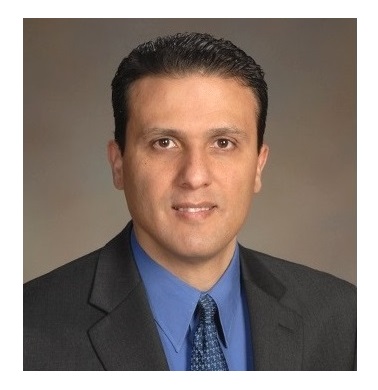
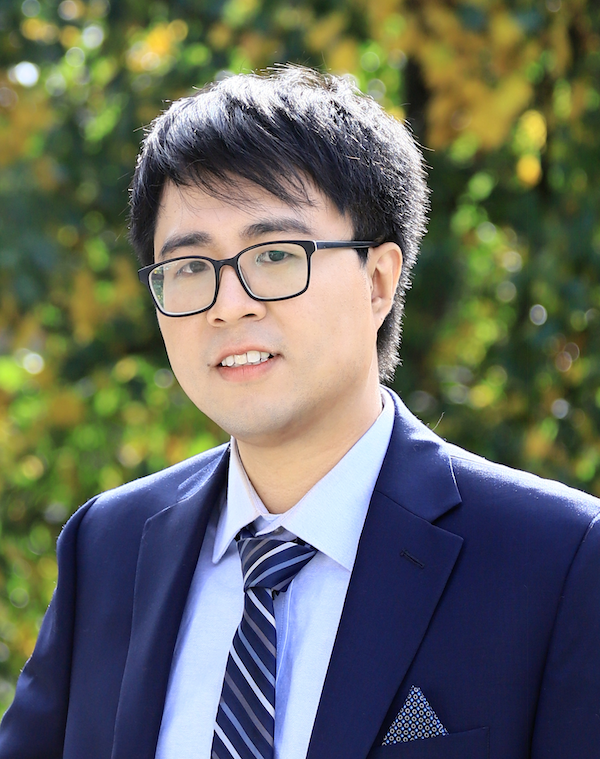
Dr. Wahab Hamou-Lhadj is a Professor and Chair at the Department of Electrical and Computer Engineering , Concordia University, and an Affiliate Researcher at NASA JPL, Caltech . He leads research in Artificial Intelligence for IT Operations (AIOps) , Software Observability , and Model-Driven Engineering , focusing on improving the reliability of digital systems in AI-driven environments.
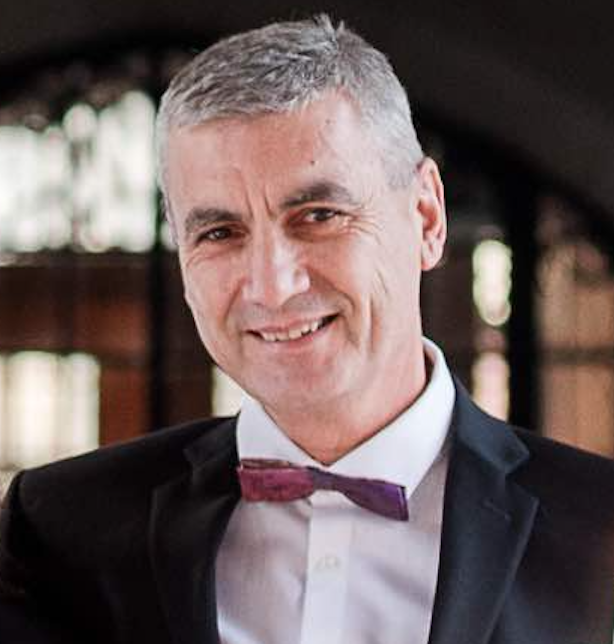
About Marin Litoiu is a Professor at York University, holding dual affiliations in the Department of Electrical Engineering and Computer Science at the Lassonde School of Engineering and the School of Information Technology in the Faculty of Liberal Arts and Professional Studies. He is a Fellow of the Canadian Academy of Engineering and a recipient of the 2020 IBM Faculty of the Year Award. His research focuses on cloud computing, self-adaptive systems, DevOps, IoT, and machine learning-driven performance engineering. Research & Awards Litoiu leads the Dependable Internet-of-Things Applications (DITA) program, funded by NSERC, and co-founded Bitnobi Inc., acquired by Myant. His notable awards include the CASCON 2019 Most Influential Paper Award and Best Paper Awards at multiple conferences. His work emphasizes practical applications of adaptive systems, cybersecurity, and smart infrastructure integration. Grants & Projects NSERC CREATE Program: $1.65M for the DITA program (2018) York Innovation, TIAP, NSERC, and OCI-funded Bitnobi incubation Leadership in multiple CASCON workshops on cloud computing and AIOps Labs & Teams Litoiu’s lab has produced impactful startups like Bitnobi and pioneered research in self-driving systems, edge computing, and AI-driven operations. His team collaborates with industry partners like IBM and explores cutting-edge topics such as LLMs in performance optimization and fault detection.
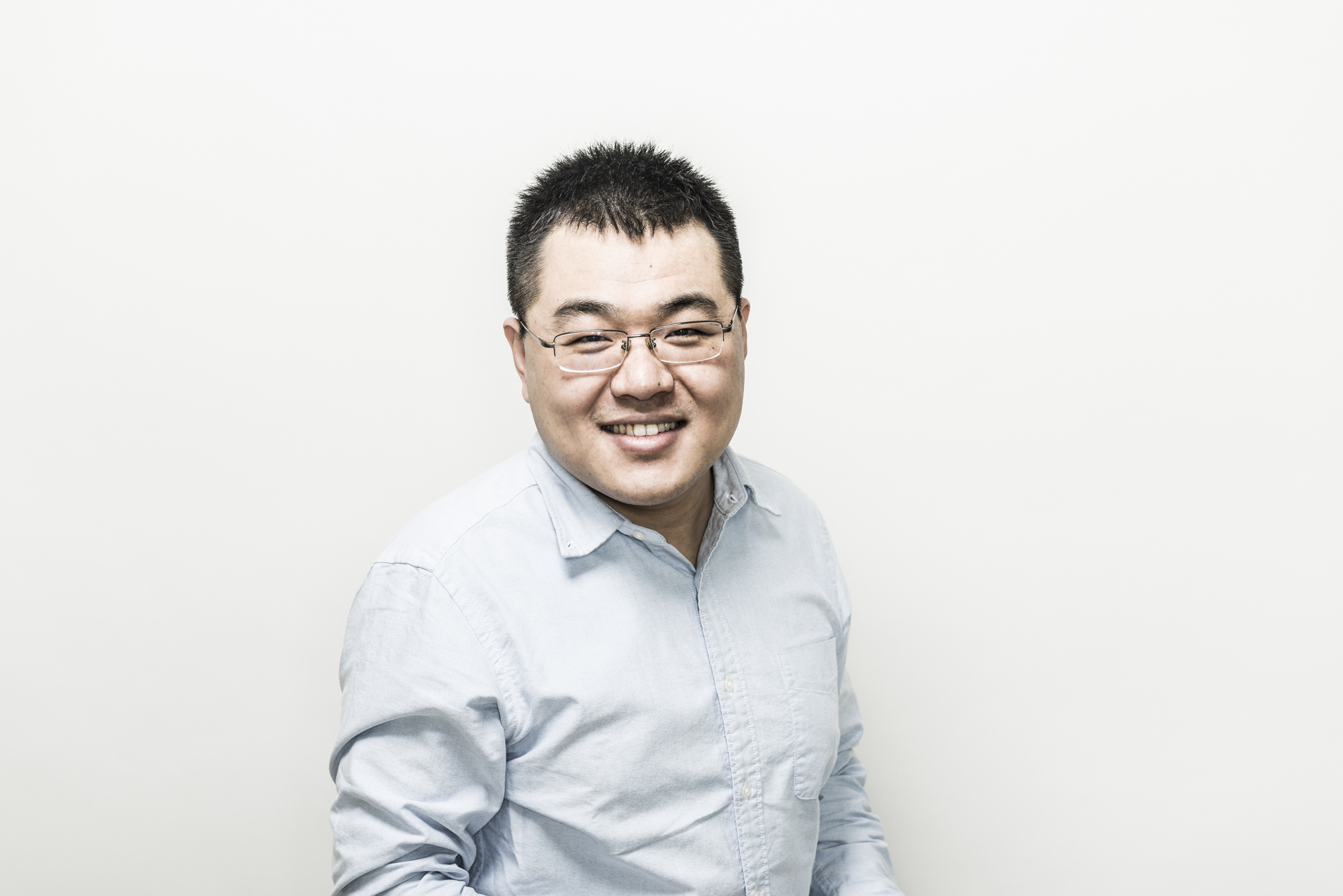
Chang Lou is an Assistant Professor in the Department of Computer Science at the University of Virginia. His research focuses on distributed systems, operating systems, and cloud computing, emphasizing runtime assurance and failure detection. He leads LiftLab, a reading group exploring cutting-edge system research. Education : Ph.D., Computer Science, Johns Hopkins University (2023); B.S., Computer Science, Shanghai Jiao Tong University (2016). Research : Develops techniques to improve system reliability, including silent failure detection, memory leak mitigation, and formal verification. His work has been deployed at Microsoft Azure and recognized with awards like NSDI Best Paper (2020). Teaching : Offers courses like CS4740 (Cloud Computing) and CS6501 (Cloud System Reliability). Awards : NSF CAREER Award (2024), ACM SIGOPS Dissertation Honorable Mention (2023), Google Cloud Grant (2023). Service : Serves on program committees for NSDI, EuroSys, and SOSP. Co-organizes workshops like SIGCOMM Formal Methods x Networks.
Zhen Ming (Jack) Jiang is an Associate Professor and York Research Chair (Tier II) in Software Engineering for Foundation Model-Powered Systems at York University's Department of Electrical Engineering and Computer Science. His research bridges software engineering, artificial intelligence, and computer systems with significant industrial impact. Dr. Jiang earned his Ph.D. from Queen's University's School of Computing and MMath/BMath degrees from the University of Waterloo's David R. Cheriton School of Computer Science. During his doctoral studies, he collaborated with BlackBerry's Performance Engineering team, developing tools now used daily to monitor commercial software systems. His research focuses on engineering rigor for AI-powered applications , software engineering evolution in the Generative AI era , and performance optimization of large-scale systems . Key areas include software performance engineering, mining software repositories, debugging distributed systems, source code analysis, and software visualization. His work combines empirical studies with practical tool development. Recent publications reveal strong trends in applying AI to software engineering challenges, particularly in machine learning systems reliability, blockchain efficiency, and AIOps solutions. His research consistently emphasizes empirical validation using real-world systems and industrial case studies. Scientific recognition includes: York Research Chair (Tier II) in Software Engineering for Foundation Model-Powered Systems NSERC Discovery Accelerator Supplements (DAS), 2020 Best Paper Award at ICST 2016 IEEE Software Best SEIP Paper at ICSE 2015 Ph.D. Research Achievement Award at Queen's University Multiple best paper awards at WCRE, MSR, and ICSE Dr. Jiang actively supervises graduate students and has secured competitive research funding including NSERC grants. His service includes program committee roles for top conferences (ICSE, ASE, ICSME) and editorial work for leading journals (TSE, TOSEM, EMSE). He leads research initiatives focused on foundation model-powered systems, collaborating with industry partners on performance monitoring and debugging solutions for large-scale distributed environments.
Max Planck Institute for Security and PrivacyGermany
Xin Peng is a Professor and Deputy Dean at the School of Computer Science, Fudan University, China. He leads the CodeWisdom research team focusing on intelligent software engineering techniques for development, maintenance, and operation of software systems. His educational background includes a PhD in Computer Science (2001-2006) and Bachelor's degree in Computer Science (1997-2001), both from Fudan University. He progressed through the academic ranks from Assistant Professor (2006-2010) to Associate Professor (2010-2015) and finally to Professor (2015-present). Professor Peng's research interests span Software Analytics, Intelligent Software Development, Microservice systems, and AIOps. His work leverages AI technologies including deep learning and knowledge graphs to develop intelligent software engineering techniques. A significant portion of his recent work focuses on applying Large Language Models to various software engineering tasks, including vulnerability detection, API usage analysis, and test automation. His publication record shows a clear trend toward increasingly sophisticated applications of AI in software engineering, with recent work heavily featuring LLMs for tasks ranging from vulnerability patch porting to resource leak detection. The research spans multiple domains including microservice systems, automotive software, and Web of Things security. Best Paper Award of ICSM 2011 ACM SIGSOFT Distinguished Paper Award of ASE 2018 and 2021 IEEE TCSE Distinguished Paper Award of ICSME 2018, 2019, and 2020 IEEE Transactions on Software Engineering Best Paper award for 2018 Professor Peng serves in numerous leadership roles including Deputy Director of CCF Technical Committee on Software Engineering, Co-Editor-in-Chief of Journal of Software: Evolution and Process, and Associate Editor for ACM Transactions on Software Engineering and Methodology. He has been actively involved in program committees for major software engineering conferences including ICSE, ASE, ESEC/FSE, and ICSME. He leads the CodeWisdom research team at Fudan University, which has developed several benchmark systems including TrainTicket for microservice research. The team's work bridges academic research with industrial applications, particularly in microservice systems analysis and intelligent software development tools.
Yintong Huo is a tenure-track Assistant Professor in the Department of Computer Science at Singapore Management University (SMU), School of Computing and Information Systems. He joined SMU in early 2024 after completing his PhD at The Chinese University of Hong Kong (CUHK) under Prof. Michael R. Lyu. His academic journey includes a Bachelor's degree from the University of Electronic Science and Technology of China. Education: PhD in Computer Science and Engineering, The Chinese University of Hong Kong (2024) Bachelor's degree, University of Electronic Science and Technology of China Huo's research focuses on intelligent software engineering , particularly empowering AI models (especially LLMs) for software development, testing, and operations. His work spans AI4SE, LLM4SE, AIOps, code intelligence, and multimodal software engineering . Two flagship projects define his current research: LogPAI - an open-source AI platform for automated log analysis adopted by leading tech companies, and WebPAI - a multimodal intelligence project for automatic webpage development. His research addresses critical challenges in software reliability, log analysis, and UI code generation through innovative applications of AI. His recent publications reveal a strong trend toward multimodal approaches in software engineering , combining vision and language models for UI code generation, and increasingly sophisticated applications of LLMs for log analysis and software reliability. Huo's work demonstrates exceptional impact, with multiple papers accepted at top-tier venues including ASE, ICSE, and FSE with high acceptance rates (e.g., 9.5% for ASE'25). Scientific Awards: ICSE Distinguished Reviewer Award (2025) ISSRE Distinguished Reviewer Award (2024) IEEE Open Software Services Award (2022, for LogPAI with 3k+ GitHub stars and 70k+ downloads) ACM SIGSOFT CAPS Travel Grants (ASE'23, ICSE'24, FSE'24) Nomination for Best Teaching Assistant Award (2022) National Scholarship (2019) Huo actively mentors students at multiple levels, currently supervising PhD students Shi Ying Chang and Dan Huang (co-supervised with Prof. David Lo), research engineer Minxing Wang, and visiting students including Shiwen Shan. His undergraduate mentee Truong Hai Dang will intern at Apple Inc. He maintains strong industry connections, with his LogPAI project adopted by world-leading tech companies. Huo serves on program committees for major conferences including ASE'25, ICSE'26, and FSE'26, and is recruiting fully-funded PhD students and research assistants for projects in AI4SE and multimodal software engineering. Huo leads the LogPAI and WebPAI research initiatives, which have evolved into substantial open-source projects with significant industry adoption. His team focuses on practical applications of AI in software engineering, with particular emphasis on reliability and usability in real-world systems. The research environment benefits from SMU's strong position in software engineering research, where the university ranks No. 2 globally in Software Engineering according to CSRankings (2020-2025).
Max Planck Institute for Security and PrivacyGermany
Tse-Hsun (Peter) Chen is an Associate Professor in the Department of Computer Science and Software Engineering at Concordia University in Montreal, Canada. He serves as Director of the SPEAR lab (Software Performance, Analysis, and Reliability lab), which focuses on improving the quality of large-scale software systems through research in log analysis and AIOps, software performance analysis, software testing, and mining software repositories. His research group maintains extensive collaborations with industry partners including ERA Environmental, Ericsson, Microsoft, and BlackBerry. Dr. Chen received his PhD and MSc in Computer Science from Queen's University and his BSc in Computer Science from the University of British Columbia. Dr. Chen's research addresses critical challenges in modern software engineering, including leveraging Large Language Models to assist developers with development, debugging, and maintenance; helping developers debug production systems by utilizing rich software data; providing optimization suggestions by analyzing user usage data; improving software quality assurances in DevOps environments; and mining software development history for useful developer suggestions. His work spans Software Engineering, Performance Engineering, DevOps & AIOps, Software Testing, and Mining Software Repositories, with a strong emphasis on practical applications that bridge academic research and industrial practice. His recent publications (2024-2025) demonstrate a pronounced shift toward integrating Large Language Models into various aspects of the software engineering lifecycle, particularly in log analysis, fault localization, code generation, and performance testing. This trend reflects the growing importance of AI in software engineering research and practice. Gina Cody Research award (2022) Ranked as one of the most active software engineering researchers worldwide by an independent study published in JSS Dr. Chen has successfully advised numerous PhD and Master's students, many of whom have secured prestigious academic positions. Several of his graduated PhD students now hold tenure-track assistant professor positions at institutions including York University, University of Alberta, DePaul University, and IIT Gandhinagar. His SPEAR lab has developed research tools that have been integrated into industrial practice for ensuring the quality of large-scale enterprise systems. The SPEAR lab, under Dr. Chen's leadership, has established itself as a leading research group in software engineering, with particular expertise in software performance analysis, log analysis, and AI applications for software engineering. The lab maintains strong industry connections and has produced numerous high-impact publications in top-tier software engineering venues including ICSE, FSE, ASE, and TSE.
Jingchao Ni is an Assistant Professor in the Department of Computer Science at the University of Houston. He previously worked as a researcher at NEC Labs America (2018-2022) and AWS AI Labs (2022-2024). He earned his Ph.D. in Computer Science from The Pennsylvania State University's College of Information Sciences and Technology in 2018 under Prof. Xiang Zhang. Research Interests: Machine Learning, Time Series Analysis (Cross-Modal/Multimodal Integration, LLM Reasoning), Graph Learning, Anomaly Detection, Generative Models, and applications in Healthcare (personalized systems, Cyber-Physical Systems, AIOps). His recent publications focus on multimodal time series analysis, vision models for temporal data, and interpretable graph neural networks, with deployments in AWS cloud systems. He has advised students on projects involving LLM agents, causal discovery, and robust forecasting. Awards include a AAAI 2019 Most Influential Paper (PaperDigest) and an ICLR 2022 Spotlight Presentation. He leads the Data-Driven Intelligence (D2I) Group and has contributed to tutorials at KDD 2025 and IJCAI 2025.
Tse-Hsun (Peter) Chen is an Associate Professor in the Department of Computer Science and Software Engineering at Concordia University, Montreal. He leads the Software PErformance, Analysis, and Reliability (SPEAR) lab, focusing on improving software quality through log analysis, AIOps, and mining software repositories. His research collaborates with companies like Microsoft, BlackBerry, and Ericsson. Education: PhD, MSc, and BSc in Computer Science from Queen's University and the University of British Columbia. Awards include the Gina Cody Research Award (2021) and recognition as one of the world's most active software engineering researchers (JSS study). Research interests include software testing, DevOps, and leveraging LLMs for SE tasks. Recent work emphasizes log parsing with LLMs (e.g., LibreLog) and fault localization. Graduates from his lab hold academic positions at institutions like York University and DePaul University. Teaching includes courses on software verification, testing, and process management. Active in program committees for ICSE, FSE, and MSR. Over 50 publications in top venues like TSE, ICSE, and FSE.
Xiaowei Yang is a Professor of Computer Science at Duke University, where she holds multiple leadership positions including Co-Director of Graduate Studies for the Master of Science in Economics and Computation Program and Director of Graduate Studies for the MS Program in the Department of Computer Science. She is a prominent researcher in computer networks and distributed systems with numerous publications in top-tier conferences and journals. Dr. Yang received her Ph.D. in Computer Science from Massachusetts Institute of Technology in 2004 and her B.S.E. in Electronic Engineering from Tsinghua University in China in 1996. Prior to joining Duke University, she served as an assistant professor in the Department of Computer Science at the University of California at Irvine. Dr. Yang's research focuses on large-scale computer systems, particularly computer networks and distributed systems. Her work addresses challenges that arise as computer systems scale in size and distribute across geographical locations, with emphasis on scalability, reliability, security, performance, and manageability. Her current research interests include developing practical ML/AI technologies to improve network reliability and security (AIOps), protecting online privacy and security of Internet users, and providing network and system support for latency-sensitive applications. Her research has significant practical impact, with several projects addressing real-world problems in cloud computing, content delivery networks, and broadband infrastructure. Dr. Yang's recent publications demonstrate a consistent focus on practical network systems research with strong empirical validation. Her work spans multiple aspects of networking including cloud infrastructure, content delivery, security protocols, and network measurements. A notable trend in her recent work is the increasing focus on privacy-preserving technologies and the security implications of modern web infrastructure, particularly concerning content delivery networks and third-party services. Among her notable recognitions is the prestigious NSF CAREER award, which supports early-career faculty who exemplify the role of teacher-scholars through outstanding research, excellent education, and the integration of education and research. Dr. Yang has secured significant research funding, including multiple National Science Foundation grants. Current projects include "CNS Core: Small: Optimizing IP Anycast Performance at Scale" (2022-2026) and previously led "CNS Core: Small: Collaborative Research: Improving the Reliability of Cable Broadband Networks with Proactive Network Maintenance" (2019-2023) and "FIA-NP: Collaborative Research: The Next-Phase MobilityFirst Project" (2014-2018). She is actively involved in mentoring students and has taught courses including Introduction to Computer Systems and Advanced Computer Networks. As part of the Duke Systems group, Dr. Yang collaborates with colleagues on various systems research projects. Her work often involves close collaboration with industry partners, particularly cloud service providers and content delivery networks, ensuring her research addresses real-world challenges in large-scale systems.
Dr. Cristiano Fanelli is a Professor of Data Science and Director of Technology at William & Mary, where he leads the Dataphys Group. His research bridges data science and physics, focusing on machine learning applications in nuclear and high-energy physics, including collaborations with CERN, Jefferson Lab, and the ePIC experiment at the Electron Ion Collider. His research interests include developing advanced machine learning algorithms for physics applications such as detector optimization, particle identification, anomaly detection, and uncertainty quantification. He actively explores the use of Graph Neural Networks and Retrieval-Augmented Generation (RAG) systems for grounding Large Language Models in physical truth, minimizing hallucinations in scientific contexts. His work integrates high-performance computing with Bayesian optimization and deep learning for simulations and data analysis in experimental physics. Dr. Fanelli has supervised numerous postdoctoral researchers, PhD and master’s students, and undergraduate researchers from William & Mary and international institutions such as the University of Regina and the University of Messina. His group works on projects including AI-assisted Detector Design (AID2E), AI-Optimization of Polarization (AIOP), and deep learning for calorimeter clustering and deep inelastic scattering. Former students have gone on to positions at UC Berkeley and in industry. Dr. Fanelli received his PhD from Sapienza University and previously worked at the Massachusetts Institute of Technology and the Institute for Artificial Intelligence and Fundamental Interactions at MIT. He maintains strong collaborative ties with major experimental facilities and is contributing to next-generation physics experiments through data science innovation.
Professor Damien Coyle is a leading academic at Ulster University , holding the title of Professor of Neurotechnology and serving as Director of the Intelligent Systems Research Centre (2017-2022) and Research Director in the School of Computing, Engineering and Intelligent Systems. He also leads the Cognitive Analytics Research Laboratory (CARL) and directs Ulster’s Spatial Computing and Neurotechnology Innovation Hub (SCANi-hub) . His research focuses on AI-driven brain-computer interface (BCI) development , translating electrophysiological signals into control signals for applications in rehabilitation, diagnostics, assistive communication, and entertainment. With over 190 publications and an h-index of 31, he pioneered wearable neurotechnology through his spinout company NeuroCONCISE Ltd (founded 2016). 2008 IEEE CIS Outstanding Doctoral Dissertation Award 2011 INNS Young Investigator of the Year 2018 IET Innovation Award Over £18m in external grants Co-investigator for Northern Ireland Functional Brain Mapping Facility As a IEEE Senior Member and founder of the International Brain-Computer Interface Society , he bridges academic research with industrial applications through projects like AI for Intelligent Neurotechnology and Smart Nano-Manufacturing Corridor .
Chang Lou is an Assistant Professor in the Department of Computer Science at the University of Virginia, part of the School of Engineering and Applied Science. His research focuses on enhancing cloud system reliability through runtime assurance, distributed systems, and formal verification techniques. He holds a Ph.D. from Johns Hopkins University (2023) and a B.S. from Shanghai Jiao Tong University (2016), with a gap year at IPADS under Prof. Haibo Chen. Education: Ph.D., Computer Science, Johns Hopkins University, 2023 (Advisor: Prof. Peng Huang) B.S., Computer Science, Shanghai Jiao Tong University, 2016 Research Interests: Dr. Lou’s work addresses complex failures in distributed systems, including runtime failure detection, formal verification for ML models, and anomaly mitigation in cloud infrastructure. His lab develops tools like OKLib and RESIN , deployed in production environments such as Microsoft Azure. Recent efforts include NSF-funded research on low-effort runtime assurance for cloud systems. Awards: Recipient of the NSF CAREER Award (2024), NSDI’20 Best Paper Award, and the ACM SIGOPS Dissertation Honorable Mention (2023). Teaching: Teaches CS4740: Cloud Computing and CS6501: Cloud System Reliability at UVA. Courses emphasize distributed systems principles, reliability techniques, and practical project-based learning. Service: Serves on program committees for NSDI’26, SOSP’25, EuroSys’25, and others. Co-organizes workshops on Formal Methods in Networked Systems (SIGCOMM 2024).
Nima Nikakhlagh is a Lecturer and Director of the Herter Art Gallery at the University of Massachusetts Amherst. His practice focuses on socio-political power dynamics, political resistance, and non-violent action through poetic approaches. He holds an MFA in Studio Arts from UMass Amherst and studied photography and film under Abbas Kiarostami. His work has been exhibited internationally, including in Tehran, San Francisco, New York, France, Italy, and Germany. Key exhibitions include the Thirty Performances Festival in Tehran (2013-2014), AiOP Festival in New York (2021), and the International VIDEOFORMES Festival in France (2022). He recently published the literary-performative book Bodies, Languages, Truths . He is affiliated with the Department of Art and located at Herter Hall. Contact: Email , Phone: (413) 545-0976.
Muskaan Singh is a Lecturer in Data Analytics at the Intelligent Systems Research Centre (ISRC) within the School of Computing, Engineering and Intelligent Systems at Ulster University . A member of the Cognitive Analytics Research Lab (CARL) , her work bridges Natural Language Processing (NLP) , Artificial Intelligence , and Practical Applications in domains ranging from machine translation to biomedical diagnostics. Education: PhD in Machine Translation (Thapar Institute of Engineering and Technology, 2016-2020) Master’s in Machine Translation (IIIT Hyderabad, India) Her research spans NLP and AI with applications in code-switched language modeling , depression detection , social media analytics , and medical diagnostics . She has developed multilingual tools for automatic minuting, including DeepCon and ALIGNMEET , and contributed to EU-funded projects like ROXANNE (criminal network analysis) and ELITR (European Live Translator). Key scientific awards include first prizes in international NLP competitions (EVAL4NLP, LT-EDI, SMM4H) and recognition at EMNLP , ACL , and COLING . She received the Inclusion and Diversity Grant (EMNLP 2021) and GHC Scholarship (2019). Current projects include AI-EPOCMON (AI-Enabled Point-of-Care Monitoring) and T3-NCP (crime prevention for safer communities). Dr. Singh has supervised grants from UKRI and Alzheimer’s Research UK , focusing on AI for health and IT operations . Her team at ISRC collaborates globally with institutions in Switzerland , Czech Republic , and India . She also leads research for the Center for Data Science and Artificial Intelligence at IIIT Lucknow, India.