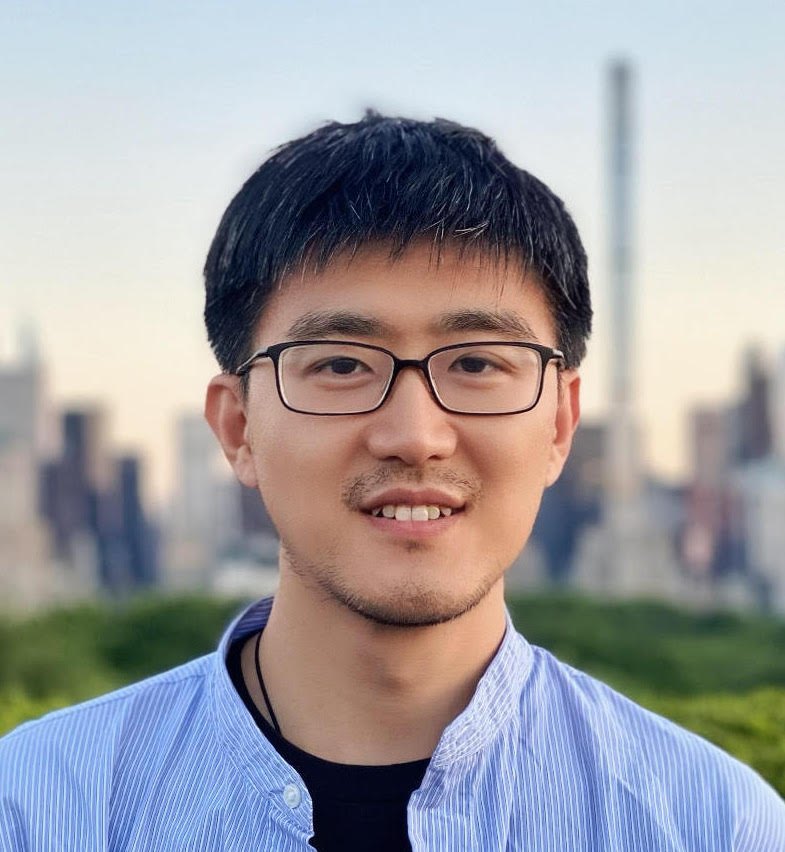
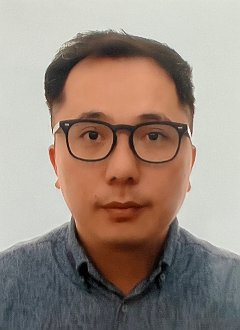
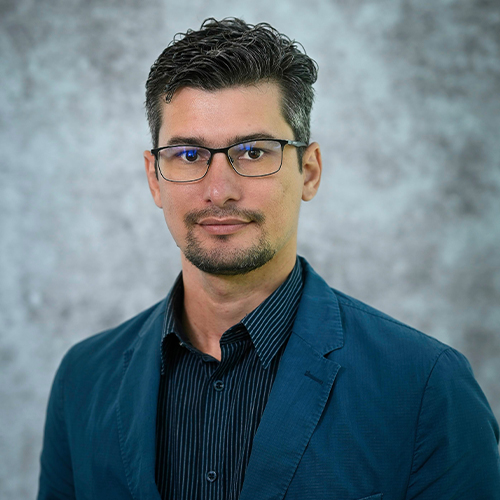
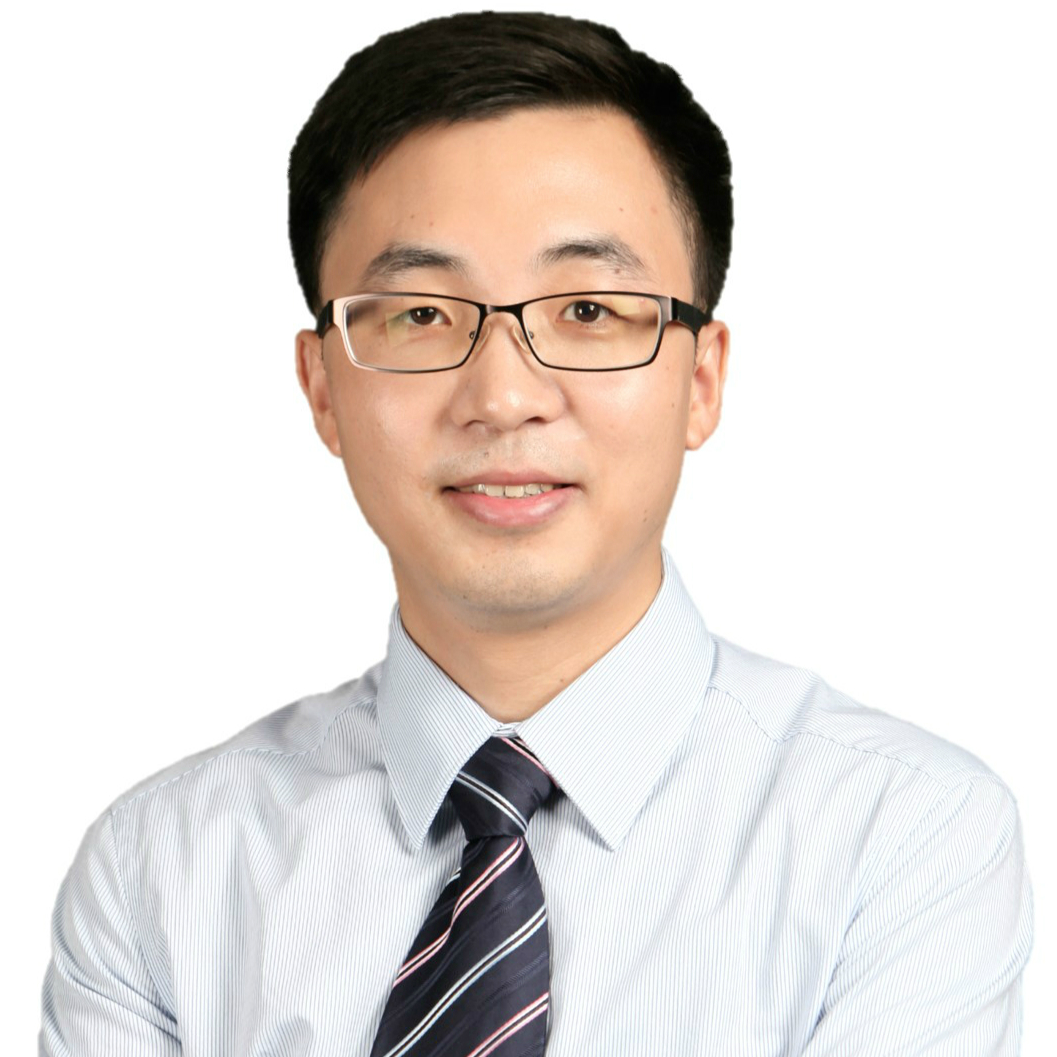
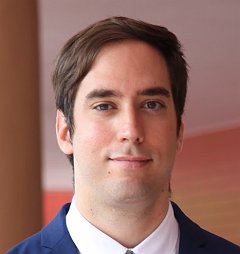
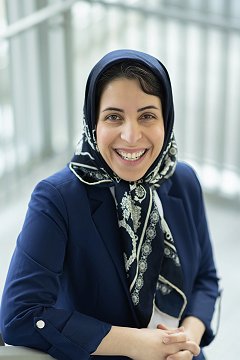
Gregory Gay is an Associate Professor in the Interaction Design and Software Engineering division within the Department of Computer Science and Engineering at Chalmers University of Technology and the University of Gothenburg, Sweden. His academic profile spans numerous software engineering conferences where he has served as committee member, program chair, and active researcher since at least 2018. Dr. Gay's research focuses on the intersection of software engineering and artificial intelligence, with particular emphasis on: Software Testing and Analysis Search-Based Software Engineering AI for Software Engineering (AI4SE) AI Engineering Automation of development tasks Software Carbon Footprint and sustainability His recent publications demonstrate a strong trend toward applying AI and optimization techniques to software testing challenges, with increasing focus on sustainability aspects of software development. Many studies take an industrial perspective, examining real-world applications in automotive software systems. His work blends theoretical foundations with practical applications, making significant contributions to both academic research and industrial practice in software engineering. Dr. Gay has been actively involved in numerous top software engineering conferences including ASE, ICSE, ESEC/FSE, ISSTA, and ICST, serving on program committees and organizing tracks. His research methodology typically combines optimization, artificial intelligence, and machine learning to help developers deliver complex systems in a safe, secure, and efficient manner.
Jie Wu is an Assistant Professor in the Department of Computer Science at Michigan Technological University, a Carnegie R1 (Very High Research Activity) institution. Previously, he was a postdoctoral researcher at the University of British Columbia working with Dr. Fatemeh Fard at the intersection of Software Engineering and AI. Dr. Wu received his PhD in Systems Engineering from George Washington University. His undergraduate and master's studies were both in Computer Science at Shanghai Jiao Tong University's elite ACM Class program. Before academia, he worked for nearly a decade as a software engineer in the industry at Snap Inc., Microsoft, and ArcSite (a startup). Dr. Wu's research focuses on Trustworthy AIware, with particular interest in transforming "AI for Software Engineering" and "AI system development" from art into rigorous science and engineering disciplines. His work emphasizes human-centered AI, AI alignment, and practical software engineering, grounded in a systems-thinking mindset. His primary research areas include AI for Software Engineering (AI4SE), Software Engineering for AI (SE4AI), Large Language Models (LLMs), Data Science, and Systems Science and Engineering. His recent publications demonstrate a strong focus on evaluating and improving communication capabilities of code-generating LLMs, automated program repair using LLMs, and applying AI to software engineering challenges. His work often bridges theoretical foundations with practical applications in industry settings, with notable contributions including the HumanEvalComm benchmark for evaluating communication skills in code generation. Distinguished Paper Award Candidate at CAIN 2024 for V-Model research Reviewer for top-tier journals including IEEE TSE and ACM TOSEM Program Committee Member for RAIE 2025, CAIN 2025, and SANER 2025 Dr. Wu is actively recruiting PhD students to join his research group at Michigan Tech to work at the intersection of Software Engineering and AI. He is passionate about bridging academic research and industry practice to accelerate innovation and create meaningful societal impact, welcoming collaborations with industry partners interested in applying cutting-edge AI research to real-world challenges.
Dr. Wenchao GU is a Postdoctoral Researcher at the Chair of Software Engineering & AI at the Technical University of Munich (TUM) , working under the supervision of Prof. Chunyang Chen. His academic journey includes a PhD in Computer Science and Engineering from The Chinese University of Hong Kong (CUHK) (2024), an MSc in Information Science from Tohoku University (2017), and a B.Eng in Mechanical and Aerospace Engineering from Tohoku University (2015). Research Interests: Dr. GU's work focuses on Artificial Intelligence for Software Engineering (AI4SE) , leveraging Large Language Models (LLMs) to advance source code understanding, analysis, and generation. Key areas include code optimization , vulnerability detection , and UI code generation . His research bridges theoretical innovations with practical tools for automated code efficiency improvement, semantic code retrieval, and natural language generation in software development workflows. Publication Trends : His recent work emphasizes iterative LLM refinement via evolutionary search (2025), segmented deep hashing for scalable code retrieval (2025), and contrastive learning in code search (2023). Earlier studies explored AST-guided transformers for code summarization (2022) and semantic dependency learning in code retrieval (2021). Scientific Awards: Distinguished Paper Award, ICSE 2025 The Aoba Foundation Scholarship (2015) JASSO Scholarship (2012) Tohoku University President Fellowship (2012) Mentorship: Dr. GU supervises 11 current students (including 1 PhD) and has advised 5 graduated Master's students. He actively seeks candidates with web/Android development expertise for UI code generation projects.
Dr. Ying Zou is a Professor in the Department of Electrical and Computer Engineering at Queen's University's Smith Engineering faculty in Kingston, Ontario, Canada. With an extensive publication record spanning from 2018 through 2025, Dr. Zou has established herself as a leading researcher in empirical software engineering with a growing focus on AI integration. Dr. Zou's research focuses on Software Engineering , Artificial Intelligence for Software Engineering (AI4SE) , Software Evolution , Software Analytics , and Empirical Software Engineering . Her work bridges theoretical approaches with practical applications, examining developer behavior, code quality improvement, and AI techniques for software engineering tasks. Recent publications demonstrate a clear progression from traditional empirical studies toward more AI-centric approaches, particularly in code refactoring, type inference, and performance analysis. Analysis of Dr. Zou's publication trends reveals a strategic evolution in her research focus. Early work centered on empirical studies of Stack Overflow and GitHub, while recent publications increasingly integrate large language models and AI techniques for software engineering tasks. Her research spans multiple dimensions including code quality, developer productivity, open source community dynamics, and performance optimization, with consistent methodological rigor in empirical validation. Dr. Zou has served in numerous leadership roles across major software engineering conferences including ASE, ICSE, and ESEC/FSE. She has been a Program Committee member for multiple tracks and conferences, and notably served as New Faculty Mentoring Co-Chair for ESEC/FSE 2026. Her service to the community extends to organizing conference tracks, chairing sessions, and mentoring new researchers in the field.
Dr. Mingwei Liu is an Associate Professor at the School of Software Engineering, Sun Yat-Sen University, China. Previously, he completed postdoctoral research at Fudan University in 2024 and received both his Ph.D. (2022) and B.E. (2017) in Software Engineering from Fudan University under the mentorship of Xin Peng. Dr. Liu's research focuses on the intersection of Software Engineering (SE) and Artificial Intelligence (AI), specifically in the domains of AI4SE (AI for Software Engineering) and SE4AI (Software Engineering for AI). His primary interest lies in leveraging advanced AI technologies, particularly large language models (LLMs) and knowledge graphs (KGs), to address complex software engineering challenges and tackle system engineering problems in AI applications. His research portfolio demonstrates a strong focus on practical applications of AI in software development, with particular emphasis on code generation, vulnerability detection, test generation, and knowledge representation for software artifacts. Through his work, Dr. Liu has contributed significantly to understanding how LLMs perform in realistic software development scenarios beyond simple function-level code generation. Dr. Liu has published over twenty papers in top international journals and conferences including TSE, TOSEM, ICSE, FSE, and ASE. His research has been recognized with prestigious awards including the IEEE TCSE Distinguished Paper Award (ICSME 2018) and the ACM SIGSOFT Distinguished Paper Award (FSE 2023). IEEE TCSE Distinguished Paper Award (ICSME 2018) ACM SIGSOFT Distinguished Paper Award (FSE 2023) Dr. Liu actively contributes to the academic community as a program committee member for major conferences including ASE, ESEC/FSE, ICSME, and SANER. He leads the SYSUSELab research group, which has developed notable resources including the ClassEval benchmark for evaluating LLMs on class-level code generation tasks.
Vahid Alizadeh is an Assistant Professor in the College of Computing and Digital Media (CDM) at DePaul University in Chicago, USA, where he has been serving since 2020. His academic career focuses on bridging the gap between software quality research and industrial practice through empirical studies and intelligent tool development. Education: Ph.D. in Computer Science, University of Michigan (2015-2020) M.Sc. in Electrical Engineering, University of Tehran (2011-2013) B.Sc. in Electrical Engineering, Iran University of Science and Technology (2006-2011) Research Interests: Dr. Alizadeh's research spans empirical software engineering, software quality, refactoring & maintenance, intelligent software engineering, and AI-enabled systems. His work combines rigorous empirical methods with practical tool development to address real-world software engineering challenges. He has particular expertise in developing intelligent refactoring technologies that are currently deployed by organizations impacting thousands of programmers worldwide. Research Trends: His publication record shows a consistent focus on applying AI and machine learning techniques to software engineering problems, particularly in the areas of refactoring and quality assurance. Recent work demonstrates increasing integration of AI/ML approaches with traditional software engineering practices, reflecting the broader trend toward AI4SE (AI for Software Engineering). Awards & Recognition: Excellence in Teaching Award from DePaul University (2025) $67,000 DePaul-RFUMS Grant for AI-Powered Community Pharmacy Research (2024) ACM SIGSOFT Distinguished Paper Award at MODELS Conference (2020) Distinguished University of Michigan-Dearborn Honors Scholar (2020) Outstanding Graduate Research Assistant Award (2018/2019) Professional Activities: Dr. Alizadeh has served in various capacities at major software engineering conferences including ASE 2022 as Session Chair and Virtualization Co-Chair, and MODELS 2025 as Web Co-Chair. His work has resulted in one patent and multiple invention licenses through the University of Michigan Tech Transfer Office. He actively mentors graduate students interested in empirical software engineering, software quality, and intelligent refactoring technologies.
Dong Wang is an Associate Professor at Tianjin University, China, specializing in software engineering research with a focus on empirical methods and AI applications in software development. His primary research interests include: Empirical Software Engineering Mining Software Repositories AI for Software Engineering (AI4SE) Professor Wang has established himself as a significant contributor to the software engineering research community through numerous publications at top conferences. His work spans software testing, programming tools, developer productivity, and open source software development, with particular emphasis on applying AI techniques to software engineering problems. His recent publications demonstrate expertise in unit test generation, JVM fuzzing, equivalent mutant detection, and studies of developer tools like GitHub Copilot. His contributions have been recognized through publications at premier software engineering venues including ASE, ICSE, FSE, and ICSME across multiple years from 2023-2025. Professor Wang is actively engaged in the research community, serving on program committees for numerous conferences and participating in New Ideas and Emerging Results tracks, demonstrating his commitment to advancing the field and supporting emerging research directions.
DongGyun Han is a Lecturer (equivalent to Assistant Professor) in the Department of Computer Science at Royal Holloway, University of London. His research specializes in Software Engineering, with emphases on Empirical Study, AI for Software Engineering (AI4SE), Software Engineering for AI (SE4AI), and Code Review. He holds a PhD from University College London (UCL), an MPhil from Hong Kong University of Science and Technology (HKUST), and a B.Eng from Jeju National University. Dr. Han's research integrates empirical methods with AI techniques to address challenges in software maintenance, code quality, and developer productivity. His work spans automated code review, defect prediction, vulnerability repair, and AI model applications in software artifacts. He actively collaborates with industry partners including Amazon Web Services. His recent publications focus on leveraging large language models for software tasks, analyzing dataset biases, and improving automated developer tools. Common themes include empirical validation of AI techniques, security enhancement, and optimizing developer workflows. Awards: No scientific awards mentioned in source materials. Academic Service: Dr. Han contributes extensively to program committees for top-tier conferences including ICSE, FSE, ASE, and MSR. He has chaired tracks at ICTSS 2024 and reviewed for journals including TOSEM, EMSE, and JSS. Affiliations: Previously affiliated with Singapore Management University's SOftware Analytics Research (SOAR) group and Secure Mobile Centre. Maintains industry connections through past roles at Amazon Web Services.
Gias Uddin is an Associate Professor in the Electrical Engineering and Computer Science department at York University's Lassonde School of Engineering. He also holds an Adjunct Professor position at the University of Calgary. Previously, he served as an Assistant Professor at the University of Calgary from 2020 to 2023. Dr. Uddin's research lies at the intersection of software engineering (SE) and artificial intelligence (AI), with specific focus areas including the assessment of AI trustworthiness using SE (SE4AI) and improving the productivity of software and knowledge professionals using AI-enabled software assistants. His work spans three key domains: Democratized Data Science (HCI → AI4DS, SE4DS), Modernized Software Issue Management (HCI → AI4SE), and Usable Cybersecurity Engineering (HCI → AI4CE). He is particularly interested in how AI can democratize the adoption of machine learning techniques across stakeholders during ML systems development. His recent publications demonstrate a strong focus on practical applications of AI in software engineering, with particular emphasis on detecting hallucinations in LLMs, improving API documentation, and developing AI-assisted tools for software issue management. His research has resulted in numerous publications at top-tier software engineering conferences including ICSE, ASE, and FSE. Distinguished paper award at FSE 2025 for work on hallucination detection in LLMs York University Research Award (2025) IBM Champion recognition for 2024 and 2025 CAS Project of the Year Award at IBM TechXChange 2024 Multiple NSERC-funded research grants Dr. Uddin has successfully secured multiple research grants including an NSERC Discovery Grant, NSERC Alliance International Catalyst Grant on 'Hallucination Detection in LLMs using Metamorphic Testing,' and several industry-funded projects with IBM. He has supervised numerous graduate students who have gone on to successful careers in both academia and industry, with many receiving prestigious scholarships and awards. As the founding director of the Data Intensive Software Analytics (DISA) Lab, he leads a team focused on developing innovative AI-assisted tools for software developers and data scientists.
Wesley Klewerton Guez Assuncao serves as an Associate Professor in the Department of Computer Science within the College of Engineering at North Carolina State University. Previously, he held positions as a University Assistant/Senior Researcher at Johannes Kepler University Linz in Austria, Postdoctoral Researcher at Pontifical Catholic University of Rio de Janeiro in Brazil, and Assistant/Associate Professor at Federal University of Technology - Paraná in Brazil. His academic journey includes a Ph.D. in Computer Science from the Federal University of Paraná with a visiting period at Johannes Kepler University. Dr. Assuncao's research spans several critical areas in modern software engineering. His primary interests include Software Modernization (reverse engineering, re-engineering, and migration), Variability Management (variability mechanisms, software customization, and software reuse), and Software Quality (technical debt, code smells, and software refactoring). He also investigates Model-Driven Engineering (model inconsistency detection, repair generation, and change propagation), Collaboration in Systems Engineering (change synchronization, tool flexibility, and conflict awareness), Software Testing (regression testing, integration testing, and test case selection/prioritization), and AI4SE (Generative AI, Machine Learning, and Evolutionary Algorithms for Software Engineering). His recent publications reveal a strong focus on software modernization challenges, particularly regarding legacy systems transformation, microservices architecture, and the application of AI techniques in software engineering. The research shows increasing integration of Large Language Models in addressing software evolution problems, with emphasis on empirical validation through industrial collaborations. His work consistently bridges theoretical foundations with practical applications, as evidenced by multiple industry partnerships and real-world case studies. Dr. Assuncao has received numerous prestigious awards including Distinguished Reviewer Awards from FSE and SANER conferences, a Young Researcher Award from Johannes Kepler University, and multiple Best Paper Awards from top software engineering conferences. His research has been recognized with ACM SIGSOFT Distinguished Paper Awards and IEEE Computer Society TCSE Distinguished Paper Awards. In terms of academic service, he serves as Co-editor of the In Practice track at the Journal of Systems and Software and has held various leadership roles in major conferences including ICSE, SANER, MSR, and SPLC. He has successfully secured substantial research funding totaling approximately USD 1.91 million from sources including the Austrian Science Fund, Brazilian National Council for Scientific and Technological Development, and state-level Brazilian research foundations. Dr. Assuncao leads the Wolfpack Innovations in Software Engineering Research (WISER) Lab at NC State University, where he supervises graduate students working on cutting-edge software engineering research problems. His lab maintains strong collaborations with international institutions and industry partners including Dynatrace and ITPRO Consulting & Software GmbH.
Yepang Liu is a tenured Associate Professor in the Department of Computer Science and Engineering at Southern University of Science and Technology (SUSTech). He leads the Software Quality Lab and directs the Trustworthy Software Research Center under the Research Institute of Trustworthy Autonomous Systems. His academic journey includes a B.Sc. in Computer Science from Nanjing University (2010) and a Ph.D. in Computer Science and Engineering from The Hong Kong University of Science and Technology (HKUST) in 2015, followed by postdoctoral research at HKUST's CASTLE Lab and Cybersecurity Lab (2015–2018). Research interests focus on Software Testing and Analysis Empirical Software Engineering AI for Software Engineering (AI4SE) Trustworthy AI Mobile Computing Software Security Current projects explore automated testing for emerging technologies like HarmonyOS and extended reality (XR), leveraging large language models (LLMs) and reinforcement learning. Awarded thrice with ACM SIGSOFT Distinguished Paper Awards (ICSE 2021, ASE 2016, ICSE 2014) and a Platinum Level Research Artifacts Honor (FSE 2016), Liu has also received teaching accolades, including SUSTech's Junior Faculty of the Year (2021) and the Top-10 Most Popular Instructor Among 2024 Graduates. His work is funded by the National Natural Science Foundation of China, National Key Research and Development Program of China, and industry partnerships.
Gail E. Kaiser is a Professor of Computer Science at Columbia University, where she conducts research in software engineering and security from a systems perspective. Her work spans program analysis, software testing, and pioneering applications of AI to software engineering (AI4SE) and vice versa (SE4AI), with significant contributions dating back to the 1980s. Education: PhD from Carnegie Mellon University ScB from Massachusetts Institute of Technology Research Focus: Professor Kaiser's work centers on static and dynamic program analysis , software testing , and software security . She pioneered applying software engineering testing techniques (particularly metamorphic testing) to machine learning software (SE4AI) during her 2005-2006 sabbatical at Columbia's Center for Computational Learning Systems. Her historical contributions include semantics-focused language-based editors (1980s-1990s, precursors to modern IDEs) and self-adaptation techniques for cloud computing (late 1990s-2000s). Publication Trends: Recent publications (2020-2024) reveal intense focus on AI-software engineering intersections: developing code generation/refinement systems (CYCLE), cross-lingual code search models (REINFOREST), execution-aware pre-training (TRACED), and specialized testing for deep learning systems. Her work consistently bridges traditional program analysis with cutting-edge AI methodologies to solve complex software quality challenges. Academic Service: Kaiser maintains active leadership in the research community through program committee roles at top conferences including PLDI, ICSE, ESEC/FSE, ASE, and SPLASH from 2013-2025. Her GitHub profile (gailkaiser) hosts course materials like COMS W4156 Advanced Software Engineering, demonstrating ongoing educational impact.
Valerio Terragni is a Senior Lecturer in the Department of Electrical, Computer, and Software Engineering at the University of Auckland, New Zealand, where he also serves as the Program Director of the Software Engineering Degree. His position as Senior Lecturer in New Zealand is equivalent to Associate Professor in many Asian, European, and North American academic systems. His educational background includes a PhD in Computer Science from The Hong Kong University of Science and Technology (2017), and B.Sc. and M.Sc. degrees in Computer Science from the University of Milano-Bicocca, Italy. Prior to his current position, he was a Senior Research Fellow at Università della Svizzera italiana (USI) in Lugano, Switzerland from 2017 to 2020. Dr. Terragni's research focuses primarily on Software Testing, with special emphasis on automated techniques for generating test cases and their applications in modern software systems. His current work centers on SE4AI (Software Engineering for AI) and AI4SE (AI for Software Engineering), particularly investigating the intersection of software testing and large language models. His research has been published in leading software engineering venues including IEEE TSE, ACM TOSEM, ICSE, FSE, ASE, ICST, and ISSTA. His recent publications demonstrate a strong focus on metamorphic testing, particularly for AI systems and large language models, as well as work on test oracle generation, software quality assessment, and software engineering education. His research shows a clear evolution from traditional software testing techniques toward addressing the unique challenges posed by AI systems. As Program Director of the Software Engineering Degree at the University of Auckland, Dr. Terragni plays a significant role in shaping software engineering education. His work on GradeStyle demonstrates his commitment to improving programming education through automated assessment tools integrated with GitHub.
Maliheh Izadi is a tenure-track assistant professor in the Faculty of Electrical Engineering, Mathematics, and Computer Science at Delft University of Technology (TU Delft), Netherlands. She leads the AISE (AI-enabled Software Engineering) research lab and serves as the scientific manager for the TU Delft/JetBrains Collaboration (AI4SE). She is also a member of the Software Engineering Research Group (SERG) at TU Delft and actively supervises PhD, MSc, and BSc students. Dr. Izadi's research focuses on enhancing software development tools through building smarter software and tailoring machine learning and NLP techniques to source code. Her primary interests include building and tailoring large language models (LLMs) and autonomous agents to source code, with specific focus areas including evaluation, benchmarking, model memorization, IDE integration, in-IDE Human-AI interaction, and extending models' capabilities to low-resource programming languages. Her work bridges the gap between deep learning and source code analysis, with applications in code understanding, generation, documentation, and developer productivity enhancement. Her recent publications reveal a strong trend toward evaluating and improving LLMs for code, with emphasis on safety, usability, and efficiency. She has made significant contributions to benchmark development, harmfulness assessment of LLMs in programming contexts, and improving the integration of AI tools within development environments. Her research consistently addresses real-world industrial challenges while advancing theoretical understanding of model behavior. Google Research Scholar Award (2025) for proposal on Tackling LLM Hallucinations Amazon Research Award (2024) for proposal on Addressing Memorization in Code LLMs ACM SIGSOFT Distinguished Paper Award (2025) for How Much Do Code Language Models Remember? ACM SIGSOFT Distinguished Paper Award (2024) for A Transformer-Based Approach for Smart Invocation of Automatic Code Completion Best Tool Award at SaTML'22 competition for STACC Best Tool Award at NLBSE'22 competition for Catiss Dr. Izadi actively collaborates with industry partners, particularly JetBrains Research, where she leads the AI4SE ICAI lab. She has supervised multiple PhD and master's students and has served on program committees for major software engineering conferences including ASE, ICSE, FSE, and MSR. Her research has been published in top venues such as IEEE/ACM ICSE, FSE, ASE, TOSEM, EMSE, MSR, ICSME, SANER, and JSS. She is also organizing the First International workshop on Autonomous Agents in Software Engineering (AgenticSE) co-located with ASE'25.
Fatemeh Hendijani Fard is an Assistant Professor in the Department of Computer Science at the University of British Columbia's Okanagan campus. She serves as a graduate student supervisor and teaches courses in Computer Science and Data Science. Dr. Fard is a member of the CITECH program and MMRI, part of the Killam family of scholars, and an active member of both IEEE and ACM. Her research focuses on the intersection of Natural Language Processing and Software Engineering, with particular emphasis on developing code intelligence models for low-resource programming languages like R. She conducts empirical studies and develops techniques to improve the computational efficiency of code-language models while making them accessible to communities with restricted GPU access. Her work strongly advocates for Diversity and Inclusion in STEM, particularly for underrepresented females. Analysis of Dr. Fard's recent publications reveals a strong research trajectory in adapting Large Language Models for code intelligence with a focus on efficiency and accessibility. Her work spans multiple dimensions including code summarization, method name prediction, code search, code clone detection, and program repair, with special attention to low-resource programming languages. A notable trend is her exploration of adapter-based approaches for knowledge transfer that reduce computational requirements while maintaining performance. Izaak Walton Killam Memorial Scholarship Alberta Innovates Technology Futures (AITF) NSERC Discovery NSERC CREATE Mitacs Accelerate UBC Start-up Fund Dr. Fard has secured significant research funding including NSERC Discovery, NSERC CREATE, Mitacs Accelerate, and UBC Start-up funds to support her work on code intelligence for low-resource programming languages. She actively serves as a graduate student supervisor, guiding research in areas related to code representation learning and mining software repositories. Her service to the academic community is extensive, having served on program committees for major conferences including FSE, MSR, ASE, SANER, and ICSME across multiple years. Dr. Fard leads research initiatives focused on making code intelligence accessible to communities working with understudied programming languages. Her team conducts empirical studies and develops new techniques specifically designed for low-resource languages, with particular attention to the R programming language. This work addresses diversity and inclusion in AI tools by ensuring developers with limited computational resources can benefit from advances in neural networks and automated tools.