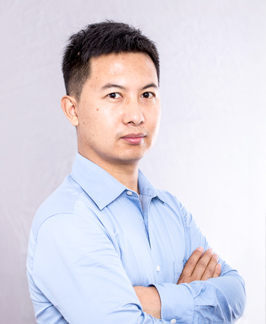
Dr. Jiayan Qiu is a Lecturer (Assistant Professor) at the University of Leicester's College of Computing and Mathematical Science. Previously, he was a postdoctoral research fellow collaborating with Prof. Zhou Wang at the University of Waterloo's Department of Electrical & Computer Engineering. He holds a Ph.D. from the University of Sydney (USYD), advised by Prof. Dacheng Tao, and completed his MPhil and Honorable B.S. at the Australian National University (ANU). His research focuses on computer vision, machine learning, and artificial intelligence, with notable contributions to visual relationship modeling, image outpainting, depth estimation, and generative models. His work has been published in top-tier venues like IEEE TPAMI, CVPR, ECCV, and ACM KDD. Professional service activities include serving as a reviewer for prestigious journals (e.g., IEEE T-PAMI, T-IP) and conferences (CVPR, ICCV, NeurIPS), as well as a member of program committees for leading AI conferences. He also contributes to academic leadership as a Guest Editor for Frontiers in Signal Processing and MDPI-Electronics .
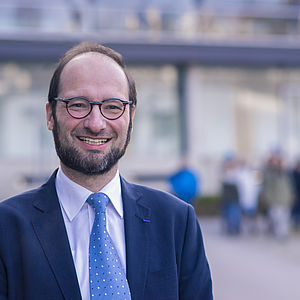
Maxime Pelcat is a Full Professor at INSA Rennes, France, affiliated with the Department of Electronics, Computer Science and Systems within the College of Engineering. His research is conducted in the VAADER team at IETR, a CNRS research unit (UMR 6164), where he leads advanced work in sustainable, secure, and open embedded systems. PhD in Signal Processing, INSA Rennes, 2010 Habilitation (HDR), Université Clermont Auvergne, 2017 Researcher at Fraunhofer IIS, Germany Contractor at France Telecom R&D Faculty at INSA Rennes since 2011 Maxime Pelcat's research focuses on sustainable electronics, open hardware (especially RISC-V), hardware security against side-channel attacks, and machine learning at the edge. He emphasizes energy efficiency, system sovereignty, and end-of-life sustainability in electronic design. His work integrates models of computation, heterogeneous architectures, and reconfigurable hardware to improve system efficiency and design productivity in embedded signal processing and telecommunications. His publications and projects reflect a strong trend in sustainable computing, embedded AI, and secure system design. The work spans FPGA-based acceleration, MPSoC optimization, deep learning integration, and dataflow programming models, particularly applied to vision systems and signal processing. Scientific Awards and Honors: Best PhD Award 2016 (Fondation Rennes 1) - for advisee Erwan Nogues Chaire d’Excellence France-Nokia 2024 Maxime Pelcat has co-advised 11 PhD students in areas including deep learning on FPGAs, intrusion detection, eavesdropping exploitation, multi-view vision systems, and reconfigurable architectures. He has participated in major research projects including 1 H2020 ICT, 1 H2020 ITN, 1 NSF, 1 FUI, and 2 ANR projects. He leads the French PIA4 CMA project ESOS (Electronics: Sustainable, Open, Sovereign), funded by France2030. He has authored over 80 peer-reviewed publications and a Springer book on multi-core prototyping. He is a key member of the VAADER research team at IETR and leads the Sustainable Computing Workshop. He has held leadership roles in major conferences, including Program Chair of SAMOS-IC 2019 and General Chair of IEEE SiPS 2022 and GDR SOC2 2020. He was an elected member of CNRS CoNRS Section 07 (Information Science) from 2018 to 2021.
Dmitri Williams is a Professor of Communication at the University of Southern California (USC) Annenberg School for Communication and Journalism. His research focuses on technology and society, particularly the social and economic impacts of new media, online gaming, and digital communities. He holds academic affiliations with multiple programs, including Communication (BA, PhD), Communication Data Science (MS), Communication Management (MCG), and Digital Social Media (MS). Williams earned his PhD from the University of Michigan in 2004. His work employs diverse methodologies, such as experiments, machine learning, surveys, and ethnography to study topics like social value measurement, player behavior in online games, and digital influence. He has collaborated with tech companies, startups, and policymakers, including testimony before the U.S. Senate on video games and serving as an expert witness in federal court cases. His research interests emphasize understanding how online environments shape social interactions, including topics like social capital, toxicity, mentorship dynamics, and gender representation. Notable projects include longitudinal studies on gaming communities, the Virtual Census series analyzing diversity in video games, and computational models of influence in digital systems. Williams’ publications span top journals like Journal of Communication , Computers in Human Behavior , and New Media & Society . He has been featured in major media outlets such as NPR , The New York Times , and Wired , and directs the Annenberg Game Lab. His consulting work helps firms optimize consumer engagement and player experience in gaming, retail, and donation platforms.
Craig Lee is a John A. and Deborah S. McNeill, Jr. Distinguished Professor and Chair of the Division of Pharmacotherapy and Experimental Therapeutics at the UNC Eshelman School of Pharmacy. He holds adjunct appointments in the UNC School of Medicine’s Division of Cardiology and is a member of the McAllister Heart Institute and Program for Precision Medicine in Healthcare. Education: Pharm.D. (UNC-Chapel Hill, 2000), Ph.D. in Pharmaceutical Sciences (UNC-Chapel Hill, 2006), and a Fellowship in Clinical Research/Drug Development (UNC/ GlaxoSmithKline). His research focuses on precision medicine, cytochrome P450 metabolism, and cardiovascular therapeutics. Key areas include genotype-guided antiplatelet therapy, pregnancy drug metabolism, and CYP-derived eicosanoids in cardiometabolic disease. Over 100 manuscripts and abstracts highlight his translational work integrating preclinical and clinical models. Recent studies emphasize optimizing drug selection/dosing via pharmacogenomics, particularly in high-risk PCI patients and pregnant populations. Collaborations with NIH-funded projects and multi-institutional registries drive his work. Grants: NIH/NHLBI Precision PCI Registry, NIH/NICHD pregnancy metabolism studies. Awards: Over 40 students advised (PhD, postdocs, PharmD). Labs: Craig Lee Lab focuses on precision medicine, pregnancy pharmacology, and eicosanoid pathways.
Antonio García Cabot is an Associate Professor in the Department of Computer Science at the University of Alcalá. His research focuses on artificial intelligence, educational technology, natural language processing, and mobile computing. He leads the INTELIA research group (Interaction Technologies and Artificial Intelligence Lab) and previously contributed to the PMI group (Intelligent Mobile Platforms). He earned his Doctorate in Computer Science from the University of Alcalá in 2013 with a thesis titled *Propuesta de un sistema multi-agente para la adaptación de contenidos docentes a las competencias, contexto y dispositivo del usuario*. His work emphasizes accessibility in digital education, gamification in MOOCs, and software engineering innovations like automated code repair using LLMs. Research trends in his 2024-2025 publications include: Advancing AI applications in educational assessment (e.g., automated question generation, distractor design) Improving mobile app usability through gesture-based interfaces and sensor integration Developing large language model-based tools for vulnerability repair and teacher simulation analysis Systematic reviews on digital competence ecosystems and multilingual AI systems His contributions to open educational resources (OER) and accessible virtual campuses have been widely adopted in Latin America. Current research extends into embedded systems education and olfactory stimuli impacts on mobile app performance.
Eva García López is a Professor in the Department of Computer Science at the University of Alcalá. She holds a PhD from the same institution, completing her thesis on improving the usability of interfaces for teaching objects in m-learning in 2013. Her research focuses on usability engineering, artificial intelligence, and educational technology, with emphases on mobile applications, accessibility, and gamification. She is affiliated with the INTELIA research group (Interaction Technologies and Artificial Intelligence Lab) and previously contributed to TIFyC (Information Technologies for Training and Knowledge) and PMI (Intelligent Mobile Platforms). Eva’s work spans developing adaptive learning systems, enhancing digital content accessibility, and leveraging large language models for educational tools. Her projects include MOOC development, social gamification experiments, and usability evaluations of mobile instant messaging apps. She has also explored the impact of olfactory stimuli on user performance and the application of NLP in automated question generation. Her contributions include guidelines for accessible digital content creation and frameworks for personalized learning paths in web engineering curricula. Her research integrates interdisciplinary approaches, combining machine learning, human-computer interaction, and educational theory to address challenges in digital learning ecosystems. Notable contributions include frameworks for curriculum development, methodologies for usability evaluation, and tools for automated code vulnerability repair.
Prof. Ralf Steinmetz is a Full Professor of Multimedia Communications at Technische Universität Darmstadt since 1996 and head of the Multimedia Communications Lab. His research focuses on adaptive multimedia systems, self-organizing networks, mobile/sensor networking, and educational technologies. He has held leadership roles at IBM's European Networking Center and Fraunhofer IPSI. His work spans cybersecurity, IoT, disaster communication systems, and industrial networking. Education : Dr.-Ing (PhD) in Electrical Engineering, TU Darmstadt (1986) Habilitation in Computer Science, Goethe University Frankfurt (1994) Research Interests : He pioneers innovations in networked multimedia systems , including fault-tolerant communication, aerial-ground disaster monitoring (e.g., CAMON system), and 5G/Industry 4.0 infrastructure. His work emphasizes resilience, adaptive protocols, and cyber-physical integration. Recent Work Trends : Publications from 2022-2025 highlight advancements in: Wireless communication protocols (ESP-NOW, LoRa) Cybersecurity (intrusion detection via machine learning) Disaster response networks (aerial-ground cooperation) Time-sensitive networking for industrial applications Key Contributions : Developed Nature 4.0 sensor systems for biodiversity monitoring Pioneered P4-programmable network hardware solutions (P4-CODEL, P4-BNG) Advanced UAV-based emergency communication frameworks
Professor Shenghua Gao is an Associate Professor at the School of Computing and Data Science of the University of Hong Kong (HKU), concurrently serving as Assistant Director for Shanghai Initiatives. He holds a PhD from Nanyang Technological University. His research focuses on integrating machine learning, spatio-temporal data analysis, and database systems to address challenges in mobility prediction, traffic management, and geospatial representation learning. He has contributed significantly to trajectory modeling, indexing frameworks for multi-dimensional data, and the application of large language models (LLMs) in spatio-temporal contexts. Key research interests include: Spatio-Temporal Data Science: Developing frameworks for efficient processing and analysis of point cloud, trajectory, and traffic data. Machine Learning for Databases: Innovating indexing algorithms (e.g., BMTree, MAST) and query optimization techniques leveraging ML. Trajectory and Mobility Prediction: Creating personalized models for next-location prediction and transfer learning across regions. Geographic AI (GeoAI): Enhancing road network representation and urban function inference using physics-guided and foundation models. Recent work highlights include the ST-LLM+ framework for traffic prediction, the MAST system for point cloud analytics, and the exploration of City Foundation Models for urban challenges. His publications span top venues in databases (SIGMOD, VLDB) and AI/data science (ICML, NeurIPS). While no awards are explicitly mentioned, his prolific output and leadership roles indicate significant academic contributions. He is actively involved in teaching and supervising research in the School’s undergraduate and postgraduate programs, including MSc(AI) and MPhil/PhD tracks.
Joelle Pineau is a Professor at the School of Computer Science, McGill University, Montreal, Canada. Her work spans Machine Learning , Artificial Intelligence , and Reinforcement Learning , with significant contributions to causal inference , ethics in AI , and continual learning . She has led initiatives like the NeurIPS 2019 Reproducibility Program and co-authored over 315 publications. Key Research Themes : Algorithmic fairness, robust policy learning, interpretable models, and AI ethics Recent Trends : Focus on uncertainty-aware systems, multi-task learning, and societal implications of foundation models Scientific Awards : NeurIPS 2019 Reproducibility Program Leadership Advancements in AI Ethics Review Practices Her work intersects Computer Science , Biomedical Research , and Societal Policy , with applications in healthcare, robotics, and knowledge graphs.
Ryan Cory-Wright is an Assistant Professor in the Analytics and Operations Group at Imperial College Business School . He previously held a Goldstine Postdoctoral Fellowship at IBM Research and earned his PhD in Operations Research from MIT in 2022 under Dimitris Bertsimas , after obtaining a BE (1st class Hons) in Engineering Science from the University of Auckland. Education : MIT (PhD), University of Auckland (BE) Affiliations : Imperial College Business School, IBM Research, MIT His research bridges optimization, machine learning, and sustainability, focusing on extending optimization methods to solve practical problems like rank-constrained product recommendations and low-carbon economy transitions . Collaborations include projects with OCP to guide two billion USD solar-battery investments . Recent work includes AI-Hilbert (2024 Nature Communications , Outstanding Technical Achievement Award ), Stability Regularized Cross-Validation , and Matrix Goemans-Williamson Rounding . He has developed scalable algorithms for sparse portfolio selection and certifiably optimal matrix completion . Honors : Goldstine Fellowship (2022-23) Nicholson Prize (2020) Pierskalla Award (2020) INFORMS DMDA Best Paper (2024) ICS Student Paper Award (2019) Advising : Co-advises Lingjun Meng as a doctoral student. He teaches Decision Making Under Uncertainty (PhD), Optimization and Decision Models (Online MSc), and Data Structures/Algorithms (UG Econ/Finance), with a focus on Python-based computational methods.
Professor Harald Kosch serves as Vice President for Academic Infrastructure and IT at the University of Passau. Since 2006, he holds the Chair of Distributed Information Systems within the Faculty of Computer Science and Mathematics. He co-leads the tri-national IRIXYS research center (University of Passau, INSA Lyon, Università di Milano) and directs the German-French DFH/UFA Doctoral College. Current academic leadership roles Specialization in distributed systems and big data International research networks in digital innovation Recipient of French academic distinction His team develops tools for distributed information processing in multimedia and data-intensive applications, with applications in eHumanities and emergency logistics. Research emphasizes cross-border collaboration and technology transfer between academia and industry. Scientific distinctions include: Chevalier de l'Ordre des Palmes Académiques 2022 DFH Dissertation Prize (for Dr. Benjamin Planche) Active in EU digital strategy, Bavarian sustainability initiatives, and Franco-Bavarian AI competitions.
Kihong Heo is an Associate Professor at the School of Computing, Korea Advanced Institute of Science and Technology (KAIST), where he leads the Programming Systems Laboratory. He received his Ph.D. in Computer Science & Engineering from Seoul National University and previously served as an Assistant Professor at KAIST (2017-2019) and a Post-doctoral Researcher at the University of Pennsylvania (2009-2017). His research focuses on developing program reasoning systems for safe and reliable software, with three main thrusts: AI-based program analysis systems for detecting deep semantic software bugs, general-purpose program simplification systems for secure and efficient software, and scalable program synthesis systems for automatic software generation and repair. His work bridges formal methods, programming languages, and machine learning to address critical challenges in software reliability and security. Prof. Heo's recent publications demonstrate a strong trend toward integrating machine learning techniques with traditional program analysis and verification methods. His research spans compiler correctness (particularly for JavaScript engines), mobile security verification, and automated program transformation. The work on 'Safeguarding Mobile GUI Agent via Logic-based Action Verification' (MobiCom 2025) and 'Optimization-Directed Compiler Fuzzing for Continuous Translation Validation' (PLDI 2025) exemplifies his focus on practical verification techniques for real-world systems. ACM SIGSOFT Distinguished Paper Award (FSE 2025) Amazon Research Award (2024) The Soo-Young Lee Teaching Innovation Award, KAIST (2024) Prize for Excellence in Teaching, KAIST (2024) Best Artifact Award, ICSE (2022) ACM SIGPLAN Distinguished Paper Award, PLDI (2019) Prof. Heo actively mentors graduate students, currently advising three Ph.D. students (Yeonhee Ryou, Taeeun Kim, Sujin Jang) and four Master's students. He serves on program committees for major conferences including ICSE, PLDI, OOPSLA, and SAS, and is an Associate Editor for ACM Transactions on Software Engineering and Methodology (TOSEM). His Programming Systems Laboratory develops tools like Sparrow, a state-of-the-art static analyzer for C programs that applies abstract interpretation techniques to verify the absence of fatal bugs.
Professor Stephan Chalup is a leading academic in Artificial Intelligence and Machine Learning at the University of Newcastle , affiliated with the School of Information and Physical Sciences and the Data Science and Statistics department. He leads the Interdisciplinary Machine Learning Research Group (IMLRG) and the Newcastle Robotics Lab , where his team has achieved global recognition, including two RoboCup world championships. PhD in Computing Science , Queensland University of Technology (2002) Diplom in Mathematics with Neuroscience , University of Heidelberg His research focuses on artificial neural networks , deep learning , and high-dimensional data analysis , with applications in robotics, computer vision, medical imaging, and architectural analysis. He investigates how biological neural systems inspire robust AI models, particularly in topological data analysis and 4D vision . The recent publications highlight a strong trend in topological and geometric machine learning , with a focus on 4D data analysis , multi-agent reinforcement learning , and robot perception . His work bridges theoretical AI with practical industry solutions in transport, healthcare, and robotics. RoboCup World Champion (2008, 2006) Leadership Excellence, CESE (2024) Supervision Research Excellence Award (2015) Multiple Best Student Paper Awards (2019, 2018, 2011) Chalup has supervised numerous students and led significant research projects, including the ARC Discovery Project on estimating topology of low-dimensional data. His lab fosters interdisciplinary collaboration and innovation, with alumni working in top global tech roles. He is an active keynote speaker and program committee member in major AI conferences. His labs, including the Newcastle Robotics Lab , are equipped with state-of-the-art robots and computing systems, supporting cutting-edge research in humanoid robotics, autonomous navigation, and AI-driven data analysis.
Dr. Jim O'Hehir is a Researcher affiliated with the University of South Australia under the UniSA STEM school and the Sustainable Infrastructure and Resource Management (SIRM) department. He also serves as the General Manager of the Forestry Centre of Excellence at the university. His work spans interdisciplinary applications in remote sensing, geospatial analysis, and virtual reality for forestry. He collaborates with institutions like the University of Tasmania, OneFortyOne Plantations, and the National Institute for Forest Products Innovation (NIFPI), with recent grants from the Australian Government Research Training Program Scholarship , Gottstein Trust , and industry partners. Dr. O'Hehir’s research focuses on overcoming technical limitations in forest inventory systems through LiDAR data fusion , UAV-based hyperspectral imaging , and VR visualization techniques . His 2024 publications highlight innovations in 3D point cloud generation, multispectral residue assessment, and AI-driven fire suppression frameworks. He contributes to policy discussions on carbon storage optimization in timber plantations under Australia’s Emissions Reduction Fund (ERF). 2024: 3D Point Cloud Fusion Using Aerial and Terrestrial Laser Scanning 2024: Multispectral Assessment of Clean-Row Treatments 2024: Immersive VR for Forest Point Clouds 2024: AI in Fire Smoke Detection 2023: Sub-Metre Geospatial Feasibility His grants and collaborations emphasize operational efficiency in forestry, with teams like the Forestry Centre of Excellence and partnerships with Geoscience Australia and Swinburne University of Technology . Future work includes scaling onboard AI for satellite missions and refining standards for data fusion in sub-canopy environments.
Nicolaj Siggelkow is the David M. Knott Professor of Management at the Wharton School, University of Pennsylvania, where he also serves as Vice Dean of the MBA Program and Co-Director of the Mack Institute for Innovation Management. His academic journey began with Economics studies at Stanford University, followed by an M.A. in Economics and a Ph.D. in Business Economics from Harvard University and Harvard Business School. His research focuses on the strategic and organizational implications of interactions among a firm's choices of activities and resources, particularly examining how firms develop and adjust their activities over time, how organizational design affects performance, and how interactions among activities create competitive advantage. His work employs diverse methodologies including field studies, econometric analysis, formal modeling, and simulation. Professor Siggelkow's recent publications reveal a clear trajectory toward digital transformation and connected strategies, with increasing focus on how technology enables continuous customer relationships and new business models. His work bridges traditional strategic management with emerging digital paradigms, particularly in healthcare, pricing of smart products, and generative AI applications. Administrative Science Quarterly Scholarly Contribution Award (2008) Fellow of the Strategic Management Society (2013) Multiple Wharton Teaching Excellence Awards spanning two decades Helen Kardon Moss Anvil Teaching Award (2010) Class of 1984 Award for highest teaching ratings (2004, 2006) The Wharton Award for contribution to student experience (2004) Professor Siggelkow serves on the editorial review boards of leading management journals including Administrative Science Quarterly, Organization Science, Strategic Management Journal, Strategic Organization, and Academy of Management Perspectives. He has developed influential frameworks like the Connected Strategy model and LIVA (Long-term Investor Value Appropriation) measure. His work with the Mack Institute for Innovation Management focuses on advancing knowledge about effective management of innovation risks and rewards, while his executive education programs help organizations implement strategic frameworks for competitive advantage. His research has been published in top-tier journals including Academy of Management Journal, Administrative Science Quarterly, Journal of Industrial Economics, Management Science, Organization Science, and Strategic Organization, demonstrating both theoretical rigor and practical relevance to business strategy.