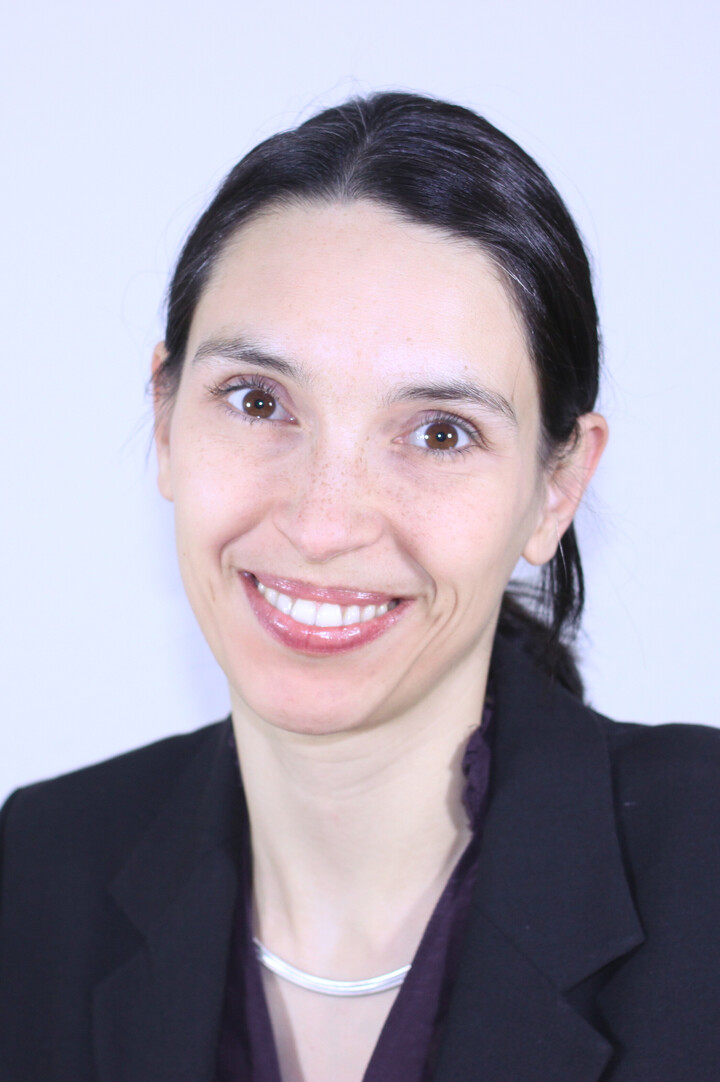
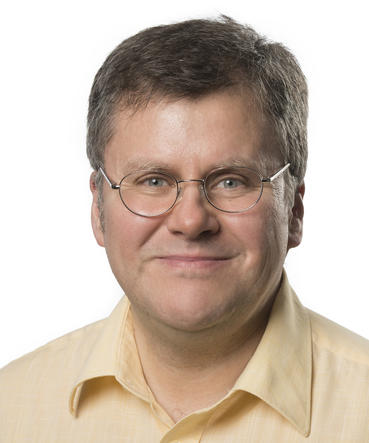
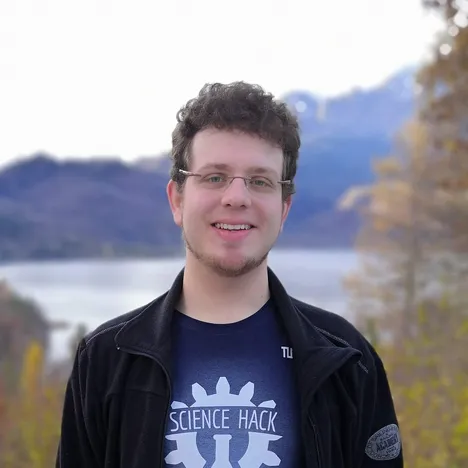
Nasir M. Rajpoot is a Professor in the Department of Computer Science at the University of Warwick, UK. His research focuses on computational pathology, medical image analysis, and deep learning applications in histology. He leads interdisciplinary projects integrating artificial intelligence with healthcare, particularly in cancer diagnostics and pathology workflows. Rajpoot’s work emphasizes developing robust algorithms for histology image analysis, including nuclear segmentation, tumor classification, and domain generalization in computational pathology. His contributions include the TIAToolbox, an open-source framework for tissue image analytics, and the CoNIC Challenge to advance nuclear detection and counting in histology images. He collaborates with clinicians and biologists to translate AI models into clinical practice, addressing challenges like tumor heterogeneity and staining variability. Rajpoot’s research spans colorectal, lung, and oral cancers, with a focus on predicting clinical outcomes via histological features and genomic data integration. Notable projects include the development of Handcrafted Histological Transformer (H2T) for unsupervised representations of whole slide images and the SAFRON framework for histology image synthesis. His work addresses domain adaptation, robustness evaluation, and explainability in AI-driven pathology systems.
Prof. Margret Keuper is a Professor of Machine Learning at the University of Mannheim's School of Business Informatics and Mathematics, leading the Data and Web Science Group. She is also affiliated with the Max-Planck-Institute for Informatics and ELLIS (fellow since 2024). Her research focuses on robust deep learning, neural architecture search, and computer vision tasks like motion segmentation and adversarial defense. She holds a PhD from the University of Freiburg and previously held positions at the University of Siegen and the University of Mannheim. Her work spans projects funded by DFG and BMBF, including Climate Visions for social media analysis and TrackOpt for motion tracking. She teaches courses on computer vision, generative models, and reinforcement learning. She actively serves on program committees for top conferences like CVPR, ECCV, and NeurIPS, and is an associate editor for IEEE TPAMI and JAIR. Education: PhD in Computer Science from University of Freiburg (advisor: Thomas Brox) Research Projects: Learning to Sense (DFG), Climate Visions (BMBF), TrackOpt (BMBF) Key Roles: Head of Mannheim Master in Data Science Examination Board, Member of MSc Business Informatics Board Her research emphasizes robustness in AI systems, with contributions to adversarial attacks, domain generalization, and efficient solvers for large-scale problems. She advises over 15 PhD students across academic and industry partnerships.
Joachim Weickert is a Professor of Mathematics and Computer Science at Saarland University where he heads the Mathematical Image Analysis Group since 2001. He received his diploma and Ph.D. in mathematics from the University of Kaiserslautern (1991, 1996), and a habilitation degree in computer science from the University of Mannheim (2001). Prior to his current position, he worked as a research assistant at the University of Kaiserslautern, as a post-doctoral researcher at the universities of Utrecht and Copenhagen, and as an assistant professor at the University of Mannheim. His research focuses on image processing, computer vision, and scientific computing, with special emphasis on techniques based on partial differential equations, variational principles, wavelets, morphological and nonlocal methods, as well as neuroexplicit approaches. He has developed mathematical models and efficient numerical algorithms for image restoration, enhancement, segmentation, compression, optic flow computation, stereo reconstruction, shape from shading, and signal processing methods for tensor fields. These ideas have been successfully applied in industry, biomedical image analysis, and other fields. Analysis of his recent publications reveals a strong trend toward combining traditional PDE-based methods with modern deep learning approaches, particularly in the areas of image inpainting and compression. His work increasingly explores the connections between numerical algorithms for partial differential equations and neural network architectures, demonstrating how mathematical foundations can inform cutting-edge AI techniques while maintaining strong theoretical guarantees. Gottfried Wilhelm Leibniz Prize (2010), considered the most important research award in Germany ERC Advanced Grant (2017) for "Inpainting-based Compression of Visual Data" Elected member of Academia Europaea - The Academy of Europe Jan Koenderink Prize for Fundamental Contributions in Computer Vision (2014) Multiple DAGM Prizes and Best Paper Awards throughout his career AAIA Fellow (2021) and Highly Ranked Scholar (2024) distinctions Professor Weickert has supervised over 250 bachelor's and master's theses and initiated the Master Programme in Visual Computing at Saarland University, the first of its kind in Germany taught in English. He has established numerous interdisciplinary collaborations with colleagues from medicine, bioinformatics, pharmacy, physics, mechatronics, and mechanical engineering. As Principal Investigator for Visual Computing within the Multimodal Computing and Interaction Cluster of Excellence, and former dean of the Faculty of Mathematics and Computer Science (2008-2010), he has played a significant leadership role in advancing visual computing research and education. He heads the Mathematical Image Analysis Group, which has been at the forefront of developing mathematical methods for image analysis. The group maintains strong connections with both theoretical mathematics and practical applications, bridging the gap between fundamental research and real-world implementation across various domains including medical imaging, industrial inspection, and multimedia processing.
Dr. Benjamin Busam is a Senior Research Scientist at the Technical University of Munich , affiliated with the Chair for Computer Science Applications in Medicine under Prof. Nassir Navab. Starting September 2025, he will hold the Professorship for Photogrammetry and Remote Sensing at TUM. His career includes leadership roles at FRAMOS Imaging Systems and Huawei Research in London. Education: Mathematics (TUM), Mathematics and Physics (ParisTech, University of Melbourne), PhD in Mathematics (TUM, 2014) His research focuses on 3D computer vision , multi-modal sensor fusion , and their applications in collaborative robotics and augmented reality . He specializes in projective geometry , 6D pose estimation , and neural radiance fields , with a particular emphasis on photometrically challenging environments. Recent publications highlight advancements in 3D scene understanding , neural rendering , and medical imaging , often leveraging machine learning and vision-language models . His work has been recognized through awards like the EMVA Young Professional Award (2015) and Innovation Pioneer of the Year (2019) , along with multiple Outstanding Reviewer distinctions at leading conferences. Dr. Busam has supervised numerous PhD and MSc students on topics including 6D pose estimation , medical augmented reality , and robotic ultrasound , collaborating with institutions like MIT , École Polytechnique , and University of Padova .
Prof. Dr.-Ing. Christoph Stiller is a full professor at the Karlsruher Institut für Technologie (KIT) and serves as the director of the Institute of Measurement and Control Technology (Institut für Mess- und Regelungstechnik, MRT). His work focuses on autonomous driving, sensor fusion, probabilistic estimation, HD mapping, motion planning, and intelligent transportation systems. Education: Details on his academic degrees are not provided in the text, but he holds the title of Dr.-Ing. indicating a doctoral degree in engineering. Research Interests: Prof. Stiller's research spans a wide array of topics critical to the development of autonomous vehicles. His work includes: Sensor Fusion: Integrating data from LiDAR, cameras, and radar to create robust perception systems. HD Mapping & Localization: Developing high-definition maps and precise localization techniques for urban and highway environments. Motion Planning & Decision Making: Creating algorithms for safe and efficient trajectory planning under uncertainty. Machine Learning & AI: Applying deep learning and reinforcement learning to perception, prediction, and control tasks. Publication Trends: His recent publications (2023–2025) emphasize robust traffic light detection, image stitching for panoramic views, motion prediction using redundancy reduction, and safety-enhanced model predictive control. The work increasingly integrates learning-based methods with classical control and estimation theory. Scientific Awards: No specific awards are listed in the provided text. Teaching & Supervision: Prof. Stiller teaches foundational and advanced courses in measurement and control systems, probabilistic estimation, and autonomous driving. He holds regular office hours during both summer and winter semesters and is actively involved in advising students and researchers. Labs & Teams: He leads the Institute of Measurement and Control Technology (MRT) at KIT, which is engaged in cutting-edge research in autonomous systems. The institute collaborates with industry and academia on large-scale projects such as UNICARagil and various European initiatives.
Luigi Acerbi is an Associate Professor in the Department of Computer Science at the University of Helsinki, where he leads the Machine and Human Intelligence research group. He is also an active member of the Finnish Center for Artificial Intelligence (FCAI) and ELLIS (European Laboratory for Learning and Intelligent Systems). His research focuses on probabilistic machine learning and computational neuroscience, particularly on developing efficient methods for statistical inference, Bayesian models of perception, and resource-constrained rationality. His work bridges machine learning and cognitive science, with applications in Bayesian optimization, simulation-based inference, and image completion. The recent publications highlight a strong trend toward unifying probabilistic conditioning across diverse tasks using transformer-based meta-learning frameworks like the Amortized Conditioning Engine (ACE). These works emphasize amortized inference, flexible latent variable modeling, and the integration of prior knowledge at runtime, enabling efficient and scalable Bayesian methods for complex problems. Scientific Affiliations: University of Helsinki, Department of Computer Science Finnish Center for Artificial Intelligence (FCAI) ELLIS (European Laboratory for Learning and Intelligent Systems) Education: PhD in Computational Neuroscience, Doctoral Training Centre, Edinburgh, UK Advisor: Sethu Vijayakumar and Daniel Wolpert Visiting work at Computational and Biological Learning Lab, Cambridge Postdoctoral Experience: Alex Pouget’s lab, University of Geneva, Switzerland Wei Ji Ma, New York University, USA Collaboration with the International Brain Laboratory Luigi Acerbi mentors PhD students including Daolang Huang and Nasrulloh Loka, and collaborates widely with researchers such as Samuel Kaski. He has contributed to open-source tools like PyVBMC and is involved in community initiatives such as the EurIPS conference. His work is supported by grants from the Research Council of Finland, Business Finland, and the UKRI Turing AI World-Leading Researcher Fellowship. He leads a research lab focused on amortized probabilistic inference, with ongoing projects including PriorGuide and Stacked VBMC, aiming to make Bayesian methods more practical and accessible for real-world scientific and engineering applications.
Prof. Dr. Wolfgang Nejdl is a Professor at the Institute for Data Science within the Faculty of Electrical Engineering and Computer Science at Leibniz University Hannover. He serves as Executive Director of the L3S Research Centre and Leibniz Forschungszentrum Inclusive Citizenship. Web Science Information Retrieval Artificial Intelligence Deep Learning His recent research focuses on AI applications in medicine , multimodal data fusion , and ethical AI systems . Projects include CAIMed (AI in Causal Medicine) and DAISEC (AI & Cybersecurity). His publications span conferences like AAMAS, WWW, and SIGIR. Notable awards include membership in the National Academy of Science and Engineering (acatech) . Former students hold positions at institutions like Stanford, TU Dresden, and ETH Zürich. Current projects involve climate resilience AI , federated learning for healthcare , and quantum-inspired data science .
Stefan Röhrl, M.Sc., is a research staff member at the Chair for Data Processing at the Technical University of Munich (TUM). His work focuses on applying artificial intelligence to biomedical imaging and computational creativity. Research Areas CellFace: AI-based analysis and diagnosis of blood cells using deep learning and digital holographic microscopy Computer & Creativity: Development of machine learning methods for artificial creativity Teaching Summer Term: Computer Vision Praktikum, Industry 4.0 Grundkurs C++, Monty Matlab, Daedalus Arduino, 3D-Druck Workshops, Python 4 EI Workshops Winter Term: Komputer & Creativität, Leistungskurs C++, Daedalus Arduino, 3D-Druck Workshops, Python 4 EI Workshops Contact Office: Z947, Arcisstraße 21, 80333 München Email: stefan.roehrl@tum.de Phone: +49 (0)89 289 23605
Prof. Dr.-Ing. Weihan Li is a Junior Professor at RWTH Aachen University, specializing in Artificial Intelligence and Digitalization for Batteries. He is affiliated with the Institute for Power Electronics and Electrical Drives (ISEA) and the Center for Ageing, Reliability, and Lifetime Prediction of Electrochemical and Power Electronic Systems (CARL). His research bridges informatics, electrochemistry, and power electronics to advance battery technology through AI. B.Sc. in Automotive Engineering (Tongji University, 2014) M.Sc. in Automotive Engineering and Transport (RWTH Aachen, 2017) Ph.D. in Electrical Engineering and Information Technology (RWTH Aachen, 2021, summa cum laude) Prof. Li’s research focuses on AI-driven battery modeling, diagnostics, and optimization. Key areas include digital twin technology, electrochemical parameterization, and lifetime prediction using field data. He explores multi-scale kinetic processes, thermal management, and mechanical-electrochemical coupling effects in battery systems. The articles listed reflect his leadership in AI-powered battery analytics, spanning degradation prediction, fast charging, failure mode analysis, and grid-scale storage. His work emphasizes both theoretical innovation (e.g., diffusion models, physics-informed neural networks) and practical applications (e.g., second-life battery screening, automotive integration). Clarivate Highly Cited Researcher 2024 BMBF BattFutur Research Group (€2M+) German Thesis Award (Körber Foundation) Reichart Prize vgbe Innovation Prize Battery Young Research Award Umbrella Award RWTH Innovation Award Prof. Li leads an interdisciplinary research group with over €6 million in grants from BMBF, BMWK, BMDV, European Commission, and industry partners. His teams focus on battery informatics, AI-driven diagnostics, and digitalization of testing processes at CARL and ISEA.
Diogo Carbonera Luvizon is a Researcher at the Max-Planck-Institut für Informatik (MPI-INF) in Saarbrücken, Germany, and a member of the Visual Computing and Artificial Intelligence (VIA) Research Center. He holds a PhD in Computer Vision and Machine Learning from CY Cergy Paris University (2019), and Bachelor's and Master's degrees in Engineering and Applied Computing from UTFPR, Brazil. His research focuses on solving complex problems in Computer Vision, Computer Graphics, and Deep Learning, particularly in human modeling and real-time systems. Education: PhD (2019) - CY Cergy Paris University; M.Sc. (2015) - UTFPR; B.Sc. (2011) - UTFPR. Research interests include 3D human pose estimation, action recognition, multitask learning, and novel view synthesis. He has contributed to patents on multiplane image generation (Samsung) and vehicle speed measurement systems. His work has been recognized with awards like the Best Paper Honorable Mention at GCPR-VMV 2022 and Best Presentation Award at ETIS Lab (2018). He has developed open-source tools, including the deephar repository for human action recognition and pose estimation. His current affiliations include MPI-INF and the VIA Research Center, a partnership between MPI-INF and Google.
Hao Liu is a researcher affiliated with institutions like Chinese Academy of Sciences , Beihang University , and Stanford University . His work spans Computer Science , Artificial Intelligence , and Robotics . Key affiliations: National Space Science Center (Beijing), School of Astronautics (Beihang), Key Laboratory of Pervasive Computing (Tsinghua) Research interests include Machine Learning , Image Processing , Graph Neural Networks , and Wireless Communication Optimization His recent publications focus on: Advanced control systems for fuzzy models Medical imaging via hyperspectral analysis Transformer-based approaches in NLP and vision Quantum-safe and edge computing protocols
Dongwook Kim is affiliated with the Korea Advanced Institute of Science & Technology (KAIST) as a faculty member in the Department of Business and Technology Management under the College of Business. His research spans multiple domains including machine learning, robotics, signal processing, and biomedical engineering. Key contributions in Computer Vision (CNN-based semantic segmentation, 3D point cloud analysis) Significant work in Hardware Design (energy-efficient processors, neuromorphic computing) Interdisciplinary expertise in Medical Imaging (bone age assessment, retinal biomarkers) and Cybersecurity (attack detection, network analytics) Publications since 2015 demonstrate sustained innovation in AI applications , Signal Processing , and Smart City Governance . His work often integrates theoretical advances with practical implementations in real-world systems. No scientific awards or student mentorship details are explicitly documented in the provided records.
Markus König is a Professor of Informatics in Civil Engineering at Ruhr University Bochum, where he has been researching and teaching since October 2009. His work focuses on Building Information Modeling (BIM), digital construction technologies, and civil engineering informatics, with significant contributions to the development and implementation of digital methods in German construction industry. Dr. König earned his degree in civil engineering with a focus on applied computer science at Leibniz University Hannover, where he also completed his doctorate on cooperative building planning at the Institute for Building Informatics. He subsequently held a junior professorship for Theoretical Methods of Project Management at Bauhaus University Weimar before joining Ruhr University Bochum. His research spans multiple cutting-edge areas including Building Information Modeling (BIM), construction process simulation, tunneling informatics, infrastructure asset management, and the application of artificial intelligence and computer vision in civil engineering. As chair of the Building Informatics Working Group from 2012-2016, he played a key role in developing the first national BIM curriculum for German universities and serves as editor of the book 'Building Information Modeling: Technological Foundations and Industrial Practice.' Analysis of his recent publications reveals a strong trend toward semantic technologies, digital twins, automated compliance checking, and the integration of AI in construction processes. His work increasingly focuses on information containers, ontology development, and the application of large language models to infrastructure data, reflecting the evolving landscape of digital construction. Dr. König's significant contributions to digital construction have been recognized with prestigious awards: Lower Saxony-Bremen Construction Industry Award (2017) for 'services in the development and introduction of digital construction in Germany' Konrad Zuse Medal (2020) While specific details about his advising and grant activities aren't explicitly mentioned in the provided text, his extensive publication record with numerous co-authors suggests active supervision of doctoral students and research staff. His involvement in multiple collaborative research projects is evident from his publication history. At Ruhr University Bochum, Professor König leads a research group focused on civil engineering informatics, with particular emphasis on BIM, digital construction technologies, and their application across the building lifecycle. His team appears to work at the intersection of computer science and civil engineering, developing innovative solutions for construction process optimization, infrastructure management, and digital transformation of the AEC industry.
Marco Cuturi is a Research Scientist at Apple ML Research in Paris and Professor of Statistics at CREST-ENSAE, Institut Polytechnique de Paris. His work bridges machine learning , optimal transport , and optimization , with applications in time-series analysis , kernels , and multiresolution methods . He has held academic roles at Kyoto University and Princeton University, and previously worked in the financial industry. Research Interests: Optimal transport theory and computational methods Kernel design for structured data and histograms Time-series alignment and soft-DTW Entropic regularization in optimization Applications to computer vision and genomics Teaching: Cuturi has taught courses on linear optimization at Princeton, geometric methods in machine learning at Kyoto, and scientific English. He has also organized machine learning summer schools in Kyoto, Les Houches, and other international venues. Recent Trends: His 2024-2025 publications focus on entropic optimal transport solvers, disentangled representation learning via Gromov-Monge gaps, and applications to text-to-image diffusion models. Collaborative work with institutions like Google Research, MIT, and University of Tokyo highlights his interdisciplinary impact.
Sergey Tulyakov is the Director of Research at Snap Inc. , leading the Creative Vision team. His work focuses on enhancing creator capabilities through computer vision , machine learning , and generative AI , with applications in 2D/3D/4D video generation, editing, and personalization. He pioneered video generation frameworks like MoCoGAN and First Order Motion Model , and has been recognized for BEST IN SHOW AWARD at SIGGRAPH Real-Time Live! 2020. PhD (2012-2017): University of Trento, Italy MSc (2010): Belorusian State University of Informatics and Radioelectronics B.Eng (2009): Belorusian State University of Informatics and Radioelectronics His research interests span computer vision , generative models , 3D reconstruction , and personalization , with a focus on making large models efficient and mobile-compatible . Recent publications highlight advancements in 4D video generation , text-guided 3D composition , and lightweight architectures . Key scientific awards include the SIGGRAPH Real-Time Live! 2020 Best in Show for Interactive Video Stylization. He has also served on technical program committees for top-tier conferences like CVPR, ICCV, SIGGRAPH, and NeurIPS since 2022. His team organizes tutorials and keynotes, including courses on Deep Generative Models and Efficient Neural Networks . While no direct student names are listed, his collaborative work spans 60+ top-tier publications.