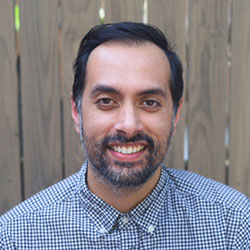
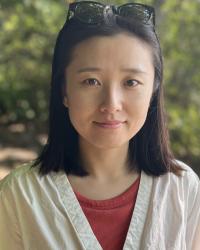
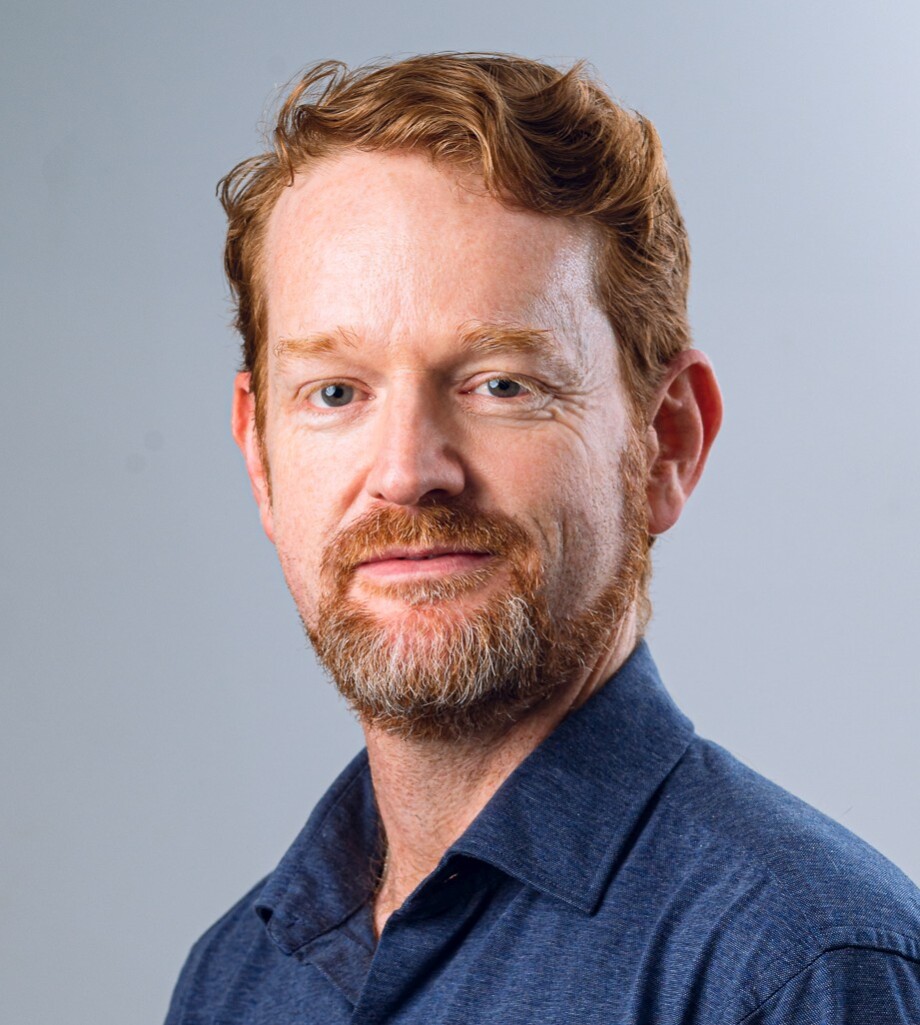
Dimitris E. Anagnostou is an Associate Professor at Heriot-Watt University's Institute of Signals, Sensors and Systems, specializing in Applied Electromagnetics with a focus on reconfigurable antennas, metamaterials, and wearable RF technologies. Heriot-Watt University IEEE Senior Member International Journal Editorial Board Research Highlights: Pioneering work in VO2 Phase-Change Antennas QR Code Security Antennas Record Gain-Bandwidth Cavity Antennas Paper-Based Eco-Friendly Designs Key applications span Defense, 5G, Space Telecommunications, and Assisted Living. Scientific Recognition: DARPA Young Faculty Award (2011) IEEE John Kraus Antenna Award (2010) ASEE Campus Star Award UNM Young Alumni Award Advising Legacy: Mentored 15+ graduate/undergraduate researchers including: Dr. Mina Iskander (Qualcomm) Dr. Muhannad Al-Tarifi (UC Boulder) Reem Al-Alawy (Top EEE Student)
Dr. Jiaming Fu is an Assistant Professor in the Department of Mechanical Engineering at the University of West Florida, part of the Hal Marcus College of Science and Engineering. He is actively involved in teaching and research, focusing on robotics and dynamic systems. Education: Ph.D. in Technology (Robotics Track), Purdue University, 2024 M.S. in Mechanical Engineering, Columbia University, 2020 B.S. in Mechanical Engineering, Florida Institute of Technology, 2017 Dr. Fu's research centers on robotics, particularly collaborative and soft robotics, variable stiffness mechanisms, compliant design, grasping, control, and AI in mechanical systems. His work emphasizes safety and adaptability in human-robot interaction, with applications in manufacturing and healthcare. He has published extensively in high-impact journals such as ASME Journal of Mechanisms and Robotics and IEEE conferences including ICRA and ReMAR. His recent publications (2021–2024) highlight innovations in variable stiffness actuators, force sensing, rehabilitation robotics, and intelligent control. He holds multiple pending patents in robotic grippers and rehabilitation tools. Dr. Fu teaches Dynamic Systems and leads the BattleBots Enterprise Project, fostering hands-on learning. Scientific Awards: ASME Top Senior Award Dr. Fu actively contributes to the academic community as a reviewer for IEEE Transactions on Biomedical Engineering, IEEE Transactions on Circuits and Systems for Video Technology, ASME Journal of Mechanisms and Robotics, and conferences like IEEE BioRob, ICRA, and IDETC-CIE. He mentors students through research and project-based learning, though specific advisees are not listed. He has not received explicit grant mentions in the text, but his patent activity and publication record suggest funded research. He is involved in enterprise teams like BattleBots, promoting student innovation in robotics.
Emmanuel Vander Poorten is an Associate Professor at the Faculty of Engineering Technology, KU Leuven, specializing in surgical robotics and medical device design. He leads the Robotics, Automation and Mechatronics (RAM) research group and serves as head of the RAS subdivision. Research Interests: Surgical Robotics, Medical Device Design, Haptics, Teleoperation, Virtual Reality Training Key Projects: MIRACLE, RIVUS, AR-Spine, ARTISTE, SafeRPlan Institute Memberships: Leuven Centre for Affordable Health Technology, DigiSoc – KU Leuven Digital Society Institute, iSi Health, Leuven.AM, Leuven.IRD His work focuses on integrating robotic systems with advanced sensing technologies for minimally invasive procedures in spine surgery, vascular interventions, and fetal operations. Current research emphasizes autonomous systems, augmented reality guidance, and reinforcement learning for surgical safety. Emmanuel contributes to teaching in robotics and drive systems at KU Leuven, including courses on autonomous vehicles, machine design, and mechatronics.
Esperanza Rivera de Torre is an Assistant Professor at the Department of Biotechnology and Biomedicine, Technical University of Denmark. Her research focuses on antibody engineering, venomics, and protein design, particularly in neutralizing venom toxins and cancer therapy. Current affiliation: Department of Biotechnology and Biomedicine (DTU) Academic rank: Assistant Professor Research Interests Specializing in antibody engineering to develop synthetic antivenoms using de novo protein design. Investigating snake venom toxins and their neutralization mechanisms via VHH antibodies. Contributing to protemics and peptide sequencing through AI-driven tools like InstaNovo. Studying structural biology of actinoporins and their interactions with lipid membranes. Active in cross-neutralizing antibodies for tropical diseases and allergens. Advising and Collaborations Supervises multiple PhD students including Ruiz Espi, Møller, and Møiniche. Collaborates on projects like AI-driven protein binder design and allergen epitope characterization. Engages in international collaborations across venom and biomedical research fields.
Samuli Simelius is an active University Researcher at the Centre for European Studies, University of Helsinki. He serves as Supervisor for the Doctoral Programme in History and Cultural Heritage and is affiliated with the Helsinki Inequality Initiative (INEQ) and Law, Governance and Space research group. His work bridges traditional archaeological methods with innovative digital approaches, particularly focusing on ancient social structures and urban environments. Simelius specializes in Roman urbanism, social inequality in antiquity, and the application of digital humanities to historical research. His recent work heavily features AI-assisted analysis of ancient social stratification, particularly examining visual representations of inequality in Roman urban contexts. His research combines traditional archaeological fieldwork with cutting-edge digital methodologies, creating interdisciplinary bridges between historical studies, spatial analysis, and computational approaches. He has been actively involved in multiple research projects focused on Roman urban inequality, including the RUIn project and the Urbaani eriarvoisuus antiikin Roomassa initiative. His publication trends show a significant shift toward digital methodologies in the last few years, with numerous 2024-2025 publications exploring AI applications in historical research, Roman urban inequality metrics, and visual reconstructions of ancient social structures. This represents an evolution from his earlier work which focused more on Pompeian gardens, Roman domestic architecture, and spatial analysis of ancient cities. Simelius maintains an active presence in academic discourse through 108 recorded activities including conference presentations, public talks, and academic visits. His media engagement demonstrates a commitment to public scholarship, with 8 media contributions discussing historical accuracy in video games, ancient societal structures, and contemporary relevance of classical studies. His research is supported by multiple active projects including the RUIn project (2024-) and Urbaani eriarvoisuus antiikin Roomassa (2025-2028), funded by Kone Foundation and Säätiö Institutum Romanum Finlandiae. He participates in international collaborations including the Casa della Regina Carolina Project (since 2018) and the Ancient Labor Network (2024), demonstrating extensive engagement with the global archaeological community. His institutional affiliations with the Helsinki Inequality Initiative position his work at the intersection of historical research and contemporary social inequality studies.
R. R Ruan is a Professor in the Department of Bioproducts and Biosystems Engineering at the University of Minnesota's College of Food, Agricultural and Natural Resource Sciences. His work aligns with UN Sustainable Development Goals through innovations in bioproducts engineering. Research focuses on non-thermal plasma technology, microalgae biotechnology, and biomass conversion Current projects include plasma-assisted ammonia production, PFAS remediation, and AI-driven microalgae cultivation Recent publications highlight advancements in: Thermoresponsive encapsulation systems for food science Microalgae-based soil nutrient management AI optimization of autotrophic cultivation Nanocellulose synthesis using waste biomass His work demonstrates interdisciplinary applications spanning agricultural engineering, biomedical research, and environmental sustainability.
Dr. Aditya Devarakonda is an Assistant Professor in the Department of Computer Science at Wake Forest University, where he teaches courses in algorithms, data structures, and parallel numerical optimization. Prior to joining Wake Forest, he was an Assistant Research Scientist in the Department of Physics and Astronomy at Johns Hopkins University. His educational background includes: Ph.D. in Computer Science from the University of California, Berkeley (2018) B.S. in Electrical & Computer Engineering from Rutgers University, New Brunswick (2012) Dr. Devarakonda's research focuses on high performance computing and machine learning , with particular emphasis on communication-avoiding algorithms for parallel systems. His work spans several key areas: Redesigning machine learning algorithms to reduce communication bottlenecks in distributed systems Developing communication-avoiding variants of optimization methods like block coordinate descent Exploring novel training techniques for deep learning models that improve performance on multi-GPU systems Implementing matrix factorization techniques that scale efficiently across distributed architectures His publication record shows a consistent focus on communication efficiency in parallel computing, with numerous papers on avoiding communication in various optimization methods. His research has evolved from foundational work on communication-avoiding Krylov methods to applications in machine learning and deep learning. Recent publications indicate expanding interests in graph neural networks and distributed Shapley values. Dr. Devarakonda has received notable recognition for his work: NSF Graduate Research Fellowship EECS Department Fellowship While specific advising information isn't detailed in the available materials, Dr. Devarakonda teaches graduate courses including CSC 721 (Theory of Algorithms) and CSC 790 (Parallel Numerical Optimization), suggesting he likely mentors graduate students in high performance computing and machine learning. His research appears to be supported by grants related to high-performance computing and machine learning optimization. His work leverages parallel computing infrastructure, including Cray supercomputers and NVIDIA GPU clusters, to develop and test communication-avoiding algorithms. His research group likely focuses on implementing and benchmarking these algorithms across various distributed computing platforms.
Dario Rodighiero is an Assistant Professor of Science and Technology Studies at the University of Groningen's Campus Fryslân, specializing in knowledge design, critical data, and digital humanities. He coordinates the Data Wise minor and teaches in the Data Science and Society program. He holds affiliations as a principal at metaLAB (at) Harvard and a faculty associate at the Berkman Klein Center for Internet & Society. His research bridges design, data, and humanities to map cultural/scientific dynamics through projects like Super-Vision (EPFL history via 8,000 theses) and the Weather Map (controversy analysis). He authored Mapping Affinities: Democratizing Data Visualization (2021) and holds a PhD from EPFL. He has lectured globally (CERN, Ars Electronica) and exhibited at MAXXI and Harvard Art Museums. Education: PhD in Sciences (EPFL), Doctoral Program in Architecture and Sciences of the City. Research Interests : Focuses on visualizing complex systems, interdisciplinary collaboration, digital archives, and controversy mapping. Develops tools for IIIF interfaces, cultural heritage analysis, and pandemic visualization (COVIC project). Grants & Labs : Works with metaLAB on projects like Surprise Machines (Harvard Art Museums) and Curatorial A(i)gents. Affiliated with Edgelands Institute (Fellow) and Freie Universität Berlin (Senior Fellow). Key Projects : Orchestrating Peirce’s PAP Manuscript, 3D Cartography of COVID-19, and the Analogous City digital mapping.
Xi Ma is an Assistant Teaching Professor and Chinese Language Coordinator at the University of Washington , affiliated with the Department of Asian Languages & Literature . He specializes in Chinese language education and pedagogy, integrating technology-enhanced teaching methods. His research interests span database systems and machine learning, focusing on hybrid workloads, explainable AI, and relational data structures. Xi Ma teaches Chinese language courses and contributes to broader language programs including Bengali, Hindi, Japanese, Korean, and more. He actively publishes in areas such as tensor optimization, counterfactual explanations, and layered analytics engines, reflecting a dual commitment to teaching and cutting-edge research. His recent work emphasizes improving data processing efficiency through innovations like the Geco framework for real-time counterfactual explanations and LMFAO for batch group-by aggregates. These contributions highlight his expertise in merging database systems with modern machine learning techniques.
Talia Ringer is an Assistant Professor at the University of Illinois Urbana-Champaign, affiliated with the Grainger College of Engineering and the Siebel School of Computing and Data Science. Her research focuses on proof engineering, formal verification, and bridging neural and symbolic proof automation. She holds a PhD in Computer Science from the University of Washington and a BS in Mathematics and Computer Science from the University of Maryland. Prior to academia, she worked at Amazon as a software engineer. Ringer is known for founding initiatives like SIGPLAN-M and the Computing Connections Fellowship, fostering inclusivity in computer science research. She has received prestigious awards including the 2023 ACM SIGPLAN Distinguished Service Award and the DARPA Young Faculty Award. Education: PhD, University of Washington (2021); BS, University of Maryland (2012) Research Areas: Dependent Type Theory, Verification, Interactive Theorem Proving, Proof Automation, Formal Methods Awards: ACM SIGPLAN Distinguished Service Award (2023), ESEC/FSE Distinguished Paper Award (2023), DARPA Young Faculty Award (2023) Her work emphasizes making formal verification accessible to programmers through tools like Proof Repair and Baldur , while advocating for ethical AI research and LGBTQ+ inclusivity. She advises a diverse team of graduate and undergraduate students in the Illinois Theorem Provers (ITP) lab, exploring topics including proof repair, reinforcement learning for proofs, and quotient type equivalences.
Eleanor O’Rourke is an Associate Professor at Northwestern University, holding a joint appointment in Computer Science and the Learning Sciences. She co-directs the Delta Lab, focusing on interdisciplinary research at the intersection of Human-Computer Interaction, AI, and educational systems. Education: Ph.D. in Computer Science & Engineering from the University of Washington (2016), MS from the University of Washington (2012), and BA in Computer Science and Spanish from Colby College. Research Interests: Design of technology-enabled learning experiences Educational games and playful learning Growth mindset interventions Real-time classroom data visualization Awards: Google Anita Borg Scholarship Microsoft Research Graduate Women’s Scholarship Best Paper Awards at ICER 2024 and CHI 2012 Grants & Advising: Funded by NSF (CAREER, CRII, Cyberlearning) and Google Advises Ph.D. students in CS, Learning Sciences, and joint programs Labs & Impact: Co-leads the Delta Lab, developing tools like Ply (web inspector) and Brain Points (growth mindset incentives). Interventions have reached 100,000+ students globally.
Professor Jonathan Paxman is a faculty member in the School of Civil and Mechanical Engineering at Curtin University, affiliated with the Faculty of Science and Engineering and the Office of the Provost. He holds a PhD (Cantab.) and is a Fellow of the Institute of Engineers Australia (FIEAust) and the Society for Higher Education in Australia (SFHEA). His research focuses on space systems engineering, meteor detection, planetary crater analysis, assistive technologies, and autonomous robotics control. Education: PhD in Engineering from the University of Cambridge (Cantab.), MPhil, and professional certifications in engineering and higher education. Teaching: Courses include Microcontroller Project and Linear Systems and Control . His research innovations include the Desert Fireball Network (DFN), a continental-scale meteor tracking system, and the Fireballs in the Sky citizen science app. He has pioneered automatic crater detection algorithms for Mars surface dating and developed control systems for autonomous spacecraft and robots. Key awards include the 2021 Research Team of the Year (Binar Space Program), 2016 Eureka Prize for Innovation in Citizen Science, and multiple teaching excellence citations. His work bridges academia and industry through projects like the Binar lunar mission series and assistive technologies for disability support. Grants and collaborations: Extensive funding for space exploration and planetary science projects. His team’s work has led to meteorite recoveries (e.g., Murrili) and contributed to Mars surface age mapping. Active in STEM outreach and curriculum innovation, including transforming pedagogy in science and engineering education. Labs/Teams: Leads the Desert Fireball Network and collaborates with NASA, ESA, and industry partners on space systems and planetary research initiatives.
Dr. Deborah Do Rosario Benros is a Senior Lecturer and Cluster Lead in Architecture at the University of East London. She specializes in computational design methodologies, robotic manufacturing, and sustainable micro-housing solutions. Her research bridges architectural theory with digital fabrication technologies, focusing on generative design systems and mass customization. Research interests span generative multilingual shape grammars, 3D printing applications in large-scale construction, and AI-assisted co-design processes. Her work emphasizes sustainable housing innovation through parametric modeling and robotic construction techniques. Recent publications demonstrate consistent focus on AI-driven design collaboration, robotic fabrication efficiency, and sustainable modular systems. Trends include increased integration of machine learning with architectural prototyping and human-AI co-creation frameworks. As Cluster Lead, she oversees research initiatives in Architecture, Computing & Engineering, fostering cross-disciplinary innovation in digital manufacturing.
Dr. Jing Wu is an Assistant Professor in the Department of Electrical and Photonics Engineering at the Technical University of Denmark. Her research focuses on bridging human cognition with system functionality, particularly in the domains of process safety, hazard analysis, and human-robot collaboration. She develops frameworks for risk-informed design and integrates Industry 4.0 principles into sustainable logistics and maintenance optimization. Her recent publications emphasize cognitive decision support in energy systems, functional safety in robotics, and advanced hazard analysis techniques using multilevel flow modeling. These works demonstrate a consistent focus on improving system reliability and safety through interdisciplinary approaches combining engineering, AI, and human factors. Dr. Wu contributes to sustainable industrial evolution through dynamic maintenance frameworks and explores the integration of sustainability principles with emerging technologies across logistics and automation systems.
Dr. Tien Nguyen is an Associate Professor in the Department of Computer Science at UT Dallas' Erik Jonsson School of Engineering. His research focuses on software engineering innovations, particularly in machine learning applications for code analysis, vulnerability detection, and automated testing. He develops neural network approaches to enhance software quality and security. Recent publications demonstrate strong emphasis on AI-driven software solutions, including GPT-based test generation, neural vulnerability scanners, and code representation learning. His team's work bridges theoretical computer science with practical developer tools, evidenced by studies on syntactic sugar design and program dependence learning. Dr. Nguyen's lab maintains active industry collaborations, with translational research addressing real-world challenges in code maintenance and cybersecurity. Current projects explore context-aware code analysis and self-improving language models for programming assistance.