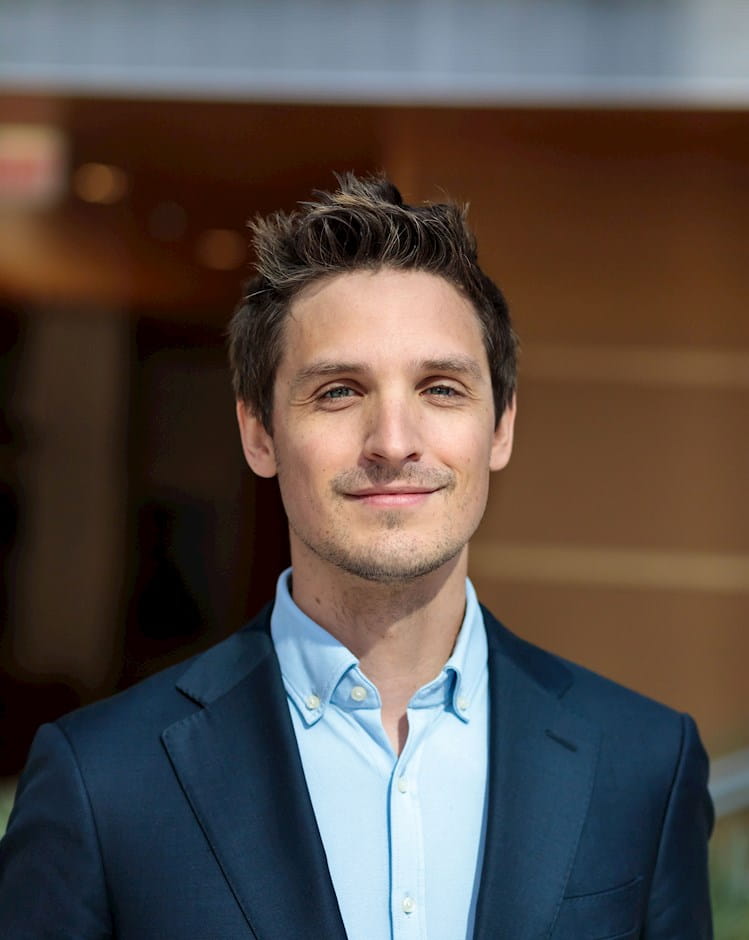
Dr. Kate Sala is a Lecturer and Assistant Program Manager of the Bachelor of Fashion & Textiles (Sustainable Innovation) at RMIT University's School of Fashion and Textiles in Melbourne, Australia. Her research focuses on the intersection of digital practices and sustainable fashion education, leveraging emerging technologies like generative AI to redefine pedagogy and creative processes in sustainable fashion. She has over 15 years of international experience in cities like Paris, Antwerp, and Melbourne, with expertise in sustainable innovation, critical design education, and future fashion systems. Her work emphasizes experimental course design and interdisciplinary approaches that integrate creativity, technology, and sustainability. She actively contributes to conferences and publications, advocating for transformative teaching strategies to prepare students for the evolving fashion industry. Dr. Sala holds a PhD in transformative sustainable fashion education and is open to supervising Masters Research or PhD students.
Mustafa Hajij is an Assistant Professor in the Data Science program at the University of San Francisco. He holds a PhD in Mathematics from Louisiana State University, an MS in Computer Science, and completed postdoctoral training at University of South Florida and Ohio State University. Previously, he served as Assistant Professor at Santa Clara University and as an AI Research Scientist at KLA Corporation. His research develops foundational frameworks for topological deep learning, including cell complex neural networks and geometric learning architectures that operate beyond graph domains. He leads the NSF-funded project 'A Unifying Deep Learning Framework Using Cell Complex Neural Networks' (DMS-2134231, $547,626). Recent publications establish new paradigms for topological representation learning, including combinatorial complexes and simplicial networks, with applications in computational biology, 3D vision, and drug discovery. He organized the ICML Topological Deep Learning Challenges and develops open-source tools like TopoX for topological learning.
Sarah Blacker is a Sessional Assistant Professor in the Department of Social Science’s Health & Society Program at York University’s Faculty of Liberal Arts & Professional Studies. Her work critically examines intersections of race, health equity, and settler colonialism. Currently on leave until May 2024, she holds affiliations with York University’s Robarts Centre for Canadian Studies and previously held postdoctoral fellowships at the Max Planck Institute for the History of Science and the University of Alberta. Education: PhD (University of Alberta), MA (McMaster University), BAH (University of King’s College). Research focuses on racialization in biomedicine, environmental justice, Indigenous knowledge governance, and data justice in health care. Her book project Warding off Disease: Racialization and Health in Settler Colonial Canada explores colonial legacies in healthcare systems. Recent publications address citizen science ethics, algorithmic discrimination, and racialized environmental health inequities. Professional background includes roles as SSHRC Postdoctoral Fellow (York University, 2019-2021), Lecturer at Munich Center for Technology in Society (2015-2019), and Research Associate at Robarts Centre. Her work critiques systemic racism in healthcare policies and advocates for decolonizing scientific practices.
Giulia Boato is an Associate Professor at the University of Trento’s Department of Information Engineering and Computer Science (DISI). She teaches courses in Probability and Multimedia Data Security. Her expertise spans Cyber Security, Digital Forensics, and Multimedia Analysis, focusing on image and signal processing for data protection, forensics, and anti-forensics. She collaborates internationally with institutions like Tampere University of Technology and Dartmouth College, co-advising PhD students and contributing to European projects like LIVINGKNOWLEDGE and GLOCAL. Education: PhD in Information and Communication Technology (2005), M.Sc. in Mathematics (2002), Scientific Lyceum (1998) with bilingual Italian-German certification. Past roles include Assistant Professor at DISI (2006–2018) and visiting researcher at the University of Vigo (2006) and University of Innsbruck (2018). Research interests include multimedia data protection, image forensics (tampering detection, computer vs. natural data discrimination), and intelligent data management. She leads projects on social media forensics, event-based retrieval, and synthetic media detection. Awards include Best Paper at IEEE WIFS 2012 and Top 10% Paper at MMSP 2012. Professional contributions include roles as co-chair of workshops, Technical Program Committee member for ICIP and ICC, and reviewer for journals like IEEE Transactions on Information Forensics and Security. She has advised PhD theses and contributed to datasets like TrueFace and WILD for synthetic media analysis.
Juan Rojas, MD, MS is an Assistant Professor in the Department of Internal Medicine at Rush Medical College. He holds multiple leadership roles including Associate Chief Medical Information Officer and Director of the Rush Health Equity Analytics Studio. He is also the Associate Program Director for the Clinical Informatics Fellowship. His research focuses on critical care medicine, healthcare informatics, and machine learning applications in healthcare. Dr. Rojas leads the Rush Health Equity Analytics Studio, addressing disparities through data-driven solutions. He is a key contributor to the Common Longitudinal ICU Data Format (CLIF) initiative, advancing multi-institutional critical care research. His work emphasizes standardizing ICU-to-ward handoffs via tools like the ICU-PAUSE framework, improving communication and patient outcomes. His research spans ventilator management, sepsis protocols, and AI-driven predictive models for ICU readmissions and discharge planning. Collaborations across institutions highlight his commitment to evidence-based practices in critical care and health equity. He has also explored the impact of cultural factors, such as patient language preferences, on sedation practices in intensive care settings. Dr. Rojas has led quality improvement projects to enhance resident education and patient care in pulmonary and critical care fellowships. His contributions to national surveys on AI adoption in healthcare provide insights into health system priorities and challenges. His work continues to bridge clinical practice, technology, and health equity in critical care environments.
Gita Reese Sukthankar is a Professor in the Department of Computer Science at the University of Central Florida (UCF) , where she directs the Intelligent Agents Lab . Her research focuses on activity and plan recognition , with applications in multi-agent systems, robotics, and human-robot interaction. She earned her Ph.D. from the Robotics Institute at Carnegie Mellon University and joined UCF in fall 2007. Research Interests: Her work spans activity recognition , intent inference , multi-agent coordination , and human-robot teams . She has applied these techniques to domains such as adversarial games (e.g., military simulations, Unreal Tournament), assistive technologies, and cooperative robotics. Her research integrates AI, machine learning, and probabilistic models to understand and predict complex team behaviors. Publication Trends: Her publications emphasize spatio-temporal modeling , probabilistic graphical models (e.g., HMMs, CRFs) , and multi-agent plan recognition . She frequently publishes in top venues like AAMAS, AAAI, and ICRA, with a focus on robust recognition of team behaviors, transfer learning, and real-world AI applications. Scientific Awards: NSF CAREER Award (2009) AFOSR Young Investigator (2009) ONR Summer Faculty Fellow (2008) UCF Faculty Excellence for Doctoral Mentoring (2012) CECS Dean's Research Professorship (2013) AAAI Senior Member (2021) ACM and IEEE Senior Member Advising and Grants: She mentors graduate students in AI and robotics and has led research funded by DARPA, AFOSR, and ONR. Her lab develops systems for intelligent agents that can understand and collaborate with humans. She has served on numerous program committees and editorial boards, including ACM Transactions on Autonomous and Adaptive Systems . She teaches courses such as Intelligent Systems , Robotics , and Machine Learning , and has been recognized for both research and teaching excellence. Labs and Teams: She leads the Intelligent Agents Lab at UCF, which focuses on data-driven social informatics and AI for human-agent teams. Her group collaborates with researchers in robotics, computer vision, and cognitive science to build adaptive, intelligent systems.
Shahin Jabbari is an Assistant Professor in the Computer Science Department at the College of Computing & Informatics, Drexel University, where he is a member of the EconCS research group. His research lies at the intersection of machine learning, game theory, and algorithmic fairness, with a focus on ethical AI and its societal implications. Prior to Drexel, he was a CRCS postdoctoral fellow at Harvard University's School of Engineering and Applied Sciences, hosted by Milind Tambe, and affiliated with the EconCS group. Education: PhD in Computer and Information Science, University of Pennsylvania (2013–2019), advised by Michael Kearns Master's in Computing Science, University of Alberta, advised by Robert Holte and Sandra Zilles Bachelor's in Computer Engineering, Sharif University of Technology His research interests center on machine learning, algorithmic fairness, and game theory, particularly focusing on how AI systems can be designed to be more equitable, interpretable, and robust. He investigates ethical aspects of algorithmic decision-making, aiming to ensure AI technologies contribute positively to society. His work often integrates human behavior modeling and experimental validation, especially in cybersecurity and public health domains. His recent publications span top venues including ICML, NeurIPS, AAAI, AAMAS, PNAS, and TMLR. The research trends show a consistent focus on fairness in AI, explainability, robustness, and strategic interactions in complex systems. Topics include fair influence maximization, adaptive phishing training, cyber deception games, and ethical machine learning frameworks. These works reflect a multidisciplinary approach combining theoretical rigor with real-world applicability. Scientific Awards and Recognitions: Best Paper Finalist, AAMAS 2021 Best Paper, GameSec 2020 Spotlight Presentation, ICML 2021 Best Paper, KI 2012 Shahin Jabbari actively contributes to the academic community through advising, teaching, and service. He teaches graduate courses such as CS 589: Responsible Machine Learning and CS 590: Privacy. He has served on the senior program committees of ICML and NeurIPS, is an Action Editor for TMLR, and has reviewed for numerous top-tier conferences and journals. He mentors students through research projects and invites prospective PhD candidates to apply through Drexel’s formal channels. He is involved in the Drexel Computer Science Theory Reading Group and contributes to advancing responsible AI practices. He is affiliated with the EconCS group at Drexel, which focuses on economic and computational aspects of AI, including game theory, mechanism design, and multi-agent systems. His lab integrates tools from machine learning, behavioral modeling, and optimization to develop AI systems that are not only intelligent but also fair and trustworthy. Future work is expected to further explore human-AI collaboration, ethical AI deployment, and policy-aware algorithm design.
André M. Carvalho is an Assistant Professor of Quality Engineering and Management at the NOVA School of Science and Technology, NOVA University Lisbon, Portugal. He holds a PhD (2020) in Engineering Design and Advanced Manufacturing from the University of Minho/MIT Portugal Program. His career includes postdoctoral research at the Technical University of Denmark (2020) and visiting roles at MIT (2018–2020) and Northeastern University (2019). His research focuses on sociotechnical systems, quality management, organizational culture, agility, and sustainability. He explores how organizations adapt to global challenges through methodologies like Lean Six Sigma and Industry 4.0 frameworks. Education: PhD in Engineering Design and Advanced Manufacturing (2020) – University of Minho/MIT Portugal Program Research Interests: Carvalho’s work bridges quality management with organizational agility, emphasizing digital transformation, Industry 4.0/5.0, and sustainable practices. He investigates frameworks for operational excellence, such as the Quality 4.0 Roadmap and the QOE-SME model for small/medium enterprises. His studies address challenges like supply chain quality, data-driven decision-making, and organizational culture’s role in innovation. Article Trends: His recent publications (2022–2025) highlight themes like Lean Six Sigma applications in healthcare, AI-driven quality forecasting, and Industry 4.0 integration. He also explores ESG factors in performance optimization and the evolving profile of quality leaders in the digital era. Awards and Recognition: Acknowledged by the Industrial Engineering and Operations Management (IEOM) Society, International Academy for Quality (IAQ), and American Society for Quality (ASQ) for research contributions. Grants and Advising: While specific grants are not detailed, his postdoctoral and visiting roles suggest institutional support. Advising focuses on doctoral/master’s students (not listed explicitly in the text).
Dr. Michał Kalisz is an Assistant Professor in the Department of Computer Science at the John Paul II Catholic University of Lublin, affiliated with the Faculty of Philosophy. His work bridges theoretical computer science with practical applications in artificial intelligence (AI) across education and business domains. Research Focus: AI ethics, educational technology, business informatics, and knowledge representation. Academic Contributions: Recently presented four conference papers between 2023-2024, exploring AI's role in education (opportunities/threats, knowledge limits), public AI literacy, and business applications. Professional Engagement: Acted as a reviewer for the Annals of Social Sciences , led international workshops (USA, Europe), and participated in the Lublin Science Festival.
Jean-Marc Jezequel is a Professor of Software Engineering at University of Rennes , affiliated with CNRS , Inria , IRISA , and Institut Universitaire de France (IUF) . His research focuses on Model-Driven Engineering , Software Product Lines , Dynamic Adaptation , and Executable Meta-languages . Key Contributions : Pioneering work in aspect-oriented and model-driven approaches for software evolution Foundational research on model transformations (e.g., UMLAUT framework) Advances in testing and validation of distributed systems Research Trends from his recent publications include: Intelligent modeling assistance integrating machine learning Contextual variability modeling for complex systems Runtime model execution for self-adaptive systems Formal methods and constraint resolution for UML validation Collaborations include researchers from Luxembourg, Montreal, Colorado State University, and INRIA.
Dr. Anna Bendrat is an Assistant Professor at the Department of English and American Studies, Maria Curie-Skłodowska University, Poland. A scholar in Rhetoric, American Drama, and Cognitive Poetics, she is actively involved in interdisciplinary research, particularly through the Cognitive Studies Team and the International Federation for Theatre Research (IFTR). Her research interests span Rhetoric, Social Communication, Identity Studies, New Media, and Affect Studies. She has led the EU Erasmus+ project MigraMedia (2023–2026) and co-founded the journal New Horizons in English Studies . Her work bridges academic rigor with public engagement, including organizing the Media in America, America in Media conference series. Anna’s recent publications interrogate urban trauma in Pulitzer-winning drama, AI’s role in reconstructing memory, and cognitive texture in multi-perspective narratives. Her scholarly activities are enriched by editorial roles in Res Rhetorica and New Horizons in English Studies , alongside grants for research in New York and Poland. She mentors the UMCS Philology Student Circle, promoting anglophone cultures, and maintains a focus on Polish-American academic collaborations. Her research team explores digital rhetoric, migration narratives, and the intersection of literature with cognitive theory.
Emilia Barakova is an Associate Professor at the Industrial Design Department of Eindhoven University of Technology. She leads the Social Robotics Lab and Transdisciplinary Research & Design cluster, focusing on robotics for autism intervention and cognitive assistance. PhD in Mathematics & Natural Sciences (University of Groningen, 1999) MSc in Electronics & Automation Engineering (Technical University of Sofia, Bulgaria) Her research merges robotics, cognitive science, and AI to develop embodied agents for social skills training in autistic children and well-being enhancement for people with disabilities. She co-developed the TiViPE programming environment for customizable robot therapy scenarios. Key publication trends show emphasis on: Human-robot interaction for autism therapy Emotion recognition via movement analysis Visual programming frameworks for robot customization Multi-agent systems in social training She serves as Associate Editor for journals including International Journal of Social Robotics and Transactions of Human-Machine Systems , and has held academic positions at RIKEN Brain Science Institute and German-Japanese Robotics Research Lab.
Mehmet Uğur KAHRAMAN is an Assistant Professor at the Department of Interior Architecture and Environmental Design at Antalya Bilim University, where he has served since 2017. Previously, he held a faculty position at Kayseri Nuh Naci Yazgan University (2015–2017). His academic journey includes a Doctorate from Hacettepe University (Interior Architecture and Environmental Design), a Master of Design (Interior Design) from Swinburne University of Technology (Australia), and a Bachelor’s degree from Hacettepe University’s Department of Interior Architecture and Environmental Design. Before academia, he worked as a construction site manager at KG Architecture in Istanbul, co-founded the food and beverage brand 'Shot&Bite' in Ankara, and later served as a designer at QUBİ Design Office. His research focuses on integrating artificial intelligence into design education, neurocognitive aspects of spatial design, sustainable materials, and pedagogical innovations in interior architecture education. He has authored over 20 peer-reviewed articles on topics ranging from AI-driven furniture design to multisensory hospitality spaces. His work bridges theoretical research with practical applications, such as developing curriculum models for design studios and exploring waste-to-art construction techniques. KAHRAMAN’s studies also address health impacts of building materials and the psychological dimensions of housing during crises like the COVID-19 pandemic. He maintains active research collaborations, particularly in Turkey and Australia, and has contributed to public infrastructure projects involving material conservation and adaptive reuse. His educational philosophy emphasizes student-centered learning, interdisciplinary approaches, and leveraging digital tools for contemporary design challenges.
Jaron Mink is an Assistant Professor at Arizona State University's School of Computing and Augmented Intelligence, leading the Human Aspects in cyber Protections and Privacy Lab (Happy Lab). His research focuses on the intersection of usable security, machine learning, and system security, particularly exploring how human factors impact ML security. He holds a Magna Cum Laude from UCLA and completed graduate studies at the University of Illinois at Urbana-Champaign (UIUC), where he served as a Teaching Assistant and Guest Lecturer in Computer Security courses. Education: University of California, Los Angeles (UCLA) - Bachelors (Magna Cum Laude) University of Illinois at Urbana-Champaign (UIUC) - PhD in Computer Science Research Interests: Human-ML Interaction Dynamics Deepfake Detection and User Perception Adversarial ML Defense Adoption Barriers User Trust in Security Tools Privacy-Preserving Technology Design His work bridges technical security solutions with human-centric usability challenges, emphasizing real-world application in social media, fitness apps, and enterprise systems. Recent Publications: Focus on quantifying sociodemographic influences in security behaviors, analyzing deepfake moderation biases, and evaluating ML security tool usability across industries. Awards: Google Research Scholar Program NSF Graduate Research Fellowship Teaching: Instructs courses like Information Assurance and Trustworthy Human-ML Interaction at ASU, previously teaching Computer Security II at UIUC. Labs/Teams: Directs the Happy Lab, actively recruiting PhD students to tackle challenges in human-centric cybersecurity and privacy. Hobbies: Passionate about vintage dance styles (Lindy Hop, Blues, Balboa) and strategic board games like Spirit Island and War of the Ring .
Maximilian Muhn is an Associate Professor of Accounting at the University of Chicago Booth School of Business. He joined Chicago Booth as an assistant professor of accounting in 2019 and was promoted to Associate Professor. His academic career focuses on empirical accounting research with particular emphasis on financial transparency and disclosure practices. Muhn received his PhD in accounting from Humboldt University of Berlin and holds an MSc and BSc in business administration from the University of Münster, Germany. Prior to his academic career, he gained professional experience in consulting (McKinsey & Company and Boston Consulting Group), auditing (KPMG and Deloitte), and management accounting (BASF and ThyssenKrupp Steel). His research primarily investigates the determinants and consequences of firms' financial transparency, as well as the effects of financial market and transparency regulation. Muhn employs diverse methodologies including field experiments, archival studies, and applications of large language models in financial analysis. His work examines how different stakeholders (investors, consumers, regulators) use and respond to corporate disclosures. Muhn teaches Financial Accounting in the Evening and Weekend MBA Program at Chicago Booth, where he aims to enable students to 'speak' the language of accounting and understand its economic foundations. His teaching emphasizes practical applications of accounting concepts in business decision-making. His scholarly contributions include publications in top accounting journals such as the Journal of Accounting Research, with recent work focusing on risk disclosures, financial transparency of private firms, consumer use of firm disclosure, and the application of generative AI in financial analysis. His research often combines traditional accounting approaches with innovative methodologies like large-scale field experiments. Muhn has collaborated with prominent scholars including Luzi Hail, David Oesch, Joachim Gassen, and Christian Leuz. His research has practical implications for corporate disclosure practices, regulatory policies, and investor decision-making. He maintains an active research agenda with several working papers in areas including private firm disclosure, generative AI applications in finance, and social disclosure decisions.






.jpeg)