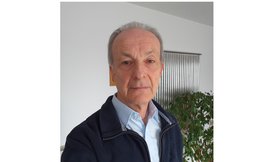
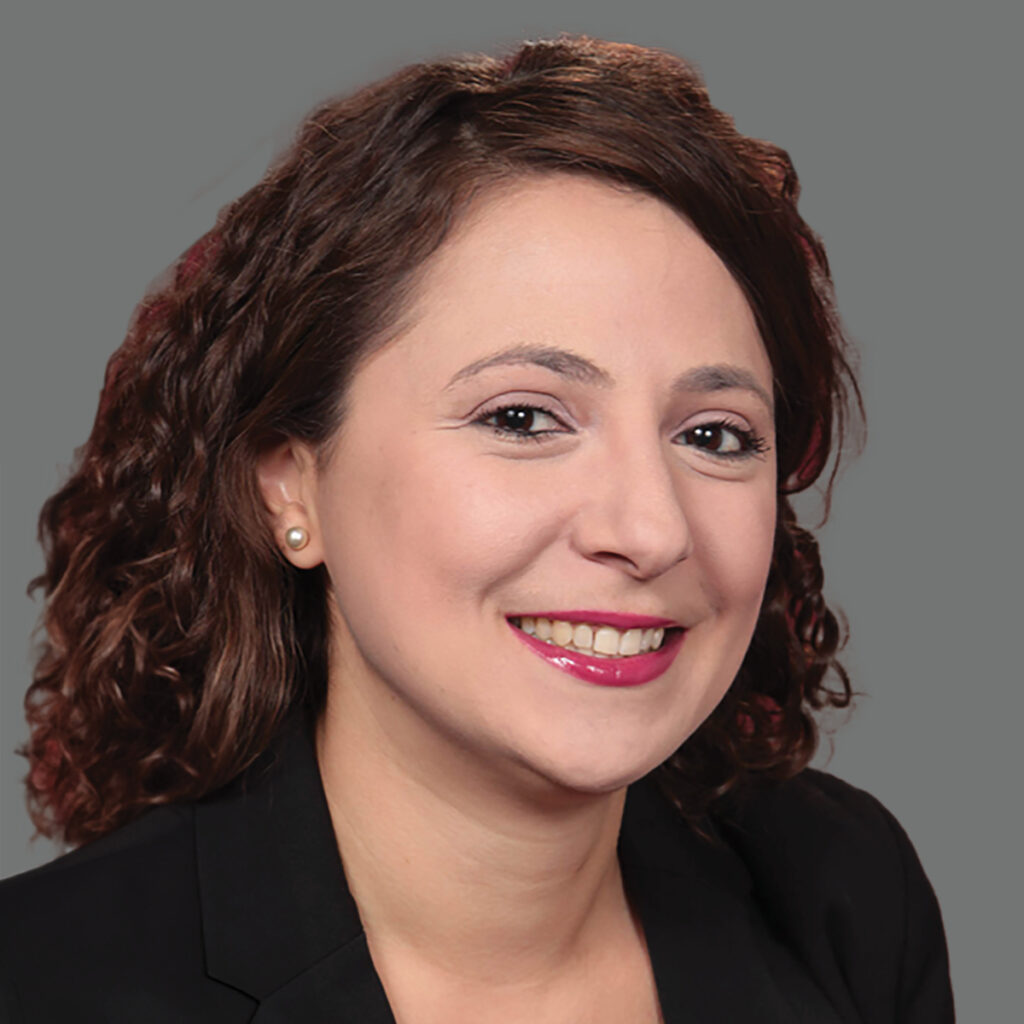
Dr. Deepayan Bhowmik is a Senior Lecturer and Director of Research at Newcastle University's School of Computing. He holds a PhD in Electronic and Electrical Engineering from the University of Sheffield. His research focuses on image/signal processing, AI, neuromorphic vision systems, and their applications in media security, remote sensing, and space research. He actively contributes to UN Sustainable Development Goals related to clean water, environmental sustainability, and responsible consumption. Grants & Collaborations: PI of £2M EPSRC-funded North East Space Communications Accelerator (2025-2029) Co-I in Airbus-funded Smart Earth Observation Satellite Constellation project (2024-2028) Lead on JPEG Trust international standard for media authenticity Research Interests: Combines theoretical advancements in signal processing with practical applications in media forensics, environmental monitoring, and heterogeneous computing. Recent work addresses AI-generated media manipulation detection and satellite imagery analysis for ecological challenges like water hyacinth infestation. Publications: Over 28 peer-reviewed articles spanning watermarking techniques, FPGA optimization, and remote sensing applications. Recent trends show increasing focus on AI-driven media security and space-based earth observation systems.
Wolfgang Oertel serves as Professor of Computer Graphics at Dresden University of Applied Sciences (HTW Dresden) within the Faculty of Informatics and Mathematics. He has held significant leadership roles including Dean of Studies (2009-2012) and Dean (2012-2015) for his faculty, and coordinated international university partnerships (2007-2011). His academic career spans over four decades with appointments at TU Dresden (1984-1998), FhG/IVI Dresden (1999-2004), and TUBA Freiberg (visiting positions in 1998-1999 and 2004-2005). Professor Oertel's research spans computer graphics, computer vision, virtual reality, and artificial intelligence with emphasis on practical applications. His work integrates knowledge representation with visual systems, focusing on spatiotemporal modeling, scientific-technological visualization, and CAD-oriented IT systems. Current projects include the Saxony5 Co-Creation Lab for Artificial Intelligence (2021) and systems for image data processing in scientific infrastructure (SEVVBWG series 2020-2023). His publication trends reveal consistent evolution from database/knowledge processing (1980s-1990s) to computer vision applications (2000s) and sophisticated AI-integrated visualization systems (2010s-present). Recent work focuses on heterogeneous traffic data visualization, knowledge-based graphic object synthesis, and conceptual frameworks bridging AI with virtual reality. Key technical domains include VRML/X3D, OpenCV, VTK, and specialized hardware integration. Award for integrated data processing (Integrata AG Tübingen, 1995) Oertel actively supervises graduate works and leads multiple research projects including Saxony5CCLKI (2021), SEVVBWG2 (2023), and GWMSV traffic simulation (2021). His laboratory maintains extensive equipment including stereo displays, 3D cameras, microscopes, VR headsets, and robotic platforms supporting research in virtual intelligent environments. Current teaching includes Computer Graphics I/II, CAD systems, and Computer Vision courses across multiple informatics programs.
Friedemann Zenke is an Assistant Professor at the University of Basel and a Junior Group Leader at the Friedrich Miescher Institute for Biomedical Research (FMI), Basel, Switzerland. His research lies at the intersection of computational neuroscience, machine learning, and neuromorphic engineering, focusing on modeling memory formation and information processing in neural networks. Assistant Professor, University of Basel (2022–present) Junior Group Leader, FMI (2019–present) SNSF Eccellenza Fellow (2022–2027) Education: PhD, School of Computer and Communication Sciences, EPF Lausanne, Switzerland (2014) Diplom in Physics, University of Bonn and Australian National University (2009) Postdoctoral Fellow, Stanford University (2015–2017) Sir Henry Wellcome Postdoctoral Fellow, University of Oxford (2017–2019) His research interests center on understanding how plasticity mechanisms—such as Hebbian, homeostatic, and predictive plasticity—enable learning and memory in biologically inspired neural networks. He develops computational models using spiking and rate-based networks, leveraging high-performance computing and machine learning tools. His work integrates theoretical analysis from dynamical systems and statistical physics with practical dimensionality reduction techniques to compare model outputs with experimental data. A major focus is on surrogate gradient methods for training non-differentiable spiking networks, enabling their application in neuromorphic hardware. The recent publications highlight a strong trend toward bridging theoretical neuroscience with practical AI and hardware applications. Key themes include credit assignment in spiking networks , energy-efficient neuromorphic learning , biologically plausible plasticity rules , and benchmarking frameworks for emerging neural models. His work increasingly emphasizes the co-design of algorithms and hardware for next-generation brain-inspired computing systems. Scientific Awards: SNSF Eccellenza Fellowship (2022–2027) Wellcome Trust Postdoctoral Fellowship (2016–2019) Swiss National Science Foundation Postdoctoral Fellowship (2015–2016) Teaching Award, EPFL (2012) Marie Curie PhD Fellowship (2010–2014) DAAD Fellowship (2006) Friedemann Zenke leads an active research group at FMI, advising multiple PhD students and mentoring postdoctoral fellows. His research is supported by competitive grants, including the SNSF Eccellenza grant. He is a key member of the Computational Neuroscience Initiative Basel , fostering interdisciplinary collaboration between theoretical and experimental neuroscience. His lab develops large-scale neural network simulations and contributes to open tools for evaluating spiking neural networks, such as the Heidelberg Spiking Data Sets. Future work aims to further unify principles of biological learning with scalable, efficient AI systems.
Andreas G. Andreou is a Professor at Johns Hopkins University with primary appointments in the Department of Electrical and Computer Engineering, and secondary appointments in the Department of Computer Science and the Whitaker Biomedical Engineering Institute. He co-founded the Johns Hopkins University Center for Language and Speech Processing (CLSP) and co-directs the Andreou Lab alongside Philippe Pouliquen. His research focuses on brain-inspired microsystems for sensory information processing, neuromorphic computing, and theoretical neuroscience. Education: Born in Nicosia, Cyprus; resides in Baltimore, Maryland. Research Interests: Computing Machinery, Sensory Information Processing, Theoretical Neuroscience, Pattern Analysis, Machine Intelligence, Microsystems Technologies, and Integrated Circuits. Awards: IEEE Fellow, 3rd Best Paper Award at IEEE BioCAS 2018, and recognition for the award-winning Stethovest wearable acoustic sensing array. His lab explores energy-efficient computing beyond Moore's Law, integrating neuroscience principles into microsystem design. Recent projects include quantum-inspired neuromorphic optimizers, AI-generated chips using ChatGPT4, and applications in cardiac acoustics and wearable technology. Collaborations span institutions like NSF, JHU-APL, and the Telluride Neuromorphic AI workshop. His work is supported by grants from DARPA, NSF, NIH, ONR, AFRL, and JHU-APL. He also holds honorary professorships at the University of Cyprus and Universidad Nacional del Sur.
Dr. Zhiru Zhang is a Professor in the School of Electrical and Computer Engineering at Cornell University and a member of the Computer Systems Laboratory. His research focuses on new algorithms, methodologies, and design automation tools for heterogeneous computing systems, with recent publications centering on high-level synthesis (HLS), hardware specialization for machine learning, and programming models for software-defined FPGAs. Dr. Zhang earned his Ph.D. in Computer Science from UCLA, where he co-founded AutoESL based on his dissertation research on HLS. AutoESL was acquired by Xilinx (now AMD), and its HLS tool evolved into Vivado HLS (now Vitis HLS), which is widely used for designing FPGA-based hardware accelerators. He also holds a B.S. in Computer Science from Peking University and an M.S. in Computer Science from UCLA. Dr. Zhang's research interests span hardware design, high-level synthesis, FPGA acceleration, machine learning acceleration, heterogeneous computing systems, and computer architecture. His work bridges the gap between software algorithms and hardware implementation, focusing on creating efficient design automation tools that enable specialized hardware for emerging applications, particularly in AI and machine learning. His recent publications demonstrate strong trends in differentiable programming for hardware design, sparse computation optimization, and efficient implementation of large language models on FPGAs. Dr. Zhang has received numerous prestigious awards including being named an IEEE Fellow, the Intel Outstanding Researcher Award, AWS AI Amazon Research Award, Facebook Research Award, Google Faculty Research Award, DAC Under-40 Innovators Award, Rising Professional Achievement Award from UCLA, DARPA Young Faculty Award, IEEE CEDA Ernest S. Kuh Early Career Award, and NSF CAREER Award. His papers have won multiple Best Paper Awards from top conferences including ASPLOS (2025), ISPD (2025), FPGA (2024, 2022, 2021, 2019), AutoML (2024), FCCM (2018), ACM TODAES (2012), and Top Picks in Hardware and Embedded Security (2020). His papers on HLS scheduling and application-specific instruction-set processor (ASIP) compilation have been inducted into the ACM/SIGDA TCFPGA Hall of Fame for the classes of 2022 and 2023, respectively. On the teaching side, Dr. Zhang has received the Ruth and Joel Spira Award for Excellence in Teaching (2018) and twice the Michael Tien'72 Excellence in Teaching Award (2016, 2022), the highest recognition for teaching in the College of Engineering. He teaches courses including ECE 5775/6775: High-Level Digital Design Automation, ENGRD/ECE 2300: Digital Logic and Computer Organization, ECE 6980: Special Topics on Hardware Acceleration of Deep Learning, ENGRG 1050: Freshman Engineering Seminar, and ECE 5950: Special Topics on High-Level Digital Design Automation. Dr. Zhang leads an active research group with numerous PhD students and postdocs. His current students include Jordan Dotzel, Jie Liu, Zichao Yue, Yixiao Du, Yaohui Cai, Andrew Butt, Hongzheng Chen, Jiajie Li, Niansong Zhang, Matthew Hofmann, Zhanqiu Hu, Vesal Bakhtazad, and Grace Dinh. His alumni have gone on to successful careers at companies like NVIDIA, Google, AWS AI, Meta, Microsoft, and academic positions at universities including University of Illinois Chicago and Zhejiang University. The group has received multiple research grants from industry partners including AWS, Intel, and Google.
Chris Kim serves as a Professor in the Department of Electrical and Computer Engineering at the University of Minnesota's College of Science and Engineering. He holds the prestigious McKnight Presidential Endowed Chair and was named a Distinguished McKnight University Professor in 2022, one of the highest honors at the university. His research focuses on designing energy-efficient, robust, and intelligent integrated circuits and systems with expertise in building chips and collaborating across materials, devices, algorithms, systems, and signal processing. Professor Kim's research interests span quantum-inspired computing, cryogenic computing, machine learning hardware, neuromorphic computing, hardware security, internet-of-things, medical devices, sensor networks, and radiation hardened chips. His group has transferred key technologies to the semiconductor industry, including silicon odometer circuits for measuring circuit wear out, radiation monitoring circuits, and SPICE models for magnetic tunnel junctions. Analysis of Professor Kim's recent publications reveals a strong trend toward quantum-inspired computing and combinatorial optimization using coupled oscillator-based Ising chips. His work bridges theoretical computer science with practical circuit implementation, with significant contributions in electromigration characterization, aging sensors, and compute-in-memory architectures. The research demonstrates a clear trajectory from fundamental circuit design to application-specific implementations for real-world problems. Intel Outstanding Researcher Award (2024) for contributions to coupled oscillator based Ising chip research Semiconductor Research Corporation (SRC) Sustainable Future award (2024) for quantum-inspired computing chips McKnight Presidential Endowed Chair (2024) Distinguished McKnight University Professor (2022) Louis John Schnell Professor in Electrical and Computer Engineering (2021) Professor Kim actively mentors numerous Ph.D. and Master's students, with over 50 graduates who now work at leading technology companies including Intel, Apple, Samsung, and NVIDIA. His research is supported by significant grants from the National Science Foundation, Semiconductor Research Corporation, Samsung Electronics, and the Department of Defense. Current projects include electromigration lifetime characterization, energy-efficient circuits for cryogenic operation, characterization of single event effects in DRAM chips, and development of CMOS oscillator-based Ising computers. The VLSI Research Group at the University of Minnesota, led by Professor Kim, focuses on developing core circuit technologies for smart and energy-efficient integrated systems. The group has produced notable achievements including a 48-spin all-to-all connected Ising solver chip published in Nature Electronics (featured on the cover), and a quantum-inspired Ising chip with nearly 2,000 coupled ring oscillators. The group maintains strong industry connections and has transferred multiple technologies to semiconductor companies.
Urs Mall is a Researcher at the Max Planck Institute for Solar System Research (MPS) in the Planetary Science Department, where he has been a staff scientist since 1998. His work focuses on experimental physics applied to planetary science, cometary research, and space instrumentation. Education: Ph.D. in Experimental Particle Physics, University of Basel, Switzerland (1985–1989) M.Sc. in Experimental Physics, University of Basel (1984) B.Sc. in Physics, Mathematics and Astronomy, University of Basel (1979–1982) Research Interests: Mall specializes in AI-driven surface landform identification, cometary in-situ analysis, remote sensing of planetary bodies, lunar exospheric studies, and space weather physics. He also designs instruments for space missions, including mass spectrometers and infrared sensors. Publications: His recent work (2016–2025) emphasizes machine learning applications in planetary geology, lunar mineral mapping, cometary morphology, and space instrumentation. Trends include AI validation in geomorphology and high-resolution spectral analysis of lunar/cometary surfaces. Space Projects: Mall has led hardware teams for ESA/NASA missions (e.g., Rosetta-RTOF, BepiColombo). Key roles include Co-Investigator for Rosetta-RTOF (2005–2018) and PI for Chandrayaan-1's SIR-2 spectrometer.
Jialin Li is the Sung Kah Kay Assistant Professor at the School of Computing , National University of Singapore (NUS). They earned a PhD from the University of Washington under the advisement of Dan Ports and a bachelor's degree from the University of Michigan . Their research focuses on distributed systems and operating systems, particularly on co-designing systems with data center networks, data plane operating systems, and decentralized infrastructure. Research Interests : Distributed systems, network ordering, consensus algorithms, in-network processing, decentralized infrastructure, and programmable hardware. Awards : OSDI '14 Jay Lepreau Best Paper Award, NSDI '15 Best Paper Award. Students : Mentors PostDocs (Chaoyi Ruan), Graduate Students (Inho Choi, Yunfan Li, Ziji Shi, etc.), and Undergraduate Students (Mohsen Ghasemi, Akshaye Shenoi, etc.). Service : Conference Organizer (APSys '25 Program Co-Chair), Technical Committee for EuroSys, SOSP, NSDI, and others.
Helen Li is the Marie Foote Reel E'46 Distinguished Professor and Department Chair of the Electrical and Computer Engineering Department at Duke University. She also holds a professorship in the Department of Computer Science at Trinity College of Arts & Sciences. Her academic leadership spans both engineering and computer science disciplines, driving innovation in neuromorphic computing and AI hardware acceleration. Education: B.S. from Tsinghua University M.S. from Tsinghua University Ph.D. from Purdue University Research Interests: Helen Li's research focuses on neuromorphic circuits and systems for brain-inspired computing , machine learning acceleration and trustworthy AI , conventional and emerging memory design and architecture , and software and hardware co-design . Her work bridges the gap between theoretical AI algorithms and practical hardware implementations, with particular emphasis on creating energy-efficient computing systems that mimic biological neural processes. She explores how specialized hardware architectures can overcome the von Neumann bottleneck and enable next-generation AI applications, particularly for edge computing environments where power and computational resources are limited. Scientific Contributions: Professor Li's publication record demonstrates consistent innovation across multiple domains of computer architecture and AI hardware. Her recent work shows a clear trend toward optimizing large language models, quantum computing components, and neuromorphic systems for real-world applications. She has made significant contributions to processing-in-memory architectures, spiking neural networks, and efficient hardware implementations for recommendation systems. Awards & Recognition: Marie Foote Reel E'46 Distinguished Professor Research Leadership: Professor Li leads multiple significant research initiatives including the Center of Neuromorphic Computing under Extreme Environments Research (2024-2029), the DoD Center of Excellence in Advanced Computing and Software (2023-2028), and the PARTNER: Neuro-Inspired AI for the Edge at UTSA (2023-2027). These projects demonstrate her leadership in securing substantial research funding and directing collaborative efforts across institutions to advance the field of neuromorphic computing and AI hardware. Research Environment: Professor Li directs a vibrant research laboratory at Duke University focused on the intersection of hardware architecture and artificial intelligence. Her lab investigates novel computing paradigms that break traditional boundaries between memory and processing, with particular emphasis on brain-inspired computing models. The research environment fosters collaboration between electrical engineers, computer scientists, and domain specialists to develop practical solutions for real-world AI deployment challenges.
Rafael Ignacio Álvarez Sánchez is a Full Professor in the Department of Computer Science and Artificial Intelligence at the University of Alicante's Polytechnic School. He has held this position since 2017 after progressing through academic ranks from Teaching Assistant (2005) to Associate Professor (2007-2008). He served as Department Director from 2016-2021, Deputy Director in multiple periods (2012, 2013, 2016), and Department Secretary from 2008-2012. His academic home is firmly within the University of Alicante where he completed all his formal education. Dr. Álvarez earned his Computer Engineering degree in 2001, Advanced Studies Diploma in 2003, and PhD in Computer Science in 2005, all from the University of Alicante. He received the Extraordinary Doctorate Award in 2009 and completed a postdoctoral research stay at the Claude Shannon Institute in Dublin under the José Castillejo program in 2008. His English proficiency is certified at C2 level (Cambridge Proficiency). His research focuses primarily on cryptography, cybersecurity, and information security with expanding applications in machine learning. Recent work examines adversarial attacks in neural networks and advanced malware detection using deep learning. He has directed 7 doctoral theses, including two defended in July 2024 on adversarial neural network attacks and malware detection. His publication record spans cryptographic techniques, security protocols, and machine learning security applications. His scholarly output shows consistent focus on cryptographic methods and security systems, with recent publications addressing modern challenges in machine learning security and password protection. The research trajectory demonstrates evolution from foundational cryptographic research toward contemporary security challenges in AI systems and advanced computing environments. Extraordinary Doctorate Award (2009) Predoctoral collaboration grant from the Ministry of Education Postdoctoral grant under the José Castillejo program C2 level English certification (Cambridge Proficiency) Professor Álvarez has directed or co-directed 29 undergraduate/master's theses in the last five years and 7 doctoral theses overall. He has participated in 5 public research projects over the last five years as both coordinator and collaborator, including projects funded by the Valencian Government and Ministry of Education. His research group affiliation is with Cybersecurity and Computing (CSC) at the Institute of Computer Research. Current work appears focused on the intersection of machine learning security and traditional cryptographic methods, particularly examining adversarial attacks and advanced malware detection techniques.
Professor Rolf Drechsler is affiliated with the Department of Mathematics and Computer Science at the University of Bremen, where he maintains an active research profile in formal verification, hardware design, and quantum computing. His office is located in the Multi-purpose high-rise building (MZH) 4330, and he can be reached at drechsler@uni-bremen.de or drechsler@informatik.uni-bremen.de. Dr. Drechsler's research focuses on formal verification techniques, particularly polynomial formal verification methods, binary decision diagrams (BDDs), in-memory computing architectures, and quantum circuit verification. His work bridges theoretical computer science with practical hardware implementation challenges. Notably, he has recently explored the integration of large language models (LLMs) with hardware verification and design automation, representing an emerging interdisciplinary research direction. An analysis of his 2024-2025 publications reveals a strong emphasis on verification methodologies for emerging computing paradigms. His research spans quantum computing verification (qSAT, quantum circuit debugging), in-memory computing (MAGIC-based architectures, memristive crossbars), and traditional hardware verification enhanced by AI techniques. The publications show a pattern of addressing verification challenges in novel computing architectures while maintaining theoretical rigor in formal methods. Professor Drechsler has made significant contributions to Binary Decision Diagram optimization, formal verification of arithmetic circuits, and hardware security. His work on polynomial formal verification represents a distinctive research thread that has evolved over recent years, addressing verification challenges for sequential circuits, approximate adders, and multi-valued logic circuits.
Matthew Lentz is an Assistant Professor of Computer Science at Duke University, where he has been employed since Fall 2021. He is affiliated with the Duke Systems Group within the Department of Computer Science under Trinity College of Arts & Sciences. Prior to joining Duke, he served as a Postdoctoral Researcher at VMware Research Group and maintains an affiliation as an Affiliated Researcher . Education: Ph.D. in Computer Science from University of Maryland, College Park (2020), advised by Bobby Bhattacharjee External Relationships: Collaborations with Broadcom and ongoing postdoctoral work with VMware Dr. Lentz's research operates at the intersection of systems, networking, and security. His work includes: Developing abstractions and tools for secure, trustworthy software systems Improving performance in modern networking and machine learning applications Exploring network performance measurement and security threat analytics Advancing GPU-as-a-Service infrastructure (via NSF CC* Compute grant 2024-2026) Research trends show consistent focus on: System security (endpoint security, verification, privacy-preserving communication) Networking optimization (service mesh, collective communication, mobile networks) Machine learning systems (inference optimization, MoE training, heterogeneous computing) Mobile computing (Bluetooth beacons, peripheral control, contact tracing) Scientific Awards: NSF CC* Compute grant for GPUs-as-a-Service infrastructure (2024) Advising & Grants: Advises current PhD students Alexander Du, Chenyang Liu, and Luka Duranovic while serving as co-advisor for Yongji Wu (now at UC Berkeley). Collaborates with Danyang Zhuo and Kartik Nayak.
Tobias Welti is a Senior Lecturer at the Zurich University of Applied Sciences (ZHAW) School of Engineering, specializing in System on Chip Design and Computer Engineering . He leads the research focus area on System on Chip – Embedded AI and Edge Processing and serves as Deputy Programme Director for Electrical Engineering. Education: CAS in Didactics of Higher Education (PHZH, 2019–2020) BSc in Computer Science (UAS Zurich, 2010–2015) MSc in Chemistry (ETH Zurich, 1998–2003) His research spans System-on-Chip design , FPGA-based AI acceleration , and low-latency wireless video transfer for applications including medical endoscopes. Recent work includes the MAX78002 CNN accelerator and EdgeAI-Trust EU project. Key trends in his publications include heterogeneous computing (FPGA-CPU integration), real-time neural network deployment , and wireless system reliability . These appear in venues like the Embedded World Conference and Embedded Computing Conference (ECC).
Eirini Eleni Tsiropoulou is an Associate Professor in the School of Electrical, Computer and Energy Engineering at Arizona State University . She previously held the same rank at the University of New Mexico, where she also served as Computer Engineering Area Chair and Director of Recruiting and Admissions. Her research integrates game theory, reinforcement learning, network economics, and optimization to enable resilient, intelligent operation of complex cyber-physical systems, with emphasis on next-generation wireless networks, smart grids, and Internet of Things ecosystems. Education Ph.D. Electrical and Computer Engineering, National Technical University of Athens, 2014 MBA Techno-economics, National Technical University of Athens, 2010 Diploma Electrical and Computer Engineering, National Technical University of Athens, 2008 Research Focus Dr. Tsiropoulou’s PROTON Lab (Positioning, Resilience, Optimization, Trust, and Network Economics) develops decision-making frameworks that combine game-theoretic modeling with multi-agent reinforcement learning to address resource orchestration, security, and economic efficiency in highly dynamic, multi-stakeholder systems. Core application domains include 5G/6G wireless heterogeneous networks Concentrated solar power and smart-grid energy management UAV-assisted edge computing and emergency response IoT device authentication and privacy-preserving data sharing Blockchain-based decentralized oracles and energy trading markets Publication Impact Her 2024-2025 output is characterized by symbiotic system design, where sensing, communication, and control co-evolve via game-theoretic incentive mechanisms and learning-based adaptation. Recent papers emphasize federated learning security, resilient positioning & timing, and market-driven resource allocation in energy and communication networks. Scientific Awards & Honors Research and Creative Works Leader Award, UNM, 2023 Early Career Award, IEEE ComSoc Internet Technical Committee, 2019 NSF CRII Award, 2019 N2Women “Rising Stars in Networking and Communications,” 2017 Five Best Paper Awards (WCNC 2012, ADHOCNETS 2015, WMNC 2019, INFOCOM 2019, BRAINS 2020) IEEE Senior Member, 2021 Dean’s Excellence Award, UNM School of Engineering, 2021 Junior Faculty Teaching Excellence Award, UNM, 2018 Editorial & Leadership Roles Associate/Area Editor: IEEE Transactions on Green Communications and Networking, IEEE Transactions on Machine Learning in Communications and Networking, IEEE Transactions on Network Science and Engineering, IEEE Networking Letters, IEEE IT Professional, IEEE Transactions on Consumer Electronics, IEEE Vehicular Technology Magazine, IEEE Wireless Communications Magazine, IEEE/ACM Transactions on Networking Co-Chair, N2 Women Community, IEEE Communications Society General/TPC Chair or Vice-Chair for IEEE INFOCOM, ICC, Globecom, SECON, WCNC, LANMAN, WiMob, and numerous other flagship conferences Research Group & Funding Her PROTON Lab currently includes 10 PhD students and is funded by the U.S. National Science Foundation, Department of Energy, Sandia National Laboratories, and industry partners, with cumulative awards exceeding $2 million since 2019.
Nico Reeb is a Researcher at the Technical University of Munich , affiliated with the Chair for Robotics, Artificial Intelligence and Real-time Systems (I6). He joined the group in December 2020 and focuses on spiking neural networks and neuromorphic computing applications. Education : B.Sc. in Physics (2018) from Ludwig-Maximilians University M.Sc. in Physics (2020) from Ludwig-Maximilians University His research bridges machine learning and computational neuroscience , with applications in automotive radar processing , 3D point cloud reconstruction , and neuromorphic hardware . He has contributed to the KI-ASIC project for energy-efficient AI in autonomous vehicles. Recent publications highlight his work on spiking network optimization, phase-encoded signal processing, and sensor fusion techniques. His educational background includes a semester at the University of Queensland and research experience at the Max Planck Institute for Astrophysics . Key Projects : KI-ASIC (Neuromorphic AI for autonomous vehicles) ANTARES Neutrino Telescope (bioluminescence and neutrino detection) He teaches courses like the SoSe 2021 Seminar on Bio-inspired Data Processing , and his work integrates physics-based approaches with computer science challenges.