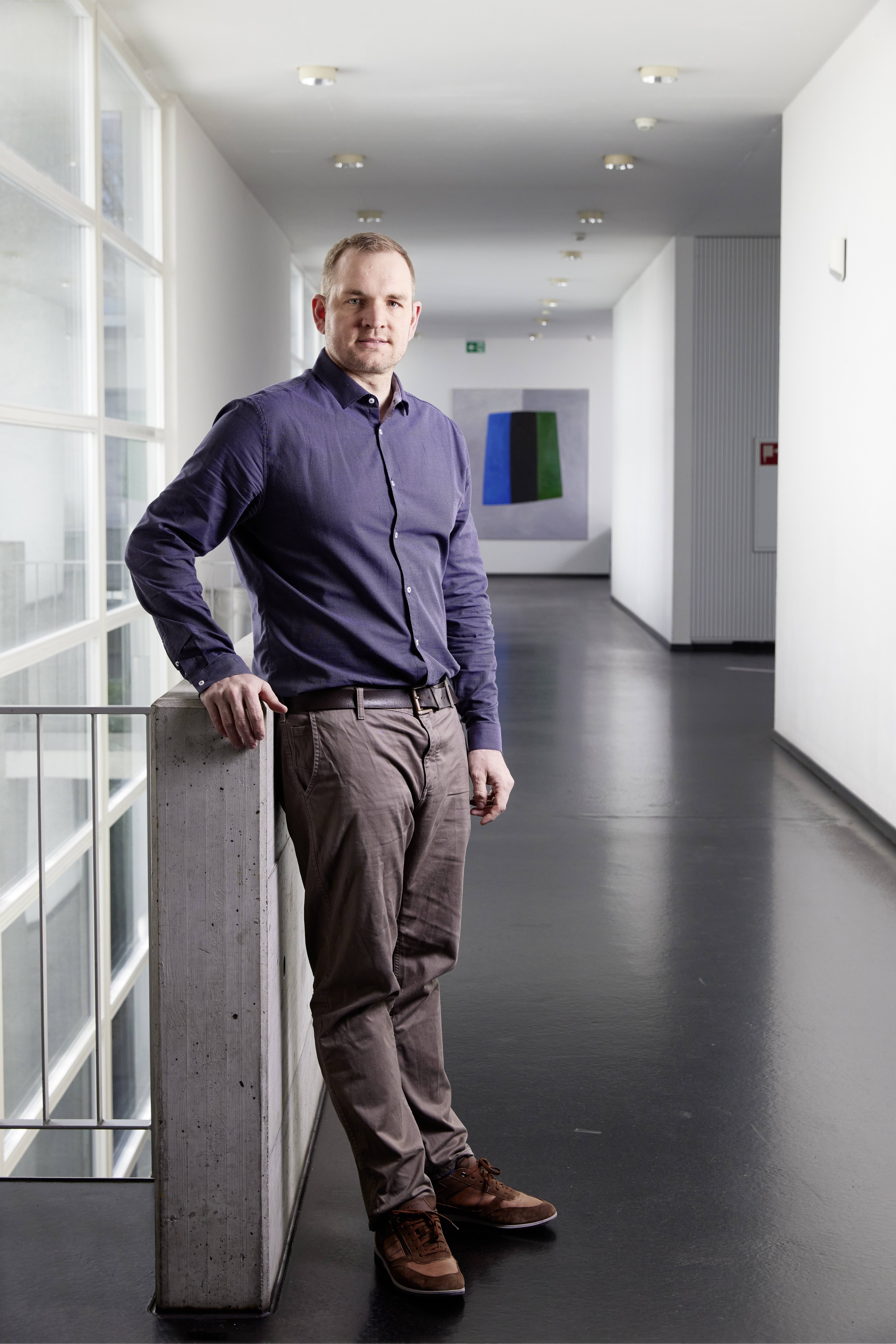
Prof. Dr. Tobias Hodel is an Assistant Professor of Digital Humanities at the University of Bern, affiliated with the Walter Benjamin College. His work focuses on applying machine learning and critical algorithm studies to historical and textual analysis. He holds a Ph.D. from the University of Zurich and has held roles such as Project Manager for the Königsfelden Edition Project and coordinator of the 'Ad fontes' e-learning program. Hodel’s research explores intersections between digital methods and traditional humanities, emphasizing ethical AI use in archives and historical workflows. He supervises numerous doctoral students and chairs the Swiss Academy of Humanities and Social Sciences (SAGW). His contributions span publications in journals like Historische Zeitschrift and conferences such as DHd and Digital Humanities. Education: Studied History and German Literature at the University of Zurich (2002–2010), with advanced roles in SNF-funded projects and book publications. His research interests include digital edition theory, text processing, and the epistemology of digital methods. Key research trends in his articles address historical document analysis, OCR advancements, and the ethical implications of AI in archives. He co-leads the ‘Basic Research and Digitization’ department at the Swiss Society for History and oversees programs like the MAS/CAS in Archives, Library, and Information Science. Hodel’s work bridges technical innovation with critical humanities scholarship.
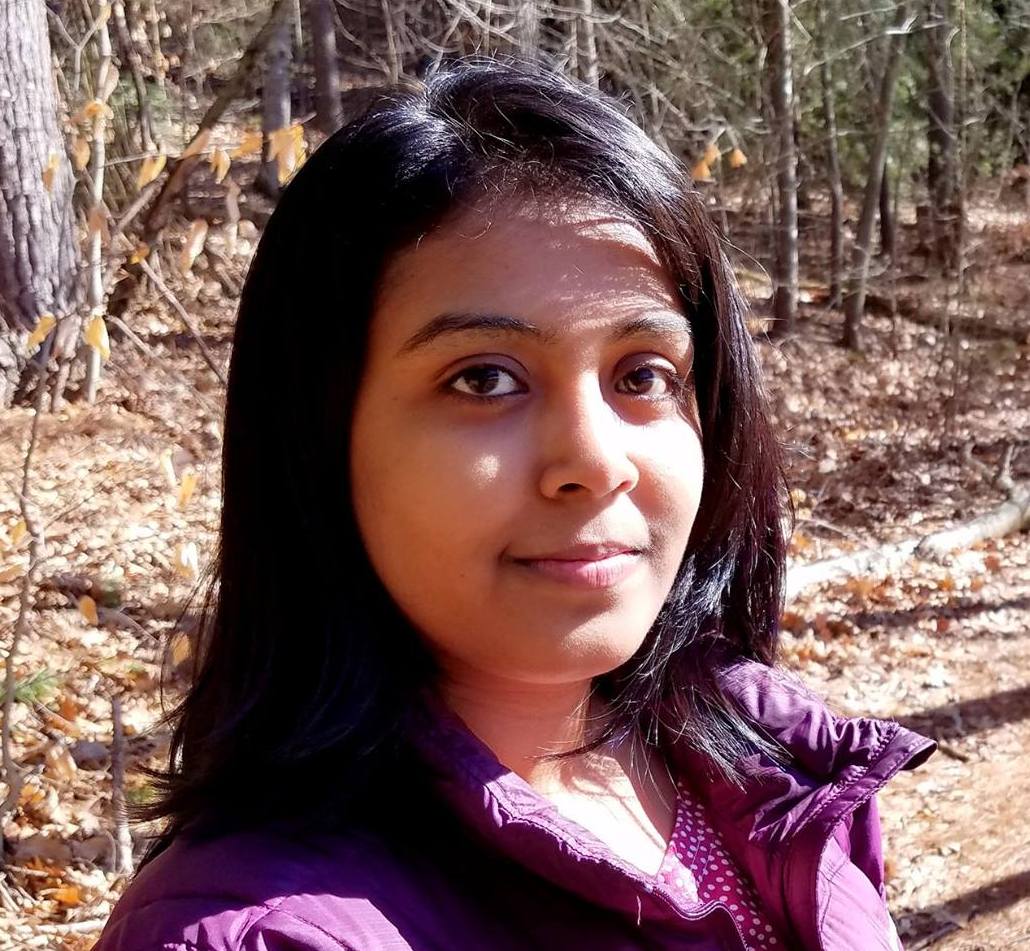
Anna Fariha is an Assistant Professor in the Kahlert School of Computing at the University of Utah. She co-leads the Data Management Research Center for Human-centered, Efficient, and Scalable Systems. Her research focuses on enhancing data system usability, explainability, and trustworthiness through algorithmic innovations and practical implementations. She holds a Ph.D. from the Manning College of Information and Computer Sciences at the University of Massachusetts, Amherst, under Prof. Alexandra Meliou. Education: Ph.D. in Computer Science, University of Massachusetts Amherst (2021) Master's in Computer Science, University of Massachusetts Amherst (2020) Undergraduate work in Computer Science, unspecified institution Her research interests include data wrangling tools, constraint discovery, conversational AI for data science, and human-centered database systems. Recent work emphasizes automated data summary recommendations, constraint violation detection, and educational tools for data science programming. Grants & Awards: NSF CIRC: ENS/Grand: POWDER-ENS Award (2024) Stena Center Seed Grant for Fintech Data Analysis (2025) Microsoft Research Dissertation Grant (2020) SIGMOD 2022 Comprehensive Reproducibility Award Teaching: Recently taught Advanced Database Systems , Human-Centric Data Management , and Deep Learning courses at the University of Utah.
Hanna Surma is an Assistant Professor in Media Studies at the Department of Media and Culture Studies, Faculty of Humanities, Utrecht University. Her work bridges television theory, reality television analysis, and data-driven creative practices in media production. Research focuses on governmentality studies, media and subjectivation, and the transformation of television production through viewer data. Co-coordinates the MA Film and Television Cultures program and teaches courses on media in transition and research methods. Recent publications include a 2022 chapter on data-driven script development for streaming services. She organizes academic workshops like Let's Talk Screenwriting and investigates the intersection of algorithms, AI, and screenwriting practices in Europe. Her scientific award includes earning a Ph.D. summa cum laude from Ruhr-Universität Bochum.
Kevin Curran is a Professor of Cyber Security at Ulster University, serving as Executive Co-Director of the Legal Innovation Centre and group leader for the Cybersecurity & Web technologies Research Group. He joined the School of Computing and Intelligent Systems in 1999 and has established himself as a leading expert in cyber security with over 800 published works. His academic home is within the School of Computing, Engineering and Intelligent Systems at Ulster University's Magee Campus in Derry~Londonderry. Professor Curran's research interests span multiple domains within cyber security, with particular expertise in location positioning within indoor environments, Internet security, and the intersection of legal technology with cybersecurity. His recent work demonstrates a strategic expansion into AI-driven security solutions, blockchain applications, and IoT security frameworks. His research shows a clear evolution from foundational networking research to contemporary applications addressing legal technology challenges and emerging security threats in connected environments. His scholarly output reveals significant trends toward interdisciplinary research, particularly at the intersection of cyber security and legal technology. Recent publications focus on applying machine learning and AI techniques to legal document classification, blockchain security for autonomous vehicles, and generative AI applications in cyber defense. His work consistently addresses practical security challenges while maintaining strong theoretical foundations. Engineering and Technology Board Visiting Lectureship for Exceptional Engineers IEEE Technical Expert for Internet/Security matters since 2008 Member of the EPSRC Peer Review College Recipient of various patents in security technologies Founding Editor in Chief of the International Journal of Ambient Computing and Intelligence Professor Curran has successfully secured and managed numerous UK and European Framework projects and Technology Transfer Schemes throughout his career. He serves as Co-Investigator on several major research projects including the Baker McKenzie Research Project (2017-2026), LFR: Legal Futures Research (2016-2026), and the Ulster Centre for Legal Innovation (2016-2026). His research group actively collaborates with industry partners and legal professionals to address real-world cybersecurity challenges. The Cybersecurity & Web technologies Research Group under his leadership focuses on practical security solutions while maintaining strong theoretical foundations. As Executive Co-Director of the Legal Innovation Centre, Professor Curran bridges the gap between legal practice and technological innovation, particularly in the realm of cybersecurity applications for legal services. His team works on developing secure platforms for legal document processing, blockchain applications for contract management, and AI-driven tools for legal professionals while maintaining rigorous security standards.
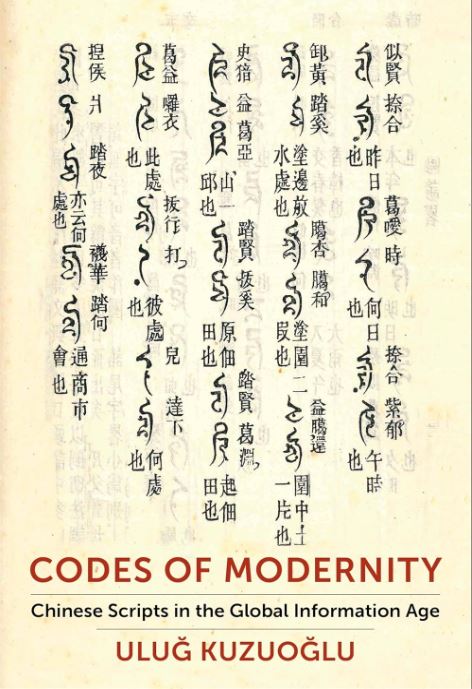
Uluğ Kuzuoğlu is an Associate Professor of History at Washington University in St. Louis, specializing in modern Chinese and global history with a focus on non-Western information and communication technologies. His academic journey includes degrees from Columbia University (PhD, 2018) and Boğaziçi University (BA and MA). He holds positions such as the MA Program Coordinator at Columbia University and has been actively involved in research and teaching since 2018. Education: PhD in History, Columbia University, 2018 (with distinction) MPhil in History, Columbia University, 2014 (with distinction) MA in History, Columbia University, 2013 MA in History, Boğaziçi University, 2010 BA in Sociology, Boğaziçi University, 2007 (with honors) Research Interests: Modern Chinese and global history, with a focus on the history of non-Western information and communication technologies Script reforms and their socio-political implications Emerging technologies like 3D, AI, and immersive tech in humanities research Virtual and augmented reality applications in academic and public contexts Publications Trends: His work explores the intersection of technology, language, and politics in modern China and Eurasia. Recent articles analyze Morse codes in Tibetan/Mongolian contexts, cognitive management through language reforms, and the global history of scripts like the Chinese Latin Alphabet. His research often bridges historical analysis with digital humanities methodologies. Scientific Awards: AY 2024-25 Luce/ACLS Early Career Fellowship in China Studies WUSTL Center for the Humanities Faculty Fellowship Multiple grants from institutions like the Center for Chinese Studies and Mellon/ACLS Advising and Grants: Advised senior thesis: Nkemjika Emenike on the Black Panther Party and CCP Recipient of grants including WUSTL's Arts & Sciences Faculty Research Grant and the Luce/ACLS Fellowship Involved in projects like the "Asia in St. Louis" app and the Immersive Technology Collective Labs/Teams: Co-leads the Immersive Technology Collective, exploring VR/AR in humanities Part of WashU's Center for the Humanities and Redefining Doctoral Education initiatives
Dr. Philippe Pasquier is a Professor at Simon Fraser University's School of Interactive Arts and Technology, where he directs the Metacreation Lab for Creative AI. His research-creation program integrates scientific research on generative AI and machine learning with artistic practice in computer music and interactive art. Research focuses on creative AI systems for artistic tasks, including multi-track music composition (Calliope), timbre synthesis, visual synthesis (Autolume), and cross-modal generation. Applications span creative software tools, interactive installations, and audiovisual performances studied through HCI methodologies. Publications demonstrate consistent innovation in generative systems, with recent work exploring controllable music generation (MIDI-GPT), GAN-based visual synthesis, and evaluation frameworks for creative AI. Artistic works have been exhibited globally at venues including Ars Electronica, Centre Pompidou, and ZKM. Secured research funding from NSERC, SSHRC, CFI, and international agencies. Founded key academic initiatives including the International Workshop on Musical Metacreation (MUME), Movement and Computation conference (MOCO), and chaired ISEA2015. Teaches creative AI, sound design, and interdisciplinary computing approaches.
Maxine Gee is a Principal Academic in Screenwriting at Bournemouth University, Faculty of Media and Communication, where she teaches across undergraduate and postgraduate programs in film and scriptwriting. She is an internationally produced playwright and screenwriter with a PhD by Creative Practice from the University of York (2018). Her work spans stage adaptations, web series, and science fiction short films, including the acclaimed Tales of Bacon and Terminal . Her research focuses on posthumanism, science fiction, horror (especially folk horror), Japanese media, adaptation, and the evolving role of AI in creative storytelling. She explores how narrative forms, particularly screenwriting, can interrogate identity, genre, and technological change. Her creative practice is deeply intertwined with theoretical inquiry, exemplified in her PhD work on posthuman noir. Maxine's recent publications and conference presentations highlight a growing emphasis on human-AI collaboration in media creation, as seen in her 2024 AHRC BRAID-funded project Shared Post-Human Imagination . Her scholarly output includes articles in Cinema: Journal of Film and Philosophy , Journal for Cultural Research , and the Palgrave Handbook of Script Development . She has been recognized with awards for her short film Terminal , including Best Short Sci-Fi Film and Best Writer at the Queen Palm International Film Festival (2019). Her external roles include serving as an external examiner for MA Screenwriting programs at several UK universities and as leader of the Screenwriting Research Network’s Practice Based/Led Working Group since 2018. Maxine is actively engaged in public outreach, including events like Rise of the Robot and Which One of Us Is Human? , and has delivered invited lectures at institutions such as UC Riverside and the University of York. Her work bridges academic research, creative production, and public discourse on the future of storytelling.
Norma Lam-Saw serves as an Associate Lecturer in Arts within the School of Humanities & Communication Arts at Western Sydney University, where she bridges philosophical inquiry with creative practices in drama and technology. Her academic credentials include: Doctor of Philosophy from Western Sydney University Bachelor of Arts from Western Sydney University Dr. Lam-Saw's research traverses Continental Philosophy and its engagement with modern technology, particularly artificial intelligence. She examines the historical and linguistic dimensions of technological concepts (paleonymies) and contributes to dramatic arts through innovative character development frameworks. Her interdisciplinary approach reveals deep connections between humanities and computational creativity. Her 2024 publications demonstrate this dual focus: an editorial in the Journal of Continental Philosophy exploring AI imagery and a GitHub-based drama script project. These works collectively highlight her commitment to integrating philosophical rigor with artistic innovation. No scientific awards were documented in available sources. Regarding professional activities, no details about student supervision or research funding were provided, though her collaboration on "The Drama Machine" indicates active participation in cross-disciplinary creative teams.
Maurizio Leotta is an Assistant Professor in Computer Science at the University of Genova, Italy, where he has been employed since 2018. He is a member of the Department of Computer Science, Bioengineering, Robotics, and Systems Engineering (DIBRIS) within the School of Mathematical, Physical and Natural Sciences. Additionally, he serves on the School Council and the Department Board of DIBRIS. Dr. Leotta received his PhD in Computer Science from the University of Genova in 2015, with a thesis on Automated Web Testing under the supervision of Prof. Filippo Ricca. His doctoral work was revised by Prof. Massimiliano di Penta (Università del Sannio, Italy) and Prof. Ali Mesbah (University of British Columbia, Canada). Before his academic career, he worked as an IT Technician in various companies and participated in research and industrial projects funded by organizations such as Finmeccanica S.p.A. and the Italian Space Agency. Dr. Leotta's primary research focuses on Software Engineering, with particular emphasis on Test Automation, which is his main research topic. He collaborates with Prof. Paolo Tonella from USI, Switzerland on this area. His other significant research interests include Empirical Software Engineering, Requirements Engineering, Business Process Modelling, and Model-Driven Software Engineering. His work often addresses practical challenges in web and mobile application testing, with a growing interest in applying AI and gamification techniques to improve software testing processes. His recent publications demonstrate a strong trend toward integrating artificial intelligence with traditional software testing methodologies, particularly in end-to-end web testing. He has made significant contributions to improving test robustness, addressing flakiness in test execution, and developing tools for better test maintenance. His work also shows increasing interest in gamification approaches to engage developers and students in software testing activities, as well as applications of large language models to enhance test automation. Dr. Leotta has received multiple prestigious awards for his research, including: Best Paper Award at ICST 2025 (Short Papers, Vision and Emerging Results) Distinguished Paper Award at ICST 2023 (Industry Papers) Best Paper Award at QUATIC 2022 (Full Papers) Best Paper Award at ICST 2022 (Demo and Testing Tool Papers) Best Paper Award at QUATIC 2020 (Full Papers) Best Student Paper Award at ICWE 2016 (Full Papers) Dr. Leotta has advised numerous graduate students, including three PhD candidates who have completed their degrees (Andrea Fasciglione in 2024, Dario Olianas in 2023, and Diego Clerissi in 2020). He currently supervises multiple Master's students working on topics related to software testing, web accessibility, and AI applications in software engineering. He has also served as a postdoctoral advisor for researchers including Diego Clerissi and Dario Olianas. Beyond advising, Dr. Leotta has secured research funding through collaborations with industry partners and has been involved in multiple research projects focused on software testing and verification. He co-directs the Software Engineering for Healthcare (SEH) Laboratory, which has been partially supported by Janssen Italia (previously by Actelion Pharmaceuticals Italia). The lab focuses on applying software engineering techniques to healthcare applications, particularly in the areas of wearable technology for patient monitoring and medical data analysis. Dr. Leotta is also active in the Gamify research community, organizing workshops on gamification in software development, verification, and validation.
C. W. (Toph) Marshall is a Professor of Greek in the Department of Ancient Mediterranean and Near Eastern Studies at the University of British Columbia , Faculty of Arts . He is currently on leave for the 2025–26 academic year. His research spans Greek and Roman theatre , ancient performance traditions , classical reception in modern media , and gender studies in antiquity . Education: B.A., McGill University DipCS, Regent College Ph.D., University of Edinburgh Research Interests: Marshall's work is organized into four major areas: Greek and Roman Theatre and Stagecraft , Ancient Performance Traditions , Performance, Translation, and Adaptation , and Popular Culture and Classical Reception . He explores how ancient texts are shaped by and shape their performance contexts, and how they are reinterpreted in modern media such as comics, television, and film. His feminist and performance-based approaches are central to his scholarship. Current Book Projects: Thomas Heywood and the Classical Imagination – early modern classical reception Aristophanes: Frogs – student-oriented introduction Sex Slaves in New Comedy – gender and agency in Roman comedy Beyond Intention and Fidelity – classical reception in modern pop culture Scientific Awards: Marshall has received numerous honors, including the UBC Killam Faculty Research Fellowship , Choice Outstanding Academic Title awards, Ray and Pat Browne Award , and fellowships from the Peter Wall Institute for Advanced Studies and the Institute of Classical Studies . Graduate Supervision: He has supervised a range of MA and PhD students working on Greek and Latin literature, performance, and reception. His students have explored topics from anatomical vocabulary in classical Athens to medical imagery in Sophocles and lovesickness in the ancient novel. Service and Outreach: Marshall serves as a Senator in the UBC Academic Senate and is Associate Editor of Didaskalia: Ancient Theatre Today . He has also co-organized international conferences and directed numerous ancient and modern plays.
Tossapon Boongoen is a Professor in the Department of Computer Science at Aberystwyth University, with over a decade of experience in artificial intelligence and machine learning. Previously, he served as Associate Professor at Mae Fah Luang University (2017-2022) and Royal Thai Air Force Academy (2011-2017), where he also directed the MFU Research and Innovation Institute. His research spans ensemble clustering for privacy-preserving data fusion deep learning in remote sensing and sky survey data network security applications for ransomware and intrusion detection forest fire risk modeling using spatial-temporal data Recent publications focus on convolutional neural networks, adversarial attack classification, and collaborative filtering algorithms. He leads international projects funded by the British Council, FCDO, and Academy of Medical Sciences, including collaborations with institutions in Thailand, Korea, Vietnam, France, and Czech Republic. Professional engagements include editorial roles in journals like Knowledge-Based Systems Frontiers in Neurorobotics PeerJ Computer Science ICT Express and partnerships with GISTDA, GOTO Observatory, and Imperial College London.
Weihang Wang is a Volunteer Assistant Professor in the Department of Computer Science and Engineering at the University of Southern California (USC), part of the School of Engineering and Applied Sciences. His research focuses on WebAssembly security, program analysis, and static/dynamic analysis frameworks. He holds a PhD and has published extensively on topics like WebAssembly obfuscation, decompilation techniques, and flaky test mitigation. Research interests include cybersecurity, software engineering, and the application of AI in program analysis. His work addresses challenges in cross-compilation for WebAssembly, decompilation accuracy, and automated detection of security vulnerabilities in web applications. Notable projects include WaSCR (side channel repairer), WBSan (bug detection), and Wefix (flaky test automation). He has received NSF travel grants for IEEE Security Development (SecDev) conferences in 2022 and 2023. His articles span 2010–2025, showing sustained contributions to web security, compiler optimization, and program transformation. His work intersects with practical applications like ad-blocking systems (Adhere) and bird flu outbreak prediction using migration data (2010–2013). Grants and awards include NSF funding for travel and research, reflecting his active role in academic conferences. He is affiliated with USC's computer science department and maintains an active Google Scholar profile with over 30 publications listed.
Nikol Rummel is a Professor at Ruhr-Universität Bochum , specializing in Computer-Supported Collaborative Learning (CSCL) , Artificial Intelligence in Education , and Human-Computer Interaction . Her work bridges educational technology with hardware reverse engineering , focusing on AI-orchestrated learning environments and adaptive tools for collaboration. Her research spans AI-orchestration tools ( Pair-Up , Co-Designing Orchestration Support ), collaborative problem-solving ( Learning Alone or Together ), and hardware reverse engineering education ( Promoting Skill Acquisition ). She investigates how multimodal data and adaptive feedback enhance learning outcomes, teacher practices, and emotional regulation. Her publications highlight trends in generative AI for academic writing , collaboration scripts , and cognitive obfuscation in cybersecurity education. Collaborations with researchers like Vincent Aleven, Christof Paar, and Steffen Becker underscore her interdisciplinary approach. Nikol Rummel’s work emphasizes teacher dashboards ( What Information Should CSCL Dashboards Provide? ), dynamic student pairing ( Combining Dialog Acts and Skill Modeling ), and emotional engagement in learning ( How to Enjoy Writing Papers ).
Jürgen Cito is an Associate Professor in the Department of Software Engineering at the Faculty of Informatics, TU Wien, where he leads research in probabilistic programming, security, and configuration management. His work is supported by major grants from the Austrian Science Fund (FWF), European Commission, and Meta Platforms, Inc., with active projects spanning 2022-2027. His research focuses on the intersection of software engineering and machine learning, particularly in static analysis of probabilistic programs, AI-driven penetration testing, and infrastructure security. Key contributions include identifying secret exposure in configuration files, grammar inference for ad hoc parsers, and performance prediction from source code, often combining empirical studies with tool development. Analysis of his 15 most recent publications (2020-2024) reveals three dominant trends: (1) Security vulnerabilities in configuration management systems, especially secret leakage in dotfiles; (2) Application of large language models to offensive security testing; and (3) Machine learning techniques for performance prediction and AutoML optimization in software contexts. Cito has supervised 22 Master's students on cutting-edge topics including AI security, infrastructure as code, and program analysis. His current research portfolio includes: Types4Strings (FWF, 2024-2027): Type systems for string processing Cloud Open Source Research Mobility Network (EU, 2023-2026): Open-source cloud infrastructure Software Assistants for Probabilistic Programming (Meta, 2022-2026): AI tools for probabilistic code He is embedded in TU Wien's Institute of Software Technology and Interactive Systems (E194), collaborating on cross-institutional projects focused on software security and developer tooling, with particular emphasis on empirical validation of security practices and configuration management systems.
Yongliang Yang is a Senior Lecturer in the Department of Computer Science at the University of Bath, affiliated with the Centre for the Analysis of Motion, Entertainment Research & Applications (CAMERA). His research spans computer graphics, shape understanding, and computational design with applications in 3D vision and geometric processing. His primary research focuses on developing shape analysis and optimization algorithms for geometric structures, with recent work emphasizing neural radiance fields, point cloud processing, and generative adversarial networks. Key contributions include novel approaches to dynamic scene representation, facial inpainting, and surface approximation techniques. Recent publications demonstrate strong trends in neural rendering for dynamic scenes and generative image synthesis, bridging geometry processing with deep learning for practical 3D reconstruction applications. Scientific recognition includes: Computer Aided Geometric Design Most Cited Paper Award (2011) Computer Aided Geometric Design Most Cited Paper Award (2012) Dr. Yang serves as Principal Investigator for Dynamic Human Reconstruction and Editing with Neural Radiance Fields (Royal Society, 2024-2026) and is Co-Investigator on CAMERA 2.0 (EPSRC, 2020-2025) and EU Horizon 2020 projects. He has supervised 9 students and serves as Associate Editor for Computer Graphics Forum (2025-2028). He actively contributes to CAMERA's research ecosystem focused on motion capture, virtual reality, and entertainment applications, driving innovation in motion analysis and digital content creation.