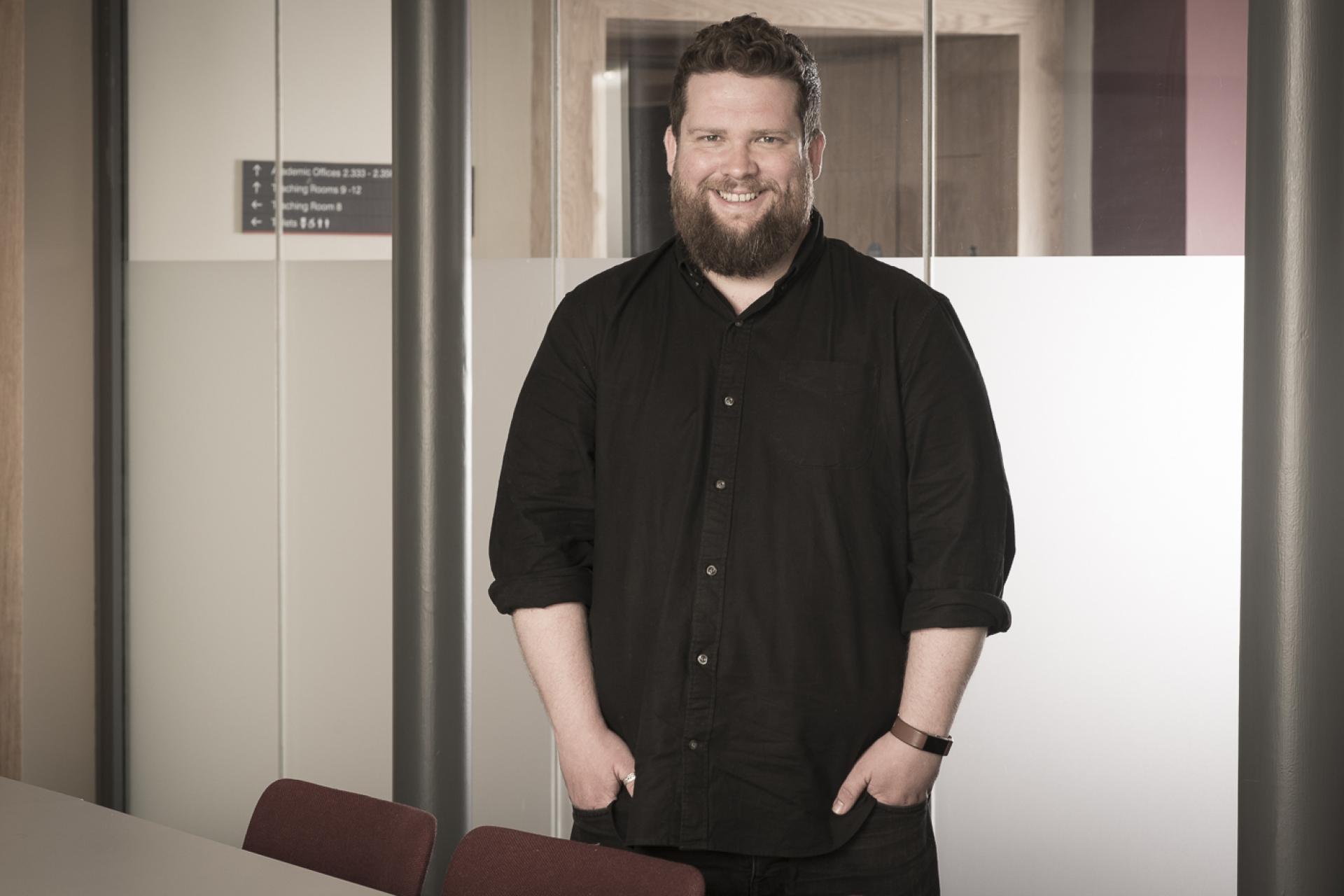
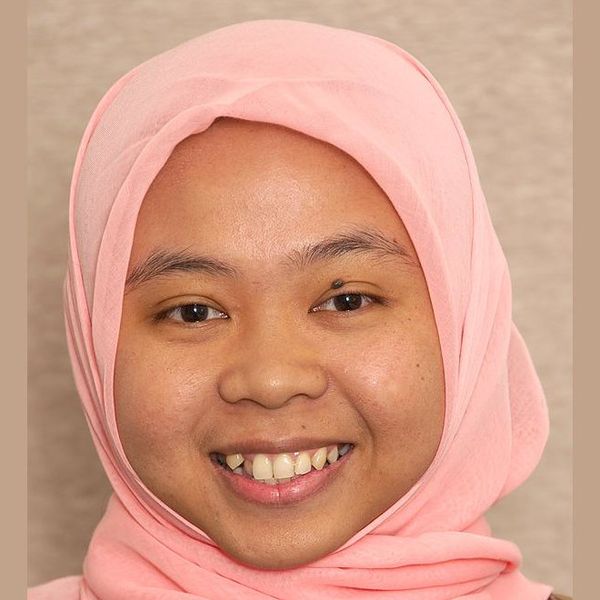
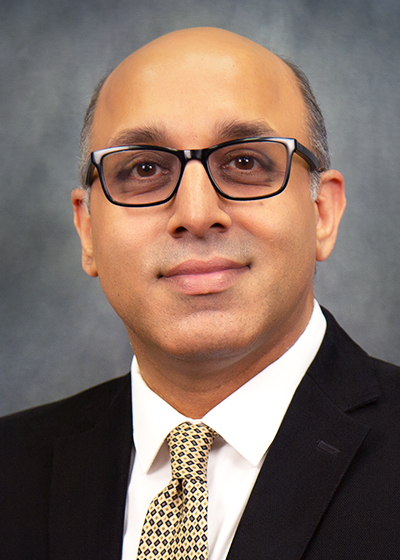
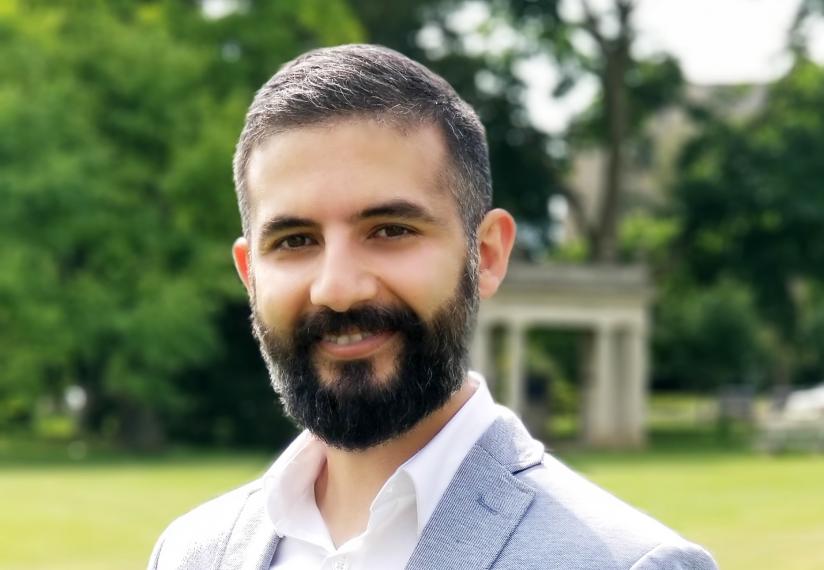
Dr. Lachlan D. Urquhart is a Senior Lecturer in Technology Law and Human-Computer Interaction at the University of Edinburgh's School of Law. He co-directs the Scottish Research Centre for Intellectual Property and Technology Law (SCRIPT) and leads the Regulation and Design (RAD) Lab. He is a director of the Centre for Research into Information, Surveillance, and Privacy (CRISP) and contributes to the Designing Responsible NLP Centre for Doctoral Training and the Institute of Design Informatics. Education: LL.B, Hons (Edinburgh); LL.M in IT & Telecoms Law, Distinction (Strathclyde); Ph.D in Computer Science (Nottingham). Research Interests: Focus on socio-technical aspects of designing, regulating, and living with emerging information technologies, including AI ethics, IoT, data privacy, cybersecurity, and responsible innovation. Projects: Principal Investigator of the £1.2m EPSRC 'Fixing the Future: Right to Repair and Equal-IoT' project; Co-Investigator on £9.75m Responsible NLP AI CDT and £3.2m EPSRC Trustworthy Autonomous Systems Governance Node. Visiting Roles: Turing Fellow (2020-22), Research Fellow at Universitá degli Studi di Milano (2022-23), and visiting researcher at Meiji University (2014).
Dr. Chutima Boonthum-Denecke is a Professor in the Department of Computer Science at Hampton University's School of Science. She joined Hampton University in 2006 as an Assistant Professor and now serves as Director of the Information Assurance and Cyber Security Center (IAC@HU). She leads the NSF CyberCorps Scholarship for Service program and has contributed to NSF initiatives like ARTSI and STARS Alliances. Her educational background includes a Ph.D. in Computer Science from Old Dominion University (2007), an MS in Applied Computer Science from Illinois State University (2000), and a BS in Computer Science from Srinakharinwirot University (1997). Dr. Boonthum-Denecke's research integrates artificial intelligence, natural language processing, and cybersecurity. Key interests include: Developing intelligent tutoring systems and educational games Secure coding practices for software engineering NLP applications in information retrieval and assessment tools Cyber-physical security for IoT and robotics Her recent publications (2016-2021) focus on machine learning applications in cybersecurity, including sentiment analysis for threat detection, blockchain-enhanced IoT security, and vulnerability assessments of emerging technologies. Collaborative work with students frequently addresses privacy ethics in AI assistants, RFID implants, and cloud systems. She mentors students through the IAC@HU lab, resulting in award-winning conference presentations on cybersecurity topics. As Principal Investigator of NSF CyberCorps, she oversees scholarship programs that bridge academic research with national security needs.
Muhammad Ali Gulzar is an Assistant Professor in the Computer Science Department at Virginia Tech and an Amazon Scholar at Amazon Web Services. His research focuses on improving developer productivity through automated debugging and testing for applications in emerging domains, including data-intensive software such as dataflow programs, ML/AI applications, and computational notebooks. Education Ph.D. in Computer Science from University of California, Los Angeles (Google Ph.D. Fellow 2017-2020) Research Interests Gulzar's research spans three primary areas: (1) automated tracking-code localization techniques in web applications, (2) re-engineering testing and debugging for data-intensive applications, and (3) advancing current testing and debugging practices in Federated Learning Applications. His work addresses the challenges of debugging in complex systems where traditional approaches fail due to the scale and distributed nature of modern applications. His research has significant implications for improving software quality, developer productivity, and accessibility in web applications. Research Trends Recent publications demonstrate a strong focus on debugging and testing challenges in emerging application domains. His work bridges traditional software engineering with machine learning, data-intensive systems, and web technologies. Notably, he has made significant contributions to Federated Learning debugging (FedDebug), accessibility challenges in ad-driven web applications, and semantic caching for Large Language Models. His approach often combines novel algorithmic insights with practical implementations that address real-world challenges in software development and maintenance. Scientific Awards Google Ph.D. Fellow (2017-2020) $1.1 million NSF award for Federated Learning research ACM CCS 2024 Distinguished Artifact Award Advising and Grants Gulzar leads a productive research group with multiple students contributing to publications in top-tier venues. His NSF-funded research on Federated Learning demonstrates his ability to secure competitive funding for innovative projects. His advising style appears to emphasize practical impact alongside theoretical contributions, with students often taking lead roles in publications. Current research directions include debugging techniques for Large Language Models, accessibility challenges in modern web applications, and novel testing approaches for distributed data processing systems.
Maneesh Agrawala is the Forest Baskett Professor of Computer Science at Stanford University and Director of the Brown Institute for Media Innovation. His research spans computer graphics, human-computer interaction, and information visualization. Agrawala's lab develops computational tools for visual communication, investigating how design principles improve media effectiveness. Current projects include diffusion models for image and video generation, sketch-based interfaces, and visualization tools for scriptwriting. His team creates systems that enable new forms of content creation and analysis. His publications demonstrate consistent innovation in visual computing, with recent advances in controllable generative models, video understanding, and visualization design. Agrawala has received numerous honors including the MacArthur Fellowship and ACM Fellowship for his contributions to visual computing.
Yepang Liu is a tenured Associate Professor in the Department of Computer Science and Engineering at Southern University of Science and Technology (SUSTech) in Shenzhen, China. He leads the Software Quality Lab and serves as director of the Trustworthy Software Research Center within the Research Institute of Trustworthy Autonomous Systems. His educational background includes a B.Sc. with honors from Nanjing University (2010) and a Ph.D. from the Hong Kong University of Science and Technology (2015), where he was supervised by Prof. Shing-Chi Cheung. Prior to joining SUSTech, he worked as a postdoc at HKUST's CASTLE Lab and Cybersecurity Lab. Liu's research primarily focuses on software testing and analysis, empirical software engineering, AI for SE, software security, and trustworthy AI. His work bridges traditional software engineering with cutting-edge AI technologies, particularly in automated testing, security analysis, and quality assurance for mobile, blockchain, and extended reality applications. Recent projects explore how large language models can enhance bug detection, improve testing automation, and address fairness issues in machine learning systems. His contributions have been recognized with three ACM SIGSOFT Distinguished Paper awards (ICSE 2021, ASE 2016, ICSE 2014) and one Distinguished Artifact award (ICSE 2019). He has also received the ACM SIGSOFT Service Award and Distinguished Reviewer Award for his extensive service to the software engineering community. Top-10 Most Active Early-Stage Software Engineering Researcher (2013-2020) Top-10 Most Popular Instructor Among 2024 Undergraduate Graduates at SUSTech Junior Faculty of the Year (2021) SUSTech Teaching Excellence Award (2021) Outstanding Mentor Award (2020, 2024) Liu actively serves on the editorial boards of Empirical Software Engineering (EMSE) and Journal of Computer Science and Technology (JCST). He has participated in over 80 conference committees including leadership roles in ICSE, FSE, ASE, and ISSTA. His research is supported by the National Natural Science Foundation of China, National Key Research and Development Program, and leading Chinese IT companies. He regularly mentors PhD and MSc students and has guided multiple national competition award-winning teams. The Software Quality Lab under Liu's direction focuses on innovative approaches to software testing, security analysis, and quality assurance across various platforms including mobile, blockchain, and extended reality applications. Current projects emphasize the integration of AI techniques with traditional software engineering practices to address emerging challenges in software quality.
Derry Wijaya is an Associate Professor and Program Coordinator for the Data Science Program at Monash University Indonesia. She also co-directs the Monash Data and Democracy Research Hub, focusing on analyzing data's impact on democracy. Previously, she served as an Assistant Professor at Boston University's Department of Computer Science. Her research spans multilingual NLP, low-resource language technologies, and combating AI-driven misinformation. Education: PhD in Language Technologies, Carnegie Mellon University (2013) Postdoctoral Fellowship, University of Pennsylvania (2013–2015) Bachelor's & Master's in Computing, National University of Singapore Research Interests: Improving language model performance via self-consistency and reasoning Analysis of bias, toxicity, and framing in AI outputs Preservation of Indonesian indigenous scripts and languages Development of tools like OpenFraming AI for multilingual framing analysis Recent Work Trends: Her publications (2023–2025) emphasize ethical AI, low-resource language solutions, and social media analysis. Notable contributions include frameworks for metric calibration (MetaMetrics), debiasing generative models, and surveys on Indonesian language technology needs. Awards & Roles: Fulbright Scholarship recipient Serves on program committees for ACL, EMNLP, NeurIPS, and ICLR Co-created OpenFraming AI for multilingual framing analysis Grants & Labs: Leads the Monash Data and Democracy Hub, focusing on tech's societal impact. Active in grant-funded projects preserving Indonesia's linguistic heritage through digitization efforts.
Carlo A. Furia is an Associate Professor at the Software Institute within the Faculty of Informatics at Università della Svizzera italiana (USI). He leads the ATOM research group and is actively involved in advancing formal methods in software engineering. His work bridges theoretical rigor with practical applicability, particularly in verification, automated repair, and empirical analysis of software systems. PhD in Computer Science, Politecnico di Milano Master of Science in Computer Science, University of Illinois at Chicago Laurea in Computer Science and Engineering, Politecnico di Milano His research focuses on making formal methods practical through automation, combining diverse techniques, and conducting thorough empirical evaluations. He is particularly interested in using Bayesian data analysis to assess software engineering data. His work spans program verification (e.g., AutoProof), contract inference, API usability, and multilingual program analysis. His recent publications highlight trends in automated program repair, JVM bytecode analysis, Android security, and empirical methodologies. These works reflect a consistent emphasis on correctness, reliability, and empirical validation in software development. Scientific service includes: Associate Editor, Empirical Software Engineering (EMSE) journal Program Committee member, FM 2026, FormaliSE 2026, ASE 2025, iFM 2025 He has advised students and leads the ATOM group, which develops tools for software analysis. He teaches courses such as Software Analysis, Programming Fundamentals, and Software Design & Modeling. Current research directions include improving empirical evaluation rigor and enhancing verification at lower code levels like bytecode.
Shahram Rahimi is a Professor and Department Head in the Department of Computer Science at the University of Alabama, College of Engineering. He concurrently holds an Adjunct Professor position at Mississippi State University. His research spans computational intelligence, machine learning, healthcare AI, cybersecurity, and quantum computing. He leads the PATENT Lab, focusing on predictive analytics, decision support systems, and AI-driven healthcare solutions. His educational background includes a Ph.D. in Computer Science. Key research areas include multi-agent systems, generative models, and predictive maintenance. He has served as an editor for journals like Scalable Computing: Practice and Experience and Informatica . Rahimi’s recent work emphasizes secure MLOps, quantum algorithms, and patient-centric medical systems. His publications address challenges in explainable AI, anomaly detection, and healthcare informatics. He actively contributes to conferences and journals in AI, cybersecurity, and computational intelligence. Editorial Roles: Scalable Computing, Engineering Letters, Informatica Labs: Predictive Analytics & Technology Integration (PATENT) Lab Key Focus Areas: Healthcare AI, Quantum Computing, Cybersecurity, Explainable Machine Learning
Serge Belongie is a Professor at the Department of Computer Science (DIKU) at the University of Copenhagen, where he holds dual affiliations with the Pioneer AI research section and the Image Analysis, Computational Modelling, and Geometry section. His academic position places him at the forefront of interdisciplinary research connecting computer vision with language models, geospatial analysis, and cultural understanding. Professor Belongie's research program encompasses several critical domains in modern artificial intelligence: Advanced computer vision and image analysis techniques Vision-language model integration and multimodal systems 3D point cloud processing and semantic segmentation Geospatial representation learning for environmental applications Fine-grained object recognition and detection Cultural context understanding in AI systems His recent publication record reveals a sophisticated trajectory toward developing precise control mechanisms for vision-language models, with applications spanning forensic analysis, cultural heritage preservation, and social media understanding. The research demonstrates increasing sophistication in handling cultural context and enabling fine-grained manipulation of visual content through natural language interfaces. Professor Belongie maintains an active research group producing significant scholarly output, with over 280 research publications documented in his academic profile. His work is supported by research funding that enables cutting-edge exploration in multimodal AI systems with practical societal impact. He plays a key role in the Pioneer AI center at the University of Copenhagen, which focuses on advancing artificial intelligence through interdisciplinary collaboration and innovative research approaches that bridge theoretical computer science with real-world applications.
Laurence Anthony is a Professor at Waseda University's School of Creative Science and Engineering, specifically affiliated with the Center for English Language Education in Science and Engineering (CELESE). He has held this position since 2009, having previously served as an Associate Professor at the same institution from 2004-2009. His academic journey began with a BSc from The University of Manchester (1991), followed by an MA (1997) and PhD (2002) from The University of Birmingham. Anthony's research centers on corpus linguistics, educational technology, and natural language processing applications in foreign language teaching. He is renowned for developing AntConc, a widely used freeware corpus analysis toolkit, along with numerous other educational software tools including AntWordProfiler, FireAnt, and ProtAnt. His work bridges linguistic theory with practical classroom applications, particularly in data-driven learning approaches for English as a Foreign Language contexts. His publication record is extensive with over 50 papers, 12,115 Google Scholar citations, and an h-index of 45. His recent work increasingly explores the intersection of corpus linguistics and artificial intelligence, examining how language models can enhance language teaching and analysis. Anthony's research has evolved from foundational corpus tool development to sophisticated applications in vocabulary profiling, writing analysis, and AI-assisted language learning. Among his notable recognitions are the Waseda University 6th e-Teaching Award (2018), the National Prize of the Japan Association of English Corpus Studies (2012), and the L'Oreal Art and Science of Color Gold Prize (2005). He serves on multiple editorial boards including for Studies in Corpus Linguistics, Journal of Asia TEFL, and Corpus Linguistics Research Journal. Anthony actively contributes to the academic community through numerous presentations at international conferences, recent ones including talks on AI integration with corpus methods at Corpus Linguistics 2025 and the LSP-Num Conference. His professional activities demonstrate ongoing engagement with both theoretical developments and practical applications in language education technology.
Afshin Ashari is an Assistant Professor in Landscape Architecture at the School of Environmental Design and Rural Development , University of Guelph. Prior to academia, he worked at BrookMcIlroy Inc., an interdisciplinary firm in Toronto, on architectural and landscape projects in public and private sectors. Education : Masters in Landscape Architecture, University of Toronto Bachelor of Computer Engineering, Azad University of Tehran Research Interests : Afshin explores the intersection of computational design and mixed-reality environments, focusing on: Art-Technology Unity in Public Spaces Algorithmic and Parametric Modeling Data-Driven Design Approaches Interactive Immersive Environments Biophilic Design Agricultural Urbanism Article Trends : His publications emphasize: AI tools for design processes Parametric modeling in urban rehabilitation Climate change communication via social media Drones for visual impact assessments Augmented reality in public spaces Historical and future-oriented design frameworks
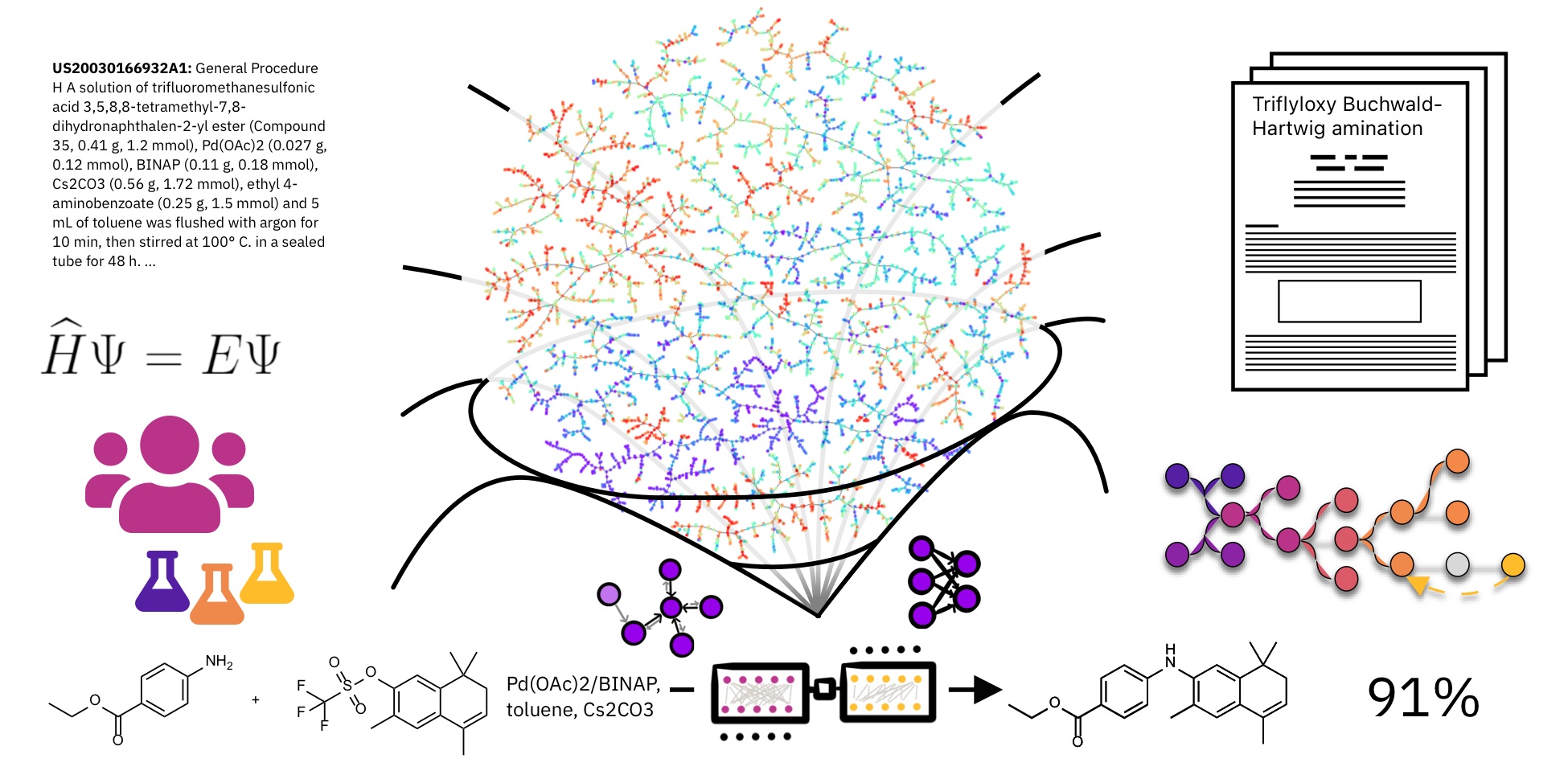
Philippe Schwaller is a Tenure Track Assistant Professor at École Polytechnique Fédérale de Lausanne (EPFL), School of Basic Sciences, within the Institute of Chemical Sciences and Engineering. He leads the Laboratory of Artificial Chemical Intelligence (LIAC), a research group focused on leveraging artificial intelligence to accelerate molecular discovery and sustainable chemistry. He is also a core Principal Investigator of the NCCR Catalysis, a national Swiss research center. His research lies at the intersection of chemistry, materials science, and computer science, with a strong emphasis on developing machine learning models for molecular design and synthesis. LIAC's work is driven by real-world sustainability challenges, aiming to reduce the time and cost of discovering new functional molecules and materials. The recent publications and projects from his lab highlight a strong trend in generative AI for chemistry, including memory-augmented models, hypergraph neural networks, and large language models tailored for scientific discovery. These efforts are complemented by educational initiatives such as the 'AI for Chemistry' course and practical programming resources for chemists. He actively supervises a diverse group of PhD students and contributes to multiple doctoral programs at EPFL, including EDCH and EDPY. His teaching portfolio includes courses on computational chemistry, AI applications in chemistry, and scientific machine learning. Philippe Schwaller is deeply involved in advancing AI-driven scientific discovery through both research and education, positioning his lab at the forefront of artificial chemical intelligence. The lab maintains active open-source contributions on GitHub, fostering collaboration and transparency in scientific AI development.
Haiyang Ai is an Associate Professor in the Literacy and Second Language Studies program at the University of Cincinnati's School of Education. His research applies corpus linguistics and natural language processing to investigate second language acquisition, writing complexity, and bilingual language processing. His educational background includes a Ph.D. in Applied Linguistics from The Pennsylvania State University (2015), an M.A. in Linguistics & Applied Linguistics from the University of Chinese Academy of Sciences (2006), and a B.A. in English from Shaanxi Normal University (2003). Dr. Ai's research spans corpus linguistics, natural language processing, second language acquisition, and computer-assisted language learning. He specializes in compiling and analyzing native and learner corpora to develop intelligent language learning systems and investigate lexical/syntactic complexity in L2 writing. His methodological approach integrates computational tools with theoretical linguistics to address practical language teaching challenges. His recent publications (2019-2023) demonstrate consistent focus on lexical bundles in professional communication, automating complexity measurement in Chinese, speech perception mechanisms in bilinguals, and grammatical puzzles in English learning. These works bridge corpus-based analysis with psycholinguistic experimentation across diverse subfields including morphosyntax, pragmatic competence, and cognitive processing in L2 acquisition. Dr. Ai has secured multiple University of Cincinnati grants including three CECH Faculty Development Grants ($2500 in 2017-2018 for verb-noun collocation research, $2000 in 2016-2017 for corrective feedback tools) and the NCFDD Faculty Success Program ($3250 in 2017), all supporting his development of computational language learning resources.
Jordan Boyd-Graber is a Professor in the Department of Computer Science at the University of Maryland's College of Computer, Mathematical, and Natural Sciences. He serves as a leading researcher in Natural Language Processing with significant contributions across multiple NLP subfields. His work bridges theoretical advances with practical applications requiring human-AI collaboration. His research interests span Natural Language Processing , Question Answering systems , Human-AI collaboration , Machine Translation , and Topic Modeling . He focuses on developing systems that work effectively with humans rather than replacing them, emphasizing interpretability and user-centered design. His work often involves creating evaluation frameworks that better capture real-world utility rather than just technical metrics. His publication record shows consistent leadership in the field, with numerous papers at top venues including ACL, EMNLP, and NAACL. Recent work (2023-2024) demonstrates strong engagement with LLMs, human evaluation methodologies, and practical applications in health and translation domains. His research often involves student collaborators, indicating active mentorship. ACL Fellow (2021) Program Chair for ACL 2023 Organizer of prompt hacking competition Leader in human-centered NLP evaluation Boyd-Graber has secured substantial funding for his research, particularly in projects involving human-AI collaboration and question answering systems. His work often involves interdisciplinary teams spanning computer science, linguistics, and domain-specific applications. He has mentored numerous graduate students who have gone on to successful careers in academia and industry. He leads research groups focused on developing interpretable NLP systems that work effectively with humans, particularly in high-stakes domains like healthcare and education. His lab frequently develops novel evaluation methodologies that better capture real-world utility rather than just technical metrics.
Tushar Sharma is an Assistant Professor at the Faculty of Computer Science, Dalhousie University, Canada. His research focuses on software code quality , refactoring , sustainable AI , and machine learning for software engineering (ML4SE) . He holds a PhD in Software Engineering from Athens University of Economics and Business (2019) and an MS in Computer Science from IIT-Madras (India). Current affiliations: Dalhousie University, SMART Lab, IEEE Senior Member Past experience: Siemens Research (2019-2021), Siemens Corporate Technology (2008-2015) Research interests span code quality assessment, technical debt management, and sustainable AI. He founded Designite , a widely used software design quality assessment tool, and contributed to the book Refactoring for Software Design Smells . Recent work examines energy-efficient language models for code, reproducibility issues in configuration scripts, and human-guided code smell detection. Publication trends reveal expertise in code smell detection, refactoring techniques, and green AI. His articles address topics like commit message generation, model quantization, and empirical studies on code quality. Collaborative efforts include tools like DesigniteJava 2.0 and frameworks for attention mechanisms in code language models. Scientific recognition: Dean's Research Excellence Award (2025), Best Artifact Award (SCAM 2023) Grants: Mitacs Accelerate grants ($225K, $15K, $30K), NSERC Discovery Grant ($154M CFREF climate action project), DRA computing resources ($51K) He actively contributes to academic service as PC Co-chair (ICSE 2024), editorial board member (JSS), and organizer of workshops on technical debt. His media coverage highlights environmental impacts of AI and software quality challenges.