Alexis Dowhuszko is a Researcher in the Department of Information and Communications Engineering at Aalto University, Espoo, Finland. Current research focuses on 6G networks, optical wireless communications, and mobile network optimization through active participation in EU-funded projects including FOCAL (as Principal Investigator), 6G-LEADER, 6GARROW, Cloudify-6G, and WALLPAPER. Educational background: Doctor of Engineering Sciences, Argentine university, 2010 Research expertise spans Visible Light Communication, 6G Networks, and Internet of Things, addressing critical challenges in Quality of Service, Integrated Access and Backhaul, and mmWave communications for urban environments. Work contributes to UN Sustainable Development Goals through sustainable wireless technology development. 2025 publications reveal strong trends in optical wireless integration for backhauling, AI-driven network optimization, and QoE-centric resource management. Key themes include IAB relaying strategies, experimental VLC implementations, and performance evaluation in dense urban deployments across next-generation mobile networks. Dowhuszko has supervised 4 theses and leads multiple research initiatives: FOCAL: Free-space Optical Communications for 6G Aerial-satellite networks (2024-2028) 6G-LEADER: LEArning-Driven and Evolved Radio for 6G Communication Systems (2025-2027) 6GARROW: 6G Ai-native integRated Ran-cOre netWorks (2025-2027) Cloudify-6G: 6G Data-driven Distributed Cloud and Communication System (2023-2026) WALLPAPER: Intelligent wallpaper for sustainable wireless systems (2023-2025) As a core member of the Risto Wichman Group, Dowhuszko collaborates on cutting-edge 6G research and contributes to media-featured projects including LED-based indoor navigation systems and personal radar development.
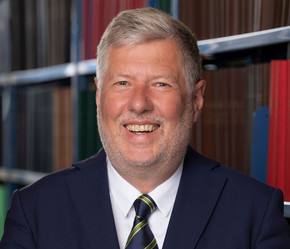
Prof. Dr. Robert Risse is an esteemed academic and practitioner in tax law, currently serving at the Institute for Austrian and International Tax Law at Vienna University of Economics and Business since 2020. Previously, he held the position of Corporate Vice President Tax & Trade at Henkel AG & Co KGaA from 2000 to 2020, where he was globally responsible for taxation and customs. He also holds the title of Honorary Professor for Tax Compliance and Applied Tax Planning at the Institute for Business Taxation, University of Leipzig. His extensive career bridges academic excellence with practical corporate tax leadership. Education 2017: Chairman of the Board of Directors for the Transfer Pricing Center of the Institute for International and Austrian Tax Law, Vienna University of Economics and Business 2014: Doctoral Thesis "Tax Compliance und Tax Risk Management: Eine rechtsvergleichende Analyse und Umsetzung in einem internationalen Konzern" at University of Freiburg 1986-1989: Second State Examination in Law, University of Bonn 1983-1986: First State Examination in Law, University of Bonn 1979-1982: Diplom Finanzwirt FH in Financial Sciences, University of Applied Sciences for Finances North Rhine-Westphalia Research Interests Prof. Risse's research focuses on the intersection of tax compliance, digitalization, and international tax systems. His work explores how digital technologies can transform tax compliance processes, particularly in multinational corporations. He has pioneered research on Tax Compliance Systems, Transfer Pricing in the digital age, and the integration of tax risk management with corporate governance frameworks. His expertise spans international tax law, corporate taxation, and the practical implementation of tax strategies in global business environments. His recent work emphasizes the practical implementation of digital tax systems, with particular attention to blockchain applications, AI in tax compliance, and the integration of tax processes with broader business systems. He has developed frameworks for assessing tax risk in multinational corporations and has contributed significantly to the understanding of transfer pricing in the context of digital business models. Publication Trends Prof. Risse's recent publications reveal a strong focus on digital transformation in tax systems, with increasing attention to practical implementation challenges. His work consistently bridges theoretical tax principles with real-world corporate applications, particularly in multinational contexts. The emergence of topics like AI in tax administration, blockchain applications, and digital compliance systems reflects his forward-looking approach. His research shows a clear trajectory from traditional tax compliance toward integrated digital tax ecosystems that address both regulatory requirements and business efficiency needs. Professional Engagement President of Gesprächskreis Rhein-Ruhr, Internationales Steuerecht e.V./International Fiscal Association (IFA) West Member of DIHK Finanz- und Steuerausschuss, Berlin Member of Düsseldorfer Vereinigung für Steuerrecht e.V Member of Fachinstitut der Steuerberater e.V., Düsseldorf Member of Institut Finanzen und Steuern, Berlin Teaching and Advisory Roles Prof. Risse has extensive teaching experience across multiple institutions including University of Leipzig, Vienna University of Economics and Business, University of Freiburg, University of Cologne, and WHU – Otto Beisheim School of Management. He has supervised doctoral students through the "Doktorandenseminar zur Betriebswirtschaftlichen Steuerlehre" at University of Leipzig. His teaching focuses on international taxation, corporate tax law, and the practical application of tax planning in multinational corporations.
Dr. Tomasz Hollanek is a Postdoctoral Research Fellow at the Leverhulme Centre for the Future of Intelligence (LCFI) and an Affiliated Lecturer in the Department of Computer Science and Technology at the University of Cambridge. His work bridges AI ethics, critical design, and technology governance, focusing on social justice, environmental sustainability, and ethical human-AI interaction. He has contributed to EU AI Act toolkits, AI companion systems, and cross-cultural AI narratives through projects at Harvard, Oxford, and École Normale Supérieure. Affiliation: University of Cambridge (LCFI, Computer Science and Technology) Collaborations: École Normale Supérieure (ENS-PSL), Observatoire des humanités numériques Research Trends: His 2025 publications emphasize regulatory compliance for AI justice, critical AI literacy in journalism, and feminist design methodologies. Earlier works (2023-2019) explore cultural AI narratives, allocentric design for sustainability, and ethical challenges in griefbots.
Dr. Samuel A. Moore is a Scholarly Communication Specialist at Cambridge University Library and Principal Investigator for the Materialising Open Research Practices in the Humanities and Social Sciences project, funded by Wellcome Trust, AHRC, and Research England Development Fund. He serves as an Affiliated Lecturer at Cambridge Digital Humanities and a College Research Associate at King’s College Cambridge. PhD in Digital Humanities from King’s College London His research bridges scholarly communication, metaresearch, and open science, with a focus on digital publishing , community-led open access , and academic governance . Recent work explores care ethics in publishing, the politics of author rights, and alternatives to corporate-controlled scholarly infrastructure. Key trends in his publications include open access policy critique, scholar-led publishing models, and interdisciplinary studies linking bioethics and academic labor. He co-founded the Radical Open Access Collective and advocates for progressive publishing ecosystems. Wellcome Trust grant AHRC grant Research England Development Fund grant Dr. Moore’s collaborations span libraries, research institutions, and global open science initiatives. His work emphasizes democratizing knowledge production and challenging commercial monopolies in academia.
Martin Salzmann-Erikson is an Associate Professor in Nursing Science at the University of Gävle, specializing in Caring Science. With extensive clinical experience in psychiatric intensive care, he has developed innovative models for staff-patient interactions and advanced courses like "Integrative Nursing in Psychiatric Care" and "Concept Analysis." His work bridges clinical practice, education, and research, focusing on the complexities of human interaction through chaos theory and digital transformation. Current research in the "Digital Shapeshifting" program addresses critical challenges in healthcare digitization, including reducing digital exclusion, ensuring inclusive care environments, and safeguarding nursing quality. Projects span interprofessional communication, digital inclusion for homeless women, and the ethical implications of AI in mental health. His methodological expertise includes netnography, autoethnography, and complexity science. Key article trends highlight intersections of technology and empathy, with recurring themes in psychiatric care, technostress, and digital equity. His 2023–2025 publications emphasize ethical AI integration, footwear symbolism in healthcare teams, and socio-technical approaches to continuous learning. Supervision roles include doctoral projects on intellectual disabilities, cyber nursing, and violence in intensive care. Supervised: Ingela Rudberg (Interprofessional Communication), Oskar Andersson (Staff Participation Promotion), Fredric Sjöberg (Violence Management, KI) Education: Courses on Integrative Nursing & Concept Analysis Affiliations: Strategic Research Area Health-Promoting Work, University of Gävle
David Weisstanner is an Assistant Professor of Health and Social Policy at the Faculty of Health Sciences and Medicine, University of Lucerne. He holds a PhD in Political Science from the University of Bern and has held academic positions at the University of Oxford and Aarhus University. Education: PhD in Political Science, University of Bern Research Interests: His interdisciplinary research focuses on the intersection of electoral politics, social policy, and public opinion. Key themes include how democracies respond to inequality and technological change, the politicization of health care, welfare state dynamics, and income redistribution. He employs comparative methods to analyze policy challenges in advanced economies. Publications: Recent work (2022–2025) demonstrates strong emphasis on income inequality, technological disruption (AI/automation), health systems reform, and welfare state adaptation. Articles frequently use cross-national data and explore voter behavior, policy preferences, and the political economy of social protection. Grants & Advising: Leads SNSF project: "Party politics and the politicization of health care" (2025–2029) Teaching: Courses include health and social policy, health inequality, and Swiss health policy.
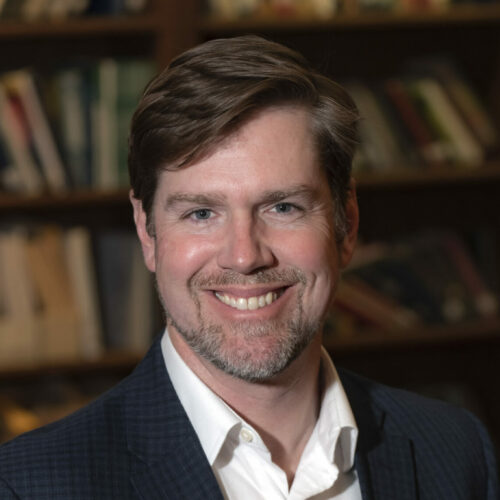
Gerald C. Kane is a Professor and the C. Herman and Mary Virginia Terry Distinguished Chair in Business Administration at the Terry College of Business, University of Georgia. He is a leading scholar in digital transformation, artificial intelligence ethics, and social media for knowledge management, with over 100 publications in top-tier journals including MIS Quarterly and Management Science. His educational background includes: PhD in Information Systems, Emory University, Goizueta Business School (2006) MBA in Computer Information Systems, Georgia State University, Robinson College of Business (2002) M. Div. in Theology, Emory University (1998) BA in Humanities, Furman University (1994) Professor Kane's research focuses on the social and ethical implications of artificial intelligence and machine learning, the success factors in digital transformation of legacy companies, and how organizations use digital tools to innovate through disruption (e.g., during the COVID-19 pandemic). He also explores social media for knowledge management across organizational boundaries and information systems in healthcare. His work provides critical insights for businesses navigating the digital era. His recent publications (2020-2025) demonstrate intense focus on AI ethics—particularly fairness and bias in machine learning algorithms—and the transformative impact of digital tools on organizational strategy and workplace design. Kane's research addresses digital strategy formulation challenges and post-pandemic workplace reinvention, reflecting his commitment to solving real-world organizational problems through technology-driven solutions. Professor Kane's contributions have been recognized with numerous prestigious awards: Davis-Dixon Impact Award, MIS Quarterly (2024) Axiom Business Book Awards Gold Medal (2021) Carroll School Coughlin Distinguished Teaching Award (2018) National Science Foundation CAREER Award ($500,000) (2009-2016) McKiernan Distinguished Fellow ($30,000), Boston College (2014-2016) Runner-up, Best Published Paper, Academy of Management (2015) U.S. Department of Defense Small Business Technology Transfer Award ($100,000) (2012) Professor Kane has secured significant research funding including a National Science Foundation CAREER Award and U.S. Department of Defense grant supporting his work on social media and knowledge management. His influential books 'The Technology Fallacy' and 'The Transformation Myth' have been translated into multiple languages and provide practical frameworks for digital transformation. While specific advisees are not documented, his role as former Senior Editor at MIS Quarterly and extensive publication record highlight his leadership in shaping information systems research.
Pedro Neves Rito is an Associate Professor at the Department of Communication and Art within the School of Education at the Polytechnic Institute of Viseu, where he has been teaching since 2007. His teaching focuses on web programming, creative programming, microcontroller programming, sensors, and ICT training for pre-school and primary school teachers. He is also a member of the CI&DEI Research Group and has served as Coordinator of the Information and Communication Technologies Area since 2022. His educational background includes: Doctorate in Information Technologies and Systems from the University of Minho (2015) Master's degree in Multimedia in Education from the University of Aveiro (2007) Degree in Computer Engineering from the Instituto Superior de Engenharia de Coimbra Numerous professional certifications including Adobe Certified Expert in Dreamweaver CS3 and Flash CS3 Rito's research spans multiple innovative areas at the intersection of technology and education. His primary interests include the adoption and diffusion of technologies, creative programming and application development, video game design, and tangible interfaces. He has extensively explored how gamification techniques can enhance learning experiences, particularly in programming education, and has investigated the potential of augmented reality in educational contexts. His work often focuses on practical applications for classroom settings, especially for pre-school and primary school teachers. His recent publications show a strong trend toward integrating artificial intelligence in educational game design, with particular emphasis on STEAM education and programming concepts. He has conducted systematic reviews on the educational potential of video games and developed frameworks for designing educational mobile video games. His research consistently emphasizes practical implementation strategies for educators, with a growing focus on AI applications in educational settings. Rito actively supervises numerous graduate students across various programs, particularly in Arts, Multimedia, and Education fields. He has led and participated in multiple research projects including "dEweB - Digital Era: WEB 3.0 and beyond," "Smart City Kids Lab," and "Eco-sensors4Health." His work demonstrates a commitment to applying technology innovations in real educational settings through practical implementation and teacher training.
Thilo Stadelmann is the Founding Director of the Centre for Artificial Intelligence at the Zurich University of Applied Sciences (ZHAW) . A computer scientist by training, he earned his Doctor of Science degree from Marburg University, Germany, and has held engineering and leadership roles in the automotive industry before transitioning to academia. His research interests lie at the intersection of representation learning and the societal implications of artificial intelligence . He is particularly focused on understanding how AI systems can be designed to enhance human capabilities while addressing ethical concerns and societal challenges. Stadelmann is a prolific speaker and educator, delivering TEDx talks and lectures on topics such as "How Not to Fear AI" , "AI vs Human: Understanding the Fundamental Differences" , and "Decoding AI Fear: The Philosophy Behind It" . His work emphasizes the importance of demystifying AI and fostering a balanced perspective on its potential and limitations. His recent publications span a wide range of AI applications, from safety-critical network infrastructures and medical imaging to industrial process control and AI governance . Notable works include studies on AI risk assessment for public policy, document recognition, and the societal impact of AI technologies. Beyond his academic role, Stadelmann is actively involved in the digital ecosystem as a (co-)founder and senior leader in several organizations, bridging the gap between research and practical implementation in the AI space.
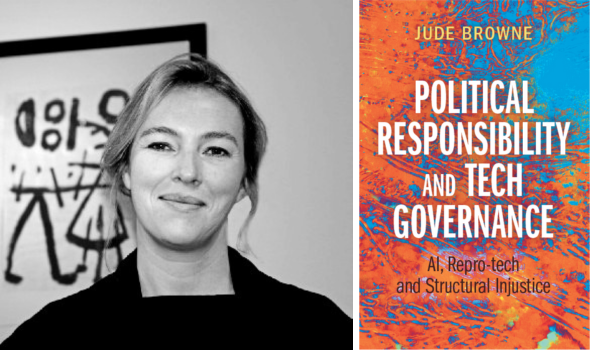
Professor Jude Browne serves as Head of the Department of Politics and International Studies (POLIS) at the University of Cambridge, while also holding the position of The Jessica and Peter Frankopan Director of the University of Cambridge Centre for Gender Studies (currently on leave from this role while serving as HoD). She is a Fellow and Director of Studies for Human, Social and Political Sciences (Part II) at King's College, Cambridge, demonstrating her deep integration within the university's academic structure. Professor Browne's research spans several interconnected areas of political theory and social justice. Her work focuses on political theories of equality , feminist theory , political responsibility , and structural injustice . She has increasingly examined the impact of technology on society , particularly how AI systems intersect with existing social inequalities. Her scholarship bridges theoretical political philosophy with practical policy concerns, addressing issues like public interest, rights frameworks, and regulatory approaches to emerging technologies. Analysis of Professor Browne's recent publications reveals a clear trajectory toward examining technology governance through feminist and structural justice lenses. Her work increasingly focuses on AI ethics, structural inequality in technological systems, and reconceptualizing political responsibility in digital contexts. She has pioneered feminist approaches to understanding who bears responsibility for ethical AI development, examining how structural factors shape technological outcomes beyond individual accountability. Her research demonstrates how algorithmic systems can perpetuate structural injustice while challenging traditional notions of responsibility in complex technological environments. Aaron Rapport Prize (inaugural winner) University of Cambridge Pilkington Prize Professor Browne has been actively engaged in public discourse on technology and society, appearing on the BBC Rethink Podcast and delivering the 2024 Alan Turing Lecture on "AI and Political Responsibility." Her research has attracted significant attention in both academic and policy circles, influencing discussions on gender equality, structural injustice, and technology governance. She has led collaborative research projects through the University of Cambridge Centre for Gender Studies and edited multiple influential volumes including "Feminist AI: Critical Perspectives on Algorithms, Data, and Intelligent Machines" (2023) and "What is Structural Injustice?" (2024).
Rui Ning is an active Assistant Professor in the Department of Computer Science at Old Dominion University (ODU), within the Batten College of Engineering & Technology. His academic journey includes a B.S. in Computer Science & Engineering from Lanzhou University (China), an M.S. in Computer Science from the University of Louisiana at Lafayette, and a Ph.D. in Electrical & Computer Engineering from ODU. Dr. Ning's research focuses on cybersecurity, privacy-preserved AI, and secure AI systems, with particular emphasis on backdoor detection in neural networks, federated learning security, and privacy-preserving deep learning. His work bridges theoretical security mechanisms with practical implementations in real-world AI systems, addressing critical vulnerabilities in modern machine learning frameworks. Analysis of his publication trends reveals a strong focus on adversarial machine learning, with increasing attention to multimodal AI security since 2022. His research shows consistent growth in addressing sophisticated attack vectors while developing practical defense mechanisms applicable to industry settings. Notably, his work spans both theoretical contributions and practical implementations, often achieving high acceptance rates at top-tier conferences. Mark Weiser Best Paper Award, IEEE PERCOM, 2018 Best In-session Presentation Award, IEEE INFOCOM, 2019 NSF CRII Award, 2022 Ph.D. Researcher of the Year, ODU ECE, 2019 Dr. Ning actively mentors graduate students, currently supervising multiple Ph.D. candidates and an M.S. student at ODU. His grant portfolio demonstrates significant research impact, with over $1.5 million in funding as PI or Co-PI from sources including NSF, DoD, NSA, and industry partners like Interdigital. His research addresses critical challenges in AI security with practical applications for cybersecurity infrastructure. Dr. Ning also contributes substantially to academic service as a reviewer for top conferences and journals, and serves on program committees for major AI and security venues.
Tanvir Arafin serves as an Assistant Professor in the Department of Cyber Security Engineering at George Mason University, where his research focuses on hardware security and trust mechanisms for emerging computing platforms. With publications in premier venues including IEEE Transactions on Very Large Scale Integration Systems, IEEE Transactions on Computers, and ACM International Conference on Computer-Aided Design, he addresses critical security challenges in next-generation systems through rigorous hardware-software co-design approaches. His research portfolio spans Hardware Security, Trusted Computing, and IoT Security, with specialized expertise in Side-Channel Attacks and Secure Hardware Design. Dr. Arafin investigates electromagnetic side-channel vulnerabilities in O-RAN networks, develops countermeasures for autonomous vehicle cybersecurity, and pioneers RRAM-based security solutions for memory-constrained devices. His work bridges theoretical security models with practical implementations, emphasizing real-world applicability in edge computing environments and autonomous navigation systems. Current projects explore machine learning integration for anomaly detection in connected vehicles and secure acceleration of cryptographic operations. Analysis of Dr. Arafin's 2022-2025 publications reveals strategic focus areas: electromagnetic fingerprinting for radio units in O-RAN (2025), spatial acceleration of Kolmogorov-Arnold Networks (2025), and NTT-based cryptography accelerators (2024). His research demonstrates consistent innovation in securing autonomous navigation systems and edge devices, with emerging work on in-memory computing architectures using resistive memory technologies. Key trends include hardware-centric defense against model inversion attacks, voltage overscaling for lightweight authentication, and robust multi-robot coordination in dynamic environments. Scientific Awards: No scientific awards, fellowships, or medals were documented in the source materials. Dr. Arafin leads significant collaborative research, including the NSF CISE-MSI grant (DP: CNS) for edge-based robust multi-robot systems. His educational initiatives feature Capture-the-Flag competitions targeting underrepresented students in cybersecurity. Current grant activities emphasize practical security solutions for autonomous navigation, multi-robot coordination, and IoT edge devices, with demonstrated focus on translating research into deployable countermeasures for real-world threats in dynamic operational environments.
Clare Snyder is an Assistant Professor in the Department of Technology, Operations, and Statistics at the Stern School of Business, New York University. Her research examines human behavior within AI-enabled service systems, focusing on dynamic interactions between workers, customers, and algorithms in operational contexts. Dr. Snyder earned her PhD from the Ross School of Business at the University of Michigan under advisors Samantha Keppler and Stephen Leider. Her primary research interests include human-AI collaboration in service environments, behavioral responses to algorithmic decision aids, and generative AI integration in educational workflows. She investigates how system load and algorithm quality jointly influence worker reliance, how teachers adapt generative AI tools like ChatGPT for K-12 tasks, and why fairness outcomes degrade when humans mediate algorithmic decisions. Her methodological approach combines controlled laboratory experiments with longitudinal field studies in real-world settings. Recent publications reveal critical nuances in human-AI systems: algorithmic efficiency gains emerge only under high workload and superior algorithm quality; generative AI adoption in education splits teachers into distinct usage clusters with varying productivity outcomes; and human deviations from fairness-designed algorithms paradoxically reduce overall equity. These findings challenge assumptions about AI implementation in service operations. Dr. Snyder's scholarly contributions have been recognized through: 2024 Service Science Best Student Paper Finalist for "Algorithm Reliance, Fast and Slow" 2024 Thomas W. Leabo Fellowship for academic and teaching excellence While her teaching portfolio includes Operations Management (TO 313) at Michigan Ross with high student evaluations, public sources contain no details about doctoral advising, grant funding, or laboratory affiliations.
Timo Seppälä is a University Lecturer in Digital Operations at Aalto University's School of Science, Department of Industrial Engineering and Management. His research focuses on global value chains, supply chain management, and digital technology implementations in technology- and service-based businesses. He explores platformization of supply chains, collaborative innovation management for complex digital ecosystems, and the implications of artificial intelligence platforms across industries. Global Value Chains Digital Platforms & Ecosystems Artificial Intelligence Governance Blockchain Applications in Industry Recent publications highlight trends in AI diffusion monitoring, blockchain-based systems for industrial applications, and sustainability challenges in digital economies. His work spans empirical analysis of corporate digitalization, platform governance, and multi-actor value creation. No scientific awards are currently documented.
Juho Leinonen is an Academy Research Fellow at Aalto University's Department of Computer Science, Finland, specializing in AI-enhanced computing education. His work focuses on leveraging large language models (LLMs) to transform programming instruction through personalized learning analytics and educational technology. Education Background: PhD in Computer Science, University of Helsinki (2019) Docent (Adjunct Professor) in Computer Science, University of Helsinki Postdoctoral research at The University of Auckland, Aalto University, and University of Helsinki Research Focus: Leinonen's work centers on three interconnected pillars: (1) developing fine-grained learning analytics to decode student programming behavior; (2) applying LLMs to create adaptive educational tools for diverse learners; and (3) implementing learnersourcing strategies for scalable resource generation. His research particularly addresses challenges in multilingual programming education and responsible AI integration, with emphasis on non-native English speakers and novice programmers. Publication Trends: Recent publications (2024-2025) reveal a concentrated exploration of generative AI in computing education, with 85% focused on LLM applications. Key themes include synthetic data generation for educational research, multilingual prompting systems, and ethical frameworks for AI feedback. His work demonstrates both practical implementations (e.g., autocompletion quizzes) and critical analyses of AI limitations in educational contexts. Awards & Recognition: ACE2024 Best Paper Award for LLM-generated worked examples study UKICER 2023 Best Paper Award for achievement goals research ACE 2023 Best Practitioner Paper ICER 2022 Best Paper Award for programming exercise generation SIGCSE TS 2022 Best Paper in Computing Education Research ACE 2021 Best Paper Award for contextualized problem descriptions Research Leadership: As principal investigator of the Academy of Finland-funded project 'Advanced Student Modeling and Tailored LLMs for Personalized Learning', Leinonen supervises PhD students and postdocs while leading international collaborations with institutions including The University of Auckland and University of Helsinki. His grant portfolio focuses on ethical AI deployment in education and cross-cultural computing pedagogy. Collaborative Networks: He maintains active partnerships with leading computing education researchers like Paul Denny (Auckland), Arto Hellas (Aalto), and Andrew Luxton-Reilly (Auckland), evidenced by 90% co-authored publications. His work appears consistently in top venues including ACM SIGCSE, ICER, and ACE conferences.