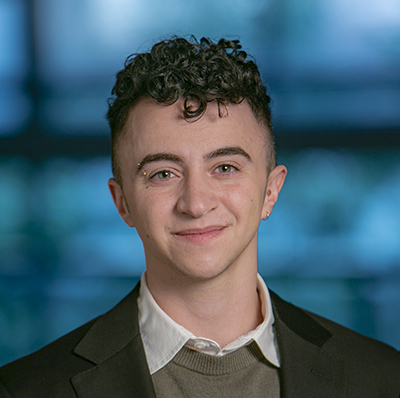
Danaë Metaxa is an Assistant Professor at the University of Pennsylvania, with a primary appointment in the Department of Computer and Information Science and a secondary appointment at the Annenberg School for Communication. They co-founded the Penn HCI group and focus on bias and representation in sociotechnical systems, particularly in high-stakes domains like politics and employment. Primary: Department of Computer and Information Science, University of Pennsylvania Secondary: Annenberg School for Communication Their research develops sociotechnical auditing methods that combine algorithmic analysis with user-centered behavioral interventions. Key areas include algorithmic justice, human-computer interaction, and marginalized groups' experiences with AI systems. Recent publications analyze generative AI harms, political content on TikTok, and automated hiring biases. They emphasize youth participation in algorithm auditing and ethical AI education. Danaë teaches courses like Algorithmic Justice and Human-Computer Interaction , and mentors PhD students in interdisciplinary research. They are a General Chair for FAccT 2025 and advocate for equity in AI research opportunities.
Isabelle Augenstein is a Professor at the University of Copenhagen's Department of Computer Science, where she leads the Copenhagen Natural Language Understanding (CopeNLU) research group and the Natural Language Processing section. She became Denmark's youngest female full professor in 2022 and co-leads the Danish Pioneer Centre for Artificial Intelligence's Speech and Language collaboratory. ERC Starting Grant recipient DFF Sapere Aude Research Leader fellow Karen Spärck Jones Award winner Hartmann Diploma Prize recipient Her research focuses on fair and accountable NLP systems, with specific emphasis on explainability, factuality, bias detection, and social NLP. She investigates cultural biases in language models, develops frameworks for explainable fact checking, and explores uncertainty estimation in NLP systems. Recent publications demonstrate expertise in: Mechanistic analysis of cultural bias representations Context utilization techniques for LLMs Explainability metrics and attribution methods Cross-domain label adaptation Retrieval-augmented generation Fact checking uncertainty quantification Major scientific contributions include: Numerous EMNLP and ACL publications Foundational work on stance detection Development of fact checking benchmarks Multilingual model analysis AI ethics frameworks She supervises a team of researchers working on explainable AI and fact checking systems, with current projects including the ExplainYourself ERC-funded initiative on explainable fact checking. Her group recently presented multiple papers at EMNLP 2025 on topics spanning explainable AI and social NLP.
Dr. Arnold Japutra is an Associate Professor of Marketing at Southampton Business School, University of Southampton. His research focuses on brand management, consumer behaviour, relationship marketing, and the adoption of emerging technologies such as AI, AR/VR, and robotics. Recognized among the Top 2% of Global Scientists, he has published in leading journals including the Journal of Business Research, European Journal of Marketing, International Marketing Review, Journal of International Management, Journal of Travel Research and Tourism Management. Dr. Japutra has held academic roles at the University of Western Australia and Universitas Indonesia, and has extensive experience in teaching, corporate training, and consulting for global organizations. His research interests include: Consumer-brand relationships Consumer negative behaviours Dark-side of brands Human-Robot interactions Adoption of new technologies (e.g., AI, AR, VR) Brand management (e.g., brand attachment, brand loyalty, brand equity) Technology adoption and consumer behaviour (e.g., impulsive and compulsive buying) Dr. Japutra's research sits at the intersection of branding, consumer psychology, and emerging technologies. His work examines how consumer–brand relationship factors drive both positive behaviors and negative ones such as impulsive buying, compulsive consumption, and trash-talking. He investigates how psychological traits shape consumer decision-making and has recently been exploring human-technology interactions with a focus on AI, robotics, AR, and VR. His publication pattern shows a clear evolution from traditional brand management topics toward increasingly technology-focused research, particularly examining the psychological impacts of AI and digital interfaces on consumer behavior. Dr. Japutra has received numerous prestigious awards, including: Stanford 2% Global Scientist Citation Rankings (2023, 2024) Business School Mid-Career Research Award, University of Western Australia (2023) Best Researcher Award, Faculty of Economics and Business, Universitas Indonesia (2023, 2022) Best paper at Journal of Hospitality and Tourism Management (2019) Best Researcher Award and Top Publication Award, Tarumanagara University (2016) Dr. Japutra is actively accepting PhD students and has extensive experience mentoring graduate researchers. His research has been supported by various grants though specific funding sources aren't detailed in the provided materials. He has also delivered corporate training and consulting services for numerous global organizations, bridging academic research with practical business applications.
Joel Mero is an Associate Professor at the School of Business and Economics, University of Jyväskylä , leading the Digital Marketing and Communication (DMC) research group and directing the International Master's Program in Digital Marketing and Corporate Communication (DMCC) . He holds a D.Sc. (Econ.) from Jyväskylä University (2016) and has designed over 20 courses across 10 institutions, covering all academic levels from Bachelor to Doctoral. His research focuses on B2B digital marketing management , particularly leveraging digital data and technologies in business markets. Notable achievements include two Best Paper Awards (2017 & 2019) in the Industrial Marketing Management journal. His work explores topics such as influencer marketing, big data analytics, marketing agility, and AI-driven strategies. Current research groups include the Sound Science Lab (music perception) and Digital Marketing and Communication (DMC) . He collaborates on projects like the Finnish Quantum Flagship , aiming to advance quantum technology applications. Mero emphasizes practical applications of digital tools, bridging academic insights with industry needs. Publications span conceptual frameworks, empirical studies, and industry guides, with a focus on B2B customer journeys, AI in content creation, and data-driven decision-making. His teaching and research highlight agility, innovation, and the ethical use of emerging technologies in marketing.
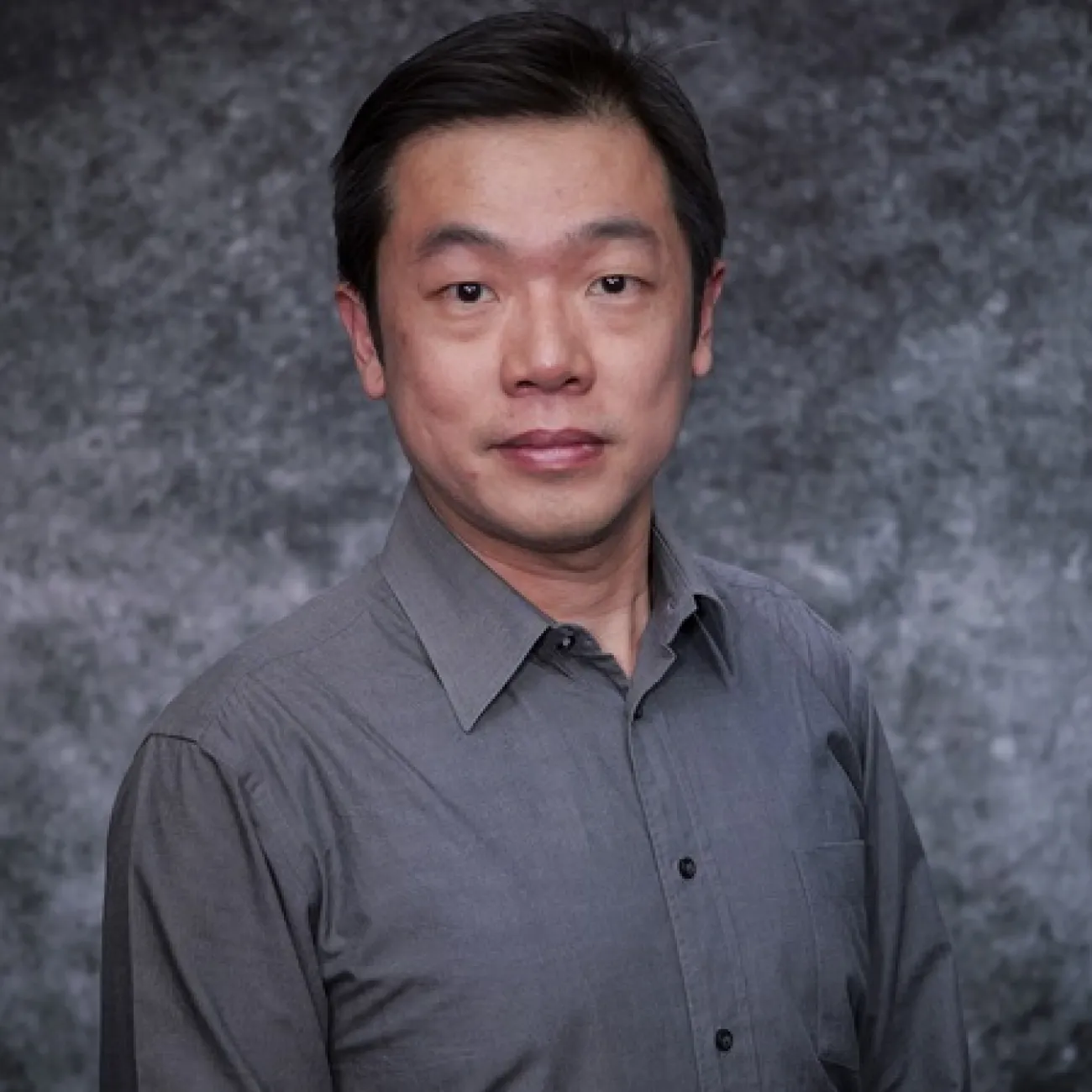
Kede Ma is an Associate Professor in the Department of Computer Science at City University of Hong Kong (CityUHK). He received his B.E. from the University of Science and Technology of China (USTC) in 2012, and MASc and Ph.D. degrees from the University of Waterloo in 2014 and 2017, respectively. From 2018 to 2019, he was a Research Associate with the Howard Hughes Medical Institute and New York University. Prof. Ma has been named to the Highly Cited Researchers list by Clarivate Analytics in 2024 and currently serves on the editorial boards of IEEE Transactions on Image Processing, IEEE Transactions on Information Forensics and Security, and IEEE Signal Processing Letters. Prof. Ma leads the Multimedia Analytics (MA) Laboratory, an interdisciplinary research group focused on computational vision, computational modeling of human visual perception, perceptual multimedia signal processing, quality assessment, and multimedia forensics. His research spans computational photography, high dynamic range imaging and rendering, omnidirectional video analysis, camera processing pipeline design, and artificial intelligence safety in multimedia systems. His work integrates machine learning techniques including reinforcement learning, generative modeling, self-supervised learning, and continual learning for multimedia signal processing applications. His recent publications demonstrate a strong focus on image quality assessment, deep learning for multimedia processing, and multimedia forensics. His work bridges theoretical computer vision principles with practical applications in multimedia systems. The research trends show increasing integration of foundation models with specialized multimedia processing tasks, particularly in quality assessment and security applications. Highly Cited Researchers list by Clarivate Analytics (2024) Best Paper Award at IEEE International Conference on Virtual Reality and Visualization (2021) Best Paper Runner-Up at International Joint Conference on Artificial Intelligence Workshop (2021) Top 10% Award at IEEE International Conference on Image Processing (2015) Finalist for the Governor General's Gold Medal, University of Waterloo (2017) Spotlight presentation at NeurIPS (2022) Highlight paper at ICCV (2025) Oral presentation at ICLR (2025) Prof. Ma advises numerous PhD students and postdoctoral fellows in the MA Laboratory. His research is supported by various grants enabling work in multimedia analytics, image processing, and computer vision. The laboratory maintains active collaborations with researchers at institutions including SUSTech, ZJU, and HIT. Current projects focus on advancing image quality assessment methodologies, developing more robust deep learning techniques for multimedia forensics, and exploring new approaches to HDR imaging and omnidirectional video processing. The Multimedia Analytics Laboratory maintains a strong focus on both theoretical foundations and practical applications of multimedia processing. Current research directions include integrating large language models with image quality assessment, developing more robust deepfake detection methods, and advancing techniques for continual learning in multimedia applications. The lab emphasizes rigorous evaluation methodologies and maintains multiple datasets for multimedia quality assessment research.
Anthony TUNG Kum Hoe is a Professor in the Department of Computer Science at the National University of Singapore (NUS), where he has established himself as a leading researcher in database systems and data mining. He is also affiliated with the NUS Graduate School for Integrative Sciences and Engineering and serves as a SINGA supervisor. His educational background includes a Ph.D. in Computer Science from Simon Fraser University (2001), an M.Sc. in Information Systems & Computer Science from NUS (1998), and a B.Sc. with 2nd Class Upper Honours in Information Systems & Computer Science from NUS (1997). Professor Tung's research spans several interconnected areas within database systems and data mining. His primary focus is on developing efficient methods for indexing and searching complex data structures including time series, trajectories, trees, graphs, and high-dimensional objects. He has pioneered work in visual query processing, keyword search, and ranking systems. His GENIE (Generic Inverted Index) and LAMP (semi-Lazy Mining Paradigm) projects represent significant contributions to big data analytics, particularly in handling the 'variety' aspect of big data by providing unified frameworks for processing diverse data structures while preserving semantic meaning. His research bridges theoretical database concepts with practical applications in visual data mining, collaborative analytics, and just-in-time model construction. His recent publications reveal a clear evolution from traditional database research toward more complex analytics on diverse data types. While maintaining his core expertise in database indexing and query processing, his work has expanded to incorporate machine learning techniques, particularly in areas like nearest neighbor search, anomaly detection, and predictive analytics. There's a noticeable trend toward interdisciplinary applications, with publications spanning computer vision, natural language processing, transportation systems, and social computing. His research group consistently publishes in top-tier venues including SIGMOD, VLDB, ICDE, and KDD, demonstrating both theoretical rigor and practical relevance. 2005 Best Paper Award for 'Indexing DNA Sequences Using q-grams' 2007 Invited panel speaker on 'Advice for a successful database researcher career in Asia' at SIGMOD 2010 Guest Lecturer for VLDB Database School 2012 VLDB 2012 Research PC Co-chairs 2015 10 Years Best Paper Award, DASFAA 2015 Invited to SIGMOD 2008 and SIGKDD 2008 Program Committees Professor Tung has supervised numerous PhD students and research associates throughout his career, including notable researchers like Zhang Zhenjie (recipient of the 2007 President Graduate Fellowship) and Wang Nan (published in SIGMOD'08). His research group has been consistently productive, with students publishing in top conferences including SIGMOD, ICDE, and VLDB. His professional service is extensive, having served as PC Chair for COMAD'06, Research PC Co-chair for VLDB 2012, and on program committees for virtually all major database and data mining conferences over the past two decades. His research has been supported by various grants that have enabled significant contributions to database technology. His GENIE and LAMP projects represent a cohesive research direction focused on developing systematic approaches to big data analytics. GENIE provides a unified platform for storage and retrieval of big data with various structures, while LAMP introduces a novel paradigm for predictive analytics that combines the strengths of lazy and eager learning approaches. These projects have evolved to incorporate GPU acceleration and parallel processing capabilities, reflecting his commitment to addressing real-world scalability challenges in data-intensive applications.
Ciara Atkinson serves as an Assistant Professor of Practice in the Department of Psychology at the University of Arizona, where she teaches foundational and specialized undergraduate courses including Introduction to Psychology (PSY 101), Social Psychology (PSY 360), and Research Methods (PSY 290A). Her pedagogical philosophy centers on making psychological science accessible through real-world applications, hands-on activities, and critical thinking development that connects theory to students' everyday experiences. Her academic credentials include: B.S. in Psychology from Otterbein University (2017) M.A. in Psychology from the University of Arizona (2019) Ph.D. in Social & Personality Psychology from the University of Arizona (2022) Dr. Atkinson's research investigates how societal expectations and gender stereotypes shape roles and identities, with particular focus on inequalities in helping-oriented occupations. Her work examines the gender roles inhibiting prosociality (GRIP) model, masculinity threats as barriers to communal engagement, and cross-national analyses of gender norms in caregiving. She employs experimental and survey methodologies to explore how traditional gender expectations constrain prosocial behavior, especially among men in communal roles. Analysis of her 15 most recent publications (2017-2025) reveals a cohesive research trajectory centered on gender dynamics in social psychology. The majority examine how traditional gender roles inhibit prosocial behavior through mechanisms like perceived backlash, masculinity threats, and policy influences, with strong methodological emphasis on cross-national comparisons (across 37-48 countries) and controlled experiments. Key thematic threads include pandemic impacts on domestic equality, AI-generated gender bias, and interventions promoting men's emotional flexibility for gender equity. Prior to her faculty appointment, she worked as a research analyst and program evaluator with the Community Research, Evaluation and Development (CRED) Team in the Norton School of Family and Consumer Sciences, Student Affairs, and the UA Cancer Center. These collaborations demonstrate her applied approach to program evaluation and community-focused research on gender dynamics in institutional settings.
Qijia Shao is an Assistant Professor at The Hong Kong University of Science and Technology (HKUST), specializing in Mobile Computing, Human-Computer Interaction (HCI), and Ubiquitous Computing. He earned his Ph.D. in Computer Science from Columbia University (2024), advised by Prof. Xia Zhou and Prof. Fred Jiang, with prior degrees from Dartmouth College (M.Sc.) and UESTC (B.Sc.). His research focuses on developing unobtrusive systems for human physical/physiological signal sensing, integrating machine learning, signal processing, and hardware design to address societal challenges in healthcare, education, and human-computer interaction. Educational Background: Ph.D., Computer Science, Columbia University (2024) M.Sc., Dartmouth College B.Sc., UESTC Visiting Student, National Chiao Tung University (EECS) Research Assistant, Missouri S&T Research Interests: Deployable systems for human state analysis via physical/physiological signals (e.g., ECG, movement) Generalizable AI algorithms for low-overhead data interpretation Hardware-software co-design for imperceptible sensing Applications in healthcare (e.g., Kangaroo Mother Care monitoring), education, and consumer electronics Awards & Recognition: MobiSys 2024 Best Paper and Demo Awards NSF Funding & Rising Stars Honors ACM UbiComp Gaetano Borriello Award Finalist Editorial Board Member (ACM IMWUT, since 2024) Lab & Collaborations: Director of the Ubiquitous X Lab at HKUST Industry partnerships with Samsung, Snap, and Philips Research International conference TPC roles (MobiSys, SenSys) and keynote speaking engagements
Christian Wolff is a University Professor and Chair of Media Informatics at the Institute for Information and Media, Language and Culture at the University of Regensburg. Since April 2022, he has served as the founding Dean of the Faculty of Computer Science and Data Science, while maintaining secondary membership in the Faculty of Languages, Literature and Cultural Studies (SLK). His academic career spans over three decades with significant contributions to multiple disciplines at the intersection of computer science and humanities. Wolff's research interests center around multimedia and multimodal information systems, electronic publishing, and text technology, particularly text mining. His work bridges computer science with digital humanities, legal informatics, and social media analysis. Recent publications demonstrate a strong focus on large language models, sentiment analysis applications across various domains, legal technology innovations, and virtual reality research for cognitive studies. His interdisciplinary approach has produced significant contributions in both technical and humanities domains. His recent publication trends reveal a strategic shift toward applied AI research, particularly in legal technology (LegalTech), social media analysis, and sentiment analysis using large language models. The publications show increasing collaboration across disciplines, connecting computer science with law, political science, literature, and psychology. His work on the digital basis document for legal proceedings represents a major practical application of his research in the German justice system. East Bavarian Cultural Prize Doctoral Award of the University of Regensburg Wolff has led numerous interdisciplinary research projects connecting computer science with humanities and legal studies. His leadership extends to institutional roles including Dean of Research, Vice Dean, and Dean of Faculty positions. He has been instrumental in establishing the new Faculty of Computer Science and Data Science at the University of Regensburg, demonstrating significant impact on institutional development and research infrastructure. Wolff directs research initiatives focused on text technology, digital humanities, and legal informatics. His work with the INDIGO - Internet and Digitization Eastern Bavaria initiative and the TRIO project demonstrates commitment to regional technology transfer and innovation. The interdisciplinary nature of his research groups connects computer scientists with legal scholars, linguists, and social scientists to address complex digital transformation challenges.
Jessica Hullman is the Ginni Rometty Professor of Computer Science at Northwestern University's McCormick School of Engineering and a Faculty Fellow at the Institute for Policy Research. Her research develops theoretical frameworks and interfaces for human-AI collaboration, focusing on uncertainty quantification, statistical modeling, and decision-making in domains like scientific research and AI-assisted analysis. Education: PhD in Information (Visualization), University of Michigan (2013) MS in Information Analysis, University of Michigan (2008) BA in Comparative Studies, Ohio State University (2003) Tableau Postdoctoral Fellowship, UC Berkeley (2015) Research Focus: Hullman's work bridges formal models of rational inference (e.g., Bayesian decision theory) with real-world applications. Key areas include: human-AI complementarity in decision-making, visualization of uncertainty, statistical reform, and LLM applications in behavioral science. Her research consistently addresses the alignment of data-driven interfaces with human cognitive capabilities. Publication Trends: Recent work demonstrates a strong emphasis on human-AI collaboration frameworks, decision-theoretic evaluation of visualizations, and methodological rigor in machine learning and social science. Key themes include uncertainty quantification (conformal prediction, privacy tradeoffs), behavioral experiments in AI-assisted tasks, and critical analyses of scientific practices. Awards & Honors: Microsoft Faculty Fellow (2019) Google Faculty Award NSF CAREER, Medium, and Small Awards Multiple best paper/honorable mention awards at top HCI/visualization venues (CHI, VIS) Funding & Labs: Principal Investigator for NSF-funded projects including HCC: Medium on visualization tools. Previously affiliated with University of Washington's Interactive Data Lab and DataLab. Current research includes NSF-supported work on improving data visualization for reasoning about analytical assumptions.
David Colon is a Tenured Lecturer at the Centre for History (CHSP) of University of Paris Institute of Political Studies, specializing in propaganda, communication, and digital history. His research focuses on mass persuasion mechanisms, information warfare, and media influence from historical and contemporary perspectives. Position: Tenured Lecturer Institution: Sciences Po (University of Paris Institute of Political Studies) Research Themes: • Propaganda and psychological manipulation • Digital history and modern information warfare • Political communication and social movements Scientific Awards: Prix Akropolis 2019 Prix Jacques Ellul 2020 Teaching & Publications: Holder of the agrégation in history, Colon contributes to graduate studies and has published extensively on propaganda, including works on Edward Bernays, cognitive warfare, and artificial intelligence's role in information manipulation.
John Basl is an Associate Professor of Philosophy at Northeastern University and Associate Director of the Northeastern Ethics Institute, where he leads initiatives in AI and data ethics. He holds affiliate roles at Khoury College of Computer Science, the Institute for Experiential AI, and Harvard's Edmond and Lily Safra Center for Ethics. His research focuses on applied ethics, particularly in AI, machine learning, data ethics, and environmental ethics. He is the author of The Death of the Ethic of Life (Oxford UP) and has contributed to interdisciplinary projects on AI governance, including the NSF-funded AI & Data Ethics (AIDE) Graduate Training Program and the National Internet Observatory. His work explores ethical challenges posed by emerging technologies, such as moral obligations to AI systems, transparency in automated decision-making, and the ethical implications of autonomous vehicles. Basl’s research also engages with environmental ethics, addressing questions about species partiality, ecological justice, and the moral status of non-human entities. He actively collaborates with technologists, policymakers, and ethicists to ensure ethical considerations are integrated into technological development. His media engagements include talks on AI ethics at institutions like the University of Toronto and the Web Summit, and articles in outlets like Aeon Magazine. Current projects include grants focused on training the next generation of AI ethics scholars and analyzing the societal impacts of generative AI. Basl advocates for accessible, interdisciplinary approaches to ethics in technology, emphasizing practical solutions to real-world challenges.
Jessica Fjeld is a Clinical Lecturer at Harvard Law School and Managing Director of the De|Center, an initiative addressing digital authoritarianism. She is affiliated with the Berkman Klein Center for Internet & Society and previously served as Assistant Director of the Cyberlaw Clinic. Her work focuses on AI governance, digital rights, and the intersection of technology with human rights and creativity. Fjeld holds a JD from Columbia Law School, an MFA in Poetry from UMass, and a BA from Columbia University. Affiliations: Harvard Law School, Berkman Klein Center, Cyberlaw Clinic Roles: Clinical Lecturer, Managing Director (De|Center), Legal Scholar Research Interests: AI ethics and governance frameworks Content moderation challenges for marginalized communities Legal aspects of AI-generated art and intellectual property Corporate accountability in tech sectors Freedom of expression in digital spaces Key Projects: Principled Artificial Intelligence Project (mapping global AI ethics principles) Online Identity Help Center (supporting marginalized users in content moderation disputes) Advocacy against facial recognition misuse in Boston Awards: Hamilton Fellow & James Kent Scholar (Columbia Law School) Poetry Society of America Recognition 92nd Street Y/Boston Review Discovery Prize
David Danks is a Professor of Data Science, Philosophy, and Policy at the University of California, San Diego. His work bridges AI ethics, causal inference, and policy, focusing on governance frameworks for emerging technologies. He leads research on trustworthy AI systems, healthcare technology applications, and sociotechnical risks. Danks is affiliated with the DIVER Lab, exploring interdisciplinary approaches to AI's societal impact. His research spans causal discovery algorithms, ethical AI design, and the intersection of science and policy. Notable themes include mitigating bias in quantum machine learning, dynamic certification for autonomous systems, and addressing unforeseen technological harms. He has contributed to national AI policy through roles like the National Artificial Intelligence Advisory Committee. Publications emphasize ethical challenges in AI development, such as algorithmic fairness, epistemic utility, and moral responsibilities in dual-use technologies. His work frequently intersects with healthcare innovation, including personalized hemodynamic models for surgical risk reduction. While no formal awards or grants are listed, Danks' involvement in high-profile initiatives like the CCC Whitepaper on pandemic prevention underscores his leadership in translational ethics and policy.
Jordi McKenzie is an Associate Professor in the Department of Economics at Macquarie University. His research focuses on industrial organization, cultural economics, and digitization, with notable contributions to digital piracy, film industry economics, and generative AI in media. He holds degrees from the University of Sydney (PhD, MEc Hons) and the University of Tasmania (BEc Hons). Education: PhD in Economics, University of Sydney MEc (Hons) in Economics, University of Sydney BEc (Hons) in Economics, University of Tasmania Research interests include AI ethics in content creation, cultural trade patterns, and the economic impact of streaming services. His work has been published in journals like Poetics and Journal of Cultural Economics . He has contributed to policy discussions on digital piracy, music industry recovery post-pandemic, and author rights in AI-generated content. Recent projects include studying the transformation of data into trusted data products, digital piracy policy impacts, and subscription video on demand’s effect on legal/illegal consumption. He received the Mallen Lifetime Achievement Award in 2014 for contributions to film industry economics. McKenzie has engaged in media commentary on topics like Netflix’s viewing metrics, music collaboration impacts, and talent show biases. His research often bridges empirical evidence and policy implications, emphasizing the cultural and economic dimensions of digitization.