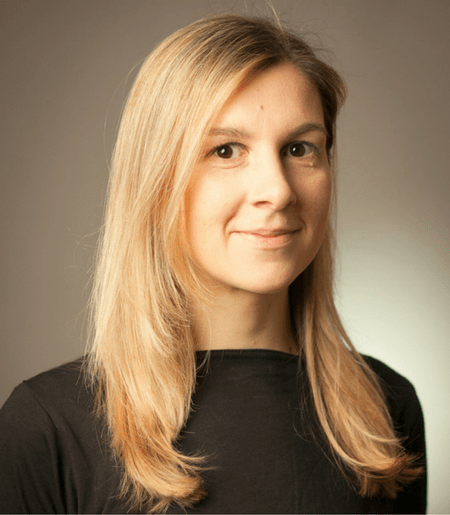
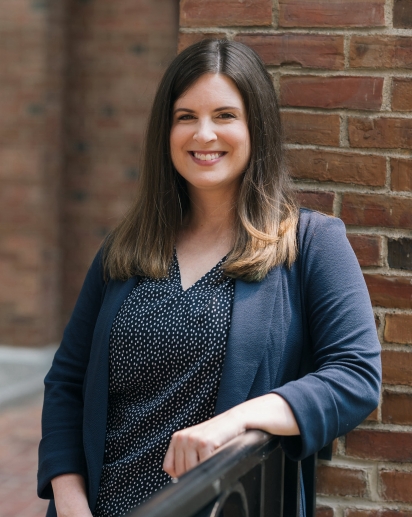
Professor Barry Porter is a faculty member at Lancaster University in the School of Computing and Communications . His research focuses on emergent software platforms that address software complexity through component models , meta-software platforms , and machine learning . Key areas include distributed systems, cloud integration with sensor nodes, green computing, and real-time visualization. Research Interests : Runtime adaptation in complex systems Self-assembling software architectures Machine learning for code optimization Distributed emergent systems at scale Green computing for multi-core environments Edge-cloud continuum integration Recent Publication Trends : His 2025 work explores genetic improvement for software using speciation algorithms , program geometry projection , and multi-agent decision frameworks . Earlier studies (2022-2024) investigate edge-cloud systems , neural transfer learning , and ecosystem curation in emergent software. Supervision & Projects : He supervises PhD student Ben Craine and leads projects like B-EGI (Bio-Enhanced Genetic Improvement) and BBC Prosperity Partnership for media delivery. Collaborations span environmental IoT, multi-agent learning, and fog computing. Labs & Groups : Affiliated with the Lancaster Intelligent, Robotic and Autonomous Systems Centre , Centre of Excellence in Environmental Data Science , and the Distributed Systems group.
Jura Liaukonyte is an Associate Professor of Marketing and Applied Economics at the Charles H. Dyson School of Applied Economics and Management within the SC Johnson College of Business at Cornell University. She holds a Ph.D. from the University of Virginia (2009). Her research focuses on the intersection of applied microeconomics, industrial organization, and quantitative marketing, with a particular emphasis on advertising content, consumer behavior, and food marketing. She has developed notable work on generic advertising, advertising as a public good, and food labeling issues. Her recent research explores topics like the impact of social media boycotts on sales (e.g., the Goya boycott study), the effects of GLP-1 medication adoption on consumer food choices, and political polarization in consumer goods. She has also contributed to understanding online shopping dynamics and the role of personalized pricing in consumer fairness perceptions. Key projects include analyzing how advertising content influences investor behavior and the effectiveness of comparative advertising in OTC analgesic markets. Her work on GMO/non-GMO labeling and CRISPR-edited food products highlights her engagement with emerging technologies' societal impacts. Liaukonyte's research has been published in top journals like Marketing Science and Management Science. She collaborates with institutions such as Numerator for consumer data insights and maintains an active presence in academic networks, including the Cornell SC Johnson College of Business Research Paper Series. Her lab focuses on data-driven analyses of consumer markets, with ongoing projects on healthiness indices and price fairness in dynamic economic environments.
Kimberly B. Rogers is an Associate Professor of Sociology at Dartmouth College , where she has been employed since 2015. She is affiliated with the Quantitative Social Science Program and the Neukom Institute for Computational Science . Her research focuses on how inequalities are produced, maintained, and resisted through behavior and emotion dynamics in social interactions , with particular attention to status and power hierarchies , occupational inequality , and mental health outcomes . She teaches courses such as Introductory Sociology , Research Methods , and Status and Power in Social Interaction , integrating computational tools into her pedagogy. PhD in Sociology, Duke University (2013) MA in Sociology, Duke University (2008) MA in Psychology, Wake Forest University (2005) BA in Psychology, Randolph-Macon Woman's College (2003) Rogers' research spans three key areas: cultural consensus in identity sentiments , behavioral/emotional responses to inequality , and computational modeling of social processes . Her work reveals how micro-social mechanisms perpetuate or disrupt status hierarchies across contexts like occupational roles , racialized interactions , and digital collaboration . Recent publications examine technological co-diffusion , pandemic-induced identity shifts , and gendered occupational perceptions . Her scholarly output follows trends in computational social science and cross-cultural emotion analysis . She employs Bayesian affect control theory to model dynamic identity processes and uncertainty in interactions , while her 2025 work on violence against women demonstrates applications of general strain theory to contemporary social issues. Senior Faculty Grant (2023-24) , Dartmouth College Wilson Fellowship (2021-22) , Dartmouth College Outstanding Article Award (2017) , American Sociological Association Seed Funding Grant (2016-17) , Dartmouth Provost Doctoral Dissertation Grant (2010-11) , National Science Foundation Rogers has received multiple grants for collaborative projects like THEMIS.COG , examining identity and sentiment modeling in groups . She mentors students through engaged scholarship and social impact practicums , though specific advisees aren't listed. Her 2019-2020 involvement with Campus Compact and 2016 DCSI teaching grant highlight her commitment to community-engaged pedagogy .
Ryan Kelly is an Associate Professor in the School of Computing Technologies at RMIT University, specializing in Human-Computer Interaction (HCI), digital health, and mixed reality. His research focuses on technology-enabled social connection and wellbeing, including designing communication tools for close relationships, digital health initiatives like the Music-Attuned Care via eHealth (MATCH) project, and VR applications for mental health. He collaborates with industry partners such as Google, Netflix, and the Worldwide Fund for Nature, and has developed technologies for older adults, including simplified video calling systems for aged care during the pandemic. His work has been featured globally in media, including Al-Jazeera's documentary All Hail the Algorithm . He actively contributes to the HCI community as a reviewer and committee member for conferences like ACM CHI and CSCW, holding roles such as Editor for CSCW 2025 and Awards Co-Chair for CSCW 2023. Ryan supervises PhD candidates exploring human-centered AI for social connection and online safety for older adults. His research aligns with UN Sustainable Development Goals 3 (Good Health), 9 (Industry Innovation), and 11 (Sustainable Cities). Key projects include the VR mindfulness application used by over 200,000 Australians and the Painpad device for pain logging in UK hospitals. He advocates for participatory design frameworks, emphasizing ethical AI and technology’s role in fostering meaningful human experiences.
David Churchill is an Associate Professor in the Department of Computer Science at Memorial University of Newfoundland (MUN), specializing in Artificial Intelligence and Real-Time Strategy (RTS) Game AI. He holds a PhD from the University of Alberta and has been actively involved in AI research since 2009. His work focuses on AI for RTS games like StarCraft, emphasizing heuristic search, combat simulation, and build order optimization. He organizes the annual AIIDE StarCraft AI Competition and maintains open-source projects like UAlbertaBot and SparCraft. Education: BSc in Pure Mathematics and Computer Science (MUN) MSc in Computer Science (MUN, 2009) PhD in Computing Science (University of Alberta, 2016) Research Interests: AI in video games, heuristic search algorithms, RTS game strategies, multi-agent systems, and robotics. His work bridges theoretical AI with practical applications in competitive gaming and robotics. Publications & Awards: Notable contributions include Search Ordering for StarCraft Build Order Optimization (2024) and Hierarchical Portfolio Search in Prismata (2017, Best Student Paper Award). His research has advanced combat simulation (SparCraft) and build-order planning (BOSS) in RTS games. Awards: Best Student Paper Award (2017) Best Paper Award (2013, 2022) Advising & Labs: Supervised over 20 graduate and undergraduate theses at MUN. Leads the StarCraft AI Competition and contributes to open-source projects like UAlbertaBot and STARTcraft. Currently not accepting new graduate students due to funding constraints.
Dr. Matteo Montecchi is a Senior Lecturer (Associate Professor) in Marketing at King’s Business School, King’s College London, where he also serves as Theme Lead for Sustainable Consumption at the Centre for Sustainable Business and Programme Director for the Strategic Marketing (Open Executive) programme. He teaches core modules such as Consumer Behaviour, Digital Marketing, and Research Methods, and leads executive education initiatives. Previously, he was a Senior Lecturer at the London College of Fashion, University of the Arts London, and has held visiting positions at Milan Politecnico, Università Cattolica del Sacro Cuore, and Università Federico II. Montecchi earned his PhD in Marketing from King’s College London, an MRes in Marketing from Birkbeck College, an Executive Master in Marketing and Sales from SDA Bocconi and ESADE, and a Bachelor’s in Business Economics from the University of Modena and Reggio Emilia. He also holds a PgCert in Academic Practice and is a Fellow of the Higher Education Academy (FHEA). His research focuses on the digital transformation of marketing, particularly the role of artificial intelligence and blockchain in enhancing transparency and trust. He investigates ethical engagement with diverse consumer groups, inclusion, and corporate responsibility, with a special interest in marginalized communities. His work integrates consumer behavior, digital interactions, and decision-making with technological innovation, offering actionable insights for sustainable and responsible business strategies. The most recent 15 publications reflect a strong trend in AI in retail, brand transparency, consumer trust, ethical data use, voice technologies, and social sustainability. His research spans journals in marketing, psychology, interactive marketing, and business ethics, demonstrating interdisciplinary impact. Scientific Awards: KingsCAT: Capture and Analysis Tool for Social Media Research at King’s College London (2024) – Recognized as part of a collaborative team for advancing digital research infrastructure and media analysis. Montecchi is actively involved in PhD supervision and is accepting new students. He has led research projects using social media analytics (KingsCAT) and has contributed to strategic debates on grand challenges in marketing. His work connects academic research with real-world managerial applications, particularly in digital strategy and ethical innovation. He is a key contributor to interdisciplinary research through tools like KingsCAT, which supports collaborative social media analysis, and his publications often involve co-authorship with experts in data science, psychology, and organizational behavior.
Angel Hsing-Chi Hwang is an Assistant Professor of Communication at the University of Southern California (USC) Annenberg School for Communication and Journalism and a core faculty member at the USC Center for AI in Society . Her research focuses on the societal impact of artificial intelligence (AI) on work practices, with a particular emphasis on human-AI interaction (HAII), digital mental health, and the future of work. She holds a PhD in Communication from Cornell University with a concentration in Human-Computer Interaction and completed postdoctoral training at the Cornell Bowers College of Computing and Information Science . Research Interests: Human-AI collaboration and ethical design Sociotechnical consequences of AI deployment at scale AI in healthcare systems and mental health services Creative processes and AI empowerment in professional domains Methods for scalable AI impact assessment Online labor markets and AI-driven work transformations Recent Work: Her publications explore topics such as the integration of AI in mental healthcare ecosystems, gender dynamics in AI-mediated teams, and the ethical implications of generative AI in creative industries. She actively engages with industry through collaborations with Microsoft Research, Google Research, and other tech institutions. Affiliations & Activities: Organizing workshops on AI disclosure, ownership, and accountability (CHIWORK 2025) Contributing to conferences like ACM CHI and ICWSM Collaborating with interdisciplinary teams on AI ethics and policy initiatives
Dr Glenda Cooper is Reader in Journalism Studies and Head of the Department of Journalism at City St George's, University of London , where she leads a team of 25 staff, 50 visiting lecturers, and over 500 students from 53 countries. She holds a PhD in Journalism from City and an MA in English Language and Literature from Oxford, and has played a pivotal role in elevating the BA Journalism programme to 1st place nationally in the Guardian and Complete University Guide (2023), as well as 1st for Graduate Prospects (Sunday Times 2022). Education: MA in Academic Practice, City, University of London (2022) PhD in Journalism, City, University of London MA in Creative Writing, City, University of London BA (Hons) English Language and Literature, St Hilda's College, University of Oxford PG Diploma in Newspaper Journalism, City University of London Glenda's research focuses on crisis and humanitarian reporting , journalism ethics , live journalism , and the intersection of media and politics, particularly through the legacy of Alistair Cooke’s Letter from America . She has led major funded projects with the British Academy, ESRC, Google Digital News Initiative, and HEIF. Her current research explores AI’s impact on journalism through the DMINR project and innovative storytelling formats via the News on Stage initiative and the Contemporary Narratives Lab . Her recent publications span topics such as AI in newsrooms, humanitarian scandals (#AidToo), refugee representation, and digital narrative innovation. These works reflect a strong interdisciplinary trend, combining journalism studies with media technology, ethics, performance, and political communication. The articles indicate a growing focus on digital transformation, ethical challenges in sourcing, and the evolving role of journalists in public discourse. Scientific Awards and Recognition: Laurence Stern Fellow at the Post (2001) Guardian Research Fellow at Nuffield College, Oxford (2006–2007) AURORA Role Model for Future Women Leaders in Academia (2018) Glenda has supervised PhD students on topics ranging from political communication in Istanbul to the manosphere's influence on journalism. She has been instrumental in curriculum development, notably designing a core ethics module for final-year journalism students. She also serves as Reviews Editor for Journalism: Theory, Practice and Criticism , UK Director of the European Journalism Observatory, and Board Member of The Conversation UK . She co-founded and co-presented the Knowhow podcast, bridging academia and media. She co-directs the Contemporary Narratives Lab and co-founded the News on Stage project, which merges journalism with theatre through live events such as News Cabaret and News on the Street . Her play Aid Memoir , based on her PhD research, was performed at the Pleasance Theatre and featured in the ESRC Festival of Social Science.
Wang Yingji is a tenured professor and doctoral supervisor at the School of Art and Media, Tongji University. He holds a PhD in Literary Studies and has served as director of the China Culture and Art Communication Research Center, member of the China Artists Association, and editorial board member of "Media Criticism" journal. BA: Chinese Language and Literature, Renmin University of China (1995) MA: Journalism, Beijing Normal University (2004) PhD: Literary Studies, Beijing Normal University (2007) His research focuses on the intersections between Journalism and Communication, Media Phenomenology, Philosophy of Technology, and Traditional Chinese Culture. His work explores embodied cognition in media interaction, technological mediation of human perception, and historical epistemology of media systems. The articles demonstrate his expertise in media phenomenology (Hubert Dreyfus analysis), digital reading behavior studies, VR technology ideologies, and historical reconstruction of Chinese communication theories. His publications span from 2016-2022 with consistent CSSCI indexing. National Social Science Fund General Project: "Chinese Modern Public Opinion Thought History" (2021) Major Project Subtopic: "Chinese Media Archaeology in Civilizational Diversity" (2020) Ministry of Education Project: "Husserl's Media and Communication Thought" (2020) Completed NSFC Project: "Rumor Propagation and Governance in Public Emergencies" (2011) As educator, he teaches courses like "Chinese Classical Media Art", "Media Research Methods", and "Communication Theory". His administrative roles include leadership positions in the Chinese Society of Journalism History and multiple journal editorial boards.
Michael Brito is a Lecturer in Mass Communications and Social Media at the School of Journalism and Mass Communications, College of Humanities and the Arts, San José State University. He is also a seasoned industry leader, currently serving as the Global Head of Data + Intelligence at Zeno Group, where he leads a 50-member analytics team supporting global clients in B2B, consumer, technology, and healthcare sectors. His academic and professional work bridges digital marketing, brand strategy, and data-driven communications. Michael’s research interests include digital marketing, social media strategy, brand communications, narrative intelligence, audience segmentation, and AI applications in PR. He is a recognized thought leader with extensive publications and blog posts exploring brand archetypes, earned media, customer engagement, and the future of digital storytelling. His work emphasizes the integration of data analytics into strategic communications to enhance brand visibility and audience connection. The trends in his recent articles reflect a strong focus on artificial intelligence in public relations, media intelligence, narrative analysis, and the evolution of digital customer journeys. His writings analyze tools like Pulsar and Cision, explore generative AI in search, and critique traditional metrics like earned media value, advocating for more sophisticated, insight-driven approaches. Top 50 Social Intelligence Pioneers by The Social Intelligence Lab Dashboard 25 Class of 2022 by PRWeek Top 25 Digital PR Innovators by PRovoke Media Michael Brito mentors students in digital communications and advises on strategic brand development. He has led major initiatives in media monitoring, social intelligence, and data-informed PR outreach. He founded and contributes to a widely-read blog on social media marketing and is a frequent speaker at industry events, including TEDx. He is also a proud U.S. Marine veteran, bringing leadership and discipline to his academic and professional roles. He is actively involved in the COMM+ lab at SJSU and supports student media through his teaching and mentorship. His work continues to influence both academic curricula and industry best practices in digital communications and brand analytics.
Prof. Dr. Julia Metag is Professor for Communication Science at the Department of Communication, University of Münster, where she heads the chair on 'Forms and Processes of Public Communication.' Her research focuses on political communication, science communication, media effects, and online communication. She is actively involved in major research initiatives such as the 'Hot SciComm Lab' (funded by the Volkswagen Foundation) and 'Global Warming’s Five Germanys,' and has led significant projects including the 'Science Barometer Switzerland.' Julia Metag's research interests include science communication, political communication, media use, public trust in science, science-related populism, climate change communication, and digital media. She investigates how audiences engage with scientific information, the role of visuals and AI in science communication, and the impact of misinformation and conspiracy theories. Her work often employs survey, experimental, and content analysis methods to understand public perceptions and media effects. Her recent publications reflect a strong focus on trust in science, audience segmentation, science literacy in digital environments, and the multimodal nature of science communication. She frequently collaborates with scholars across Europe, particularly with Mike S. Schäfer and other colleagues in Switzerland and Germany. Scientific Awards and Memberships: Member of the Academia Europaea (The Academy of Europe) Member of the German Society for Journalism and Communication Studies (DGPuK) Member of the International Communication Association (ICA) Member of the European Communication Research and Education Association (ECREA) Member of the Center for Higher Education and Science Studies (CHESS), University of Zurich Editorial Board Member of Studies in Communication Sciences , Media and Communication , and Environmental Communication Advisory Board Member of the German 'Wissenschaftsbarometer' Julia Metag supervises student theses and leads collaborative research projects, often involving interdisciplinary teams. She has previously held academic positions at the University of Zurich and the University of Fribourg, and her work is widely published in top journals such as Public Understanding of Science , Science Communication , and Communication Research . She is also involved in public engagement through projects like 'Frag Sophie!' and 'Nachgefragt bei Sophie & Co,' which use creative formats to bridge science and society. She leads the 'Hot SciComm Lab,' which investigates science communication in highly contested, multimodal environments shaped by social media, AI, and deepfakes. Her leadership in research networks such as 'Cultures of Compromise' further demonstrates her interdisciplinary reach and academic influence.
Mor Naaman is a Professor at Cornell University specializing in Human-Computer Interaction, Social Media Analysis, and AI-Mediated Communication. With a prolific publication record spanning over two decades, his research focuses on how people interact with social computing systems, particularly examining trust, information exposure, and community dynamics in online environments. His research interests span several interconnected domains: Human-Computer Interaction with emphasis on social media platforms, AI-Mediated Communication examining how AI systems influence human communication patterns, Misinformation Detection and analysis of information ecosystems, Location-Based Social Networks and community awareness systems, and Trust in Online Systems. His work often bridges technical and social aspects of computing, with publications appearing in top venues like CHI, CSCW, and ICWSM. Analysis of his recent publications (2022-2025) reveals a strong focus on the emerging challenges of AI in social contexts, particularly examining AI-generated content, trustworthiness evaluations of AI systems, and the social implications of generative AI. His research shows consistent interest in understanding community dynamics across platforms like Reddit, Facebook, and Twitter, with recent work examining hyperlocal communities, news consumption patterns, and cross-cultural aspects of AI-mediated communication. Mor Naaman has mentored numerous students and collaborators, including Xiao Ma, Yiqing Hua, and Marianne Aubin Le Quéré, who frequently appear as co-authors on his publications. His work demonstrates strong interdisciplinary connections between computer science, social science, and communication studies. His research methodology typically combines large-scale data analysis of social media platforms with user studies and system design, contributing both theoretical insights and practical applications for designing more effective social computing systems. Recent projects have examined AI writing assistants, community governance of AI content, and the cultural implications of AI-mediated communication.
Dr. Maxime Cordeil is a Senior Lecturer in Human Centred Computing at the School of Electrical Engineering and Computer Science, The University of Queensland. His research focuses on Virtual and Augmented Reality technologies for data interaction, interactive visualization systems, and AR interfaces for industry applications. He has authored over 60 publications in top-tier venues such as ACM CHI and IEEE VR, and was nominated as Australia's Field Leader in Computer Graphics in 2021 and 2022. Research Interests: Data visualization, immersive analytics, medical imaging, collaborative systems, and human-computer interaction. Current Projects: Includes embedded visualizations for sports performance, interactive machine learning in 3D environments, and mixed-reality applications in forensic science. PhD Supervision: Actively guiding students in topics like immersive gesture exploration, AR for digital health, and collaborative VR systems. His work bridges theory and practice, with tools like IATK (Immersive Analytics Toolkit) and the MADE-Axes hardware system. He collaborates with industry partners like Raytracer and CSIRO, focusing on applications in space exploration, underwater training, and remote operations. Awards: Multiple best paper recognitions at ISS and CHI, plus industry-driven research grants. Labs: Leads the Immersive Analytics research group at UQ, specializing in embodied interaction and spatial computing.
Charlie Beckett is a Professor of Practice and Director of Polis and the Polis/LSE JournalismAI project at the London School of Economics and Political Science (LSE), Department of Media and Communications. He specializes in the transformation of journalism in the digital age, focusing on AI integration, media ethics, and international news dynamics. His roles include leading research initiatives on journalism’s societal role and advising on media policy. Research Interests: Beckett’s work explores Artificial Intelligence in journalism, networked media systems, and the ethical challenges of digital communication. He examines how journalism adapts to technological changes, particularly in AI-driven news production and disinformation landscapes. His projects include the JournalismAI global survey and the LSE Truth, Trust & Technology Commission. Articles Trends: His recent work emphasizes AI’s impact on newsrooms, media trust dynamics, and global journalism practices. Themes include ethical AI adoption, generative AI applications, and regulatory frameworks for digital platforms. Awards: While no specific honors are listed, his contributions to media policy and journalism innovation are widely recognized internationally. Advising & Grants: Directs major initiatives like Polis and JournalismAI, fostering collaborations between academia, industry, and policymakers. His work often addresses funding challenges in journalism sustainability and ethical technology use. Labs/Teams: Leads Polis, a think-tank for journalism-society research, and oversees the JournalismAI project analyzing global AI trends in media. Collaborates with international institutions on media governance and innovation.
Johannes Schöning is a Professor of Human-Computer Interaction (HCI) at the University of St. Gallen and leads the Ubiquitous Media Technology Lab . His research focuses on developing user interfaces that empower individuals and communities through data-driven decision-making, with interdisciplinary applications in geographic information science, public health, medical contexts, and extreme environments like space missions. He emphasizes methodological rigor from AI, computer graphics, and cognitive psychology. Organizes AlpCHI 2026 Chair of ACM Eugene Lawler Award Committee Editorial Board, AI Perspectives (Springer Nature) Research Trends : His publications from 2025–2024 reveal a focus on Mixed Reality (autoethnography, weight perception), Accessibility (visual impairment support), Environmental HCI (CO2 eco-feedback), and Geospatial Technologies (navigation externalities, map analytics). Interdisciplinary work appears in journals like Nature and PLOS ONE . Scientific Recognition : ACM Distinguished Member Best Paper & Accessibility Awards (Interact 2019, MobileHCI 2015) Junior Fellow, Gesellschaft für Informatik (2013) Academic Service : Active in conference leadership (SIGCHI Switzerland Chair 2021–2023, ISS 2016 Program Chair) and reviewing for top venues including ACM CHI , Ubicomp , and IEEE VR . Regular reviewer for European science foundations and DFG/BMBF proposals.