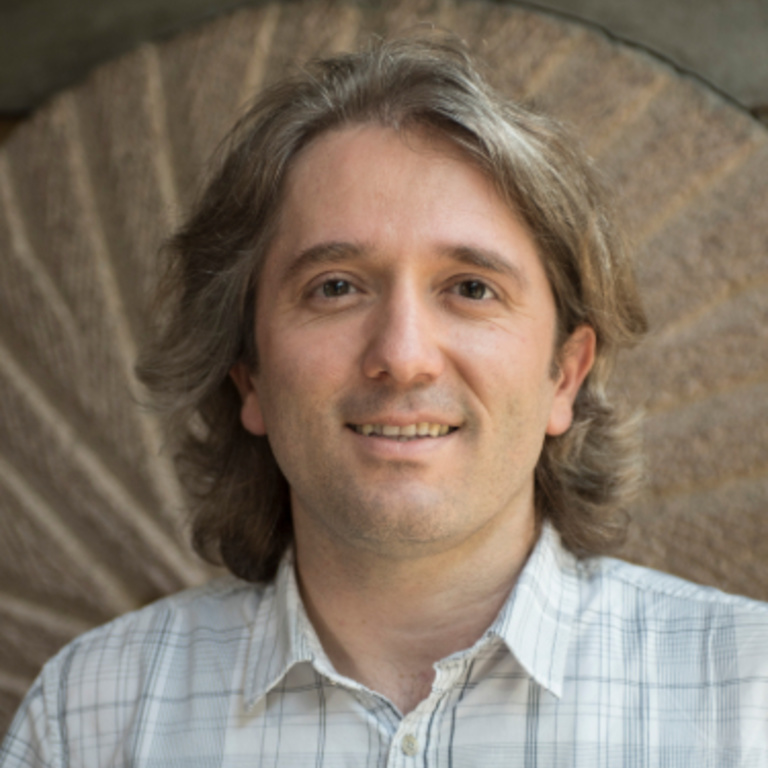
Dr. Patrick Filippi is a Lecturer in Precision Crop Management at the School of Life and Environmental Sciences, University of Sydney. He is affiliated with the Precision Agriculture Laboratory and the Sydney Institute of Agriculture. His work focuses on integrating remote sensing, machine learning, and geostatistics to address challenges in precision agriculture, particularly in crop yield modeling, soil mapping, and environmental monitoring. Research interests include precision agriculture technologies, soil science applications, data-driven crop management, and the use of satellite and proximal sensing for agricultural decision-making. He has contributed to projects funded by the Grains Research and Development Corporation (GRDC) and the University of Sydney, focusing on spatial variability in crop production, soil constraints, and machine learning interpretability. Key achievements include developing the LimeSoDa dataset for soil mapping and winning the 2016 CSIRO AgData Challenge Hackathon. His grants span topics like nitrogen fixation mapping in legumes and frost/heat management analytics. Filippi collaborates closely with industry to translate research into practical tools for farmers. Awards: 2nd Place CSIRO AgData Challenge Hackathon (2016) Labs: Precision Agriculture Laboratory (https://precision-agriculture.sydney.edu.au/) Grants: Includes Strategic Partnership Seeding Grants (2024), GRDC-funded projects (2022–2024), and Start-Up Research Funding (2024).
Douglas H Fisher is an Associate Professor of Computer Science and Computer Engineering at Vanderbilt University's School of Engineering. His research focuses on artificial intelligence, particularly machine learning, and computational sustainability. He holds a Ph.D., M.S., and B.S. in Computer Science from the University of California - Irvine. His work bridges AI with societal challenges, emphasizing sustainability, education technology, and cognitive modeling. Notable areas include integrating sustainability into computing curricula, leveraging AI for peer review systems (pReview), and exploring bias mitigation in neural networks. He has contributed to foundational machine learning techniques, such as rule induction for medical data analysis and decision tree optimization. Fisher's research spans interdisciplinary applications: from geospatial water resource modeling to MOOCs' social incentives. His educational contributions include blended learning frameworks and open educational resources advocacy. He has authored over 100 publications across AI, sustainability, and education, reflecting a commitment to both technical innovation and societal impact.
Nilanjan Sarkar is the Vice Dean and Senior Associate Dean for Faculty Affairs at Vanderbilt University's School of Engineering, holding the David K. Wilson Professorship in Engineering. He is a Professor in Mechanical Engineering, Computer Engineering, and Computer Science. His research focuses on intelligent systems for human interaction, including robotics, virtual/augmented reality, and assistive technologies for neurodevelopmental disorders and aging populations. Education: PhD (Mechanical Engineering, University of Pennsylvania), ME (Indian Institute of Science), BE (Indian Institute of Engineering Science and Technology, Shibpur). Research interests span human-robot interaction, sensor fusion, and rehabilitation engineering. His lab develops systems for autism intervention, stroke rehabilitation, and elderly engagement through socially assistive robotics and VR/AR. Notable projects include robot-mediated therapy for children and AR telepresence systems for long-term care facilities. Labs/Teams: Robotics and Autonomous Systems Laboratory. Key contributions include CoMove, RASSLE, and the Career Interview Readiness in VR platform. His work emphasizes participatory design with end-users for ethical and inclusive technology.
Natalia Andrienko is a Professor of Computer Science at City University London and Lead Scientist in the Knowledge Discovery department at Fraunhofer-Institut für Intelligente Analyse- und Informationssysteme. Her work bridges visual analytics with mobility data science and machine learning, focusing on human-in-the-loop systems for pattern discovery and spatiotemporal data exploration. Professor, Computer Science, City University London (2013-present) Lead Scientist, Knowledge Discovery, Fraunhofer Institute (1997-present) Research interests center on visual analytics methodology for spatiotemporal data, human-centered machine learning, and mobility pattern analysis. She develops frameworks for interactive dashboards, trust visualization in ML, and semantic exploration of location-based data, with a focus on scalable and privacy-respecting techniques. Her recent publications investigate hybrid human-machine discovery of movement patterns, contextual visual analytics for multivariate events, and the integration of temporal periodization with spatial analysis. Articles emphasize applications in sports analytics, transportation systems, and collaborative visual analysis workflows. Key collaborations include work with Gennady Andrienko and Salvatore Rinzivillo. She has contributed to journals like Visual Informatics , IEEE Transactions on Visualization and Computer Graphics , and International Journal of Cartography , maintaining active research output across visual analytics, mobility science, and geospatial data modeling.
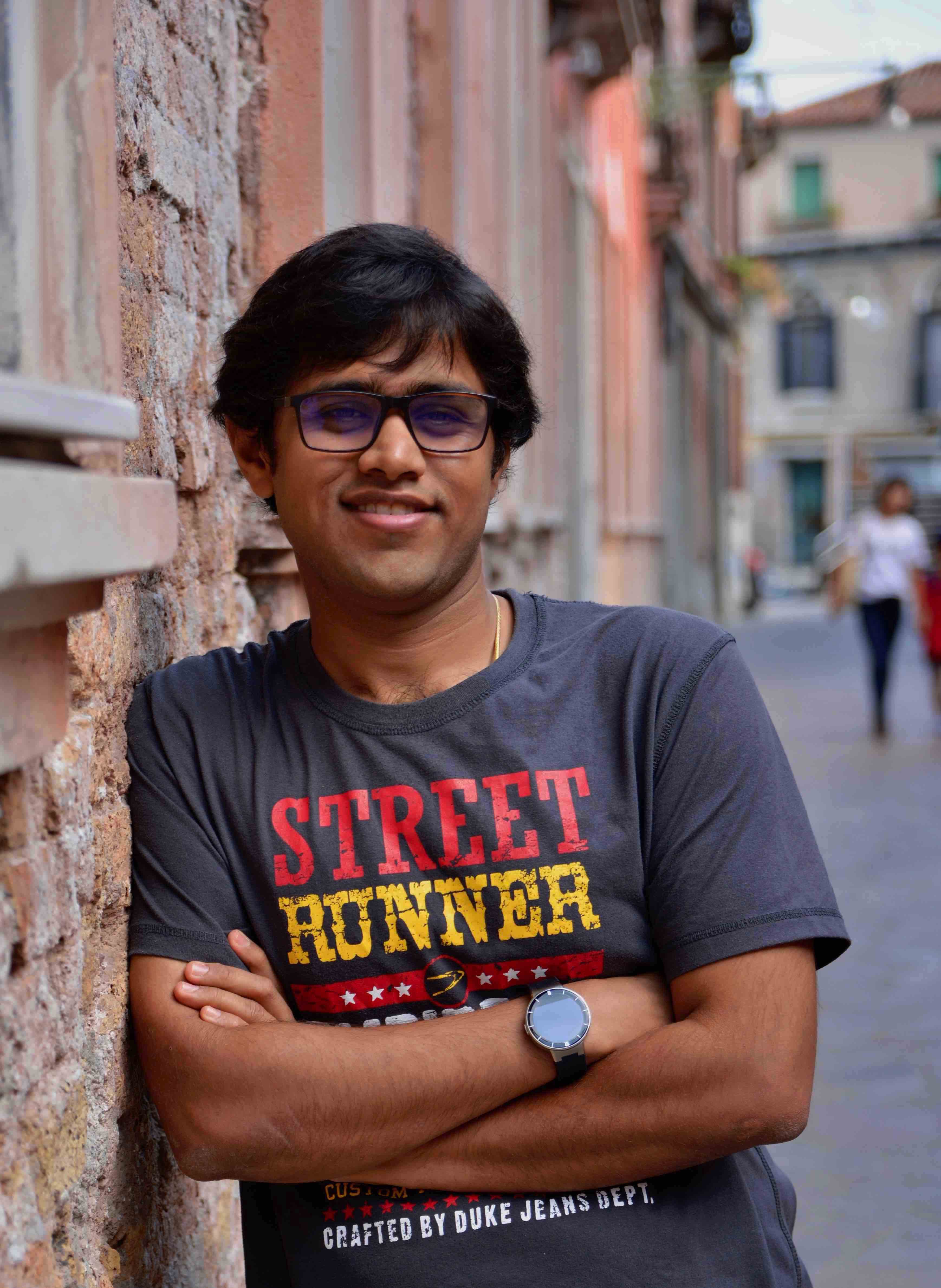
Arpan Gujarati is a Sessional Lecturer in the Department of Computer Science at the University of British Columbia (UBC), affiliated with the Systopia Lab. He teaches graduate and undergraduate courses such as CPSC 538G (Distributed Systems), CPSC 416 (Operating Systems), and CPEN 432 (Real-Time System Design). He holds a PhD from the Max Planck Institute for Software Systems and TU Kaiserslautern, where he was supervised by Björn B. Brandenburg. PhD: Max Planck Institute for Software Systems & TU Kaiserslautern (2020) Undergraduate: Birla Institute of Technology and Science (BITS Pilani) Postdoctoral Researcher: MPI-SWS Research Associate: UBC Software Development Engineer: Citrix R&D, India His research focuses on real-time and distributed systems, with applications in cyber-physical systems, fault tolerance, and machine learning reliability. He investigates scheduling algorithms, reliability analysis, and the integration of learning-enabled components into safety-critical systems. His work combines theoretical analysis with practical system implementations, often involving real-world testbeds and open-source tools. His recent publications span top-tier venues including RTSS, OSDI, ECRTS, DSN, and Middleware, with a strong emphasis on performance predictability, resilience of ML systems, and real-time communication. His work frequently addresses challenges in timing guarantees, fault tolerance, and system reliability in both cloud and embedded environments. SIGBED Paul Caspi Memorial Dissertation Award Best Paper Award at RTSS 2022 Distinguished Artifact Award at OSDI 2020 Best Student Paper Award at Middleware 2017 Outstanding Paper Award at RTCSA 2025 He advises several PhD students and undergraduate researchers at UBC, including Heng Zhao, Aida Aminian, Zainab Saeed Wattoo, and Philip Schowitz. He has led multiple research projects involving robotic arms, NVIDIA Holoscan, FreeRTOS, and distributed key-value stores. His lab work emphasizes reproducibility, open datasets, and practical system building. He has served on program committees for RTSS, RTAS, ECRTS, and Middleware, and contributes to journals such as Real-Time Systems and JSys.
Anna Beer is a researcher in the Faculty of Computer Science, specializing in data mining and machine learning with a focus on density-based clustering, spectral clustering, and interactive clustering frameworks. She holds a BSc and MSc in computer science and maintains an ORCID profile (https://orcid.org/0000-0002-6890-997X) for her research contributions. Research Themes: Development of clustering algorithms (e.g., DISCO, Scar, LUCKe), fairness in density-based clustering (FairDen), and applications to molecular dynamics and climate research (DROPP). Collaborations: Works with colleagues like Ira Assent, Christian Plant, and Lars Krieger, with recent contributions to conferences like ICLR 2025. Activities: Presented research on density-connectivity distance at a 2023 oral contribution. Publications: 9 publications since 2019, including 3 in 2025 and 6 in 2024, covering topics from cluster evaluation to deep active learning strategies.
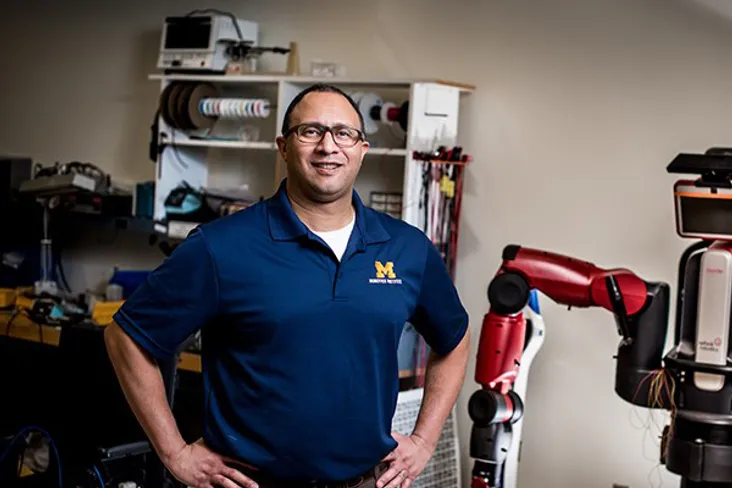
Affiliations & Roles Lionel P. Robert Jr. is a Professor of Information and Robotics at the University of Michigan, holding joint appointments in the School of Information and the College of Engineering's Robotics Department. He directs the Michigan Autonomous Vehicle Research Intergroup Collaboration (MAVRIC) and is an affiliate faculty member at the National Center for Institutional Diversity and Indiana University's Center for Computer-Mediated Communication. His roles include editorial board positions at journals like the Journal of Computer Information Systems and leadership in professional organizations such as ACM and IEEE. Education Ph.D. in Information Systems, Indiana University (BAT Fellow, KPMG Scholar) M.B. from Indiana University, Bloomington M.S. degrees from Clemson University and University of Louisiana, Lafayette B.S. from University of Louisiana, Lafayette Research Focus Robert's research bridges collaboration through technology, with a focus on human-robot interaction, autonomous vehicles, and virtual teams. His work addresses trust in automated systems, human-AV communication, and the sociotechnical implications of robotics in workplaces and public spaces. Recent projects explore explanations for automated vehicles, security robots' societal acceptance, and AI ethics in healthcare and labor. Key Contributions He has published over 100 peer-reviewed articles in journals like MIS Quarterly and conferences such as CHI and HRI. His research has been funded by NSF, Toyota Research Institute, and the Army Research Laboratory. Notable outcomes include frameworks for AV trust repair, models of human-robot team performance, and critiques of AI-driven labor practices. Awards & Recognition ACM Distinguished Member IEEE Senior Member Carnegie Junior Faculty Development Fellowship 3× Teaching Commendation (2006–2008) Grants & Labs Current grants include studies on explainable AI, human-AV trust dynamics, and security robot design. The MAVRIC lab focuses on AV-pedestrian interactions while the CCMC explores digital communication's societal impact.
Dr. Chao Hu is the Collins Aerospace Professor in Engineering Innovation and Associate Professor at the University of Connecticut's Department of Mechanical Engineering within the College of Engineering. His research focuses on engineering design under uncertainty, battery health diagnostics, and structural health monitoring. He holds a B.E. from Tsinghua University (2007) and a Ph.D. from the University of Maryland (2011), with prior roles at Medtronic and Iowa State University. Research interests emphasize physics-informed machine learning for prognostics, battery degradation modeling, and reliability-based design optimization. Key publications include work on digital twin models for lithium-ion batteries, federated learning for fleet-wide fault diagnosis, and probabilistic machine learning pipelines for real-time state estimation. He has received awards like the ASME Design Automation Young Investigator Award and highly cited paper recognitions. Dr. Hu serves as Senior Editor for Engineering Optimization and Review Editor for Structural and Multidisciplinary Optimization . His work spans academic leadership in journals and industrial collaborations. Current projects include battery aging datasets (UConn-ILCC and UConn-ISU-ILCC), design for remanufacturing frameworks, and high-rate structural health monitoring techniques.
Theresa Scharl-Hirsch is a Senior Scientist and Deputy Scientific Director at the Core Facility Bioinformatics, University of Natural Resources and Life Sciences, Vienna (BOKU). She holds concurrent appointments at the Institute of Statistics, BOKU, and has extensive experience in bioprocess modeling, machine learning, and statistical computing. Her work bridges biochemical engineering with advanced data science methodologies. Her research focuses on real-time monitoring of biopharmaceutical processes, clustering of high-dimensional data (particularly RNA sequencing), and application of explainable machine learning techniques. She has developed statistical models for process optimization and quality prediction in antibody capture and protein purification, with a strong emphasis on industrial implementations using R programming. Key trends in her publications include three-way data analysis, matrix-variate Gaussian mixture models, and permutation-based variable importance methods for deep learning architectures. Her work spans bioprocess engineering, bioinformatics, and industrial data science applications.
Olga Russakovsky is an Associate Professor in the Computer Science Department at Princeton University. She serves as Associate Director of the Princeton AI Lab and Chair of the Board of Directors at AI4ALL, a nonprofit dedicated to diversity in AI leadership. Her research focuses on computer vision, machine learning, human-computer interaction, and fairness in AI. She specializes in developing AI systems that reason about the visual world, emphasizing fairness, accountability, and transparency. Her work integrates computer vision with ethical AI frameworks, and she is affiliated with Princeton’s Center for Statistics and Machine Learning and Center for Information Technology Policy. Her publications address biases in datasets, explainable AI, and generative models. Her recent research trends include: Bias detection in datasets (e.g., CelebA, ImageNet) Interactive and explainable AI systems Generative models like diffusion and vision-language integration Deepfake detection and AI forensics Conceptual learning and few-shot training Scientific awards: NSF CAREER Award for fairer computer vision systems Co-founder of AI4ALL and Stanford AI4ALL outreach programs She advises students through AI4ALL initiatives and leads the Visual AI Lab, which focuses on robust, inclusive AI development. Her work bridges technical innovation with societal impact, particularly in diversity-focused education.
Professor Markku Kulmala (University of Helsinki) is a leading expert in atmospheric and environmental physics. As Academician of Finland and double ERC Advanced Grant holder, he leads the Institute for Atmospheric and Earth System Research (INAR) and ACCC Flagship. With ~1200 publications and a WoS H-index of 124, his work focuses on atmospheric aerosols, climate interactions, and air quality. Academy of Finland grants (2004-2009, 2011-2015) ERC Advanced Grant (2×) ISI Highly Cited Researcher His research team has published 4 groundbreaking studies in Nature and Science , including: Aerosol formation mechanisms Aerosol-cloud-climate interactions Atmosphere-land surface relationships Climate-air quality feedbacks With over 20 PhD/Master's students supervised, recent work includes Arctic aerosol studies ( Elementa 2025), Beijing air quality analysis ( Nature Communications 2025), and climate modeling applications. He has received multiple international awards including the Fuchs Memorial Award and honors from Stockholm and Tartu universities.
Ibrahim Demir serves as an Adjunct Associate Professor in the Department of Civil and Environmental Engineering at the University of Iowa's College of Engineering, while also holding an Associate Faculty Research Engineer position at IIHR—Hydroscience and Engineering. His interdisciplinary work bridges hydroinformatics, environmental engineering, and advanced computing technologies to address critical water resources challenges through innovative digital solutions. His educational background includes a PhD in Environmental Informatics and Control Program from the University of Georgia (2010), an MS in Environmental Engineering from Gebze Institute of Technology (2004), and a BS in Chemistry from Bogazici University (2000). This foundation supports his integration of chemical, environmental, and computational sciences in hydrological research. Dr. Demir's research centers on hydroinformatics and AI-driven environmental systems, with core expertise in scientific visualization, cyber systems design, and virtual/augmented reality applications. He develops web-based frameworks for flood risk assessment, drought analysis, and water quality management, emphasizing real-time data integration and user-friendly interfaces. Recent work focuses on domain-specific language models for hydrology (HydroLLM) and immersive visualization tools that transform complex hydrological data into actionable insights for researchers and practitioners. Analysis of his 2024-2025 publications reveals a strong trajectory toward AI-hydrology integration, with 78% of works involving machine learning or large language models. Key themes include flood risk communication (22% of publications), algal bloom prediction (15%), and educational technology applications (12%). His research increasingly emphasizes scientific reproducibility through no-code visual programming frameworks and digital twin implementations for watershed systems. Dr. Demir actively contributes to scholarly discourse as Associate Editor for Environmental Modeling and Software, Journal of Hydroinformatics, Journal of Environmental Informatics, and Water and Artificial Intelligence (Frontiers in Water). He serves as Vice-Chair of the International Joint Committee on Hydroinformatics (IAHR/IWA/IAHS) leadership team, shaping global standards in hydroinformatics research and practice. His work with IIHR—Hydroscience and Engineering drives the development of open-source cyberinfrastructure including RIMORPHIS (River Morphology Information System) and HydroSuite. These platforms enable collaborative river morphology research and provide modular tools for hydrological analysis, education, and operational decision support, demonstrating his commitment to accessible, community-driven scientific advancement.
Jilles Vreeken is a Professor of Computer Science at Saarland University and tenured faculty at the CISPA Helmholtz Center for Information Security, where he leads the Exploratory Data Analysis research group. He is also an ELLIS Fellow and Faculty of the Saarbrücken Unit on AI and ML. His work bridges theoretical foundations with practical applications in causal inference, unsupervised learning, and exploratory data analysis. Dr. Vreeken's research focuses on developing theory and algorithms for answering fundamentally exploratory questions about data: "what is going on in my data?", "what causes what and how?", and "what can we learn from this model?" without making unnecessary or unjustified assumptions. He takes a principled approach based on information theory to identify what is worth knowing, then develops efficient algorithms for extracting useful interpretable results. His work spans causal inference under realistic conditions (including hidden confounding, selection bias, and non-i.i.d. data), summarizing complex data and models in understandable terms, and combining these threads to create more robust and useful models across diverse data types. His recent publications demonstrate a strong trend toward causal discovery in increasingly realistic settings, including non-stationary time series, event sequences, and scenarios with hidden confounders. He has made significant contributions to federated learning, interpretable machine learning, and pattern mining. His work consistently applies information-theoretic principles to develop methods that are both theoretically sound and practically useful for extracting insights from complex data. Dr. Vreeken has received numerous prestigious awards including: IEEE ICDM'18 Tao Li Award for Excellence in Research IEEE ICDM'18 Best Paper Award UdS-CS'15 Busy Beaver Teaching Award ACM SIGKDD'11 Best Student Paper Award ACM SIGKDD'10 Doctoral Dissertation Runner-Up Award ECML PKDD'09 Best Student Paper Award As an advisor, Dr. Vreeken has mentored numerous doctoral researchers to completion, including Dr. Osman Ali Mian, Dr. David Kaltenpoth, Dr. Boris Wiegand, Dr. Sebastian Dalleiger, Dr. Janis Kalofolias, Dr. Jonas Fischer, Dr. Alexander Marx, Dr. Panagiotis Mandros, Dr. Kailash Budhathoki, Dr. Roel Bertens, Dr. Koen Smets, and Dr. Michael Mampaey. He has secured significant research funding as PI for multiple projects including "AI for Prediction and Therapy Guidance in Acute Stroke" (HAICU, 2025-2028), "Neuro-Explicit Models of Language, Vision and Action" (RTG, DFG, 2023-2028), and "Crushing Antimicrobial Resistance using Explainable AI" (HAICU, 2021-2024). Dr. Vreeken leads the Exploratory Data Analysis (EDA) research group at CISPA, which focuses on developing theory and algorithms for discovering novel insights from data, learning inherently interpretable models, and drawing reliable causal conclusions. The group has produced numerous influential algorithms and frameworks in causal inference, pattern mining, and exploratory data analysis, with applications spanning healthcare, materials science, and cybersecurity.
Dr Zhe Wang is a Senior Lecturer at the School of Information and Communication Technology, Griffith University, focusing on artificial intelligence, knowledge graphs, and semantic technologies. He earned his PhD in Computer Science from Griffith University (2011) and previously worked as a Research Fellow at the University of Oxford (2011-2013) on ontology-based systems. Research: Specializes in knowledge graph construction, rule mining for explainable AI, and integrating machine learning with logical reasoning. Led development of the scalable RLvLR rule-mining system and contributed to the HermiT ontology reasoner. Teaching: Instructs undergraduate and postgraduate courses including Introduction to Artificial Intelligence, Secure Development Operations, and Software Engineering Fundamentals. Grants: Funded by Australia's Economic Accelerator Ignite Grant (2025) for AI-driven marine life survey systems and Office of National Intelligence projects (2021-2022). Publications: Active in top venues like AAAI, ICASSP, and ISWC, with recent work on temporal knowledge graph reasoning, auction design algorithms, and neurosymbolic AI systems.
Prof. Dr.-Ing. Marc Reichenbach serves as the Chair of Integrated Systems at the Institute for Applied Microelectronics and Data Technology at the University of Rostock. His office is located at Albert-Einstein-Straße 26, 18059 Rostock, Room 102 (1st floor), with contact information including telephone (0381) 498 7270 and email marc.reichenbach@uni-rostock.de. Professor Reichenbach's research focuses on the intersection of hardware design and artificial intelligence, with particular expertise in memory technologies and computing architectures. His work spans several key areas: Development of specialized computer architectures for deep learning applications Advanced VLSI design and CPU architecture Emerging memory technologies, particularly RRAM (Resistive Random-Access Memory) FPGA-based acceleration systems Hardware implementations for neural networks and AI applications Analysis of Professor Reichenbach's recent publications (2023-2025) reveals a strong focus on memory computing technologies, particularly RRAM-based systems. His work demonstrates expertise across multiple dimensions of computer architecture including ASIC design, FPGA acceleration, and novel memory systems. The publications show a clear trajectory toward implementing AI and machine learning capabilities directly in hardware, with applications ranging from edge computing to satellite systems. A significant portion of his recent work addresses the challenges of implementing neural networks using emerging memory technologies, focusing on efficiency, reliability, and performance optimization. Professor Reichenbach teaches several advanced courses including: Computer architectures for deep learning applications Project seminar Embedded Systems Advanced VLSI Design (Advanced CPU Design) His research group appears to be actively engaged in several cutting-edge projects related to hardware acceleration for AI applications, memory computing, and embedded systems design. The group collaborates on projects involving digital twins for hardware systems, real-time operating systems for heterogeneous architectures, and specialized computing systems for various applications from medical devices to drone technology.