Shahid Raza is a Professor of Cybersecurity at the University of Glasgow's School of Computing Science. He previously led the RISE Cybersecurity Unit in Sweden, establishing it as a leading research group. His expertise spans IoT Security, PKI, AI-driven cybersecurity solutions, and hardware/data security. Raza holds a PhD and Docentship from Uppsala University, alongside a Bachelor's with a Gold Medal for academic excellence. Education: B.Sc. (Computer Science, 3.99/4.0 CGPA, Gold Medal), Licentiate, PhD, and Docentship in Cybersecurity from Sweden. He leads EU-funded projects like H2020 CONCORDIA and Horizon Europe CUSTODES, coordinating initiatives such as the Cyber Node and Cyber Range. Active in cybersecurity policy, he serves on the EU SCCG, ECSO, and EARTO Security & Defence Research working groups. Research Interests Public Key Infrastructure (PKI) for IoT AIAgent-Driven Cybersecurity Solutions IoT Certification Standards Hardware Security for Low-Power Devices Grants & Projects Coordinator: Horizon Europe CUSTODES Technical Leader: H2020 Arcadian-IoT Founder: RISE Cyber Range (Sweden's largest cybersecurity test facility) Awards & Memberships IEEE Senior Member Gold Medal for Academic Excellence (Bachelor's)
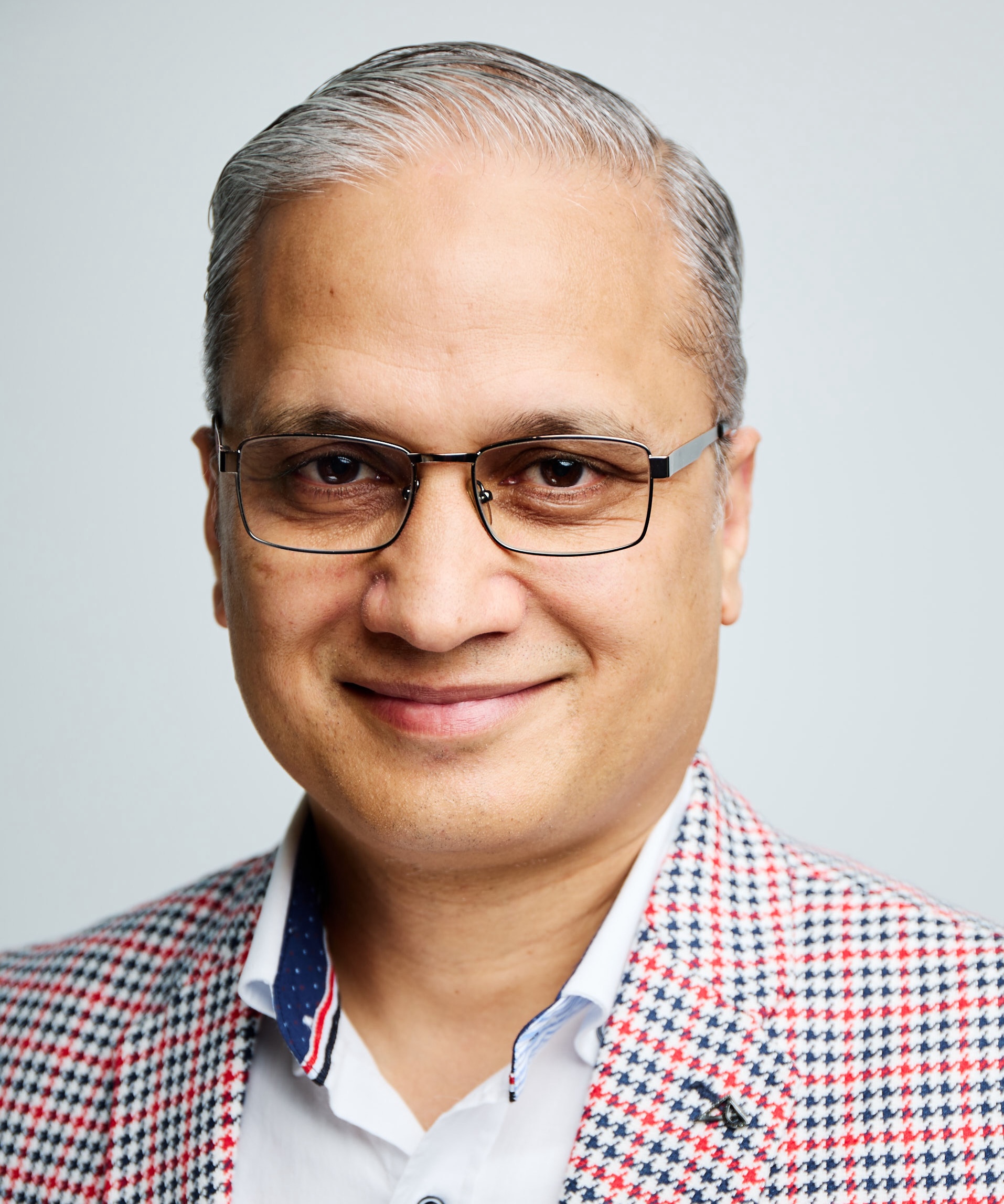
Dr. Vivek Nallur is an Assistant Professor in the School of Computer Science at University College Dublin. His research focuses on Machine Ethics, Multi-Agent Systems, emergence in socio-technical systems, and decentralized adaptation mechanisms. He holds a PhD from the University of Birmingham and advanced certifications in university teaching from UCD. Education: BBS, Delhi University Post-Graduate Diploma in Advanced Software Technology, National Centre for Software Technology MS, Carnegie Mellon University PhD, University of Birmingham Prof Cert University Teaching & Learning, University College Dublin Research Interests: Machine Ethics explores ethical decision-making in autonomous systems, while Multi-Agent Systems (MAS) are his primary tool for studying self-adaptation and emergence. He serves on key committees like IEEE P7008 (Ethically Driven Nudging) and the AAAI 2021 Spring Symposium on AI Ethics. His work bridges computer science with philosophy, law, and social sciences. Advising & Grants: Supervises three PhD students focusing on ethical AI, elder-care robotics, and AI governance. Leads the Machine Ethics Research Group and participates in the ML-Labs SFI grant (2019–2027). Professional Roles: Senior Member of IEEE, organizer for AAAI ethics symposia, and contributor to OpenAAL's ELSI panel. Teaches modules on Machine Learning, Operating Systems, and Web Development.
Kristian J. Hammond is the Bill and Cathy Osborn Professor of Computer Science at Northwestern University's McCormick School of Engineering. He directs both the Master of Science in Artificial Intelligence Program and the Center for Advancing Safety of Machine Intelligence (CASMI). His research focuses on artificial intelligence, natural language generation, narrative generation, conversational interfaces, and ethical AI applications across domains like law, education, and journalism. Hammond co-founded Narrative Science, leveraging AI for automated journalism from data. Education: PhD, MS, and BA in Philosophy (all from Yale University). His work spans technical innovation and societal impact, with notable contributions to AI transparency, bias mitigation, and machine learning ethics. Hammond has authored influential articles on AI governance, conversational systems, and the future of work in an automated economy. His leadership roles emphasize interdisciplinary collaboration between computer science, business, and humanities. Research highlights include developing AI systems that enhance human capabilities, exploring ethical frameworks for machine intelligence, and advancing AI safety through initiatives like CASMI. He frequently engages in public discourse via TEDx talks and commentaries on AI's societal implications, emphasizing the need for human-centered technology design.
Dr. Hai Phan is an Associate Professor in Data Science at New Jersey Institute of Technology's Ying Wu College of Computing. He holds a Ph.D. in Computer Science and Engineering from CNRS, University Montpellier 2 (2013), an M.S. from Konkuk University (2010), and a B.S. from HCM City University of Technology (2008). His research explores privacy-preserving machine learning and computational health analytics: Federated learning systems and optimization Privacy-enhancing technologies (differential privacy) Health informatics and social media analysis Cybersecurity defenses and adversarial learning Fair and ethical AI systems Dr. Phan's publications demonstrate strong emphasis on federated learning architectures with privacy guarantees, defenses against emerging security threats, and analysis of health-related behaviors through social media. Recent work focuses on IoT applications, large language model security, and mobile federated learning ecosystems. His research integrates techniques from distributed systems, cryptography, and machine learning. No scientific awards are mentioned in available sources. Information regarding student advising, research grants, or laboratory affiliations is not provided in available documentation.
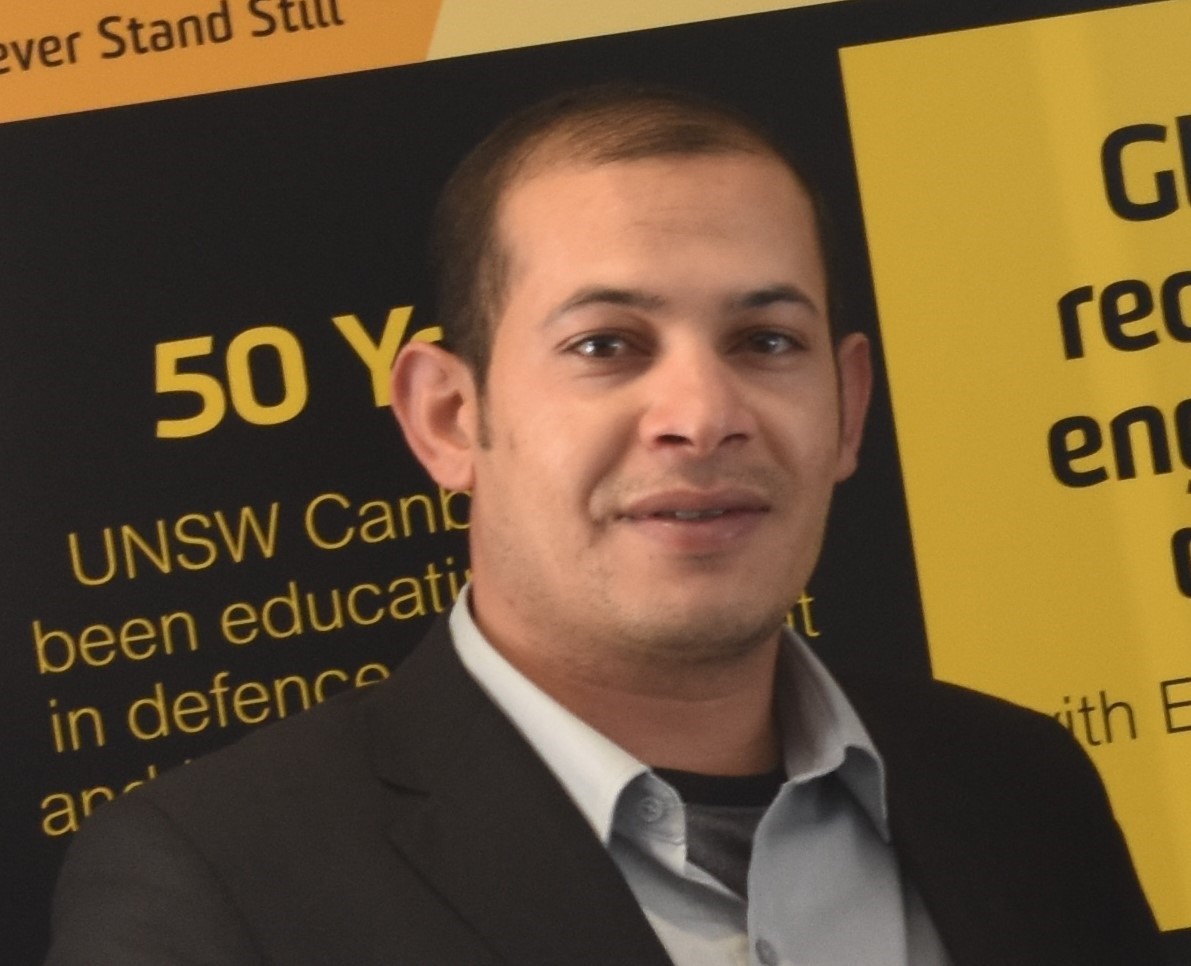
Dr. Nour Moustafa is an Associate Professor and ARC DECRA Fellow at the School of Systems & Computing (SysCom) , University of New South Wales (UNSW) Canberra , Australia. He leads the Intelligent Security Group and focuses on developing AI/ML-driven cybersecurity frameworks for smart systems. Educated at Helwan University (BSc/MSc in Information Systems) and UNSW (PhD in Cybersecurity). Research Interests include intrusion detection, threat intelligence, privacy preservation, digital forensics, and cyber resilience, with methodologies spanning statistical analysis , machine learning , and deep learning applied to IoT , Edge/Cloud , and Industrial IoT environments. His work emphasizes federated learning for privacy preservation, blockchain for secure AI, and digital twins for network self-healing. Notable contributions include the TON-IoT , Bot-IoT , and UNSW-NB15 datasets for cybersecurity evaluation. Scientific Awards : 2020 Spitfire Memorial Defence Fellowship ACM Distinguished Speaker IEEE Senior Member He has served as guest associate editor for IEEE Transactions journals and held leadership roles in conferences like IEEE TrustCom . His research bridges academia and industry, with over 75 publications in top-tier venues.
Dr. Hak-Keung Lam is a Reader in the Department of Engineering at King's College London, part of the Faculty of Natural, Mathematical & Engineering Sciences. He holds an IEEE Fellowship and has been a Clarivate Web of Science Highly Cited Researcher since 2018. His research focuses on fuzzy control systems, neural networks, stability analysis, and their applications in biomedical and engineering domains. Education: Dr. Eng. (2000), B. Eng. (1995), both from Hong Kong Polytechnic University. Research Interests: Fuzzy modeling, neural network-based control, computational intelligence, machine learning, and biomedical applications such as ECG/EEG signal classification. His work bridges theoretical advancements with practical implementations in robotics, autonomous systems, and healthcare technology. Publications: Over 480 publications (as of 2023) in top-tier journals and conferences, with a focus on control systems, fuzzy logic, and intelligent systems. Recent work includes fault-tolerant control, cyber-physical systems, and explainable AI. Awards: IEEE Fellow (2019), 1st Place in PhysioNet Computing in Cardiology Challenge (2022). Grants/Projects: Active projects include fuzzy control system stabilization, autonomous robots in healthcare environments, and networked control of robotic systems. Labs/Teams: Center for Robotics Research, contributing to solutions for societal challenges through robot-centric approaches.
Ankit Kariryaa is a Tenure Track Assistant Professor at the Department of Computer Science and Department of Geosciences and Natural Resource Management , University of Copenhagen. His work bridges Machine Learning and Environmental Informatics , focusing on remote sensing, geospatial analysis, and ecological modeling. University of Copenhagen, Denmark Machine Learning Section, Department of Computer Science Geography, Land, Environment and Society, Department of Geosciences Kariryaa specializes in applying deep learning and computer vision to environmental challenges. His research includes: Automated tree detection and biomass estimation via satellite imagery Multi-modal geospatial representation learning Monitoring farmland tree decline and carbon sequestration potential Agroforestry system mapping using AI Developing AI tools for climate policy and sustainability Recent work trends show a focus on quantum-inspired machine learning , environmental monitoring , and cross-cultural AI applications . His 15 most recent publications span topics in remote sensing , ecological modeling , and AI ethics , with methods ranging from neural networks to tensor-based learning. He collaborates across disciplines, notably with researchers in ecology , climate science , and quantum computing . His outreach includes seminars on AI in agroforestry and ecosystem management , while his team contributes to global tree resource databases like TreeSense.
Dr Fabio Pierazzi is an Associate Professor in Information Security at the Department of Computer Science, University College London. His research focuses on enhancing systems security through AI, particularly in environments where attackers rapidly adapt to defenses. He investigates adversarial attacks, concept drift mitigation, and explainability of ML-based security systems. Research emphasizes adversarial machine learning in security contexts Works on practical applications in malware analysis and network intrusion detection Explores concept drift robustness and problem-space constraints Collaborates with industry to improve real-world security solutions His publications span top-tier venues like IEEE Security & Privacy, ACM CCS, and USENIX Security. Key themes include adversarial robustness, security evaluation methodologies, and AI's limitations in practice. He supervises research degrees and provides consultancy for security projects.
Hui Wang is a Professor and Associate Chair for PhD Studies and Research in the Department of Computer Science at the Charles V. Schaefer, Jr. School of Engineering and Science, Stevens Institute of Technology. She also serves as the Director of the Data Science PhD Program and holds leadership roles in multiple institutional committees, including the Doctoral Committee, Faculty Mentoring Program, and Strategic Planning initiatives at both departmental and university levels. Research Interests: Dr. Wang's research focuses on building trustworthy machine learning systems by integrating privacy, fairness, and accountability . Her work aims to fortify ML models against privacy attacks, eliminate algorithmic biases, and ensure auditable decision-making. She explores intersections between machine learning, data mining, and cybersecurity, with applications across domains requiring ethical and secure AI deployment. Recent Research Trends: Her recent publications and funded projects reflect a strong emphasis on privacy-preserving machine learning , fairness-aware systems , and verifiable computing . Themes include securing graph embeddings, federated learning with fairness guarantees, and audit mechanisms for black-box models. Supported by NSF, Cisco, and Google, her work bridges theoretical rigor with practical system design. Scientific Awards: NSF CAREER Award, 2014 Advising and Grants: Dr. Wang actively mentors PhD students and hosts visiting scholars. She leads multiple NSF-funded projects, including Securing Network Embedding against Privacy Attacks and Privacy for All: Ensuring Fair Privacy Protection in Machine Learning . Her research is supported by substantial grants from the National Science Foundation, Cisco, and Google, reflecting her leadership in trustworthy AI. Labs and Teams: While not explicitly named, Dr. Wang leads a research group focused on trustworthy machine learning, advising students and collaborating with industry partners. She is deeply integrated into the Data Science PhD program and CS faculty leadership, shaping research and academic strategy at Stevens.
Courtney N. Reed is a Lecturer in Digital Technologies at Loughborough University London, where she joined in November 2023. She maintains a dual role as a visiting research fellow at the Max Planck Institute for Informatics. Her academic journey includes a BMus in Electronic Production and Design from Berklee College of Music (2016), followed by an MSc (2018) and PhD (2023) in Computer Science from Queen Mary University of London. Prior to her current position, she completed postdoctoral research at both the Max Planck Institute for Informatics and King's College London. Bachelor of Music: Electronic Production and Design, Berklee College of Music (2016) Master of Science: Computer Science, Queen Mary University of London (2018) Doctor of Philosophy: Computer Science, Queen Mary University of London (2023) Dr. Reed's research explores the entangled relationships between humans, bodies, instruments, and technology in music interaction, with particular focus on vocal electromyography (VoxEMG) and the vocalist-voice relationship. Her work incorporates feminist and post-human theories to examine sociopolitical contexts within arts technology, aiming to design for creativity while acknowledging individual, messy bodies in artistic practice. She has developed an open-source platform for vocal electromyography to investigate how biosignal feedback changes understanding and perception of the body in vocal performance. Her interdisciplinary approach bridges music technology, human-computer interaction, and embodied interaction studies. Analysis of Dr. Reed's recent publications (2023-2025) reveals a strong thematic focus on embodied interaction in music technology, with particular emphasis on vocal performance, biosignal feedback, and the philosophical underpinnings of digital instrument design. Her work consistently integrates theoretical frameworks like Karen Barad's agential realism with practical applications in digital musical instruments. Key trends include the exploration of ambiguity in data representation, the sociocultural dimensions of timbre in instrument design, and the development of novel methodologies for understanding embodied musical experiences through micro-phenomenology and ethnographic approaches. ACM SIGCHI Outstanding Dissertation Award (2024) for her thesis 'Imagining & Sensing: Understanding and Extending the Vocalist-Voice Relationship Through Biosignal Feedback' Best Newcomer Award at Loughborough University London's Community Awards Celebration (2024) Dr. Reed actively contributes to the academic community through conference organization and leadership roles. She serves as Member-at-Large on the NIME Board, previously chaired papers for NIME 2024, and co-organized the IBM SkillsBuild Sprint at Loughborough London. She has also chaired sessions at the ACM TEI Conference and co-chaired the Student Design Competition. Her collaborative work spans multiple institutions and includes significant contributions to interdisciplinary projects that bridge music, technology, and human experience. She has been instrumental in developing the senSInt research group and the RaveNET wearable network project. Dr. Reed leads the senSInt research group which focuses on sensorimotor interaction in music and performance contexts. The group develops innovative technologies including the VoxEMG platform for vocal electromyography, the Bones anti-corset for vocal performance, and the RaveNET network of wearable biosensing nodes. These projects explore the intersection of biosignals, embodied interaction, and musical expression, creating novel frameworks for understanding how technology mediates human creativity and performance. The group frequently collaborates with musicians, technologists, and theorists to develop and test these systems in real-world performance contexts.
Prof Ghassan Beydoun is a Professor and Head of Discipline (Information Systems) at the School of Computer Science, University of Technology Sydney (UTS). He leads the Information Systems discipline and is affiliated with the Centre for Advanced Modelling and Geospatial Information Systems (CAMGIS). His research focuses on AI-driven systems, agent-based modelling, ontologies, and disaster management, with notable contributions to knowledge graphs, enterprise architecture, and IoT applications. Beydoun actively supervises Masters and PhD students in these domains. His research interests span metamodelling, agent systems, and AI applications in disaster management (e.g., flood, landslide, and earthquake risk assessment), health systems, and smart infrastructure. He has pioneered frameworks for reproducible machine learning solutions, digital identity systems, and cloud migration strategies. Beydoun’s work integrates interdisciplinary methods, such as bibliometric analysis for journal evolution and XAI for spatial hazard prediction. Recent publications highlight his expertise in AI for climate-induced hazard modelling, agent-based knowledge transfer mechanisms, and metaverse applications in education. His funded projects include AI-powered circular economy initiatives, smart beach safety systems, and health data querying frameworks. Beydoun collaborates with industry partners like CSIRO, Capsicum Business Architects, and Data Zoo, translating research into practical solutions for enterprise architecture, cybersecurity, and public health.
Magnus Bång is a Senior Associate Professor at the Department of Computer and Information Science (IDA) at Linköping University, affiliated with the Artificial Intelligence and Integrated Computer Systems (AIICS) division. His research focuses on advancing human-AI collaboration, automation systems, and AI applications in domains like cyberphysical production, air traffic management, and process industries. He has contributed to interdisciplinary projects involving real-time human-automation interfaces, explainable AI dashboards for industrial processes, and safety-critical systems integration. His work bridges theoretical AI advancements with practical implementations in sectors such as aviation and maritime logistics. Notable collaborations include research with the Swedish Maritime Administration to enhance shipping efficiency through AI and interactive visualization. He actively participates in EU-funded initiatives like the Horizon 2020 projects targeting autonomous systems and air traffic control. Research interests span MLOps for industrial systems, glyph-based communication design for human-automation teams, and operator modeling across traffic management domains. His publications emphasize cross-disciplinary solutions to challenges in automation and human-centric AI design.
Avinash Kori is a Ph.D. researcher at Imperial College London affiliated with the Safe and Trusted AI Centre for Doctoral Training (CDT). Supervised by Prof. Francesca Toni and Prof. Ben Glocker , his research focuses on Explainable AI (XAI) , causality , and deep learning with applications in medical image analysis and optimization algorithms . His work includes publications on arXiv and conferences like MICCAI , covering topics such as robust segmentation , concept-based explanations , and symbolic reasoning in hyperbolic space . He has also explored stochastic optimization , support vector machines (SVM) , and gradient descent variants , providing theoretical and practical implementations. Recent trends in his publications highlight advancements in robust CNN models , causal logic frameworks , and hyperbolic geometry for hierarchical learning . His research is driven by the need to make AI systems more transparent and reliable for critical domains like healthcare. Scientific Awards: AAAIw Overall Best Paper Award (Feb 2021) for CNN interpretability research. He actively contributes to open-source implementations via platforms like GitHub and shares insights through blogs and paper reviews . His academic journey includes an undergraduate degree in Biomedical Engineering Design with a minor in Machine Learning from Indian Institute of Technology, Madras , followed by research internships at Siemens and Stanford University .
Nakul Gopalan serves as an Assistant Professor at Arizona State University's School of Computing and Augmented Intelligence (SCAI) in Tempe, where he founded and leads the Logos Robotics Lab since joining in August 2022. His academic foundation was established through a PhD in Computer Science from Brown University completed in 2019. Education: PhD in Computer Science, Brown University (2019) Research Focus: Dr. Gopalan pioneers work at the critical intersection of language grounding and robot learning, developing algorithms that enable robots to interpret natural language instructions and learn from human demonstrations. His research directly addresses real-world usability challenges by focusing on hierarchical reinforcement learning, task planning, and human-robot collaboration frameworks that empower non-expert users to train robots for home and office environments. Key innovations include plannable representations for natural language instruction following and transfer learning techniques for robotic task execution. Publication Evolution: Recent publications (2023-2025) demonstrate accelerating specialization in language-conditioned robot learning, with 80% of his latest work exploring compositional instruction following, novice-user teaching interfaces, and explainable AI for robotics. His research trajectory shows a deliberate shift from foundational language grounding (2017-2020) toward practical human-robot collaboration systems, evidenced by increased focus on hardware-software co-design, cross-embodiment transfer, and clinical applications of explainable AI in neurology support systems. Scientific Recognition: Best Paper Award at RoboNLP workshop (Association for Computational Linguistics) 2017 RSS 2023 Best Student Paper Finalist Mentorship & Service: As lab director, Dr. Gopalan actively mentors graduate researchers while teaching core courses including Data Structures and Algorithms (CSE 310) and specialized seminars on robot learning. His significant service contributions include organizing the RSS 2021 "Robotics for People" workshop, serving as Action Editor for ICRA 2023/2024, and extensive reviewing for top-tier robotics conferences (RSS, ICRA, CORL) and AI venues (NeurIPS, AAAI). Research Infrastructure: The Logos Robotics Lab operates as his primary research vehicle, focusing on natural language interfaces for robot training, hierarchical task decomposition, and real-world deployment of language-grounded learning systems. Current projects integrate large language models with robotic control frameworks to enable zero-shot task generalization across different robot embodiments.
Natalia Díaz Rodríguez is an Assistant Professor of Artificial Intelligence at ENSTA ParisTech, where she works in the Computer Science and Systems Engineering department within the Autonomous Systems and Robotics Lab (U2IS). She is also affiliated with the INRIA Flowers team, focusing on developmental robotics. Her research spans deep learning, reinforcement learning, continual learning, and symbolic AI, with applications in explainable AI, computer vision, and robotics for social good. Her academic background includes a double PhD in Artificial Intelligence from Abo Akademi University and the University of Granada, alongside MSc degrees in Soft Computing and Computer Engineering from the University of Granada. She contributes to interdisciplinary AI, particularly in robotics, ethics, and healthcare applications, and co-organizes workshops on continual learning. Double PhD in Artificial Intelligence (2015), Abo Akademi University and University of Granada Doctoral diploma on Innovation and Entrepreneurship (2017), EIT Digital MSc in Soft Computing and Intelligent Systems (2012), University of Granada MSc in Computer Engineering (2010), University of Granada Her recent publications focus on trustworthy AI, including bias identification, counterfactual explanations, and continual learning strategies, reflecting her commitment to ethical and robust AI systems. She also explores AI applications in structural engineering, climate visualization, and financial risk assessment, emphasizing practical deployment and interpretability.