Christian Stiegler is a Lecturer at the Department of German Studies, University of Vienna, located at Universitätsring 1, 1010 Wien. His teaching focuses on modern German literature, with courses examining themes such as digital horizons, artificial intelligence, and ethics within literary studies. 2025W: Modern German Literature 2025S: Modern German Literature - Die Ästhetik der Künstlichkeit 2024W: Modern German Literature - Digitale Horizonte - Künstliche Intelligenz in der deutschsprachigen Literaturwissenschaft 2024W: Ethik und Künstliche Intelligenz in der Literaturwissenschaft His research interests include the intersection of Artificial Intelligence , ethics , and aesthetics in German literature, particularly within the context of digital humanities . No scientific awards or publications were explicitly mentioned in the provided data.
Christoph Bock is a Principal Investigator at CeMM Research Center for Molecular Medicine and Professor/Head of the Institute of Artificial Intelligence at Medical University of Vienna. He leads the Biomedical Sequencing Facility and contributes to the Human Cell Atlas and ELLIS initiatives. Key research areas: Single-cell biology , Epigenetics , CRISPR screening , Machine learning , Cell therapy , Multi-omics Major contributions: CellWhisperer (natural language single-cell analysis), JAK-STAT signaling in immune homeostasis, LIQUORICE for liquid biopsies, and RnBeads software Scientific Awards include: ERC Starting Grant (2016) ERC Consolidator Grant (2021) Overton Prize (2017) Erwin Schrödinger Prize (2022) Clarivate Highly Cited Researcher (2019-2024) His lab develops bioinformatics tools (e.g., RnBeads, LIQUORICE) and applies systems immunology to understand disease mechanisms. Startup leadership : Co-founder of Myllia Biotechnology. Collaborations include clinical translations and tech development with the Biomedical Sequencing Facility.
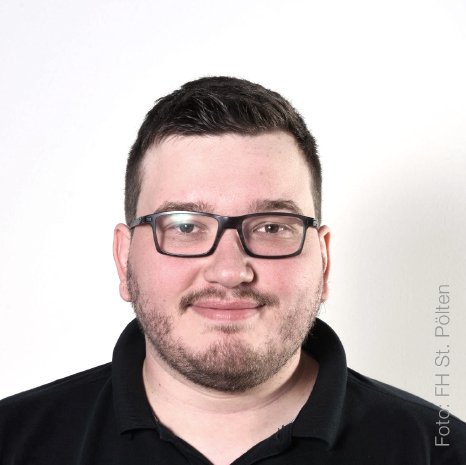
Alexander Buchelt serves as a Researcher in the Department of Computer Science and Security at University of Applied Sciences St. Pölten, contributing to the Data Science and Artificial Intelligence (BA) program. His industry background includes data analytics roles at Hutchison Drei Austria (2014-2018) and MindTake Research GmbH (2019-2020), followed by academic experience as a Student Assistant at FH St. Pölten (2020-2022). His research spans artificial intelligence with emphasis on natural language processing for German content moderation, fractal-based neural network architectures, and AI policy frameworks. Current work demonstrates strong focus on real-world implementation including drone applications in forest ecology, multilingual social media analysis, and regulatory compliance for emerging AI systems. Technical approaches integrate machine learning with domain-specific challenges across environmental science, media analysis, and telecommunications. Publication trends since 2022 reveal increasing emphasis on ethical AI deployment and practical system robustness, with 2024-2025 works addressing content moderation safeguards, neural network innovation, and environmental monitoring solutions. His research consistently bridges theoretical AI development with tangible societal applications, particularly in European regulatory contexts and German-language environments. As part of the Department of Computer Science and Security, Buchelt contributes to Austria's applied research ecosystem focused on practical technology solutions. His work aligns with the university's mission in developing industry-relevant AI applications while addressing emerging challenges in security, ethics, and cross-domain implementation.
University College of Teacher Education Lower AustriaAustria
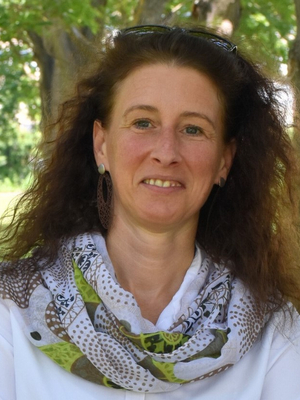
Petra Heißenberger is a Professor and currently serves as Vice Rector for Teaching and School Development Consulting at the University College of Teacher Education Lower Austria (Pädagogische Hochschule Niederösterreich). She has been with the institution since 2007 and previously worked at the Pedagogical Academy in Baden from 2005-2007. Her academic career includes leadership roles such as Head of the Department of Leadership Culture (2022-2024) and Director of the Leadership Center since 2013. Professor Heißenberger's research focuses on educational leadership, particularly examining leadership personalities including the 'Dark Triad' (narcissism, Machiavellianism, and psychopathy) in school leadership contexts. Her work spans school management, educational innovation, school autonomy, and future literacy in the Anthropocene. She has led significant research projects including NÖbegabt 5-7 (2013-2018) on identifying talents in young children, INNOVITAS (since 2017) on school autonomy across Europe, TEDCA (since 2017) on teacher career development, and the Culture Nature Literacy project (since 2022). Her recent publications demonstrate a strong focus on the intersection of leadership, school development, and educational innovation. The 15 most recent articles show particular emphasis on future literacy, diversity education, AI in education, and sustainable school development. Her work often takes the form of edited journal issues for R&E-SOURCE and #schule verantworten, where she serves as editor-in-chief, ensuring these platforms address current challenges in educational leadership. 2024 Book: 'Lehrkräfte führen, fördern und fordern. Leitfaden für Schulleitungen zum Performance-Management des Kollegiums' (Guiding, Promoting, and Challenging Teachers: A Guide for School Leaders on Performance Management) 2024 Articles on AI in education and its implications for educational equity 2023-2025 Series of publications on leadership, school culture, and innovation Professor Heißenberger actively supervises students in the Master's program in School Management and has been instrumental in developing continuing education programs for school leaders. Her practical experience as a former primary school teacher (1994-2005) informs her research and teaching approach, bridging theory and practice in educational leadership. She is recognized for her ability to translate complex leadership theories into practical applications for school administrators. She leads the Leadership Center at the University College of Teacher Education Lower Austria, which serves as a hub for research, professional development, and innovation in educational leadership. The center focuses on developing leadership competencies for current and future school leaders through evidence-based approaches and practical application, with particular attention to the challenges of leading in increasingly complex educational environments.
Dr. Melanie Schaur is a Research Fellow at Johannes Kepler University Linz (JKU), affiliated with the Institute for Political Science and Social Policy and the Institute for Integrated Studies. Her work bridges assistive technologies, digital transformation in social enterprises, and Austrian political studies. She holds a Dr., BSc, and MSSc, and teaches courses on Austrian politics and societal structures. Her research explores: AI-driven assistive technologies for disability care Digital skills development in social enterprises Policy impacts on technology adoption EU-wide strategies for inclusive workforce training Recent publications emphasize assistive tech, AI ethics, and social policy, reflecting interdisciplinary approaches. She leads/contributes to key projects: Care4Skills (2024-2028): Training solutions for long-term care sectors B-Wise (2021-2024): Digital skills toolkits for social enterprises Dyslexia Lab (2023-2025): Assistive tech for learning disabilities
University of Applied Sciences Wiener NeustadtAustria
Sandra Holub serves as a Researcher at the Institute for Marketing within the Faculty of Business at the University of Applied Sciences Wiener Neustadt (FHWN). Her academic profile demonstrates a strong commitment to interdisciplinary research at the intersection of marketing, consumer behavior, and sustainability. Her research interests span multiple domains including sustainable consumption, digital marketing, food science, and behavioral economics. Dr. Holub's work particularly focuses on understanding consumer responses to sustainable product alternatives, with significant contributions to the study of meat alternatives and climate-conscious behavior. Her research employs both quantitative and qualitative methodologies to examine how sensory marketing, labeling strategies, and behavioral interventions influence consumer decision-making. Dr. Holub's publication record shows consistent scholarly output with 23 documented publications spanning from 2016 to 2025, demonstrating increasing research productivity in recent years. Her work appears in reputable journals like the British Food Journal and covers emerging topics at the intersection of traditional marketing principles and contemporary sustainability challenges. Ella - Award for excellent teaching and learning formats at FHWN (2nd place, November 2024) Ella - Auszeichnung für exzellente Lehr- und Lernformate an der FHWN (1. Platz, 2025) WU High Potential Contact Weeks (2017) Dr. Holub actively translates her research into practical applications through media engagement and professional speaking engagements. She has participated in numerous conferences and public discussions on topics ranging from e-commerce strategies to sustainable consumer behavior. Her involvement in the biscuit4all project (2022-2024) demonstrates her commitment to developing practical, evidence-based solutions for promoting climate-conscious behavior across energy, mobility, and nutrition contexts. Through her teaching awards and media appearances, she effectively bridges academic research with real-world business applications.
Vienna University of Economics and BusinessAustria
Dr. Ali Ozkes is a Research Professor at the Institute for Public Management & Governance and an affiliated researcher at the Competence Center for Applied AI & Scientific Computing at Vienna University of Economics and Business. He also holds a part-time professorship at SKEMA Business School. His academic journey includes a habilitation from University Paris 1 Panthéon-Sorbonne, a doctorate from École Polytechnique in Paris, a master's from Istanbul Bilgi University, and bachelor's degrees from the University of London and LSE. Dr. Ozkes' research spans several interconnected fields: Collective decision-making processes and consensus building Ethics of artificial intelligence and human-AI interaction Public administration and organizational behavior Behavioral social sciences and social choice theory Strategic decision-making in public and nonprofit sectors His recent publications (2024-2025) show a strong focus on the intersection of AI ethics, public administration, and organizational decision-making. Key themes include consensus building in leadership teams, ethical frameworks for AI in public sector applications, and cognitive models of decision-making. His work frequently appears in top journals across management, public administration, and AI ethics domains. Scientific recognition includes: WU Visiting Fellowship for Japan (2019) Dr. Ozkes actively supervises graduate students and has served on numerous doctoral committees. His research is supported by multiple interdisciplinary projects, including 'Morality, social choice and artificial intelligence' (2019-2021) and 'Establishment of an international research center for experimental financial markets' (2020-2025). He has collaborated with institutions worldwide including Aix-Marseille University, Caltech, Lund University, and Waseda University. Dr. Ozkes contributes significantly to academic service as co-editor of code and data for Management Science and co-editor of a special issue of Theory and Decision. He is also a member of several prestigious academic societies including the Academy of Management, Association for Computing Machinery, and Society for Social Choice and Welfare. His expertise was instrumental in developing the Code of Conduct for General Purpose AI Models under the EU AI Regulation.