Xuekun LuView profile
Senior Lecturer
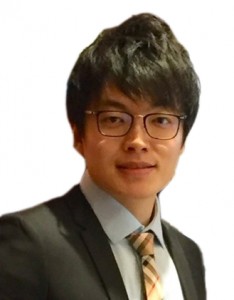
Dr. Xuekun Lu is a Senior Lecturer in Green Energy at Queen Mary University of London's School of Engineering and Materials Science, where he also serves as Deputy Chair of the Undergraduate Subject Exam Board. His academic career focuses on the intersection of materials science, electrochemistry, and sustainable energy technologies, with particular emphasis on advanced characterization and modeling of energy storage systems. Dr. Lu's research primarily centers on three interconnected areas: (1) revealing the interplay between 3D microstructure and performance/failure mechanisms of electrochemical energy devices (lithium-ion batteries, fuel cells) using correlative operando characterization techniques (X-ray CT, ptychography, XRD-CT, FIB-SEM, optical microscopy, TEM); (2) multiscale multiphysics modeling of mass transport and electrochemical performance at electrode, device, and system levels; and (3) developing scalable and sustainable engineering solutions to fabricate advanced electrodes with tunable microstructure to enhance energy density, power density, and cycle life of next-generation lithium-ion batteries. His publication record includes 57 total papers with an h-index of 27 and 2,713 citations, featuring 14 first-authored papers in high-impact journals including Nature Communications, Energy & Environmental Science, and Joule. His work demonstrates a clear progression toward increasingly sophisticated multimodal characterization approaches combined with advanced computational modeling to address fundamental challenges in energy storage technology, with particular focus on microstructure-performance relationships in battery electrodes. ESI Highly Cited Paper (citation > 400) Editor's Highlights in Nature Communications 2020 Top 50 Chemistry and Materials Sciences Articles The Top 25 Chemistry and Materials Sciences Articles of 2023 Invited Reviewer for EPSRC Open Postdoctoral Fellowship Dr. Lu currently mentors PhD students Alex Han (researching 'Fabricating Novel-Structured Lithium-Ion Batteries') and Daqing Li (working on 'Advanced Manufacturing of Novel-Structured Next-Generation Automotive Lithium-Ion Battery Electrodes'). He has secured significant research funding, including a £448,598 EPSRC grant for 'From 2D to 4D: correlative imaging and modelling for next-generation automotive' research. His work has been translated into industry R&D for lithium-ion batteries, demonstrating strong academic-industrial collaboration. His research group employs a comprehensive approach combining cutting-edge imaging techniques with advanced computational modeling to tackle critical challenges in energy storage technology, with particular focus on understanding and optimizing the relationship between electrode microstructure and battery performance across multiple spatial and temporal scales.