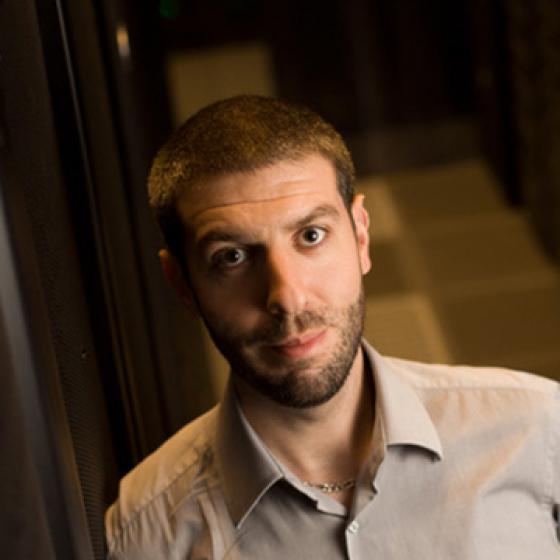
Prof. Marcus Magnor is a full Professor of Computer Science at Technische Universität Braunschweig (TU Braunschweig), leading the Computer Graphics Lab. He also holds an adjunct professorship in Physics and Astronomy at the University of New Mexico, USA. His academic journey includes a BA in Physics from Würzburg University (1995), an MS from the University of New Mexico (1997), and a PhD in Electrical Engineering from Erlangen University (2000). He completed his habilitation in Computer Science at Saarland University in 2005, earning the venia legendi qualification. His research focuses on visual computing, encompassing image formation, analysis, synthesis, and perception. Key areas include computer graphics, vision, computational photography, astrophysics visualization, and optics. He has pioneered work in multi-view video coding, free-viewpoint video, and planetary nebulae reconstruction. Prof. Magnor has organized over 20 international conferences and workshops, including VMV 2023 and the Symposium on Visual Computing and Perception. He serves on editorial boards for journals like Computer Graphics Forum and has held leadership roles such as CS Department Chair at TU Braunschweig (2015–2019). Awards include the Wissenschaftspreis Niedersachsen and recognition as a Fulbright Scholar. His outreach includes popular science lectures on topics like digital image manipulation and 3D cinema technology.
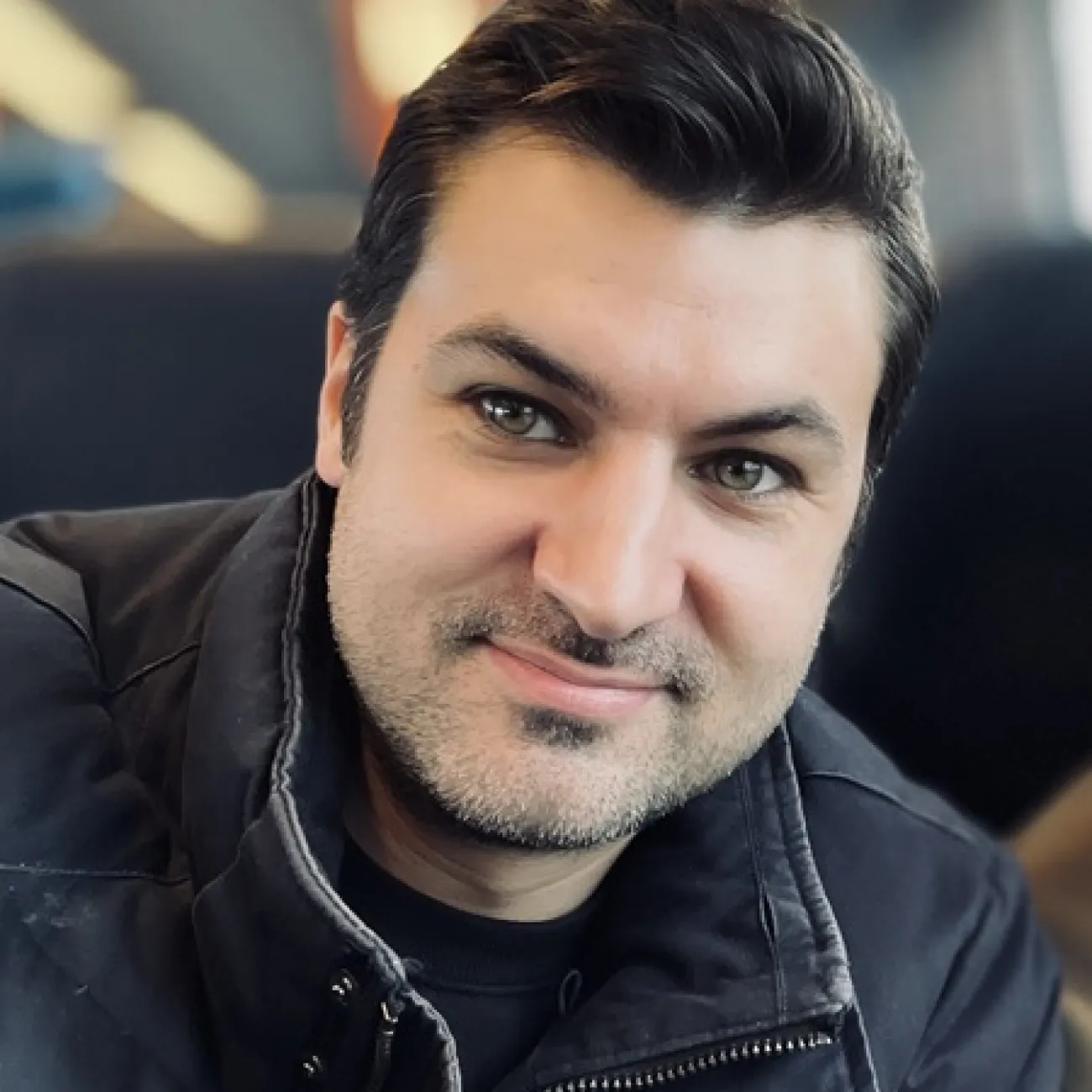
Prof. Hartwig Anzt is a Professor at TU Munich, leading the Chair of Computational Mathematics within the TUM School of Computation, Information, and Technology. He also holds a professorship at the University of Tennessee and directs the Innovative Computing Lab (ICL). His research focuses on high-performance computing, particularly in sparse linear algebra, iterative methods, Krylov solvers, and preconditioning. He emphasizes sustainable software development and leads the Ginkgo open-source library for scientific computing. Academically, Anzt earned his PhD in 2012 from the Karlsruhe Institute of Technology (KIT) and led a Helmholtz junior research group there. He has extensive collaborations with institutions like Sandia National Laboratories, Argonne National Laboratory, and the University of Tennessee. His software projects include Ginkgo and MAGMA-sparse, both part of the xSDK ecosystem. Recent talks highlight his work on exascale computing, GPU optimization, and software sustainability. He advocates for platform-portable numerical libraries and has contributed to the Exascale Computing Project (ECP). His research addresses challenges in energy efficiency, fault tolerance, and algorithm design for multi/manycore architectures.
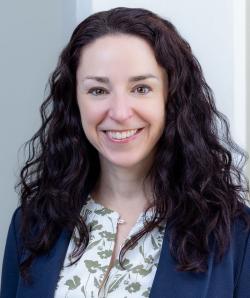
Viktor Larsson is an Assistant Professor at the Centre for Mathematical Sciences, Lund University, specializing in Computer Vision and Machine Learning. Previously, he worked as a PostDoc and senior researcher at ETH Zurich's Computer Vision and Geometry group under Marc Pollefeys. His research focuses on geometric estimation problems in 3D computer vision, including Structure-from-Motion, visual localization, SLAM, and integrating machine learning into classical pipelines. Key research interests include robust estimation techniques, hybrid feature usage, and algorithmic efficiency. He actively supervises PhD/MSc students and has secured grants for impactful projects. Recent work explores data-driven alternatives to hand-crafted heuristics in vision tasks. Notable achievements include a docent qualification (2024), Best Paper Honorable Mention (CVPR 2024), and Best Student Paper (ICCV 2021). His articles span topics like RANSAC optimization, neural scene encoding, and eigenvalue-based localization methods. He also serves on conference committees for CVPR, 3DV, and ECCV, contributing to academic discourse through tutorials and plenary talks.
Yingzhen Yang is an Assistant Professor at Arizona State University's School of Computing and Augmented Intelligence. His research focuses on statistical machine learning, deep learning, optimization, and theoretical computer science. He has held industrial internships at Microsoft Research and Hewlett-Packard Labs, and has contributed to projects in computer vision and graphics. Ph.D. from the University of Illinois Research interests include theory of deep learning, subspace learning, sparse representation, and optimization. His work bridges machine learning theory and applications, with notable contributions to L0-Sparse Subspace Clustering and neural architecture search. Recent publications highlight advancements in graph neural networks, transformer optimization, and medical image classification. His work on L0-SSC earned a Best Paper Finalist award at ECCV 2016. Awards: ECCV 2016 Best Paper Finalist, 2010 Carnegie Dean's Tuition Fellowship Advises students in the Statistical Deep Learning Lab, focusing on topics like model compression and AutoML. Collaborates on synthetic data generation and robust neural architecture search. Labs/Teams: Leads the Statistical Deep Learning (SDL) Lab, fostering research in theory-driven machine learning applications.
Larry Davis is a Professor in the Department of Computer Science and the Institute for Advanced Computer Studies (UMIACS) at the University of Maryland. He is affiliated with the Computer Vision Laboratory of the Center for Automation Research, where he previously served as head from 1981-1986. His research focuses on visual surveillance, human movement analysis, and advanced computer vision systems such as the Keck Laboratory for the Analysis of Visual Movement. Established in 1998, the Keck Lab uses a 64-camera array to study 3D human motion tracking and shape recognition. His work spans projects like codebook-based background subtraction for surveillance and clothing appearance models for persistent tracking. He leads interdisciplinary research on laser beam propagation through atmospheric turbulence and has secured significant grants, including a $4M Multidisciplinary Research Initiative contract. His recent publications emphasize AI-driven solutions for media forensics, generative models, and adversarial attacks on vision systems. Research contributions include innovations in neural rendering (FlexNeRF), personalized clothing compatibility frameworks, and systems for detecting deepfakes and video tampering. His work bridges theoretical advancements with real-world applications in security, healthcare, and retail technology.
Monica Barbero is an Associate Professor in the Department of Structural, Geotechnical and Building Engineering (DISEG) at Politecnico di Torino, Italy. She serves as Vice Coordinator of the Academic Board for the Ph.D. programme in Civil and Environmental Engineering and actively contributes to international research and standardization efforts, including Eurocode 7 and ITA-AITES congresses. Her research interests span geotechnical engineering, landslide hazard and risk, rock mechanics, tunneling, natural hazards, and the mechanical behavior of snow and complex geological formations. She leads multiple research networks focused on slope stability, landslide risk mitigation, and underground structures. Monica Barbero's recent publications reflect a strong trend in numerical modeling, constitutive modeling of geomaterials (especially rock and snow), and quantitative risk assessment for geohazards. Her work integrates field monitoring, laboratory testing, and advanced computational methods to address challenges in alpine and urban environments. assegnazione del finanziamento MIUR - ANVUR delle attività base di ricerca (legge 11 dicembre 2016 n. 232) conferred by MIUR, Italy (2017) premio per l’incentivazione della progettualità, conferito dal Politecnico di Torino sulla base dei progetti di ricerca conferred by Politecnico di Torino, Italy (2018) She has supervised Ph.D. students Lorenzo Milan (on brittle rock failure in deep excavations) and Gianmarco Vallero (on visco-plastic modeling of snow). She leads commercial research projects funded by Anas, regional authorities, and infrastructure operators, focusing on landslide risk, tunnel stability, and dam safety. She also serves on editorial boards of journals such as Gallerie e Grandi Opere Sotterranee and Geoingegneria Ambientale e Mineraria . Monica Barbero is a key member of research teams working on complex geotechnical formations and landslide monitoring systems. She coordinates national and international collaborations, including with Universidade Federal de Minas Gerais (Brazil), and participates in organizing major geotechnical conferences.
Maria Lia Napoli is a Fixed-term Assistant Professor in the Department of Structural, Geotechnical and Building Engineering (DISEG) at Politecnico di Torino, Italy. She is actively engaged in teaching and research in geotechnical engineering, with a focus on rock mechanics, slope stability, rockfall risk assessment, and the behavior of complex geological formations. Research Interests: Her research spans critical areas in geotechnical and environmental engineering, including rockfall source area characterization using the Susceptibility Index to Failure (SIF), coastal cliff stability, tunnelling in heterogeneous rock masses, and numerical modeling of geotechnical structures. She specializes in block-in-matrix formations, landslide risk analysis, and sustainability in geotechnical design. Recent Publications Trends: Her recent publications (2023–2025) demonstrate a strong focus on quantitative and numerical approaches to geohazard assessment. Key themes include the development and validation of the SIF and SAI indices for rockfall prediction, 3D slope stability analysis, failure mechanisms in coastal cliffs, and tunnelling in complex geotechnical environments. These works reflect interdisciplinary integration of field data, laboratory testing, and advanced simulation techniques. Promising Young Investigator Contest (ePIC) conferred by IACMAG 2020, Italy (2021) Riconoscimento per la pubblicazione 'A semi-quantitative approach to assess the propensity of rockfall source areas to instability based on the Susceptibility Index to Failure (SIF): the case study of Capo Calavà (Italy)' presented at VIII Convegno Nazionale dei Ricercatori di Ingegneria Geotecnica, Palermo, 5-7 July 2023, conferred by GNIG, Italy (2023) Teaching and Supervision: She has served as a teaching assistant and course collaborator in several undergraduate and graduate programs, including Civil Engineering, Environmental Engineering, and Building Engineering. She contributes to courses such as Geotechnics, Analysis and Design of Geotechnical Structures, Rock Mechanics, and Geotechnical Engineering for Sustainability. While no direct advisees are listed, her role in teaching and PhD-level instruction indicates active mentorship involvement. Research Projects: She leads research projects funded by commercial contracts, including a 2023–2026 study on understanding kinematic trends and a 2025 consulting project on slope support structures for a B&B in Camaiore. These reflect applied research with real-world geotechnical challenges.
Kwek-Tze Tan is an Associate Professor in the Mechanical Engineering Department at the University of Akron , specializing in composite materials and metamaterials. He joined the university in 2014 after working at the Institute of Materials Research and Engineering in Singapore. Education : B.Eng. (2004), M.Eng. (2006) from National University of Singapore; Ph.D. (2011) from Tokyo Metropolitan University; Post-Doc (2013) at Purdue University. Research Focus : Impact and fracture mechanics of composites, acoustic/elastic metamaterials, bioinspired materials, 3D printing, and Arctic temperature effects. Grants : Recipient of 2 multi-year U.S. Office of Naval Research (ONR) grants for Arctic condition composite studies. Labs : Leads research at the Metacomposites Lab (website: metacomposites.uakron.edu ). Scientific Awards include UA Faculty Research Committee Fellowship (2019), Firestone Fellowship (2018), LaunchTown Entrepreneurship Award (2016), JSPS Fellowship (2016), ICA-ASA Young Scientist Grant (2013), and Metamaterials Congress Travel Grant (2012).
Thomas Pock is a Professor of Computer Science at Graz University of Technology, holding the AIT Stiftungsprofessur for Mobile Computer Vision. He is affiliated with the Institute for Computer Graphics and Vision (ICG) within the Faculty of Computer Science and serves as a principal scientist at the Austrian Institute of Technology (AIT), Center for Vision, Automation & Control. He leads the Vision, Learning and Optimization (VLO) research group, which focuses on mathematical modeling and optimization in computer vision. His research interests lie at the intersection of computer vision, image processing, and mathematical optimization. Specifically, he develops mathematical models for computer vision and efficient convex and non-smooth optimization algorithms , particularly for mobile scenarios. His recent work increasingly integrates variational methods with deep learning, especially in solving inverse problems in imaging such as medical reconstruction and deblurring. The trends in his recent publications show a strong emphasis on deep learning for inverse problems , variational networks , and learned optimization . His group explores how to combine classical mathematical models with data-driven deep learning approaches to achieve stable, interpretable, and high-performance solutions in image reconstruction and processing. His scientific achievements have been recognized with several prestigious awards: START Prize, Austrian Science Fund (FWF), 2013 German Pattern Recognition Award, DAGM, 2013 ERC Starting Grant, European Research Council, 2014 Thomas Pock actively mentors students and leads a research group of 10 PhD students and 2 postdocs. He has secured significant research grants, including the ERC Starting Grant, which supports his foundational work. He is also engaged in scientific communication, giving invited talks at international venues such as SIAM and co-organizing the IMAGINE One World seminar series to foster global collaboration in imaging and inverse problems. He leads the Vision, Learning and Optimization (VLO) group at the Institute for Computer Graphics and Vision. The group develops mathematical models and efficient algorithms for computer vision and image processing, with a focus on mobile applications. The team includes multiple PhD students and postdoctoral researchers and has produced notable software and publications in top venues.
Prof. Dr. Gregor Schiele is a Full Professor at the University of Duisburg-Essen , where he leads the Embedded Systems Department of Computer Science since 2014. His research focuses on self-organizing embedded systems in the Internet of Things (IoT), with emphasis on local embedded intelligence using deep learning and neural networks, as well as programming abstractions for adaptive systems . PhD in Computer Science (2007) from the University of Stuttgart Prior affiliations: Insight Centre for Data Analytics (Ireland), National University of Ireland, Galway, University of Mannheim Current research explores Embedded Machine Learning , FPGA-based AI Accelerators , and Energy-Efficient IoT Systems , with recent publications on quantization-aware training , configuration-aware power management , and medical signal processing . His 15 most recent articles highlight expertise in FPGA optimization , soft sensors , and adaptive architectures for time-series forecasting and fluid flow estimation . Key collaboration networks include the Elastic AI Ecosystem , ZaKI.D , and TransfAIr projects. He teaches courses like Programmieren in C , Internet of Things: Protocols and System Software , and Embedded Systems , while supervising research assistants and student teams in the IoT Garage initiative.
Minchul Kim is a researcher in computer science and quantum engineering, focusing on face recognition, synthetic data, and secure computation. His work spans journals like Information Fusion and IEEE Transactions on Circuits and Systems II: Express Briefs , as well as conferences such as CVPR, OFC, and WACV. Key contributions include physics-driven biometric systems, spiking neural networks for quantum communication, and privacy-preserving computation frameworks. His research leverages synthetic data and diffusion models for 3D human recognition, with a focus on pose and clothing invariance. Collaborations include Xiaoming Liu (Michigan State University), Anil K. Jain (Michigan State), Jungwoo Lee (Yonsei University), and others.
Nils Bausch is a Course Leader in the Department of Science and Engineering at Southampton Solent University. He holds a PhD from the University of Portsmouth and a Diplom Ingenieur (FH) in Mechatronics from FH Aachen. His academic roles include teaching engineering modules across foundation, undergraduate, and postgraduate levels, with a focus on project supervision and applied engineering. Affiliations : Southampton Solent University; Department of Science and Engineering Professional Memberships : Chartered Engineer (CEng), Member of Institution of Engineering and Technology (MIET), Fellow of the Higher Education Academy (FHEA) Research interests span embedded systems, additive manufacturing, corrosion detection, nuclear power plant control, and AI-driven technologies. Nils has secured grants from GCRF, EPSRC, and Innovate UK, and has authored over 40 peer-reviewed publications. His work includes studies on intelligent systems for powered wheelchairs, corrosion monitoring of offshore wind turbines, and advanced control methodologies for nuclear reactors. Key Research Themes : Smart home and assistive technologies Sensor systems and IoT applications Robust control engineering for critical infrastructure Material degradation analysis in marine environments Recent articles focus on wavelet-based control systems for nuclear reactors, corrosion detection in offshore wind turbines, and bio-inspired UAV control algorithms. Awards include prestigious engineering certifications reflecting his industry-academia collaboration. Nils serves as an external examiner for UK higher education programs and actively contributes to professional registration processes through the IET.
Olivier Desjardins is a Professor in the Sibley School of Mechanical and Aerospace Engineering at Cornell University, where he has been a faculty member since July 2011. He previously served on the Mechanical Engineering faculty at the University of Colorado at Boulder. His research is centered on high-fidelity computational modeling of turbulent, reacting, and multiphase flows with applications in energy, propulsion, and combustion systems. Ph.D., Mechanical Engineering, Stanford University, 2008 M.Sc., Aeronautics & Astronautics, SUPAERO (ENSAE), Toulouse, 2003 M.Sc., Mechanical Engineering, Stanford University, 2003 Dr. Desjardins’ research focuses on developing and applying advanced numerical methods such as large-eddy simulation (LES) and direct numerical simulation (DNS) to study complex fluid dynamics involving liquid-gas interfaces, atomization, and interfacial instabilities. His work spans fundamental fluid mechanics and practical applications in combustors and biomass reactors. Key areas include turbulence modeling, surface tension effects, and multiscale simulations of spray formation and breakup. His recent publications (2021–2025) demonstrate a strong emphasis on improving the accuracy and efficiency of volume-of-fluid (VOF) methods, including interface reconstruction, subgrid-scale modeling, and machine learning-enhanced simulations. There is a clear trend toward integrating physics-informed models, adjoint-based control, and rigorous experimental validation, especially in air-blast atomization and droplet dynamics. His group also contributes to open-source frameworks like OpenFOAM. NSF CAREER Award (2014) Junior Award, International Conference on Multiphase Flow (2016) Distinguished Paper Award, 33rd International Symposium on Combustion (2010) Research Excellence Award, Cornell College of Engineering (2020) Robert '55 and Vanne '57 Cowie Teaching Award, Cornell (2016) Outstanding Graduate Education Award, University of Colorado (2008) Dr. Desjardins has led multiple federally funded research projects, including those supported by the National Science Foundation. His work often involves collaboration with experimentalists and validation against physical data, including radiography and shadowgraph imaging. He has advised graduate students in mechanical engineering and computational science, contributing to advancements in multiphase flow modeling. His research group develops open, reproducible methodologies for simulating complex interfacial flows. His lab focuses on computational modeling of multiphase systems, particularly through the development of high-fidelity simulation frameworks. The team works on algorithm development for interface tracking, turbulence modeling, and multiscale coupling, with applications in energy systems and aerospace engineering. Projects include microgravity droplet dynamics (ISS-related), spray control, and catalytic biomass conversion.
Dr. Joseph Lifton is a Lecturer in Mechatronics at the University of Southampton. He holds a PhD from the same institution (2015) and has extensive experience in academic and industry roles. From 2015–2018, he lectured Engineering Design at the University of Southampton Malaysia Campus. Later, from 2018–2024, he worked at Singapore’s Agency for Science, Technology and Research (A*STAR), focusing on advanced metrology and industrial collaboration. His research emphasizes inspection of complex engineering components, intelligent tomographic techniques, 3D image processing, and high-energy X-ray CT systems for large/dense objects. He currently supervises PhD students and contributes to cutting-edge manufacturing research. Education: PhD in Engineering, University of Southampton (2015) Research Focus: Dr. Lifton’s work bridges academic innovation and industrial needs, particularly in advanced manufacturing and metrology. Key areas include: Development of X-ray CT systems for large/dense objects Algorithm optimization for tomographic imaging and defect detection Applications of deep learning in additive manufacturing quality control Professional Contributions: His ORCID -linked publications (e.g., in Journal of X-Ray Science and Technology , Surface Topography ) reflect his expertise in imaging and materials science. He collaborates with industries to solve real-world measurement challenges.
Debra McGivney, PhD, is an Assistant Professor in the Department of Biomedical Engineering at the Case School of Engineering, Case Western Reserve University. She also serves as Associate Chair of the Case School of Engineering. Her research focuses on mathematical modeling of biomedical applications, particularly in medical imaging. She specializes in magnetic resonance fingerprinting (MRF), inverse problems using Bayesian frameworks, and computational solutions for imaging challenges. Education: PhD in Applied Mathematics, Case Western Reserve University (2013) MS in Mathematics, John Carroll University (2006) BS in Mathematics, University of Notre Dame (2004) Her research interests include MRF techniques for quantifying tissue properties, tackling the partial volume effect, and improving imaging accuracy through pattern matching and statistical methods. Recent work emphasizes optimizing pulse sequences, reducing artifacts, and applying MRF to brain tumors and epilepsy diagnostics. Her publications highlight advancements in MRF simulation, error estimation, and integration with quantum-inspired algorithms. She has contributed to 3D imaging techniques, radiomic analysis, and automated sequence design. Labs and collaborations involve interdisciplinary teams focused on medical imaging innovation, though specific lab names are not mentioned.