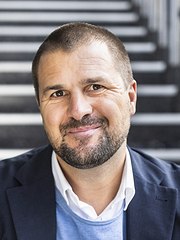
Prof. Dr. Sebastian von Mammen is a tenured professor at the University of Würzburg's Institute for Computer Science, where he heads the Games Engineering research group and contributes to the Chair for Human-Computer Interaction. His group leads the Games Engineering academic program. Previously, he completed his habilitation (2012-2016) at the University of Augsburg's Chair of Organic Computing and was a postdoctoral fellow at the University of Calgary. His research spans: Real-Time Interactive Systems : Visual programming, immersion techniques, software engineering Interactive Simulations : Serious games for healthcare/logistics/construction Artificial Life : Self-organisation, adaptive systems, evolutionary computation Artificial Intelligence : Agent-based modeling, procedural content generation Recent publications (2023-2025) demonstrate strong focus on: Virtual reality applications in education (femtoPro optics simulator, BrainBuilder neuroanatomy) Healthcare technology platforms (VIA-VR for medical serious games) Game mechanics analysis (Match-3, Jump'n'Run flow) AI-driven emotion recognition and interactive systems Computational modeling of biological systems He leads the Games Engineering research group and previously participated in the Evolutionary and Swarm Design group (Calgary) and LINDSAY project. His lab develops VR simulations for scientific training and serious games applications.
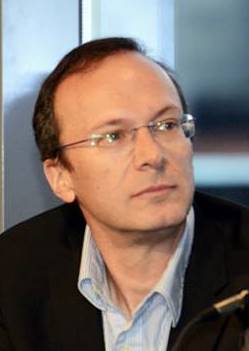
Dr. John F. Eberth is an Associate Professor at Drexel University's School of Biomedical Engineering, Science and Health Systems. As a cardiovascular engineer with expertise in mechanical controls, continuum biomechanics, and hydrogel-based extracellular matrix mimetics, he leads the Applied Biomechanics and Mechanobiology Lab (ABML) to investigate vascular behavior under mechanical stimuli. PhD in Biomedical Engineering from Texas A&M University (2008) MS in Mechanical Engineering from Clemson University (2004) BS in Mechanical Engineering from Clarkson University (2001) His research focuses on vascular pathology and mechanobiology, including: Aortopathy and aneurysm mechanics Endothelial dysfunction and arterial stiffening Hydrogel-based vascular grafts Calcification chelation therapy Coronary artery disease Perfusion tissue culture Recent publications demonstrate expertise in vascular imaging techniques, mechanical modeling, and therapeutic interventions. Key themes include drug-coated balloon development, collagen fiber mechanics, and bioreactor systems for vascular conditioning.
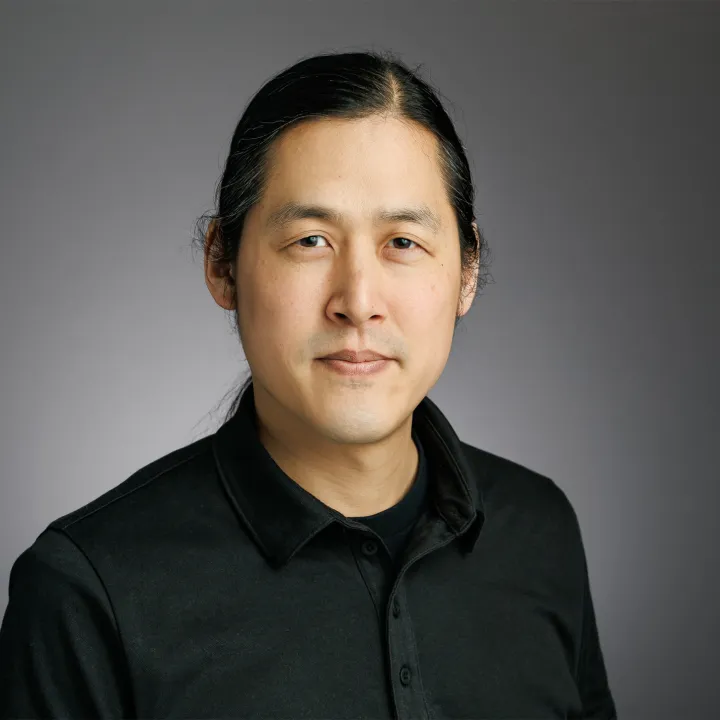
Nikolas Brasch is a PhD candidate and researcher at the Chair of Computer Aided Medical Procedures (CAMP) within the Department of Informatics at the Technical University of Munich. He is affiliated with the research group led by Prof. Nassir Navab and maintains his office at Boltzmannstr. 3, 85748 Garching b. München, Room 5613.03.039. Brasch's research centers on 3D computer vision with emphasis on SLAM (Simultaneous Localization and Mapping) and 3D scene understanding. His work bridges computer vision with medical applications, particularly in medical augmented reality and surgical robotics. He has developed innovative approaches for improving depth estimation in challenging environments and creating robust SLAM systems that maintain accuracy in dynamic settings. His publication record shows a consistent trajectory in advancing 3D vision techniques with practical applications in medical contexts. His research demonstrates particular strength in sensor fusion techniques and semantic understanding of 3D environments. Wild ToFu: Improving Range and Quality of Indirect Time-of-Flight Depth with RGB Fusion in Challenging Environments (2021) Structure-SLAM: Low-Drift Monocular SLAM in Indoor Environments (2020) Semantic Monocular SLAM for Highly Dynamic Environments (2018) As an educator, Brasch serves as a teaching assistant for the Praktikum on 3D Computer Vision course at TUM. He mentors students on various thesis projects related to 3D vision, human pose estimation, and semantic reconstructions, typically collaborating with Prof. Federico Tombari. His teaching activities reflect his research expertise and commitment to training the next generation of computer vision researchers.
Satoshi Funabashi is an Assistant Professor in the Department of Intermedia Art and Science at Waseda University's School of Fundamental Science and Engineering, Japan. He is affiliated with the Graduate Program for Embodiment Informatics under Waseda University's Program for Leading Graduate Schools and contributes to multiple graduate schools including the Graduate School of Creative Science and Engineering. Education: Doctor of Engineering (Waseda University, 2017-2021) Research Focus: Robotics, tactile sensing, deep learning, and embodiment informatics Academic Appointments: Assistant Professor (non-tenure-track) His research centers on symbiotic robotics and tactile-driven manipulation, with recent publications exploring graph convolutional networks, vision-touch fusion, and morphology-specific deep learning for robotic hands. He has secured multiple competitive research grants including JSPS KAKENHI and JST ACT-I programs. Scientific Awards: Grant-in-Aid for Scientific Research (B) (KAKENHI), JSPS (2024-2027) Grant-in-Aid for Early-Career Scientists, JSPS (2022-2024) JST ACT-I Research Fellow (2020-2022, 2018-2020) JSPS Research Fellowship DC1 (2017-2020) He collaborates with the Intelligent Dynamics and Representation Lab (Prof. Tetsuya Ogata) and the Intelligent Machine Lab (Prof. Shigeki Sugano) at Waseda University. He has interned at MIT's CSAIL (2018-2019) and conducted research at UC Davis (2015). His work has been cited over 500 times with an h-index of 14 according to Google Scholar.
Andreas Weber is an Associate Professor at the University of Twente's Digital Society Institute , specializing in the Knowledge, Transformation & Society (KiTeS) research group . His work examines the long-term historical and global relationship between Science, Technology, and Society , with particular focus on colonial histories of natural history, chemistry, and sustainability , as well as computational technologies for contextualizing digitized archives . He leads the HAICu project (2023–2029) on digital cultural heritage and coordinates STS PhD training for the Netherlands Graduate Research School (2019–2024). MA & PhD in History (2005 & 2012), Leiden University Assistant Professor (2017–2023), University of Twente Andreas' research integrates digital humanities with colonial science history , emphasizing global histories of minerals , digital humanism , and AI's societal context . His 15 most recent publications (2016–2025) explore topics like colonial bias in natural history collections , FAIR data implementation , and semantic annotation of handwritten archives , spanning disciplines from history of science to computer science and museum studies . He has received 7 scientific awards , including multiple Best Teacher Awards (2020–2023) and the IEEE eScience Best Poster Award (2018). Andreas supervises PhD and postdoctoral projects while engaging in media commentary on colonial heritage issues and co-organizing international conferences like Hydrogen Pasts and Futures (2024).
Elizabeth Brainerd is the Robert P. Brown Professor of Biology and Professor of Medical Science in the Department of Ecology and Evolutionary Biology at Brown University. She has been a leading figure in vertebrate biomechanics and evolutionary morphology since joining Brown in 2005, where she directs the Keck XROMM Core Facility. Previously, she served as Assistant Professor (1994-1999) and Associate Professor (2000-2005) at the University of Massachusetts Amherst. Her research focuses on biomechanics and evolutionary morphology, combining anatomical studies with engineering principles to understand animal movement. Brainerd is a pioneer of X-ray Reconstruction of Moving Morphology (XROMM) technology, which enables 3D visualization of skeletal movement in living animals. Her work spans diverse vertebrate groups including fish, amphibians, reptiles, birds, and mammals, with applications to feeding, breathing, and locomotion mechanics. Brainerd's research has been consistently supported by major NSF grants, including the development of microXROMM for high-resolution imaging of small animals. Her publications reveal a trajectory from foundational work on breathing mechanics to innovative applications of XROMM technology across multiple vertebrate systems, particularly in suction feeding mechanics and skeletal kinematics. Her scientific recognition includes: Fellow of the American Association for the Advancement of Science (2004) Distinguished Research Achievement Award from Brown University (2019) Fellow of the American Association for Anatomy (2020) Joseph S. Nelson Lifetime Achievement Award in Ichthyology (2021) Bidder Prize Lecture from the Society for Experimental Biology (2023) Brainerd has mentored 7 doctoral students and 5 MS students to completion, plus over 50 undergraduate researchers. She has served as President of both the International Society of Vertebrate Morphology (2016-2019) and the Society for Integrative and Comparative Biology (2019-2021). Her teaching includes undergraduate courses in Comparative Anatomy, Comparative Physiology, and Human Physiology, graduate courses in Muscle Architecture and Biomechanics, and medical education in Human Anatomy.
David Lentink is a Full Professor of Biomimetics at the University of Groningen , leading the Biomimetics Group within the Faculty of Science and Engineering. His research bridges biomechanics, aerospace engineering, and robotics, focusing on avian flight mechanics and bio-inspired aerial robotics . Previously at Stanford University, he pioneered the development of the Aerodynamic Force Platform and low-turbulence wind tunnels for animal flight studies. Education : PhD in Aerospace Engineering (Stanford), MSc in Mechanical Engineering (Delft), BSc in Mechanical Engineering (Delft). Research Interests : Understanding bird flight biomechanics to design advanced drones, studying evolutionary adaptations in flight, and developing biohybrid robots with real feathers. Scientific Awards : Dutch Academic Year Prize for the Flight Artists (2013). World Economic Forum Young Scientist under 40 (2013). Alumnus of the Young Academy of The Royal Netherlands Academy of Arts and Sciences. Labs : The Lentink Lab at Groningen’s Linnaeusborg campus integrates bird aviaries, wind tunnels, and maker spaces for bio-inspired robotics development. His team collaborates globally with institutions like Stanford, TU/e, and Sorama.
Jan Christof Recker is Nucleus Professor and holder of the chair for Information Systems and Digital Innovation at the University of Hamburg Business School, funded through the Excellence Strategy of the Federal and State Governments. He also holds adjunct professor positions at the University of Agder (Kristiansand, Norway) since 2022 and at the QUT Business School (Brisbane, Australia) since 2018, and has previously served as Professor for Information Systems and Systems Development at the University of Cologne (2018-2021) and Full Professor for Digital Innovation at QUT Business School. Dr. Recker holds bachelor's and master's degrees in information systems from the University of Münster and a PhD in Information Systems from the Queensland University of Technology. His educational background forms the foundation for his expertise in bridging technical and organizational aspects of digital transformation. His research focuses on how organizations deal with digital innovation, digital transformation, and digital entrepreneurship. As a field researcher, he has collaborated with large organizations including Woolworths, SAP, Hilti, Commonwealth Bank, Federal Police, Lufthansa, and Ubisoft, as well as various startups. Dr. Recker employs quantitative, qualitative, and mixed field methods in his research and is also competent in design research. His current research interests include technology analysis and design in the digital age, digital entrepreneurship and new venture creation, digital innovation and transformation in large organizations, digitalization of products, services, and processes, and digital solutions for sustainable development. His work aligns with multiple UN Sustainable Development Goals including Industry, Innovation and Infrastructure (SDG 9), Responsible Consumption and Production (SDG 12), and Reduced Inequalities (SDG 10). Dr. Recker's recent publications demonstrate a sophisticated exploration of the intersection between physical and digital experiences, generative AI development methodologies, societal impacts of crises on business growth patterns, and responsible digital innovation frameworks. His work spans multiple high-impact journals across information systems, management science, and entrepreneurship disciplines, consistently addressing practical organizational challenges with theoretically grounded approaches. His notable awards and honors include: AIS Fellow Award (2018) Outstanding Associate Editor Award by MIS Quarterly (2019) SIGGreen Best Paper Award (2021) Best Paper Award by the Journal of Information Technology Theory and Application (2014) Vice Chancellor's Award for Excellence (2014) Dr. Recker has secured significant research funding for projects related to digital innovation and transformation, including the HIVESOUND start-up scholarship (2024-2025) and research on how digital products are created through hardware-software interactions (2022-2024). As Editor-in-Chief for Communications of the Association for Information Systems (2015-2020) and current Senior Editor for the MIS Quarterly, he has shaped scholarly discourse in the field. His supervision of doctoral students has been recognized with multiple awards, reflecting his commitment to developing the next generation of information systems scholars. His Management Transfer Lab at the University of Hamburg serves as a nexus for academic-industry collaboration, focusing on translating theoretical insights into practical solutions for digital transformation challenges. The lab maintains strong partnerships with major corporations and startups alike, ensuring research relevance while providing students with real-world experience in digital innovation contexts.
Dr. Xiaohan Yu is a Lecturer in Artificial Intelligence at Macquarie University's School of Computing, joining in December 2023. Previously, he completed his doctoral studies at Griffith University and served as a Research Fellow at the ARC Research Hub for Driving Farming Productivity. His research focuses on Ultra-Fine-Grained Visual Categorization (Ultra-FGVC), Smart Farming, and Automated Crop Cultivar Identification, with over 70 publications in top-tier venues like ICCV, CVPR, and IEEE Transactions. He holds editorial roles at Pattern Recognition and SN Computer Science , and received the APRS Early Career Award (2022) and ACM MM 2024 Outstanding Area Chair distinction. Education: Completed doctoral studies in Artificial Intelligence at Griffith University, Australia. Research Interests: Ultra-Fine-Grained Visual Categorization (Ultra-FGVC) Smart Farming and Agricultural Robotics Computer Vision Applications in Healthcare (e.g., trachoma detection) Deep Learning, Continual Learning, and Domain Adaptation Key Contributions: Pioneered Ultra-FGVC research, developed frameworks like Mix-ViT and CLE-ViT, and contributed to benchmarking multi-object tracking in farming. His work bridges pattern recognition with real-world applications in agriculture and healthcare. Scientific Awards: Australian Pattern Recognition Society (APRS) Early Career Researcher Award 2022 ACM Multimedia 2024 Outstanding Area Chair Award Advising & Grants: Actively involved in editorial roles (Area Chair for ACM MM, IJCNN) and grant-funded research through ARC hubs. His work is supported by collaborations in agriculture and AI-driven solutions for crop cultivar identification. Labs & Affiliations: Member of Macquarie's Smart Green Cities Research Centre and Frontier AI Research Centre , advancing interdisciplinary AI applications.
Craig Gotsman is a Professor and Dean at the Ying Wu College of Computing, New Jersey Institute of Technology. He previously held roles at Cornell Tech, Technion, ETH Zurich, and MIT. His research focuses on computational geometry, computer graphics, and 3D animation. Ph.D. in Computer Science, Hebrew University of Jerusalem (1991) His work spans geometric modeling, mesh processing, and applications in animation and visualization. Recent research trends include gaze correction in video conferencing, mesh parameterization, and spectral compression techniques. Notable awards include Fellowships in the US National Academy of Inventors and the Academy of Europe, multiple best paper awards, and the Technion's Hewlett Packard Chair in Computer Engineering. Gotsman has mentored over 50 postgraduate students and holds ten US patents. He co-founded three companies: Virtue 3D Inc. (acquired by NVIDIA), Estimotion Inc. (now ITIS Israel Ltd.), and CatchEye.
Christian Timmerer is a Professor at the Institute of Information Technology, Alpen-Adria-Universität Klagenfurt. His research focuses on adaptive video streaming , energy efficiency , MPEG standardization , and quality of experience (QoE) , with significant contributions to HTTP Adaptive Streaming (HAS), multi-codec optimization, and immersive media systems. Email: christian.timmerer@aau.at Office Hours: Monday 3:00-4:00 PM (by appointment) Projects: CD-Labor ATHENA, GAIA, SPIRIT His research integrates machine learning and generative AI to enhance video encoding, super-resolution, and voice dubbing, while prioritizing sustainability through energy-aware algorithms and open-source tools like GREEM and VEED. Current work emphasizes latency reduction and dynamic bitrate adaptation in live streaming environments. Recent publications address VVC optimization , multi-resolution encoding , and perceptual quality modeling , reflecting interdisciplinary efforts in networking , computer vision , and human-computer interaction . Awards include leading funded projects on adaptive streaming and green video systems.
Summer J Decker, PhD is a Professor of Medicine and Professor of Clinical Radiology, Surgery, Pathology, Cinematic Arts, and Biomedical Engineering at the University of Southern California . She directs the Center for Innovation in Medical Visualization , focusing on 3D imaging technologies and their applications in clinical and forensic settings. Email: summer.decker@med.usc.edu Twitter: @Summerin3D Her research spans 3D Printing in Medicine , Forensic Imaging , Medical Visualization , and Radiology , with recent work on postmortem CT applications, virtual reality for surgical planning, and age prediction via vertebral osteophytes. Publications highlight trends in 3D printing , forensic radiology , and clinical imaging . She actively collaborates across disciplines, leading projects in pediatric cardiology , neurosurgery , and biomedical engineering , and has contributed to pandemic-era imaging research strategies.
Aditi Majumder is a Professor of Computer Science at the University of California, Irvine (UCI), affiliated with the School of Engineering and Information Sciences. Her research focuses on multi-projector display systems, augmented reality (AR), and their applications in scientific and medical fields. She holds a Ph.D. from the University of North Carolina, Chapel Hill (2003). Her work addresses challenges in geometric, chromatic, and luminescent corrections for tiled displays, with applications in surgical assistance and deformable surface visualization. Recent projects include precision stencils for surgical sites and dynamic projection mapping on non-rigid surfaces. Notable achievements include the Inaugural Hasso Plattner Endowed Chair in Artificial Intelligence (2025). Her research spans AR in medicine, real-time multi-projector synchronization, and color gamut optimization. Dr. Majumder also engages in public discourse on computer science education, emphasizing its societal importance and foundational skills like programming and discrete mathematics. Her 15 most recent articles (2021–2024) highlight advancements in surgical AR, deformable surface projection systems, and medical visualization. These contributions bridge computer graphics, vision, and biomedical engineering, reflecting her interdisciplinary approach to solving complex display and interaction challenges.
Dr. Callum Atkinson is a Senior Lecturer in Mechanical & Aerospace Engineering at Monash University, specializing in turbulent flow dynamics and experimental fluid mechanics. His research focuses on understanding and controlling turbulent shear flows in pipes, boundary layers, jets, and rocket engines, combining high-fidelity numerical simulations with advanced optical diagnostics like holographic PIV and tomographic techniques. He has developed novel methodologies for 3D velocity and density measurements, contributing to drag reduction studies, heat transfer analysis, and flow control in aerospace and mechanical systems. His work addresses UN Sustainable Development Goals related to energy efficiency and sustainable transport. Current roles include leading collaborative projects on adverse pressure gradient boundary layers and flow mixing, and he actively participates in peer review for journals like Journal of Fluid Mechanics and Physics of Fluids . He supervises PhD students in topics such as hybrid rocket engine optimization and turbulence modeling, leveraging Monash's engineering research infrastructure. Notable contributions include one of the world's largest adverse pressure gradient simulations and pioneering volumetric flow visualization techniques. His experimental toolkit includes laser diagnostics, tomographic PIV, and background-oriented schlieren systems. Recent work has explored superhydrophobic surface drag reduction, thermal jet behavior, and the dynamics of high-speed jet flows. He maintains a strong focus on bridging experimental and computational fluid dynamics to advance fundamental understanding and industrial applications.
Theodore Kim is a Professor of Computer Science at Yale University, where he co-leads the Computer Graphics Group with Julie Dorsey and Holly Rushmeier. His research focuses on physics-based simulation, including fluid dynamics, solid mechanics, and fractal growth structures. He holds a PhD from the University of North Carolina at Chapel Hill and has held academic positions at UCSB and the University of Saskatchewan. His work has been applied in over two dozen films, earning him SciTech Oscars in 2012 and 2022. He previously served as a Senior Research Scientist at Pixar, contributing to projects like *Cars 3*, *Coco*, and *Incredibles 2*. Education: Ph.D., Computer Science, University of North Carolina at Chapel Hill (2006) M.S., Computer Science, University of North Carolina at Chapel Hill (2006) B.S., Computer Science, Cornell University (2001) Research Interests: Kim’s work bridges academia and industry, emphasizing practical applications of physics-based simulation. Notable areas include hair and skin simulation for animation, fluid dynamics, and the historical context of computer graphics innovations. His research also addresses racial biases in graphics, such as in hair and skin modeling. Articles Trends: Recent work emphasizes diverse representation (e.g., Black hair simulation), biomechanical accuracy (feather modeling), and historical analysis of technical contributions (e.g., Búi Tướng Phong’s legacy). Earlier publications focus on fluid subspace methods, wavelet turbulence, and efficient simulation techniques. Awards: Academy Award for Scientific and Technical Achievement (2012, 2022) NSF CAREER Award (2013–2018) UCSB Harold J. Plous Award (2015) Best Paper Awards at SCA (2011, 2016, 2018) Grants & Labs: Leads Yale’s Critical Computing Initiative and directs undergraduate studies in CS. His lab collaborates with industry (e.g., Pixar) and emphasizes open-source software. Current projects include fractal design tools and anti-racist graphics research.