Andrea Vedaldi is a Professor of Computer Vision and Machine Learning at the University of Oxford's Department of Engineering Science, affiliated with the Visual Geometry Group (VGG). He specializes in unsupervised methods for understanding images and videos, focusing on 3D geometry and semantics. His research bridges foundational AI and practical applications, with contributions to generative models, neural fields, and self-supervised learning. Education: PhD in Computer Science (2008), University of California, Los Angeles MSc in Computer Science (2005), UCLA BSc in Information Engineering (2003), University of Padua Research Interests: Unsupervised learning, 3D perception, generative AI, neural rendering, and scalable vision systems. His work emphasizes ethical, responsible AI aligned with ERC-funded projects like UNION (ERC Consolidator Grant). Key Contributions: Co-developer of VLFeat and MatConvNet libraries Leader in 3D reconstruction and diffusion models (e.g., CatFree3D) Recipient of the PAMI Thomas S. Huang Prize and multiple best paper awards Grants & Service: Principal Investigator on £2.3M ERC Consolidator Grant (UNION) Co-organizer of major conferences (ECCV 2020 Program Chair, CVPR 2023 Area Chair) Reviewer for top journals/conferences (PAMI, CVPR, NeurIPS) Labs & Teams: VGG Group at Oxford, collaborating on projects like Meta 3D Gen and Common Objects in 3D (CO3D).
Prof. Ingmar Posner is a leading figure in applied artificial intelligence at the University of Oxford, where he serves as Principal Investigator for the Applied Artificial Intelligence Lab (A2I) and founding Director of the Oxford Robotics Institute. His work focuses on enabling robots to operate effectively in complex real-world environments through experience-driven learning. Key research areas: robot learning, scene interpretation, data-efficient learning, and transfer learning Applications in manipulation, autonomous driving, logistics, and space exploration His team has produced groundbreaking work in world models, sim-to-real transfer, and constraint-based manipulation systems (e.g., COMBO-Grasp). Notable contributions include the TWIST distillation framework and foundational research in tactile data generation (TactGen). He has received multiple best paper awards at top robotics venues. Publications reveal evolving research themes: 2025 work emphasizes language-conditioned learning (Lumos) and multi-agent decision-making, while 2024 focused on diffusion models for locomotion and differentiable simulators. Earlier work spans from urban scene analysis to physically plausible scene synthesis (RELATE).
Professor Andrew Davison holds the position of Professor of Robot Vision at Imperial College London's Department of Computing. He leads the Dyson Robotics Laboratory and the Robot Vision Research Group, focusing on advancing SLAM (Simultaneous Localization and Mapping) and Spatial AI. His groundbreaking work includes the MonoSLAM algorithm (2003), enabling real-time 3D vision for robotics and AR/VR. Current research emphasizes scalable, semantic-rich Spatial AI systems, as outlined in his FutureMapping papers (2018–2019). Education: BA in Physics (Oxford, 1994), D.Phil. (Oxford, 1998). Postdoctoral work at AIST, Japan (1998–2000), followed by a lectureship at Imperial (2002–present). Industrial collaborations include SLAMcore, a Spatial AI startup, and Dyson Robotics Lab. Over 18 PhD students supervised, many now leading roles at Meta, NVIDIA, SLAMcore, and academia. Notable contributions include DTAM, KinectFusion, and Event Camera SLAM. Recognized for software tools like SceneLib and contributions to robotics benchmarks (SLAMBench). Active on Twitter (@AjdDavison) for research updates.
Lourdes Agapito is a Professor of 3D Vision at the Department of Computer Science, University College London (UCL), within the Faculty of Engineering Sciences. She leads research in Non-Rigid Structure from Motion (NR-SFM) and 3D reconstruction from monocular video sequences. Her work addresses dynamic scenes, deformable objects, and articulated structures, with applications in robotics and computer vision. She holds an ERC Starting Grant (2008–2014) and led the EU Horizon 2020-funded Second Hands project (2014–2019), collaborating with institutions like EPFL and KIT to develop robots with 3D visual perception for maintenance tasks. Her research group focuses on dense optical flow estimation, video registration, and deformable tracking. Agapito’s research interests include monocular 3D reconstruction, non-rigid motion analysis, and neural approaches to 3D modeling. She has supervised multiple PhD students and postdocs, including notable researchers such as Ravi Garg and Marco Paladini (Sullivan Prize recipient). Her contributions to conferences include roles as Program Chair for CVPR 2016 and CVPR 2017, and she has authored influential papers on topics like Video-Popup (ECCV 2014) and Modal Space (CVPR 2017). Current projects involve advancing neural parametric models and real-time 3D reconstruction techniques. Awards include the ERC Starting Grant and recognition for her team’s work in non-rigid reconstruction. She actively mentors students and collaborates on grants, with recent openings for postdocs and PhD candidates in 3D vision and robotics.
Andrew Zisserman is a Royal Society Research Professor at the University of Oxford's Department of Engineering Science, affiliated with the Visual Geometry Group (VGG). His research focuses on computer vision, artificial intelligence, and neural networks, with significant contributions to multimodal learning, video understanding, and 3D scene analysis. He leads projects exploring visual-language models, audio-visual synchronization, and clinical imaging applications. Key research areas include: Video analysis and temporal modeling Multimodal systems for sign language translation and action recognition 3D shape estimation and physical property inference Foundation models and cross-modal retrieval Recent work highlights: Developed Flamingo and Tapir models for video-language tasks Advancements in spinal MRI analysis and clinical imaging Leadership in EGO4D and VoxCeleb challenges Honors include Fellowship of the Royal Society (FRS) and the ISSLS Prize in Clinical Science 2023 for spinal analysis innovations. His lab collaborates globally, emphasizing real-world applications in healthcare and autonomous systems.
Alessio Lomuscio is a Professor of Safe Artificial Intelligence at Imperial College London, holding the prestigious Royal Academy of Engineering Chair in Emerging Technologies and recognized as an ACM Distinguished Member. He leads the Safe AI Lab, which focuses on developing methods and tools for the verification of AI systems to ensure their safe and secure deployment in applications of societal importance. His research spans verification and robust learning for neural networks and decision trees, robust machine learning in aviation and finance, monitoring of machine learning systems, assurance for autonomous systems and AI, and verification and validation of neuro-symbolic systems. Lomuscio has made significant contributions to formal verification methods for AI systems, particularly in the context of safety-critical applications. His recent publications demonstrate a strong focus on neural network verification techniques, with applications across multiple domains including finance, aviation, and autonomous systems. His work bridges theoretical advances in formal methods with practical applications in real-world AI systems, addressing critical challenges in AI safety and trustworthiness. Scientific Awards: Royal Academy of Engineering Chair in Emerging Technologies ACM Distinguished Member Lomuscio has served in numerous leadership roles, including as Co-Director (2023-present) and Deputy Director (2019-2023) of the UKRI Centre for Doctoral Training in Safe and Trusted Artificial Intelligence. He has also held positions as Director of Strategy and Planning (2017-2020), Member of Management Committee (2013-2020), and Deputy Head of Department (2016-2017). His editorial service includes roles as Associate Editor for Artificial Intelligence Journal and Editorial Board Member for Journal of Artificial Intelligence Research and Journal of Autonomous Agents and Multi-agent Systems. His research group actively mentors students and researchers, with current openings for PhD and postdoctoral positions focused on AI verification and safety. Lomuscio's work has established him as a leading figure in the field of safe and verifiable AI systems, with significant contributions to both theoretical foundations and practical applications.
Professor Carlo Harvey is a creative technologist at the School of Digital Arts (SODA), Manchester Metropolitan University. His interdisciplinary research merges games , machine learning , virtual production , and cultural heritage reinterpretation . He leads industry collaborations with entities like Jaguar Land Rover and Epic Games, focusing on AI-driven interactive audio, real-time visualization, and accessibility solutions. Award-winning projects : TIGA, Innovate UK, and Epic Games MegaGrant for Accession Industry partnerships : Automotive sector, cultural institutions His research spans human-computer interaction , multisensory virtual environments , and acoustic-visual cross-modal perception . Recent publications address robotic simulations, motion alignment, and haptic feedback systems. Scientific recognition : TIGA Award, Innovate UK Funding, Epic Games MegaGrant Advocacy : Digital inclusion, creative collaboration, social impact of technology
Perla Maiolino serves as an Associate Professor in Engineering Science at the University of Oxford and Principal Investigator of the Soft Robotics Lab (SRL) within the Oxford Robotics Institute. Her academic foundation includes BEng, MEng, and PhD degrees in Robotics and Automation from the University of Genoa, where she pioneered CySkin technology for distributed tactile sensing in robots—later exhibited at the Science Museum in London. She expanded her expertise during a 2017-2018 postdoctoral fellowship at Cambridge University's Biologically Inspired Robotics Lab, focusing on soft robotics and tactile perception. Dr. Maiolino's research centers on developing artificial skin systems, soft robotic actuators, and distributed sensing architectures. Her work bridges biological inspiration with engineering innovation to create robots capable of safe human interaction and dexterous manipulation in unstructured environments. Key contributions include compliant beaded-string jamming mechanisms for anthropomorphic fingers, monolithic 3D-printed soft pneumatic arms (JAMMit!), and distributed time-of-flight sensor networks for robotic self-awareness. Recent publications (2024-2025) reveal a strong convergence of tactile sensing with machine learning, featuring optical flow for gesture recognition, diffusion models for artificial skin simulation, and zero-shot sim-to-real transfer techniques. Her team has made significant advances in multi-modal sensing integration, variable stiffness actuation, and scene flow estimation for robots operating in dynamic surroundings. Scientific Awards No specific awards were documented in the provided institutional materials. Advising and Grants While her leadership of the Soft Robotics Lab implies active student supervision and grant management, detailed information about advisees or funded projects was not included in the source documentation. Labs and Teams As Principal Investigator of the Soft Robotics Lab at Oxford Robotics Institute, Dr. Maiolino directs research on tactile perception systems, soft actuation mechanisms, and sensor-integrated robotic structures. The lab's work focuses on applications requiring safe physical interaction, including healthcare robotics and human-robot collaboration scenarios, with emphasis on multi-material 3D printing and embedded sensing technologies.
Professor Haijiang Li is a Chair in BIM for Smart Engineering at Cardiff University's School of Engineering. His roles include leading the Computational Mechanics and Engineering AI Research Group, directing the BIM for Smart Engineering Centre, and overseeing the BIM MSc programme. He holds editorial roles for journals like Construction Innovation and Automation in Construction , and chairs the European Group of Intelligent Computing in Engineering (EG-ICE). Research focuses on smart computational engineering platforms integrating BIM, AI, and big data for sustainable infrastructure. Key areas include digital twins, disaster management, and resilient urban systems. He has secured £40M in research funding, including £9M as PI, and led over 70 research staff and students. Prof. Li is a Standards Committee Technical Executive at buildingSMART, driving international BIM standards. His work includes co-authoring a book on BIM standards across China, the US, and the UK. Awards include Fellowships from the British Computer Society (FBCS) and the Higher Education Academy (FHEA). His research outputs span over 250 publications, covering topics like AI-driven bridge maintenance, ontology-based decision-making, and energy-efficient urban systems. Collaborations with industry and global partners emphasize practical applications of BIM and smart technologies.
Professor Gabriel Brostow is a faculty member in the Department of Computer Science at University College London (UCL), where he leads research in Computer Vision and Human-Computer Interaction. He also serves as Chief Research Scientist and Senior Director of the R&D Team at Niantic, the company behind Pokémon GO. His work bridges academic research and industry applications, focusing on developing AI systems that enhance human capabilities through what he terms 'Human in the Loop AI'—now commonly referred to as Human-Centered AI. Brostow completed his BS in Electrical Engineering at UT Austin, followed by a PhD with Irfan Essa at Georgia Tech. He then pursued postdoctoral research with Roberto Cipolla's Computer Vision & Robotics Group at Cambridge University as a Marshall Sherfield Fellow, and with Marc Pollefeys in ETH Zurich's CVG Group. His research explores how AI, particularly Computer Vision, can serve as 'super-tools' for professionals across various domains including filmmaking, architecture, robotics, and scientific research. Specific interests include assistive technology for everyday life, authoring systems that maximize user effort, 3D reconstruction, depth estimation, and vision-language models. His work often involves creating systems that are validated through real-world human interaction to ensure practical utility. Analysis of his recent publications reveals a strong focus on practical applications of Computer Vision that directly interact with humans. His research spans 3D scene understanding, depth estimation, sketch-based interfaces, and multimodal AI systems. There's a clear emphasis on creating benchmarks and tools that facilitate human-AI collaboration, with applications in assistive technology, urban planning, filmmaking, and biodiversity monitoring. His work frequently appears at top conferences including CVPR, NeurIPS, ECCV, and CHI. Marshall Sherfield Fellowship Brostow actively mentors PhD students, with current advisees including Ross Murphy, Skanda Koppula, Gizem Unlu, Omiros Pantazis, and Jamie Watson. His alumni include numerous PhD graduates and MSc students who have gone on to successful careers in academia and industry. He emphasizes selecting students based on passion and potential rather than just academic credentials, valuing traits like helpfulness, drive, and hunger to learn. His research is supported through collaborations with major institutions and companies including DeepMind, MIT, and the University of Edinburgh. He leads a research group at UCL that collaborates closely with Niantic's R&D team, creating a unique bridge between academic research and industry application. His team's work frequently involves developing novel Computer Vision techniques that are validated through real-world human interaction, ensuring practical utility alongside technical innovation. The group explores blue-sky research problems with applications ranging from assistive technology to professional tools for filmmakers, architects, and scientists studying diverse environments.
Professor Daniel Rueckert is a leading academic in Artificial Intelligence and Medical Imaging, holding dual positions at Imperial College London (as Professor of Visual Information Processing) and Technical University of Munich (Alexander von Humboldt Professor for AI in Medicine and Healthcare). He obtained his MSc from Technical University Berlin (1993) and PhD from Imperial College London (1997), followed by postdoctoral work at King’s College London. At Imperial, he led the Department of Computing (2016–2020) and founded the Biomedical Image Analysis group. His research focuses on AI-driven medical image analysis, including algorithms for image reconstruction, registration, and clinical decision support. His research interests span AI applications in healthcare, machine learning for medical imaging, and computational methods for clinical diagnostics. Notable contributions include over 500 publications and 60+ PhD graduates, with key works in federated learning, cardiac motion analysis, and biomarker development. Awards include the Leibniz Prize (2025), Royal Academy of Engineering Fellowship (2015), and multiple ERC grants. He leads the BioMedIA research group and is an editorial board member of Medical Image Analysis . Recent publications highlight advancements in AI-driven medical imaging, such as secure federated learning frameworks and deep learning models for disease prediction. His work bridges academic and industrial sectors through initiatives like IXICO, an Imperial spin-out. Current affiliations include roles at both Imperial and TUM, emphasizing interdisciplinary collaboration in healthcare technology. Advising and grants: Supervised over 60 PhD students and 40 post-docs. Secured grants including ERC Synergy (2013) and ERC Advanced (2020). Active in labs focused on biomedical image computing and AI in healthcare systems. Collaborative efforts include the BioMedIA group and TUM’s AI initiatives. Labs/teams: Leads the Biomedical Image Analysis group at Imperial and the TUM AI in Medicine team. Collaborates extensively on projects like cardiac imaging analysis and federated learning for healthcare.
Professor Julie Harris is a faculty member at the University of St Andrews, holding the position of Professor of Psychology within the School of Psychology and Neuroscience since 2005. She previously held academic posts at Newcastle University and the University of Edinburgh, and conducted postdoctoral research at the Smith-Kettlewell Eye Research Institute in California. Her research focuses on human visual processing, including vision and camouflage, depth perception, binocular stereopsis, and eye movements in natural environments. She earned a BSc in Physics from Imperial College London and a DPhil from Oxford University. Research interests include exploring how visual systems process environmental cues for depth and motion, with applications in camouflage design and stereo display technologies. Her lab employs psychophysical, behavioral, and computational methods. Notable projects address countershading camouflage effectiveness, motion-in-depth perception, and visual-motor interactions in driving scenarios. Selected grants include funding from BBSRC, Leverhulme Trust, and Medical Research Scotland. Collaborations span evolutionary biology, neuroscience, and applied vision science. She supervises PhD students Federico De Filippi and Rebecca Maguire. Awards include the Davida Teller Award Nomination and Fellowship in the Society of Biology. Labs/Teams: Julie Harris Lab (St Andrews), St Andrews Vision Labs, and the Institute of Behavioural and Neural Sciences. Current projects investigate warning signal design, visual perception in virtual environments, and the impact of visual processing on driving ability.
Andrew Markham is a Professor of Computer Science at the University of Oxford , affiliated with Kellogg College . He leads a research group focusing on Cyber Physical Systems (CPS) , specializing in sensors, signal processing, and machine learning to enable machines to better perceive the physical world. His work emphasizes cross-disciplinary collaboration, notably in wildlife tracking and indoor positioning systems. He has held roles as a Postdoctoral Fellow (2008-2012), Associate Professor (2013), and Full Professor (2021). Education : PhD in Electrical Engineering (University of Cape Town, 2008), BSc (Hons) in Electrical Engineering (2004). Research Interests : Tracking and localization in GPS-denied environments (e.g., underground, indoors), magneto-inductive systems, physics-informed machine learning, and data-driven approaches for noisy sensor data. His projects include wildlife monitoring via wireless sensor networks and mmWave radar for human motion capture. Key Projects : CARACAL acoustic monitoring system, mmPoint dense human tracking, and RandLA-Net for large-scale point cloud segmentation. His work spans robotics, environmental sensing, and biomedical applications. Advising & Grants : Supervises over 30 students and collaborates with industrial partners. Research teams include Cyber Physical Systems, Autonomous Ubiquitous Sensing, and Wildlife Monitoring initiatives. Labs/Teams : Leads the CPS research group, focusing on sensor networks, inertial navigation, and multimodal fusion systems. Collaborates with zoology and earth science disciplines on applied projects.
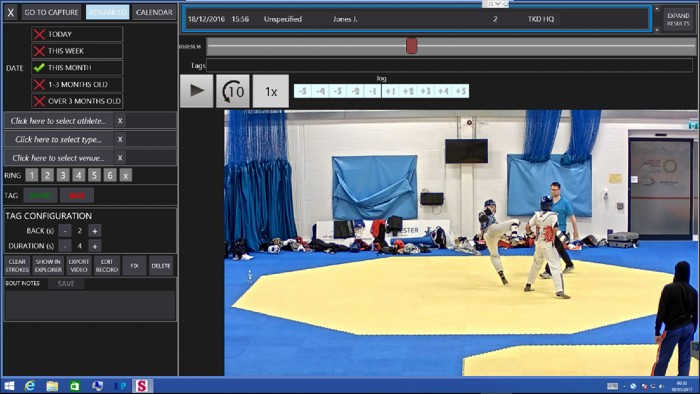
Dr. Simon Goodwill is the Head of Research in Sport and Physical Activity and Head of the Sports Engineering Research Group (SERG) at Sheffield Hallam University's Academy of Sport and Physical Activity. He holds a PhD focused on tennis ball-racket impact modeling and has collaborated with the International Tennis Federation. His expertise includes novel photogrammetry techniques, software development for athlete performance analysis, and camera calibration systems like check2d/check3d. He led projects supporting Team GB athletes in multiple Olympics, contributing to 42 medals at Rio 2016. Currently, he oversees the Advanced Wellbeing Research Centre (AWRC), applying sports performance methodologies to health research. His work integrates machine vision, data acquisition hardware, and elite athlete monitoring systems, with notable contributions to the EIS Innovation Partnership and sports tech exhibits like Le Tour Yorkshire's bike simulator. Education & Research: Simon’s PhD (modeling tennis impacts) and extensive software engineering background underpin his research. His projects span biomechanics, sports engineering, and health tech, with collaborations involving UK Sport, FIFA, and Adidas. He has developed systems used by athletes in London 2012, Rio 2016, and Glasgow 2014 Commonwealth Games. Research Themes: His work emphasizes performance analysis through photogrammetry, real-time athlete tracking, and health-related applications of sports tech. Key projects include court pace rating for the ITF, iBoxer2 boxing data tools, and the AWRC’s health innovations. Grants & Impact: The AWRC, funded by UK DoH and ESIF (£15.7M), reflects his role in translating elite athlete tech to public health. His work is cited in UK government reports on Olympic legacy and has received media attention, including BBC features on GB Boxing’s iBoxer software. Advising & Leadership: Supervised 17 PhD students on topics like machine learning in taekwondo, swimming analysis, and tennis racket dynamics. Served as External/External advisor and led 10+ Olympic cycle projects. Active in the International Sports Engineering Association as Director.
Dr James Herbert-Read is an Associate Professor and Whitten Lecturer in Marine Biology at the Department of Zoology, University of Cambridge. He serves as Deputy Head of Department (Postgraduate Education) and leads the Marine Behavioural Ecology Group. His research focuses on understanding how animals, particularly marine organisms, collect and process information from their environments to make behavioral decisions, with emphasis on social interactions, adaptation mechanisms, and ecological constraints. His group employs theoretical frameworks, controlled experiments, and quantitative field studies to investigate behavioral diversity in marine species. Key themes include collective behavior, predator-prey dynamics, camouflage strategies, and the impacts of environmental stressors on animal decision-making. Recent publications highlight work on lionfish vocalization mechanisms, cuttlefish camouflage, citizen science applications in marine research, and behavioral responses to visual and acoustic noise. Scientific awards and affiliations include: Whitten Lecturer in Marine Biology Associate Professor, University of Cambridge He has supervised research projects on topics such as: Social attraction in invasive fish species Evolution of coordinated movement Neurophysiological basis for leadership in shoals Maternal effects on offspring exploration